


All Exams > OPSC OCS (Odisha) > 6 Months Preparation Course for OPSC > All Questions
All questions of Class 7 for OPSC OCS (Odisha) Exam
Acid turns blue litmusA: OrangeB: PinkC: greenD: RedCorrect answer is 'D'. Can you explain this answer?
Acid turns blue litmus
A: Orange
B: Pink
C: green
D: Red
 | Jithin Chawla answered |
Acids turn blue litmus red. Litmus paper is used as indicator to check acids and bases.

Which of the following is a natural indicator- a)Turmeric
- b)Methyl orange
- c)Oxalic acid.
- d)Phenolphthalein
Correct answer is option 'A'. Can you explain this answer?
Which of the following is a natural indicator
a)
Turmeric
b)
Methyl orange
c)
Oxalic acid.
d)
Phenolphthalein
 | Sanjana Kumar answered |
Some of the natural indicators are red cabbage juice, onion paste, turmeric, lemon juice etc. Natural indicators are turmric,litmus,china rose etc are some natural indicators. Some Natural Indicators are red Cabbage juice,turmeric,china rose[hibiscus] and litmus.
Practice Quiz or MCQ (Multiple Choice Questions) with solutions are available for Practice, which would help you prepare for chapter Physical and Chemical Changes, Class 7, Science. You can practice these practice quizzes as per your speed and improvise the topic. Q.Melting of ice is a- a)Both physical and chemical change
- b)Chemical change
- c)Periodic change
- d)Physical change
Correct answer is 'D'. Can you explain this answer?
Practice Quiz or MCQ (Multiple Choice Questions) with solutions are available for Practice, which would help you prepare for chapter Physical and Chemical Changes, Class 7, Science. You can practice these practice quizzes as per your speed and improvise the topic.
Q.
Melting of ice is a
a)
Both physical and chemical change
b)
Chemical change
c)
Periodic change
d)
Physical change
 | Maitri Sarkar answered |
Melting of ice is a physical change because it involves change only in the physical state of water: from ice in the solid state to water in the liquid state.
Moreover, no new chemical substance is formed in the process and this change is reversible. Water can be converted back into ice simply by freezing.
A device which prevents or allow the current to flow through it- a)Motor
- b)Terminal
- c)Conductor
- d)Switch
Correct answer is option 'D'. Can you explain this answer?
A device which prevents or allow the current to flow through it
a)
Motor
b)
Terminal
c)
Conductor
d)
Switch
 | Rohini Seth answered |
A circuit breaker can be used over and over again. The basic circuit breaker consists of a simple switch, connected to an electromagnet.
Generally electrical current requires a close path or circuit to flow, so when switch is off it won't flow. A switch prevents or allow the current to flow through it.
In insects, air enters the body through- a)Spiracles
- b)Gills
- c)Lungs
- d)Skin
Correct answer is option 'A'. Can you explain this answer?
In insects, air enters the body through
a)
Spiracles
b)
Gills
c)
Lungs
d)
Skin
| | Maitri Sarkar answered |
Insect bodies have openings, called spiracles, along the thorax and abdomen. These openings connect to the tubular network, allowing oxygen to pass into the body, regulating the diffusion of CO2 and water vapor.

Inhalation is the- a)Release of oxygen
- b)Intake of carbon dioxide
- c)Intake of oxygen
- d)Release of carbon dioxide
Correct answer is option 'C'. Can you explain this answer?
Inhalation is the
a)
Release of oxygen
b)
Intake of carbon dioxide
c)
Intake of oxygen
d)
Release of carbon dioxide
 | Prateek Sharma answered |
The part of breathing during which oxygen rich air is taken in is called inhalation.
A car is moving with 72 km/hrs. The speed of the car in m/s is- a)30 m/s
- b)20 m/s
- c)40 m/s
- d)25 m/s
Correct answer is option 'B'. Can you explain this answer?
A car is moving with 72 km/hrs. The speed of the car in m/s is
a)
30 m/s
b)
20 m/s
c)
40 m/s
d)
25 m/s
 | Meera Reddy answered |
We know ,
1 km=1000m , 1 hour=3600s
1km/h=1000/3600m/s=5/18m/s
72km/h=72×5/18m/s
=4×5m/s
=20m/s.
1 km=1000m , 1 hour=3600s
1km/h=1000/3600m/s=5/18m/s
72km/h=72×5/18m/s
=4×5m/s
=20m/s.
The excess of water absorbed plants by their roots gets evaporated through the process of- a)Absorption
- b)Elimination
- c)Transpiration
- d)Excretion
Correct answer is option 'C'. Can you explain this answer?
The excess of water absorbed plants by their roots gets evaporated through the process of
a)
Absorption
b)
Elimination
c)
Transpiration
d)
Excretion
 | Prisha Mehta answered |
Plants lose gallons of water every day through the process of transpiration, the evaporation of water from plants primarily through pores in their leaves. Up to 99% of the water absorbed by roots is lost via transpiration through plant leaves.
What percent of your body weight is water?- a)50%
- b)70%
- c)60%
- d)80%
Correct answer is option 'C'. Can you explain this answer?
What percent of your body weight is water?
a)
50%
b)
70%
c)
60%
d)
80%
 | Rithika Roy answered |
About 60% of our body consists of water. It forms the main constituent of cell and blood.
A wind vane is used to measure the- a)Air humidity
- b)Wind direction
- c)Air pressure
- d)Wind speed
Correct answer is option 'B'. Can you explain this answer?
A wind vane is used to measure the
a)
Air humidity
b)
Wind direction
c)
Air pressure
d)
Wind speed
 | Geetika Shah answered |
A wind vane is a simple device to know the direction of wind at particular time.
Which of the following is a reversible change?- a)Melting of ice
- b)Germination of seed
- c)Burning of matchstick
- d)Changing of milk into curd
Correct answer is option 'A'. Can you explain this answer?
Which of the following is a reversible change?
a)
Melting of ice
b)
Germination of seed
c)
Burning of matchstick
d)
Changing of milk into curd
 | Varun Kapoor answered |
Melting of ice is a reversible change while burning of matchstick, changing of milk into curd and germination of seed is chemical change.
What is the name of object through which light can pass?- a)Opaque
- b)Translucent
- c)Transparent
- d)Luminous
Correct answer is option 'C'. Can you explain this answer?
What is the name of object through which light can pass?
a)
Opaque
b)
Translucent
c)
Transparent
d)
Luminous
 | Sanaya Shah answered |
The object through which light can pass easily is called transparent object. Glass, water and thin plastic sheets are transparent object.
In Japan cyclone is known as- a)Storm
- b)Hurricane
- c)Typhoon
- d)Thunderstorm
Correct answer is option 'C'. Can you explain this answer?
In Japan cyclone is known as
a)
Storm
b)
Hurricane
c)
Typhoon
d)
Thunderstorm
 | Stuti Chakraborty answered |
In Japan cyclone is known as Typhoon. Japan is worst affected by regular typhoon.
Water is a/an- a)Element
- b)Mixture
- c)Solution
- d)Compound
Correct answer is option 'D'. Can you explain this answer?
Water is a/an
a)
Element
b)
Mixture
c)
Solution
d)
Compound
 | Anand Iyer answered |
Water is a compound as it contains hydrogen and oxygen in fixed ration by mass.
There is acute water shortage due to- a)Excessive population growth
- b)Climate change
- c)Global warming
- d)Excess evaporation
Correct answer is option 'A'. Can you explain this answer?
There is acute water shortage due to
a)
Excessive population growth
b)
Climate change
c)
Global warming
d)
Excess evaporation
 | Advait Pillai answered |
There is acute shortage of water throughout the world due to excessive population growth which leads to overuse and misuse of water.
Climate of a place do not depends on- a)Latitude
- b)Wind
- c)Humidity
- d)Longitude
Correct answer is option 'D'. Can you explain this answer?
Climate of a place do not depends on
a)
Latitude
b)
Wind
c)
Humidity
d)
Longitude
 | Palak Iyer answered |
The factors that determine the climate of a place are:
· Latitude
· Altitude
· Winds
· Distance from the sea
· Humidity and Ocean Currents
Longitude is not a factor that determines the climate of a place.
Practice Quiz or MCQ (Multiple Choice Questions) with solutions are available for Practice, which would help you prepare for chapter Water A Precious Resource, Class 7, Science. You can practice these practice quizzes as per your speed and improvise the topic. Q.Ground water between two layers of rocks is called- a)Rain water
- b)Water table
- c)Aquifer
- d)Water level
Correct answer is 'C'. Can you explain this answer?
Practice Quiz or MCQ (Multiple Choice Questions) with solutions are available for Practice, which would help you prepare for chapter Water A Precious Resource, Class 7, Science. You can practice these practice quizzes as per your speed and improvise the topic.
Q.
Ground water between two layers of rocks is called
a)
Rain water
b)
Water table
c)
Aquifer
d)
Water level
 | Kiran Bajaj answered |
If groundwater is between two confined layers, it is called confined aquifer. If groundwater is not confined by an upper confining layer, it is unconfined equifer. If, on the other hand, groundwater is confined by two confining units (such as upper confining layer and lower confining layer), it is called confined aquifer.
Q. The centre of cyclone is known asa)Eyes of hurricanesb)Ear of hurricanesc)Middle of hurricanesd)Nose of hurricanesCorrect answer is option 'A'. Can you explain this answer?
 | Prashanth Sen answered |
The most recognizable feature found within a cyclone is the eye. They are found at the center and are between 20-50km in diameter. The eye is the focus of the cyclone, the point about which the rest of the storm rotates and where the lowest surface pressures are found in the storm
When two or more cells are joined together it forms a- a)Dynamo
- b)Battery
- c)Radio
- d)Transistor
Correct answer is option 'B'. Can you explain this answer?
When two or more cells are joined together it forms a
a)
Dynamo
b)
Battery
c)
Radio
d)
Transistor
 | Saikat Chawla answered |
Combination of two or more cells are joined together forms battery.
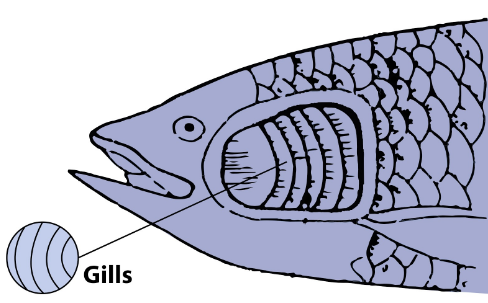
Gills are respiratory organs in- a)Fish
- b)Cockroach
- c)Amoeba
- d)Earthworm
Correct answer is option 'A'. Can you explain this answer?
Gills are respiratory organs in
a)
Fish
b)
Cockroach
c)
Amoeba
d)
Earthworm
 | Freak Artworks answered |
Gills are respiratory organs in fish. Gills intake oxygen from water.
Practice Quiz or MCQ (Multiple Choice Questions) with solutions are available for Practice, which would help you prepare for chapter Waste water Story, Class 7, Science. You can practice these practice quizzes as per your speed and improvise the topic. Q.Liquid waste from houses is called- a)Sludge
- b)Effluent
- c)Smog
- d)Sewage
Correct answer is option 'D'. Can you explain this answer?
Practice Quiz or MCQ (Multiple Choice Questions) with solutions are available for Practice, which would help you prepare for chapter Waste water Story, Class 7, Science. You can practice these practice quizzes as per your speed and improvise the topic.
Q.
Liquid waste from houses is called
a)
Sludge
b)
Effluent
c)
Smog
d)
Sewage
| | Anita Menon answered |
Sewage is wastewater released by homes, industries, hospitals, offices and other users. It also includes rainwater that has run down the street during a storm or heavy rain. The water that washes off roads and rooftops carries harmful substances with it. Sewage is a liquid waste. Most of it is water, which has dissolved and suspended impurities.
Chemical changes are- a)Always irreversible
- b)Mostly reversible
- c)Always reversible
- d)Mostly irreversible
Correct answer is option 'A'. Can you explain this answer?
Chemical changes are
a)
Always irreversible
b)
Mostly reversible
c)
Always reversible
d)
Mostly irreversible
| | Lakshmi Reddy answered |
Crystals of copper sulphate are prepared by the method of crystallization. It is an example of physical change.
So option D is correct answer.
Practice Quiz or MCQ (Multiple Choice Questions) with solutions are available for Practice, which would help you prepare for chapter Weather Climate and Adaptations of Animals to Climate, Class 7, Science. You can practice these practice quizzes as per your speed and improvise the topic. Q.An animal found in desert- a)Camel
- b)Penguin
- c)Polar bear
- d)Frog
Correct answer is option 'A'. Can you explain this answer?
Practice Quiz or MCQ (Multiple Choice Questions) with solutions are available for Practice, which would help you prepare for chapter Weather Climate and Adaptations of Animals to Climate, Class 7, Science. You can practice these practice quizzes as per your speed and improvise the topic.
Q.
An animal found in desert
a)
Camel
b)
Penguin
c)
Polar bear
d)
Frog
 | Sparsh Khanna answered |
Camel is found in desert because it can survive for many days without water and easily walk on sand.
Birds are adapted to fly because of - a)Streamlined body
- b)light bones
- c)feathers and wings
- d)all of these
Correct answer is option 'D'. Can you explain this answer?
Birds are adapted to fly because of
a)
Streamlined body
b)
light bones
c)
feathers and wings
d)
all of these
| | Mayank Roy answered |
The bodies of birds are adapted for flying. Many of a bird's bones are hollow which makes birds' bodies lightweight. Flying birds have large chest muscles that move the wings.The long flight feathers on the wings and tail help birds balance and steer.
During flood drinking water should be- a)Sedimented
- b)Filtered
- c)All of these
- d)Boiled
Correct answer is option 'C'. Can you explain this answer?
During flood drinking water should be
a)
Sedimented
b)
Filtered
c)
All of these
d)
Boiled
 | Keerthana Basak answered |
During a flood, it is important to ensure that drinking water is safe for consumption. Here are the steps to make sure the water is safe:
- Sedimented: Allow the water to sit undisturbed so that sediment and particles can settle at the bottom.
- Filtered: Use a filtering system or boil water and then filter it to remove any remaining impurities.
- Boiled: Boil the water for at least one minute to kill any harmful bacteria or pathogens present.
By following these steps, you can ensure that the drinking water is safe to consume during a flood.
- Sedimented: Allow the water to sit undisturbed so that sediment and particles can settle at the bottom.
- Filtered: Use a filtering system or boil water and then filter it to remove any remaining impurities.
- Boiled: Boil the water for at least one minute to kill any harmful bacteria or pathogens present.
By following these steps, you can ensure that the drinking water is safe to consume during a flood.
Which of the following is a reversible change?- a)Melting of ice
- b)Germination of seed
- c)Changing of milk into curd
- d)Burning of match stick
Correct answer is option 'A'. Can you explain this answer?
Which of the following is a reversible change?
a)
Melting of ice
b)
Germination of seed
c)
Changing of milk into curd
d)
Burning of match stick
| | Meera Reddy answered |
If we take certain amount of ice and we start it heating we will slowly begin to observe that the ice is melting and it is turning to water.
This process is called melting and it is reversible.This is because when ice has turned to water after heating,when we place the same melted water and begin to freeze it,we will find that it is slowly being converted into ice.Hence,proving that melting of ice is a reversible process!
In irrigation, which technique reduces the water loss?- a)Tube well system
- b)Planting crops in rainy season
- c)Canal system
- d)Drip irrigation
Correct answer is option 'D'. Can you explain this answer?
In irrigation, which technique reduces the water loss?
a)
Tube well system
b)
Planting crops in rainy season
c)
Canal system
d)
Drip irrigation
 | Vandana Mukherjee answered |
Drip and sprinkler irrigation systems are the most water efficient irrigation systems. They deliver water directly to a plant's roots, reducing the evaporation that happens with spray watering systems. Timers can be used to schedule watering during the cooler parts of the day which further reduces water loss.
The speed of the vehicle is recorded by- a)Ammeter
- b)Odometer
- c)Speedometer
- d)Voltmeter
Correct answer is option 'C'. Can you explain this answer?
The speed of the vehicle is recorded by
a)
Ammeter
b)
Odometer
c)
Speedometer
d)
Voltmeter
 | Jyoti Kulkarni answered |
- The speedometer is a device found in vehicles that measures the current speed of the vehicle.
- It provides real-time information, allowing drivers to maintain safe speeds and abide by traffic regulations.
- Unlike an odometer, which measures distance traveled, the speedometer focuses solely on speed.
- Ammeter and voltmeter measure electrical current and voltage, respectively, and are not related to vehicle speed.
Topic in NCERT: Measuring Speed
Line in NCERT: "The speedometer records the speed directly in km/h."
What is the process called when new individuals are produced from the vegetative parts of the parent plant?- a)Budding
- b)Spore formation
- c)Vegetative propagation
- d)Fragmentation
Correct answer is option 'C'. Can you explain this answer?
a)
Budding
b)
Spore formation
c)
Vegetative propagation
d)
Fragmentation
 | Rainbow Rise Classes answered |
Vegetative propagation is a form of asexual reproduction in plants where new plants are produced from the vegetative parts such as roots, stems, and leaves. This method allows plants to reproduce without seeds, ensuring the survival and spread of the species.
Which one is not an adaptation of camel for desert condition- a)It excrete very little of urine and dry dung.
- b)Its feet are broad with paddy soles
- c)It has hump which stores fat
- d)It perspires a lot to keep the body cool
Correct answer is option 'D'. Can you explain this answer?
Which one is not an adaptation of camel for desert condition
a)
It excrete very little of urine and dry dung.
b)
Its feet are broad with paddy soles
c)
It has hump which stores fat
d)
It perspires a lot to keep the body cool
 | Akshara Das answered |
Camels have many adaptations that allow them to live successfully in desert conditions. Deserts are hot and dry. Winds blow sand all around, so a camel has long eyelashes. It has nostrils that can open and close.
1. A camel can go a week or more without water, and they can last for several months without food. They can drink up to 32 gallons (46 litres) of water at one drinking session!
2. Camels store fat in the hump, not water. The fat can be metabolised for energy.
3. Unlike most mammals, a healthy camel's body temperature fluctuates (changes) throughout the day from 34degC to 41.7degC (93degF-107degF.) This allows the camel to conserve water by not sweating as the environmental temperature rises.
4. Camels feet are wide so they can walk on sand more easily. Their huge feet help them to walk on sand without sinking into it.
5. Camels have thick lips so they can eat the prickly desert plants with out feeling pain.
6. The colour of their bodies helps them to blend into their environment.
7. Camel's ears are covered with hair, even on the inside. The hair helps keep out sand or dust that might blow into the animal's ears.
What will happen if carbon dioxide gas is passed through lime water?- a)Calcium carbonate is formed
- b)The lime water turns milky
- c)Both of these
- d)None of these
Correct answer is option 'C'. Can you explain this answer?
What will happen if carbon dioxide gas is passed through lime water?
a)
Calcium carbonate is formed
b)
The lime water turns milky
c)
Both of these
d)
None of these
 | Bespoke Classes answered |
Explanation:
- Formation of Calcium Carbonate: When carbon dioxide gas is passed through lime water, a chemical reaction occurs where the carbon dioxide reacts with the calcium hydroxide in the lime water to form calcium carbonate.
- Lime Water Turns Milky: The formation of calcium carbonate results in the lime water turning milky or cloudy in appearance.
- Both of These: Therefore, when carbon dioxide gas is passed through lime water, both the formation of calcium carbonate and the milky appearance of the lime water are observed as a result of the chemical reaction.
In human eyes, image is formed on- a)Eye lens
- b)Cornea
- c)Retina
- d)Pupil
Correct answer is option 'C'. Can you explain this answer?
In human eyes, image is formed on
a)
Eye lens
b)
Cornea
c)
Retina
d)
Pupil
| | Bhaskar Desai answered |
Formation of Image in Human Eye
The human eye is a complex organ that is responsible for vision. It captures the light that enters the eye and converts it into electrical impulses that are sent to the brain for interpretation. The image formation in the human eye involves the following steps:
1. Cornea:
The cornea is the transparent outer layer of the eye that covers the iris, pupil, and anterior chamber. It acts as a protective barrier and helps to refract (bend) light as it enters the eye.
2. Pupil:
The pupil is the black circular opening in the center of the iris. It controls the amount of light that enters the eye by dilating (opening up) or constricting (closing down) in response to changes in light intensity.
3. Lens:
The lens is a transparent, biconvex structure located behind the iris. It helps to focus light onto the retina by changing its shape. The process of changing the shape of the lens is called accommodation.
4. Retina:
The retina is the innermost layer of the eye that contains photoreceptor cells called rods and cones. These cells convert light into electrical impulses that are sent to the brain via the optic nerve for interpretation.
5. Optic Nerve:
The optic nerve is a bundle of nerve fibers that carries the electrical impulses from the retina to the brain.
6. Brain:
The brain receives the electrical impulses from the optic nerve and interprets them as images.
Conclusion:
Thus, the image is formed on the retina of the human eye. The cornea and lens work together to focus the light onto the retina, which contains the photoreceptor cells that convert the light into electrical impulses that are sent to the brain for interpretation.
The human eye is a complex organ that is responsible for vision. It captures the light that enters the eye and converts it into electrical impulses that are sent to the brain for interpretation. The image formation in the human eye involves the following steps:
1. Cornea:
The cornea is the transparent outer layer of the eye that covers the iris, pupil, and anterior chamber. It acts as a protective barrier and helps to refract (bend) light as it enters the eye.
2. Pupil:
The pupil is the black circular opening in the center of the iris. It controls the amount of light that enters the eye by dilating (opening up) or constricting (closing down) in response to changes in light intensity.
3. Lens:
The lens is a transparent, biconvex structure located behind the iris. It helps to focus light onto the retina by changing its shape. The process of changing the shape of the lens is called accommodation.
4. Retina:
The retina is the innermost layer of the eye that contains photoreceptor cells called rods and cones. These cells convert light into electrical impulses that are sent to the brain via the optic nerve for interpretation.
5. Optic Nerve:
The optic nerve is a bundle of nerve fibers that carries the electrical impulses from the retina to the brain.
6. Brain:
The brain receives the electrical impulses from the optic nerve and interprets them as images.
Conclusion:
Thus, the image is formed on the retina of the human eye. The cornea and lens work together to focus the light onto the retina, which contains the photoreceptor cells that convert the light into electrical impulses that are sent to the brain for interpretation.
Clay particles are of size- a)More than 0.004 mm
- b)Less than 0.04 mm
- c)More than 0.02 mm
- d)Less than 0.002 mm
Correct answer is option 'D'. Can you explain this answer?
Clay particles are of size
a)
More than 0.004 mm
b)
Less than 0.04 mm
c)
More than 0.02 mm
d)
Less than 0.002 mm
 | Bibek Singh answered |
The soils that contain particles of size less than 0.002mm are called clayey soil. It is most suitable for rice, wheat and gram.

Atmospheric pressure is measured with the help of- a)Barometer
- b)Thermometer
- c)Hygrometer
- d)All of these.
Correct answer is option 'A'. Can you explain this answer?
Atmospheric pressure is measured with the help of
a)
Barometer
b)
Thermometer
c)
Hygrometer
d)
All of these.
 | Sai Kumar answered |
Atmospheric pressure of a place is measured with the help of an instrument called Barometer.
Change in position with respect to the surroundings is called- a)Acceleration
- b)Speed
- c)Momentum
- d)Force
Correct answer is option 'B'. Can you explain this answer?
Change in position with respect to the surroundings is called
a)
Acceleration
b)
Speed
c)
Momentum
d)
Force
| | Lakshmi Reddy answered |
The change in position with respect to the surroundings is called Speed
- Speed is the measure of how quickly an object moves from one position to another. It is calculated as the distance traveled divided by the time taken to travel that distance.
Line in NCERT: "The distance moved by an object in a unit time is called its speed."
The small bulb-like projection coming out from yeast cell is called a ______.- a)Pseudopodia
- b)Bud
- c)Fragment
- d)False - feet
Correct answer is option 'B'. Can you explain this answer?
The small bulb-like projection coming out from yeast cell is called a ______.
a)
Pseudopodia
b)
Bud
c)
Fragment
d)
False - feet
| | Amit Sharma answered |
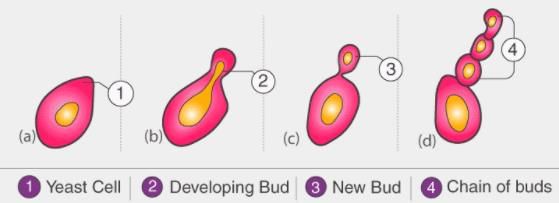
- Budding is a type of asexual reproduction in which a new organism develops from an outgrowth or bud due to cell division at one particular site. The small bulb-like projection coming out from the yeast cell is called a bud.
- Organisms such as hydra use regenerative cells for reproduction in the process of budding.
Which of the following place is unlikely to be affected by cyclone?- a)Mangaluru
- b)Puri
- c)Amritsar
- d)Chennai
Correct answer is option 'C'. Can you explain this answer?
Which of the following place is unlikely to be affected by cyclone?
a)
Mangaluru
b)
Puri
c)
Amritsar
d)
Chennai
 | Meghana Choudhary answered |
Cyclone occurs near the coastal area. As Amritsar is far away from coastal area, it is unlikely to be affected by cyclone.
Splitting of white rays of light into seven colours is called- a)Dispersion of light
- b)Reflection of light
- c)Refraction of light
- d)Scattering of light
Correct answer is option 'A'. Can you explain this answer?
Splitting of white rays of light into seven colours is called
a)
Dispersion of light
b)
Reflection of light
c)
Refraction of light
d)
Scattering of light
 | Gargi Shah answered |
Splitting of white rays of light into seven colour when passes through a prism is called dispersion of light.
Water vapours present in the atmosphere is called - a)humidity
- b)precipitation
- c)climate
- d)rain fall
Correct answer is option 'A'. Can you explain this answer?
Water vapours present in the atmosphere is called
a)
humidity
b)
precipitation
c)
climate
d)
rain fall
 | Abhiram Roy answered |
Water vapours present in the atmosphere is called humidity .
‘Khadar’ is another name of- a)Black soil
- b)Red soil
- c)Desert soil
- d)Alluvial soil
Correct answer is option 'D'. Can you explain this answer?
‘Khadar’ is another name of
a)
Black soil
b)
Red soil
c)
Desert soil
d)
Alluvial soil
| | Ananya Das answered |
Alluvial soil is also called as Khadar in some part of India.
World water day is celebrated on- a)22 March
- b)12 March
- c)22 May
- d)12 May
Correct answer is option 'A'. Can you explain this answer?
World water day is celebrated on
a)
22 March
b)
12 March
c)
22 May
d)
12 May
| | Vandana Mukherjee answered |
World Water Day (WWD) is celebrated on 22 March every year to focus attention on the importance of freshwater and advocating for the sustainable management of freshwater resources. The United Nations General Assembly initiated this response on 22 March 1993 as the first World Water Day.
The basic unit of speed is:- a)km/min
- b)m/min
- c)km/h
- d)m/s
Correct answer is option 'D'. Can you explain this answer?
The basic unit of speed is:
a)
km/min
b)
m/min
c)
km/h
d)
m/s
 | Kavya Rane answered |
The basic unit of distance is metre (m). The basic unit of time is second (s). Since we know that s=d/t. Therefore, the basic unit of speed is m/s.
So option D is the correct answer.
Lightning is usually accompanied by- a)Rain
- b)Earthquake
- c)Thunder
- d)Floods
Correct answer is option 'C'. Can you explain this answer?
Lightning is usually accompanied by
a)
Rain
b)
Earthquake
c)
Thunder
d)
Floods
 | Kunal Mehra answered |
Lightening is usually accompanied by thunder. Actually lightning and thunder occurs together but lightening reaches to us first followed by thunder.
__________ should be banned to prevent soil pollution.- a)Fertilisers
- b)Metals
- c)Plastics
- d)Glass
Correct answer is option 'C'. Can you explain this answer?
__________ should be banned to prevent soil pollution.
a)
Fertilisers
b)
Metals
c)
Plastics
d)
Glass
 | Pallavi Banerjee answered |
Plastics should be banned because plastic is non-biodegradable that causes soil pollution.
Water is chlorinated to- a)Kill germs
- b)Change colour
- c)Soften it
- d)Improve its taste
Correct answer is option 'A'. Can you explain this answer?
Water is chlorinated to
a)
Kill germs
b)
Change colour
c)
Soften it
d)
Improve its taste
| | Amit Sharma answered |
Water is chlorinated after water work to kill the germ present in it as chlorine acts as disinfectant.
Which one of the following transport oxygen to different parts of the body?- a)WBC
- b)Platelets
- c)RBC
- d)All of them.
Correct answer is option 'C'. Can you explain this answer?
Which one of the following transport oxygen to different parts of the body?
a)
WBC
b)
Platelets
c)
RBC
d)
All of them.
 | Keerthana Mukherjee answered |
Red blood cells (RBC’) are responsible for transport of oxygen to different parts of the body due to presence of haemoglobin in it.
Speed light is fastest in- a)Air
- b)Water
- c)Diamond
- d)Glass
Correct answer is option 'A'. Can you explain this answer?
Speed light is fastest in
a)
Air
b)
Water
c)
Diamond
d)
Glass
 | Baishali Menon answered |
Speed of light is fastest in air. Speed of light decreases with increase in density. Light travels slowest in diamond.
Cyclone is also known as- a)Hurricanes
- b)Thunder
- c)Tsunamis
- d)Storms
Correct answer is option 'A'. Can you explain this answer?
Cyclone is also known as
a)
Hurricanes
b)
Thunder
c)
Tsunamis
d)
Storms
 | Rahul Shah answered |
Cyclone is also known as hurricanes in some part of world.
Chapter doubts & questions for Class 7 - 6 Months Preparation Course for OPSC 2026 is part of OPSC OCS (Odisha) exam preparation. The chapters have been prepared according to the OPSC OCS (Odisha) exam syllabus. The Chapter doubts & questions, notes, tests & MCQs are made for OPSC OCS (Odisha) 2026 Exam. Find important definitions, questions, notes, meanings, examples, exercises, MCQs and online tests here.
Chapter doubts & questions of Class 7 - 6 Months Preparation Course for OPSC in English & Hindi are available as part of OPSC OCS (Odisha) exam. Download more important topics, notes, lectures and mock test series for OPSC OCS (Odisha) Exam by signing up for free.
6 Months Preparation Course for OPSC636 videos|2472 docs|801 tests |
