


All Exams > NEET > 30-Day Revision Course for NEET > All Questions
All questions of Structural Organisation in Animals for NEET Exam
The respiratory mechanism in Frog includes:
A. Cutaneous respiration through moist skin.
B. Buccopharyngeal respiration through lining of buccopharyngeal cavity.
C. Pulmonary respiration through lungs.
D. Tracheal respiration through spiracles.
E. Branchial respiration in tadpole stage only.
Which of the above statements are correct for adult Frog?- a)A, B and C only
- b)A, B, C and E only
- c)A, C and D only
- d)B, C, D and E only
Correct answer is option 'A'. Can you explain this answer?
A. Cutaneous respiration through moist skin.
B. Buccopharyngeal respiration through lining of buccopharyngeal cavity.
C. Pulmonary respiration through lungs.
D. Tracheal respiration through spiracles.
E. Branchial respiration in tadpole stage only.
Which of the above statements are correct for adult Frog?
a)
A, B and C only
b)
A, B, C and E only
c)
A, C and D only
d)
B, C, D and E only
 | Aditi Datta answered |
Respiratory Mechanism in Adult Frogs
Adult frogs utilize multiple methods for respiration, primarily due to their amphibious nature. Here's a breakdown of the correct mechanisms:
1. Cutaneous Respiration
- Frogs can absorb oxygen directly through their moist skin.
- This allows them to breathe while submerged in water or when on land, making skin a significant respiratory surface.
2. Buccopharyngeal Respiration
- The lining of the buccopharyngeal cavity also facilitates gas exchange.
- Frogs can gulp air and exchange gases in this cavity, functioning as an additional respiratory method.
3. Pulmonary Respiration
- Adult frogs possess lungs which they use for breathing air.
- When on land, they rely on their lungs to extract oxygen from the air efficiently.
Incorrect Options for Adult Frogs
4. Tracheal Respiration
- This method is not present in frogs; tracheal systems are typically found in insects.
- Frogs do not have spiracles or tracheae for respiration.
5. Branchial Respiration
- This type of respiration is relevant only during the tadpole stage when they have gills.
- Adult frogs do not utilize branchial respiration as they develop lungs.
Conclusion
The correct answer is option 'A', which includes cutaneous, buccopharyngeal, and pulmonary respiration methods. This multi-faceted respiratory system allows frogs to thrive in diverse environments, effectively utilizing both skin and lungs while transitioning between aquatic and terrestrial habitats.
Adult frogs utilize multiple methods for respiration, primarily due to their amphibious nature. Here's a breakdown of the correct mechanisms:
1. Cutaneous Respiration
- Frogs can absorb oxygen directly through their moist skin.
- This allows them to breathe while submerged in water or when on land, making skin a significant respiratory surface.
2. Buccopharyngeal Respiration
- The lining of the buccopharyngeal cavity also facilitates gas exchange.
- Frogs can gulp air and exchange gases in this cavity, functioning as an additional respiratory method.
3. Pulmonary Respiration
- Adult frogs possess lungs which they use for breathing air.
- When on land, they rely on their lungs to extract oxygen from the air efficiently.
Incorrect Options for Adult Frogs
4. Tracheal Respiration
- This method is not present in frogs; tracheal systems are typically found in insects.
- Frogs do not have spiracles or tracheae for respiration.
5. Branchial Respiration
- This type of respiration is relevant only during the tadpole stage when they have gills.
- Adult frogs do not utilize branchial respiration as they develop lungs.
Conclusion
The correct answer is option 'A', which includes cutaneous, buccopharyngeal, and pulmonary respiration methods. This multi-faceted respiratory system allows frogs to thrive in diverse environments, effectively utilizing both skin and lungs while transitioning between aquatic and terrestrial habitats.

Which of the following statements about the reproductive system of male Frog (Rana tigrina) is NOT incorrect?- a)The testes are paired and located near the kidneys
- b)Vasa efferentia connect the testis to the ureter
- c)The ureter acts as urinogenital duct in males
- d)Bidder's canal is present in males only
Correct answer is option 'C'. Can you explain this answer?
a)
The testes are paired and located near the kidneys
b)
Vasa efferentia connect the testis to the ureter
c)
The ureter acts as urinogenital duct in males
d)
Bidder's canal is present in males only
 | Dhruba Chakraborty answered |
Understanding the Male Frog Reproductive System
Frogs, particularly Rana tigrina, possess a fascinating reproductive system. Let's analyze the statements to identify which one is NOT incorrect.
Statement Analysis
- a) The testes are paired and located near the kidneys
- This statement is correct. The testes are indeed paired and situated near the kidneys in male frogs.
- b) Vasa efferentia connect the testis to the ureter
- This statement is incorrect. Vasa efferentia actually connect the testis to the kidneys, not the ureter.
- c) The ureter acts as urinogenital duct in males
- This statement is NOT incorrect. In male frogs, the ureter does serve a dual purpose, functioning as both a urinary and genital duct, allowing for the passage of sperm and urine.
- d) Bidder's canal is present in males only
- This statement is incorrect. Bidder's canal is associated with the reproductive system of males, but it can also play a role in females.
Conclusion
The correct answer, option 'C', highlights the unique function of the ureter in male frogs. It is significant to understand that while the ureter serves as a urinogenital duct, it is essential in the reproductive process, facilitating the transfer of sperm during mating. Understanding these anatomical relationships is crucial for comprehending frog reproduction in a broader biological context.
Frogs, particularly Rana tigrina, possess a fascinating reproductive system. Let's analyze the statements to identify which one is NOT incorrect.
Statement Analysis
- a) The testes are paired and located near the kidneys
- This statement is correct. The testes are indeed paired and situated near the kidneys in male frogs.
- b) Vasa efferentia connect the testis to the ureter
- This statement is incorrect. Vasa efferentia actually connect the testis to the kidneys, not the ureter.
- c) The ureter acts as urinogenital duct in males
- This statement is NOT incorrect. In male frogs, the ureter does serve a dual purpose, functioning as both a urinary and genital duct, allowing for the passage of sperm and urine.
- d) Bidder's canal is present in males only
- This statement is incorrect. Bidder's canal is associated with the reproductive system of males, but it can also play a role in females.
Conclusion
The correct answer, option 'C', highlights the unique function of the ureter in male frogs. It is significant to understand that while the ureter serves as a urinogenital duct, it is essential in the reproductive process, facilitating the transfer of sperm during mating. Understanding these anatomical relationships is crucial for comprehending frog reproduction in a broader biological context.
In the nervous system of Frog, the brain is divided into forebrain, midbrain and hindbrain. Which of the following correctly matches the parts with their respective divisions?
List-I (Brain Part) List-II (Division) A. Cerebellum I. Forebrain B. Optic lobes II. Midbrain C. Olfactory lobes III. Hindbrain D. Medulla oblongata IV. None of these
- a)A-III, B-II, C-I, D-III
- b)A-II, B-I, C-III, D-II
- c)A-I, B-III, C-II, D-I
- d)A-III, B-I, C-II, D-III
Correct answer is option 'A'. Can you explain this answer?
| List-I (Brain Part) | List-II (Division) |
|---|---|
| A. Cerebellum | I. Forebrain |
| B. Optic lobes | II. Midbrain |
| C. Olfactory lobes | III. Hindbrain |
| D. Medulla oblongata | IV. None of these |
a)
A-III, B-II, C-I, D-III
b)
A-II, B-I, C-III, D-II
c)
A-I, B-III, C-II, D-I
d)
A-III, B-I, C-II, D-III
 | Lead Academy answered |
The correct answer is Option A - A-III, B-II, C-I, D-III
Cerebellum is part of the hindbrain and is mainly involved in the coordination of voluntary movements and maintenance of posture.
Optic lobes constitute the major portion of the midbrain and serve as the primary visual processing centres in frogs.
Olfactory lobes develop from the forebrain and are responsible for receiving and processing olfactory (smell) information.
Medulla oblongata belongs to the hindbrain and contains vital autonomic centres that regulate functions such as respiration and heart activity.
Which of the following statements regarding the digestive system of Rana tigrina (Frog) are correct?
A. The liver is bilobed and helps in digestion of fats.
B. Digestion of food is completed in the stomach.
C. The pancreas is present and secretes digestive enzymes.
D. The intestine is differentiated into duodenum, ileum and rectum.
E. The cloaca is the common chamber for digestive, excretory and reproductive systems.- a)A, C, D and E only
- b)A, B, C and D only
- c)B, C, D and E only
- d)A, C and E only
Correct answer is option 'A'. Can you explain this answer?
A. The liver is bilobed and helps in digestion of fats.
B. Digestion of food is completed in the stomach.
C. The pancreas is present and secretes digestive enzymes.
D. The intestine is differentiated into duodenum, ileum and rectum.
E. The cloaca is the common chamber for digestive, excretory and reproductive systems.
a)
A, C, D and E only
b)
A, B, C and D only
c)
B, C, D and E only
d)
A, C and E only
 | Ambition Institute answered |
The correct answer is Option A - A, C, D and E only
The liver of the frog is a large, two-lobed (bilobed) organ that produces bile; bile aids the digestion of fats by emulsification, making fat droplets accessible to lipase action.
The stomach carries out initial mechanical and protein digestion (pepsin action), but digestion is not completed there; most chemical digestion and absorption occur in the small intestine, so the statement that digestion is completed in the stomach is incorrect.
The pancreas is present in frog and secretes digestive enzymes (pancreatic enzymes) into the duodenum, contributing to the breakdown of carbohydrates, proteins and fats.
The intestine is differentiated into the duodenum, ileum (parts of the small intestine) and the rectum (part of the large intestine), with the duodenum receiving bile and pancreatic secretions for further digestion.
The cloaca is a common chamber into which the digestive, excretory and reproductive ducts open, serving as the single external opening for these systems.
Therefore, statements A, C, D and E are correct, which corresponds to Option A.
Topic in NCERT: Digestive system
Line in NCERT: "digestion of food takes place by the action of hcl and gastric juices secreted from the walls of the stomach."
"final digestion takes place in the intestine."
"the main digestive glands are liver and pancreas."
"the alimentary canal consists of oesophagous, stomach, intestine and rectum, which open into the cloaca."
"the cloaca is a small, median chamber that is used to pass faecal matter, urine and sperms to the exterior."
"final digestion takes place in the intestine."
"the main digestive glands are liver and pancreas."
"the alimentary canal consists of oesophagous, stomach, intestine and rectum, which open into the cloaca."
"the cloaca is a small, median chamber that is used to pass faecal matter, urine and sperms to the exterior."
Recognise the figure and find out the correct match.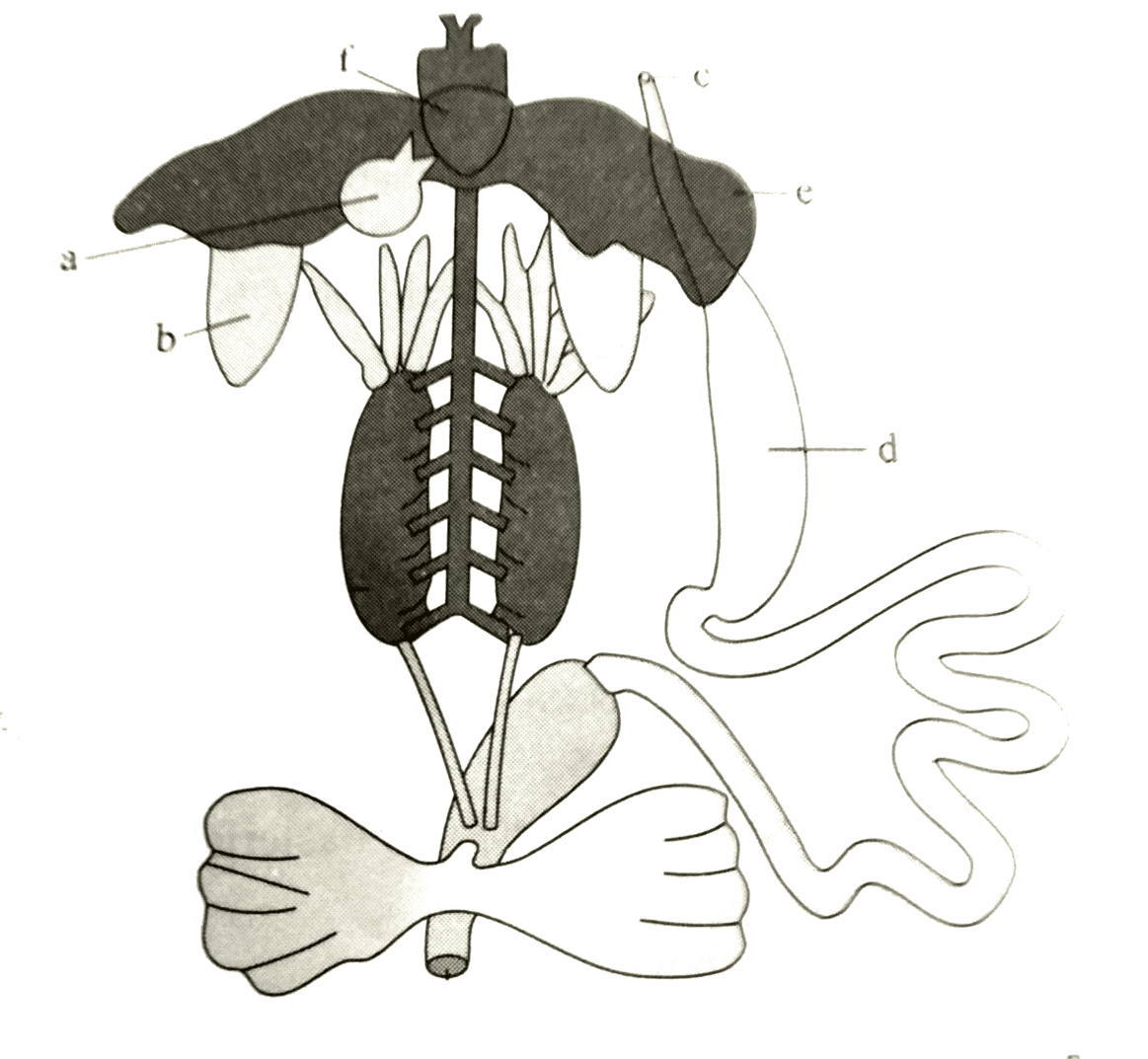
- a)d-liver, a-heart, c-lung, b-oesophagus, f-gall bladder, e-stomach
- b)e-liver, f-heart, b-lung, c-oesophagus, a-gall bladder, d-stomach
- c)e-liver, f-heart, a-lung, c-oesophagus, b-gall bladder, d- stomach
- d)e-liver, f-heat, b-lung, d-oesophagus, a-gall bladder, c-stomach
Correct answer is option 'B'. Can you explain this answer?
Recognise the figure and find out the correct match.
a)
d-liver, a-heart, c-lung, b-oesophagus, f-gall bladder, e-stomach
b)
e-liver, f-heart, b-lung, c-oesophagus, a-gall bladder, d-stomach
c)
e-liver, f-heart, a-lung, c-oesophagus, b-gall bladder, d- stomach
d)
e-liver, f-heat, b-lung, d-oesophagus, a-gall bladder, c-stomach
 | Top Rankers answered |
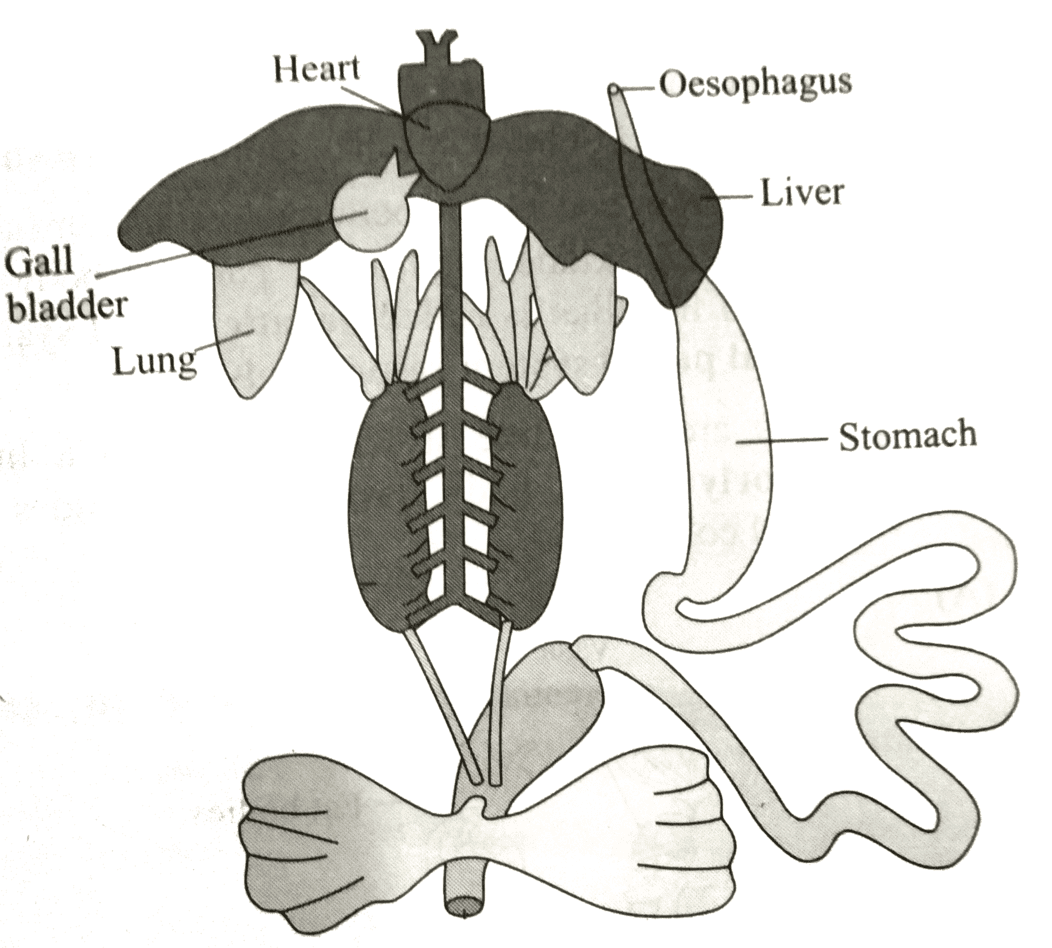
Chapter doubts & questions for Structural Organisation in Animals - 30-Day Revision Course for NEET 2026 is part of NEET exam preparation. The chapters have been prepared according to the NEET exam syllabus. The Chapter doubts & questions, notes, tests & MCQs are made for NEET 2026 Exam. Find important definitions, questions, notes, meanings, examples, exercises, MCQs and online tests here.
Chapter doubts & questions of Structural Organisation in Animals - 30-Day Revision Course for NEET in English & Hindi are available as part of NEET exam. Download more important topics, notes, lectures and mock test series for NEET Exam by signing up for free.
30-Day Revision Course for NEET85 videos|301 docs|171 tests |
