


All Exams > NEET > 30-Day Revision Course for NEET > All Questions
All questions of Human Health and Disease for NEET Exam
The chemical test that is used for diagnosis of typhoid is:- a)ESR-Test
- b)PCR-Test
- c)Widal-Test
- d)ELISA-Test
Correct answer is option 'C'. Can you explain this answer?
The chemical test that is used for diagnosis of typhoid is:
a)
ESR-Test
b)
PCR-Test
c)
Widal-Test
d)
ELISA-Test
 | Jeeshan Ahmed answered |
The Widal test is one method that may be used to help make a presumptive diagnosis of enteric fever, also known as typhoid fever.The test was based on demonstrating the presence of agglutinin (antibody) in the serum of an infected patient, against the H (flagellar) and O (somatic) antigens ofSalmonella typhi.

The chemical test that is used for diagnosis of typhoid is:- a)ESR-Test
- b)PCR-Test
- c)Widal-Test
- d)ELISA-Test
Correct answer is option 'C'. Can you explain this answer?
The chemical test that is used for diagnosis of typhoid is:
a)
ESR-Test
b)
PCR-Test
c)
Widal-Test
d)
ELISA-Test
 | Dilip answered |
Its given in 12th NCERT.... widal test for typhoid
Can you explain the answer of this question below:The disease chikunguniya is transmitted by- A:Cockroach
- B:Aedes mosquitoes
- C:House flies
- D:Female Anopheles
The answer is b.
The disease chikunguniya is transmitted by
A:
Cockroach
B:
Aedes mosquitoes
C:
House flies
D:
Female Anopheles
 | Rohan Singh answered |
When a mosquito feeds on an infected person, the mosquito can become infected and can bite and infect others. The Aedes aegypti and Aedes albopictus mosquitoes transmit chikungunya. They also transmit dengue fever, another disease caused by a virus.
The disease causing microorganisms are called?- a)Microbes
- b)Fungi
- c)Allotropes
- d)Pathogen
Correct answer is option 'D'. Can you explain this answer?
The disease causing microorganisms are called?
a)
Microbes
b)
Fungi
c)
Allotropes
d)
Pathogen
 | Anjali Iyer answered |
Most microbes belong to four major groups: bacteria, viruses, protozoa or fungi. (To find out more, see the “Bacteria/Viruses/Protozoa” fact sheets). Disease-causing microbes can also be called pathogens, germs or bugs and are responsible for causing infectious diseases.
Antibodies are produced by:- a)T-cells
- b)B-cells
- c)Monocytes
- d)Phagocytes
Correct answer is option 'B'. Can you explain this answer?
Antibodies are produced by:
a)
T-cells
b)
B-cells
c)
Monocytes
d)
Phagocytes
| | Rohit Shah answered |
Antibodies are produced by specialized white blood cells called B lymphocytes (or B cells). When an antigen binds to the B-cell surface, it stimulates the B cell to divide and mature into a group of identical cells called a clone.
Formation of antibodies within our body is called:- a)Innate immunity
- b)Acquired immunity
- c)Passive immunity
- d)Active immunity
Correct answer is option 'D'. Can you explain this answer?
Formation of antibodies within our body is called:
a)
Innate immunity
b)
Acquired immunity
c)
Passive immunity
d)
Active immunity
 | Shalini Basu answered |
The combination of antibodies and complement promotes rapid clearing of pathogens. The production of antibodies by plasma cells in response to an antigen is called active immunity and describes the host's active response of theimmune system to an infection or to a vaccination.
The sporozoites that cause infection, when a female Anopheles mosquito bites a person, are stored in- a)Liver of person
- b)RBCs of mosquito
- c)Salivary glands of mosquito
- d)Intestine of person
Correct answer is option 'C'. Can you explain this answer?
The sporozoites that cause infection, when a female Anopheles mosquito bites a person, are stored in
a)
Liver of person
b)
RBCs of mosquito
c)
Salivary glands of mosquito
d)
Intestine of person
 | Geetika Shah answered |
- Sporozoites enter the female Anopheles mosquito when they bite an infected person where these sporozoite fertilise and multiply in the stomach wall of the female Anopheles and stored in the salivary gland of mosquito till it is again transferred to the human body by a mosquito bite.
- After entering the human body the sporozoites reach the liver cells, where they multiply. This is followed by their attack on red blood cells resulting in their rupture. The ruptured RBCs release a toxin called haemozoin, which is responsible for high recurring fever, chills and shivering.
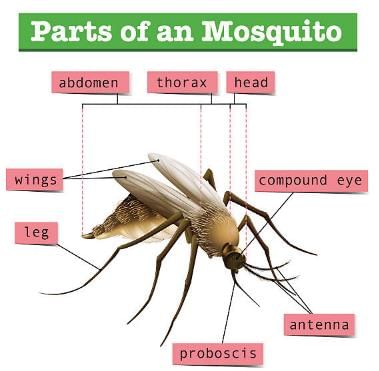
- Mosquito Anatomy:
Immuno-deficiency syndrome could develop due to- a)Defective liver
- b)AIDS virus
- c)Defective thymus
- d)Weak immune system
Correct answer is option 'B'. Can you explain this answer?
Immuno-deficiency syndrome could develop due to
a)
Defective liver
b)
AIDS virus
c)
Defective thymus
d)
Weak immune system
| | Rajeev Saxena answered |
Human immunodeficiency virus infection and acquired immune deficiency syndrome (HIV/AIDS) is a spectrum of conditions caused by infection with the human immunodeficiency virus (HIV).Following initial infection, a person may not notice any symptoms or may experience a brief period of influenza-like illness. Typically, this is followed by a prolonged period with no symptoms. As the infection progresses, it interferes more with the immune system, increasing the risk of developing common infections such as tuberculosis, as well as other opportunistic infections, and tumors that rarely affect people who have working immune systems.[5] These late symptoms of infection are referred to as acquired immunodeficiency syndrome (AIDS).This stage is often also associated with unintended weight loss.
Where will you look for the sporozoites of the malarial parasite?- a)Saliva of infected female Anopheles mosquito
- b)Spleen of infected humans
- c)Salivary glands of freshly moulted female Anopheles mosquito
- d)Red blood corpuscles of human suffering from malaria
Correct answer is option 'A'. Can you explain this answer?
Where will you look for the sporozoites of the malarial parasite?
a)
Saliva of infected female Anopheles mosquito
b)
Spleen of infected humans
c)
Salivary glands of freshly moulted female Anopheles mosquito
d)
Red blood corpuscles of human suffering from malaria
| | Rajat Kapoor answered |
Sporozoite is the infective stage of the malarial parasite. They are present in the saliva of infected female anopheles mosquito.
Which one of the following is a matching pair of a drug and its category?- a)Heroin – psychotropic
- b)Benzodiazepines – pain killer
- c)Lysergic acid dimethyl amide – narcotic
- d)Amphetamines – stimulant
Correct answer is option 'D'. Can you explain this answer?
Which one of the following is a matching pair of a drug and its category?
a)
Heroin – psychotropic
b)
Benzodiazepines – pain killer
c)
Lysergic acid dimethyl amide – narcotic
d)
Amphetamines – stimulant
 | Shivani Rane answered |
Amphetamines is kind of drug which is used as stimulant. It is a strong CNS stimulant that is used in the treatment of ADHD. Lysergic acid dimethyl amide is not a narcotic and heroin is not a psychotropic agent.
Which of the following is the unit of immune system?- a)Chondrocyte
- b)Erythrocyte
- c)Lymphocyte
- d)Parasite
Correct answer is option 'C'. Can you explain this answer?
Which of the following is the unit of immune system?
a)
Chondrocyte
b)
Erythrocyte
c)
Lymphocyte
d)
Parasite
 | Pankaj Banerjee answered |
Lymphocytes are one of several different types of white blood cells. Lymphocytes are of two types B cells and T cells. When a macrophage engulfs organisms, B cells (humoral immunity) release antibodies which cause the destruction of bacteria. The T cells (cell-mediated immunity) destroy the infectious organisms by killing the body cells that are affected. Hence lymphocytes is a unit of the immune system.
So, the correct answer is 'Lymphocytes'.
Anti venom against snake poison contains:- a)Antigens
- b)Enzymes
- c)Antigen-antibody complexes
- d)Antibodies
Correct answer is option 'D'. Can you explain this answer?
Anti venom against snake poison contains:
a)
Antigens
b)
Enzymes
c)
Antigen-antibody complexes
d)
Antibodies
 | Madhavan Ghosh answered |
Anti venom against snake poison contains antibodies.
Explanation:
Anti venom is a serum that is used to treat snake bites. It contains antibodies that are specifically produced to neutralize the venom of a particular snake species. The antibodies are produced by injecting a small amount of the snake venom into an animal, usually a horse, and then collecting the blood serum from the animal after a certain period of time. This serum contains the antibodies that have been produced in response to the venom.
The antibodies in the anti venom work by binding to the venom molecules and neutralizing their toxic effects. This prevents the venom from causing damage to the body and allows the body's own immune system to clear the venom from the bloodstream.
It is important to note that anti venom is specific to the species of snake that produced the venom. This means that anti venom for one species of snake will not be effective against the venom of another species. It is also important to administer anti venom as soon as possible after a snake bite, as the venom can rapidly spread through the body and cause severe damage if left untreated.
Explanation:
Anti venom is a serum that is used to treat snake bites. It contains antibodies that are specifically produced to neutralize the venom of a particular snake species. The antibodies are produced by injecting a small amount of the snake venom into an animal, usually a horse, and then collecting the blood serum from the animal after a certain period of time. This serum contains the antibodies that have been produced in response to the venom.
The antibodies in the anti venom work by binding to the venom molecules and neutralizing their toxic effects. This prevents the venom from causing damage to the body and allows the body's own immune system to clear the venom from the bloodstream.
It is important to note that anti venom is specific to the species of snake that produced the venom. This means that anti venom for one species of snake will not be effective against the venom of another species. It is also important to administer anti venom as soon as possible after a snake bite, as the venom can rapidly spread through the body and cause severe damage if left untreated.
The function of IgE is- a)Protection from inhaled/ingested pathogens
- b)Mediate in allergic response
- c)Activation of B-cells
- d)Stimulation of complement system, passive immunity to foetus
Correct answer is option 'B'. Can you explain this answer?
The function of IgE is
a)
Protection from inhaled/ingested pathogens
b)
Mediate in allergic response
c)
Activation of B-cells
d)
Stimulation of complement system, passive immunity to foetus
 | Kiran Mehta answered |
The function of IgE antibody as mediators in allergic reactions of Type I is explained by their ability to interact both with antigen and with receptor molecules on the membrane of blood basophils and tissue mast cells. However, it is not understood how the interaction of an allergen with cell-bound IgE antibody will induce basophil (mast) cells to release a great number of biologically active substances of which some will be further discussed at this meeting, nor is it known what role the IgE-mast cell system plays in the development and control of a normal immune response.
Japanese encephalitis is transmitted by- a)Tse tse fly
- b)Sand fly
- c)Housefly
- d)Mosquito
Correct answer is option 'D'. Can you explain this answer?
Japanese encephalitis is transmitted by
a)
Tse tse fly
b)
Sand fly
c)
Housefly
d)
Mosquito
| | Rajeev Saxena answered |
Japanese encephalitis (JE) virus, a flavivirus, is closely related to West Nile and St. Louis encephalitis viruses. JE virus is transmitted to humans through the bite of infected Culex species mosquitoes, particularly Culex tritaeniorhynchus.
The virus is maintained in a cycle between mosquitoes and vertebrate hosts, primarily pigs and wading birds. Humans are incidental or dead-end hosts, because they usually do not develop high enough concentrations of JE virus in their bloodstreams to infect feeding mosquitoes.
JE virus transmission occurs primarily in rural agricultural areas, often associated with rice production and flooding irrigation. In some areas of Asia, these conditions can occur near urban centers.
In temperate areas of Asia, JE virus transmission is seasonal. Human disease usually peaks in the summer and fall. In the subtropics and tropics, transmission can occur year-round, often with a peak during the rainy season.
The primary and secondary immune response are carried out with the help of two special types of lymphocytes present in our blood called?- a)B-lymphocytes and T-lymphocytes
- b)Lymphocytes and monocytes
- c)T-lymphocytes and A-lymphocytes
- d)B-lymphocytes and M-lymphocytes
Correct answer is option 'A'. Can you explain this answer?
The primary and secondary immune response are carried out with the help of two special types of lymphocytes present in our blood called?
a)
B-lymphocytes and T-lymphocytes
b)
Lymphocytes and monocytes
c)
T-lymphocytes and A-lymphocytes
d)
B-lymphocytes and M-lymphocytes
| | Anaswara Rajput answered |
The primary immune response can be described as the first response of our body system to a newly introduced foreign agent, while the secondary immune response is defined as an intensified immune response to this previously exposed antigen. The primary and secondary immune response is carried out by following two types of lymphocytes;
1)B-Lymphocytes: responsible for the production of antibodies in our blood. the type of antibodies is IgA. IgD, IgE, IgG, IgM.
2)T-Lymphocytes: These are mediators cell-mediated immunity.
So, the correct answer is 'Option A
1)B-Lymphocytes: responsible for the production of antibodies in our blood. the type of antibodies is IgA. IgD, IgE, IgG, IgM.
2)T-Lymphocytes: These are mediators cell-mediated immunity.
So, the correct answer is 'Option A
Anti-venom is used for the treatment of snake bite. The treatment of snake bite by anti-venom is an example of- a)Artificially acquired active immunity
- b)Specific natural immunity
- c)Naturally acquired passive immunity
- d)Artificially acquired passive immunity
Correct answer is option 'D'. Can you explain this answer?
Anti-venom is used for the treatment of snake bite. The treatment of snake bite by anti-venom is an example of
a)
Artificially acquired active immunity
b)
Specific natural immunity
c)
Naturally acquired passive immunity
d)
Artificially acquired passive immunity
| | Vivek Patel answered |
The treatment of snake bite by anit-venom is an example of artificial acquired passive immunity. Anti-venom neutralize the effect of venom in the body.
Human Immunodeficiency Virus causes aids by attacking a type of white blood cell called- a)CD4
- b)CD3
- c)CD8
- d)None of these
Correct answer is option 'A'. Can you explain this answer?
Human Immunodeficiency Virus causes aids by attacking a type of white blood cell called
a)
CD4
b)
CD3
c)
CD8
d)
None of these
| | Bhaskar Ala answered |
"HIV " Attacks CD4 cells (T- helper, T- cells) .. this cells plays important role in immune system..
Development of vaccine is difficult for AIDS because HIV gene- a)Integrates into large number of host genes
- b)Undergoes mutation at rapid
- c)Undergoes reverse transcriptase
- d)Integrates its genome into that of helper T cells
Correct answer is option 'B'. Can you explain this answer?
Development of vaccine is difficult for AIDS because HIV gene
a)
Integrates into large number of host genes
b)
Undergoes mutation at rapid
c)
Undergoes reverse transcriptase
d)
Integrates its genome into that of helper T cells
| | Kekan Dp answered |
It damage our immunity system from which any bacteria or virus can affect on us it's difficult to choose one tablet
Which of the following is a pair of viral diseases?- a)Ringworm, AIDS
- b)Dysentery, Common Cold
- c)Common Cold, AIDS
- d)Typhoid, Tuberculosis
Correct answer is option 'C'. Can you explain this answer?
Which of the following is a pair of viral diseases?
a)
Ringworm, AIDS
b)
Dysentery, Common Cold
c)
Common Cold, AIDS
d)
Typhoid, Tuberculosis
| | Muskan Sethi answered |
Ringworm - fungal infection AIDS- HIV virus Common cold - Rhino Virus typhoid - Salmonella typhi ( bacteria) tuberculosis - mycobacterium tuberculosis ( bacteria) dysentery - it is of two types bacterial and amoebic therefore the viral diseases are AIDS and Common cold
The disease chikunguniya is transmitted by- a)Cockroach
- b)Aedes mosquitoes
- c)House flies
- d)Female Anopheles
Correct answer is option 'B'. Can you explain this answer?
The disease chikunguniya is transmitted by
a)
Cockroach
b)
Aedes mosquitoes
c)
House flies
d)
Female Anopheles
 | Abhay Iyer answered |
Mosquitoes become infected when they feed on a person already infected with the virus. Infectedmosquitoes can then spread the virus to other people through bites. Chikungunya virus is most often spread to people by Aedes aegypti andAedes albopictus mosquitoes. These are the samemosquitoes that transmit dengue virus.
Antigen binding site in an antibody is found between- a)One heavy and one light chain
- b)Two heavy chains
- c)Two light chains
- d)Either between two light chains or between one heavy and one light chain depending upon the nature of antigen
Correct answer is option 'A'. Can you explain this answer?
Antigen binding site in an antibody is found between
a)
One heavy and one light chain
b)
Two heavy chains
c)
Two light chains
d)
Either between two light chains or between one heavy and one light chain depending upon the nature of antigen
 | Sonal Kulkarni answered |
Antibody consist one heavy and one light chain. The antigen binding site is present between one heavy and one light chain.
Assertion: There is a time lag between the infection and appearance of first symptoms of AIDS.Reason: This period may vary from a few months to many years up to 10 years.- a)Reason is correct but not explains the assertion
- b)Both assertion and reason are correct.
- c)Assertion is correct but reason is incorrect
- d)Both assertion and reason are incorrect
Correct answer is option 'B'. Can you explain this answer?
Assertion: There is a time lag between the infection and appearance of first symptoms of AIDS.
Reason: This period may vary from a few months to many years up to 10 years.
a)
Reason is correct but not explains the assertion
b)
Both assertion and reason are correct.
c)
Assertion is correct but reason is incorrect
d)
Both assertion and reason are incorrect
| | Gaurav Kumar answered |
The correct answer is:
2. Both assertion and reason are correct.
Explanation:
- Assertion: There is a time lag between the infection and appearance of the first symptoms of AIDS.
- This is correct. After an individual is infected with HIV, there is a period of latency where the virus is present but may not show symptoms. This time lag can vary greatly.
- Reason: This period may vary from a few months to many years up to 10 years.
- This is also correct. The asymptomatic period after HIV infection can range from a few months to several years, often up to 10 years or more before symptoms of AIDS manifest.
The reason accurately explains the assertion.
Assertion (A): Malaria is caused by a virus.Reason (R): Malaria is transmitted to humans by the bite of infected Anopheles mosquitoes.- a)Both A and R are true, and R is the correct explanation of A.
- b)Both A and R are true, but R is not the correct explanation of A.
- c)A is true, but R is false.
- d)A is false, but R is true.
Correct answer is option 'D'. Can you explain this answer?
Assertion (A): Malaria is caused by a virus.
Reason (R): Malaria is transmitted to humans by the bite of infected Anopheles mosquitoes.
a)
Both A and R are true, and R is the correct explanation of A.
b)
Both A and R are true, but R is not the correct explanation of A.
c)
A is true, but R is false.
d)
A is false, but R is true.
 | Stepway Academy answered |
Answer: Option D.
Solution: Malaria is caused by Plasmodium parasites, not a virus. The statement in R is true as the disease is indeed transmitted by the bite of infected Anopheles mosquitoes, making A false and R true.
Statement I: Benign tumors normally remain confined to their original location and do not spread to other parts.
Statement II: The malignant tumors are mass of proliferating cells that grow very rapidly.
Statement III: The mass of proliferating cells called ceroplastic cells.- a)Statement I and III are correct
- b)Statement I and II are correct
- c)Statement II and III are correct
- d)All Statements are correct
Correct answer is option 'B'. Can you explain this answer?
Statement I: Benign tumors normally remain confined to their original location and do not spread to other parts.
Statement II: The malignant tumors are mass of proliferating cells that grow very rapidly.
Statement III: The mass of proliferating cells called ceroplastic cells.
Statement II: The malignant tumors are mass of proliferating cells that grow very rapidly.
Statement III: The mass of proliferating cells called ceroplastic cells.
a)
Statement I and III are correct
b)
Statement I and II are correct
c)
Statement II and III are correct
d)
All Statements are correct
 | Partho Kumar answered |
Benign tumors normally remain confined to their original location and do not spread to other parts. The malignant tumors are mass of proliferating cells that grow very rapidly. The mass of proliferating cells called neoplastic or tumors cells.
A person suffering from a disease caused by Plasmodium, experiences chill and fever at the time when?- a)The sporozoites released from RBCs are being rapidly killed and broken down inside spleen
- b)The trophozoites reach maximum growth and give out certain toxins
- c)The parasite after its rapid multiplication inside RBCs ruptures them, releasing the stage to enter fresh RBCs
- d)The microgametocytes and megagametocytes are being destroyed by the WBCs
Correct answer is option 'C'. Can you explain this answer?
a)
The sporozoites released from RBCs are being rapidly killed and broken down inside spleen
b)
The trophozoites reach maximum growth and give out certain toxins
c)
The parasite after its rapid multiplication inside RBCs ruptures them, releasing the stage to enter fresh RBCs
d)
The microgametocytes and megagametocytes are being destroyed by the WBCs
| | Kaavya Dasgupta answered |
Understanding Plasmodium Infection
Plasmodium species, which cause malaria, have a complex life cycle involving several stages in both humans and mosquitoes. The symptoms of malaria, particularly chills and fever, are linked to specific events in this life cycle.
Chills and Fever Mechanism
- The primary symptoms of malaria, such as chills and fever, occur during the rupture of red blood cells (RBCs).
- This rupture happens when the parasite, in its asexual stage, has multiplied significantly within the RBCs.
RBC Rupture Process
- As Plasmodium multiplies inside the RBCs, it develops into mature trophozoites and then schizonts.
- When the schizonts reach maturity, they cause the infected RBCs to burst, releasing thousands of new merozoites into the bloodstream.
Release of Merozoites
- The release of merozoites triggers a strong immune response, leading to the release of pyrogens (fever-inducing substances).
- This immune response results in the characteristic chills followed by fever, marking the cyclical nature of malaria symptoms.
Conclusion
- Therefore, the correct answer is option 'C': "The parasite after its rapid multiplication inside RBCs ruptures them, releasing the stage to enter fresh RBCs."
- Understanding this mechanism is crucial for recognizing the symptoms of malaria and the importance of timely treatment to prevent severe complications.
Plasmodium species, which cause malaria, have a complex life cycle involving several stages in both humans and mosquitoes. The symptoms of malaria, particularly chills and fever, are linked to specific events in this life cycle.
Chills and Fever Mechanism
- The primary symptoms of malaria, such as chills and fever, occur during the rupture of red blood cells (RBCs).
- This rupture happens when the parasite, in its asexual stage, has multiplied significantly within the RBCs.
RBC Rupture Process
- As Plasmodium multiplies inside the RBCs, it develops into mature trophozoites and then schizonts.
- When the schizonts reach maturity, they cause the infected RBCs to burst, releasing thousands of new merozoites into the bloodstream.
Release of Merozoites
- The release of merozoites triggers a strong immune response, leading to the release of pyrogens (fever-inducing substances).
- This immune response results in the characteristic chills followed by fever, marking the cyclical nature of malaria symptoms.
Conclusion
- Therefore, the correct answer is option 'C': "The parasite after its rapid multiplication inside RBCs ruptures them, releasing the stage to enter fresh RBCs."
- Understanding this mechanism is crucial for recognizing the symptoms of malaria and the importance of timely treatment to prevent severe complications.
In which of the following situation infection of AIDS does not occur?- a)Foetus of AIDS infected mother
- b)Utilization of clothes used by AIDS patient
- c)Breast feeding to children by AIDS infected mother
- d)Utilization of syringe used by AIDS patient
Correct answer is option 'B'. Can you explain this answer?
In which of the following situation infection of AIDS does not occur?
a)
Foetus of AIDS infected mother
b)
Utilization of clothes used by AIDS patient
c)
Breast feeding to children by AIDS infected mother
d)
Utilization of syringe used by AIDS patient
| | Awantika Gupta answered |
Only blood transfusion, saliva contamination, and sexual intercourse are responsible for spreading AIDS not sharing utensils, clothes etc.
Suspension of attenuated pathogen that stimulates antibody formation is_______.- a)Serum
- b)Antitoxin
- c)Antibiotic
- d)Vaccine
Correct answer is option 'D'. Can you explain this answer?
Suspension of attenuated pathogen that stimulates antibody formation is_______.
a)
Serum
b)
Antitoxin
c)
Antibiotic
d)
Vaccine
 | Rohan Unni answered |
Vaccine, suspension of weakened, killed, or fragmented microorganisms or toxins or of antibodies or lymphocytes that is administered primarily to prevent disease. A vaccine can confer active immunity against a specific harmful agent by stimulating the immune system to attack the agent.
Select the correct sequence about the life cycle of Plasmodium:- a)Sporozoites (human) → RRCs → liver cells → gametocytes in blood → blood meal, bite (female mosquito )→ fertilisation (mosquito) → sporozoites (mosquito)
- b)Sporozoites (human) → Liver cells → RBCs → Gametocytes in blood → Blood meal (female mosquito) → Multiply (female mosquito) → Sporozoites (female mosquito)
- c)Gametocytes (female mosquito) → Gametocytes (human) → RBCs → Multiply → Sporozoites → Blood meal (human) → Sporozoites (female mosquito) → Multiply (female mosquito) → Gametocytes (female mosquito)
- d)Sporozoites (human) → Liver cells → Gametocytes in blood → RBCs → Blood meal (female mosquito) → Multiply (female mosquito) → Sporozoites (female mosquito)
Correct answer is option 'B'. Can you explain this answer?
Select the correct sequence about the life cycle of Plasmodium:
a)
Sporozoites (human) → RRCs → liver cells → gametocytes in blood → blood meal, bite (female mosquito )→ fertilisation (mosquito) → sporozoites (mosquito)
b)
Sporozoites (human) → Liver cells → RBCs → Gametocytes in blood → Blood meal (female mosquito) → Multiply (female mosquito) → Sporozoites (female mosquito)
c)
Gametocytes (female mosquito) → Gametocytes (human) → RBCs → Multiply → Sporozoites → Blood meal (human) → Sporozoites (female mosquito) → Multiply (female mosquito) → Gametocytes (female mosquito)
d)
Sporozoites (human) → Liver cells → Gametocytes in blood → RBCs → Blood meal (female mosquito) → Multiply (female mosquito) → Sporozoites (female mosquito)
 | Ciel Knowledge answered |
The correct sequence of the Plasmodium life cycle involves the following steps:
Sporozoites are injected into humans by the female mosquito. The sporozoites travel to the liver where they mature. After the liver stage, the parasite enters the RBCs where it multiplies.Some of the parasites develop into gametocytes, which are released into the blood.These gametocytes are taken up by a female mosquito during a blood meal. Inside the mosquito, the gametocytes undergo sexual reproduction to form sporozoites.Finally, sporozoites are transmitted back to humans when the mosquito bites again.
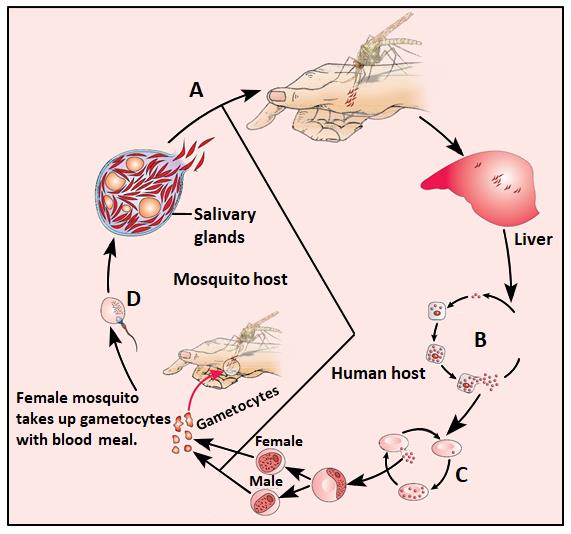
Sporozoites are injected into humans by the female mosquito. The sporozoites travel to the liver where they mature. After the liver stage, the parasite enters the RBCs where it multiplies.Some of the parasites develop into gametocytes, which are released into the blood.These gametocytes are taken up by a female mosquito during a blood meal. Inside the mosquito, the gametocytes undergo sexual reproduction to form sporozoites.Finally, sporozoites are transmitted back to humans when the mosquito bites again.
Which of the following is the primary mode of transmission for the filarial worm Wuchereria causing elephantiasis?- a)Contact with infected clothing
- b)Bite from female mosquitoes
- c)Inhalation of contaminated air
- d)Consumption of contaminated food
Correct answer is option 'B'. Can you explain this answer?
a)
Contact with infected clothing
b)
Bite from female mosquitoes
c)
Inhalation of contaminated air
d)
Consumption of contaminated food
 | Ambition Institute answered |
Wuchereria, the filarial worm causing elephantiasis, is primarily transmitted through the bite of infected female mosquitoes. These mosquitoes act as vectors for the pathogen.
Which diagnostic technique relies on non-ionising radiations and strong magnetic fields to detect internal abnormalities?- a)Radiography
- b)CT scan
- c)MRI
- d)Biopsy
Correct answer is option 'C'. Can you explain this answer?
Which diagnostic technique relies on non-ionising radiations and strong magnetic fields to detect internal abnormalities?
a)
Radiography
b)
CT scan
c)
MRI
d)
Biopsy
 | Knowledge Centre answered |
MRI (Magnetic Resonance Imaging) uses non-ionising radiation and strong magnetic fields to detect structural and physiological changes within tissues, providing high-resolution internal images.
Which of the following fungi is primarily responsible for causing ringworm infections?- a)Aspergillus
- b)Microsporum
- c)Penicillium
- d)Saccharomyces
Correct answer is option 'B'. Can you explain this answer?
a)
Aspergillus
b)
Microsporum
c)
Penicillium
d)
Saccharomyces
 | Sreemoyee Chopra answered |
Understanding Ringworm Infections
Ringworm is a common fungal infection that affects the skin, hair, and nails. It is caused by a group of fungi known as dermatophytes.
Primary Causative Agent
- The primary fungus responsible for ringworm infections is Microsporum.
- This genus includes various species that can infect humans and animals, leading to the characteristic ring-like lesions on the skin.
Other Fungi Mentioned
- Aspergillus:
- Typically associated with respiratory issues and other infections, not skin infections like ringworm.
- Penicillium:
- Known for its role in antibiotic production (e.g., penicillin) and does not cause ringworm.
- Saccharomyces:
- A yeast primarily involved in fermentation processes, such as bread and beer production, and is not linked to dermatophyte infections.
Mechanism of Infection
- Microsporum species thrive in warm, humid environments and can be contracted through direct contact with an infected person, animal, or contaminated surfaces.
- The fungi invade the outer layer of the skin, leading to inflammation and the typical circular, red, itchy patches.
Prevention and Treatment
- Good hygiene practices, such as keeping skin dry and clean, can help prevent ringworm infections.
- Antifungal creams and medications are effective in treating these infections, with a focus on eradicating the Microsporum fungi.
In summary, Microsporum is the key player in ringworm infections, distinguishing it from other non-dermatophyte fungi like Aspergillus, Penicillium, and Saccharomyces.
Ringworm is a common fungal infection that affects the skin, hair, and nails. It is caused by a group of fungi known as dermatophytes.
Primary Causative Agent
- The primary fungus responsible for ringworm infections is Microsporum.
- This genus includes various species that can infect humans and animals, leading to the characteristic ring-like lesions on the skin.
Other Fungi Mentioned
- Aspergillus:
- Typically associated with respiratory issues and other infections, not skin infections like ringworm.
- Penicillium:
- Known for its role in antibiotic production (e.g., penicillin) and does not cause ringworm.
- Saccharomyces:
- A yeast primarily involved in fermentation processes, such as bread and beer production, and is not linked to dermatophyte infections.
Mechanism of Infection
- Microsporum species thrive in warm, humid environments and can be contracted through direct contact with an infected person, animal, or contaminated surfaces.
- The fungi invade the outer layer of the skin, leading to inflammation and the typical circular, red, itchy patches.
Prevention and Treatment
- Good hygiene practices, such as keeping skin dry and clean, can help prevent ringworm infections.
- Antifungal creams and medications are effective in treating these infections, with a focus on eradicating the Microsporum fungi.
In summary, Microsporum is the key player in ringworm infections, distinguishing it from other non-dermatophyte fungi like Aspergillus, Penicillium, and Saccharomyces.
Fill in the blanks in the different columns of the table given below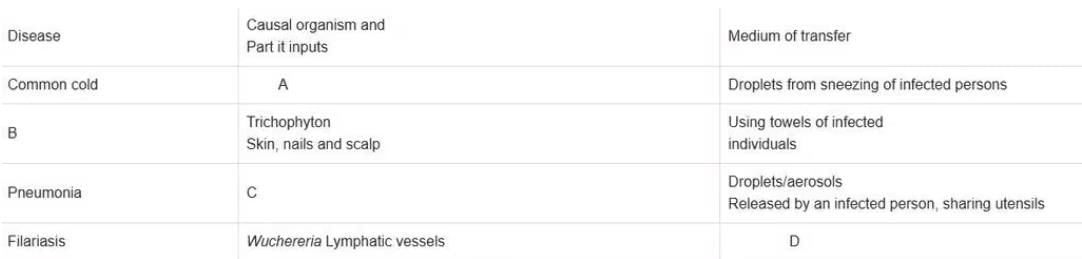
- a)A- Rhinovirus. Nose and respiratory passage not lungs
B - Ringworm
C - Haemophilus influenzae. Alveoli of lungs
D - Contaminated food and water - b) A- Coryza virus. Alveoli of lungs
B - Ringworm
C - Streptococcus pneumoniae. Nose and respiratory passage
D - Culex mosquito - c) A- Rhinovirus. Nose and respiratory passage not lungs
B - Ascariasis
C - Haemophilus influenzae. Lungs
D - Culex mosquito - d)A- Rhinovirus. Nose and respiratory passage not lungs
B - Ringworm
C - Haemophilus influenzae. Alveoli of lungs
D - Culex mosquito
Correct answer is option 'D'. Can you explain this answer?
Fill in the blanks in the different columns of the table given below
a)
A- Rhinovirus. Nose and respiratory passage not lungs
B - Ringworm
C - Haemophilus influenzae. Alveoli of lungs
D - Contaminated food and water
B - Ringworm
C - Haemophilus influenzae. Alveoli of lungs
D - Contaminated food and water
b)
A- Coryza virus. Alveoli of lungs
B - Ringworm
C - Streptococcus pneumoniae. Nose and respiratory passage
D - Culex mosquito
B - Ringworm
C - Streptococcus pneumoniae. Nose and respiratory passage
D - Culex mosquito
c)
A- Rhinovirus. Nose and respiratory passage not lungs
B - Ascariasis
C - Haemophilus influenzae. Lungs
D - Culex mosquito
B - Ascariasis
C - Haemophilus influenzae. Lungs
D - Culex mosquito
d)
A- Rhinovirus. Nose and respiratory passage not lungs
B - Ringworm
C - Haemophilus influenzae. Alveoli of lungs
D - Culex mosquito
B - Ringworm
C - Haemophilus influenzae. Alveoli of lungs
D - Culex mosquito
| | Ambition Institute answered |
-Rhino viruses represent one such group of viruses which cause one of the most infectious human ailments – the common cold. They infect the nose and respiratory passage but not the lungs. The common cold is characterised by nasal congestion and discharge, sore throat, hoarseness, cough, headache, tiredness, etc., which usually last for 3-7 days. Droplets resulting from cough or sneezes of an infected person.
-Bacteria like Streptococcus pneumoniae and Haemophilus influenzae are responsible for the disease pneumonia in humans which infects the alveoli (air filled sacs) of the lungs. As a result of the infection, the alveoli get filled with fluid leading to severe problems in respiration. The symptoms of pneumonia include fever, chills, cough and headache.
- Wuchereria (W. bancrofti and W. malayi), the filarial worms cause a slowly developing chronic inflammation of the organs in which they live for many years, usually the lymphatic vessels of the lower limbs and the disease is called elephantiasis or filariasis . The genital organs are also often affected, resulting in gross deformities. The pathogens are transmitted to a healthy person through the bite by the female mosquito vectors - culex mosquito
- Many fungi belonging to the genera Microsporum, Trichophyton and Epidermophyton are responsible for ringworms which is one of the most common infectious diseases in man. Appearance of dry, scaly lesions on various parts of the body such as skin, nails and scalp (Figure 7.3) are the main symptoms of the disease
-Bacteria like Streptococcus pneumoniae and Haemophilus influenzae are responsible for the disease pneumonia in humans which infects the alveoli (air filled sacs) of the lungs. As a result of the infection, the alveoli get filled with fluid leading to severe problems in respiration. The symptoms of pneumonia include fever, chills, cough and headache.
- Wuchereria (W. bancrofti and W. malayi), the filarial worms cause a slowly developing chronic inflammation of the organs in which they live for many years, usually the lymphatic vessels of the lower limbs and the disease is called elephantiasis or filariasis . The genital organs are also often affected, resulting in gross deformities. The pathogens are transmitted to a healthy person through the bite by the female mosquito vectors - culex mosquito
- Many fungi belonging to the genera Microsporum, Trichophyton and Epidermophyton are responsible for ringworms which is one of the most common infectious diseases in man. Appearance of dry, scaly lesions on various parts of the body such as skin, nails and scalp (Figure 7.3) are the main symptoms of the disease
Which is the particular type of drug that is obtained from the plants whose one flowering branch is shown below?

- a)Hallucinogen
- b)Depressant
- c)Stimulant
- d) Pain-Killer
Correct answer is option 'A'. Can you explain this answer?
Which is the particular type of drug that is obtained from the plants whose one flowering branch is shown below?
a)
Hallucinogen
b)
Depressant
c)
Stimulant
d)
Pain-Killer
 | Top Rankers answered |
The image of above flowering plant shown is of Datura and it is well-known plant for its hallucinogenic properties.
ELISA is- a)Enzyme linked immuno-sorbent assay
- b)Enzyme linked ions assay
- c)Enzyme linked inductive assay
- d)None of the above
Correct answer is option 'A'. Can you explain this answer?
ELISA is
a)
Enzyme linked immuno-sorbent assay
b)
Enzyme linked ions assay
c)
Enzyme linked inductive assay
d)
None of the above
 | Little Cma answered |
This test is used to detect measure antibodies in your blood against any infectious agent mainly HIV viruses.
Which of the following statements regarding AIDS is incorrect?- a)HIV is a retrovirus containing RNA as its genetic material.
- b)HIV primarily infects macrophages and helper T-cells.
- c)HIV can be transmitted through contaminated food and water.
- d)ELISA test is used for its diagnosis.
Correct answer is option 'C'. Can you explain this answer?
Which of the following statements regarding AIDS is incorrect?
a)
HIV is a retrovirus containing RNA as its genetic material.
b)
HIV primarily infects macrophages and helper T-cells.
c)
HIV can be transmitted through contaminated food and water.
d)
ELISA test is used for its diagnosis.
 | Lead Academy answered |
HIV is transmitted via sexual contact, contaminated needles, blood transfusion, or from mother to child through placenta, not through food or water. ELISA is used for HIV detection.
Chapter doubts & questions for Human Health and Disease - 30-Day Revision Course for NEET 2026 is part of NEET exam preparation. The chapters have been prepared according to the NEET exam syllabus. The Chapter doubts & questions, notes, tests & MCQs are made for NEET 2026 Exam. Find important definitions, questions, notes, meanings, examples, exercises, MCQs and online tests here.
Chapter doubts & questions of Human Health and Disease - 30-Day Revision Course for NEET in English & Hindi are available as part of NEET exam. Download more important topics, notes, lectures and mock test series for NEET Exam by signing up for free.
30-Day Revision Course for NEET85 videos|301 docs|171 tests |
