


All Exams > NEET > 30-Day Revision Course for NEET > All Questions
All questions of Biomolecules for NEET Exam
Synthesis of protein is controlled by:- a)Nucleotide
- b)RNA
- c)DNA
- d)Nucleoside
Correct answer is option 'B'. Can you explain this answer?
Synthesis of protein is controlled by:
a)
Nucleotide
b)
RNA
c)
DNA
d)
Nucleoside
 | Lavanya Menon answered |
RNA can directly control the synthesis of proteins, hence can easily express the characters. DNA, however, is dependent on RNA for synthesis of proteins. The protein synthesising machinery has evolved around RNA.

The essential amino acid is:- a)Serine
- b)Arginine
- c)Alanine
- d)Glycine
Correct answer is option 'B'. Can you explain this answer?
The essential amino acid is:
a)
Serine
b)
Arginine
c)
Alanine
d)
Glycine
 | Ritika Sengupta answered |
Essential Amino Acids
Amino acids are the building blocks of proteins. There are 20 different amino acids that make up proteins, and they can be classified into two groups: essential and non-essential.
- Essential amino acids cannot be synthesized by the body and must be obtained through the diet.
- Non-essential amino acids can be synthesized by the body.
Arginine as an Essential Amino Acid
Arginine is one of the essential amino acids that cannot be synthesized by the body and must be obtained through the diet.
Functions of Arginine
Arginine has several important functions in the body, including:
- Acting as a precursor for the synthesis of nitric oxide, which helps to relax blood vessels and improve blood flow.
- Stimulating the release of growth hormone, which is important for muscle growth and repair.
- Supporting immune function.
- Playing a role in wound healing.
Food Sources of Arginine
Arginine can be found in a variety of foods, including:
- Meat and poultry
- Fish and seafood
- Dairy products
- Nuts and seeds
- Legumes and beans
Conclusion
Arginine is an essential amino acid that plays important roles in the body, including supporting immune function, stimulating growth hormone release, and aiding in wound healing. It can be obtained through a variety of dietary sources, including meat, fish, dairy, nuts, and legumes.
Amino acids are the building blocks of proteins. There are 20 different amino acids that make up proteins, and they can be classified into two groups: essential and non-essential.
- Essential amino acids cannot be synthesized by the body and must be obtained through the diet.
- Non-essential amino acids can be synthesized by the body.
Arginine as an Essential Amino Acid
Arginine is one of the essential amino acids that cannot be synthesized by the body and must be obtained through the diet.
Functions of Arginine
Arginine has several important functions in the body, including:
- Acting as a precursor for the synthesis of nitric oxide, which helps to relax blood vessels and improve blood flow.
- Stimulating the release of growth hormone, which is important for muscle growth and repair.
- Supporting immune function.
- Playing a role in wound healing.
Food Sources of Arginine
Arginine can be found in a variety of foods, including:
- Meat and poultry
- Fish and seafood
- Dairy products
- Nuts and seeds
- Legumes and beans
Conclusion
Arginine is an essential amino acid that plays important roles in the body, including supporting immune function, stimulating growth hormone release, and aiding in wound healing. It can be obtained through a variety of dietary sources, including meat, fish, dairy, nuts, and legumes.
Alpha helix is found in- a)RNA
- b)Lipid
- c)Carbohydrates
- d)secondary proteins
Correct answer is option 'D'. Can you explain this answer?
Alpha helix is found in
a)
RNA
b)
Lipid
c)
Carbohydrates
d)
secondary proteins
| | Ræjû Bhæï answered |
The alpha helix (α-helix) is a common motif in the secondary structure of proteins and is a right hand-helix conformation in which every backbone N−H group hydrogen bonds to the backbone C=O. group of the amino acid located three or four residues earlier along the protein sequence.
The enzyme pepsin hydrolyses:- a)polysaccharides to monosaccharides
- b)glucose to ethyl alcohol
- c)proteins to amino acids
- d)fats to fatty acids
Correct answer is option 'C'. Can you explain this answer?
The enzyme pepsin hydrolyses:
a)
polysaccharides to monosaccharides
b)
glucose to ethyl alcohol
c)
proteins to amino acids
d)
fats to fatty acids
 | Nidhi Yadav answered |
Pepsin is an enzyme that is primarily found in the stomach and plays a crucial role in the digestion of proteins. It is secreted by the gastric chief cells in an inactive form called pepsinogen, which is then activated by the acidic environment of the stomach. Once activated, pepsin breaks down proteins into smaller peptide fragments and eventually into individual amino acids, which can be absorbed by the body.
Pepsin acts through a process called hydrolysis, which involves the addition of a water molecule to break the peptide bonds that hold the amino acids together in a protein. This process is essential for the body to obtain the necessary amino acids for various physiological functions, such as the synthesis of new proteins, enzyme activity, and hormone production.
To better understand why the correct answer is option 'C' (proteins to amino acids), let's break down the other options and eliminate them:
a) Polysaccharides to monosaccharides: This process is actually carried out by enzymes called amylases, not pepsin. Amylases are found in saliva and pancreatic secretions and are responsible for breaking down complex carbohydrates (polysaccharides) into simpler sugars (monosaccharides) such as glucose.
b) Glucose to ethyl alcohol: This process is not mediated by pepsin but rather by a different enzyme called yeast. Yeast is able to convert glucose into ethyl alcohol through a process called fermentation.
d) Fats to fatty acids: The digestion of fats involves the action of enzymes called lipases, not pepsin. Lipases break down fats (triglycerides) into fatty acids and glycerol, which can then be absorbed by the body.
In summary, pepsin is specifically responsible for hydrolyzing proteins into amino acids. This process is crucial for the body to obtain the necessary building blocks for protein synthesis and various other physiological functions.
Pepsin acts through a process called hydrolysis, which involves the addition of a water molecule to break the peptide bonds that hold the amino acids together in a protein. This process is essential for the body to obtain the necessary amino acids for various physiological functions, such as the synthesis of new proteins, enzyme activity, and hormone production.
To better understand why the correct answer is option 'C' (proteins to amino acids), let's break down the other options and eliminate them:
a) Polysaccharides to monosaccharides: This process is actually carried out by enzymes called amylases, not pepsin. Amylases are found in saliva and pancreatic secretions and are responsible for breaking down complex carbohydrates (polysaccharides) into simpler sugars (monosaccharides) such as glucose.
b) Glucose to ethyl alcohol: This process is not mediated by pepsin but rather by a different enzyme called yeast. Yeast is able to convert glucose into ethyl alcohol through a process called fermentation.
d) Fats to fatty acids: The digestion of fats involves the action of enzymes called lipases, not pepsin. Lipases break down fats (triglycerides) into fatty acids and glycerol, which can then be absorbed by the body.
In summary, pepsin is specifically responsible for hydrolyzing proteins into amino acids. This process is crucial for the body to obtain the necessary building blocks for protein synthesis and various other physiological functions.
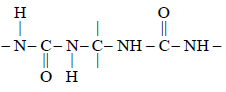
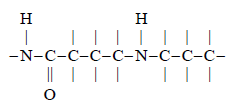
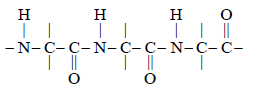
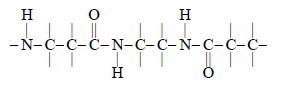

Haemoglobin is an example of:- a)Quaternary Structure of protein
- b)Tertiary Structure of protein
- c)Primary Structure of protein
- d)Seconary Structure of protein
Correct answer is option 'A'. Can you explain this answer?
Haemoglobin is an example of:
a)
Quaternary Structure of protein
b)
Tertiary Structure of protein
c)
Primary Structure of protein
d)
Seconary Structure of protein
 | Om Desai answered |
The correct answer is A
Haemoglobin is a Quaternary protein because it has 4 polypeptide structures - 2alpha and 2 beta.
Haemoglobin is a Quaternary protein because it has 4 polypeptide structures - 2alpha and 2 beta.
The active form of vitamin D is:- a)Calcidiol
- b)Calcitriol
- c)Cholecalciferol
- d)Any of the above
- e)None of the above
Correct answer is option 'B'. Can you explain this answer?
The active form of vitamin D is:
a)
Calcidiol
b)
Calcitriol
c)
Cholecalciferol
d)
Any of the above
e)
None of the above
 | Rajdeep Saini answered |
The active form of vitamin D is calcitriol.
Calcitriol, also known as 1,25-dihydroxyvitamin D3, is the active form of vitamin D in the body. It is the biologically active metabolite that is synthesized from calcidiol, also known as 25-hydroxyvitamin D3, which is the storage form of vitamin D.
Explanation:
1. Vitamin D and its forms:
Vitamin D is a fat-soluble vitamin that plays a crucial role in maintaining bone health and calcium homeostasis. It exists in several forms, including vitamin D2 (ergocalciferol) and vitamin D3 (cholecalciferol), which are obtained from dietary sources or synthesized in the skin upon exposure to sunlight.
2. Conversion of vitamin D to its active form:
When vitamin D2 or D3 is ingested or synthesized, it undergoes a series of metabolic conversions in the liver and kidneys to become the active form of vitamin D. The first step involves hydroxylation in the liver, where vitamin D is converted to calcidiol (25-hydroxyvitamin D3) through the action of the enzyme 25-hydroxylase.
3. Activation of calcidiol to calcitriol:
The second and final step in the activation of vitamin D occurs in the kidneys. Calcidiol undergoes further hydroxylation by the enzyme 1-alpha-hydroxylase, resulting in the formation of calcitriol (1,25-dihydroxyvitamin D3). This conversion is tightly regulated by various factors, including parathyroid hormone (PTH), calcium levels, and phosphate levels.
4. Biological functions of calcitriol:
Calcitriol acts as a hormone and binds to the vitamin D receptor (VDR) in target tissues, such as the intestines, bones, and kidneys. It regulates the absorption of calcium and phosphate in the intestines, promotes bone mineralization by increasing calcium and phosphate uptake, and helps maintain normal blood calcium levels. Calcitriol also has non-skeletal functions, including modulation of immune responses and cell growth.
Conclusion:
In conclusion, the active form of vitamin D is calcitriol, which is synthesized from calcidiol through the action of 1-alpha-hydroxylase in the kidneys. Calcitriol plays a crucial role in maintaining calcium homeostasis and bone health, as well as other physiological processes in the body.
Calcitriol, also known as 1,25-dihydroxyvitamin D3, is the active form of vitamin D in the body. It is the biologically active metabolite that is synthesized from calcidiol, also known as 25-hydroxyvitamin D3, which is the storage form of vitamin D.
Explanation:
1. Vitamin D and its forms:
Vitamin D is a fat-soluble vitamin that plays a crucial role in maintaining bone health and calcium homeostasis. It exists in several forms, including vitamin D2 (ergocalciferol) and vitamin D3 (cholecalciferol), which are obtained from dietary sources or synthesized in the skin upon exposure to sunlight.
2. Conversion of vitamin D to its active form:
When vitamin D2 or D3 is ingested or synthesized, it undergoes a series of metabolic conversions in the liver and kidneys to become the active form of vitamin D. The first step involves hydroxylation in the liver, where vitamin D is converted to calcidiol (25-hydroxyvitamin D3) through the action of the enzyme 25-hydroxylase.
3. Activation of calcidiol to calcitriol:
The second and final step in the activation of vitamin D occurs in the kidneys. Calcidiol undergoes further hydroxylation by the enzyme 1-alpha-hydroxylase, resulting in the formation of calcitriol (1,25-dihydroxyvitamin D3). This conversion is tightly regulated by various factors, including parathyroid hormone (PTH), calcium levels, and phosphate levels.
4. Biological functions of calcitriol:
Calcitriol acts as a hormone and binds to the vitamin D receptor (VDR) in target tissues, such as the intestines, bones, and kidneys. It regulates the absorption of calcium and phosphate in the intestines, promotes bone mineralization by increasing calcium and phosphate uptake, and helps maintain normal blood calcium levels. Calcitriol also has non-skeletal functions, including modulation of immune responses and cell growth.
Conclusion:
In conclusion, the active form of vitamin D is calcitriol, which is synthesized from calcidiol through the action of 1-alpha-hydroxylase in the kidneys. Calcitriol plays a crucial role in maintaining calcium homeostasis and bone health, as well as other physiological processes in the body.
Name the RNA molecules which is used to carry genetic information copied from DNA?- a)tRNA
- b)mRNA
- c)rRNA
- d)snRNA
Correct answer is option 'B'. Can you explain this answer?
Name the RNA molecules which is used to carry genetic information copied from DNA?
a)
tRNA
b)
mRNA
c)
rRNA
d)
snRNA
| | Raushani Praween answered |
Because mRNA is called messanger RNA, which carries the information from DNA to synthesis of protein and other essential products in cell.
Process which leads to the synthesis of RNA is called- a)Termination
- b)Replication
- c)Transcription
- d)Translation
Correct answer is option 'C'. Can you explain this answer?
Process which leads to the synthesis of RNA is called
a)
Termination
b)
Replication
c)
Transcription
d)
Translation
 | Srishti Raghuwanshi answered |
DNA TO DNA - replication
DNA TO RNA-transcription
RNA TO PROTEIN-translation
DNA TO RNA-transcription
RNA TO PROTEIN-translation
Purine derivative among the following bases is:- a)Uracil
- b)Cytosine
- c)Guanine
- d)Thymine
Correct answer is option 'C'. Can you explain this answer?
Purine derivative among the following bases is:
a)
Uracil
b)
Cytosine
c)
Guanine
d)
Thymine
 | Shail Chawla answered |
Purine is a type of nitrogenous base found in DNA and RNA molecules. The purine bases are adenine and guanine. Among the given options, the purine derivative is:
c) Guanine
Explanation:
- Purine and pyrimidine are two types of nitrogenous bases found in DNA and RNA molecules.
- Purine bases are larger and have a double-ring structure, while pyrimidine bases are smaller and have a single-ring structure.
- Adenine and guanine are purine bases, while cytosine, thymine, and uracil are pyrimidine bases.
- Therefore, among the given options, the purine derivative is guanine.
c) Guanine
Explanation:
- Purine and pyrimidine are two types of nitrogenous bases found in DNA and RNA molecules.
- Purine bases are larger and have a double-ring structure, while pyrimidine bases are smaller and have a single-ring structure.
- Adenine and guanine are purine bases, while cytosine, thymine, and uracil are pyrimidine bases.
- Therefore, among the given options, the purine derivative is guanine.
Nucleoside differs from nucleotide with the absence of:- a)Pentose sugar and Nitrogenous base
- b)Nitrogenous base
- c)Phosphoric acid
- d)Pentose sugar
Correct answer is option 'C'. Can you explain this answer?
Nucleoside differs from nucleotide with the absence of:
a)
Pentose sugar and Nitrogenous base
b)
Nitrogenous base
c)
Phosphoric acid
d)
Pentose sugar
 | Arun Khanna answered |
The structure of nucleotide and nucleoside units are distinguished primarily by the presence (or lack thereof) of this phosphate group. Deoxyribose in DNA differs from the ribose found in RNA in that it has only a hydrogen atom in the same position that ribose has a hydroxyl (-OH) group.
In DNA, the complimentary bases are: [2008]- a)Adenine and thymine; guanine andcytosine
- b)Adenine and thymine ; guanine and uracil
- c)Adenine and guanine; thymine andcytosine
- d)Uracil and adenine; cytosine and guanine
Correct answer is option 'A'. Can you explain this answer?
In DNA, the complimentary bases are: [2008]
a)
Adenine and thymine; guanine andcytosine
b)
Adenine and thymine ; guanine and uracil
c)
Adenine and guanine; thymine andcytosine
d)
Uracil and adenine; cytosine and guanine
 | Prashanth Dasgupta answered |
In DNA the complimentary base are
Adenine and thymine.
Guanine and cytosine
The genetic information for cell is contained
in the sequence of bases A, T, G and C in
DNA molecule.
Adenine and thymine.
Guanine and cytosine
The genetic information for cell is contained
in the sequence of bases A, T, G and C in
DNA molecule.
On hydrolysis, proteins give:- a)Amides
- b)Amino acids
- c)Nucleotides
- d)Nucleosides
Correct answer is option 'B'. Can you explain this answer?
On hydrolysis, proteins give:
a)
Amides
b)
Amino acids
c)
Nucleotides
d)
Nucleosides
 | Aiims answered |
Proteins are polymers of amino acids therefore their hydrolysis gives amino acids
The segment of DNA which acts as theinstrumental manual for the synthesis of the protein is: [2009]- a)ribose
- b)gene
- c)nucleoside
- d)nucleotide
Correct answer is option 'B'. Can you explain this answer?
The segment of DNA which acts as theinstrumental manual for the synthesis of the protein is: [2009]
a)
ribose
b)
gene
c)
nucleoside
d)
nucleotide
 | Nayanika Reddy answered |
The DNA sequence that codes for a specific
protein is called a Gene and thus every
protein in a cell has a corrosponding gene.
protein is called a Gene and thus every
protein in a cell has a corrosponding gene.
Nucleotides are joined together by 5′ and 3′ carbon atoms of pentose sugar. The linkage is known as: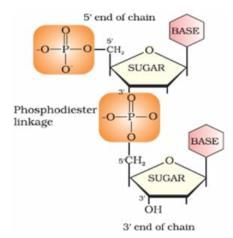
- a)Glycosidic
- b)Peptide
- c)Hydrogen
- d)Phoshodiester
Correct answer is option 'D'. Can you explain this answer?
Nucleotides are joined together by 5′ and 3′ carbon atoms of pentose sugar. The linkage is known as:
a)
Glycosidic
b)
Peptide
c)
Hydrogen
d)
Phoshodiester
 | Preeti Iyer answered |
Nucleotides are joined together by phosphodiester linkage between 5′ and 3′ carbon atoms of pentose sugar.
Which of the following base is not found in DNA?- a)Uracil
- b)Guanine
- c)Cytosine
- d)Adenine
Correct answer is option 'A'. Can you explain this answer?
Which of the following base is not found in DNA?
a)
Uracil
b)
Guanine
c)
Cytosine
d)
Adenine
| | Ritu Pal answered |
Uracil is not found in DNA , as it Uracil has more base pair affinity to adenine , guanine and cytosine. Instead thymine is present in DNA.
RNA is different from DNA because RNA contains:- a)Ribose sugar and thymine
- b)Deoxyribose sugar and thymine
- c)Ribose sugar and uracil
- d)Deoxyribose sugar and uracil
Correct answer is option 'C'. Can you explain this answer?
RNA is different from DNA because RNA contains:
a)
Ribose sugar and thymine
b)
Deoxyribose sugar and thymine
c)
Ribose sugar and uracil
d)
Deoxyribose sugar and uracil
 | Farhin Saheer answered |
There are two types of pentose sugars- ribose and deoxyribose.The former is present in rna and the latter in dna. In the case of nitrogenous bases uracil is present in rna instead of thymine
Which of the following statements is correct about Enzymes?- a)Enzymes have optimum activity at body temperature.
- b)Enzymes are carbohydrates.
- c)Enzymes have all these properties.
- d)Enzymes consist of nucleic acid.
Correct answer is option 'A'. Can you explain this answer?
Which of the following statements is correct about Enzymes?
a)
Enzymes have optimum activity at body temperature.
b)
Enzymes are carbohydrates.
c)
Enzymes have all these properties.
d)
Enzymes consist of nucleic acid.
 | Honey answered |
Yes. option a is correct as enzymes are proteins and contain amino acids and the correct option is only they have optimum activity at body temperature... hope you got it...
Which one of the following does not exhibit thephenomenon of mutarotation ? [2010]- a)(+) – Sucrose
- b)(+) – Lactose
- c)(+) – Maltose
- d)(–) – Fructose
Correct answer is option 'A'. Can you explain this answer?
Which one of the following does not exhibit thephenomenon of mutarotation ? [2010]
a)
(+) – Sucrose
b)
(+) – Lactose
c)
(+) – Maltose
d)
(–) – Fructose
 | Rajesh Datta answered |
Sucrose does not have free — CHO or
CO group, hence it does not undergo
mutarotation.
CO group, hence it does not undergo
mutarotation.
In which structure of protein, the polypeptide chain forms all possible hydrogen bonds by twisting into right handed screw?- a)Primary structure
- b)Tertiary structure
- c)β-pleated sheet structure
- d)α-helix structure
Correct answer is option 'D'. Can you explain this answer?
In which structure of protein, the polypeptide chain forms all possible hydrogen bonds by twisting into right handed screw?
a)
Primary structure
b)
Tertiary structure
c)
β-pleated sheet structure
d)
α-helix structure
| | Swara Sharma answered |
Alpha helix in secondary structure.
The cell membranes are mainly composed of [2005]- a)fats
- b)proteins
- c)phospholipids
- d)carbohydrates
Correct answer is option 'C'. Can you explain this answer?
The cell membranes are mainly composed of [2005]
a)
fats
b)
proteins
c)
phospholipids
d)
carbohydrates
 | Muskaan Basak answered |
Cell membranes (Plasma membranes) constitutes bilayer of phospholipid with embedded proteins. In humans, lipids accounts for upto 79% of cell membrance.
Chargaff's rule states that in an organism [2003]- a)Amounts of all bases are equal
- b)Amount of adenine (A) is equal to that ofthymine (T) and the amount of guanine (G)is equal to that of cytosine (C)
- c)Amount of adenine (A) is equal to that ofguanine (G) and the amount of thymine (T)is equal to that of cytosine (C)
- d)Amount of adenine (A) is equal to that ofcytosine (C) and rthe amount of thymine (T)is equal to that of guanine (G)
Correct answer is option 'B'. Can you explain this answer?
Chargaff's rule states that in an organism [2003]
a)
Amounts of all bases are equal
b)
Amount of adenine (A) is equal to that ofthymine (T) and the amount of guanine (G)is equal to that of cytosine (C)
c)
Amount of adenine (A) is equal to that ofguanine (G) and the amount of thymine (T)is equal to that of cytosine (C)
d)
Amount of adenine (A) is equal to that ofcytosine (C) and rthe amount of thymine (T)is equal to that of guanine (G)
 | Surbhi Das answered |

Amount of A = T and that of G = C.
Phospholipids are esters of glycerol with [2003]- a)Three phosphate groups
- b)Three carboxylic acid residues
- c)Two carboxylic acid residues and onephosphate group
- d)One carboxylic acid residue and twophosphate groups
Correct answer is option 'C'. Can you explain this answer?
Phospholipids are esters of glycerol with [2003]
a)
Three phosphate groups
b)
Three carboxylic acid residues
c)
Two carboxylic acid residues and onephosphate group
d)
One carboxylic acid residue and twophosphate groups
 | Pankaj Kulkarni answered |
Phospholipids are derivatives of glycerol in
which two of the hydroxyl groups are
esterified with fatty acids while the third is
esterified with some derivative of phosphoric
acid with some alcohol such as choline,
ethanolamine, serine or inositol.
which two of the hydroxyl groups are
esterified with fatty acids while the third is
esterified with some derivative of phosphoric
acid with some alcohol such as choline,
ethanolamine, serine or inositol.
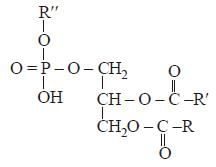
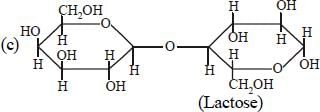
Which one of the following statements is nottrue regarding (+) Lactose ? [2011]- a)On hydrolysis (+) Lactose gives equalamount of D(+) glucose and D(+) galactose.
- b)(+) Lactose is a β-glycoside formed by theunion of a molecule of D(+) glucose and amolecule of D(+) galactose.
- c)(+) Lactose is a reducing sugar and doesnot exhibit mutarotation.
- d)(+) Lactose, C12H22O11 contains 8-OHgroups.
Correct answer is option 'C'. Can you explain this answer?
Which one of the following statements is nottrue regarding (+) Lactose ? [2011]
a)
On hydrolysis (+) Lactose gives equalamount of D(+) glucose and D(+) galactose.
b)
(+) Lactose is a β-glycoside formed by theunion of a molecule of D(+) glucose and amolecule of D(+) galactose.
c)
(+) Lactose is a reducing sugar and doesnot exhibit mutarotation.
d)
(+) Lactose, C12H22O11 contains 8-OHgroups.
 | Dipanjan Chawla answered |
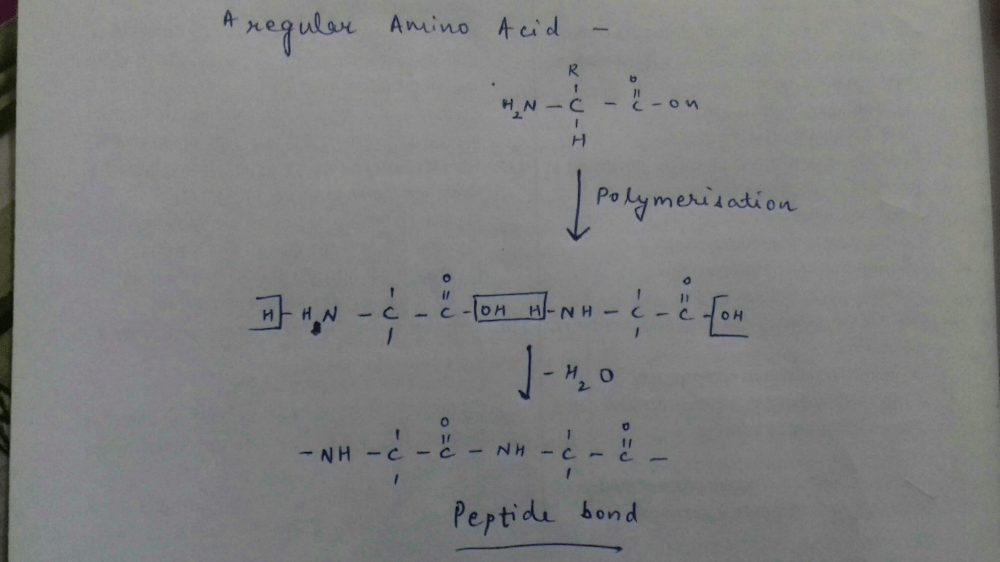
Amino acid are connected to each other by:- a)Hydrogen bond
- b)Carbon bond
- c)Polydiester bond
- d)Peptide bond
Correct answer is option 'D'. Can you explain this answer?
Amino acid are connected to each other by:
a)
Hydrogen bond
b)
Carbon bond
c)
Polydiester bond
d)
Peptide bond
 | Vijay Bansal answered |
A peptide bond is formed (-CONH) between the –NH2 group and the –COOH group of any two adjacent amino acids and it leads to the elimination of a water molecule. The resultant product formed is an amide.
Which of the following is a test for proteins?- a)Molish’s test
- b)Benedict’s test
- c)Biuret test
- d)Beilstein test
Correct answer is option 'C'. Can you explain this answer?
Which of the following is a test for proteins?
a)
Molish’s test
b)
Benedict’s test
c)
Biuret test
d)
Beilstein test
 | Savita Soni answered |
Yes biuret is a blue solution,when it reacts with protein ,its color become pink - purple. molish test & Benedict both are for carbohydrate where as beilstein is for halides
The enzyme which hydrolyses triglycerides tofatty acids and glycerol is called [2004]- a)Maltase
- b)Lipase
- c)Zymase
- d)Pepsin
Correct answer is option 'B'. Can you explain this answer?
The enzyme which hydrolyses triglycerides tofatty acids and glycerol is called [2004]
a)
Maltase
b)
Lipase
c)
Zymase
d)
Pepsin
 | Swara Desai answered |
Triglycerides are lipids, hence these are
hydrolysed by lipases to glycerol and fatty
acids.
hydrolysed by lipases to glycerol and fatty
acids.
When more than ten amino acids react, then the product formed is called:- a)Polypeptide
- b)Hexapeptide
- c)Tripeptide
- d)Dipeptide
Correct answer is option 'A'. Can you explain this answer?
When more than ten amino acids react, then the product formed is called:
a)
Polypeptide
b)
Hexapeptide
c)
Tripeptide
d)
Dipeptide
 | Nabanita Pillai answered |
Polypeptide is the correct answer.
Explanation:
When more than ten amino acids react, the product formed is called a polypeptide. A polypeptide is a chain of amino acids joined together by peptide bonds. Peptide bonds are formed through a condensation reaction between the carboxyl group of one amino acid and the amino group of another amino acid, resulting in the release of a water molecule.
Key points:
- Polypeptides are formed by the polymerization of amino acids.
- Amino acids are organic compounds that contain an amino group (-NH2) and a carboxyl group (-COOH) attached to a central carbon atom.
- There are 20 different types of amino acids that can be found in proteins, each with a unique side chain or R-group.
- The order and sequence of amino acids in a polypeptide chain determine the structure and function of the protein.
- Polypeptides can vary in length, ranging from just a few amino acids to thousands of amino acids in length.
- Polypeptides can fold into specific three-dimensional structures, such as alpha helices and beta sheets, which are stabilized by various types of interactions between amino acid side chains.
- These folded structures are critical for the proper functioning of proteins and can determine their enzymatic activity, binding specificity, and overall stability.
- Polypeptides can also undergo post-translational modifications, such as phosphorylation or glycosylation, which can further modify their structure and function.
- Polypeptides can interact with other molecules, such as other polypeptides or small molecules, to form larger protein complexes or perform specific biological functions.
- Polypeptides are an essential component of all living organisms and play critical roles in processes such as metabolism, signaling, and immune response.
In conclusion, when more than ten amino acids react, the product formed is called a polypeptide, which is a chain of amino acids joined together by peptide bonds. Polypeptides are the building blocks of proteins and are essential for the structure and function of biological systems.
Explanation:
When more than ten amino acids react, the product formed is called a polypeptide. A polypeptide is a chain of amino acids joined together by peptide bonds. Peptide bonds are formed through a condensation reaction between the carboxyl group of one amino acid and the amino group of another amino acid, resulting in the release of a water molecule.
Key points:
- Polypeptides are formed by the polymerization of amino acids.
- Amino acids are organic compounds that contain an amino group (-NH2) and a carboxyl group (-COOH) attached to a central carbon atom.
- There are 20 different types of amino acids that can be found in proteins, each with a unique side chain or R-group.
- The order and sequence of amino acids in a polypeptide chain determine the structure and function of the protein.
- Polypeptides can vary in length, ranging from just a few amino acids to thousands of amino acids in length.
- Polypeptides can fold into specific three-dimensional structures, such as alpha helices and beta sheets, which are stabilized by various types of interactions between amino acid side chains.
- These folded structures are critical for the proper functioning of proteins and can determine their enzymatic activity, binding specificity, and overall stability.
- Polypeptides can also undergo post-translational modifications, such as phosphorylation or glycosylation, which can further modify their structure and function.
- Polypeptides can interact with other molecules, such as other polypeptides or small molecules, to form larger protein complexes or perform specific biological functions.
- Polypeptides are an essential component of all living organisms and play critical roles in processes such as metabolism, signaling, and immune response.
In conclusion, when more than ten amino acids react, the product formed is called a polypeptide, which is a chain of amino acids joined together by peptide bonds. Polypeptides are the building blocks of proteins and are essential for the structure and function of biological systems.
The correct statement in respect of protein haemoglobin is that it [2004]- a)functions as a catalyst for biologicalreactions
- b)maintains blood sugar level
- c)acts as an oxygen carrier in the blood
- d)forms antibodies and offers resistance todieases
Correct answer is option 'C'. Can you explain this answer?
The correct statement in respect of protein haemoglobin is that it [2004]
a)
functions as a catalyst for biologicalreactions
b)
maintains blood sugar level
c)
acts as an oxygen carrier in the blood
d)
forms antibodies and offers resistance todieases
 | Sneha Basak answered |
Haemoglobin acts as an oxygen carrier in
the blood since it reacts with oxygen to form
unstable oxyhaemoglobin which easily
breaks to give back haemoglobin and
oxygen.
the blood since it reacts with oxygen to form
unstable oxyhaemoglobin which easily
breaks to give back haemoglobin and
oxygen.
Cellulose is a polymer of [2002]- a)Glucose
- b)Fructose
- c)Ribose
- d)Sucrose
Correct answer is option 'A'. Can you explain this answer?
Cellulose is a polymer of [2002]
a)
Glucose
b)
Fructose
c)
Ribose
d)
Sucrose
 | Yash Saha answered |
We know that cellulose (C6H12O6 )n is the
chief constituent of cell walls of plants. It is
the most abundant organic substance found
in nature. It is a polymer of glucose with
3500 repeat units in a chain.
chief constituent of cell walls of plants. It is
the most abundant organic substance found
in nature. It is a polymer of glucose with
3500 repeat units in a chain.
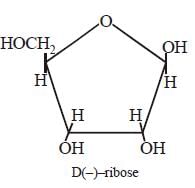
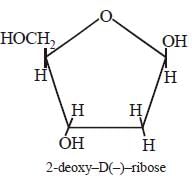
RNA and DNA are chiral molecules, their chiralityis due to [2007]- a)chiral bases
- b)chiral phosphate ester units
- c)D-sugar component
- d)L-sugar component.
Correct answer is option 'C'. Can you explain this answer?
RNA and DNA are chiral molecules, their chiralityis due to [2007]
a)
chiral bases
b)
chiral phosphate ester units
c)
D-sugar component
d)
L-sugar component.
 | Arindam Khanna answered |
Each nucleic acid consists of a pentose
sugar a heterocyclic base, and phosphoric
acid. The sugar present in DNA is 2-deoxy
-D (–) ribose and the sugar present in RNA
is D (–)- ribose. The chirality of DNA and
RNA molecules are due to the presence of
sugar components.
sugar a heterocyclic base, and phosphoric
acid. The sugar present in DNA is 2-deoxy
-D (–) ribose and the sugar present in RNA
is D (–)- ribose. The chirality of DNA and
RNA molecules are due to the presence of
sugar components.
The helical structure of protein is stabilized by [2004]- a)dipeptide bonds
- b)hydrogen bonds
- c)ether bonds
- d)peptide bonds
Correct answer is option 'B'. Can you explain this answer?
The helical structure of protein is stabilized by [2004]
a)
dipeptide bonds
b)
hydrogen bonds
c)
ether bonds
d)
peptide bonds
 | Bhargavi Choudhury answered |
The α-helix structure is formed when the
chain of α-amino acids coils as a right
handed screw (called α-helix) because of the
formation of hydrogen bonds between
amide groups of the same peptide chain, i.e.,
NH group in one unit is linked to carbonyl
oxygen of the third unit by hydrogen
bonding. This hydrogen bonding between
different units is responsible for holding
helix in a position.
chain of α-amino acids coils as a right
handed screw (called α-helix) because of the
formation of hydrogen bonds between
amide groups of the same peptide chain, i.e.,
NH group in one unit is linked to carbonyl
oxygen of the third unit by hydrogen
bonding. This hydrogen bonding between
different units is responsible for holding
helix in a position.
Certain organic compounds are required in small amount in our diet but their deficiency causes diseases. The compounds are called:- a)Proteins
- b)Vitamins
- c)Carbohydrates
- d)Amino acid
Correct answer is option 'B'. Can you explain this answer?
Certain organic compounds are required in small amount in our diet but their deficiency causes diseases. The compounds are called:
a)
Proteins
b)
Vitamins
c)
Carbohydrates
d)
Amino acid
| | Student Ten answered |
Certain organic compounds are required in small amount but their deficiency causes diseases. The compounds are called Vitamins. Most of the vitamins cannot be synthesised in our body but plants can synthesise almost all of them, so they are considered as essential food factors.
When a protein is subjected to physical changes the protein loses its biological activity. This is known as:- a)Polypeptide
- b)Depeptide
- c)Renaturation
- d)Denaturation
Correct answer is option 'D'. Can you explain this answer?
When a protein is subjected to physical changes the protein loses its biological activity. This is known as:
a)
Polypeptide
b)
Depeptide
c)
Renaturation
d)
Denaturation
| | Arun Khanna answered |
This loss of biological activity by the protein is called denaturation. During denaturation, the secondary and the tertiary structures of the protein get destroyed, but the primary structure remains unaltered. One of the examples of denaturation of proteins is the coagulation of egg white when an egg is boiled.
Which of the statements about "Denaturation" given below are correct ? [2011 M]
(a) Denaturation of proteins causes loss of secondary and tertiary structures of the protein.
(b) Denturation leads to the conversion of double strand of DNA into single strand
(c) Denaturation affects primary strucrture which gets distorted- a)(b) and (c)
- b)(a) and (c)
- c)(a) and (b)
- d)(a), (b) and (c)
Correct answer is option 'C'. Can you explain this answer?
Which of the statements about "Denaturation" given below are correct ? [2011 M]
(a) Denaturation of proteins causes loss of secondary and tertiary structures of the protein.
(b) Denturation leads to the conversion of double strand of DNA into single strand
(c) Denaturation affects primary strucrture which gets distorted
(a) Denaturation of proteins causes loss of secondary and tertiary structures of the protein.
(b) Denturation leads to the conversion of double strand of DNA into single strand
(c) Denaturation affects primary strucrture which gets distorted
a)
(b) and (c)
b)
(a) and (c)
c)
(a) and (b)
d)
(a), (b) and (c)
 | Ameya Pillai answered |
Denaturation
Denaturation is the process by which proteins or nucleic acids lose their structure due to external factors such as heat, pH changes, or chemicals. Let's analyze the statements given in the question:
Statement (a) - Correct
- Denaturation of proteins causes the loss of secondary and tertiary structures of the protein. This is true as denaturation disrupts the non-covalent interactions that maintain the protein's folded structure, leading to the loss of secondary and tertiary structures.
Statement (b) - Incorrect
- Denaturation does not lead to the conversion of double-stranded DNA into single strands. DNA denaturation involves the separation of the two strands of DNA, but it does not convert double-stranded DNA into single strands.
Statement (c) - Correct
- Denaturation affects the primary structure of proteins, causing it to become distorted. The primary structure refers to the sequence of amino acids in a protein, and denaturation can disrupt this sequence, leading to distortion.
Therefore, the correct statements about denaturation are (a) and (c). Denaturation primarily affects the secondary and tertiary structures of proteins while also impacting the primary structure by causing distortion.
Denaturation is the process by which proteins or nucleic acids lose their structure due to external factors such as heat, pH changes, or chemicals. Let's analyze the statements given in the question:
Statement (a) - Correct
- Denaturation of proteins causes the loss of secondary and tertiary structures of the protein. This is true as denaturation disrupts the non-covalent interactions that maintain the protein's folded structure, leading to the loss of secondary and tertiary structures.
Statement (b) - Incorrect
- Denaturation does not lead to the conversion of double-stranded DNA into single strands. DNA denaturation involves the separation of the two strands of DNA, but it does not convert double-stranded DNA into single strands.
Statement (c) - Correct
- Denaturation affects the primary structure of proteins, causing it to become distorted. The primary structure refers to the sequence of amino acids in a protein, and denaturation can disrupt this sequence, leading to distortion.
Therefore, the correct statements about denaturation are (a) and (c). Denaturation primarily affects the secondary and tertiary structures of proteins while also impacting the primary structure by causing distortion.
Which one of the following is a water soluble vitamin?- a)K
- b)A
- c)B
- d)D
Correct answer is option 'C'. Can you explain this answer?
Which one of the following is a water soluble vitamin?
a)
K
b)
A
c)
B
d)
D
| | Kavita Joshi answered |
Vitamin B is a water soluble vitamin. They must be regularly supplied in diet because they are readily excreted in urine. Vitamin A, D, E and K are fat soluble vitamins. Whereas, vitamin B and C are water soluble.
_________ are biocatalysts which speed up the reactions in biosystems.- a)Enzymes
- b)Nucleic acid
- c)Vitamins
- d)Amino acids
Correct answer is option 'A'. Can you explain this answer?
_________ are biocatalysts which speed up the reactions in biosystems.
a)
Enzymes
b)
Nucleic acid
c)
Vitamins
d)
Amino acids
| | Vijay Bansal answered |
In enzyme (protein) is a biological catalyst.
A sequence of how many nucleotides inmessenger RNA makes a codon for an amino acid? [2004]- a)Three
- b)Four
- c)One
- d)Two
Correct answer is option 'A'. Can you explain this answer?
A sequence of how many nucleotides inmessenger RNA makes a codon for an amino acid? [2004]
a)
Three
b)
Four
c)
One
d)
Two
 | Krish Patel answered |
The bond formed between two amino acids
by the elimination of a water molecule is
called a peptide linkage or bond. The peptide
bond is simply another name for amide bond.
by the elimination of a water molecule is
called a peptide linkage or bond. The peptide
bond is simply another name for amide bond.
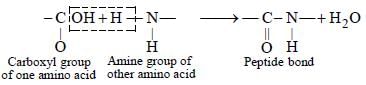
The product formed by linking amino acid
molecules through peptide linkages. —
CO—NH—, is called a peptide
molecules through peptide linkages. —
CO—NH—, is called a peptide
The symptoms of retinol excess are- a)bone fragility
- b)Fibrous Protein
- c)weakness
- d)all of these
Correct answer is option 'B'. Can you explain this answer?
The symptoms of retinol excess are
a)
bone fragility
b)
Fibrous Protein
c)
weakness
d)
all of these
 | Arjun Chavan answered |
The correct answer is option B
Fibrous Protein
When polypeptide chains run parallel & are held together by hydrogen and disulphide bonds, then ber, rod or wire-like structure is formed. They are shaped like fibers; hence called Fibrous protein These proteins are water-insoluble.
Fibrous Protein
When polypeptide chains run parallel & are held together by hydrogen and disulphide bonds, then ber, rod or wire-like structure is formed. They are shaped like fibers; hence called Fibrous protein These proteins are water-insoluble.
In DNA the complementary bases are:- a)adenine and guanine; thymine and cytosine
- b)adenine and thymine; guanine and cytosine
- c)uracil and adenine; cytosine and guanine
- d)adenine and thymine; guanine and uracil
Correct answer is option 'B'. Can you explain this answer?
In DNA the complementary bases are:
a)
adenine and guanine; thymine and cytosine
b)
adenine and thymine; guanine and cytosine
c)
uracil and adenine; cytosine and guanine
d)
adenine and thymine; guanine and uracil
 | Aditya Sen answered |
Each nucleotide base can hydrogen-bond with a specific partner base in a process known as complementary base pairing: Cytosine forms three hydrogen bonds with guanine, and adenine forms two hydrogen bonds with thymine.
Which is not a true statement? [2002]- a)α-Carbon of α-amino acid is asymmetric
- b)All proteins are found in L-form
- c)Human body can synthesize all proteins theyneed
- d)At pH = 7 both amino and carboxylic groupsexist in ionised form
Correct answer is option 'B'. Can you explain this answer?
Which is not a true statement? [2002]
a)
α-Carbon of α-amino acid is asymmetric
b)
All proteins are found in L-form
c)
Human body can synthesize all proteins theyneed
d)
At pH = 7 both amino and carboxylic groupsexist in ionised form
 | Pallabi Reddy answered |
All proteins are not found in L-form but they
may be present in form of D or L
may be present in form of D or L
Which one of the following is a peptide hormone ? [2006]- a)Testosterone
- b)Thyroxin
- c)Adrenaline
- d)Glucagon
Correct answer is option 'D'. Can you explain this answer?
Which one of the following is a peptide hormone ? [2006]
a)
Testosterone
b)
Thyroxin
c)
Adrenaline
d)
Glucagon
 | Subham Chavan answered |
Testorterone and Adrenaline are steroid
harmone, Thyroxin is non-steroided harmone
glucagon is peptide harmone.
harmone, Thyroxin is non-steroided harmone
glucagon is peptide harmone.
Which one of the following, statements isincorrect about enzyme catalysis? [2012]- a)Enzymes are mostly proteinous in nature.
- b)Enzyme action is specific.
- c)Enzymes are denaturated by ultraviolet raysand at high temperature.
- d)Enzymes are least reactive at optimumtemperature.
Correct answer is option 'D'. Can you explain this answer?
Which one of the following, statements isincorrect about enzyme catalysis? [2012]
a)
Enzymes are mostly proteinous in nature.
b)
Enzyme action is specific.
c)
Enzymes are denaturated by ultraviolet raysand at high temperature.
d)
Enzymes are least reactive at optimumtemperature.
 | Ruchi Chopra answered |
Enzymes are most reactive at optimum
temperature. The optimum temperature for
enzyme activity lies between 40°C to 60°C.
temperature. The optimum temperature for
enzyme activity lies between 40°C to 60°C.
Glycolysis is [2003]- a)conversion of glucose to haem
- b)oxidation of glucose to glutamate
- c)conversion of pyruvate to citrate
- d)oxidation of glucose to pyruvate
Correct answer is option 'D'. Can you explain this answer?
Glycolysis is [2003]
a)
conversion of glucose to haem
b)
oxidation of glucose to glutamate
c)
conversion of pyruvate to citrate
d)
oxidation of glucose to pyruvate
| | Ruchi Chopra answered |
It is a common pathway for both the aerobic
& anaerobic respiration in which 1 glucose
molecule is converted to 2 molecules of
pyruvate.
& anaerobic respiration in which 1 glucose
molecule is converted to 2 molecules of
pyruvate.
The amino acid which are synthesized in the body are known as:- a)Natural
- b)Non-essential
- c)Essential
- d)Artificial
Correct answer is option 'B'. Can you explain this answer?
The amino acid which are synthesized in the body are known as:
a)
Natural
b)
Non-essential
c)
Essential
d)
Artificial
| | Arun Khanna answered |
Nonessential amino acids are mainly synthesized from glucose (alanine, arginine [from the urea cycle in hepatic cells], asparagine, aspartate, cysteine, glutamate, glutamine, glycine, proline, and serine), except for tyrosine, which is synthesized from phenylalanine.
Deficiency of which vitamin causes scurvy?- a)Vitamin B1
- b)Vitamin B12
- c)Vitamin C
- d)Vitamin A
Correct answer is option 'C'. Can you explain this answer?
Deficiency of which vitamin causes scurvy?
a)
Vitamin B1
b)
Vitamin B12
c)
Vitamin C
d)
Vitamin A
| | Pooja Mehta answered |
Vitamin C (ascorbic acid) short-term deficiency can lead to weakness, weight loss and general aches and pains. Longer-term depletion may affect the connective tissue. Persistent vitamin C deficiency leads to scurvy.
In DNA the linkages between differentnitrogenous bases are: [NEET Kar. 2013]- a)peptide linkage
- b)phosphate linkage
- c)H-bonding
- d)glycosidic linkage
Correct answer is option 'C'. Can you explain this answer?
In DNA the linkages between differentnitrogenous bases are: [NEET Kar. 2013]
a)
peptide linkage
b)
phosphate linkage
c)
H-bonding
d)
glycosidic linkage
 | Arya Nair answered |
The base pairs of the two strands of DNA
are linked together through H-bonds.
are linked together through H-bonds.
Enzymes belong to the class of compounds called:- a)Polypeptides
- b)Polysaccharides
- c)Hydrocarbons
- d)Polynitrogen heterocyclic compounds
Correct answer is option 'A'. Can you explain this answer?
Enzymes belong to the class of compounds called:
a)
Polypeptides
b)
Polysaccharides
c)
Hydrocarbons
d)
Polynitrogen heterocyclic compounds
| | Nidhi Yadav answered |
Enzymes belong to the class of compounds called polypeptides.
Enzymes are biological catalysts that are responsible for facilitating chemical reactions in living organisms. They play a crucial role in various physiological processes such as metabolism, digestion, and DNA replication. Enzymes are highly specific in their actions and can accelerate the rate of chemical reactions by lowering the activation energy required for the reaction to occur.
Enzymes are classified as polypeptides for the following reasons:
1. Structure: Enzymes are composed of long chains of amino acids linked together by peptide bonds. These chains fold into specific three-dimensional structures that are critical for their catalytic activity. The amino acid sequence and arrangement determine the enzyme's shape and function.
2. Protein nature: Enzymes are a type of protein. Proteins are organic compounds made up of polypeptides, which are linear chains of amino acids. Therefore, enzymes are classified as polypeptides due to their proteinaceous nature.
3. Synthesis: Enzymes are synthesized in living cells through a process called protein synthesis or translation. During translation, the genetic information encoded in DNA is transcribed into messenger RNA (mRNA), which serves as a template for the synthesis of proteins. The mRNA carries the instructions for the specific sequence of amino acids that make up the enzyme.
4. Function: Enzymes exhibit catalytic activity due to their specific three-dimensional structure. They bind to substrates, which are the molecules upon which they act, and facilitate the conversion of substrates into products. The specific amino acid sequence and arrangement in the enzyme determine its ability to recognize and bind to the substrate, leading to the catalytic reaction.
In conclusion, enzymes belong to the class of compounds called polypeptides because they are composed of long chains of amino acids linked together by peptide bonds. This polypeptide nature is crucial for their structure, synthesis, and catalytic function in living organisms.
Enzymes are biological catalysts that are responsible for facilitating chemical reactions in living organisms. They play a crucial role in various physiological processes such as metabolism, digestion, and DNA replication. Enzymes are highly specific in their actions and can accelerate the rate of chemical reactions by lowering the activation energy required for the reaction to occur.
Enzymes are classified as polypeptides for the following reasons:
1. Structure: Enzymes are composed of long chains of amino acids linked together by peptide bonds. These chains fold into specific three-dimensional structures that are critical for their catalytic activity. The amino acid sequence and arrangement determine the enzyme's shape and function.
2. Protein nature: Enzymes are a type of protein. Proteins are organic compounds made up of polypeptides, which are linear chains of amino acids. Therefore, enzymes are classified as polypeptides due to their proteinaceous nature.
3. Synthesis: Enzymes are synthesized in living cells through a process called protein synthesis or translation. During translation, the genetic information encoded in DNA is transcribed into messenger RNA (mRNA), which serves as a template for the synthesis of proteins. The mRNA carries the instructions for the specific sequence of amino acids that make up the enzyme.
4. Function: Enzymes exhibit catalytic activity due to their specific three-dimensional structure. They bind to substrates, which are the molecules upon which they act, and facilitate the conversion of substrates into products. The specific amino acid sequence and arrangement in the enzyme determine its ability to recognize and bind to the substrate, leading to the catalytic reaction.
In conclusion, enzymes belong to the class of compounds called polypeptides because they are composed of long chains of amino acids linked together by peptide bonds. This polypeptide nature is crucial for their structure, synthesis, and catalytic function in living organisms.
Chapter doubts & questions for Biomolecules - 30-Day Revision Course for NEET 2026 is part of NEET exam preparation. The chapters have been prepared according to the NEET exam syllabus. The Chapter doubts & questions, notes, tests & MCQs are made for NEET 2026 Exam. Find important definitions, questions, notes, meanings, examples, exercises, MCQs and online tests here.
Chapter doubts & questions of Biomolecules - 30-Day Revision Course for NEET in English & Hindi are available as part of NEET exam. Download more important topics, notes, lectures and mock test series for NEET Exam by signing up for free.
30-Day Revision Course for NEET85 videos|301 docs|171 tests |
