


All Exams > Electrical Engineering (EE) > SSC JE Electrical Mock Test Series (Hindi) 2026 > All Questions
All questions of Electromagnetic Fields Theory for Electrical Engineering (EE) Exam
For making a capacitor, it is better to select a dielectric having- a)High permittivity
- b)Low permittivity
- c)Same permittivity as that of air
- d)Very low permittivity
Correct answer is option 'A'. Can you explain this answer?
For making a capacitor, it is better to select a dielectric having
a)
High permittivity
b)
Low permittivity
c)
Same permittivity as that of air
d)
Very low permittivity
 | Ravi Singh answered |
In a capacitor the value of capacitor is given by  hence with dielectric having high permittivity higher values of capacitance can be achieved with small capacitor size.
hence with dielectric having high permittivity higher values of capacitance can be achieved with small capacitor size.
Determine the reluctance (in Amp-turns/Wb) of a coil, when the flux through the coil is 25 Wb and the value of produced mmf is 50 Amp-turns- a)2
- b)4
- c)6
- d)8
Correct answer is option 'A'. Can you explain this answer?
Determine the reluctance (in Amp-turns/Wb) of a coil, when the flux through the coil is 25 Wb and the value of produced mmf is 50 Amp-turns
a)
2
b)
4
c)
6
d)
8
 | Yash Patel answered |
Given that, mmf = 50 Amp-turns
Magnetic flux = 25 Wb
Reluctance = mmf/flux = 50/25 = 2 Amp-turns/Wb
Which one of the following materials cannot be used for permanent magnets?- a)Alnico
- b)Barium-Ferrite
- c)Carbon-steel
- d)Iron-Cobalt alloy
Correct answer is option 'D'. Can you explain this answer?
Which one of the following materials cannot be used for permanent magnets?
a)
Alnico
b)
Barium-Ferrite
c)
Carbon-steel
d)
Iron-Cobalt alloy
 | Deepika Saha answered |
Of the given material, only iron cobalt alloy cannot be used to make permanent magnets.


As per Ohm’s law of magnetic circuit:- a)Flux = mmf/reluctance
- b)Flux = reluctance/mmf
- c)Flux = emf/reluctance
- d)Flux = reluctance/emf
Correct answer is option 'A'. Can you explain this answer?
As per Ohm’s law of magnetic circuit:
a)
Flux = mmf/reluctance
b)
Flux = reluctance/mmf
c)
Flux = emf/reluctance
d)
Flux = reluctance/emf
 | Lavanya Menon answered |
Ohm’s law in case of magnetic circuits can be stated as, the magnetic flux developed in the circuit is directly proportional to magnetomotive force. The relation is similar to Ohm’s law and can be formed by replacing electro motive force (emf) with mmf and electric current (i) with magnetic flux.
Flux = mmf/reluctance.
A perfect magnetic conductor is defined to be a material for which...- a)A tangential component of magnetic field is zero at the surface
- b)A tangential component of electric field is zero at the surface
- c)Normal component of magnetic field is non-zero
- d)Normal component of electric field is non-zero
Correct answer is option 'A'. Can you explain this answer?
A perfect magnetic conductor is defined to be a material for which...
a)
A tangential component of magnetic field is zero at the surface
b)
A tangential component of electric field is zero at the surface
c)
Normal component of magnetic field is non-zero
d)
Normal component of electric field is non-zero
 | Anuj Rane answered |
In a perfect magnetic conductor the value of has infinite magnetic conductivity (inverse of magnetic reluctance). In a perfect magnetic conductor the normal electric field and tangential magnetic field is zero while tangential electric field and normal magnetic field is equal.
Determine the intensity of magnetization (in A/m) of a magnet when the pole strength of the magnet is 30 A-m and the area of the pole of the magnet is 2 sq. m.- a)60
- b)30
- c)25
- d)15
Correct answer is option 'D'. Can you explain this answer?
Determine the intensity of magnetization (in A/m) of a magnet when the pole strength of the magnet is 30 A-m and the area of the pole of the magnet is 2 sq. m.
a)
60
b)
30
c)
25
d)
15
 | Preethi Banerjee answered |
The magnetic field intensity at any point is defined as the force experienced by the point when placed under the influence of an external magnetic field.
Intensity of magnetization = pole strength/area of the pole of the magnet = 30/2 = 15 A/m
If the magnetic susceptibility of any material is less than zero then the material is ________.- a)Paramagnetic
- b)Ferromagnetic
- c)Diamagnetic
- d)Ferrimagnetic
Correct answer is option 'C'. Can you explain this answer?
If the magnetic susceptibility of any material is less than zero then the material is ________.
a)
Paramagnetic
b)
Ferromagnetic
c)
Diamagnetic
d)
Ferrimagnetic
| | Poulomi Ahuja answered |
In paramagnetic materials, the magnetic field in the material is strengthened by the induced magnetization. Hence the magnetic susceptibility value is a small positive.
In diamagnetic materials, the magnetic field in the material is weakened by the induced magnetization. Hence the magnetic susceptibility value is a small negative.
Ferromagnetic, ferrimagnetic materials possess permanent magnetization even without external magnetic field. Hence these materials have large positive value of magnetic susceptibility.
What will be the voltage (in V) across a 8 H inductor, when the rate of change of current in the inductor is 0.5 A/sec.- a)2
- b)6
- c)4
- d)8
Correct answer is option 'C'. Can you explain this answer?
What will be the voltage (in V) across a 8 H inductor, when the rate of change of current in the inductor is 0.5 A/sec.
a)
2
b)
6
c)
4
d)
8
 | Pallavi Nair answered |
Given that, inductance (L) = 8 H
Rate of change of current = 0.5 A/sec

पदार्थ का प्रतिधारण का गुण निम्न में से किस के निर्माण के लिए उपयोगी है?- a)स्थायी चुंबक
- b)ट्रान्सफ़ॉर्मर
- c)गैर चुंबकीय पदार्थ
- d)विद्युत चुम्बक
Correct answer is option 'A'. Can you explain this answer?
पदार्थ का प्रतिधारण का गुण निम्न में से किस के निर्माण के लिए उपयोगी है?
a)
स्थायी चुंबक
b)
ट्रान्सफ़ॉर्मर
c)
गैर चुंबकीय पदार्थ
d)
विद्युत चुम्बक
 | Prisha Sengupta answered |
लागू चुंबकत्व को हटा दिए जाने के बाद चुंबकत्व की यह शक्ति को पदार्थ का प्रतिधारण कहा जाता है।
पदार्थों को उनके चुंबकत्व को बनाए रखने के लिए उच्च संवेदनशीलता की आवश्यकता होती है और ऐसे पदार्थों को स्थायी चुंबक बनाने के लिए उपयोग किया जाता है।
Midway between two equal and similar charges, a third equal and similar charge is placed. Then this third charge will ________.- a)Remain in stable equilibrium
- b)Be in unstable equilibrium
- c)Not be in equilibrium
- d)Will move out of the field to influence the two charges
Correct answer is option 'A'. Can you explain this answer?
Midway between two equal and similar charges, a third equal and similar charge is placed. Then this third charge will ________.
a)
Remain in stable equilibrium
b)
Be in unstable equilibrium
c)
Not be in equilibrium
d)
Will move out of the field to influence the two charges
| | Harshitha Pillai answered |
Midway between two equal and similar charges, a third equal and similar charge is placed. As the charge is placed midway between two similar charges, the force acts on the third charge due to two charges will be same. Hence third charge will remain in stable equilibrium.
A conductor of length 0.6 m is situated at the right angle to a uniform magnetic field of flux density 4 Wb/sq. m. The conductor is moving with a velocity of 50 m/s. Calculate the emf induced (in V) n the conductor.- a)100
- b)115
- c)118
- d)120
Correct answer is option 'D'. Can you explain this answer?
A conductor of length 0.6 m is situated at the right angle to a uniform magnetic field of flux density 4 Wb/sq. m. The conductor is moving with a velocity of 50 m/s. Calculate the emf induced (in V) n the conductor.
a)
100
b)
115
c)
118
d)
120
| | Janhavi Roy answered |
Given that, Magnetic flux density (B) = 4 Wb/sq. m.
Length (l) = 0.6 m
Velocity (v) = 50 m/s
Emf induced is, E=Blvsinθ
E=4×0.6×50×sin90=120
When a dielectric is placed in an electric field, the field strength _____.- a)Increases
- b)Decreases
- c)Remain unchanged
- d)Reduces to zero
Correct answer is option 'B'. Can you explain this answer?
When a dielectric is placed in an electric field, the field strength _____.
a)
Increases
b)
Decreases
c)
Remain unchanged
d)
Reduces to zero
| | Shraddha Datta answered |
A dielectric is an electrical insulator that can be polarized by an applied electric field. When a dielectric is placed in an electric field, electric charges do not flow through the material as they do in an electrical conductor. Hence the electrical field strength decreases.
Permeance is analogous to:- a)Conductance
- b)Reluctance
- c)Inductance
- d)Resistance
Correct answer is option 'A'. Can you explain this answer?
Permeance is analogous to:
a)
Conductance
b)
Reluctance
c)
Inductance
d)
Resistance
 | Sanchita Choudhary answered |
Permeance is a magnetic property, it is analogous to conductance. Reluctance is analogous to resistance.
चुम्बकीय क्षेत्र में कौन स्थिर आवेश का अनुभव करता है?- a)बल
- b)एक बल के तहत घूर्णन गति
- c)कोई बल नहीं
- d)बलाघूर्ण
Correct answer is option 'C'. Can you explain this answer?
चुम्बकीय क्षेत्र में कौन स्थिर आवेश का अनुभव करता है?
a)
बल
b)
एक बल के तहत घूर्णन गति
c)
कोई बल नहीं
d)
बलाघूर्ण
 | Ashwin Mukherjee answered |
चुंबकीय क्षेत्र केवल विद्युत क्षेत्र को बदलकर उत्पादित किया जाता है। जब कोई आवेश स्थिर होता है, तो उसके विद्युत क्षेत्र में कोई बदलाव नहीं होता है और इसलिए कोई चुंबकीय क्षेत्र उत्पन्न नहीं होता है।
क्यूरी बिंदु क्या है?- a)वोल्टेज, जिस पर चुंबकीय पदार्थ इसके चुंबकीय गुण को खो देता है
- b)तापमान, जिस पर चुंबकीय पदार्थ इसके चुंबकीय गुण को खो देता है
- c)वोल्टेज, जिस पर चुंबकीय पदार्थ इसके चुंबकीय गुण को अर्जित करता है
- d)तापमान, जिसपर चुंबकीय पदार्थ इसके चुंबकीय गुण को अर्जित करता है
Correct answer is option 'B'. Can you explain this answer?
क्यूरी बिंदु क्या है?
a)
वोल्टेज, जिस पर चुंबकीय पदार्थ इसके चुंबकीय गुण को खो देता है
b)
तापमान, जिस पर चुंबकीय पदार्थ इसके चुंबकीय गुण को खो देता है
c)
वोल्टेज, जिस पर चुंबकीय पदार्थ इसके चुंबकीय गुण को अर्जित करता है
d)
तापमान, जिसपर चुंबकीय पदार्थ इसके चुंबकीय गुण को अर्जित करता है
| | Aaditya Choudhary answered |
क्यूरी तापमान या क्यूरी बिंदु वह तापमान होता है जिसके ऊपर कुछ पदार्थ प्रेरित चुंबकत्व द्वारा प्रतिस्थापित होने के लिए अपने स्थायी चुंबकीय गुण को खो देते हैं।
0.8 मिली हेनरी के एक कुण्डल जिसमें 2 एम्पियर की विद्युत धारा प्रवाहित होती है और यह 0.4 सेकेंड में विपरीत दिशा में हो जाती है, तो इसमें प्रेरित इ.एम.एफ क्या है?- a)0.16 वोल्ट
- b)0.4 वोल्ट
- c)0.008 वोल्ट
- d)0.064 वोल्ट
Correct answer is option 'C'. Can you explain this answer?
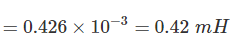
0.8 मिली हेनरी के एक कुण्डल जिसमें 2 एम्पियर की विद्युत धारा प्रवाहित होती है और यह 0.4 सेकेंड में विपरीत दिशा में हो जाती है, तो इसमें प्रेरित इ.एम.एफ क्या है?
a)
0.16 वोल्ट
b)
0.4 वोल्ट
c)
0.008 वोल्ट
d)
0.064 वोल्ट
| | Ameya Gupta answered |
दिया गया है कि,
कुण्डल में प्रेरकत्व (L) = 0.8 मिली हेनरी
विद्युत धारा (I) = 2 एम्पेयर
विद्युत धारा में बदलाव = 2 – (–2) = 4

चुम्बकीय प्रेरित बल (एम.एम.एफ.) की इकाई क्या है?- a)प्रति वेबर एम्पियर मोड़
- b)वेबर प्रति मीटर
- c)वेबर प्रति एम्पियर
- d)एम्पियर मोड़
Correct answer is option 'D'. Can you explain this answer?
चुम्बकीय प्रेरित बल (एम.एम.एफ.) की इकाई क्या है?
a)
प्रति वेबर एम्पियर मोड़
b)
वेबर प्रति मीटर
c)
वेबर प्रति एम्पियर
d)
एम्पियर मोड़
 | Ishan Saini answered |
चुम्बकीय प्रेरित बल के अस्तित्व के कारण विद्युत परिपथ में विद्युत धारा प्रवाहित होती है उसी प्रकार चुम्बकीय प्रेरित बल (एम.एम.एफ.) चुंबकीय परिपथ में चुंबकीय फ्लक्स को संचालित करने के लिए आवश्यक होता है। चुंबकीय दबाव जो चुंबकीय परिपथ में चुंबकीय फ्लक्स को स्थापित करता है, चुम्बकीय प्रेरित बल कहलाता है। एम.एम.एफ. की एस.आई. इकाई एम्पेयर-मोड (AT) है।
निम्नलिखित में से कौन चुंबकीय फ्लक्स घनत्व और दूरी के बीच संबंधों को सही तरीके से परिभाषित करता है?- a)चुंबकीय फ्लक्स घनत्व दूरी में कमी के साथ बढ़ता है
- b)चुंबकीय फ्लक्स घनत्व दूरी में कमी के साथ घटता है
- c)चुंबकीय फ्लक्स घनत्व दूरी से संबंधित नहीं है
- d)चुंबकीय फ्लक्स घनत्व दूरी में प्रत्येक 1 मीटर कमी के साथ आधा हो जाता है
Correct answer is option 'A'. Can you explain this answer?
निम्नलिखित में से कौन चुंबकीय फ्लक्स घनत्व और दूरी के बीच संबंधों को सही तरीके से परिभाषित करता है?
a)
चुंबकीय फ्लक्स घनत्व दूरी में कमी के साथ बढ़ता है
b)
चुंबकीय फ्लक्स घनत्व दूरी में कमी के साथ घटता है
c)
चुंबकीय फ्लक्स घनत्व दूरी से संबंधित नहीं है
d)
चुंबकीय फ्लक्स घनत्व दूरी में प्रत्येक 1 मीटर कमी के साथ आधा हो जाता है
| | Disha Das answered |
हम जानते हैं कि, B = μH
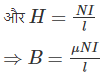
चुंबकीय फ्लक्स घनत्व लम्बाई के व्युत्क्रमानुपाती है। इसलिए चुंबकीय फ्लक्स घनत्व दूरी में कमी के साथ बढ़ता है।
फेराइट _______ का एक प्रकार है- a)चुंबकीय पदार्थ
- b)चालन पदार्थ
- c)अर्धचालक पदार्थ
- d)रोधक पदार्थ
Correct answer is option 'A'. Can you explain this answer?
फेराइट _______ का एक प्रकार है
a)
चुंबकीय पदार्थ
b)
चालन पदार्थ
c)
अर्धचालक पदार्थ
d)
रोधक पदार्थ
| | Sanchita Sharma answered |
फेराइट सामान्यतौर पर लौह ऑक्साइड से व्युत्पन्न फेरिमैग्नेटिक सिरेमिक यौगिक होते हैं। अधिकांश अन्य सेरामिक की तरह, फेराइट कठोर, भंगुर और बिजली के कम चालक होते हैं
चालक से प्रवाहित होने वाली विद्युत धारा के चारों ओर बल की चुंबकीय रेखाओं की दिशा को कैसे ज्ञात किया जा सकता है?- a)दाहिने हाथ की मुट्ठी का नियम
- b)फ्लेमिंग दक्षिणहस्त नियम
- c)लेंज़ नियम
- d)बॉयल नियम
Correct answer is option 'A'. Can you explain this answer?
चालक से प्रवाहित होने वाली विद्युत धारा के चारों ओर बल की चुंबकीय रेखाओं की दिशा को कैसे ज्ञात किया जा सकता है?
a)
दाहिने हाथ की मुट्ठी का नियम
b)
फ्लेमिंग दक्षिणहस्त नियम
c)
लेंज़ नियम
d)
बॉयल नियम
| | Upasana Joshi answered |
दाहिने हाथ की मुट्ठी के नियम के अनुसार, कल्पना कीजिए कि आपने अपने दाहिने हाथ में विद्युत धारा प्रवाहित होने वाली तार पकड़ी हुई है ताकि अंगूठा विद्युत धारा की दिशा को इंगित करे, तो तार पर लिपटी हुई अंगुलियाँ धारा के कारण उत्पन्न चुम्बकीय क्षेत्र की दिशा बताती हैं।
संबंधित पारगम्यता क्रमशः 300 और 400 वाले पदार्थों के बने दो चुंबकीय कोर A और B का समरूप भौतिक आयाम समान है, तो _______ ।- a)A द्वारा दिया गया प्रतिष्टम्भ B से अधिक होगा
- b)A और B द्वारा दिया गया प्रतिष्टम्भ समान होगा
- c)प्रयोगशाला परीक्षण के बिना कुछ नहीं बताया जा सकता है
- d)B द्वारा दिया गया प्रतिष्टम्भ A से अधिक होगा
Correct answer is option 'A'. Can you explain this answer?
संबंधित पारगम्यता क्रमशः 300 और 400 वाले पदार्थों के बने दो चुंबकीय कोर A और B का समरूप भौतिक आयाम समान है, तो _______ ।
a)
A द्वारा दिया गया प्रतिष्टम्भ B से अधिक होगा
b)
A और B द्वारा दिया गया प्रतिष्टम्भ समान होगा
c)
प्रयोगशाला परीक्षण के बिना कुछ नहीं बताया जा सकता है
d)
B द्वारा दिया गया प्रतिष्टम्भ A से अधिक होगा
 | Sarthak Yadav answered |
प्रतिष्टम्भ संबंधित पारगम्यता के व्युत्क्रमानुपाती होता है। इसलिए कम पारगम्यता के साथ पदार्थ अधिक प्रतिष्टम्भ देगा।
यहाँ कोर A में कम पारगम्यता है और इसलिए अधिक प्रतिष्टम्भ देता है।
कॉपर, चाँदी, हीरा किसके उदहारण हैं?- a)विषम चुंबकीय पदार्थ
- b)अनुचुंबकीय पदार्थ
- c)लौह-चुंबकीय पदार्थ
- d)फेरीचुंबकीय पदार्थ
Correct answer is option 'A'. Can you explain this answer?
कॉपर, चाँदी, हीरा किसके उदहारण हैं?
a)
विषम चुंबकीय पदार्थ
b)
अनुचुंबकीय पदार्थ
c)
लौह-चुंबकीय पदार्थ
d)
फेरीचुंबकीय पदार्थ
 | Divya Singh answered |
कॉपर, चाँदी, हीरा विषम चुंबकीय पदार्थ के उदहारण हैं।
विषम चुंबकीय पदार्थो को चुंबकीय क्षेत्र से न्यून मात्रा में विकर्षित होते हैं और बाह्य चुंबकीय क्षेत्र हटा दिए जाने पर पदार्थ चुंबकीय गुणों को बनाए नहीं रखते हैं।
पदार्थ की पारगम्यता का माप क्या होता है?- a)बल की चुंबकीय रेखा के लिए पदार्थ की चालकता
- b)पदार्थ का प्रतिरोध
- c)एक चुम्बक के चारों ओर वोल्टेज पात का योग
- d)वैलेंस बॉन्ड में इलेक्ट्रॉन की संख्या
Correct answer is option 'A'. Can you explain this answer?
पदार्थ की पारगम्यता का माप क्या होता है?
a)
बल की चुंबकीय रेखा के लिए पदार्थ की चालकता
b)
पदार्थ का प्रतिरोध
c)
एक चुम्बक के चारों ओर वोल्टेज पात का योग
d)
वैलेंस बॉन्ड में इलेक्ट्रॉन की संख्या
 | Naveen Kapoor answered |
पारगम्यता एक पदार्थ अन्दर चुंबकीय क्षेत्र के गठन के समर्थन के लिए पदार्थ की क्षमता का माप है। यह चुंबकीकरण का परिमाण होता है जो एक पदार्थ पर लागू चुंबकीय क्षेत्र के प्रत्युत्तर में प्राप्त होता है।
यह समानुपातिकता का स्थिरांक है जो चुंबकीय फ्लक्स घनत्व और चुंबकीय क्षेत्र तीव्रता के बीच होता है।
B = μH
चुंबकीय पारगम्यता की इकाई हेनरी प्रति मीटर है।
चुंबकत्व के तेजी से विपरीत होने के अधीन पदार्थ में क्या होना चाहिए।- a)B – H लूप का बड़ा क्षेत्रफल
- b)उच्च पारगम्यता और कम हिस्ट्रेसिस नुकसान
- c)उच्च निग्राहिता और उच्च अवरोधन
- d)उच्च निग्राहिता और कम घनत्व
Correct answer is option 'B'. Can you explain this answer?
चुंबकत्व के तेजी से विपरीत होने के अधीन पदार्थ में क्या होना चाहिए।
a)
B – H लूप का बड़ा क्षेत्रफल
b)
उच्च पारगम्यता और कम हिस्ट्रेसिस नुकसान
c)
उच्च निग्राहिता और उच्च अवरोधन
d)
उच्च निग्राहिता और कम घनत्व
| | Mainak Roy answered |
पारगम्यता एक पदार्थ के अपने भीतर चुंबकीय क्षेत्र के गठन के समर्थन के लिए पदार्थ की क्षमता का माप होता है। यह चुंबकीयकरण की डिग्री है जो कि एक लागू चुंबकीय क्षेत्र के लिए प्रतिक्रिया में एक पदार्थ द्वारा प्राप्त होती है। इसलिए पारगम्यता चुंबकत्व के तेजी से विपरीत होने के लिए उच्च होनी चाहिए।
हिस्ट्रेसिस नुकसान कोर के चुंबकीयकरण और विचुंबकन के कारण होता है क्योंकि अग्र और विपरीत दिशाओं में विद्युत धरा प्रवाहित होती है। इसलिए यह कम होना चाहिए।
जब एक कुण्डल में 0.05 सेकेंड में विद्युत धारा 1 A से 4 A में बदलती है और कुण्डल में प्रेरित इ.एम.एफ. 8 वोल्ट है। तो कुण्डल का स्वः प्रेरकत्व क्या है?- a)0.8 हेनरी
- b)0.4 हेनरी
- c)0.2 हेनरी
- d)0.1 हेनरी
Correct answer is option 'C'. Can you explain this answer?
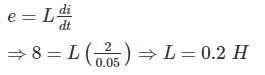
जब एक कुण्डल में 0.05 सेकेंड में विद्युत धारा 1 A से 4 A में बदलती है और कुण्डल में प्रेरित इ.एम.एफ. 8 वोल्ट है। तो कुण्डल का स्वः प्रेरकत्व क्या है?
a)
0.8 हेनरी
b)
0.4 हेनरी
c)
0.2 हेनरी
d)
0.1 हेनरी
| | Prisha Sengupta answered |
दिया गया है कि,
विद्युत धारा (I) = 2 A से 4 A में बदलती है
विद्युत धारा में बदलाव = 2 A
समय (t) = 0.05
इ.एम.एफ. (e) = 8 वोल्ट
Which property of a material opposes the passage of magnetic flux through it?- a)Permeance
- b)Capacitance
- c)Inductance
- d)Reluctance
Correct answer is option 'D'. Can you explain this answer?
Which property of a material opposes the passage of magnetic flux through it?
a)
Permeance
b)
Capacitance
c)
Inductance
d)
Reluctance
| | Suyash Joshi answered |
Reluctance in a magnetic circuits opposes the passage of magnetic flux. This is analogous to resistance in the electric circuit but rather than dissipating electric energy it stores magnetic energy. Permeance is the inverse of reluctance. In a magnetic circuit, permeance is a measure of the quantity of magnetic flux for a number of current-turns. This is analogous to electrical conductance in the electric circuit.
Which law states that “the line integral of the magnetic field intensity H around a closed path is equal to the total current linked by the contour”?- a)Kirchhoff’s voltage law
- b)Ampere’s circuit law
- c)Ohm’s law
- d)Kirchhoff’s current law
Correct answer is option 'B'. Can you explain this answer?
Which law states that “the line integral of the magnetic field intensity H around a closed path is equal to the total current linked by the contour”?
a)
Kirchhoff’s voltage law
b)
Ampere’s circuit law
c)
Ohm’s law
d)
Kirchhoff’s current law
| | Anoushka Choudhury answered |
The given statement is, the line integral of the magnetic field intensity H around a closed path is equal to the total current linked by the contour. Ampere’s circuit law states that the line integral of the magnetic field around some closed loop is equal to the times the algebraic sum of the currents which pass through the loop.
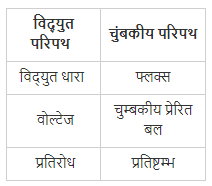
एक पदार्थ की चुंबकीय क्षेत्र तीव्रता क्या होती है, जिसकी संबंधित पारगम्यता 1 है, जब फ्लक्स घनत्व 0.005 T है?- a)250 AT/m
- b)452 AT/m
- c)1775 AT/m
- d)3980 AT/m
Correct answer is option 'D'. Can you explain this answer?
एक पदार्थ की चुंबकीय क्षेत्र तीव्रता क्या होती है, जिसकी संबंधित पारगम्यता 1 है, जब फ्लक्स घनत्व 0.005 T है?
a)
250 AT/m
b)
452 AT/m
c)
1775 AT/m
d)
3980 AT/m
| | Ishan Saini answered |
चुंबकीय क्षेत्र तीव्रता (H) और चुंबकीय फ्लक्स घनत्व (B) के बीच संबंध इस प्रकार है,
B = μ H

अनुचुंबकीय पदार्थ:- a)चुंबकीय क्षेत्र द्वारा कम आकर्षित होते हैं
- b)विषम चुंबकीय पदार्थ के समान होते हैं
- c)चुंबक द्वारा कम विकर्षित होते हैं
- d)क्यूरी से ऊपर तापित लौह द्वारा उत्पन्न किए जाते हैं
Correct answer is option 'A'. Can you explain this answer?
अनुचुंबकीय पदार्थ:
a)
चुंबकीय क्षेत्र द्वारा कम आकर्षित होते हैं
b)
विषम चुंबकीय पदार्थ के समान होते हैं
c)
चुंबक द्वारा कम विकर्षित होते हैं
d)
क्यूरी से ऊपर तापित लौह द्वारा उत्पन्न किए जाते हैं
| | Disha Das answered |
लागू किए गए चुम्बकीय क्षेत्र की समान दिशा में एक बाहरी चुम्बकीय क्षेत्र में रखे हुए कम चुंबकीय पदार्थों को अनुचुम्बकीय पदार्थ कहा जाता है। वे क्षेत्र के कमजोर भाग से मजबूत भाग में स्थानांतरित होते हैं। इन पदार्थों द्वारा प्रदर्शित चुंबकत्व को अनुचुम्बकत्व कहा जाता है।
उदाहरण: एल्यूमिनियम, प्लैटिनम, सोडियम, कैल्शियम
अस्थायी चुंबक का उपयोग किसमें किया जाता है?- a)जनरेटर
- b)लाउड स्पीकर
- c)मोटर
- d)उपरोक्त में से सभी
Correct answer is option 'D'. Can you explain this answer?
अस्थायी चुंबक का उपयोग किसमें किया जाता है?
a)
जनरेटर
b)
लाउड स्पीकर
c)
मोटर
d)
उपरोक्त में से सभी
| | Disha Das answered |
अस्थायी चुंबक नरम धातुओं से बने होते हैं और स्थायी चुंबकीय क्षेत्र या विद्युतीय धारा के निकट होने पर ही केवल उनके चुंबकत्व को बनाए रखते हैं। सामान्य अस्थायी चुंबकों में कील और पेपर क्लिप शामिल होते हैं, जिसे एक मजबूत चुंबक द्वारा उठाया या स्थानांतरित किया जा सकता है।
अस्थायी चुंबक का उपयोग टेलीफोन, लाउड स्पीकर, जनरेटर और इलेक्ट्रिक मोटर में किया जाता है।
The graph shown below represents the B-H curve for _______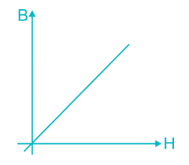
- a)Glass
- b)Steel
- c)Iron
- d)Air
Correct answer is option 'D'. Can you explain this answer?
The graph shown below represents the B-H curve for _______
a)
Glass
b)
Steel
c)
Iron
d)
Air
 | Saumya Basak answered |
B-H curve is used to show the relationship between magnetic flux density (B) and magnetic field strength (H) for a particular material.
There is no hysteresis loss in air as air does not consists of magnetic material. So the B-H curve in the air should be a straight line.
According to the equation B = μH, this straight line passes through origin and has a slope of μ.
उत्तेजक क्षेत्र को हटा देने के बाद लौह में शेष चुम्बकत्व को किस रूप में जाना जाता है?- a)प्रतिष्टम्भ
- b)पारगम्यता
- c)संवेदनशीलता
- d)अवशिष्ट चुंबकत्व
Correct answer is option 'D'. Can you explain this answer?
उत्तेजक क्षेत्र को हटा देने के बाद लौह में शेष चुम्बकत्व को किस रूप में जाना जाता है?
a)
प्रतिष्टम्भ
b)
पारगम्यता
c)
संवेदनशीलता
d)
अवशिष्ट चुंबकत्व
| | Gaurav Chauhan answered |
चुंबकीकरण प्रक्रिया को रोकने के बाद कोर में इसके कुछ चुम्बकत्व को बनाएं रखने के लिए कुण्डल की क्षमता को अवरोधन कहा जाता है, जबकि कोर में शेष फ्लक्स घनत्व की मात्रा को अवशिष्ट चुंबकत्व कहा जाता है।
नरम चुंबकीय पदार्थ में क्या होता है?- a)उच्च पारगम्यता और कम अवपीड़क बल
- b)कम पारगम्यता और उच्च अवपीड़क बल
- c)उच्च अवशिष्ट चुंबकत्व
- d)कम प्रतिरोधकता
Correct answer is option 'A'. Can you explain this answer?
नरम चुंबकीय पदार्थ में क्या होता है?
a)
उच्च पारगम्यता और कम अवपीड़क बल
b)
कम पारगम्यता और उच्च अवपीड़क बल
c)
उच्च अवशिष्ट चुंबकत्व
d)
कम प्रतिरोधकता
| | Sakshi Roy answered |
नरम चुंबकीय पदार्थ वे पदार्थ होते हैं जो आसानी से चुंबकित और विचुंबकित हो जाते हैं।
पारगम्यता एक पदार्थ अन्दर चुंबकीय क्षेत्र के गठन के समर्थन के लिए पदार्थ की क्षमता का माप है। यह चुंबकीकरण का परिमाण होता है जो एक पदार्थ पर लागू चुंबकीय क्षेत्र के प्रत्युत्तर में प्राप्त होता है। यह चुंबकीकरण का परिमाण होता है जो एक पदार्थ पर लागू चुंबकीय क्षेत्र के प्रत्युत्तर में प्राप्त होता है। इसलिए यह नरम चुंबकीय सामग्री के लिए उच्च होना चाहिए।
अवपीड़क क्षेत्र या अवपीड़क बल, एक लौहचौम्बिक पदार्थ की क्षमता का एक परिमाण होता है जो बिना किसी विचुंबकन के बाहरी चुंबकीय क्षेत्र का सामना कर सकता है। इसलिए यह नरम चुंबकीय सामग्री के लिए कम होना चाहिए।
श्रेणी संयोजन में जुड़े दो कुण्डलों के अवकल युग्मन में 2 मिली हेनरी, 4 मिली हेनरी के स्वः-प्रेरकत्व है और 0.15 मिली हेनरी का परस्पर प्रेरकत्व है। तो संयोजन के समतुल्य क्या है?- a)5.7 मिली हेनरी
- b)5.85 मिली हेनरी
- c)6.3 मिली हेनरी
- d)6.15 मिली हेनरी
Correct answer is option 'A'. Can you explain this answer?
श्रेणी संयोजन में जुड़े दो कुण्डलों के अवकल युग्मन में 2 मिली हेनरी, 4 मिली हेनरी के स्वः-प्रेरकत्व है और 0.15 मिली हेनरी का परस्पर प्रेरकत्व है। तो संयोजन के समतुल्य क्या है?
a)
5.7 मिली हेनरी
b)
5.85 मिली हेनरी
c)
6.3 मिली हेनरी
d)
6.15 मिली हेनरी
| | Puja Shah answered |
दिया गया है कि, L1 = 2 मिली हेनरी, L2 = 4 मिली हेनरी, M = 0.15 मिली हेनरी
अवकल युग्मन के लिए श्रेणी संयोजन में दो कुण्डलों का समतुल्य इस प्रकार है
Leq = L1 + L2 - 2M = 2 + 4 – 2 (0.15) = 5.7 मिली हेनरी
चुंबकीय परिपथ में वायु अंतराल का प्रभाव क्या होता है?- a)प्रतिष्टम्भ में वृद्धि
- b)फ्लक्स घनत्व में कमी
- c)फ्लक्स का विभाजन
- d)चुम्बकीय प्रभावन बल को कम करना
Correct answer is option 'A'. Can you explain this answer?
चुंबकीय परिपथ में वायु अंतराल का प्रभाव क्या होता है?
a)
प्रतिष्टम्भ में वृद्धि
b)
फ्लक्स घनत्व में कमी
c)
फ्लक्स का विभाजन
d)
चुम्बकीय प्रभावन बल को कम करना
| | Ashwin Mukherjee answered |
चुंबकीय परिपथ में वायु अंतराल का अर्थ है चुंबकीय प्रतिरोध अर्थात् चुम्बकीय फ्लक्स घनत्व के प्रति प्रतिष्टम्भ होना। इसलिए वायु अंतराल प्रतिष्टम्भ में वृद्धि दर्शाता है।
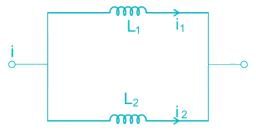


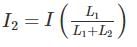
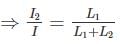
Which one of the following is the CORRECT expression for magnetic susceptibility?- a)B/H
- b)I/H
- c)

- d)

Correct answer is option 'B'. Can you explain this answer?
Which one of the following is the CORRECT expression for magnetic susceptibility?
a)
B/H
b)
I/H
c)
d)
| | Sanchita Sharma answered |
Magnetic susceptibility is a dimensionless proportionality constant that indicates the degree of magnetization of a material in response to an applied magnetic field.
Magnetic susceptibility (X) of a material is the ratio of magnetization I (magnetic moment per unit volume) to the applied magnetizing field intensity H.
X = I/H
एक साधारण लीवर की उत्कृष्ट अनुरूपता ______ है;- a)संधारित्र ब्रिज
- b)ट्रांसफार्मर
- c)पारस्परिक प्रेरित्र
- d)इनमें से कोई नहीं
Correct answer is option 'B'. Can you explain this answer?
एक साधारण लीवर की उत्कृष्ट अनुरूपता ______ है;
a)
संधारित्र ब्रिज
b)
ट्रांसफार्मर
c)
पारस्परिक प्रेरित्र
d)
इनमें से कोई नहीं
| | Ishan Saini answered |
एक लीवर कुछ उठाने के लिए आवश्यक कार्य के स्तर के समान कार्य स्तर को बनाए रखता है, जैसे कि यदि इसका उपयोग नहीं किया जाता था।
W = Fd
आवश्यक बल की मात्रा में कमी होती है, लेकिन काम स्थिर होने के दौरान आपको जिस दूरी की आवश्यकता है, वह बढ़ जाती है।
एक ट्रांसफार्मर में जाने वाली शक्ति की मात्रा बाहर से आने वाले मात्रा के समान होती है (नुकसान के लिए लेखांकन नहीं होता है)
शक्ति = वोल्टेज × विद्युत धारा
P = VI
आप ट्रांसफार्मर के वोल्टेज में वृद्धि कर सकते हैं, लेकिन विद्युत धारा वृत्क्रम में परिवर्तनीय होगी क्योंकि शक्ति में कोई बदलाव नहीं होता है।
चुंबकीय ध्रुव शक्ति मात्रा की एम.के.एस. तर्कसंगत इकाई क्या है?- a)वोल्ट/मीटर
- b)हेनरी/मीटर
- c)जूल/कूलम्ब
- d)एम्पियर-मीटर
Correct answer is option 'D'. Can you explain this answer?
चुंबकीय ध्रुव शक्ति मात्रा की एम.के.एस. तर्कसंगत इकाई क्या है?
a)
वोल्ट/मीटर
b)
हेनरी/मीटर
c)
जूल/कूलम्ब
d)
एम्पियर-मीटर
| | Upasana Joshi answered |
चुंबकीय ध्रुव शक्ति एक चुंबक के एक मुख द्वारा दूसरे चुंबक के मुख पर लगाए गए बल का माप होता है जब दोनों चुंबक समान और विपरीत ध्रुवों द्वारा दर्शाए जाते हैं।
वेबर चुंबकीय ध्रुव शक्ति के मात्रा की एम.के.एस. के तर्कसंगत इकाई होती है।
यदि 180 कुंडलियों वाला एक कुण्डल 0.5 मीटर औसत परिधि और कुण्डल के माध्यम से प्रवाहित होने वाली 4 एम्पियर की विद्युत धारा वाले एक लकड़ी के रिंग पर समानरूप से कुंडलित है, तो चुंबकीय क्षेत्र की मजबूती ज्ञात कीजिये।- a)1410 एम्पियर-मोड/मीटर
- b)1420 एम्पियर-मोड/मीटर
- c)1430 एम्पियर-मोड/मीटर
- d)1440 एम्पियर-मोड/मीटर
Correct answer is option 'D'. Can you explain this answer?
यदि 180 कुंडलियों वाला एक कुण्डल 0.5 मीटर औसत परिधि और कुण्डल के माध्यम से प्रवाहित होने वाली 4 एम्पियर की विद्युत धारा वाले एक लकड़ी के रिंग पर समानरूप से कुंडलित है, तो चुंबकीय क्षेत्र की मजबूती ज्ञात कीजिये।
a)
1410 एम्पियर-मोड/मीटर
b)
1420 एम्पियर-मोड/मीटर
c)
1430 एम्पियर-मोड/मीटर
d)
1440 एम्पियर-मोड/मीटर
| | Sarthak Yadav answered |
दिया गया है कि, कुंडलियों की संख्या (N) = 180
लम्बाई (l) = 0.5 मीटर
विद्युत धारा (I) = 4 एम्पियर
चुंबकीय क्षेत्र की मजबूती (H) इस प्रकार दी गयी है,

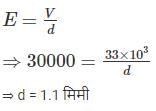
50 हर्ट्ज़ की आवृत्ति पर रबर की पारद्युतिक मजबूती 30000 वोल्ट/मिमी है। तो विभंग को बनाये रखने के लिए 33 किलो वोल्ट के विद्युतीय चालक पर विद्युतरोधन की आवश्यक मोटाई क्या है?- a)0.9 सेमी
- b)0.8 मिमी
- c)1.0 सेमी
- d)1.1 मिमी
Correct answer is option 'D'. Can you explain this answer?
50 हर्ट्ज़ की आवृत्ति पर रबर की पारद्युतिक मजबूती 30000 वोल्ट/मिमी है। तो विभंग को बनाये रखने के लिए 33 किलो वोल्ट के विद्युतीय चालक पर विद्युतरोधन की आवश्यक मोटाई क्या है?
a)
0.9 सेमी
b)
0.8 मिमी
c)
1.0 सेमी
d)
1.1 मिमी
| | Prisha Sengupta answered |
दिया गया है कि,
विद्युत क्षेत्र (E) = 30000 वोल्ट/मिमी
विभंग वोल्टेज (V) = 33 किलो वोल्ट
1 cm त्रिज्या का एक पृथक वृत्त वायु में रखा जाता है, तो उसकी धारिता ज्ञात करें।- a)2.2 pF
- b)1.11 pF
- c)1.8 pF
- d)2.1 pF
Correct answer is option 'B'. Can you explain this answer?
1 cm त्रिज्या का एक पृथक वृत्त वायु में रखा जाता है, तो उसकी धारिता ज्ञात करें।
a)
2.2 pF
b)
1.11 pF
c)
1.8 pF
d)
2.1 pF
| | Upasana Joshi answered |
एक पृथक वृत्त की धारिता इस प्रकार से दी जाती है,
C = 4πε0R = 4π×8.854×10−12×1×10−2 = 1.11pF
एक चुम्बकीय कुण्डल के प्रतिष्टम्भ की गणना कीजिये जो एक लौह कोर पर समान रूप से कुंडलित है, बशर्ते कि लौह की संबंधित पारगम्यता 1400 हो। साथ ही, चुंबकीय परिपथ की लम्बाई 70 सेमी है और कोर का अनुप्रस्थ-काट क्षेत्रफल 5 सेमी2 है?- a)3.6 × 10⁵ AT/Wb
- b)7.9 × 10⁵ AT/Wb
- c)7.9 × 10⁸ AT/Wb
- d)4.6 × 10⁸ AT/Wb
Correct answer is option 'B'. Can you explain this answer?
एक चुम्बकीय कुण्डल के प्रतिष्टम्भ की गणना कीजिये जो एक लौह कोर पर समान रूप से कुंडलित है, बशर्ते कि लौह की संबंधित पारगम्यता 1400 हो। साथ ही, चुंबकीय परिपथ की लम्बाई 70 सेमी है और कोर का अनुप्रस्थ-काट क्षेत्रफल 5 सेमी2 है?
a)
3.6 × 10⁵ AT/Wb
b)
7.9 × 10⁵ AT/Wb
c)
7.9 × 10⁸ AT/Wb
d)
4.6 × 10⁸ AT/Wb
| | Prisha Kulkarni answered |
चुम्बकीय कुण्डल का प्रतिष्टम्भ इस प्रकार दिया गया है,


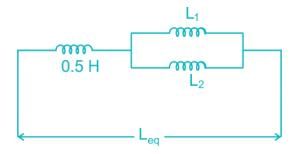
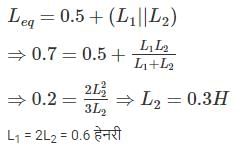
कुण्डल का स्वः प्रेरकत्व उच्च होने पर- a)इसकी वेबर-कुंडली कम हो जाती है
- b)प्रेरित इ.एम.एफ. कम हो जाता है
- c)इसके द्वारा उत्पादित प्रवाह अधिक होता है
- d)इसके माध्यम से स्थिर धारा स्थापित करने में विलम्ब होता है
Correct answer is option 'D'. Can you explain this answer?
कुण्डल का स्वः प्रेरकत्व उच्च होने पर
a)
इसकी वेबर-कुंडली कम हो जाती है
b)
प्रेरित इ.एम.एफ. कम हो जाता है
c)
इसके द्वारा उत्पादित प्रवाह अधिक होता है
d)
इसके माध्यम से स्थिर धारा स्थापित करने में विलम्ब होता है
| | Mira Mukherjee answered |
कुण्डल का स्वः प्रेरकत्व कुण्डल में स्वः प्रेरित इ.एम.एफ. और विद्युत धारा के बदलाव की दर के अनुपात के रूप में परिभाषित होता है।

कुण्डल का स्वः प्रेरकत्व उच्च होने पर इसके माध्यम से स्थिर धारा स्थापित करने में विलम्ब होता है।
दो अनंत समानांतर धातु प्लेटों को समान ध्रुवीयता के समकक्ष सतह आवेश घनत्व के साथ आवेशित किया जाता है। तो प्लेटों के बीच के अंतर में विद्युत क्षेत्र क्या होता है?- a)एक प्लेट द्वारा उत्पादित विद्युत क्षेत्र के समान
- b)प्लेट पर उत्पादित क्षेत्र का आधा हिस्सा
- c)शून्य
- d)क्षेत्र स्थिति के निर्देशांक पर निर्भर करता है
Correct answer is option 'C'. Can you explain this answer?
दो अनंत समानांतर धातु प्लेटों को समान ध्रुवीयता के समकक्ष सतह आवेश घनत्व के साथ आवेशित किया जाता है। तो प्लेटों के बीच के अंतर में विद्युत क्षेत्र क्या होता है?
a)
एक प्लेट द्वारा उत्पादित विद्युत क्षेत्र के समान
b)
प्लेट पर उत्पादित क्षेत्र का आधा हिस्सा
c)
शून्य
d)
क्षेत्र स्थिति के निर्देशांक पर निर्भर करता है
| | Ameya Gupta answered |
दो अनंत समानांतर धातु प्लेटों को समान ध्रुवीयता के समकक्ष सतह आवेश घनत्व के साथ आवेशित किया जाता है। समकक्ष सतह आवेश घनत्व में समान आवेश होते हैं, जो या तो धनात्मक या ऋणात्मक होते हैं। समान आवेश एक दूसरे से विकर्षित होते हैं, इसलिए प्लेटों के बीच के अंतर में परिणामी विद्युत क्षेत्र शून्य होता है।
एक लघु सोलेनॉइड के अक्ष पर चुंबकीय क्षेत्र मजबूती:- a)एम्पियर मोड़ के समानुपाती और लम्बाई के व्युत्क्रमानुपाती होती है
- b)लम्बाई के समानुपाती और एम्पियर मोड़ के व्युत्क्रमानुपाती होती है
- c)कुंडलियों की संख्या के समानुपाती और विद्युत धारा के व्युत्क्रमानुपाती होती है
- d)सोलेनॉइड के व्यास के समानुपाती और कुंडलियों की संख्या के व्युत्क्रमानुपाती होती है
Correct answer is option 'A'. Can you explain this answer?
एक लघु सोलेनॉइड के अक्ष पर चुंबकीय क्षेत्र मजबूती:
a)
एम्पियर मोड़ के समानुपाती और लम्बाई के व्युत्क्रमानुपाती होती है
b)
लम्बाई के समानुपाती और एम्पियर मोड़ के व्युत्क्रमानुपाती होती है
c)
कुंडलियों की संख्या के समानुपाती और विद्युत धारा के व्युत्क्रमानुपाती होती है
d)
सोलेनॉइड के व्यास के समानुपाती और कुंडलियों की संख्या के व्युत्क्रमानुपाती होती है
| | Aaditya Choudhary answered |
एक लघु सोलेनॉइड के चुंबकीय क्षेत्र मजबूती (H) इस प्रकार दी गयी है,

जहाँ N कुंडलियों की संख्या है।
I एम्पियर में विद्युत धारा है।
L लम्बाई है।
उपरोक्त व्यंजक से हम देख सकते हैं कि चुंबकीय क्षेत्र मजबूती एम्पियर मोड़ के समानुपाती और लम्बाई के व्युत्क्रमानुपाती होता है।
Chapter doubts & questions for Electromagnetic Fields Theory - SSC JE Electrical Mock Test Series (Hindi) 2026 2026 is part of Electrical Engineering (EE) exam preparation. The chapters have been prepared according to the Electrical Engineering (EE) exam syllabus. The Chapter doubts & questions, notes, tests & MCQs are made for Electrical Engineering (EE) 2026 Exam. Find important definitions, questions, notes, meanings, examples, exercises, MCQs and online tests here.
Chapter doubts & questions of Electromagnetic Fields Theory - SSC JE Electrical Mock Test Series (Hindi) 2026 in English & Hindi are available as part of Electrical Engineering (EE) exam. Download more important topics, notes, lectures and mock test series for Electrical Engineering (EE) Exam by signing up for free.
