


All Exams > Class 3 > EVS for Class 3 > All Questions
All questions of A House Like This for Class 3 Exam
Due to which reason the houses were ten to twelve feet above the ground.- a)Rain
- b)Heat
- c)Animal
- d)Thief
Correct answer is option 'A'. Can you explain this answer?
Due to which reason the houses were ten to twelve feet above the ground.
a)
Rain
b)
Heat
c)
Animal
d)
Thief
 | Anjali Gupta answered |
Correct Answer :- A
Explanation:- Due to the rain, the houses were ten to twelve feet above the ground.

Which of the following statements is INCORRECT?- a)We should allow sunlight to our house because it helps to kill germs and decrease humidity.
- b)We should put wire mesh on the windows to stop the entry of dust and light.
- c)We should welcome our guests in the living room of our house.
- d)We should use bricks, cement, etc. to make our permanent houses as they make a house strong.
Correct answer is option 'C'. Can you explain this answer?
Which of the following statements is INCORRECT?
a)
We should allow sunlight to our house because it helps to kill germs and decrease humidity.
b)
We should put wire mesh on the windows to stop the entry of dust and light.
c)
We should welcome our guests in the living room of our house.
d)
We should use bricks, cement, etc. to make our permanent houses as they make a house strong.
| | Saanvi Ahuja answered |
Wire mesh on windows and doors stop the entry of insects such as mosquitoes and flies
What is the name of the boy in this story?- a)Namal
- b)Namez
- c)Naman
- d)Naseem
Correct answer is option 'D'. Can you explain this answer?
What is the name of the boy in this story?
a)
Namal
b)
Namez
c)
Naman
d)
Naseem
 | Dhruv Shah answered |
The name of the boy in this story is Naseem.
Explanation:
In the given options, option 'A' is "Namal", option 'B' is "Namez", option 'C' is "Naman", and option 'D' is "Naseem". To determine the correct answer, we need to analyze the information provided in the question.
According to the question, we are looking for the name of the boy in the story. The options provided are names, and we need to choose the correct one.
Now, let's analyze each option:
Option 'A': Namal - This option does not match the correct answer as it is not "Naseem".
Option 'B': Namez - This option does not match the correct answer as it is not "Naseem".
Option 'C': Naman - This option does not match the correct answer as it is not "Naseem".
Option 'D': Naseem - This option matches the correct answer mentioned in the question.
Therefore, the correct answer is option 'D', which is "Naseem".
It is important to carefully read the question and analyze the provided options to determine the correct answer. In this case, the name "Naseem" is the correct answer as it matches the given information.
Explanation:
In the given options, option 'A' is "Namal", option 'B' is "Namez", option 'C' is "Naman", and option 'D' is "Naseem". To determine the correct answer, we need to analyze the information provided in the question.
According to the question, we are looking for the name of the boy in the story. The options provided are names, and we need to choose the correct one.
Now, let's analyze each option:
Option 'A': Namal - This option does not match the correct answer as it is not "Naseem".
Option 'B': Namez - This option does not match the correct answer as it is not "Naseem".
Option 'C': Naman - This option does not match the correct answer as it is not "Naseem".
Option 'D': Naseem - This option matches the correct answer mentioned in the question.
Therefore, the correct answer is option 'D', which is "Naseem".
It is important to carefully read the question and analyze the provided options to determine the correct answer. In this case, the name "Naseem" is the correct answer as it matches the given information.
X is a clothing worn in winters, while Y is a clothing worn in summers. Select the correct option regarding it.- a)X can be raincoat while Y can be a leather jacket.
- b)X can be made of cotton while Y can be made of wool.
- c)X is always made from natural fibres while Y is always made from man-made fibres.
- d)None of these
Correct answer is option 'D'. Can you explain this answer?
X is a clothing worn in winters, while Y is a clothing worn in summers. Select the correct option regarding it.
a)
X can be raincoat while Y can be a leather jacket.
b)
X can be made of cotton while Y can be made of wool.
c)
X is always made from natural fibres while Y is always made from man-made fibres.
d)
None of these
 | Mira Saha answered |
'X' can be clothing made up of wool, fur or silk (all natural fibres). 'Y' can be clothing made up of cotton (natural fibre) and nylon or polyester (man-made fibres).
____ is the house used by the people who keep moving from one place to another.- a)

- b)

- c)

- d)

Correct answer is option 'C'. Can you explain this answer?
____ is the house used by the people who keep moving from one place to another.
a)
b)
c)
d)
 | Nikhil Verma answered |
People who keep moving from one place to another live in temporary houses like caravans, tents, etc.
Mitali and Anuj were from which place?- a)Delhi
- b)Mumbai
- c)Kullu
- d)Manali
Correct answer is option 'A'. Can you explain this answer?
Mitali and Anuj were from which place?
a)
Delhi
b)
Mumbai
c)
Kullu
d)
Manali
| | Anushka Dabaria answered |
The correct answer is ( A)
Which of these can explain the reason for mud houses being common in desert areas like Rajasthan?- a)Mud houses remain comparatively cooler in summers
- b)Rainfall is very scarce in Rajasthan
- c)The roofs are made of thorny bushes
- d)Both (a) and (b)
Correct answer is option 'D'. Can you explain this answer?
Which of these can explain the reason for mud houses being common in desert areas like Rajasthan?
a)
Mud houses remain comparatively cooler in summers
b)
Rainfall is very scarce in Rajasthan
c)
The roofs are made of thorny bushes
d)
Both (a) and (b)
 | Shradha Saini answered |
Mud houses remain comparatively cool in summer

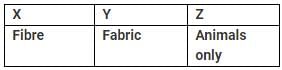
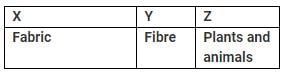
Clothes are made from ___X___ which in turn is made from ___Y___. We get Y from ___Z___.- a)

- b)
- c)
- d)

Correct answer is option 'C'. Can you explain this answer?
Clothes are made from ___X___ which in turn is made from ___Y___. We get Y from ___Z___.
a)
b)
c)
d)
| | Mihir Saha answered |
The clothes are made using fabrics. Fabrics are made by weaving fibres together. We get fibres such as cotton, jute, etc., from plants whereas fibres like wool and silk are obtained from animals.
_____ is an example of synthetic fibre.- a)Nylon
- b)Acrylic
- c)Polyester
- d)All of these
Correct answer is option 'D'. Can you explain this answer?
_____ is an example of synthetic fibre.
a)
Nylon
b)
Acrylic
c)
Polyester
d)
All of these
| | Ameya Singh answered |
Synthetic Fibre: Definition and Examples
Synthetic Fibre: Synthetic fibres are man-made fibres that are produced from chemical substances. They are made through a process called polymerization, in which small molecules called monomers are joined together to form long chains called polymers. Synthetic fibres are widely used for clothing, bedding, and various other applications due to their durability, strength, and resistance to chemicals.
Examples of Synthetic Fibres: There are several examples of synthetic fibres, including:
- Nylon: Nylon is a synthetic fibre that was first developed in the 1930s. It is a strong, durable, and lightweight fibre that is used in clothing, stockings, parachutes, and various other applications.
- Acrylic: Acrylic is a synthetic fibre that is similar in appearance to wool. It is soft, lightweight, and warm, and is used in clothing, blankets, and upholstery.
- Polyester: Polyester is a synthetic fibre that is commonly used in clothing, bedding, and carpets. It is strong, durable, and resistant to wrinkles and chemicals.
Conclusion: In conclusion, all of the above options (nylon, acrylic, and polyester) are examples of synthetic fibres. They are widely used in various applications due to their durability, strength, and resistance to chemicals.
Synthetic Fibre: Synthetic fibres are man-made fibres that are produced from chemical substances. They are made through a process called polymerization, in which small molecules called monomers are joined together to form long chains called polymers. Synthetic fibres are widely used for clothing, bedding, and various other applications due to their durability, strength, and resistance to chemicals.
Examples of Synthetic Fibres: There are several examples of synthetic fibres, including:
- Nylon: Nylon is a synthetic fibre that was first developed in the 1930s. It is a strong, durable, and lightweight fibre that is used in clothing, stockings, parachutes, and various other applications.
- Acrylic: Acrylic is a synthetic fibre that is similar in appearance to wool. It is soft, lightweight, and warm, and is used in clothing, blankets, and upholstery.
- Polyester: Polyester is a synthetic fibre that is commonly used in clothing, bedding, and carpets. It is strong, durable, and resistant to wrinkles and chemicals.
Conclusion: In conclusion, all of the above options (nylon, acrylic, and polyester) are examples of synthetic fibres. They are widely used in various applications due to their durability, strength, and resistance to chemicals.
______ should be present sufficiently in a healthy house.- a)Clean and fresh air
- b)Sunlight
- c)Mosquitoes
- d)Both (a) and (b)
Correct answer is option 'D'. Can you explain this answer?
______ should be present sufficiently in a healthy house.
a)
Clean and fresh air
b)
Sunlight
c)
Mosquitoes
d)
Both (a) and (b)
 | Krish Chatterjee answered |
Sunlight and fresh air keep us healthy, thus a house should be made in such a way that it has abundance of both.
Which type of houses are there in Delhi?- a)Bamboo house
- b)Mud house
- c)Multi storey buildings
- d)Wooden house
Correct answer is option 'C'. Can you explain this answer?
Which type of houses are there in Delhi?
a)
Bamboo house
b)
Mud house
c)
Multi storey buildings
d)
Wooden house
| | Sahil Nair answered |
Types of Houses in Delhi
In Delhi, there are various types of houses, ranging from traditional to modern ones. The most common type of houses found in Delhi are multi-storey buildings. Let's discuss the types of houses in Delhi in detail.
Multi-storey Buildings
Multi-storey buildings are the most common type of houses in Delhi. These buildings are made of concrete and have several floors. They are usually equipped with modern amenities such as elevators, air conditioning, and security systems. These buildings can be found in almost every part of the city, and they cater to people from all walks of life.
Independent Houses
Independent houses are another type of houses found in Delhi. They are usually built on a plot of land and have a front yard and backyard. These houses are ideal for families who prefer more privacy and space. They can be found in both urban and suburban areas of Delhi.
Apartments
Apartments are a type of multi-storey building, but they are divided into separate units or flats. Each flat has its own kitchen, bathroom, and living area. Apartments are popular among people who want to live in a community and enjoy the benefits of shared amenities such as swimming pools, gyms, and playgrounds. They can be found in various sizes, ranging from small studios to large penthouses.
Villas
Villas are luxurious houses that are usually built on large plots of land. They have spacious rooms, gardens, and swimming pools. Villas are popular among the affluent section of society who want to live in a luxurious environment away from the hustle and bustle of the city.
Conclusion
In conclusion, Delhi has a diverse range of houses, ranging from multi-storey buildings to luxurious villas. Each type of house caters to the needs of different people and offers a unique living experience.
In Delhi, there are various types of houses, ranging from traditional to modern ones. The most common type of houses found in Delhi are multi-storey buildings. Let's discuss the types of houses in Delhi in detail.
Multi-storey Buildings
Multi-storey buildings are the most common type of houses in Delhi. These buildings are made of concrete and have several floors. They are usually equipped with modern amenities such as elevators, air conditioning, and security systems. These buildings can be found in almost every part of the city, and they cater to people from all walks of life.
Independent Houses
Independent houses are another type of houses found in Delhi. They are usually built on a plot of land and have a front yard and backyard. These houses are ideal for families who prefer more privacy and space. They can be found in both urban and suburban areas of Delhi.
Apartments
Apartments are a type of multi-storey building, but they are divided into separate units or flats. Each flat has its own kitchen, bathroom, and living area. Apartments are popular among people who want to live in a community and enjoy the benefits of shared amenities such as swimming pools, gyms, and playgrounds. They can be found in various sizes, ranging from small studios to large penthouses.
Villas
Villas are luxurious houses that are usually built on large plots of land. They have spacious rooms, gardens, and swimming pools. Villas are popular among the affluent section of society who want to live in a luxurious environment away from the hustle and bustle of the city.
Conclusion
In conclusion, Delhi has a diverse range of houses, ranging from multi-storey buildings to luxurious villas. Each type of house caters to the needs of different people and offers a unique living experience.


Refer to the given picture and answer the question.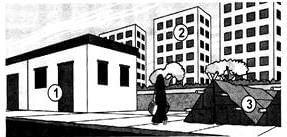 Savitri is a nomad. To earn bread, she works as a helper in three homes which are on different floors. She lives in a and works in b. Which of the following options correctly identifies a and b in the figure?
- a)a-3, b-1
- b)a-2, b-1
- c)a-3, b-2
- d)a-2, b-3
Correct answer is option 'C'. Can you explain this answer?
Refer to the given picture and answer the question.
Savitri is a nomad. To earn bread, she works as a helper in three homes which are on different floors. She lives in a and works in b. Which of the following options correctly identifies a and b in the figure?
a)
a-3, b-1
b)
a-2, b-1
c)
a-3, b-2
d)
a-2, b-3
 | Madhavan Majumdar answered |
Savitri lives in a temporary house (3) and works in permanent houses (2) at different floors.
Refer to the given picture and answer the question.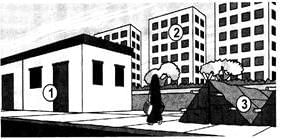
- a)Portable and temporary houses
- b)Movable and portable houses
- c)Temporary and permanent houses
- d)Permanent and skyscraper houses
Correct answer is option 'C'. Can you explain this answer?
Refer to the given picture and answer the question.
a)
Portable and temporary houses
b)
Movable and portable houses
c)
Temporary and permanent houses
d)
Permanent and skyscraper houses
| | Avi Das answered |
'1' and '2' are permanent houses whereas, '3' is a temporary house (tent).
Select the correct match of the place and the houses commonly found there.- a)
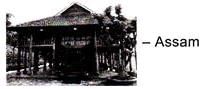
- b)
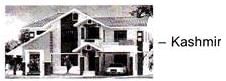
- c)
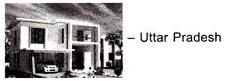
- d)All of these
Correct answer is option 'D'. Can you explain this answer?
Select the correct match of the place and the houses commonly found there.
a)
b)
c)
d)
All of these
| | Bhavya Datta answered |
Assam is a flood and rain prone area, so houses here are made on stilts. In Kashmir, snowfall occurs in winter, so houses with sloping roofs are made over there. Uttar Pradesh has moderate climate, so houses with flat roofs are made over there.
Select the correct statement about the clothes made of fibre obtained from the animal shown here.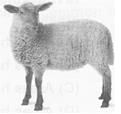
- a)They do not trap air.
- b)They keep us warm.
- c)They are waterproof.
- d)They cannot be burnt.
Correct answer is option 'B'. Can you explain this answer?
Select the correct statement about the clothes made of fibre obtained from the animal shown here.
a)
They do not trap air.
b)
They keep us warm.
c)
They are waterproof.
d)
They cannot be burnt.
 | Pranavi Chauhan answered |
The animal shown here is sheep. Sheep gives us wool. Woollen clothes are warm. They trap air in the tiny pockets between their fibres but they are not waterproof and can easily burn.
Study the given flow chart carefully. Cotton and silk are represented by the letters ____ and ____ respectively.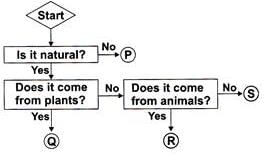
- a)P, Q
- b)Q, R
- c)Q, S
- d)R, S
Correct answer is option 'B'. Can you explain this answer?
Study the given flow chart carefully. Cotton and silk are represented by the letters ____ and ____ respectively.
a)
P, Q
b)
Q, R
c)
Q, S
d)
R, S
| | Manasa Ahuja answered |
'Q' is cotton, a natural fibre that is obtained from cotton plant. 'R' is silk, also a natural fibre that comes from an insect (animal), silkworm.
Select the option in which INCORRECT odd member is encircled.- a)Nylon, Acrylic, Polyester,

- b)Tent, Caravan, Houseboat,

- c)Cotton, Silk,
 Wool
Wool - d)Raincoat,
 Skirt, T-shirt
Correct answer is option 'D'. Can you explain this answer?
Select the option in which INCORRECT odd member is encircled.
a)
Nylon, Acrylic, Polyester,
b)
Tent, Caravan, Houseboat,
c)
Cotton, Silk, Wool
Woold)
Raincoat, Skirt, T-shirt
Skirt, T-shirt| | Stuti Yadav answered |
Short, skirts and t-shirt are worn in summers whereas raincoat is worn during rainy season.
A _______ is being organized in our school.- a)Quiz
- b)Fair
- c)Market
- d)Camp
Correct answer is option 'D'. Can you explain this answer?
A _______ is being organized in our school.
a)
Quiz
b)
Fair
c)
Market
d)
Camp
| | Taapasya Bhat answered |
Camp is held in the school
Which is a capital of India?- a)New Delhi
- b)West Bengal
- c)Bihar
- d)Assam
Correct answer is option 'A'. Can you explain this answer?
Which is a capital of India?
a)
New Delhi
b)
West Bengal
c)
Bihar
d)
Assam
| | Ayush Thakur answered |
New Delhi is capital of India
Chapter doubts & questions for A House Like This - EVS for Class 3 2026 is part of Class 3 exam preparation. The chapters have been prepared according to the Class 3 exam syllabus. The Chapter doubts & questions, notes, tests & MCQs are made for Class 3 2026 Exam. Find important definitions, questions, notes, meanings, examples, exercises, MCQs and online tests here.
Chapter doubts & questions of A House Like This - EVS for Class 3 in English & Hindi are available as part of Class 3 exam. Download more important topics, notes, lectures and mock test series for Class 3 Exam by signing up for free.
EVS for Class 355 videos|182 docs|48 tests |
