


All Exams > SSC CGL > General Intelligence and Reasoning for SSC CGL > All Questions
All questions of Direction Sense for SSC CGL Exam
One evening Damu was standing on the field facing the cricket stump. The shadow of the cricket stump falls on the right side of Damu, then find out which side Damu is facing?- a)South
- b)East
- c)West
- d)North
Correct answer is option 'D'. Can you explain this answer?
One evening Damu was standing on the field facing the cricket stump. The shadow of the cricket stump falls on the right side of Damu, then find out which side Damu is facing?
a)
South
b)
East
c)
West
d)
North
 | Abhiram Mehra answered |
Understanding Damu's Position
To determine which direction Damu is facing, we need to analyze the information given about the cricket stump and its shadow.
Key Points to Consider:
- Direction of Light: Shadows are cast in the opposite direction of the light source. In this scenario, the light source is the sun.
- Shadow Falls on the Right Side: If Damu is facing a certain direction and the shadow of the cricket stump falls on his right side, it indicates that the sun is positioned in a specific direction.
Analyzing Directions:
1. Sunrise and Sunset:
- The sun rises in the East and sets in the West.
- In the afternoon, the sun is generally in the South.
2. Facing Directions:
- If Damu is facing North, the sun would be to his right (East), which would cast the shadow of the stump towards the West.
- If Damu is facing South, the sun would be to his left (East), casting the shadow towards the East.
- If Damu is facing East, the sun would be behind him (in the West), casting the shadow towards the West.
- If Damu is facing West, the sun would be in front of him (East), casting the shadow towards the East.
Conclusion:
Given that the shadow of the cricket stump falls on the right side of Damu, he must be facing North. This is because, in this position, the sun is in the East, causing the shadow to fall towards the West, which is Damu's right side. Therefore, the correct answer is option D (North).
To determine which direction Damu is facing, we need to analyze the information given about the cricket stump and its shadow.
Key Points to Consider:
- Direction of Light: Shadows are cast in the opposite direction of the light source. In this scenario, the light source is the sun.
- Shadow Falls on the Right Side: If Damu is facing a certain direction and the shadow of the cricket stump falls on his right side, it indicates that the sun is positioned in a specific direction.
Analyzing Directions:
1. Sunrise and Sunset:
- The sun rises in the East and sets in the West.
- In the afternoon, the sun is generally in the South.
2. Facing Directions:
- If Damu is facing North, the sun would be to his right (East), which would cast the shadow of the stump towards the West.
- If Damu is facing South, the sun would be to his left (East), casting the shadow towards the East.
- If Damu is facing East, the sun would be behind him (in the West), casting the shadow towards the West.
- If Damu is facing West, the sun would be in front of him (East), casting the shadow towards the East.
Conclusion:
Given that the shadow of the cricket stump falls on the right side of Damu, he must be facing North. This is because, in this position, the sun is in the East, causing the shadow to fall towards the West, which is Damu's right side. Therefore, the correct answer is option D (North).

Direction: Study the following information and answer the given questions carefully.Q is to the south of P. A is to the west of B, which is to the west of C. D is to the south of B. P is to the west of A.Q is to the _____ of D.- a)North
- b)South
- c)North west
- d)Cannot be determined
Correct answer is option 'D'. Can you explain this answer?
Direction: Study the following information and answer the given questions carefully.
Q is to the south of P. A is to the west of B, which is to the west of C. D is to the south of B. P is to the west of A.
Q is to the _____ of D.
a)
North
b)
South
c)
North west
d)
Cannot be determined
 | Malavika Rane answered |
Explanation:
Given Information:
- Q is to the south of P.
- A is to the west of B, which is to the west of C.
- D is to the south of B.
- P is to the west of A.
Analysis:
To determine the position of Q with respect to D, we need to analyze the given information.
Position of P, Q, and A:
- P is to the west of A.
- Q is to the south of P.
- Therefore, Q is to the south of A.
Position of B and C:
- A is to the west of B.
- B is to the west of C.
Position of D:
- D is to the south of B.
Position of Q with respect to D:
- Since D is to the south of B and Q is to the south of A, we cannot determine the exact position of Q with respect to D based on the given information.
Therefore, the correct answer is Cannot be determined.
Given Information:
- Q is to the south of P.
- A is to the west of B, which is to the west of C.
- D is to the south of B.
- P is to the west of A.
Analysis:
To determine the position of Q with respect to D, we need to analyze the given information.
Position of P, Q, and A:
- P is to the west of A.
- Q is to the south of P.
- Therefore, Q is to the south of A.
Position of B and C:
- A is to the west of B.
- B is to the west of C.
Position of D:
- D is to the south of B.
Position of Q with respect to D:
- Since D is to the south of B and Q is to the south of A, we cannot determine the exact position of Q with respect to D based on the given information.
Therefore, the correct answer is Cannot be determined.
Direction: Study the following information and answer the given questions carefully.Eight books S, E, M, T, N, O, H and Z are lying on the table such that E is 12cm north of M, which is 10cm to the west of T. Z is 10cm east of T. S is to the north of Z. H is to the south of Z. O is 20cm west of N, which is 5cm south of T. S is to the east of E. N is to the west of H.Q. How far and in which direction is S with respect to M?- a)4√34 cm, north east
- b)2√34 cm, south east
- c)4√34 cm, west
- d)2√34 cm, south west
Correct answer is option 'A'. Can you explain this answer?
Direction: Study the following information and answer the given questions carefully.
Eight books S, E, M, T, N, O, H and Z are lying on the table such that E is 12cm north of M, which is 10cm to the west of T. Z is 10cm east of T. S is to the north of Z. H is to the south of Z. O is 20cm west of N, which is 5cm south of T. S is to the east of E. N is to the west of H.
Q. How far and in which direction is S with respect to M?
a)
4√34 cm, north east
b)
2√34 cm, south east
c)
4√34 cm, west
d)
2√34 cm, south west
 | Arnav Saini answered |
Understanding the Positions of the Books
To determine the position of S with respect to M, we need to interpret the given information step-by-step:
1. Establishing Positions
- E is 12 cm north of M.
- M is 10 cm west of T.
- Z is 10 cm east of T.
- S is to the north of Z.
- H is to the south of Z.
- O is 20 cm west of N.
- N is 5 cm south of T.
- S is to the east of E.
- N is to the west of H.
2. Drawing the Layout
- Start with T as a reference point (0, 0).
- M is at (-10, 0) (10 cm west of T).
- E is at (-10, 12) (12 cm north of M).
- Z is at (0, 0) (10 cm east of T).
- N is at (0, -5) (5 cm south of T).
- O is at (-20, -5) (20 cm west of N).
- H is at (0, -5) (south of Z), so H is at (0, -10).
- S is positioned to the north of Z, thus S is at (0, 10).
3. Calculating the Distance and Direction
Now, with the coordinate positions established:
- M is at (-10, 0).
- S is at (0, 10).
4. Finding the Distance
- Distance formula:
- d = √[(x2 - x1)² + (y2 - y1)²]
- Plugging in the coordinates:
- d = √[(0 - (-10))² + (10 - 0)²]
- d = √[(10)² + (10)²]
- d = √[100 + 100] = √200 = 10√2.
5. Determining the Direction
- The position of S relative to M is in the northeast direction.
Conclusion
Thus, the distance and direction of S with respect to M is 4√34 cm, northeast. Therefore, the correct answer is option 'A'.
To determine the position of S with respect to M, we need to interpret the given information step-by-step:
1. Establishing Positions
- E is 12 cm north of M.
- M is 10 cm west of T.
- Z is 10 cm east of T.
- S is to the north of Z.
- H is to the south of Z.
- O is 20 cm west of N.
- N is 5 cm south of T.
- S is to the east of E.
- N is to the west of H.
2. Drawing the Layout
- Start with T as a reference point (0, 0).
- M is at (-10, 0) (10 cm west of T).
- E is at (-10, 12) (12 cm north of M).
- Z is at (0, 0) (10 cm east of T).
- N is at (0, -5) (5 cm south of T).
- O is at (-20, -5) (20 cm west of N).
- H is at (0, -5) (south of Z), so H is at (0, -10).
- S is positioned to the north of Z, thus S is at (0, 10).
3. Calculating the Distance and Direction
Now, with the coordinate positions established:
- M is at (-10, 0).
- S is at (0, 10).
4. Finding the Distance
- Distance formula:
- d = √[(x2 - x1)² + (y2 - y1)²]
- Plugging in the coordinates:
- d = √[(0 - (-10))² + (10 - 0)²]
- d = √[(10)² + (10)²]
- d = √[100 + 100] = √200 = 10√2.
5. Determining the Direction
- The position of S relative to M is in the northeast direction.
Conclusion
Thus, the distance and direction of S with respect to M is 4√34 cm, northeast. Therefore, the correct answer is option 'A'.
Direction: Study the following information and answer the given questions carefully.Point P is 6m to the east of point Q, which is 8m to the north of point R, which is 4m to the north of point S,and R is lso 5m to west of TQ. In which direction is point P with respect to point T?- a)South west
- b)North
- c)North east
- d)South
Correct answer is option 'B'. Can you explain this answer?
Direction: Study the following information and answer the given questions carefully.
Point P is 6m to the east of point Q, which is 8m to the north of point R, which is 4m to the north of point S,and R is lso 5m to west of T
Q. In which direction is point P with respect to point T?
a)
South west
b)
North
c)
North east
d)
South
 | EduRev SSC CGL answered |
From the information given in the question we get the following arrangement:
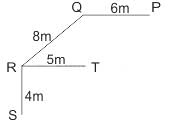
We can see that point P is in north direction with respect to point T.
Hence, Option B is correct.
We can see that point P is in north direction with respect to point T.
Hence, Option B is correct.
Maneka walks 5 km towards the North, then takes a right turn and walks 10 km. Now, she turns left and walks 5 km. Finally, she takes another left turn and walks 10 km. In which direction is she walking now and how far is she from the starting point?- a)East, 10 km
- b)South, 5 km
- c)North, 5 km
- d)West, 10 km
Correct answer is option 'D'. Can you explain this answer?
Maneka walks 5 km towards the North, then takes a right turn and walks 10 km. Now, she turns left and walks 5 km. Finally, she takes another left turn and walks 10 km. In which direction is she walking now and how far is she from the starting point?
a)
East, 10 km
b)
South, 5 km
c)
North, 5 km
d)
West, 10 km
| | Arnav Saini answered |
Step-by-Step Movement Analysis
Maneka's journey can be broken down into distinct steps to understand her final position.
1. Initial Movement
- Maneka walks 5 km North.
2. First Turn
- She takes a right turn and walks 10 km East.
3. Second Turn
- Maneka then turns left and walks 5 km North.
4. Final Turn
- Finally, she takes another left turn and walks 10 km West.
Final Position Calculation
- After walking 5 km North, she is at point (0, 5).
- After walking 10 km East, she reaches (10, 5).
- After walking 5 km North, her position is (10, 10).
- After taking another 10 km West, she moves to (0, 10).
Direction Analysis
- From her starting point at (0, 0), her final position is (0, 10).
- This means she is now 10 km North of her starting point.
Distance from Starting Point
- The distance between her starting point and final position is 10 km in the North direction.
Conclusion
- After analyzing her movements, it is clear that Maneka is walking in the West direction and is 10 km away from her starting point.
Correct Answer
- Therefore, the correct answer is option D: West, 10 km.
Maneka's journey can be broken down into distinct steps to understand her final position.
1. Initial Movement
- Maneka walks 5 km North.
2. First Turn
- She takes a right turn and walks 10 km East.
3. Second Turn
- Maneka then turns left and walks 5 km North.
4. Final Turn
- Finally, she takes another left turn and walks 10 km West.
Final Position Calculation
- After walking 5 km North, she is at point (0, 5).
- After walking 10 km East, she reaches (10, 5).
- After walking 5 km North, her position is (10, 10).
- After taking another 10 km West, she moves to (0, 10).
Direction Analysis
- From her starting point at (0, 0), her final position is (0, 10).
- This means she is now 10 km North of her starting point.
Distance from Starting Point
- The distance between her starting point and final position is 10 km in the North direction.
Conclusion
- After analyzing her movements, it is clear that Maneka is walking in the West direction and is 10 km away from her starting point.
Correct Answer
- Therefore, the correct answer is option D: West, 10 km.
Direction: Study the following information and answer the given questions carefully.Nine points (S, T, U, V, W, X, Y, Z and A) are at different distances and directions from each other.W is 30m to the south of Y, which is 16m to the west of T. The distance between V and X is equal to the distance between T and U. Z is 28m to the east of X. The distance between X and Z is double the distance between Y and Z, which is to the south of Y. V is 14m to the south of T. S is 12m to the west of U, which is to the west of Y. V is 16m north of A.Q. In which direction is point S with respect to point A?- a)South
- b)North east
- c)North
- d)North west
Correct answer is option 'D'. Can you explain this answer?
Direction: Study the following information and answer the given questions carefully.
Nine points (S, T, U, V, W, X, Y, Z and A) are at different distances and directions from each other.
W is 30m to the south of Y, which is 16m to the west of T. The distance between V and X is equal to the distance between T and U. Z is 28m to the east of X. The distance between X and Z is double the distance between Y and Z, which is to the south of Y. V is 14m to the south of T. S is 12m to the west of U, which is to the west of Y. V is 16m north of A.
Q. In which direction is point S with respect to point A?
a)
South
b)
North east
c)
North
d)
North west
 | Ssc Cgl answered |
From the common explanation, we can see that point S is in north west direction with respect to point A.
Hence, Option D is correct.
Common Explanation:
References:
W is 30m to the south of Y, which is 16m to the west of T.
S is 12m to the west of U, which is the west of Y.
V is 14m to the south of T.
V is 16m to the north of A.
Z is 28m to the east of X.
The distance between V and X is equal to the distance between T and U.
The distance between X and Z is double the distance between Y and Z, which is to the south of Y.
Inferences:
From the above statement, we get the final figure below:
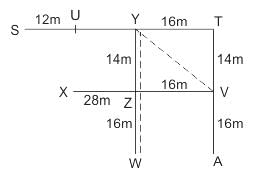
Hence, Option D is correct.
Common Explanation:
References:
W is 30m to the south of Y, which is 16m to the west of T.
S is 12m to the west of U, which is the west of Y.
V is 14m to the south of T.
V is 16m to the north of A.
Z is 28m to the east of X.
The distance between V and X is equal to the distance between T and U.
The distance between X and Z is double the distance between Y and Z, which is to the south of Y.
Inferences:
From the above statement, we get the final figure below:
Direction: Study the following information and answer the given questions carefully.Nine points (S, T, U, V, W, X, Y, Z and A) are at different distances and directions from each other.W is 30m to the south of Y, which is 16m to the west of T. The distance between V and X is equal to the distance between T and U. Z is 28m to the east of X. The distance between X and Z is double the distance between Y and Z, which is to the south of Y. V is 14m to the south of T. S is 12m to the west of U, which is to the west of Y. V is 16m north of A.Q. Which one of the following doesn’t belong to this group?- a)SY
- b)TV
- c)ZW
- d)SZ
Correct answer is option 'D'. Can you explain this answer?
Direction: Study the following information and answer the given questions carefully.
Nine points (S, T, U, V, W, X, Y, Z and A) are at different distances and directions from each other.
W is 30m to the south of Y, which is 16m to the west of T. The distance between V and X is equal to the distance between T and U. Z is 28m to the east of X. The distance between X and Z is double the distance between Y and Z, which is to the south of Y. V is 14m to the south of T. S is 12m to the west of U, which is to the west of Y. V is 16m north of A.
Q. Which one of the following doesn’t belong to this group?
a)
SY
b)
TV
c)
ZW
d)
SZ
| | Ssc Cgl answered |
From the common explanation, we can see that all makes straight line except SZ.
Hence, Option D is correct.
Common Explanation:
References:
W is 30m to the south of Y, which is 16m to the west of T.
S is 12m to the west of U, which is the west of Y.
V is 14m to the south of T.
V is 16m to the north of A.
Z is 28m to the east of X.
The distance between V and X is equal to the distance between T and U.
The distance between X and Z is double the distance between Y and Z, which is to the south of Y.
Inferences:
From the above statement, we get the final figure below:
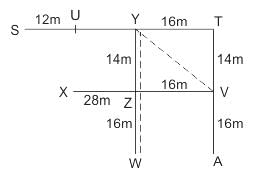
Hence, Option D is correct.
Common Explanation:
References:
W is 30m to the south of Y, which is 16m to the west of T.
S is 12m to the west of U, which is the west of Y.
V is 14m to the south of T.
V is 16m to the north of A.
Z is 28m to the east of X.
The distance between V and X is equal to the distance between T and U.
The distance between X and Z is double the distance between Y and Z, which is to the south of Y.
Inferences:
From the above statement, we get the final figure below:
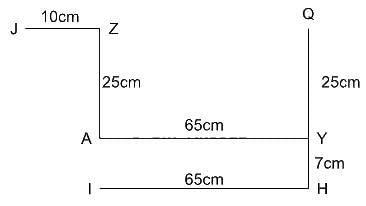
Direction: Study the following information and answer the given questions carefully.Z is 25 cm to the north of A. H is 7 cm south of Y. I is 65 cm to the west of H. Y is 65 cm to the east of A. J is 10 cm to the west of Z. Y is 25 cm to the south of Q.Q. What is the shortest distance between Q and H?- a)25 cm
- b)32 cm
- c)35 cm
- d)45 cm
Correct answer is option 'B'. Can you explain this answer?
Direction: Study the following information and answer the given questions carefully.
Z is 25 cm to the north of A. H is 7 cm south of Y. I is 65 cm to the west of H. Y is 65 cm to the east of A. J is 10 cm to the west of Z. Y is 25 cm to the south of Q.
Q. What is the shortest distance between Q and H?
a)
25 cm
b)
32 cm
c)
35 cm
d)
45 cm
| | EduRev SSC CGL answered |
From the common explanation, we get the shortest distance between A and H is QY + YH = 25 cm + 7 cm = 32 cm.
Hence, Option B is correct.
Common Explanation:
Reference:
Z is 25 cm to the north of A.
Y is 65 cm to the east of A.
H is 7 cm south of Y.
I is 65 cm to the west of H.
J is 10 cm to the west of Z.
Y is 25 cm to the south of Q.
Inference:
From the above statement, we get the final figure as below:
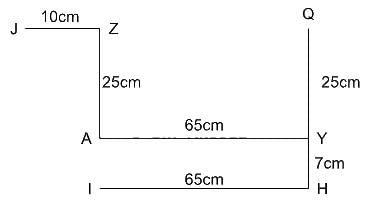
Hence, Option B is correct.
Common Explanation:
Reference:
Z is 25 cm to the north of A.
Y is 65 cm to the east of A.
H is 7 cm south of Y.
I is 65 cm to the west of H.
J is 10 cm to the west of Z.
Y is 25 cm to the south of Q.
Inference:
From the above statement, we get the final figure as below:
Direction: Study the following information and answer the given questions carefully.Z is 25 cm to the north of A. H is 7 cm south of Y. I is 65 cm to the west of H. Y is 65 cm to the east of A. J is 10 cm to the west of Z. Y is 25 cm to the south of Q.Q is in which direction with respect to I?- a)North west
- b)South west
- c)North east
- d)East
Correct answer is option 'C'. Can you explain this answer?
Direction: Study the following information and answer the given questions carefully.
Z is 25 cm to the north of A. H is 7 cm south of Y. I is 65 cm to the west of H. Y is 65 cm to the east of A. J is 10 cm to the west of Z. Y is 25 cm to the south of Q.
Q is in which direction with respect to I?
a)
North west
b)
South west
c)
North east
d)
East
| | EduRev SSC CGL answered |
From the common explanation, we can see that Q is in north east direction with respect to I.
Hence, Option C is correct.
Common Explanation:
Reference:
Z is 25 cm to the north of A.
Y is 65 cm to the east of A.
H is 7 cm south of Y.
I is 65 cm to the west of H.
J is 10 cm to the west of Z.
Y is 25 cm to the south of Q.
Inference:
From the above statement, we get the final figure as below:
Hence, Option C is correct.
Common Explanation:
Reference:
Z is 25 cm to the north of A.
Y is 65 cm to the east of A.
H is 7 cm south of Y.
I is 65 cm to the west of H.
J is 10 cm to the west of Z.
Y is 25 cm to the south of Q.
Inference:
From the above statement, we get the final figure as below:
Direction: Study the following information and answer the given questions carefully.Point C is 80 km to the north of point H.
Point D is 50 km to the south of point S.
Point E is 60 km to the east of point D.
Point S is 80 km to the east of point R.
Point R is 70 km to the north of point B.
Point T is 30 km to the north of point E.
Point H is 100 km to the west of point B.Q. What is the shortest distance between points S and E and in which direction is point E with respect to point S?- a)10√61 km, south west
- b)10√61 km, south east
- c)12√61 km, north west
- d)12√61 km, north east
Correct answer is option 'B'. Can you explain this answer?
Direction: Study the following information and answer the given questions carefully.
Point C is 80 km to the north of point H.
Point D is 50 km to the south of point S.
Point E is 60 km to the east of point D.
Point S is 80 km to the east of point R.
Point R is 70 km to the north of point B.
Point T is 30 km to the north of point E.
Point H is 100 km to the west of point B.
Point D is 50 km to the south of point S.
Point E is 60 km to the east of point D.
Point S is 80 km to the east of point R.
Point R is 70 km to the north of point B.
Point T is 30 km to the north of point E.
Point H is 100 km to the west of point B.
Q. What is the shortest distance between points S and E and in which direction is point E with respect to point S?
a)
10√61 km, south west
b)
10√61 km, south east
c)
12√61 km, north west
d)
12√61 km, north east
 | Glance Learning Institute answered |
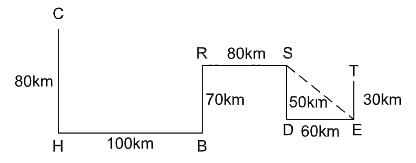
From the common explanation:
Using Pythagoras theorem, we get
SE2 = DS2 + DE2
SE2 = 502 + 602 = 2500 + 3600 = 6100
SE =61√10 km
And point E is in south east direction with respect to S.
Hence, Option B is correct.
Common Explanation:
References:
Point C is 80 km to the north of point H.
Point H is 100 km to the west of point B.
Point R is 70 km to the north of point B.
Point S is 80 km to the east of point R.
Point D is 50 km to the south of point S.
Point E is 60 km to the east of point D.
Point T is 30 km to the north of point E.
Inferences:
From the above statement, we get the final figure as below:
Using Pythagoras theorem, we get
SE2 = DS2 + DE2
SE2 = 502 + 602 = 2500 + 3600 = 6100
SE =61√10 km
And point E is in south east direction with respect to S.
Hence, Option B is correct.
Common Explanation:
References:
Point C is 80 km to the north of point H.
Point H is 100 km to the west of point B.
Point R is 70 km to the north of point B.
Point S is 80 km to the east of point R.
Point D is 50 km to the south of point S.
Point E is 60 km to the east of point D.
Point T is 30 km to the north of point E.
Inferences:
From the above statement, we get the final figure as below:
Direction: Study the following information and answer the given questions carefully.Eight books S, E, M, T, N, O, H and Z are lying on the table such that E is 12cm north of M, which is 10cm to the west of T. Z is 10cm east of T. S is to the north of Z. H is to the south of Z. O is 20cm west of N, which is 5cm south of T. S is to the east of E. N is to the west of H.Q. In which direction is O with respect to E?- a)South west
- b)North west
- c)North east
- d)North
Correct answer is option 'A'. Can you explain this answer?
Direction: Study the following information and answer the given questions carefully.
Eight books S, E, M, T, N, O, H and Z are lying on the table such that E is 12cm north of M, which is 10cm to the west of T. Z is 10cm east of T. S is to the north of Z. H is to the south of Z. O is 20cm west of N, which is 5cm south of T. S is to the east of E. N is to the west of H.
Q. In which direction is O with respect to E?
a)
South west
b)
North west
c)
North east
d)
North
| | EduRev SSC CGL answered |
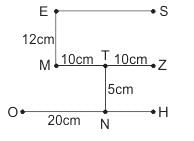
From the common explanation, we can see that O is in south west direction with respect to E.
Hence, Option A is correct.
Common Explanation:
References:
E is 12cm north of M, which is 10cm to the west of T.
Z is 10cm east of T.
O is 20cm west of N, which is 5cm south of T.
S is to the north of Z.
H is to the south of Z.
N is to the west of H.
S is to the east of E.
Inferences:
From the above statement, we get the final figure below:
Hence, Option A is correct.
Common Explanation:
References:
E is 12cm north of M, which is 10cm to the west of T.
Z is 10cm east of T.
O is 20cm west of N, which is 5cm south of T.
S is to the north of Z.
H is to the south of Z.
N is to the west of H.
S is to the east of E.
Inferences:
From the above statement, we get the final figure below:
Direction: Study the following information and answer the given questions carefully.Point C is 80 km to the north of point H.
Point D is 50 km to the south of point S.
Point E is 60 km to the east of point D.
Point S is 80 km to the east of point R.
Point R is 70 km to the north of point B.
Point T is 30 km to the north of point E.
Point H is 100 km to the west of point B.Q. in which direction is point C with respect to point D?- a)South
- b)North east
- c)North
- d)North west
Correct answer is option 'D'. Can you explain this answer?
Direction: Study the following information and answer the given questions carefully.
Point C is 80 km to the north of point H.
Point D is 50 km to the south of point S.
Point E is 60 km to the east of point D.
Point S is 80 km to the east of point R.
Point R is 70 km to the north of point B.
Point T is 30 km to the north of point E.
Point H is 100 km to the west of point B.
Point D is 50 km to the south of point S.
Point E is 60 km to the east of point D.
Point S is 80 km to the east of point R.
Point R is 70 km to the north of point B.
Point T is 30 km to the north of point E.
Point H is 100 km to the west of point B.
Q. in which direction is point C with respect to point D?
a)
South
b)
North east
c)
North
d)
North west
| | EduRev SSC CGL answered |
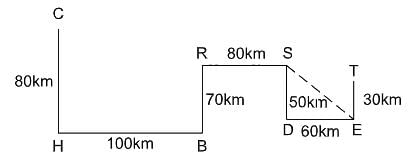
From the common explanation, we can see that point C is in the north west direction with respect to point D.
Hence, Option D is correct.
Common Explanation:
References:
Point C is 80 km to the north of point H.
Point H is 100 km to the west of point B.
Point R is 70 km to the north of point B.
Point S is 80 km to the east of point R.
Point D is 50 km to the south of point S.
Point E is 60 km to the east of point D.
Point T is 30 km to the north of point E.
Inferences:
From the above statement, we get the final figure as below:
Hence, Option D is correct.
Common Explanation:
References:
Point C is 80 km to the north of point H.
Point H is 100 km to the west of point B.
Point R is 70 km to the north of point B.
Point S is 80 km to the east of point R.
Point D is 50 km to the south of point S.
Point E is 60 km to the east of point D.
Point T is 30 km to the north of point E.
Inferences:
From the above statement, we get the final figure as below:
Direction: Study the following information and answer the given questions carefully.Eight books S, E, M, T, N, O, H and Z are lying on the table such that E is 12cm north of M, which is 10cm to the west of T. Z is 10cm east of T. S is to the north of Z. H is to the south of Z. O is 20cm west of N, which is 5cm south of T. S is to the east of E. N is to the west of H.Q. What is distance between S and H?- a)8 cm
- b)12 cm
- c)15 cm
- d)17 cm
Correct answer is option 'D'. Can you explain this answer?
Direction: Study the following information and answer the given questions carefully.
Eight books S, E, M, T, N, O, H and Z are lying on the table such that E is 12cm north of M, which is 10cm to the west of T. Z is 10cm east of T. S is to the north of Z. H is to the south of Z. O is 20cm west of N, which is 5cm south of T. S is to the east of E. N is to the west of H.
Q. What is distance between S and H?
a)
8 cm
b)
12 cm
c)
15 cm
d)
17 cm
| | Ssc Cgl answered |
From the common explanation, we get the distance between S and H is SZ + ZH = 12 cm + 5 cm = 17 cm.
Hence, Option D is correct.
Common Explanation:
References:
E is 12cm north of M, which is 10cm to the west of T.
Z is 10cm east of T.
O is 20cm west of N, which is 5cm south of T.
S is to the north of Z.
H is to the south of Z.
N is to the west of H.
S is to the east of E.
Inferences:
From the above statement, we get the final figure below:
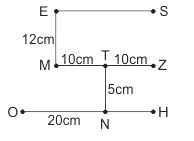
Hence, Option D is correct.
Common Explanation:
References:
E is 12cm north of M, which is 10cm to the west of T.
Z is 10cm east of T.
O is 20cm west of N, which is 5cm south of T.
S is to the north of Z.
H is to the south of Z.
N is to the west of H.
S is to the east of E.
Inferences:
From the above statement, we get the final figure below:
Direction: Study the following information and answer the given questions carefully.Ishu was standing in a park. She walked 6m towards the east and turned right and walked 3m. Then she turned left and walked 6m to reach the mall. Now, she turned right and walked 4m and again turned right and walked 3m to reach the gym. After some time, she turned left and walked 3m and turned right and walked 9m to reach his school.Q. What is the shortest distance between the mall and the gym?- a)3m
- b)4m
- c)5m
- d)6m
Correct answer is option 'C'. Can you explain this answer?
Direction: Study the following information and answer the given questions carefully.
Ishu was standing in a park. She walked 6m towards the east and turned right and walked 3m. Then she turned left and walked 6m to reach the mall. Now, she turned right and walked 4m and again turned right and walked 3m to reach the gym. After some time, she turned left and walked 3m and turned right and walked 9m to reach his school.
Q. What is the shortest distance between the mall and the gym?
a)
3m
b)
4m
c)
5m
d)
6m
| | Ssc Cgl answered |
Let the distance between the mall and the gym be x m.
From the common explanation:
Using Pythagoras theorem, we get
x2 = 42 + 32
x2 = 16 + 9 = 25
x = 5 m
Hence, Option C is correct.
Common Explanation:
References:
Ishu was standing in a park.
She walked 6m towards the east and turned right and walked 3m.
Then she turned left and walked 6m to reach the mall.
Now, she turned right and walked 4m and again turned right and walked 3m to reach the gym.
After some time, she turned left and walked 3m and turned right and walked 9m to reach his school.
Inferences:
From the above statement, we get the final figure below:
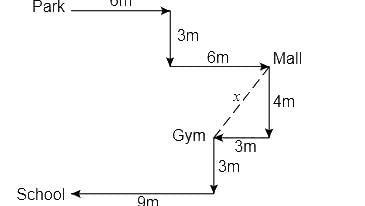
From the common explanation:
Using Pythagoras theorem, we get
x2 = 42 + 32
x2 = 16 + 9 = 25
x = 5 m
Hence, Option C is correct.
Common Explanation:
References:
Ishu was standing in a park.
She walked 6m towards the east and turned right and walked 3m.
Then she turned left and walked 6m to reach the mall.
Now, she turned right and walked 4m and again turned right and walked 3m to reach the gym.
After some time, she turned left and walked 3m and turned right and walked 9m to reach his school.
Inferences:
From the above statement, we get the final figure below:
Direction: Study the following information and answer the given questions carefully.John started walking from point A. Point B is 20cm north of point A. Point A is 6cm east of point H. Point B is 6cm west of point G. Point C is 6cm west of point E. Point D is 20cm south of point G. Point C is the midpoint of points D and G. Point E is 10cm north of point F.Q. What is the shortest distance between the points H and F?- a)6 cm
- b)12 cm
- c)18 cm
- d)24 cm
Correct answer is option 'C'. Can you explain this answer?
Direction: Study the following information and answer the given questions carefully.
John started walking from point A. Point B is 20cm north of point A. Point A is 6cm east of point H. Point B is 6cm west of point G. Point C is 6cm west of point E. Point D is 20cm south of point G. Point C is the midpoint of points D and G. Point E is 10cm north of point F.
Q. What is the shortest distance between the points H and F?
a)
6 cm
b)
12 cm
c)
18 cm
d)
24 cm
 | Target Study Academy answered |
From the common explanation, we get the distance between H and F is HA + BG + CE = 6 cm + 6 cm + 6 cm = 18 cm.
Hence, Option C is correct.
Final Arrangement:
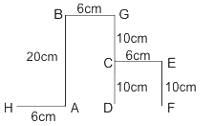
Common Explanation:
Reference:
Point B is 20cm north of point A.
Point A is 6cm east of point H.
Point B is 6cm west of point G.
Point C is 6cm west of point E.
Point C is the midpoint of points D and G.
Point E is 10cm north of point F.
Point D is 20cm south of point G.
Inference:
From the above statement, we get the final figure below:
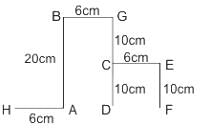
Hence, Option C is correct.
Final Arrangement:
Common Explanation:
Reference:
Point B is 20cm north of point A.
Point A is 6cm east of point H.
Point B is 6cm west of point G.
Point C is 6cm west of point E.
Point C is the midpoint of points D and G.
Point E is 10cm north of point F.
Point D is 20cm south of point G.
Inference:
From the above statement, we get the final figure below:
Direction: Study the following information and answer the given questions carefully.Ishu was standing in a park. She walked 6m towards the east and turned right and walked 3m. Then she turned left and walked 6m to reach the mall. Now, she turned right and walked 4m and again turned right and walked 3m to reach the gym. After some time, she turned left and walked 3m and turned right and walked 9m to reach his school.Q. How far and in which direction is the school with respect to the park?- a)10m, south west
- b)14m, east
- c)12m, west
- d)10m, south
Correct answer is option 'D'. Can you explain this answer?
Direction: Study the following information and answer the given questions carefully.
Ishu was standing in a park. She walked 6m towards the east and turned right and walked 3m. Then she turned left and walked 6m to reach the mall. Now, she turned right and walked 4m and again turned right and walked 3m to reach the gym. After some time, she turned left and walked 3m and turned right and walked 9m to reach his school.
Q. How far and in which direction is the school with respect to the park?
a)
10m, south west
b)
14m, east
c)
12m, west
d)
10m, south
| | Ssc Cgl answered |
From the common explanation, we can see that her school is in south direction with respect to the park and the distance between the park and the school = 3m + 4m + 3m = 10m
Hence, Option D is correct.
Common Explanation:
References:
Ishu was standing in a park.
She walked 6m towards the east and turned right and walked 3m.
Then she turned left and walked 6m to reach the mall.
Now, she turned right and walked 4m and again turned right and walked 3m to reach the gym.
After some time, she turned left and walked 3m and turned right and walked 9m to reach his school.
Inferences:
From the above statement, we get the final figure below:
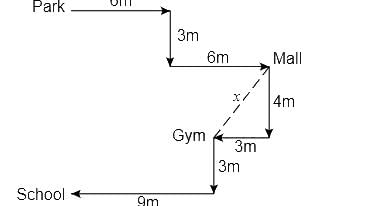
Hence, Option D is correct.
Common Explanation:
References:
Ishu was standing in a park.
She walked 6m towards the east and turned right and walked 3m.
Then she turned left and walked 6m to reach the mall.
Now, she turned right and walked 4m and again turned right and walked 3m to reach the gym.
After some time, she turned left and walked 3m and turned right and walked 9m to reach his school.
Inferences:
From the above statement, we get the final figure below:
Rohit started walking from his home towards north. After covering a distance of 8 km, he turned towards left and covered a distance of 6 km and reached his office. What is the shortest distance between his home and his office?- a)10 km
- b)12 km
- c)16 km
- d)15 km
Correct answer is option 'A'. Can you explain this answer?
Rohit started walking from his home towards north. After covering a distance of 8 km, he turned towards left and covered a distance of 6 km and reached his office. What is the shortest distance between his home and his office?
a)
10 km
b)
12 km
c)
16 km
d)
15 km
 | T.S Academy answered |
From the information given in the question we get the following arrangement:
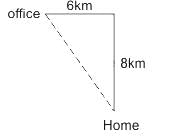
Required distance = √(82 + 62) = √100 = 10 km
Hence, Option A is correct.
Required distance = √(82 + 62) = √100 = 10 km
Hence, Option A is correct.
Direction: Study the following information and answer the given questions carefully.Nine points (S, T, U, V, W, X, Y, Z and A) are at different distances and directions from each other.W is 30m to the south of Y, which is 16m to the west of T. The distance between V and X is equal to the distance between T and U. Z is 28m to the east of X. The distance between X and Z is double the distance between Y and Z, which is to the south of Y. V is 14m to the south of T. S is 12m to the west of U, which is to the west of Y. V is 16m north of A.Q. How far and in which direction is point V with respect to point Y?- a)21 m, south west
- b)2√113 m, south west
- c)25 m, north west
- d)2√113 m, south east
Correct answer is option 'D'. Can you explain this answer?
Direction: Study the following information and answer the given questions carefully.
Nine points (S, T, U, V, W, X, Y, Z and A) are at different distances and directions from each other.
W is 30m to the south of Y, which is 16m to the west of T. The distance between V and X is equal to the distance between T and U. Z is 28m to the east of X. The distance between X and Z is double the distance between Y and Z, which is to the south of Y. V is 14m to the south of T. S is 12m to the west of U, which is to the west of Y. V is 16m north of A.
Q. How far and in which direction is point V with respect to point Y?
a)
21 m, south west
b)
2√113 m, south west
c)
25 m, north west
d)
2√113 m, south east
| | Ssc Cgl answered |
From the common explanation:
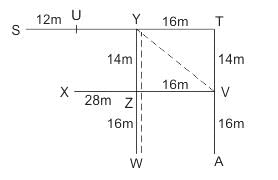
Using Pythagoras theorem, we get
VY2 = YZ2 + ZV2
VY2 = 142 + 162 = 196 + 256 = 452
VY = 2√113 m
And V is in south east direction with respect to Y.
Hence, Option D is correct.
Common Explanation:
References:
W is 30m to the south of Y, which is 16m to the west of T.
S is 12m to the west of U, which is the west of Y.
V is 14m to the south of T.
V is 16m to the north of A.
Z is 28m to the east of X.
The distance between V and X is equal to the distance between T and U.
The distance between X and Z is double the distance between Y and Z, which is to the south of Y.
Inferences:
From the above statement, we get the final figure below:
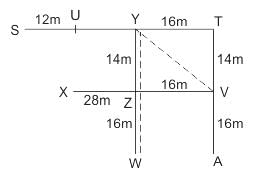
Using Pythagoras theorem, we get
VY2 = YZ2 + ZV2
VY2 = 142 + 162 = 196 + 256 = 452
VY = 2√113 m
And V is in south east direction with respect to Y.
Hence, Option D is correct.
Common Explanation:
References:
W is 30m to the south of Y, which is 16m to the west of T.
S is 12m to the west of U, which is the west of Y.
V is 14m to the south of T.
V is 16m to the north of A.
Z is 28m to the east of X.
The distance between V and X is equal to the distance between T and U.
The distance between X and Z is double the distance between Y and Z, which is to the south of Y.
Inferences:
From the above statement, we get the final figure below:
Direction: Study the following information and answer the given questions carefully.Anurag is standing at point P, facing the north direction. He starts walking towards the west and reaches point Q after walking 12m. Then he moves 12m to his right towards point R. From point R, he again moves his right to reach point S, which is 8m apart from point R. He again moves towards the right to reach point T after covering a distance of 6m from point S. Finally, he moves 12m to his left to reach point U.Q. In which direction is point R with respect to point P?- a)South
- b)North west
- c)North east
- d)North
Correct answer is option 'B'. Can you explain this answer?
Direction: Study the following information and answer the given questions carefully.
Anurag is standing at point P, facing the north direction. He starts walking towards the west and reaches point Q after walking 12m. Then he moves 12m to his right towards point R. From point R, he again moves his right to reach point S, which is 8m apart from point R. He again moves towards the right to reach point T after covering a distance of 6m from point S. Finally, he moves 12m to his left to reach point U.
Q. In which direction is point R with respect to point P?
a)
South
b)
North west
c)
North east
d)
North
| | T.S Academy answered |
From the common explanation, we can see that point R is in north west direction with respect to point P.
Hence, Option B is correct.
Final Arrangement:
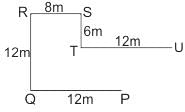
Common Explanation:
References:
Anurag is standing at point P, facing the north direction.
He starts walking towards west and reaches point Q after walking 12m.
He moves 12m to his right towards point R.
From point R, he again moves his right to reach point S, which is 8m apart from point R.
He again moves towards right to reach point T after covering a distance of 6m from point S.
Finally, he moves 12m to his left to reach point U.
Inferences:
From the above statement, we get the final figure below:
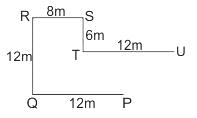
Hence, Option B is correct.
Final Arrangement:
Common Explanation:
References:
Anurag is standing at point P, facing the north direction.
He starts walking towards west and reaches point Q after walking 12m.
He moves 12m to his right towards point R.
From point R, he again moves his right to reach point S, which is 8m apart from point R.
He again moves towards right to reach point T after covering a distance of 6m from point S.
Finally, he moves 12m to his left to reach point U.
Inferences:
From the above statement, we get the final figure below:
Direction: Study the following information and answer the given questions carefully.Anurag is standing at point P, facing the north direction. He starts walking towards the west and reaches point Q after walking 12m. Then he moves 12m to his right towards point R. From point R, he again moves his right to reach point S, which is 8m apart from point R. He again moves towards the right to reach point T after covering a distance of 6m from point S. Finally, he moves 12m to his left to reach point U.Q. Point U is in _____ direction of point S.- a)South west
- b)South east
- c)North west
- d)North east
Correct answer is option 'B'. Can you explain this answer?
Direction: Study the following information and answer the given questions carefully.
Anurag is standing at point P, facing the north direction. He starts walking towards the west and reaches point Q after walking 12m. Then he moves 12m to his right towards point R. From point R, he again moves his right to reach point S, which is 8m apart from point R. He again moves towards the right to reach point T after covering a distance of 6m from point S. Finally, he moves 12m to his left to reach point U.
Q. Point U is in _____ direction of point S.
a)
South west
b)
South east
c)
North west
d)
North east
| | EduRev SSC CGL answered |
From the common explanation, we can see that point U is in south east direction of point S.
Hence, Option B is correct
Final Arrangement:
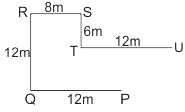
Common Explanation:
References:
Anurag is standing at point P, facing the north direction.
He starts walking towards west and reaches point Q after walking 12m.
He moves 12m to his right towards point R.
From point R, he again moves his right to reach point S, which is 8m apart from point R.
He again moves towards right to reach point T after covering a distance of 6m from point S.
Finally, he moves 12m to his left to reach point U.
Inferences:
From the above statement, we get the final figure below:
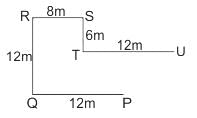
Hence, Option B is correct
Final Arrangement:
Common Explanation:
References:
Anurag is standing at point P, facing the north direction.
He starts walking towards west and reaches point Q after walking 12m.
He moves 12m to his right towards point R.
From point R, he again moves his right to reach point S, which is 8m apart from point R.
He again moves towards right to reach point T after covering a distance of 6m from point S.
Finally, he moves 12m to his left to reach point U.
Inferences:
From the above statement, we get the final figure below:
Direction: Study the following information and answer the given questions carefully.There are six houses P, Q, R, S, T and U. P is 8 km north of Q. S is 10 km east of U, which is 12 km south of T. S is 8 km north of R, which is 12 km east of P. Q. What is the shortest distance between house Q and house A, which is exactly between house P and house R?- a)8 km
- b)10 km
- c)12 km
- d)9 km
Correct answer is option 'B'. Can you explain this answer?
Direction: Study the following information and answer the given questions carefully.
There are six houses P, Q, R, S, T and U. P is 8 km north of Q. S is 10 km east of U, which is 12 km south of T. S is 8 km north of R, which is 12 km east of P.
Q. What is the shortest distance between house Q and house A, which is exactly between house P and house R?
a)
8 km
b)
10 km
c)
12 km
d)
9 km
| | Ssc Cgl answered |
Using Pythagoras theorem, we get
AQ2 = AP2 + PQ2
AQ2 = 62 + 82 = 36 + 64 = 100
AQ =10 km
Hence, Option B is correct.
Common Explanation:
References:
P is 8 km north of Q.
S is 10 km east of U, which is 12 km south of T.
S is 8 km north of R, which is 12 km east of P.
Inferences:
From the above statement, we get the final figure below:
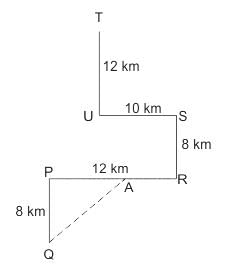
AQ2 = AP2 + PQ2
AQ2 = 62 + 82 = 36 + 64 = 100
AQ =10 km
Hence, Option B is correct.
Common Explanation:
References:
P is 8 km north of Q.
S is 10 km east of U, which is 12 km south of T.
S is 8 km north of R, which is 12 km east of P.
Inferences:
From the above statement, we get the final figure below:
Direction: Study the following information and answer the given questions carefully.There are six houses P, Q, R, S, T and U. P is 8 km north of Q. S is 10 km east of U, which is 12 km south of T. S is 8 km north of R, which is 12 km east of P. Q. In which direction is house P with respect to house S?- a)South
- b)North west
- c)North
- d)South west
Correct answer is option 'D'. Can you explain this answer?
Direction: Study the following information and answer the given questions carefully.
There are six houses P, Q, R, S, T and U. P is 8 km north of Q. S is 10 km east of U, which is 12 km south of T. S is 8 km north of R, which is 12 km east of P.
Q. In which direction is house P with respect to house S?
a)
South
b)
North west
c)
North
d)
South west
| | EduRev SSC CGL answered |
From the common explanation, we can see that house P is in south west direction with respect to house S.
Hence, Option D is correct.
Common Explanation:
References:
P is 8 km north of Q.
S is 10 km east of U, which is 12 km south of T.
S is 8 km north of R, which is 12 km east of P.
Inferences:
From the above statement, we get the final figure below:
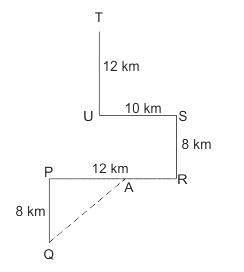
Hence, Option D is correct.
Common Explanation:
References:
P is 8 km north of Q.
S is 10 km east of U, which is 12 km south of T.
S is 8 km north of R, which is 12 km east of P.
Inferences:
From the above statement, we get the final figure below:
Direction: Study the following information and answer the given questions carefully.Point P is 6m to the east of point Q, which is 8m to the north east of point R, which is 4m to the north of point S.Q. In which direction is point S with respect to point P?- a)South west
- b)North
- c)North west
- d)South
Correct answer is option 'A'. Can you explain this answer?
Direction: Study the following information and answer the given questions carefully.
Point P is 6m to the east of point Q, which is 8m to the north east of point R, which is 4m to the north of point S.
Q. In which direction is point S with respect to point P?
a)
South west
b)
North
c)
North west
d)
South
 | Iq Funda answered |
From the information given in the question we get the following arrangement:
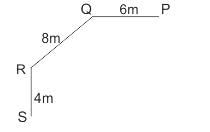
We can see that point S is in south west direction with respect to point P.
Hence, Option A is correct.
Hence, Option A is correct.
Direction: Study the following information and answer the given questions carefully.Q is to the south of P. A is to the west of B, which is to the west of C. D is to the south of B. P is to the west of A.A is to the _____ of D.- a)North west
- b)South east
- c)South west
- d)West
Correct answer is option 'A'. Can you explain this answer?
Direction: Study the following information and answer the given questions carefully.
Q is to the south of P. A is to the west of B, which is to the west of C. D is to the south of B. P is to the west of A.
A is to the _____ of D.
a)
North west
b)
South east
c)
South west
d)
West
| | T.S Academy answered |
From the common explanation, we can see that A is to the north west of D.
Hence, Option A is correct.
Final Arrangement:
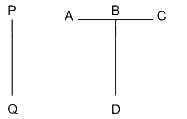
Common Explanation:
References:
Q is to the south of P.
A is to the west of B, which is to the west of C.
D is to the south of B.
P is to the west of A.
Inferences:
From the above statement, we get the final figure below:
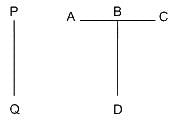
Hence, Option A is correct.
Final Arrangement:
Common Explanation:
References:
Q is to the south of P.
A is to the west of B, which is to the west of C.
D is to the south of B.
P is to the west of A.
Inferences:
From the above statement, we get the final figure below:
Direction: Study the following information and answer the given questions carefully.Ishu was standing in a park. She walked 6m towards the east and turned right and walked 3m. Then she turned left and walked 6m to reach the mall. Now, she turned right and walked 4m and again turned right and walked 3m to reach the gym. After some time, she turned left and walked 3m and turned right and walked 9m to reach his school.Q. What is the direction of the gym with respect to the park?- a)South west
- b)North west
- c)North east
- d)South east
Correct answer is option 'D'. Can you explain this answer?
Direction: Study the following information and answer the given questions carefully.
Ishu was standing in a park. She walked 6m towards the east and turned right and walked 3m. Then she turned left and walked 6m to reach the mall. Now, she turned right and walked 4m and again turned right and walked 3m to reach the gym. After some time, she turned left and walked 3m and turned right and walked 9m to reach his school.
Q. What is the direction of the gym with respect to the park?
a)
South west
b)
North west
c)
North east
d)
South east
| | Glance Learning Institute answered |
From the common explanation, we can see that the gym is in the south east direction of the park.
Hence, Option D is correct.
Common Explanation:
References:
Ishu was standing in a park.
She walked 6m towards the east and turned right and walked 3m.
Then she turned left and walked 6m to reach the mall.
Now, she turned right and walked 4m and again turned right and walked 3m to reach the gym.
After some time, she turned left and walked 3m and turned right and walked 9m to reach his school.
Inferences:
From the above statement, we get the final figure below:
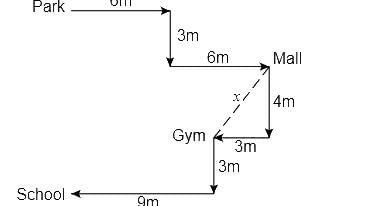
Hence, Option D is correct.
Common Explanation:
References:
Ishu was standing in a park.
She walked 6m towards the east and turned right and walked 3m.
Then she turned left and walked 6m to reach the mall.
Now, she turned right and walked 4m and again turned right and walked 3m to reach the gym.
After some time, she turned left and walked 3m and turned right and walked 9m to reach his school.
Inferences:
From the above statement, we get the final figure below:
Amanda was facing the east direction. Then he took two 90 degree turns in an anticlockwise direction continuously, and then again took four 45 degree turns in the clockwise direction continuously. In which direction Amanda is facing now?- a)South East
- b)East
- c)South
- d)North West
Correct answer is option 'B'. Can you explain this answer?
Amanda was facing the east direction. Then he took two 90 degree turns in an anticlockwise direction continuously, and then again took four 45 degree turns in the clockwise direction continuously. In which direction Amanda is facing now?
a)
South East
b)
East
c)
South
d)
North West
| | Ssc Cgl answered |
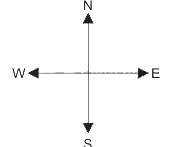
From hints given it is clear that he took two 90 degree turns in anticlockwise direction continuously, and then again took four 45 degree turns in clockwise direction continuously. So, the net turn is:
Anticlockwise 2(90) – clockwise 4(45) = 180 - 180 = 0 degree. Thus, after turning 0-degrees he is still facing east.
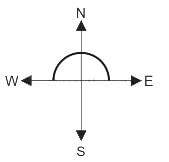
Hence option B is correct answer.
Direction: Study the following information and answer the given questions carefully.Anurag is standing at point P, facing the north direction. He starts walking towards the west and reaches point Q after walking 12m. Then he moves 12m to his right towards point R. From point R, he again moves his right to reach point S, which is 8m apart from point R. He again moves towards the right to reach point T after covering a distance of 6m from point S. Finally, he moves 12m to his left to reach point U.Q. What is the shortest distance between point P and point U?- a)8m
- b)9m
- c)10m
- d)12m
Correct answer is option 'C'. Can you explain this answer?
Direction: Study the following information and answer the given questions carefully.
Anurag is standing at point P, facing the north direction. He starts walking towards the west and reaches point Q after walking 12m. Then he moves 12m to his right towards point R. From point R, he again moves his right to reach point S, which is 8m apart from point R. He again moves towards the right to reach point T after covering a distance of 6m from point S. Finally, he moves 12m to his left to reach point U.
Q. What is the shortest distance between point P and point U?
a)
8m
b)
9m
c)
10m
d)
12m
| | EduRev SSC CGL answered |
Using Pythagoras theorem, we get
PU2 = 62 + 82 = 36 + 64 = 100
PU = 10m
Hence, Option C is correct.
Final Arrangement:
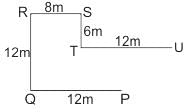
Common Explanation:
References:
Anurag is standing at point P, facing the north direction.
He starts walking towards west and reaches point Q after walking 12m.
He moves 12m to his right towards point R.
From point R, he again moves his right to reach point S, which is 8m apart from point R.
He again moves towards right to reach point T after covering a distance of 6m from point S.
Finally, he moves 12m to his left to reach point U.
Inferences:
From the above statement, we get the final figure below:
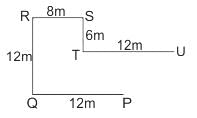
PU2 = 62 + 82 = 36 + 64 = 100
PU = 10m
Hence, Option C is correct.
Final Arrangement:
Common Explanation:
References:
Anurag is standing at point P, facing the north direction.
He starts walking towards west and reaches point Q after walking 12m.
He moves 12m to his right towards point R.
From point R, he again moves his right to reach point S, which is 8m apart from point R.
He again moves towards right to reach point T after covering a distance of 6m from point S.
Finally, he moves 12m to his left to reach point U.
Inferences:
From the above statement, we get the final figure below:
Direction: Study the following information and answer the given questions carefully.John started walking from point A. Point B is 20cm north of point A. Point A is 6cm east of point H. Point B is 6cm west of point G. Point C is 6cm west of point E. Point D is 20cm south of point G. Point C is the midpoint of points D and G. Point E is 10cm north of point F.Q. How far and in which direction is point E with respect to point G?- a)2√34 cm, south west
- b)2√34 cm, south east
- c)4√34 cm, west
- d)4√34 cm, east
Correct answer is option 'B'. Can you explain this answer?
Direction: Study the following information and answer the given questions carefully.
John started walking from point A. Point B is 20cm north of point A. Point A is 6cm east of point H. Point B is 6cm west of point G. Point C is 6cm west of point E. Point D is 20cm south of point G. Point C is the midpoint of points D and G. Point E is 10cm north of point F.
Q. How far and in which direction is point E with respect to point G?
a)
2√34 cm, south west
b)
2√34 cm, south east
c)
4√34 cm, west
d)
4√34 cm, east
| | Iq Funda answered |
Using Pythagoras theorem, we get
EG2 = CG2 + CE2
EG2 = 102 + 62 = 100 + 36 = 136
EG =2√34 cm
And the point E is in south east direction with respect to point G.
Hence, Option B is correct.
Final Arrangement:
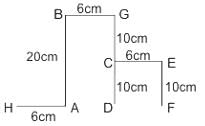
Common Explanation:
Reference:
Point B is 20cm north of point A.
Point A is 6cm east of point H.
Point B is 6cm west of point G.
Point C is 6cm west of point E.
Point C is the midpoint of points D and G.
Point E is 10cm north of point F.
Point D is 20cm south of point G.
Inference:
From the above statement, we get the final figure below:
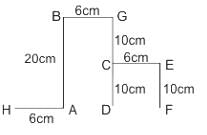
EG2 = CG2 + CE2
EG2 = 102 + 62 = 100 + 36 = 136
EG =2√34 cm
And the point E is in south east direction with respect to point G.
Hence, Option B is correct.
Final Arrangement:
Common Explanation:
Reference:
Point B is 20cm north of point A.
Point A is 6cm east of point H.
Point B is 6cm west of point G.
Point C is 6cm west of point E.
Point C is the midpoint of points D and G.
Point E is 10cm north of point F.
Point D is 20cm south of point G.
Inference:
From the above statement, we get the final figure below:
Direction: Study the following information and answer the given questions carefully.John started walking from point A. Point B is 20cm north of point A. Point A is 6cm east of point H. Point B is 6cm west of point G. Point C is 6cm west of point E. Point D is 20cm south of point G. Point C is the midpoint of points D and G. Point E is 10cm north of point F.Q. In which direction is point H with respect to point G?- a)South west
- b)North west
- c)North east
- d)South
Correct answer is option 'A'. Can you explain this answer?
Direction: Study the following information and answer the given questions carefully.
John started walking from point A. Point B is 20cm north of point A. Point A is 6cm east of point H. Point B is 6cm west of point G. Point C is 6cm west of point E. Point D is 20cm south of point G. Point C is the midpoint of points D and G. Point E is 10cm north of point F.
Q. In which direction is point H with respect to point G?
a)
South west
b)
North west
c)
North east
d)
South
| | Ssc Cgl answered |
From the common explanation, we can see that point H is in south west direction with respect to point G.
Hence, Option A is correct.
Final Arrangement:

Common Explanation:
Reference:
Point B is 20cm north of point A.
Point A is 6cm east of point H.
Point B is 6cm west of point G.
Point C is 6cm west of point E.
Point C is the midpoint of points D and G.
Point E is 10cm north of point F.
Point D is 20cm south of point G.
Inference:
From the above statement, we get the final figure below:

Hence, Option A is correct.
Final Arrangement:
Common Explanation:
Reference:
Point B is 20cm north of point A.
Point A is 6cm east of point H.
Point B is 6cm west of point G.
Point C is 6cm west of point E.
Point C is the midpoint of points D and G.
Point E is 10cm north of point F.
Point D is 20cm south of point G.
Inference:
From the above statement, we get the final figure below:
If A is 5cm west of B. C is 4cm east of D. E is 3cm north of C. D is 8cm south of B. F is 4cm south of C, then what is the shortest distance between B and E?- a)√29 cm
- b)5 cm
- c)√35 cm
- d)√41 cm
Correct answer is option 'D'. Can you explain this answer?
If A is 5cm west of B. C is 4cm east of D. E is 3cm north of C. D is 8cm south of B. F is 4cm south of C, then what is the shortest distance between B and E?
a)
√29 cm
b)
5 cm
c)
√35 cm
d)
√41 cm
| | EduRev SSC CGL answered |
From the information given in the question we get the following arrangement:
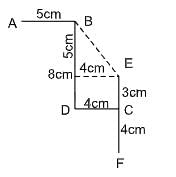
Using Pythagoras theorem, we get
BE2 = 52 + 42
BE2 = 25 + 16
BE = √41 cm
Hence, Option E is correct.
Using Pythagoras theorem, we get
BE2 = 52 + 42
BE2 = 25 + 16
BE = √41 cm
Hence, Option E is correct.
Chapter doubts & questions for Direction Sense - General Intelligence and Reasoning for SSC CGL 2026 is part of SSC CGL exam preparation. The chapters have been prepared according to the SSC CGL exam syllabus. The Chapter doubts & questions, notes, tests & MCQs are made for SSC CGL 2026 Exam. Find important definitions, questions, notes, meanings, examples, exercises, MCQs and online tests here.
Chapter doubts & questions of Direction Sense - General Intelligence and Reasoning for SSC CGL in English & Hindi are available as part of SSC CGL exam. Download more important topics, notes, lectures and mock test series for SSC CGL Exam by signing up for free.
General Intelligence and Reasoning for SSC CGL177 videos|264 docs|169 tests |
