


All Exams > Class 8 > Science Class 8 > All Questions
All questions of Reproduction in Animals for Class 8 Exam
In asexual reproduction- a)No parents are involved
- b)Four parents are involved
- c)One parent is involved
- d)Two parents are involved
Correct answer is option 'C'. Can you explain this answer?
In asexual reproduction
a)
No parents are involved
b)
Four parents are involved
c)
One parent is involved
d)
Two parents are involved
 | Disha Dey answered |
In asexual reproduction only one parent is involved. The new organism is identical to parent. No gametes formation takes place in asexual reproduction.

Budding is found in- a)Bacteria
- b)Protozoa
- c)Planarian
- d)Hydra
Correct answer is option 'D'. Can you explain this answer?
Budding is found in
a)
Bacteria
b)
Protozoa
c)
Planarian
d)
Hydra
 | Pankaj Unni answered |
Budding is a mode of asexual reproduction in which a small outgrowth develop on body surface that enlarge and get separated from parent body. Budding takes place in hydra and yeast.
Which of the following shows external fertilisation? - a)Cow
- b)Human Being
- c)Frog
- d)Hen
Correct answer is option 'C'. Can you explain this answer?
Which of the following shows external fertilisation?
a)
Cow
b)
Human Being
c)
Frog
d)
Hen
 | Stuti Basak answered |
Understanding External Fertilisation
External fertilisation is a reproductive process where the fusion of male and female gametes occurs outside the female's body, typically in water. Among the options provided, frogs are known for this method of reproduction.
Examples of Organisms
- Cow: Cows reproduce through internal fertilisation, where the male's sperm fertilizes the female's egg inside her body.
- Human Being: Humans also exhibit internal fertilisation, where fertilisation occurs within the female reproductive tract.
- Frog: Frogs are a classic example of external fertilisation. During mating, the female lays eggs in water, and the male releases sperm over the eggs, resulting in fertilisation occurring externally. This method is advantageous in aquatic environments as it allows for a large number of gametes to be released simultaneously, increasing the chances of successful fertilisation.
- Hen: Hens reproduce through internal fertilisation. The male rooster fertilises the eggs inside the hen's body before they are laid.
Conclusion
In summary, the correct answer is option 'C', the frog, as it demonstrates external fertilisation. This reproductive strategy is particularly effective for amphibians like frogs, whose life cycle includes both aquatic and terrestrial stages.
External fertilisation is a reproductive process where the fusion of male and female gametes occurs outside the female's body, typically in water. Among the options provided, frogs are known for this method of reproduction.
Examples of Organisms
- Cow: Cows reproduce through internal fertilisation, where the male's sperm fertilizes the female's egg inside her body.
- Human Being: Humans also exhibit internal fertilisation, where fertilisation occurs within the female reproductive tract.
- Frog: Frogs are a classic example of external fertilisation. During mating, the female lays eggs in water, and the male releases sperm over the eggs, resulting in fertilisation occurring externally. This method is advantageous in aquatic environments as it allows for a large number of gametes to be released simultaneously, increasing the chances of successful fertilisation.
- Hen: Hens reproduce through internal fertilisation. The male rooster fertilises the eggs inside the hen's body before they are laid.
Conclusion
In summary, the correct answer is option 'C', the frog, as it demonstrates external fertilisation. This reproductive strategy is particularly effective for amphibians like frogs, whose life cycle includes both aquatic and terrestrial stages.
In which animals is external fertilisation most commonly observed?- a)Birds
- b)Mammals
- c)Amphibians and fish
- d)Reptiles
Correct answer is option 'C'. Can you explain this answer?
a)
Birds
b)
Mammals
c)
Amphibians and fish
d)
Reptiles
 | Capstone Ias Learning answered |
External fertilisation is most commonly observed in amphibians and fish, where fertilisation occurs outside the female body, usually in water. Birds, mammals, and reptiles typically undergo internal fertilisation.
What is the function of the jelly on the eggs laid by frogs?- a)To provide protection to the eggs
- b)To hold the eggs together
- c)Both A and B
- d)None of the above
Correct answer is option 'C'. Can you explain this answer?
What is the function of the jelly on the eggs laid by frogs?
a)
To provide protection to the eggs
b)
To hold the eggs together
c)
Both A and B
d)
None of the above
 | EduRev Class 8 answered |
The jelly on frog eggs serves several important functions:
- Protection: It provides a barrier against predators and environmental hazards.
- Holding eggs together: It helps keep the eggs in clusters, making them more stable in water.
- Thus, the correct answer is C: Both A and B, as the jelly holds the eggs together and fulfills other protective roles.
In Hydra, the mode of reproduction is- a)Both B and C
- b)Sexual
- c)Asexual
- d)None of these
Correct answer is option 'C'. Can you explain this answer?
In Hydra, the mode of reproduction is
a)
Both B and C
b)
Sexual
c)
Asexual
d)
None of these
| | Preethi Bajaj answered |
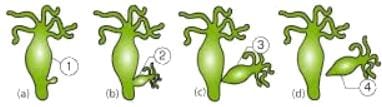
Hydra reproduce by asexual mode. Budding is the process by which hydra reproduce through asexual mode. An outgrowth grows from the parent body due to the repeated cell division at a specific site. The cell which divide rapidly are known as regenerative cell. The outgrowth from the parent body is known as bud. This bud separates from the parent and develops into a genetically identical new organism.
What term is used for animals that lay eggs?- a)Viviparous
- b)Oviparous
- c)Metamorphic
- d)Binary fission
Correct answer is option 'B'. Can you explain this answer?
a)
Viviparous
b)
Oviparous
c)
Metamorphic
d)
Binary fission
 | Innovative Classes answered |
Oviparous animals are those that lay eggs, which then develop into young ones. Viviparous animals, on the other hand, give birth to live young ones. Metamorphosis and binary fission are different reproductive processes.
In which type of fertilisation do sperms swim towards eggs in water?- a)External fertilisation
- b)Internal fertilisation
- c)Asexual reproduction
- d)Sexual reproduction
Correct answer is option 'A'. Can you explain this answer?
a)
External fertilisation
b)
Internal fertilisation
c)
Asexual reproduction
d)
Sexual reproduction
 | Divey Sethi answered |
In external fertilisation, sperms swim towards eggs in water, as seen in many aquatic animals. Internal fertilisation occurs inside the female body.
State whether the following statement is True or FalseThe male reproductive organs in humans include a pair of testes, two sperm ducts, and a penis.- a)True
- b)False
Correct answer is option 'A'. Can you explain this answer?
State whether the following statement is True or False
The male reproductive organs in humans include a pair of testes, two sperm ducts, and a penis.
a)
True
b)
False
 | Ias Masters answered |
- Yes, the male reproductive organs in humans include a pair of testes, two sperm ducts, and a penis.
- The testes produce male gametes called sperms.
- Sperms are very small cells with a head, a middle piece, and a tail.
- There are millions of sperms produced by the testes.
- These reproductive parts work together to help in the process of reproduction.
Which of the following labelled stages grow within a case during development?
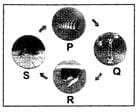
- a)P
- b)Q
- c)R
- d)S
Correct answer is option 'C'. Can you explain this answer?
Which of the following labelled stages grow within a case during development?
a)
P
b)
Q
c)
R
d)
S
 | Chitra Choudhury answered |
Where are you going for the cosd
After fertilisation, the ________ divides repeatedly to give rise to a ball of cells.- a)Ovum
- b)Sperm
- c)Zygote
- d)Embryo
Correct answer is option 'C'. Can you explain this answer?
After fertilisation, the ________ divides repeatedly to give rise to a ball of cells.
a)
Ovum
b)
Sperm
c)
Zygote
d)
Embryo
 | BT Educators answered |
Solution: The fusion of the male and the female gamete, i.e., the sperm and the ovum, is called fertilisation. This results in the formation of a single-celled zygote. After fertilisation, the zygote repeatedly divides to give rise to a ball of cells. This ball of cells eventually develops into the various types of cells and tissues in an organism.
What does the zygote develop into?- a)A single cell
- b)A sperm
- c)A new individual
- d)An egg
Correct answer is option 'C'. Can you explain this answer?
a)
A single cell
b)
A sperm
c)
A new individual
d)
An egg
 | Upsc Rank Holders answered |
The zygote, formed by the fusion of sperm and egg, develops into a new individual. It does not remain a single cell but undergoes multiple stages of development.
Which of the following sequences is in the correct order?- a)Zygote → Embryo → Foetus → Baby
- b)Zygote → Embryo → Baby → Foetus
- c)Embryo→ Zygote → Baby → Foetus
- d)Foetus → Zygote → Embryo → Baby
Correct answer is option 'A'. Can you explain this answer?
Which of the following sequences is in the correct order?
a)
Zygote → Embryo → Foetus → Baby
b)
Zygote → Embryo → Baby → Foetus
c)
Embryo→ Zygote → Baby → Foetus
d)
Foetus → Zygote → Embryo → Baby
| | Nisha Nambiar answered |
Understanding the Developmental Stages
The correct sequence of human development is crucial for understanding how life begins and progresses. The correct order is:
Zygote → Embryo → Foetus → Baby
1. Zygote
- The zygote is the initial cell formed when a sperm fertilizes an egg.
- It contains genetic material from both parents and is the beginning of a new organism.
2. Embryo
- After a few days, the zygote undergoes cell division and becomes an embryo.
- This stage lasts until about the 8th week of pregnancy, during which essential organs and structures begin to form.
3. Foetus
- From the 9th week until birth, the developing human is referred to as a foetus.
- During this period, the body continues to grow, and the organs mature, preparing the foetus for life outside the womb.
4. Baby
- After approximately 40 weeks of gestation, the baby is born.
- This marks the transition from an internal environment (womb) to an external one (outside world).
Conclusion
The sequence of development is straightforward and essential for understanding human growth. Each stage plays a critical role in the formation and maturation of the human body. The option 'A' accurately reflects this natural progression.
The correct sequence of human development is crucial for understanding how life begins and progresses. The correct order is:
Zygote → Embryo → Foetus → Baby
1. Zygote
- The zygote is the initial cell formed when a sperm fertilizes an egg.
- It contains genetic material from both parents and is the beginning of a new organism.
2. Embryo
- After a few days, the zygote undergoes cell division and becomes an embryo.
- This stage lasts until about the 8th week of pregnancy, during which essential organs and structures begin to form.
3. Foetus
- From the 9th week until birth, the developing human is referred to as a foetus.
- During this period, the body continues to grow, and the organs mature, preparing the foetus for life outside the womb.
4. Baby
- After approximately 40 weeks of gestation, the baby is born.
- This marks the transition from an internal environment (womb) to an external one (outside world).
Conclusion
The sequence of development is straightforward and essential for understanding human growth. Each stage plays a critical role in the formation and maturation of the human body. The option 'A' accurately reflects this natural progression.
What provides protection to frog eggs laid in water?- a)A shell
- b)A layer of jelly
- c)A membrane
- d)A coating of mucus
Correct answer is option 'B'. Can you explain this answer?
a)
A shell
b)
A layer of jelly
c)
A membrane
d)
A coating of mucus
 | Kirti Singh answered |
Protection for Frog Eggs
Frog eggs are typically laid in water, and their protection is crucial for the survival of the developing embryos. The correct answer to the question about what provides this protection is option 'B': a layer of jelly.
Structure and Composition
- Frog eggs are surrounded by a gelatinous layer, commonly referred to as jelly.
- This jelly layer is composed of water and proteins, which serve multiple protective functions.
Functions of the Jelly Layer
- Physical Barrier: The jelly provides a soft yet firm shield against physical disturbances and predators. It helps to absorb shocks, protecting the delicate eggs inside.
- Hydration: The jelly is primarily composed of water, which helps keep the eggs hydrated. This is vital for their development, as the embryos need a moist environment to grow.
- Chemical Defense: The jelly can contain chemicals that deter predators and parasites, making it less appealing to potential threats.
- Oxygen Supply: The gelatinous layer allows for gas exchange, ensuring that the developing embryos receive enough oxygen while still being protected.
Conclusion
In summary, the jelly layer around frog eggs serves as a crucial protective mechanism that ensures the survival and development of the embryos. Its physical, chemical, and biological properties make it an essential feature of amphibian reproduction in aquatic environments.
Frog eggs are typically laid in water, and their protection is crucial for the survival of the developing embryos. The correct answer to the question about what provides this protection is option 'B': a layer of jelly.
Structure and Composition
- Frog eggs are surrounded by a gelatinous layer, commonly referred to as jelly.
- This jelly layer is composed of water and proteins, which serve multiple protective functions.
Functions of the Jelly Layer
- Physical Barrier: The jelly provides a soft yet firm shield against physical disturbances and predators. It helps to absorb shocks, protecting the delicate eggs inside.
- Hydration: The jelly is primarily composed of water, which helps keep the eggs hydrated. This is vital for their development, as the embryos need a moist environment to grow.
- Chemical Defense: The jelly can contain chemicals that deter predators and parasites, making it less appealing to potential threats.
- Oxygen Supply: The gelatinous layer allows for gas exchange, ensuring that the developing embryos receive enough oxygen while still being protected.
Conclusion
In summary, the jelly layer around frog eggs serves as a crucial protective mechanism that ensures the survival and development of the embryos. Its physical, chemical, and biological properties make it an essential feature of amphibian reproduction in aquatic environments.
Read the given information and identify P, Q and R.
P - An ovum is discharged by the ovary
Q - An embryo is Implanted in the uterus
R - The fusion of male and female gametes takes place- a)

- b)

- c)

- d)

Correct answer is option 'A'. Can you explain this answer?
Read the given information and identify P, Q and R.
P - An ovum is discharged by the ovary
Q - An embryo is Implanted in the uterus
R - The fusion of male and female gametes takes place
P - An ovum is discharged by the ovary
Q - An embryo is Implanted in the uterus
R - The fusion of male and female gametes takes place
a)
b)
c)
d)
| | EduRev Class 8 answered |
P is ovulation, Q is implantation and R is fertilization.
Female reproductive system contains ______ of ovaries.- a)Single
- b)Four pair
- c)A pair
- d)Two pair
Correct answer is option 'C'. Can you explain this answer?
Female reproductive system contains ______ of ovaries.
a)
Single
b)
Four pair
c)
A pair
d)
Two pair
 | Priya Nair answered |
Female reproductive system contains a pair of ovaries. Ovaries produce female gamete called ovum and secrete female hormone.
How long does it take for a chick to develop inside a hen's egg?- a)1 week
- b)2 weeks
- c)3 weeks
- d)4 weeks
Correct answer is option 'C'. Can you explain this answer?
a)
1 week
b)
2 weeks
c)
3 weeks
d)
4 weeks
 | S.S Career Academy answered |
A chick takes approximately 3 weeks to develop inside the egg. The hen incubates the eggs to provide the necessary warmth for development, after which the chick hatches from the egg.
Which of the following statements is true about asexual reproduction?- a)New individuals are produced without the fusion of gametes.
- b)New individuals involves the fusion of male and female gametes.
- c)It is a mode of reproduction which occurs only in plants.
- d)New individuals are produced by the fusion of dissimilar gametes.
Correct answer is option 'A'. Can you explain this answer?
Which of the following statements is true about asexual reproduction?
a)
New individuals are produced without the fusion of gametes.
b)
New individuals involves the fusion of male and female gametes.
c)
It is a mode of reproduction which occurs only in plants.
d)
New individuals are produced by the fusion of dissimilar gametes.
 | Saanvi Kaur answered |
Reproduction without the fusion of gametes is known as asexual reproduction. The offspring are genetically identical.
What is the developing structure called when the zygote begins dividing repeatedly to form a ball of cells and later differentiates into tissues and organs?- a)Zygote
- b)Embryo
- c)Foetus
- d)Gamete
Correct answer is option 'B'. Can you explain this answer?
What is the developing structure called when the zygote begins dividing repeatedly to form a ball of cells and later differentiates into tissues and organs?
a)
Zygote
b)
Embryo
c)
Foetus
d)
Gamete
 | Divyansh Chaudhary answered |
Understanding the Developing Structure: Embryo
When a zygote forms after the fertilization of an egg by a sperm, it initiates a crucial developmental journey that leads to the formation of an organism. This journey can be detailed as follows:
1. Formation of the Zygote
- A zygote is the initial cell formed when a sperm fertilizes an egg.
- It contains genetic material from both parents, establishing the foundation for the new organism.
2. Cell Division and Development
- After fertilization, the zygote undergoes rapid cell division, a process known as cleavage.
- This results in a ball of cells called a morula, which eventually develops into a blastocyst.
3. Differentiation into Tissues and Organs
- As the blastocyst implants into the uterine wall, it begins to differentiate.
- Cells start to specialize into different types, leading to the formation of tissues and organs.
- This stage is crucial for establishing the body plan and functions of the future organism.
4. Definition of an Embryo
- The term "embryo" refers to the developing structure from the time of implantation until the end of the eighth week of pregnancy.
- During this period, major organs and systems are formed, laying the groundwork for further development.
Conclusion
In summary, the correct answer is option 'B'—Embryo. This term encompasses the critical stages of development following the zygote's formation, highlighting the transition from a single cell to a complex organism through cell division and differentiation. Understanding this process is essential for grasping the fundamentals of biology and human development.
When a zygote forms after the fertilization of an egg by a sperm, it initiates a crucial developmental journey that leads to the formation of an organism. This journey can be detailed as follows:
1. Formation of the Zygote
- A zygote is the initial cell formed when a sperm fertilizes an egg.
- It contains genetic material from both parents, establishing the foundation for the new organism.
2. Cell Division and Development
- After fertilization, the zygote undergoes rapid cell division, a process known as cleavage.
- This results in a ball of cells called a morula, which eventually develops into a blastocyst.
3. Differentiation into Tissues and Organs
- As the blastocyst implants into the uterine wall, it begins to differentiate.
- Cells start to specialize into different types, leading to the formation of tissues and organs.
- This stage is crucial for establishing the body plan and functions of the future organism.
4. Definition of an Embryo
- The term "embryo" refers to the developing structure from the time of implantation until the end of the eighth week of pregnancy.
- During this period, major organs and systems are formed, laying the groundwork for further development.
Conclusion
In summary, the correct answer is option 'B'—Embryo. This term encompasses the critical stages of development following the zygote's formation, highlighting the transition from a single cell to a complex organism through cell division and differentiation. Understanding this process is essential for grasping the fundamentals of biology and human development.
Which of the following statements about the human female egg cell is incorrect?- a)It is produced when a female reaches puberty.
- b)The two ovaries in a female alternately produce the egg cells.
- c)One egg cell is usually produced by a female every 28 days.
- d)An egg cell can live in the body of a female for about a month.
Correct answer is option 'D'. Can you explain this answer?
Which of the following statements about the human female egg cell is incorrect?
a)
It is produced when a female reaches puberty.
b)
The two ovaries in a female alternately produce the egg cells.
c)
One egg cell is usually produced by a female every 28 days.
d)
An egg cell can live in the body of a female for about a month.
 | C K Academy answered |
A is correct: The human female egg cells (oocytes) begin to mature and are available for release starting at puberty.
B is correct: The two ovaries alternate in releasing egg cells, though both ovaries do not release eggs simultaneously.
C is correct: Typically, one egg is released from the ovary every 28 days during a woman's menstrual cycle.
D is incorrect: An egg cell (ovum) typically survives for about 12 to 24 hours after ovulation. It does not live for a month.
What structure in the female reproductive system holds the developing baby?- a)Oviduct
- b)Ovary
- c)Uterus
- d)Fallopian tube
Correct answer is option 'C'. Can you explain this answer?
a)
Oviduct
b)
Ovary
c)
Uterus
d)
Fallopian tube
 | Kaavya Sarkar answered |
Understanding the Uterus
The uterus, also known as the womb, is a vital organ in the female reproductive system. It plays a crucial role in supporting a developing baby during pregnancy. Here’s a detailed explanation of its function:
Structure of the Uterus
- The uterus is a hollow, muscular organ located in the pelvis, between the bladder and the rectum.
- It has three main layers: the endometrium (inner lining), myometrium (muscular middle layer), and perimetrium (outer lining).
Function in Pregnancy
- Upon fertilization of the egg in the oviduct (fallopian tube), the fertilized egg (zygote) travels to the uterus.
- The endometrium thickens in preparation for the implantation of the embryo, providing a rich supply of blood and nutrients.
- Once the embryo implants into the endometrium, the uterus nurtures the developing fetus throughout the pregnancy.
Protection and Support
- The muscular walls of the uterus provide protection and physical support to the growing fetus.
- The uterus expands to accommodate the growing baby, eventually reaching significant size by the end of pregnancy.
Conclusion
In summary, the uterus is the correct answer because it is the structure that holds and supports the developing baby during pregnancy. The other options, such as the oviduct, ovary, and fallopian tube, have different roles in reproduction but do not serve as the location for fetal development.
The uterus, also known as the womb, is a vital organ in the female reproductive system. It plays a crucial role in supporting a developing baby during pregnancy. Here’s a detailed explanation of its function:
Structure of the Uterus
- The uterus is a hollow, muscular organ located in the pelvis, between the bladder and the rectum.
- It has three main layers: the endometrium (inner lining), myometrium (muscular middle layer), and perimetrium (outer lining).
Function in Pregnancy
- Upon fertilization of the egg in the oviduct (fallopian tube), the fertilized egg (zygote) travels to the uterus.
- The endometrium thickens in preparation for the implantation of the embryo, providing a rich supply of blood and nutrients.
- Once the embryo implants into the endometrium, the uterus nurtures the developing fetus throughout the pregnancy.
Protection and Support
- The muscular walls of the uterus provide protection and physical support to the growing fetus.
- The uterus expands to accommodate the growing baby, eventually reaching significant size by the end of pregnancy.
Conclusion
In summary, the uterus is the correct answer because it is the structure that holds and supports the developing baby during pregnancy. The other options, such as the oviduct, ovary, and fallopian tube, have different roles in reproduction but do not serve as the location for fetal development.
Which part of the sperm contains the genetic material?- a)Tail
- b)Head
- c)Middle piece
- d)Nucleus
Correct answer is option 'B'. Can you explain this answer?
a)
Tail
b)
Head
c)
Middle piece
d)
Nucleus
 | Valor Academy answered |
The head of the sperm contains the genetic material required for fertilisation. The tail aids in movement, and the middle piece provides energy.
Which of the following animals is an example of a viviparous animal?- a)Frog
- b)Fish
- c)Dog
- d)Bird
Correct answer is option 'C'. Can you explain this answer?
a)
Frog
b)
Fish
c)
Dog
d)
Bird
 | Snehal Kumar answered |
Understanding Viviparous Animals
Viviparous animals are those that give birth to live young instead of laying eggs. This reproductive strategy is common among mammals, including humans and dogs.
Examples of Viviparous Animals
- Dog: The correct answer is option 'C' - Dogs are viviparous, meaning they carry their young in the womb until they are fully developed and ready to be born.
- Fish and Frogs: These animals primarily reproduce through external fertilization, laying eggs in water. While some species of fish have evolved to give live birth, the majority are oviparous (egg-laying).
- Birds: Birds are also oviparous, laying eggs that develop outside the mother's body.
Key Characteristics of Viviparity
- Live Birth: Viviparous animals give birth to live young, which have developed within the mother's body.
- Nourishment: The developing embryos receive nutrients and oxygen through a placenta or similar structure.
- Parental Care: Viviparous species often show a higher degree of parental care, enhancing the survival chances of their offspring.
Conclusion
In summary, the dog is a prime example of a viviparous animal due to its method of giving birth to live young. In contrast, frogs, fish, and birds primarily reproduce by laying eggs, making them oviparous. Understanding these reproductive strategies is essential in the study of animal biology and evolution.
Viviparous animals are those that give birth to live young instead of laying eggs. This reproductive strategy is common among mammals, including humans and dogs.
Examples of Viviparous Animals
- Dog: The correct answer is option 'C' - Dogs are viviparous, meaning they carry their young in the womb until they are fully developed and ready to be born.
- Fish and Frogs: These animals primarily reproduce through external fertilization, laying eggs in water. While some species of fish have evolved to give live birth, the majority are oviparous (egg-laying).
- Birds: Birds are also oviparous, laying eggs that develop outside the mother's body.
Key Characteristics of Viviparity
- Live Birth: Viviparous animals give birth to live young, which have developed within the mother's body.
- Nourishment: The developing embryos receive nutrients and oxygen through a placenta or similar structure.
- Parental Care: Viviparous species often show a higher degree of parental care, enhancing the survival chances of their offspring.
Conclusion
In summary, the dog is a prime example of a viviparous animal due to its method of giving birth to live young. In contrast, frogs, fish, and birds primarily reproduce by laying eggs, making them oviparous. Understanding these reproductive strategies is essential in the study of animal biology and evolution.
What is the stage of the embryo called in which all the body parts like hands, legs, head, eyes, and ears can be identified?- a)Zygote
- b)Foetus
- c)Gamete
- d)Embryo
Correct answer is option 'B'. Can you explain this answer?
What is the stage of the embryo called in which all the body parts like hands, legs, head, eyes, and ears can be identified?
a)
Zygote
b)
Foetus
c)
Gamete
d)
Embryo
| | Mayank Ghosh answered |
Understanding the Stages of Embryonic Development
In the development of a human embryo, there are several critical stages. The correct answer to the question about the stage where all body parts can be identified is the "Fetus."
Stages of Embryonic Development:
- Zygote:
- This is the earliest stage of development, occurring right after fertilization when the sperm and egg unite.
- At this point, the zygote is a single cell and does not yet exhibit distinct body parts.
- Embryo:
- This stage follows the zygote and lasts until the end of the eighth week of gestation.
- While the embryo begins to develop basic structures, significant features like hands, legs, and facial features are not yet fully formed.
- Fetus:
- This stage begins at the ninth week of gestation and continues until birth.
- By this time, major body parts such as hands, legs, head, eyes, and ears can be distinctly identified.
- The fetus undergoes rapid growth and development, refining its features and systems.
Conclusion:
The correct answer is b) Fetus because it is during this stage that all major body structures become recognizable. Understanding the progression from zygote to embryo and finally to fetus is essential in comprehending human development.
In the development of a human embryo, there are several critical stages. The correct answer to the question about the stage where all body parts can be identified is the "Fetus."
Stages of Embryonic Development:
- Zygote:
- This is the earliest stage of development, occurring right after fertilization when the sperm and egg unite.
- At this point, the zygote is a single cell and does not yet exhibit distinct body parts.
- Embryo:
- This stage follows the zygote and lasts until the end of the eighth week of gestation.
- While the embryo begins to develop basic structures, significant features like hands, legs, and facial features are not yet fully formed.
- Fetus:
- This stage begins at the ninth week of gestation and continues until birth.
- By this time, major body parts such as hands, legs, head, eyes, and ears can be distinctly identified.
- The fetus undergoes rapid growth and development, refining its features and systems.
Conclusion:
The correct answer is b) Fetus because it is during this stage that all major body structures become recognizable. Understanding the progression from zygote to embryo and finally to fetus is essential in comprehending human development.
A Paramecium reproduces by dividing itself into two daughter cells. This process is called- a)Budding
- b)Regeneration
- c)Binary fission
- d)Vegetative propagation
Correct answer is option 'C'. Can you explain this answer?
A Paramecium reproduces by dividing itself into two daughter cells. This process is called
a)
Budding
b)
Regeneration
c)
Binary fission
d)
Vegetative propagation
 | Future Foundation Institute answered |
Binary fission is a type of asexual reproduction seen in unicellular organisms. In this method, first, the nucleus divides, followed by cytoplasmic division. This forms two daughter cells from one parent cell. Therefore, Paramecium dividing itself to form two daughter cells represents binary fission.
State whether the following statement is True or False:The embryo develops into a foetus before birth.- a)True
- b)False
Correct answer is option 'A'. Can you explain this answer?
State whether the following statement is True or False:
The embryo develops into a foetus before birth.
a)
True
b)
False
| | Ashwin Nambiar answered |
Understanding Embryonic Development
The statement that "the embryo develops into a foetus before birth" is indeed true. Let’s delve into the details of embryonic development.
Stages of Development
- Fertilization: The process begins when a sperm fertilizes an egg, resulting in a zygote.
- Embryonic Stage: The zygote undergoes multiple cell divisions and forms a blastocyst. This stage lasts for roughly the first 8 weeks of pregnancy.
- Transition to Foetal Stage: After the embryonic stage, the developing organism is referred to as a foetus. This transition occurs around 8 weeks post-fertilization.
Characteristics of the Foetal Stage
- Growth and Development: The foetus continues to grow and develop the major organs and systems necessary for survival outside the womb.
- Duration: The foetal stage lasts until birth, typically around 40 weeks of gestation.
Importance of the Foetal Stage
- Vital Processes: During this time, critical processes like organ formation and maturation occur, preparing the foetus for life after birth.
- Monitoring Development: Medical professionals monitor the foetus through ultrasounds and other tests to ensure healthy development.
Conclusion
In summary, the statement is true as the embryo indeed transitions into a foetus, marking a crucial phase in prenatal development. Understanding these stages is essential for comprehending human development and reproductive health.
The statement that "the embryo develops into a foetus before birth" is indeed true. Let’s delve into the details of embryonic development.
Stages of Development
- Fertilization: The process begins when a sperm fertilizes an egg, resulting in a zygote.
- Embryonic Stage: The zygote undergoes multiple cell divisions and forms a blastocyst. This stage lasts for roughly the first 8 weeks of pregnancy.
- Transition to Foetal Stage: After the embryonic stage, the developing organism is referred to as a foetus. This transition occurs around 8 weeks post-fertilization.
Characteristics of the Foetal Stage
- Growth and Development: The foetus continues to grow and develop the major organs and systems necessary for survival outside the womb.
- Duration: The foetal stage lasts until birth, typically around 40 weeks of gestation.
Importance of the Foetal Stage
- Vital Processes: During this time, critical processes like organ formation and maturation occur, preparing the foetus for life after birth.
- Monitoring Development: Medical professionals monitor the foetus through ultrasounds and other tests to ensure healthy development.
Conclusion
In summary, the statement is true as the embryo indeed transitions into a foetus, marking a crucial phase in prenatal development. Understanding these stages is essential for comprehending human development and reproductive health.
The animals that produce new young ones are called- a)viviparous
- b)oviparous
- c)both
- d)none of these
Correct answer is option 'A'. Can you explain this answer?
The animals that produce new young ones are called
a)
viviparous
b)
oviparous
c)
both
d)
none of these
| | C K Academy answered |
The animals that produce new young ones are called viviparous animals.
Explanation:
Viviparous animals give birth to live young, unlike oviparous animals, which lay eggs. In viviparous animals, the embryo develops inside the mother's body, receiving nourishment directly until birth. Examples include most mammals, like humans, dogs, and cats.
Process of formation of spermatozoa is called- a)Oogenesis
- b)Blast genesis
- c)Spermatogenesis
- d)Semen formation
Correct answer is option 'C'. Can you explain this answer?
Process of formation of spermatozoa is called
a)
Oogenesis
b)
Blast genesis
c)
Spermatogenesis
d)
Semen formation
 | Anushka Basu answered |
The formation of spermatozoa is called spermatogenesis. Spermatogenesis occurs in testes of male at puberty to form male gametes.
What type of asexual reproduction involves the development of new individuals from buds?- a)Binary fission
- b)Metamorphosis
- c)Budding
- d)Internal fertilisation
Correct answer is option 'C'. Can you explain this answer?
What type of asexual reproduction involves the development of new individuals from buds?
a)
Binary fission
b)
Metamorphosis
c)
Budding
d)
Internal fertilisation
| | Sreemoyee Bajaj answered |
Understanding Asexual Reproduction Through Budding
Asexual reproduction is a mode of reproduction that does not involve the fusion of gametes, allowing organisms to produce offspring independently. One prominent form of asexual reproduction is budding.
What is Budding?
- Definition: Budding is a type of asexual reproduction where new individuals develop from outgrowths or "buds" on the parent organism.
- Process: The bud grows while attached to the parent, eventually maturing into a new individual. When it is fully developed, the bud can detach from the parent and live independently.
Examples of Organisms That Reproduce via Budding
- Hydra: A small, freshwater organism that exhibits budding prominently. It forms a bud on its body, which eventually detaches to become a new hydra.
- Yeast: Single-celled fungi like Saccharomyces cerevisiae reproduce by budding, where a small protrusion forms on the parent cell, grows, and separates.
Comparison with Other Asexual Methods
- Binary Fission: Involves the division of a single organism into two equal parts. Common in bacteria and some protozoa.
- Metamorphosis: Refers to a developmental process involving drastic changes in form, common in insects, but not a method of reproduction.
- Internal Fertilization: A method involving the fusion of male and female gametes, leading to sexual reproduction, not asexual.
In summary, the correct answer to the question is option 'C' because budding specifically describes the formation of new individuals from buds, distinguishing it from other asexual reproduction methods.
Asexual reproduction is a mode of reproduction that does not involve the fusion of gametes, allowing organisms to produce offspring independently. One prominent form of asexual reproduction is budding.
What is Budding?
- Definition: Budding is a type of asexual reproduction where new individuals develop from outgrowths or "buds" on the parent organism.
- Process: The bud grows while attached to the parent, eventually maturing into a new individual. When it is fully developed, the bud can detach from the parent and live independently.
Examples of Organisms That Reproduce via Budding
- Hydra: A small, freshwater organism that exhibits budding prominently. It forms a bud on its body, which eventually detaches to become a new hydra.
- Yeast: Single-celled fungi like Saccharomyces cerevisiae reproduce by budding, where a small protrusion forms on the parent cell, grows, and separates.
Comparison with Other Asexual Methods
- Binary Fission: Involves the division of a single organism into two equal parts. Common in bacteria and some protozoa.
- Metamorphosis: Refers to a developmental process involving drastic changes in form, common in insects, but not a method of reproduction.
- Internal Fertilization: A method involving the fusion of male and female gametes, leading to sexual reproduction, not asexual.
In summary, the correct answer to the question is option 'C' because budding specifically describes the formation of new individuals from buds, distinguishing it from other asexual reproduction methods.
What protective layer forms around the developing embryo in hens?- a)Amniotic sac
- b)Egg shell
- c)Placenta
- d)Uterine lining
Correct answer is option 'B'. Can you explain this answer?
a)
Amniotic sac
b)
Egg shell
c)
Placenta
d)
Uterine lining
| | BT Educators answered |
In hens, a hard shell forms around the developing embryo as a protective layer. This shell protects the embryo and provides a stable environment for its development until the chick is ready to hatch.
Which of the following is/are paired structure in human reproductive system?- a)Ovary
- b)Testes
- c)Fallopian tube
- d)All of these
Correct answer is option 'D'. Can you explain this answer?
Which of the following is/are paired structure in human reproductive system?
a)
Ovary
b)
Testes
c)
Fallopian tube
d)
All of these
 | Shreya Bajaj answered |
Ovaries testes and fallopian tubes are the paired structures in human reproductive system.
What does the fusion of sperm and egg create?- a)Embryo
- b)Zygote
- c)Gamete
- d)Sperm cell
Correct answer is option 'B'. Can you explain this answer?
a)
Embryo
b)
Zygote
c)
Gamete
d)
Sperm cell
| | Capstone Ias Learning answered |
The fusion of sperm and egg results in the formation of a zygote, which eventually develops into an embryo and then a new individual.
What is cloning?- a)Making a copy of a living thing
- b)Making a new type of plant
- c)Creating a magic spell
- d)Making a big noise
Correct answer is option 'A'. Can you explain this answer?
a)
Making a copy of a living thing
b)
Making a new type of plant
c)
Creating a magic spell
d)
Making a big noise
 | K.L Institute answered |
Cloning means making a copy of a living thing. It's like making an exact twin of a plant, animal, or any living part. Just like when you have a toy and you make another toy that looks exactly the same, that's what cloning is - making a copy.
Which of the following comparisons are true of sexual and asexual reproduction?
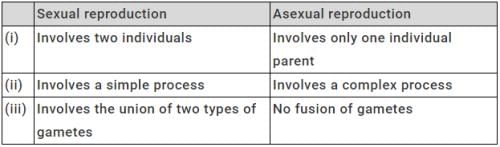
- a)Only (i) and (ii)
- b)Only (i) and (iii)
- c)Only (ii) and (iii)
- d)All the above
Correct answer is option 'B'. Can you explain this answer?
Which of the following comparisons are true of sexual and asexual reproduction?
a)
Only (i) and (ii)
b)
Only (i) and (iii)
c)
Only (ii) and (iii)
d)
All the above
| | C K Academy answered |
Options I and III are true of comparison of sexual and asexual reproduction.
Sexual reproduction - It involves two individuals, where two different gametes fuse together (male gamete fuses with female gamete).
Asexual reproduction - It involves only one individual; the offspring has same characters as parents.
Asexual reproduction - It involves only one individual; the offspring has same characters as parents.
What happens during binary fission in amoeba?- a)An embryo develops into a foetus
- b)A nucleus divides followed by the division of the cell
- c)A single cell develops into a bud
- d)An egg hatches into a chick
Correct answer is option 'B'. Can you explain this answer?
a)
An embryo develops into a foetus
b)
A nucleus divides followed by the division of the cell
c)
A single cell develops into a bud
d)
An egg hatches into a chick
| | S.S Career Academy answered |
During binary fission in amoeba, the nucleus divides first, followed by the division of the cell into two separate individuals. This method of asexual reproduction results in two amoebae from one parent cell.
Chapter doubts & questions for Reproduction in Animals - Science Class 8 2026 is part of Class 8 exam preparation. The chapters have been prepared according to the Class 8 exam syllabus. The Chapter doubts & questions, notes, tests & MCQs are made for Class 8 2026 Exam. Find important definitions, questions, notes, meanings, examples, exercises, MCQs and online tests here.
Chapter doubts & questions of Reproduction in Animals - Science Class 8 in English & Hindi are available as part of Class 8 exam. Download more important topics, notes, lectures and mock test series for Class 8 Exam by signing up for free.
Science Class 8136 videos|531 docs|57 tests |
