


All Exams > Class 8 > Social Studies (SST) Class 8 > All Questions
All questions of Agriculture for Class 8 Exam
Name the oldest occupation known to humans- a)Agriculture
- b)Trading
- c)Mining
- d)Hunting
Correct answer is option 'A'. Can you explain this answer?
Name the oldest occupation known to humans
a)
Agriculture
b)
Trading
c)
Mining
d)
Hunting
 | Mona Ghosh answered |
1 Agriculture bcz.A poor person can also do.
2 A non educational person also can do.
3 In a traditional manner they can do.

Name the term given to the commercial rearing of silk worms to supplement the income of the farmer.- a)Horticulture
- b)Viticulture
- c)Sericulture
- d)Pisciculture
Correct answer is option 'C'. Can you explain this answer?
Name the term given to the commercial rearing of silk worms to supplement the income of the farmer.
a)
Horticulture
b)
Viticulture
c)
Sericulture
d)
Pisciculture
 | Maitri Patel answered |
Sericulture
Sericulture is the term given to the commercial rearing of silk worms to supplement the income of the farmer. It is a lucrative business and is practiced mainly in the rural areas of India. The practice of sericulture involves the cultivation of mulberry trees, which provide the food for the silk worms.
Process of Sericulture
The process involves the following steps:
1. Mulberry cultivation: Farmers cultivate mulberry trees to provide food for the silk worms.
2. Egg production: Female silk moths lay eggs which are collected and kept in a cool place until they hatch.
3. Rearing of silk worms: The eggs hatch into silk worms, which are then reared in trays. The silk worms are fed with fresh mulberry leaves every day.
4. Cocoon formation: After about 25-30 days, the silk worms stop eating and start spinning cocoons around themselves.
5. Silk extraction: After about 10-12 days, the cocoons are ready to be harvested. The silk is extracted from the cocoons by boiling them in water.
6. Weaving: The silk is then spun into thread and woven into fabric.
Benefits of Sericulture
Sericulture has several benefits:
1. It provides a source of income for farmers.
2. It is an eco-friendly activity as it involves the cultivation of mulberry trees.
3. It provides employment opportunities for rural communities.
4. It is a renewable resource as the silk worms can be reared again and again.
5. It is a high-value product that has a huge demand in both domestic and international markets.
Conclusion
Sericulture is an important activity that has the potential to transform the lives of farmers in rural areas. It is a sustainable and eco-friendly activity that provides a source of income and employment to rural communities. With proper training and support, sericulture can be a profitable business for farmers.
Sericulture is the term given to the commercial rearing of silk worms to supplement the income of the farmer. It is a lucrative business and is practiced mainly in the rural areas of India. The practice of sericulture involves the cultivation of mulberry trees, which provide the food for the silk worms.
Process of Sericulture
The process involves the following steps:
1. Mulberry cultivation: Farmers cultivate mulberry trees to provide food for the silk worms.
2. Egg production: Female silk moths lay eggs which are collected and kept in a cool place until they hatch.
3. Rearing of silk worms: The eggs hatch into silk worms, which are then reared in trays. The silk worms are fed with fresh mulberry leaves every day.
4. Cocoon formation: After about 25-30 days, the silk worms stop eating and start spinning cocoons around themselves.
5. Silk extraction: After about 10-12 days, the cocoons are ready to be harvested. The silk is extracted from the cocoons by boiling them in water.
6. Weaving: The silk is then spun into thread and woven into fabric.
Benefits of Sericulture
Sericulture has several benefits:
1. It provides a source of income for farmers.
2. It is an eco-friendly activity as it involves the cultivation of mulberry trees.
3. It provides employment opportunities for rural communities.
4. It is a renewable resource as the silk worms can be reared again and again.
5. It is a high-value product that has a huge demand in both domestic and international markets.
Conclusion
Sericulture is an important activity that has the potential to transform the lives of farmers in rural areas. It is a sustainable and eco-friendly activity that provides a source of income and employment to rural communities. With proper training and support, sericulture can be a profitable business for farmers.
Name the type of farming practiced to meet the needs of the farmer's family i.e.- a)Mixed Farming
- b)Subsistence Farming
- c)Commercial Farming
- d)Plantation agriculture
Correct answer is option 'B'. Can you explain this answer?
Name the type of farming practiced to meet the needs of the farmer's family i.e.
a)
Mixed Farming
b)
Subsistence Farming
c)
Commercial Farming
d)
Plantation agriculture
 | Pooja Choudhury answered |
Subsistence farming, form of farming in which nearly all of the crops or livestock raised are used to maintain the farmer and the farmer's family, leaving little, if any, surplus for sale or trade.
Which agricultural method involves high yielding varieties (HYV) of seeds and mechanization?- a)Subsistence farming
- b)Organic farming
- c)Intensive farming
- d)Commercial farming
Correct answer is option 'C'. Can you explain this answer?
a)
Subsistence farming
b)
Organic farming
c)
Intensive farming
d)
Commercial farming
 | EduRev Class 8 answered |
Intensive farming involves the use of high yielding varieties (HYV) of seeds, mechanization, and other modern agricultural practices to increase crop production, especially in developing countries with large populations.
Name the term given to the Breeding of Fish in specially constructed tanks and ponds- a)Sericulture
- b)Pisciculture
- c)Horticulture
- d)Viticulture
Correct answer is option 'B'. Can you explain this answer?
Name the term given to the Breeding of Fish in specially constructed tanks and ponds
a)
Sericulture
b)
Pisciculture
c)
Horticulture
d)
Viticulture
 | Anita Menon answered |
Pisciculture also known as fish farming is the rearing of fish for food in enclosures such as fish ponds or tanks. The fish are reared and raised in enclosures such as cages, open nets, tanks and ponds.
Banking, Insurance sectors etc can be a good example of which of the following type of economic activity- a)Tertiary
- b)Primary
- c)Secondary
- d)Primary and Secondary
Correct answer is option 'A'. Can you explain this answer?
Banking, Insurance sectors etc can be a good example of which of the following type of economic activity
a)
Tertiary
b)
Primary
c)
Secondary
d)
Primary and Secondary
| | Aditi Saxena answered |
Tertiary Sector Refers to Commercial Services
The tertiary sector of the economy is the service industry. Service companies do not provide a physical good like the primary or secondary sectors do, but they still provide value. For example, banks, insurance and the police all are examples of the service industry. Industries included in the primary or secondary sectors will typically have employees that provide tertiary services such as advertising, accountants and warehousing employees. The tertiary sector is usually strongest in advanced market economies.
Name the term given to the land on which the crops are grown- a)Arable
- b)Pasture
- c)Meadow
- d)Barren
Correct answer is option 'A'. Can you explain this answer?
Name the term given to the land on which the crops are grown
a)
Arable
b)
Pasture
c)
Meadow
d)
Barren
| | Anjali Kapoor answered |
Arable land (from Latin arabilis, "able to be plowed") is, according to one definition, land capable of being ploughed and used to grow crops.In Britain, it was traditionally contrasted with pasturable land such as heaths which could be used for sheep-rearing but not farmland.
A quite different kind of definition is used by various agencies concerned with agriculture. In providing statistics on arable land, the FAO and the World Bank[2] use the definition offered in the glossary accompanying FAOSTAT: "Arable land is the land under temporary agricultural crops (multiple-cropped areas are counted only once), temporary meadows for mowing or pasture, land under market and kitchen gardens and land temporarily fallow (less than five years). The abandoned land resulting from shifting cultivation is not included in this category. Data for ‘Arable land’ are not meant to indicate the amount of land that is potentially cultivable."A more concise definition appearing in the Eurostat glossary similarly refers to actual, rather than potential use: "land worked (ploughed or tilled) regularly, generally under a system of crop rotation."
This type of farming is practiced in the arid and semi-arid regions of Sahara, Central Asia, and Rajasthan etc. Herdsmen move from place to place with their animals for fodder and water along defined routes due to climatic constraints and terrain. Which type of farming is being referred to ?- a)Plantation agriculture
- b)Shifting Cultivation
- c)Commercial Farming
- d)Nomadic Farming
Correct answer is option 'D'. Can you explain this answer?
This type of farming is practiced in the arid and semi-arid regions of Sahara, Central Asia, and Rajasthan etc. Herdsmen move from place to place with their animals for fodder and water along defined routes due to climatic constraints and terrain. Which type of farming is being referred to ?
a)
Plantation agriculture
b)
Shifting Cultivation
c)
Commercial Farming
d)
Nomadic Farming
| | Rajeev Sengupta answered |
The nomads techniques of agriculture. Nomads are people who travel around from place to place without having one settled place where they live. Most nomadic groups follow a fixed annual or seasonal pattern of movements and settlements.
Which crop is primarily grown in black and alluvial soils?- a)Rice
- b)Cotton
- c)Wheat
- d)Maize
Correct answer is option 'B'. Can you explain this answer?
a)
Rice
b)
Cotton
c)
Wheat
d)
Maize
| | EduRev Class 8 answered |
Cotton grows best in black and alluvial soils. Major cotton producers, such as China, the USA, and India, have regions with these soil types, which support the high temperature and light rainfall cotton needs.
State whether the following statement is True or False:Rice is the major food crop of the world.- a)True
- b)False
Correct answer is option 'A'. Can you explain this answer?
State whether the following statement is True or False:
Rice is the major food crop of the world.
a)
True
b)
False
 | Trisha Vashisht answered |
- Rice is indeed a major food crop that is widely grown and consumed around the world.
- It is a staple food in many countries and regions, especially in tropical and sub-tropical areas.
Which country is the top producer of tea, along with India, China, and Sri Lanka?- a)Kenya
- b)Brazil
- c)Malaysia
- d)Colombia
Correct answer is option 'A'. Can you explain this answer?
a)
Kenya
b)
Brazil
c)
Malaysia
d)
Colombia
 | C K Academy answered |
Kenya is one of the top producers of tea, known for its high-quality tea plantations that require a cool climate and well-distributed high rainfall, similar to other leading producers like India, China, and Sri Lanka.
What type of farming involves the cultivation of a single crop like tea or coffee?- a)Subsistence farming
- b)Mixed farming
- c)Plantation farming
- d)Organic farming
Correct answer is option 'C'. Can you explain this answer?
a)
Subsistence farming
b)
Mixed farming
c)
Plantation farming
d)
Organic farming
 | Amrutha Unni answered |
Understanding Plantation Farming
Plantation farming is a specialized form of agriculture where a single crop is cultivated extensively over a large area. This method is particularly prominent in tropical and subtropical regions, where specific crops thrive due to favorable climatic conditions.
Key Characteristics of Plantation Farming:
- Single Crop Focus: Plantation farming emphasizes the cultivation of one primary crop, such as tea, coffee, rubber, or sugarcane. This specialization allows farmers to optimize their resources and production techniques for that particular crop.
- Large Scale Production: Unlike subsistence farming, which focuses on personal food needs, plantation farming is conducted on a commercial scale. This means that the produce is primarily intended for sale in national or international markets.
- Labor-Intensive: Plantation farming often requires a significant workforce for planting, maintaining, and harvesting the crops. This labor can be seasonal or permanent, depending on the crop cycle.
- Use of Technology: Many plantations employ modern agricultural practices and technology to enhance productivity and ensure efficient management of the crops.
Examples of Plantation Crops:
- Tea: Cultivated in regions like India and Sri Lanka, tea plantations require specific climatic conditions and well-maintained soil.
- Coffee: Grown in countries like Brazil and Colombia, coffee plantations are also heavily reliant on suitable weather and altitude.
In summary, plantation farming is distinct from other farming types due to its focus on a single crop and its scale of production, making it a critical component of the agricultural economy in many countries.
Plantation farming is a specialized form of agriculture where a single crop is cultivated extensively over a large area. This method is particularly prominent in tropical and subtropical regions, where specific crops thrive due to favorable climatic conditions.
Key Characteristics of Plantation Farming:
- Single Crop Focus: Plantation farming emphasizes the cultivation of one primary crop, such as tea, coffee, rubber, or sugarcane. This specialization allows farmers to optimize their resources and production techniques for that particular crop.
- Large Scale Production: Unlike subsistence farming, which focuses on personal food needs, plantation farming is conducted on a commercial scale. This means that the produce is primarily intended for sale in national or international markets.
- Labor-Intensive: Plantation farming often requires a significant workforce for planting, maintaining, and harvesting the crops. This labor can be seasonal or permanent, depending on the crop cycle.
- Use of Technology: Many plantations employ modern agricultural practices and technology to enhance productivity and ensure efficient management of the crops.
Examples of Plantation Crops:
- Tea: Cultivated in regions like India and Sri Lanka, tea plantations require specific climatic conditions and well-maintained soil.
- Coffee: Grown in countries like Brazil and Colombia, coffee plantations are also heavily reliant on suitable weather and altitude.
In summary, plantation farming is distinct from other farming types due to its focus on a single crop and its scale of production, making it a critical component of the agricultural economy in many countries.
Which of the following crops requires high temperature, light rainfall, and bright sunshine?- a)Wheat
- b)Jute
- c)Cotton
- d)Rice
Correct answer is option 'C'. Can you explain this answer?
a)
Wheat
b)
Jute
c)
Cotton
d)
Rice
 | Bibek Singh answered |
Crops and Their Environmental Needs
When considering the cultivation conditions for various crops, temperature, rainfall, and sunlight play crucial roles. Among the options provided, cotton stands out for its specific requirements.
Temperature Needs
- Cotton thrives in high temperatures, ideally between 21°C to 30°C (70°F to 86°F).
- This warm climate helps in the growth and development of the cotton plant, leading to better yields.
Rainfall Requirements
- Cotton requires light rainfall, typically around 50 to 100 cm annually.
- Excessive moisture can lead to issues such as root rot or fungal diseases, making light rainfall essential.
Sunshine and Light
- Bright sunshine is vital for cotton cultivation, as it aids in photosynthesis.
- Adequate sunlight exposure contributes to the development of fiber, which is the primary product of cotton plants.
Comparison with Other Crops
- Wheat: Prefers moderate temperatures and can tolerate some rainfall; not suited for high heat.
- Jute: Requires warm and humid conditions with more rainfall than cotton.
- Rice: Thrives in flooded conditions and requires substantial water supply, making it unsuitable for arid climates.
Conclusion
In summary, cotton (option C) uniquely requires high temperatures, light rainfall, and bright sunshine, making it the correct answer among the options given. Proper understanding of these environmental needs is crucial for successful cultivation.
When considering the cultivation conditions for various crops, temperature, rainfall, and sunlight play crucial roles. Among the options provided, cotton stands out for its specific requirements.
Temperature Needs
- Cotton thrives in high temperatures, ideally between 21°C to 30°C (70°F to 86°F).
- This warm climate helps in the growth and development of the cotton plant, leading to better yields.
Rainfall Requirements
- Cotton requires light rainfall, typically around 50 to 100 cm annually.
- Excessive moisture can lead to issues such as root rot or fungal diseases, making light rainfall essential.
Sunshine and Light
- Bright sunshine is vital for cotton cultivation, as it aids in photosynthesis.
- Adequate sunlight exposure contributes to the development of fiber, which is the primary product of cotton plants.
Comparison with Other Crops
- Wheat: Prefers moderate temperatures and can tolerate some rainfall; not suited for high heat.
- Jute: Requires warm and humid conditions with more rainfall than cotton.
- Rice: Thrives in flooded conditions and requires substantial water supply, making it unsuitable for arid climates.
Conclusion
In summary, cotton (option C) uniquely requires high temperatures, light rainfall, and bright sunshine, making it the correct answer among the options given. Proper understanding of these environmental needs is crucial for successful cultivation.
Which country is known for producing two to three crops of rice per year in favorable climatic conditions?- a)China
- b)Egypt
- c)Sri Lanka
- d)Bangladesh
Correct answer is option 'D'. Can you explain this answer?
Which country is known for producing two to three crops of rice per year in favorable climatic conditions?
a)
China
b)
Egypt
c)
Sri Lanka
d)
Bangladesh
| | EduRev Class 8 answered |
In favorable climatic conditions, such as those in West Bengal and Bangladesh, it is possible to grow two to three crops of rice per year due to the suitable temperature, humidity, and rainfall.
Which factor is crucial for the development of plantations?- a)Low labor requirement
- b)Lack of capital investment
- c)Development of a transport network
- d)Subsistence farming techniques
Correct answer is option 'C'. Can you explain this answer?
a)
Low labor requirement
b)
Lack of capital investment
c)
Development of a transport network
d)
Subsistence farming techniques
| | C K Academy answered |
The development of a transport network is crucial for plantations, as it ensures the efficient processing and distribution of the single crop produced, whether on the farm itself or in nearby factories.
Which country is the leading producer of coffee?- a)India
- b)Brazil
- c)Colombia
- d)Kenya
Correct answer is option 'B'. Can you explain this answer?
a)
India
b)
Brazil
c)
Colombia
d)
Kenya
| | Trisha Vashisht answered |
Brazil is the world's leading producer of coffee, benefiting from its warm, wet climate and well-drained loamy soils, particularly on hill slopes which are ideal for coffee cultivation.
Agriculture or farming can be looked at as a system. Which one among the following is not an important output of agriculture- a)Dairy products
- b)Poultry products
- c)Ploughing
- d)Wool
Correct answer is option 'C'. Can you explain this answer?
Agriculture or farming can be looked at as a system. Which one among the following is not an important output of agriculture
a)
Dairy products
b)
Poultry products
c)
Ploughing
d)
Wool
 | Vikas Choudhury answered |
Output: The outputs from the system include crops, wool, dairy, poultry products, etc. hence, ploughing is not an output.
What is the primary goal of agricultural development in developing countries?- a)Increase in commercial agriculture
- b)Intensive agriculture for subsistence
- c)Decrease in farm mechanization
- d)Focus on export-oriented crops
Correct answer is option 'B'. Can you explain this answer?
a)
Increase in commercial agriculture
b)
Intensive agriculture for subsistence
c)
Decrease in farm mechanization
d)
Focus on export-oriented crops
| | C K Academy answered |
In developing countries, the primary goal of agricultural development is often intensive agriculture on small holdings to ensure subsistence, addressing the needs of a large population.
Which crop needs moderate temperature, rainfall, and lots of sunshine, thriving in well-drained fertile soils?- a)Cotton
- b)none
- c)Maize
- d)Jute
Correct answer is option 'C'. Can you explain this answer?
Which crop needs moderate temperature, rainfall, and lots of sunshine, thriving in well-drained fertile soils?
a)
Cotton
b)
none
c)
Maize
d)
Jute
| | Trisha Vashisht answered |
Maize requires moderate temperature, rainfall, and plenty of sunshine, thriving in well-drained fertile soils. Major maize-producing countries include North America, Brazil, and India.
In shifting cultivation, a plot of land is cleared by felling trees and burning them. The ashes are then mixed with the soil and crops like maize, yam, potatoes, and cassava are grown. After the soil loses its fertility, the land is ______ and the cultivator moves to a new plot.
- a)harvested
- b)fertilized
- c)abandoned
- d)irrigated
Correct answer is option 'C'. Can you explain this answer?
In shifting cultivation, a plot of land is cleared by felling trees and burning them. The ashes are then mixed with the soil and crops like maize, yam, potatoes, and cassava are grown. After the soil loses its fertility, the land is ______ and the cultivator moves to a new plot.
a)
harvested
b)
fertilized
c)
abandoned
d)
irrigated
 | Kds Coaching answered |
When the soil loses its nutrients and cannot support crops effectively anymore, the farmer leaves that land and goes to find a new area to grow crops. This helps the soil become healthy again so that new plants can grow well.
What climate conditions are best for growing wheat?- a)High temperature and heavy rainfall
- b)Moderate temperature and rainfall
- c)Low temperature and humidity
- d)Cool climate and high humidity
Correct answer is option 'B'. Can you explain this answer?
a)
High temperature and heavy rainfall
b)
Moderate temperature and rainfall
c)
Low temperature and humidity
d)
Cool climate and high humidity
| | C K Academy answered |
Wheat requires moderate temperature and rainfall during its growing season, with bright sunshine needed at the time of harvest. These conditions are typically found in regions like the USA, Canada, and parts of India.
Which crop can be grown on less fertile and sandy soils and is known as a coarse grain?- a)Wheat
- b)Rice
- c)Millets
- d)Cotton
Correct answer is option 'C'. Can you explain this answer?
a)
Wheat
b)
Rice
c)
Millets
d)
Cotton
| | EduRev Class 8 answered |
Millets, also known as coarse grains, can be grown on less fertile and sandy soils. They are hardy crops that need low rainfall and can tolerate high to moderate temperatures. Examples include jowar, bajra, and ragi.
What type of soil is ideal for growing maize?- a)Sandy soil
- b)Clayey soil
- c)Well-drained fertile soil
- d)Black soil
Correct answer is option 'C'. Can you explain this answer?
a)
Sandy soil
b)
Clayey soil
c)
Well-drained fertile soil
d)
Black soil
| | Amrutha Unni answered |
Ideal Soil for Growing Maize
Maize, also known as corn, thrives best in specific soil conditions that support its growth and yield. The ideal soil type for maize cultivation is well-drained fertile soil. Here's why:
Characteristics of Well-Drained Fertile Soil
- Nutrient-Rich: Fertile soil contains essential nutrients such as nitrogen, phosphorus, and potassium, which are vital for maize growth.
- Good Aeration: Well-drained soil allows for proper air circulation, preventing root rot and promoting healthy root development.
- Moisture Retention: While it drains well, this type of soil can still retain adequate moisture, providing a consistent water supply to the maize plants.
Comparison with Other Soil Types
- Sandy Soil: Although sandy soil drains well, it lacks essential nutrients and does not retain moisture effectively, which can stress maize plants.
- Clayey Soil: Clayey soil, while nutrient-rich, can become compacted and may not drain well, leading to waterlogged conditions that can harm maize roots.
- Black Soil: Often good for certain crops, black soil can be too heavy and retain too much moisture, making it challenging for maize, especially in areas with high rainfall.
Conclusion
In summary, well-drained fertile soil is the ideal choice for growing maize due to its nutrient content, good aeration, and moisture retention capabilities. Selecting the right soil type is crucial for achieving optimal growth and yield in maize cultivation.
Maize, also known as corn, thrives best in specific soil conditions that support its growth and yield. The ideal soil type for maize cultivation is well-drained fertile soil. Here's why:
Characteristics of Well-Drained Fertile Soil
- Nutrient-Rich: Fertile soil contains essential nutrients such as nitrogen, phosphorus, and potassium, which are vital for maize growth.
- Good Aeration: Well-drained soil allows for proper air circulation, preventing root rot and promoting healthy root development.
- Moisture Retention: While it drains well, this type of soil can still retain adequate moisture, providing a consistent water supply to the maize plants.
Comparison with Other Soil Types
- Sandy Soil: Although sandy soil drains well, it lacks essential nutrients and does not retain moisture effectively, which can stress maize plants.
- Clayey Soil: Clayey soil, while nutrient-rich, can become compacted and may not drain well, leading to waterlogged conditions that can harm maize roots.
- Black Soil: Often good for certain crops, black soil can be too heavy and retain too much moisture, making it challenging for maize, especially in areas with high rainfall.
Conclusion
In summary, well-drained fertile soil is the ideal choice for growing maize due to its nutrient content, good aeration, and moisture retention capabilities. Selecting the right soil type is crucial for achieving optimal growth and yield in maize cultivation.
Which crop requires high temperature and heavy rainfall for its growth?- a)Maize
- b)Cotton
- c)Jute
- d)Wheat
Correct answer is option 'C'. Can you explain this answer?
a)
Maize
b)
Cotton
c)
Jute
d)
Wheat
 | Coders Trust answered |
Jute requires high temperature and heavy rainfall for its growth, thriving in the humid tropical regions where it is primarily grown, such as in India and Bangladesh.
What does agricultural development aim to achieve?- a)Increase in mechanization only
- b)Decrease in crop diversity
- c)Increased food security
- d)Reduced farm size
Correct answer is option 'C'. Can you explain this answer?
a)
Increase in mechanization only
b)
Decrease in crop diversity
c)
Increased food security
d)
Reduced farm size
| | Coders Trust answered |
Agricultural development aims to increase food security by enhancing farm production through methods such as expanding cropped areas, improving irrigation, using fertilizers, high-yielding seeds, and mechanizing agriculture.
Analyse the following and identify which one among the following can be treated as Inputs to the agriculture system. 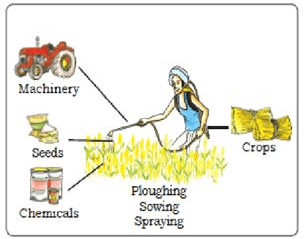
- a)Crops
- b)Machinery, Seeds,Chemicals
- c)Both A and B
- d)None
Correct answer is option 'B'. Can you explain this answer?
Analyse the following and identify which one among the following can be treated as Inputs to the agriculture system.
a)
Crops
b)
Machinery, Seeds,Chemicals
c)
Both A and B
d)
None
 | Nidhi Bhatt answered |
The important inputs are seeds, fertilisers, and machinery.
Which crop is mainly grown in well-drained loamy soils on hill slopes?- a)Tea
- b)Rice
- c)Wheat
- d)Cotton
Correct answer is option 'A'. Can you explain this answer?
Which crop is mainly grown in well-drained loamy soils on hill slopes?
a)
Tea
b)
Rice
c)
Wheat
d)
Cotton
| | Coders Trust answered |
- Tea is primarily grown in well-drained loamy soils found on hill slopes.
- This type of soil allows for effective drainage, preventing water accumulation, which is crucial for tea plants.
- Tea requires consistent rainfall but thrives best when the roots are not waterlogged.
- Countries like India, China, and Sri Lanka are famous for their tea cultivation, benefiting from the ideal hilly terrain.
Fill up the missing blank after analyzing the given image : 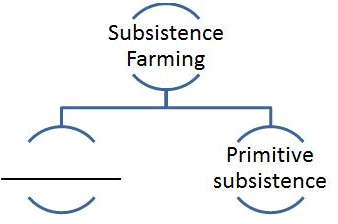
- a)Intensive Subsistence
- b)Primeval Subsistence
- c)Original Subsistence
- d)Traditional Subsistence
Correct answer is option 'A'. Can you explain this answer?
Fill up the missing blank after analyzing the given image :
a)
Intensive Subsistence
b)
Primeval Subsistence
c)
Original Subsistence
d)
Traditional Subsistence
 | Avi Mehra answered |
Subsistence agriculture is often divided into three different types, including intensive subsistence, which is the traditional method, shifting cultivation, which relies on clearing forest to create new farm plots every few years and pastoral nomadism, which relies on traveling with herds of animals.
Chapter doubts & questions for Agriculture - Social Studies (SST) Class 8 2026 is part of Class 8 exam preparation. The chapters have been prepared according to the Class 8 exam syllabus. The Chapter doubts & questions, notes, tests & MCQs are made for Class 8 2026 Exam. Find important definitions, questions, notes, meanings, examples, exercises, MCQs and online tests here.
Chapter doubts & questions of Agriculture - Social Studies (SST) Class 8 in English & Hindi are available as part of Class 8 exam. Download more important topics, notes, lectures and mock test series for Class 8 Exam by signing up for free.
Social Studies (SST) Class 886 videos|559 docs|53 tests |
