


All Exams > Class 8 > Social Studies (SST) Class 8 > All Questions
All questions of Tribals, Dikus and the Vision of a Golden Age for Class 8 Exam
Apart from the Forest Regulation Act, which was the other Act passed by the British in 1871 which labeled all the adivasi groups that rebelled against the British as criminals.- a)Illegal Tribes Act
- b)Illegal societies Act
- c)Criminal Societies Act
- d)Criminal Tribes Act
Correct answer is option 'D'. Can you explain this answer?
Apart from the Forest Regulation Act, which was the other Act passed by the British in 1871 which labeled all the adivasi groups that rebelled against the British as criminals.
a)
Illegal Tribes Act
b)
Illegal societies Act
c)
Criminal Societies Act
d)
Criminal Tribes Act
 | Pooja Shah answered |
The British colonisers passed the Criminal Tribes Act, labelling them, along with 198 other nomadic and forest groups, “criminal”. A stroke of the pen turned 14 million people into criminals in their own land. The Criminal Tribes Act 1871 was one of the many laws passed by the British colonial government that applied to Indians based on their religion and caste identification.

How did Birsa Munda die?- a)He died of malaria
- b)He was captured by the British and killed
- c)He committed suicide
- d)He died of cholera
Correct answer is option 'D'. Can you explain this answer?
How did Birsa Munda die?
a)
He died of malaria
b)
He was captured by the British and killed
c)
He committed suicide
d)
He died of cholera
 | Vikas Choudhury answered |
Birsa Munda was a young freedom fighter and a tribal leader, whose spirit of activism in the late nineteenth century, is remembered to be a strong mark of protest against British rule in India. He died in Ranchi Jail on 9 June 1900. Although the British claimed he died of cholera, he never showed symptoms of the disease. ... After his death the movement faded out. However, the movement was significant in at least two ways.
Given below are a few reasons as to why the tribals felt uncomfortable under the British. One statement is not True, pick out the one- a)Tribals were paid very low wages .
- b)Tribals who had depended on the forest for food and fodder were forced to stay in the forest and hills by the British.
- c)Tribals were exploited even by the money lenders.
- d)Tribals were forced to work as labourers under the British
Correct answer is option 'B'. Can you explain this answer?
Given below are a few reasons as to why the tribals felt uncomfortable under the British. One statement is not True, pick out the one
a)
Tribals were paid very low wages .
b)
Tribals who had depended on the forest for food and fodder were forced to stay in the forest and hills by the British.
c)
Tribals were exploited even by the money lenders.
d)
Tribals were forced to work as labourers under the British
 | Meera Singh answered |
Tribals who had depended on the forest for food and fodder were forced to stay in the forest and hills by the British.
Name the Act passed by the British In 1865 that gave British the power to declare any forest land as Government land.- a)Forest Ruling Act
- b)Indian Forest Act
- c)Forest Bye-Laws
- d)Forest Directive Act
Correct answer is option 'B'. Can you explain this answer?
Name the Act passed by the British In 1865 that gave British the power to declare any forest land as Government land.
a)
Forest Ruling Act
b)
Indian Forest Act
c)
Forest Bye-Laws
d)
Forest Directive Act
 | Mrinalini Patel answered |
Indian Forest Act was passed by British. It was passed in the year 1865. According to this act the right of Indian communities on forests were limited and authority was transferred to British government.
The act of 1865 empowered the British government to declare any land covered with trees as a government forest and make rules to manage it.
From the given number of options, choose the one that can be best tells us about the Gaddis of Kulu.- a)Money lenders
- b)Reared only goats
- c)Shepherds
- d)Tribal chieftains
Correct answer is option 'C'. Can you explain this answer?
From the given number of options, choose the one that can be best tells us about the Gaddis of Kulu.
a)
Money lenders
b)
Reared only goats
c)
Shepherds
d)
Tribal chieftains
 | Upasana Menon answered |
Agriculture, animal husbandry and trade are the main occupations of these tribes. Generally, Gaddi people used to go to the tough areas with their sheep and goats, called Dhan.
From this photograph, identify this tribal hero from Chottanagpur in Bihar, who had miraculous powers to cure all diseases.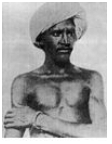
- a)Tilkha Majhi
- b)Birsa Munda
- c)Kiang Nongbah
- d)Jatra Oraon
Correct answer is option 'B'. Can you explain this answer?
From this photograph, identify this tribal hero from Chottanagpur in Bihar, who had miraculous powers to cure all diseases.
a)
Tilkha Majhi
b)
Birsa Munda
c)
Kiang Nongbah
d)
Jatra Oraon
| | Pooja Shah answered |
In 1895, a man named Birsa was seen roaming the forests and villages of Chottanagpur in Bihar. People said he had miraculous powers – he could cure all diseases and multiply grain. Birsa himself declared that God had appointed him to save his people from trouble, free them from the slavery of dikus (outsiders).
Why did the British consider the Chhota Nagpur belt vital?- a)This region had rich minerals and also dense teak and sal forests
- b)This region was an important place for the British to sell their produce .
- c)This region had a lot of adivasis who could work for the British
- d)This region had many big buildings
Correct answer is option 'A'. Can you explain this answer?
Why did the British consider the Chhota Nagpur belt vital?
a)
This region had rich minerals and also dense teak and sal forests
b)
This region was an important place for the British to sell their produce .
c)
This region had a lot of adivasis who could work for the British
d)
This region had many big buildings
 | Amit Sharma answered |
This region has vast reserves of coal and iron ore. Also, iron ore is cheaply available in the region, thus providing the raw material for iron and steel industries.
From the seeds of which tree did the tribals extract oil to cook?- a)Neem
- b)Mahagony
- c)Sal
- d)Teak
Correct answer is option 'C'. Can you explain this answer?
From the seeds of which tree did the tribals extract oil to cook?
a)
Neem
b)
Mahagony
c)
Sal
d)
Teak
 | Ashish Joshi answered |
Tribals extracted oil from the seed of sal to cook.
What is Jhum or Jhoom Cultivation?- a)This type of cultivation cleared a small patch of land, grew crops like rice,vegetable, fruits etc. and when the soil loses fertility, moved and shifted to another patch of virgin land for cultivation
- b)In this type, the British allotted different lands to the tribals and asked them to grow indigo plants instead of crops
- c)In this type of cultivation, the tribal chief divided the forest land and asked the tribals to grow crops .
- d)This type of cultivation encouraged the farmers to grow various crops simultaneously according to the climate.
Correct answer is option 'A'. Can you explain this answer?
What is Jhum or Jhoom Cultivation?
a)
This type of cultivation cleared a small patch of land, grew crops like rice,vegetable, fruits etc. and when the soil loses fertility, moved and shifted to another patch of virgin land for cultivation
b)
In this type, the British allotted different lands to the tribals and asked them to grow indigo plants instead of crops
c)
In this type of cultivation, the tribal chief divided the forest land and asked the tribals to grow crops .
d)
This type of cultivation encouraged the farmers to grow various crops simultaneously according to the climate.
 | Kabir Verma answered |
Jhum (Shifting) cultivation is a primitive practice of cultivation in States of North Eastern Hill Region of India and people involved in such cultivation are called Jhumia. The practice involves clearing vegetative/forest cover on land/slopes of hills, drying and burning it before onset of monsoon and cropping on it thereafter. After harvest, this land is left fallow and vegetative regeneration is allowed on it till the plot becomes reusable for the same purpose in a cycle. Meanwhile, the process is repeated in a new plot designated for Jhum cultivation during next year. Initially, when the Jhum cycle was long and ranged from 20 to 30 years, the process worked well. However, with increase in human population and increasing pressure on land, Jhum cycle reduced progressively (5-6 years) causing problem of land degradation and threat to ecology of the region at large.
From the seeds of Sal and Mahua, the tribal extract oil to cook. What exactly is Mahua ?- a)Root of a tree
- b)A flower that is eaten or used to make alcohol
- c)Stem of a tree
- d)Leaves of a tree
Correct answer is option 'B'. Can you explain this answer?
From the seeds of Sal and Mahua, the tribal extract oil to cook. What exactly is Mahua ?
a)
Root of a tree
b)
A flower that is eaten or used to make alcohol
c)
Stem of a tree
d)
Leaves of a tree
 | Rahul Mehta answered |
The correct option is Option B.
Mahua flowers, fruits and leaves are edible and used as vegetables in India and other Southern Asian countries. The sweet, fleshy flowers are eaten fresh or dried, powdered and cooked with flour, used as a sweetener or fermented to make alcohol (Fern, 2014). The fleshy outer coat of the fruit is used as a vegetable.
Mahua flowers, fruits and leaves are edible and used as vegetables in India and other Southern Asian countries. The sweet, fleshy flowers are eaten fresh or dried, powdered and cooked with flour, used as a sweetener or fermented to make alcohol (Fern, 2014). The fleshy outer coat of the fruit is used as a vegetable.
Practice Quiz or MCQ (Multiple Choice Questions) with solutions are available for Practice, which would help you prepare for chapter Tribals Dikus and Golden Age, Class 8, SST History. You can practice these practice quizzes as per your speed and improvise the topic. Q.From the following list of choices, which one would be most appropriate meaning of the term Adivasis ?- a)Tribals
- b)Money lenders
- c)Land lords
- d)Village Headmen
Correct answer is option 'A'. Can you explain this answer?
Practice Quiz or MCQ (Multiple Choice Questions) with solutions are available for Practice, which would help you prepare for chapter Tribals Dikus and Golden Age, Class 8, SST History. You can practice these practice quizzes as per your speed and improvise the topic.
Q.
From the following list of choices, which one would be most appropriate meaning of the term Adivasis ?
a)
Tribals
b)
Money lenders
c)
Land lords
d)
Village Headmen
| | Pooja Shah answered |
Adivasi is the collective term for tribes of the Indian Subcontinent, who are considered indigenous to places within India wherein they live, either as foragers or as tribalistic sedentary communities. However, India does not recognise Tribe as Indigenous people.
Lists of statements with respect to the tribal life are given below. Choose the one that does not pertain to the tribal life.- a)The tribal groups lived by hunting animals and gathering forest produce.
- b)Most of the tribals ate fruits and roots collected from the forest and cooked food with the oil extracted from the seeds
- c)The tribals saw forests as essential for survival
- d)The tribals always migrated and hence did not have a permanent forest habitat.
Correct answer is option 'D'. Can you explain this answer?
Lists of statements with respect to the tribal life are given below. Choose the one that does not pertain to the tribal life.
a)
The tribal groups lived by hunting animals and gathering forest produce.
b)
Most of the tribals ate fruits and roots collected from the forest and cooked food with the oil extracted from the seeds
c)
The tribals saw forests as essential for survival
d)
The tribals always migrated and hence did not have a permanent forest habitat.
 | Bhavya Nambiar answered |
The correct option is D.
Tribal people in India are called adivasi. Adivasi is an umbrella term for a heterogeneous set of ethnic and tribal groups considered the aboriginal population of India. They have a permanent habitants. Forest is home for many Indian tribes. It provides them with the basic needs like food, water, shelter etc. Therefore, we need to preserve our forest for a good environment and for the people who totally depend on nature for their livelihood.
Tribal people in India are called adivasi. Adivasi is an umbrella term for a heterogeneous set of ethnic and tribal groups considered the aboriginal population of India. They have a permanent habitants. Forest is home for many Indian tribes. It provides them with the basic needs like food, water, shelter etc. Therefore, we need to preserve our forest for a good environment and for the people who totally depend on nature for their livelihood.
Why did the local weavers and leather workers turn to the Khonds for help ?- a)When the local weavers and leather workers needed oil for production .
- b)When the local weavers and leather workers needed forest shrubs and herbs for medicinal purpose.
- c)When the local weavers and leather workers needed supplies of kusum and palash flowers to colour their clothes and leather
- d)When the local weavers and leather workers needed to hunt animals.
Correct answer is option 'C'. Can you explain this answer?
Why did the local weavers and leather workers turn to the Khonds for help ?
a)
When the local weavers and leather workers needed oil for production .
b)
When the local weavers and leather workers needed forest shrubs and herbs for medicinal purpose.
c)
When the local weavers and leather workers needed supplies of kusum and palash flowers to colour their clothes and leather
d)
When the local weavers and leather workers needed to hunt animals.
| | Meera Datta answered |
The Khonds were a community who lived in the forests of Orissa. They saw forests as essential for survival. They regularly went out on collective hunts and then divided the men amongst themselves. They ate fruits and roots collected from the forest and cooked food with the oil they extracted from seeds of the sal and mahua. They used many forest shrubs and herbs for medicinal purposes, and sold forest produce, and sold forest produce in the local markets. The local weavers and leather workers turned to the Khonds when they needed supplies of kudum and palash flowers to colour their clothes and leather.
To which tribe did Birsa belong to?- a)Santhals
- b)Oreons
- c)Mundas
- d)Kols
Correct answer is option 'C'. Can you explain this answer?
To which tribe did Birsa belong to?
a)
Santhals
b)
Oreons
c)
Mundas
d)
Kols
 | Gungun Shrivas answered |
Birsa belonged to Munda tribe in Jharkhand and he was therefore called Birsa Munda
In what way did the movement by Birsa Munda prove to be a significant one?- a)This movement helped British to impose huge land taxes on the adivasis.
- b)He proved that tribal people had the capacity to protest against injustice and rebel against colonial rule.
- c)This movement proved that British was much stronger than the tribals.
- d)This movement helped the British to easily implement the Permanent settlement
Correct answer is option 'B'. Can you explain this answer?
In what way did the movement by Birsa Munda prove to be a significant one?
a)
This movement helped British to impose huge land taxes on the adivasis.
b)
He proved that tribal people had the capacity to protest against injustice and rebel against colonial rule.
c)
This movement proved that British was much stronger than the tribals.
d)
This movement helped the British to easily implement the Permanent settlement
| | Anjali Kapoor answered |
The Birsa Movement was significant in 2 ways:
1. It forced the colonial govt. to introduce laws so that the land of the tribals could not be easily taken over by the dikus.
2. It showed once again that the tribals had the capacity to protest against injustice and express their anger against the colonial rule.
What did the Bakarwals of Kashmir rear?- a)Only horses
- b)Only cattle
- c)Only bullocks
- d)Only goats
Correct answer is option 'D'. Can you explain this answer?
What did the Bakarwals of Kashmir rear?
a)
Only horses
b)
Only cattle
c)
Only bullocks
d)
Only goats
| | Varun Kapoor answered |
The Bakarwals of Kashmir primarily rear goats. Therefore, the correct option is d) Only goats. The Bakarwals are a nomadic community that traditionally rears goats, sheep, and other livestock in the mountains of Jammu and Kashmir, and other parts of North India. They are known for their expertise in animal husbandry and their ability to navigate the rugged terrain of the Himalayas with their herds. They move with their animals to higher altitudes during the summer months and descend to lower elevations in the winter.
Why did the tribals saw the moneylenders and traders as evil outsiders and the cause for their misery?- a)Tribals had to compulsorily work for the traders and money lenders as their labourers
- b)Tribals often gave the goods they produced to the traders and hence they were without food most of the time .
- c)Tribals had to often buy goods from the traders at higher price with the money given as a loan by the moneylenders and they were always in debt and poverty.
- d)Tribals thought themselves as forest people and hence did not want any money lender or trader to interfere in their affairs.
Correct answer is option 'C'. Can you explain this answer?
Why did the tribals saw the moneylenders and traders as evil outsiders and the cause for their misery?
a)
Tribals had to compulsorily work for the traders and money lenders as their labourers
b)
Tribals often gave the goods they produced to the traders and hence they were without food most of the time .
c)
Tribals had to often buy goods from the traders at higher price with the money given as a loan by the moneylenders and they were always in debt and poverty.
d)
Tribals thought themselves as forest people and hence did not want any money lender or trader to interfere in their affairs.
 | Anjana Choudhary answered |
Moneylenders, Hindu landlords and the British officials were considered dikus or the outsiders. The tribals were under the slavery of these outsiders. Hence they wished to free them from their (outsiders) slavery. They viewed dikus as the sole cause of their misery and sufferings. Tribal groups often needed to buy and sell in under to be able to get the goods that were not produced within the locality. This led to their difference on traders and moneylanders. Traders came around with things for sale, and sold the goods at high prices. Moneylenders gave loans with which the tribals met their cash needs, adding to what they earned. But the interest charged on the loans was usually very high. So for the tribals, market and commerce often meant debt and poverty. They therefore came to see the moneylender and trader as evil outsiders and the cause of their misery.
What happened when traders and moneylenders came into the forests more often during the nineteenth century?- a)Tribal groups started selling forest produce for cash.
- b)Tribal groups stopped working for wages.
- c)Tribal groups chased traders away from the forests.
- d)Tribal groups started growing more crops.
Correct answer is option 'A'. Can you explain this answer?
What happened when traders and moneylenders came into the forests more often during the nineteenth century?
a)
Tribal groups started selling forest produce for cash.
b)
Tribal groups stopped working for wages.
c)
Tribal groups chased traders away from the forests.
d)
Tribal groups started growing more crops.
 | EduRev Class 8 answered |
- When traders and moneylenders visited the forests more often during the nineteenth century, tribal groups began selling forest produce for cash.
- This means they exchanged things they found in the forest for money.
Which among the following options best describe broadcasting or scattering- a)The method of sowing seeds in Jhum cultivation
- b)The method of harvesting in Jhum cultivation
- c)The method of raising cattle in poultries
- d)The method of granting titles to the tribal chiefs by the British
Correct answer is option 'A'. Can you explain this answer?
Which among the following options best describe broadcasting or scattering
a)
The method of sowing seeds in Jhum cultivation
b)
The method of harvesting in Jhum cultivation
c)
The method of raising cattle in poultries
d)
The method of granting titles to the tribal chiefs by the British
 | Anushka Tiwari answered |
The jhum cultivators broadcast the seeds, that is, scattered the seeds on the field instead of ploughing the land and sowing the seeds. Once the crop was ready and harvested, they moved to another field.
Why were the Baigas of Central India reluctant to do work for others?- a)Since Baigas were tribal chieftains, they thought they cannot work as labourers.
- b)Since Baigas only reared cattle, they thought they cannot work as labourers.
- c)Since Baigas saw themselves as people of the forest, they thought it below their dignity to work as a labourers.
- d)Since the Baigas were money lenders, they thought lending money was more profitable
Correct answer is option 'C'. Can you explain this answer?
Why were the Baigas of Central India reluctant to do work for others?
a)
Since Baigas were tribal chieftains, they thought they cannot work as labourers.
b)
Since Baigas only reared cattle, they thought they cannot work as labourers.
c)
Since Baigas saw themselves as people of the forest, they thought it below their dignity to work as a labourers.
d)
Since the Baigas were money lenders, they thought lending money was more profitable
| | Jaideep Verma answered |
The baigas of central India were reluctant to do work for others because the baigas saw themselves as people of the forest ,who could only live on the produced of the forest .It was below the dignity of a baiga to become a labourer
A few statement related to the Adivasis are given below. Choose the one that is not applicable to the tribals of India.- a)Isolated , they stayed away from the society and never exploited nature
- b)They shared common culture
- c)The adivasis did not like to live in communities or groups
- d)They lived in forests and hills.
Correct answer is option 'C'. Can you explain this answer?
A few statement related to the Adivasis are given below. Choose the one that is not applicable to the tribals of India.
a)
Isolated , they stayed away from the society and never exploited nature
b)
They shared common culture
c)
The adivasis did not like to live in communities or groups
d)
They lived in forests and hills.
| | Kiran Mehta answered |
Adivasis have a deep relation with the forests. Even now they mostly live away from the towns and near the forests. Their local economy also depends on the items collected from the forest and that is why industrialization and deforestation deeply affects their livelihood. Practicing sustainable forest management, they are seen as the protectors of the forests and the biodiversity of our planet.
What did the British want the shifting cultivators to become?- a)Farmers
- b)Nomads
- c)Peasant cultivators
- d)Hunters
Correct answer is option 'C'. Can you explain this answer?
What did the British want the shifting cultivators to become?
a)
Farmers
b)
Nomads
c)
Peasant cultivators
d)
Hunters
| | Roshni Chopra answered |
Introduction
The British colonial administration had specific agricultural policies that aimed to reshape traditional farming practices in India, particularly targeting the shifting cultivators.
Understanding Shifting Cultivation
- Shifting cultivation, also known as slash-and-burn agriculture, involved clearing forests for cultivation and moving to new areas once soil fertility declined.
- This method was common among various tribal communities in India, allowing them to utilize land sustainably.
British Objectives
The British sought to transform shifting cultivators into settled, productive agriculturalists for several reasons:
- Economic Control: By converting shifting cultivators into peasant cultivators, the British aimed to exert greater control over agricultural production and revenue collection.
- Taxation: Settled farmers could be taxed more easily compared to nomadic groups, providing a steady source of income for the British government.
- Production Increase: The British believed that settled agriculture would lead to increased crop yields and more consistent food supply, benefiting both the colony and the British economy.
Impacts of Transformation
- Loss of Traditional Practices: The shift from shifting cultivation to peasant farming often disregarded indigenous knowledge and practices, leading to cultural erosion.
- Land Ownership Issues: The introduction of land ownership laws disrupted communal land use patterns and marginalized traditional cultivators.
Conclusion
In conclusion, the British aimed for shifting cultivators to become peasant cultivators to ensure economic control, facilitate taxation, and increase agricultural productivity. This transformation had significant social and cultural implications, reshaping the agricultural landscape of India.
The British colonial administration had specific agricultural policies that aimed to reshape traditional farming practices in India, particularly targeting the shifting cultivators.
Understanding Shifting Cultivation
- Shifting cultivation, also known as slash-and-burn agriculture, involved clearing forests for cultivation and moving to new areas once soil fertility declined.
- This method was common among various tribal communities in India, allowing them to utilize land sustainably.
British Objectives
The British sought to transform shifting cultivators into settled, productive agriculturalists for several reasons:
- Economic Control: By converting shifting cultivators into peasant cultivators, the British aimed to exert greater control over agricultural production and revenue collection.
- Taxation: Settled farmers could be taxed more easily compared to nomadic groups, providing a steady source of income for the British government.
- Production Increase: The British believed that settled agriculture would lead to increased crop yields and more consistent food supply, benefiting both the colony and the British economy.
Impacts of Transformation
- Loss of Traditional Practices: The shift from shifting cultivation to peasant farming often disregarded indigenous knowledge and practices, leading to cultural erosion.
- Land Ownership Issues: The introduction of land ownership laws disrupted communal land use patterns and marginalized traditional cultivators.
Conclusion
In conclusion, the British aimed for shifting cultivators to become peasant cultivators to ensure economic control, facilitate taxation, and increase agricultural productivity. This transformation had significant social and cultural implications, reshaping the agricultural landscape of India.
What is the literal meaning of the word fallow?- a)A field left uncultivated for a while so that the soil recovers fertility.
- b)A luxuriant land with a lot of crops cultivated on it
- c)A fertile land for cultivation
- d)A dense forest
Correct answer is option 'A'. Can you explain this answer?
What is the literal meaning of the word fallow?
a)
A field left uncultivated for a while so that the soil recovers fertility.
b)
A luxuriant land with a lot of crops cultivated on it
c)
A fertile land for cultivation
d)
A dense forest
| | Anjali Rao answered |
Fallow: Land that has undergone ploughing and harrowing and has been left unseeded for one or more growing seasons.
Some important features of the Jhum cultivation are given below. Pick out the one that is not related to the Jhum cultivation.- a)The cultivators cut the tree- tops to allow sunlight to reach the ground and burnt the vegetation on the land to clear it for cultivation
- b)Potash, the ash from the burning of the vegetation used to fertilise the soil.
- c)Once a crop is harvested they move to another virgin land and the old one remained fallow for many years.
- d)This type of cultivation is done on small patches of land and hence not suitable for forests cultivation by the tribals.
Correct answer is option 'D'. Can you explain this answer?
Some important features of the Jhum cultivation are given below. Pick out the one that is not related to the Jhum cultivation.
a)
The cultivators cut the tree- tops to allow sunlight to reach the ground and burnt the vegetation on the land to clear it for cultivation
b)
Potash, the ash from the burning of the vegetation used to fertilise the soil.
c)
Once a crop is harvested they move to another virgin land and the old one remained fallow for many years.
d)
This type of cultivation is done on small patches of land and hence not suitable for forests cultivation by the tribals.
| | Sanaya Basak answered |
Some tribal people practiced jhum cultivation also known as shifting cultivation. This was done on small cultivation. This was done on small patches of land, mostly in forests. The cultivators cleared off small patches of land. They then burnt the vegetation and spread the ash from the firing, which contained potash to fertilise the soil. They used equipment like axes and hoe for preparing the soil for cultivation. Then they scattered the seeds on the field. Once the crop was ready and harvested, they moved to another field. Shifting cultivators were found in the hilly and forested tracts of north – east and central India.
State whether the following statement is True or FalseSome tribal people bought goods using the money they earned from odd jobs.- a)True
- b)False
Correct answer is option 'A'. Can you explain this answer?
State whether the following statement is True or False
Some tribal people bought goods using the money they earned from odd jobs.
a)
True
b)
False
 | C K Academy answered |
- Tribal people often engage in odd jobs to earn money due to limited access to traditional employment.
- This earned money is crucial for purchasing goods they need.
- Such transactions reflect the integration of modern economic practices into traditional tribal lifestyles.
- Therefore, the statement "Some tribal people bought goods using the money they earned from odd jobs" is True.
- This earned money is crucial for purchasing goods they need.
- Such transactions reflect the integration of modern economic practices into traditional tribal lifestyles.
- Therefore, the statement "Some tribal people bought goods using the money they earned from odd jobs" is True.
According to the list given below, who were the Van Gujjars of the Punjab hills?- a)Reared only goats
- b)Cattle herders
- c)Village heads
- d)Money lenders
Correct answer is option 'B'. Can you explain this answer?
According to the list given below, who were the Van Gujjars of the Punjab hills?
a)
Reared only goats
b)
Cattle herders
c)
Village heads
d)
Money lenders
| | Sneha Sen answered |
The Van Gujjars are a transhumance tribe of pastoralists belonging to the Himalayas. Their livelihood and subsistence depends primarily on their cattle. During summer they walk upto and beyond 12,500 ft in the mountains and trek down at the onset of winter.
Which one of the following best describes the Labadis of Andhra Pradesh?- a)Tribal chieftains
- b)Labourers
- c)Cattle herders
- d)Money lenders
Correct answer is option 'C'. Can you explain this answer?
Which one of the following best describes the Labadis of Andhra Pradesh?
a)
Tribal chieftains
b)
Labourers
c)
Cattle herders
d)
Money lenders
 | Prashanth Malik answered |
The Van Gujjars of the Punjab hills and the Labadis of Andhra Pradesh were cattle herders, the Gaddis of Kulu were shepherds, and the Bakarwals of Kashmir reared goats.
Chapter doubts & questions for Tribals, Dikus and the Vision of a Golden Age - Social Studies (SST) Class 8 2026 is part of Class 8 exam preparation. The chapters have been prepared according to the Class 8 exam syllabus. The Chapter doubts & questions, notes, tests & MCQs are made for Class 8 2026 Exam. Find important definitions, questions, notes, meanings, examples, exercises, MCQs and online tests here.
Chapter doubts & questions of Tribals, Dikus and the Vision of a Golden Age - Social Studies (SST) Class 8 in English & Hindi are available as part of Class 8 exam. Download more important topics, notes, lectures and mock test series for Class 8 Exam by signing up for free.
Social Studies (SST) Class 886 videos|559 docs|53 tests |
