


All Exams > Class 8 > Social Studies (SST) Class 8 > All Questions
All questions of Civilising the Native , Educating the Nation for Class 8 Exam
From the outline map of India, identify the place marked A in black circle. Situated on the banks of Ganges, in Uttar Pradesh also known as Varanasi or Kasi where the Hindu College was established in 1791.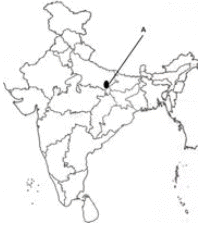
- a)Agra
- b)Kanpur
- c)Jhansi
- d)Benares
Correct answer is option 'D'. Can you explain this answer?
From the outline map of India, identify the place marked A in black circle. Situated on the banks of Ganges, in Uttar Pradesh also known as Varanasi or Kasi where the Hindu College was established in 1791.
a)
Agra
b)
Kanpur
c)
Jhansi
d)
Benares
 | Manish Aggarwal answered |
Varanasi, also called Benares, Banaras, or Kashi, city, southeastern Uttar Pradesh state, northern India. It is located on the left bank of the Ganges (Ganga) River and is one of the seven sacred cities of Hinduism. Pop. (2001) city, 1,091,918; urban agglom., 1,203,961; (2011) city, 1,198,491; urban agglom., 1,432,280.
Banaras Hindu University, formerly Central Hindu College, is a public central university located in Varanasi, Uttar Pradesh. It was established jointly in 1916 by the Maharaja of Darbhanga Rameshwar Singh, Pandit Madan Mohan Malaviya, Sir Sunder Lal and British Theosophist and Home Rule League founder Annie Besant.
Banaras Hindu University, formerly Central Hindu College, is a public central university located in Varanasi, Uttar Pradesh. It was established jointly in 1916 by the Maharaja of Darbhanga Rameshwar Singh, Pandit Madan Mohan Malaviya, Sir Sunder Lal and British Theosophist and Home Rule League founder Annie Besant.

Name the important scholar who studied Sanskrit and found it to be the most scientific language of the world. He also translated the important works Shakuntala and Manusmriti into English- a)Charles Wood
- b)William Jones
- c)Nathaniel Halhed
- d)Max Muller
Correct answer is option 'B'. Can you explain this answer?
Name the important scholar who studied Sanskrit and found it to be the most scientific language of the world. He also translated the important works Shakuntala and Manusmriti into English
a)
Charles Wood
b)
William Jones
c)
Nathaniel Halhed
d)
Max Muller
 | Priya Menon answered |
Sir William Jones was an Anglo-Welsh phiologist and scholar of ancient India, particularly known for his proposition of the existence of a relationship among Indo-European languages. he postulated the common ancestry of Sanskrit, Latin, and Greek, his findings providing the impetus for the development of comparative linguistics in the early 19th century.
The temples of darkness that were falling of themselves into decay. Who said these words about the Calcutta Madrasa and Benares Sanskrit College?- a)Lord William Bentick
- b)Lord Dalhousie
- c)Lord Ripon
- d)Lord Macaulay
Correct answer is option 'D'. Can you explain this answer?
The temples of darkness that were falling of themselves into decay. Who said these words about the Calcutta Madrasa and Benares Sanskrit College?
a)
Lord William Bentick
b)
Lord Dalhousie
c)
Lord Ripon
d)
Lord Macaulay
 | EduRev Class 8 answered |
The correct answer is:
- Lord Macaulay
Lord Macaulay made this statement about the Calcutta Madrasa and Benares Sanskrit College. He played a significant role in promoting English education in India through his famous Minute on Indian Education in 1835. Macaulay advocated for Western education over traditional Indian learning systems. This move had a lasting impact on the education system in India, leading to the decline of traditional institutions like the Calcutta Madrasa and Benares Sanskrit College.
- Lord Macaulay
Lord Macaulay made this statement about the Calcutta Madrasa and Benares Sanskrit College. He played a significant role in promoting English education in India through his famous Minute on Indian Education in 1835. Macaulay advocated for Western education over traditional Indian learning systems. This move had a lasting impact on the education system in India, leading to the decline of traditional institutions like the Calcutta Madrasa and Benares Sanskrit College.
A person who can read, write and teach Persian is called a _________- a)Munshi
- b)Biographer
- c)Linguist
- d)Orientalist
Correct answer is option 'A'. Can you explain this answer?
A person who can read, write and teach Persian is called a _________
a)
Munshi
b)
Biographer
c)
Linguist
d)
Orientalist
 | Aditya Kumar answered |
Munshi is the correct answer. A person who can read write and teach Persian is called Munshi.
Name the person who was a part of the Scottish missionary who helped to establish the Serampore Mission- a)Hudson Taylor
- b)Andrew Fuller
- c)William Carry
- d)William Ward
Correct answer is option 'C'. Can you explain this answer?
Name the person who was a part of the Scottish missionary who helped to establish the Serampore Mission
a)
Hudson Taylor
b)
Andrew Fuller
c)
William Carry
d)
William Ward
 | Vikram Kapoor answered |
The correct option is C.
William Carey (17 August 1761 – 9 June 1834) was a British Christian missionary, Particular Baptist minister, translator, social reformer and cultural anthropologist who founded the Serampore College and the Serampore University, the first degree-awarding university in India.
William Carey (17 August 1761 – 9 June 1834) was a British Christian missionary, Particular Baptist minister, translator, social reformer and cultural anthropologist who founded the Serampore College and the Serampore University, the first degree-awarding university in India.
Complete by choosing the most appropriate word from the following list of options. The introduction of _____________ brought with it ideas of democracy, liberty, fraternity among the minds of Indians- a)Western education
- b)Subsidiary alliance
- c)Doctrine of Lapse
- d)Expansion policies
Correct answer is option 'A'. Can you explain this answer?
Complete by choosing the most appropriate word from the following list of options. The introduction of _____________ brought with it ideas of democracy, liberty, fraternity among the minds of Indians
a)
Western education
b)
Subsidiary alliance
c)
Doctrine of Lapse
d)
Expansion policies
 | C K Academy answered |
The introduction of Western education brought with it ideas of democracy, liberty, fraternity among the minds of Indians because:
- Western education introduced new concepts and values.
- It emphasized principles like democracy, liberty, and fraternity.
- These ideas influenced the thinking of Indians positively.
- Western education played a significant role in shaping modern Indian society.
- It helped in spreading awareness about democratic ideals and fostering a sense of unity and progress.
- Western education introduced new concepts and values.
- It emphasized principles like democracy, liberty, and fraternity.
- These ideas influenced the thinking of Indians positively.
- Western education played a significant role in shaping modern Indian society.
- It helped in spreading awareness about democratic ideals and fostering a sense of unity and progress.
Where in India a Madrasa was set up in 1781 to promote the study of Arabic, Persian and Islamic Law ?- a)Madras
- b)Bombay
- c)Benares
- d)Calcutta
Correct answer is option 'D'. Can you explain this answer?
Where in India a Madrasa was set up in 1781 to promote the study of Arabic, Persian and Islamic Law ?
a)
Madras
b)
Bombay
c)
Benares
d)
Calcutta
 | Sanvi Kapoor answered |
A madrasa was set up in Calcutta in 1781 to promote the study of Arabic, Persian and Islamic law; and the Hindu College was established in Benaras in 1791 to encourage the study of ancient Sanskrit texts that would be useful for the administration of the country.
A Single shelf of a good European library was worth the whole native literature of India and Arabia. Who said these words?- a)Wlliam Bentick
- b)James Mill
- c)Thomas Carlyle
- d)Thomas Babington Macaulay
Correct answer is option 'D'. Can you explain this answer?
A Single shelf of a good European library was worth the whole native literature of India and Arabia. Who said these words?
a)
Wlliam Bentick
b)
James Mill
c)
Thomas Carlyle
d)
Thomas Babington Macaulay
| | Alok Goyal answered |
“A single shelf of a good European library was worth the whole native literature of India and Arabia,” Macaulay wrote in the Minute.
This statement was a part of the speech of Thomas Babington Macaulay, the famous British historian, and politician of the 19th century. This quote was told in his Parliamentary speech on 2nd February 1835. Where he was laying stress over the oriental education plan designed by the British government. According to him, English literature was far more developed than that written in Sanskrit or Arabian language.
Regarding Wood's Despatch, which of the following statements are true?1. Grants-in-Aid system was introduced.2. Establishment of universities was recommended.3. English as a medium of instruction at all levels of education was recommended.Select the correct answer using the code given below:- a)1 and 2 only
- b)2 and 3 only
- c)1 and 3 only
- d)1, 2 and 3
Correct answer is option 'A'. Can you explain this answer?
Regarding Wood's Despatch, which of the following statements are true?
1. Grants-in-Aid system was introduced.
2. Establishment of universities was recommended.
3. English as a medium of instruction at all levels of education was recommended.
Select the correct answer using the code given below:
a)
1 and 2 only
b)
2 and 3 only
c)
1 and 3 only
d)
1, 2 and 3
 | Megha Sarkar answered |
Wood's Despatch:
- In 1854, Charles Wood prepared a Despatch on an educational system for India. It was considered the "Magna Carta of English Education in India".
- This document was the first comprehensive plan for the spread of education in India.
- Some of the provisions of Charles Wood Despatch are as follows -
- It asked the Government of India to assume responsibility for the education of the masses, thus repudiating the 'downward filtration theory', at least on paper.
- It systematized the hierarchy from vernacular primary schools in villages at the bottom, followed by Anglo-Vernacular High Schools and an affiliated college at the district level, and affiliating universities in the presidency towns of Calcutta, Bombay, and Madras.
- It recommended a system of grants-in-aid to encourage private enterprise. Hence, statement 1 is correct.
- It recommended English as the medium of instruction for higher studies and vernaculars at the school level. Hence, statement 3 is not correct.
- The Despatch recommended the establishment of universities in the three Presidency towns of Calcutta, Bombay, and Madras. The universities were to be modeled after the London University and these were to have a senate consisting of a Chancellor, a Vice-Chancellor, and fellows who were nominated by the Government.
- Hence, statement 2 is correct.
What does the Arabic word Madrasa refer to?- a)A place of learning, a school or college
- b)A place of worship
- c)A mine
- d)A factory
Correct answer is option 'A'. Can you explain this answer?
What does the Arabic word Madrasa refer to?
a)
A place of learning, a school or college
b)
A place of worship
c)
A mine
d)
A factory
| | Alok Verma answered |
It is the Arabic word for any type of educational institution, secular or religious (of any religion), whether for elementary instruction or higher learning. The word is variously transliterated madrasah, medresa, madrassa, madraza, medrese, etc.
Identify this linguist who arrived in Calcutta in 1783 as a junior judge at the Supreme Court.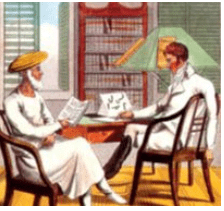
- a)Max Muller
- b)William Jones
- c)Henry Thomas Colebrooke
- d)Warren Hastings
Correct answer is option 'B'. Can you explain this answer?
Identify this linguist who arrived in Calcutta in 1783 as a junior judge at the Supreme Court.
a)
Max Muller
b)
William Jones
c)
Henry Thomas Colebrooke
d)
Warren Hastings
| | Suresh Reddy answered |
William Jones was a British linguist who arrived at Calcutta, India, in 1783. Initially, he was appointed as a junior judge in the Supreme Court established by the Company in India. Jones had knowledge of Greek, Latin, French, Arabic and Persian.
In countries like India, British used this term to mark the difference between the local languages and everyday use and English. This term is generally used to refer to a local language or dialect as distinct from what is seen as the standard language.- a)Colloquial
- b)Jargon
- c)Vernacular
- d)Slang
Correct answer is option 'C'. Can you explain this answer?
In countries like India, British used this term to mark the difference between the local languages and everyday use and English. This term is generally used to refer to a local language or dialect as distinct from what is seen as the standard language.
a)
Colloquial
b)
Jargon
c)
Vernacular
d)
Slang
 | Jithin Jain answered |
Vernacular
, Explanation: British considered English as the language of the imperial masters and said that knowledge of East was full of errors and unscientific thought. So for local languages they used the term vernacular.
Which year did the Court of Directors of the East India Company in London sent an educational dispatch to the Governor General in India?- a)1800
- b)1854
- c)1880
- d)1890
Correct answer is option 'B'. Can you explain this answer?
Which year did the Court of Directors of the East India Company in London sent an educational dispatch to the Governor General in India?
a)
1800
b)
1854
c)
1880
d)
1890
| | Ritu Joshi answered |
The correct answer is option b) 1854.
The Court of Directors of the East India Company in London sent an educational dispatch to the Governor General in India in 1854, outlining their policy on education in India. This dispatch marked the beginning of formal Western-style education in India and led to the establishment of a number of schools and colleges throughout the country. It also played a significant role in the development of the Indian education system.
Name the President of the Board of Control in England who sent a dispatch.- a)Lord Dalhousie
- b)Lord Macaulay
- c)Charles Wood
- d)James Mill
Correct answer is option 'C'. Can you explain this answer?
Name the President of the Board of Control in England who sent a dispatch.
a)
Lord Dalhousie
b)
Lord Macaulay
c)
Charles Wood
d)
James Mill
| | EduRev Class 8 answered |
The President of the Board of Control in England who sent a dispatch was Charles Wood.
- Charles Wood was a crucial figure in British governance.
- As the President of the Board of Control, he oversaw matters related to the British East India Company.
- Dispatches were official communications sent by the Board of Control to India.
- Wood's dispatches likely contained instructions, policies, or decisions affecting British India's administration.
- His role was significant in shaping British colonial policies and governance in India.
- Charles Wood was a crucial figure in British governance.
- As the President of the Board of Control, he oversaw matters related to the British East India Company.
- Dispatches were official communications sent by the Board of Control to India.
- Wood's dispatches likely contained instructions, policies, or decisions affecting British India's administration.
- His role was significant in shaping British colonial policies and governance in India.
How did the European learning improve the moral character of Indians?- a)It would expand the trade and commerce
- b)It would make them truthful and honest
- c)It would make the Indians realize the importance of developing resources of the country
- d)It would make them change their tastes and desires and create a demand for British goods
Correct answer is option 'B'. Can you explain this answer?
How did the European learning improve the moral character of Indians?
a)
It would expand the trade and commerce
b)
It would make them truthful and honest
c)
It would make the Indians realize the importance of developing resources of the country
d)
It would make them change their tastes and desires and create a demand for British goods
 | Ojasvi Mehta answered |
Wood’s Despatch said that European learning would improve the moral character of Indians. It would make them truthful and honest, and thus supply the Company with civil servants who could be trusted and depended upon.
Identify this famous historian from the following clues :
He was the most outspoken and influential critic who attacked the Orientalists
He saw India as an uncivlised country that needed to be civilized
He felt that British government in India should stop wasting public money in promoting Oriental learning for it was of no practical use. 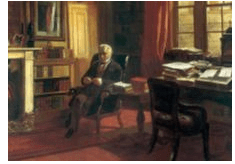
- a)James Mill
- b)Thomas Carlyle
- c)Thomas Babington Macaulay
- d)Wlliam Bentick
Correct answer is option 'C'. Can you explain this answer?
Identify this famous historian from the following clues :
He was the most outspoken and influential critic who attacked the Orientalists
He saw India as an uncivlised country that needed to be civilized
He felt that British government in India should stop wasting public money in promoting Oriental learning for it was of no practical use.
He was the most outspoken and influential critic who attacked the Orientalists
He saw India as an uncivlised country that needed to be civilized
He felt that British government in India should stop wasting public money in promoting Oriental learning for it was of no practical use.
a)
James Mill
b)
Thomas Carlyle
c)
Thomas Babington Macaulay
d)
Wlliam Bentick
 | Sanjana Bose answered |
The correct answer is option C, Thomas Babington Macaulay. He was a British historian, politician, and colonial administrator who wrote extensively about India and its history. He was a vocal critic of the Orientalists, who he believed had a romanticized view of India and its culture. He saw India as an uncivilized country that needed to be modernized and westernized, and he believed that the British government in India should focus on promoting Western education and values. He also felt that British government in India should stop wasting public money in promoting Oriental learning for it was of no practical use. His famous Minute on Indian Education, 1835, outlined his vision of English-language education for India which had a lasting impact on Indian education system.
Warren Hastings took the initiative to set up a Madrasa at one of the important cities of India and believed that the ancient customs of the country and Oriental learning ought to be the basis of British rule in India. Which city is being referred to here ?- a)Pondicherry
- b)Madras
- c)Calcutta
- d)Bombay
Correct answer is option 'C'. Can you explain this answer?
Warren Hastings took the initiative to set up a Madrasa at one of the important cities of India and believed that the ancient customs of the country and Oriental learning ought to be the basis of British rule in India. Which city is being referred to here ?
a)
Pondicherry
b)
Madras
c)
Calcutta
d)
Bombay
 | Muskaan Nambiar answered |
Answer:
The city being referred to in the question is Calcutta. Warren Hastings, the first Governor-General of Bengal, took the initiative to set up a Madrasa (an Islamic educational institution) in Calcutta. He believed that the ancient customs of the country and Oriental learning should be the foundation of British rule in India.
Warren Hastings and his policy of Oriental Learning:
Warren Hastings was an influential figure in the British East India Company and played a significant role in shaping British policy in India. He believed that the British should adopt a policy of Oriental Learning, which meant embracing the culture, customs, and institutions of India rather than imposing British ideals.
Establishment of Madrasa in Calcutta:
As a part of his policy, Warren Hastings set up a Madrasa in Calcutta in 1781. The Madrasa was designed to promote Oriental learning and provide education in Islamic studies. It aimed to bridge the gap between the British and the Indian population by incorporating Indian traditions and education systems.
Importance of Calcutta:
Calcutta, now known as Kolkata, was one of the most important cities in India during the British colonial period. It was the capital of British India from 1772 until 1911. The city served as the center of British administration, trade, and cultural exchange. Calcutta was also known for its vibrant intellectual and educational environment, making it an ideal location for the establishment of a Madrasa.
Significance of Oriental Learning:
Hastings' emphasis on Oriental learning was a departure from the earlier policies of the British East India Company, which focused primarily on trade and economic exploitation. By promoting Oriental learning, Hastings aimed to gain a deeper understanding of Indian society, culture, and governance. He believed that by incorporating Indian customs and traditions, the British could effectively rule over India and gain the support of the local population.
Conclusion:
Warren Hastings set up a Madrasa in Calcutta as a part of his policy of Oriental Learning. This initiative aimed to foster cultural understanding and incorporate Indian customs into British rule in India. Calcutta's significance as a major city in British India made it an appropriate location for the establishment of the Madrasa.
The city being referred to in the question is Calcutta. Warren Hastings, the first Governor-General of Bengal, took the initiative to set up a Madrasa (an Islamic educational institution) in Calcutta. He believed that the ancient customs of the country and Oriental learning should be the foundation of British rule in India.
Warren Hastings and his policy of Oriental Learning:
Warren Hastings was an influential figure in the British East India Company and played a significant role in shaping British policy in India. He believed that the British should adopt a policy of Oriental Learning, which meant embracing the culture, customs, and institutions of India rather than imposing British ideals.
Establishment of Madrasa in Calcutta:
As a part of his policy, Warren Hastings set up a Madrasa in Calcutta in 1781. The Madrasa was designed to promote Oriental learning and provide education in Islamic studies. It aimed to bridge the gap between the British and the Indian population by incorporating Indian traditions and education systems.
Importance of Calcutta:
Calcutta, now known as Kolkata, was one of the most important cities in India during the British colonial period. It was the capital of British India from 1772 until 1911. The city served as the center of British administration, trade, and cultural exchange. Calcutta was also known for its vibrant intellectual and educational environment, making it an ideal location for the establishment of a Madrasa.
Significance of Oriental Learning:
Hastings' emphasis on Oriental learning was a departure from the earlier policies of the British East India Company, which focused primarily on trade and economic exploitation. By promoting Oriental learning, Hastings aimed to gain a deeper understanding of Indian society, culture, and governance. He believed that by incorporating Indian customs and traditions, the British could effectively rule over India and gain the support of the local population.
Conclusion:
Warren Hastings set up a Madrasa in Calcutta as a part of his policy of Oriental Learning. This initiative aimed to foster cultural understanding and incorporate Indian customs into British rule in India. Calcutta's significance as a major city in British India made it an appropriate location for the establishment of the Madrasa.
What did Thomas Babington Macaulay suggest should be the focus of education in India?- a)To teach only poetry and sacred literature
- b)To encourage the study of Arabic and Sanskrit
- c)To make Indians familiar with Western scientific and technical advances
- d)To promote Oriental institutions like the Calcutta Madrasa
Correct answer is option 'C'. Can you explain this answer?
What did Thomas Babington Macaulay suggest should be the focus of education in India?
a)
To teach only poetry and sacred literature
b)
To encourage the study of Arabic and Sanskrit
c)
To make Indians familiar with Western scientific and technical advances
d)
To promote Oriental institutions like the Calcutta Madrasa
 | Jithin Menon answered |
Introduction to Macaulay's Educational Vision
Thomas Babington Macaulay, a prominent British historian and politician, played a crucial role in shaping the educational policies in colonial India during the 19th century. His views on education were influenced by his belief in Western superiority and the need to modernize Indian society.
Focus on Western Education
Macaulay argued that the education system in India should prioritize Western scientific and technical knowledge. His rationale included:
Rejection of Traditional Studies
Macaulay's vision was clear in his dismissal of traditional Indian educational institutions and languages, such as Arabic and Sanskrit. He believed that:
Conclusion
In summary, Macaulay's focus on making Indians familiar with Western scientific and technical advances was a pivotal aspect of his educational policy. This approach aimed to reform Indian society by introducing modernity through education, ultimately reflecting the colonial mindset of that era.
Thomas Babington Macaulay, a prominent British historian and politician, played a crucial role in shaping the educational policies in colonial India during the 19th century. His views on education were influenced by his belief in Western superiority and the need to modernize Indian society.
Focus on Western Education
Macaulay argued that the education system in India should prioritize Western scientific and technical knowledge. His rationale included:
- Modernization: He believed that exposure to Western ideas would enable Indians to progress and align with modern global standards.
- Practical Knowledge: Macaulay emphasized the importance of practical skills and scientific understanding, which he felt were lacking in traditional Indian education.
- Language of Instruction: He advocated for English as the medium of instruction, arguing that it would bridge the gap between the British rulers and the Indian populace.
Rejection of Traditional Studies
Macaulay's vision was clear in his dismissal of traditional Indian educational institutions and languages, such as Arabic and Sanskrit. He believed that:
- Limited Relevance: Traditional subjects, including poetry and sacred literature, had little relevance in the context of scientific advancement.
- Backwardness: Institutions like the Calcutta Madrasa were seen as outdated and not conducive to the progressive education he envisioned.
Conclusion
In summary, Macaulay's focus on making Indians familiar with Western scientific and technical advances was a pivotal aspect of his educational policy. This approach aimed to reform Indian society by introducing modernity through education, ultimately reflecting the colonial mindset of that era.
William Jones was an expert in ____.- a)Law
- b)Mathematics
- c)Medicine
- d)Engineering
Correct answer is option 'A'. Can you explain this answer?
William Jones was an expert in ____.
a)
Law
b)
Mathematics
c)
Medicine
d)
Engineering
| | C K Academy answered |
William Jones was very good at understanding and working with laws. He studied them carefully to help make fair decisions.
What did William Adam find out about the education system in Bengal and Bihar in the 1830s?- a)The schools had printed books
- b)Students were separated into different classes
- c)Children learned under a banyan tree
- d)There were annual examinations
Correct answer is option 'C'. Can you explain this answer?
What did William Adam find out about the education system in Bengal and Bihar in the 1830s?
a)
The schools had printed books
b)
Students were separated into different classes
c)
Children learned under a banyan tree
d)
There were annual examinations
| | EduRev Class 8 answered |
William Adam discovered that children in Bengal and Bihar learned in places like under a banyan tree. This was how they studied back then. It was different from schools today where students have separate classrooms.
Some comments about the Orientalist Vision of Learning by the British are given below. Select the one that is not applicable to this particular style of learning.- a)British argued that the aim of education ought to be to teach what was useful and practical.
- b)British argued that it is not advisable to encourage the study of Arabic and Sanskrit language and literature
- c)British said that knowledge of the east was full of errors and unscientific thoughts
- d)British observed that Western literature was non-serious and light hearted.
Correct answer is option 'D'. Can you explain this answer?
Some comments about the Orientalist Vision of Learning by the British are given below. Select the one that is not applicable to this particular style of learning.
a)
British argued that the aim of education ought to be to teach what was useful and practical.
b)
British argued that it is not advisable to encourage the study of Arabic and Sanskrit language and literature
c)
British said that knowledge of the east was full of errors and unscientific thoughts
d)
British observed that Western literature was non-serious and light hearted.
| | Ritu Joshi answered |
British officials had criticised the Orientalist vision of learning. They said that the knowledge of the East was full of errors and unscientific thought. They saw Eastern literature as non-serious and light-hearted. So they argued that it was wrong on the part of the British to spend so much effort in encouraging the study of Arabic and Sanskrit language and literature.
This picture is of a university that was established as per recommendations of the Woods Dispatch along the lines of London universities. Identify the place where this famous university stands today in the state of Maharashtra? 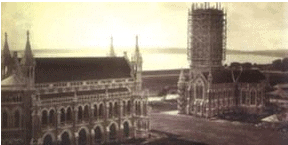
- a)Pune
- b)Aurangabad
- c)Bombay
- d)Nasik
Correct answer is option 'C'. Can you explain this answer?
This picture is of a university that was established as per recommendations of the Woods Dispatch along the lines of London universities. Identify the place where this famous university stands today in the state of Maharashtra?
a)
Pune
b)
Aurangabad
c)
Bombay
d)
Nasik
| | Utkarsh Maurya answered |
C
Name the college established on the banks of the river Hooghly near Calcutta by William Carey.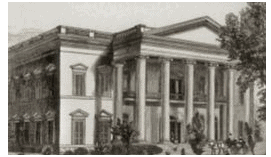
- a)Bethune College
- b)Vidyasagar College
- c)Serampore College
- d)Scottish Church college
Correct answer is option 'C'. Can you explain this answer?
Name the college established on the banks of the river Hooghly near Calcutta by William Carey.
a)
Bethune College
b)
Vidyasagar College
c)
Serampore College
d)
Scottish Church college
| | C K Academy answered |
The college established by William Carey on the banks of the river Hooghly near Calcutta is Serampore College. Here's a concise explanation of why this is the correct answer:
- William Carey, a renowned English Baptist missionary, played a significant role in the establishment of Serampore College.
- Serampore College, located in Serampore, West Bengal, India, was founded in 1818 by Carey along with Joshua Marshman and William Ward.
- This educational institution became a significant center for learning and played a crucial role in the spread of education and knowledge in the region.
- William Carey, a renowned English Baptist missionary, played a significant role in the establishment of Serampore College.
- Serampore College, located in Serampore, West Bengal, India, was founded in 1818 by Carey along with Joshua Marshman and William Ward.
- This educational institution became a significant center for learning and played a crucial role in the spread of education and knowledge in the region.
Which year was the English education Act introduced in India?- a)1800
- b)1900
- c)1835
- d)1880
Correct answer is option 'C'. Can you explain this answer?
Which year was the English education Act introduced in India?
a)
1800
b)
1900
c)
1835
d)
1880
| | C K Academy answered |
The English Education Act was introduced in India in 1835. Here's a concise explanation of why this is the correct answer:
- The English Education Act of 1835 was a significant legislative intervention by the British in India.
- It laid the foundation for a systematic educational system in India by promoting Western education.
- The Act aimed to impart Western knowledge and science to Indians and to create a class of people who would be "Indian in blood and color, but English in taste."
Therefore, the correct answer is C: 1835.
- The English Education Act of 1835 was a significant legislative intervention by the British in India.
- It laid the foundation for a systematic educational system in India by promoting Western education.
- The Act aimed to impart Western knowledge and science to Indians and to create a class of people who would be "Indian in blood and color, but English in taste."
Therefore, the correct answer is C: 1835.
How many pathshalas were there in Bengal and Bihar according to William Adam's report?- a)5
- b)10
- c)1 lakh
- d)50
Correct answer is option 'C'. Can you explain this answer?
a)
5
b)
10
c)
1 lakh
d)
50
 | Deepak Pillai answered |
Overview of William Adam's Report
William Adam, a Scottish missionary and educationist, conducted an extensive survey in the early 19th century about educational institutions in Bengal and Bihar. His findings highlighted the state of education in these regions during British colonial rule.
Pathshalas in Bengal and Bihar
- According to Adam's report, there were approximately 1 lakh (100,000) pathshalas in Bengal and Bihar.
- Pathshalas were traditional village schools that played a pivotal role in the education system before formal schooling was widely established.
Significance of Pathshalas
- These institutions served as essential centers for learning, particularly in rural areas. They focused on imparting knowledge in various subjects, including literacy, mathematics, and religious texts.
- The high number of pathshalas indicated a vibrant community-based education system, catering to the needs of local populations.
Impact of British Education Policies
- Adam's report emphasized the necessity for the British to recognize and incorporate indigenous educational systems into their policies.
- His findings prompted discussions on reforming education in India, laying the groundwork for future educational initiatives by the British.
Conclusion
The significant number of pathshalas, as reported by William Adam, illustrates the rich educational heritage of Bengal and Bihar prior to the British intervention. Understanding this historical context is crucial for appreciating the evolution of education in India.
William Adam, a Scottish missionary and educationist, conducted an extensive survey in the early 19th century about educational institutions in Bengal and Bihar. His findings highlighted the state of education in these regions during British colonial rule.
Pathshalas in Bengal and Bihar
- According to Adam's report, there were approximately 1 lakh (100,000) pathshalas in Bengal and Bihar.
- Pathshalas were traditional village schools that played a pivotal role in the education system before formal schooling was widely established.
Significance of Pathshalas
- These institutions served as essential centers for learning, particularly in rural areas. They focused on imparting knowledge in various subjects, including literacy, mathematics, and religious texts.
- The high number of pathshalas indicated a vibrant community-based education system, catering to the needs of local populations.
Impact of British Education Policies
- Adam's report emphasized the necessity for the British to recognize and incorporate indigenous educational systems into their policies.
- His findings prompted discussions on reforming education in India, laying the groundwork for future educational initiatives by the British.
Conclusion
The significant number of pathshalas, as reported by William Adam, illustrates the rich educational heritage of Bengal and Bihar prior to the British intervention. Understanding this historical context is crucial for appreciating the evolution of education in India.
Three Englishmen were busy discovering the ancient Indian heritage and mastering Indian languages. One was Willam Jones and another Henry Thomas Colebrooke. Name the third person- a)Max Muller
- b)Nathaniel Halhed
- c)Warren Hastings
- d)Henry Thomas Colebrooke
Correct answer is option 'B'. Can you explain this answer?
Three Englishmen were busy discovering the ancient Indian heritage and mastering Indian languages. One was Willam Jones and another Henry Thomas Colebrooke. Name the third person
a)
Max Muller
b)
Nathaniel Halhed
c)
Warren Hastings
d)
Henry Thomas Colebrooke
 | Rahul Menon answered |
It was necessary to study Indian history, philosophy, and law. William Jones, an expert in law and a linguist, took this task. He began to study ancient Indian texts on law, philosophy, religion, morality, arithmetic, medicine and the other sciences.
Englishmen like Henry Thomas Colebrooke and Nathaniel Halhed were also busy discovering the ancient Indian heritage, mastering Indian languages and translating Sanskrit and Persian works into English.
Who started the journal Asiatick Researches?- a)Henry Thomas Colebrooke
- b)Warren Hastings
- c)William Jones
- d)Max Muller
Correct answer is option 'C'. Can you explain this answer?
Who started the journal Asiatick Researches?
a)
Henry Thomas Colebrooke
b)
Warren Hastings
c)
William Jones
d)
Max Muller
 | Nidhi Bhatt answered |
In January 1784 Sir William Jones sent out a circular-letter to a selected number of British residents of Calcutta with a view to establish a society for the Asiatic studies.
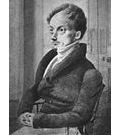

The following image is a pictorial representation of a Dutch painter who came to India in the late 18th century. Name this Dutch painter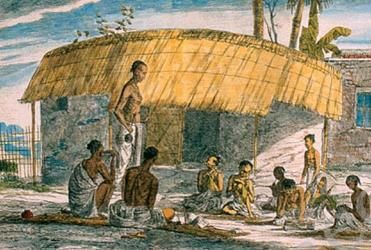
- a)William Adam
- b)William Carey
- c)Lord Macualay
- d)Francois Solvyn
Correct answer is option 'D'. Can you explain this answer?
The following image is a pictorial representation of a Dutch painter who came to India in the late 18th century. Name this Dutch painter
a)
William Adam
b)
William Carey
c)
Lord Macualay
d)
Francois Solvyn
| | Nidhi Bhatt answered |
The correct answer is D: Francois Solvyn.
- Francois Solvyn was a Dutch painter who came to India in the late 18th century.
- The image depicts the everyday life of a village pathshala, showcasing his work.
- Solvyn's paintings often captured scenes of Indian life with meticulous detail.
- His style reflected the influence of European realism combined with a focus on Indian subjects.
- This painting is a testament to his skill in depicting the cultural nuances of Indian life during that time.
- Francois Solvyn was a Dutch painter who came to India in the late 18th century.
- The image depicts the everyday life of a village pathshala, showcasing his work.
- Solvyn's paintings often captured scenes of Indian life with meticulous detail.
- His style reflected the influence of European realism combined with a focus on Indian subjects.
- This painting is a testament to his skill in depicting the cultural nuances of Indian life during that time.
From the image given below, name this English scholar who learnt Sanskrit and ancient sacred writings of Hinduism along with William Jones.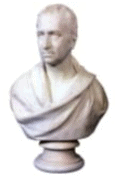
- a)Max Muller
- b)Nathaniel Halhed
- c)Warren Hastings
- d)Henry Thomas Colebrooke
Correct answer is option 'D'. Can you explain this answer?
From the image given below, name this English scholar who learnt Sanskrit and ancient sacred writings of Hinduism along with William Jones.
a)
Max Muller
b)
Nathaniel Halhed
c)
Warren Hastings
d)
Henry Thomas Colebrooke
 | Avik Mukherjee answered |
Henry Thomas Colebrookewas a Sanskrit scholar and orientalist. He held administrative, legal and academic posts whilst in India during which time he learnt Sanskrit. He was thus able to translate “Digest of Hindu Laws”, unfinished by Sir William Jones. He translated the two treatises, the Mitacshara of Vijnaneshwara and the Dayabhaga of Jimutavahana under the title Law of Inheritance. During his residence at Calcutta he wrote his Sanskrit Grammar (1805), some papers on the religious ceremonies of the Hindus, and his Essay on the Vedas (1805).
Chapter doubts & questions for Civilising the Native , Educating the Nation - Social Studies (SST) Class 8 2026 is part of Class 8 exam preparation. The chapters have been prepared according to the Class 8 exam syllabus. The Chapter doubts & questions, notes, tests & MCQs are made for Class 8 2026 Exam. Find important definitions, questions, notes, meanings, examples, exercises, MCQs and online tests here.
Chapter doubts & questions of Civilising the Native , Educating the Nation - Social Studies (SST) Class 8 in English & Hindi are available as part of Class 8 exam. Download more important topics, notes, lectures and mock test series for Class 8 Exam by signing up for free.
Social Studies (SST) Class 886 videos|559 docs|53 tests |
