


All Exams > Class 8 > Social Studies (SST) Class 8 > All Questions
All questions of Women, Caste and Reform for Class 8 Exam
Name the person who founded the Theosophical Society in India.- a)Annie Besant
- b)Sarojini Naidu
- c)Rama Bai Ranade
- d)Raja Ram Mohan Roy
Correct answer is option 'A'. Can you explain this answer?
Name the person who founded the Theosophical Society in India.
a)
Annie Besant
b)
Sarojini Naidu
c)
Rama Bai Ranade
d)
Raja Ram Mohan Roy
 | Krish Sengupta answered |
Founder of Theosophical Society in India:
Annie Besant
Explanation:
The Theosophical Society was founded in New York City in 1875 by Helena Petrovna Blavatsky, Henry Steel Olcott, William Quan Judge, and others. Annie Besant, a British social reformer, joined the Society in 1889 and became its leader in 1907. She founded the Theosophical Society in India in 1893 along with Henry Steel Olcott.
Life of Annie Besant:
Annie Besant was born in London, England in 1847. She was a social reformer, women's rights activist, and theosophist. In 1873, she became a member of the National Secular Society and started writing for their publication, The National Reformer. She also became involved in the trade union movement and the Fabian Society.
Contribution of Annie Besant:
Annie Besant's contribution to the Theosophical Society in India was immense. She was instrumental in establishing the society's headquarters in Adyar, Chennai. She also founded the Central Hindu College in Benares (now Varanasi), which later became the Banaras Hindu University. She was a strong advocate of Indian self-rule and worked closely with Indian leaders like Bal Gangadhar Tilak and Mahatma Gandhi.
Conclusion:
Annie Besant's contribution to the Theosophical Society in India and her work for the Indian independence movement have made her a prominent figure in Indian history. Her legacy continues to inspire social reformers and activists today.
Annie Besant
Explanation:
The Theosophical Society was founded in New York City in 1875 by Helena Petrovna Blavatsky, Henry Steel Olcott, William Quan Judge, and others. Annie Besant, a British social reformer, joined the Society in 1889 and became its leader in 1907. She founded the Theosophical Society in India in 1893 along with Henry Steel Olcott.
Life of Annie Besant:
Annie Besant was born in London, England in 1847. She was a social reformer, women's rights activist, and theosophist. In 1873, she became a member of the National Secular Society and started writing for their publication, The National Reformer. She also became involved in the trade union movement and the Fabian Society.
Contribution of Annie Besant:
Annie Besant's contribution to the Theosophical Society in India was immense. She was instrumental in establishing the society's headquarters in Adyar, Chennai. She also founded the Central Hindu College in Benares (now Varanasi), which later became the Banaras Hindu University. She was a strong advocate of Indian self-rule and worked closely with Indian leaders like Bal Gangadhar Tilak and Mahatma Gandhi.
Conclusion:
Annie Besant's contribution to the Theosophical Society in India and her work for the Indian independence movement have made her a prominent figure in Indian history. Her legacy continues to inspire social reformers and activists today.

With respect to ancient India, a list of statements related to the untouchables are given below. Point out the one that is not TRUE.- a)They were not allowed to draw water from the wells used by the upper castes
- b)They were not considered as inferior human beings
- c)They were not allowed to bathe in ponds where the upper caste bathed
- d)They were not allowed to enter temples
Correct answer is option 'B'. Can you explain this answer?
With respect to ancient India, a list of statements related to the untouchables are given below. Point out the one that is not TRUE.
a)
They were not allowed to draw water from the wells used by the upper castes
b)
They were not considered as inferior human beings
c)
They were not allowed to bathe in ponds where the upper caste bathed
d)
They were not allowed to enter temples
 | Neha Khanna answered |
Untouchables are considered as inferior social beings and therefore not entitled to any individual rights i.e., civic, religious, political and economic. In fact, the disabilities are so severe that they are physically and socially isolated and excluded from the the rest of the Hindu society.
Among the following, which class belonged to the traders and money lenders- a)Brahmans
- b)Shudras
- c)Vaishyas
- d)None of these
Correct answer is option 'C'. Can you explain this answer?
Among the following, which class belonged to the traders and money lenders
a)
Brahmans
b)
Shudras
c)
Vaishyas
d)
None of these
 | Alok Verma answered |
Hindu religious texts assigned Vaishyas to traditional roles in agriculture and cattle-rearing, but over time they came to be landowners, traders and money-lenders. Therefore making it their responsibility to provide sustenance for those of higher class, since they were of lower class.
Painted by a European artist who came to India, this was one of the many pictures of a religious practice, a social evil that existed in ancient India. Identify the name of the practice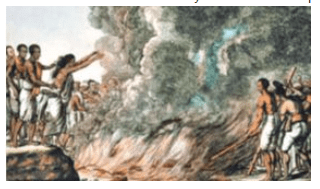
- a)Child Marriage
- b)Female infanticide
- c)Sati
- d)Untouchability
Correct answer is option 'C'. Can you explain this answer?
Painted by a European artist who came to India, this was one of the many pictures of a religious practice, a social evil that existed in ancient India. Identify the name of the practice
a)
Child Marriage
b)
Female infanticide
c)
Sati
d)
Untouchability
 | Vikram Kapoor answered |
In some parts of the country, widows were praised if they chose death by burning themselves on the funeral pyre of their husbands. Women who died in this manner, whether willingly or otherwise, were called “sati”, meaning virtuous women. Sati, painted by Balthazar Solvyn, was one of the many pictures of a religious practice painted by the European artists who came to India. The practice of sati was seen as evidence of the barbarism of the East.
In which century did the first Urdu novels began to be written?- a)18th
- b)19th
- c)17th
- d)20th
Correct answer is option 'B'. Can you explain this answer?
In which century did the first Urdu novels began to be written?
a)
18th
b)
19th
c)
17th
d)
20th
| | Suresh Reddy answered |
Humanist Urdu literature became fully developed in the last third of the 19th century. The novel was the foremost genre, as seen in the didactic novels of Nazir Ahmad (1836–1912), the adventure novels of R. Sarshar (1846 or 1847 to 1903), the historical novels of Abdul-Halim Sharar (1860–1926), and the socially oriented novels of Mirza Rusva (1858–1931). Humanism and patriotism typified the poetry and literary criticism of Muhammad Husain Azad (1829–1910), Hali (1837–1914), and Muhammad Shibli Numani (1857–1914).
Under which Governor General did Raja Ram Mohan Roy initiative to ban Sati?- a)Lord Mountbatten
- b)William Bentick
- c)Lord Dalhousie
- d)Lord Ripon
Correct answer is option 'B'. Can you explain this answer?
Under which Governor General did Raja Ram Mohan Roy initiative to ban Sati?
a)
Lord Mountbatten
b)
William Bentick
c)
Lord Dalhousie
d)
Lord Ripon
| | Maya Joshi answered |
**Governor General William Bentinck and the Initiative to Ban Sati**
**Introduction**
Raja Ram Mohan Roy, often hailed as the "Father of the Indian Renaissance," played a pivotal role in various social and religious reforms during the early 19th century. One of his notable achievements was his efforts towards the abolition of the practice of Sati, a custom where widows were expected to immolate themselves on their husband's funeral pyre. This initiative was carried out during the tenure of Governor General William Bentinck.
**Governor General William Bentinck**
William Bentinck served as the Governor-General of India from 1828 to 1835. He was appointed by the British East India Company and played a crucial role in implementing several reforms in India. Bentinck was a liberal-minded administrator who sought to modernize Indian society and address various social evils prevailing at that time.
**Efforts of Raja Ram Mohan Roy**
Raja Ram Mohan Roy, a prominent social reformer and intellectual, vehemently opposed the practice of Sati. He considered it an inhumane and regressive practice that needed to be abolished. With his deep knowledge of Hindu scriptures and his ability to communicate effectively with both Indian and British officials, Roy worked tirelessly to bring about a change in societal attitudes towards Sati.
**Formation of the Sati Regulation Act**
In 1829, Governor General William Bentinck passed the Sati Regulation Act, which declared the practice of Sati illegal in British India. This act aimed to put an end to the custom of Sati and protect the lives of widows who were coerced or forced into self-immolation.
**Raja Ram Mohan Roy's Influence**
Raja Ram Mohan Roy's influence on Governor General William Bentinck cannot be overstated. Roy's arguments and advocacy for the abolition of Sati played a crucial role in shaping Bentinck's decision to pass the Sati Regulation Act. Roy's extensive knowledge of Hindu scriptures and his ability to present logical and rational arguments against Sati helped sway public opinion in favor of its abolition.
**Conclusion**
In conclusion, it was under the tenure of Governor General William Bentinck that Raja Ram Mohan Roy's efforts towards the abolition of Sati bore fruit. The passing of the Sati Regulation Act in 1829 marked a significant step towards eradicating this cruel practice from Indian society. Bentinck's decision was influenced by the persuasive arguments and tireless efforts of Raja Ram Mohan Roy, who played a pivotal role in bringing about this important social reform.
**Introduction**
Raja Ram Mohan Roy, often hailed as the "Father of the Indian Renaissance," played a pivotal role in various social and religious reforms during the early 19th century. One of his notable achievements was his efforts towards the abolition of the practice of Sati, a custom where widows were expected to immolate themselves on their husband's funeral pyre. This initiative was carried out during the tenure of Governor General William Bentinck.
**Governor General William Bentinck**
William Bentinck served as the Governor-General of India from 1828 to 1835. He was appointed by the British East India Company and played a crucial role in implementing several reforms in India. Bentinck was a liberal-minded administrator who sought to modernize Indian society and address various social evils prevailing at that time.
**Efforts of Raja Ram Mohan Roy**
Raja Ram Mohan Roy, a prominent social reformer and intellectual, vehemently opposed the practice of Sati. He considered it an inhumane and regressive practice that needed to be abolished. With his deep knowledge of Hindu scriptures and his ability to communicate effectively with both Indian and British officials, Roy worked tirelessly to bring about a change in societal attitudes towards Sati.
**Formation of the Sati Regulation Act**
In 1829, Governor General William Bentinck passed the Sati Regulation Act, which declared the practice of Sati illegal in British India. This act aimed to put an end to the custom of Sati and protect the lives of widows who were coerced or forced into self-immolation.
**Raja Ram Mohan Roy's Influence**
Raja Ram Mohan Roy's influence on Governor General William Bentinck cannot be overstated. Roy's arguments and advocacy for the abolition of Sati played a crucial role in shaping Bentinck's decision to pass the Sati Regulation Act. Roy's extensive knowledge of Hindu scriptures and his ability to present logical and rational arguments against Sati helped sway public opinion in favor of its abolition.
**Conclusion**
In conclusion, it was under the tenure of Governor General William Bentinck that Raja Ram Mohan Roy's efforts towards the abolition of Sati bore fruit. The passing of the Sati Regulation Act in 1829 marked a significant step towards eradicating this cruel practice from Indian society. Bentinck's decision was influenced by the persuasive arguments and tireless efforts of Raja Ram Mohan Roy, who played a pivotal role in bringing about this important social reform.
Who founded Arya Samaj, an organization that attempted to reform Hinduism?- a)Swami Dayanand Saraswathi
- b)Veerasalingam Pantulu
- c)Swami Ramakrishna Paramahamsa
- d)Swami Vivekananda
Correct answer is option 'A'. Can you explain this answer?
Who founded Arya Samaj, an organization that attempted to reform Hinduism?
a)
Swami Dayanand Saraswathi
b)
Veerasalingam Pantulu
c)
Swami Ramakrishna Paramahamsa
d)
Swami Vivekananda
 | Saranya Yadav answered |
The founder of Arya Samaj, an organization that attempted to reform Hinduism, is Swami Dayanand Saraswathi.
Swami Dayanand Saraswathi:
- He was born in 1824 in Gujarat, India.
- He was a teacher and a philosopher who believed in the Vedas as the true source of knowledge and wisdom.
- In 1875, he founded the Arya Samaj, a Hindu reform movement aimed at restoring the Vedic tradition.
- He believed in the principles of monotheism, the rejection of idol worship, and the promotion of social equality.
- He also advocated for the education of women, the abolition of caste system, and the promotion of Swadeshi (self-reliance) movement.
- He wrote many books, including the Satyarth Prakash (The Light of Truth), which is considered the most important work of the Arya Samaj.
Arya Samaj:
- The Arya Samaj is a Hindu reform movement that was established in 1875 by Swami Dayanand Saraswathi.
- Its main goal was to reform Hinduism and restore the Vedic tradition.
- The Arya Samaj rejected idol worship, caste system, and other practices that were considered to be un-Vedic.
- The organization aimed to promote social equality, education, and self-reliance.
- The Arya Samaj established many schools and colleges to promote education, especially for women.
- The organization also played a key role in the Indian independence movement.
Conclusion:
Swami Dayanand Saraswathi founded the Arya Samaj, a Hindu reform movement that aimed to restore the Vedic tradition, promote social equality, education, and self-reliance. The organization played a key role in the Indian independence movement and is still active today.
Swami Dayanand Saraswathi:
- He was born in 1824 in Gujarat, India.
- He was a teacher and a philosopher who believed in the Vedas as the true source of knowledge and wisdom.
- In 1875, he founded the Arya Samaj, a Hindu reform movement aimed at restoring the Vedic tradition.
- He believed in the principles of monotheism, the rejection of idol worship, and the promotion of social equality.
- He also advocated for the education of women, the abolition of caste system, and the promotion of Swadeshi (self-reliance) movement.
- He wrote many books, including the Satyarth Prakash (The Light of Truth), which is considered the most important work of the Arya Samaj.
Arya Samaj:
- The Arya Samaj is a Hindu reform movement that was established in 1875 by Swami Dayanand Saraswathi.
- Its main goal was to reform Hinduism and restore the Vedic tradition.
- The Arya Samaj rejected idol worship, caste system, and other practices that were considered to be un-Vedic.
- The organization aimed to promote social equality, education, and self-reliance.
- The Arya Samaj established many schools and colleges to promote education, especially for women.
- The organization also played a key role in the Indian independence movement.
Conclusion:
Swami Dayanand Saraswathi founded the Arya Samaj, a Hindu reform movement that aimed to restore the Vedic tradition, promote social equality, education, and self-reliance. The organization played a key role in the Indian independence movement and is still active today.
Where did the first primary school for girls start at?- a)Kanpur
- b)Pune
- c)Aligarh
- d)Bhopal
Correct answer is option 'B'. Can you explain this answer?
Where did the first primary school for girls start at?
a)
Kanpur
b)
Pune
c)
Aligarh
d)
Bhopal
| | Vikram Kapoor answered |
Country's first school for girls was started at Bhide Wada in Pune. On 1st Jan. 1848, India's first school for girls was started at Bhide Wada in Pune by Mahatma Jotiba Phule and Savitribai Phule.
Name the uppermost caste in the social ladder that existed in ancient India- a)Kshatriyas
- b)Shudras
- c)Vaishyas
- d)Brahmans
Correct answer is option 'D'. Can you explain this answer?
Name the uppermost caste in the social ladder that existed in ancient India
a)
Kshatriyas
b)
Shudras
c)
Vaishyas
d)
Brahmans
 | Sounak Sengupta answered |
A Brahmin is a member of the highest caste or varna in Hinduism. The Brahmins are the caste from which Hindu priests are drawn, and are responsible for teaching and maintaining sacred knowledge.
Which of the following adhered to the tradition of Bhakti that believed in spiritual equality of all castes?- a)Arya Samaj
- b)Brahmo Samaj
- c)Theosophical Society
- d)Prarthana Samaj
Correct answer is option 'D'. Can you explain this answer?
Which of the following adhered to the tradition of Bhakti that believed in spiritual equality of all castes?
a)
Arya Samaj
b)
Brahmo Samaj
c)
Theosophical Society
d)
Prarthana Samaj
| | Anshul Saini answered |
The Prarthana Samaj adhered to the tradition of Bhakti that believed in spiritual equality of all castes.
Who has been referred as the Prophet of Indian Nationalism?- a)Bankim Chandra Chatterjee
- b)Aurobindo ghosh
- c)Raja Ram Mohan Roy
- d)Dadabai Naoroji
Correct answer is option 'C'. Can you explain this answer?
Who has been referred as the Prophet of Indian Nationalism?
a)
Bankim Chandra Chatterjee
b)
Aurobindo ghosh
c)
Raja Ram Mohan Roy
d)
Dadabai Naoroji
 | Poonam Reddy answered |
Raja Ram Mohan Roy is considered as the prophet of Indian Nationalism. His influence was apparent in the fields of politics, public administration, and education, as well as religion. He was described by Rabindranath Tagore as the " Father of Indian Renaissance " and the " Prophet of Indian Nationalism.
In the Telugu speaking areas of the Madras Presidency an association was formed for widow remarriage. Name the personality behind this, who is also called the Vidyasagar of the south.- a)Bankim Chandra Chatterjee
- b)Dadabai Naoroji
- c)Ishwara Chandra Vidyasagar
- d)Veerasalingam Pantulu
Correct answer is option 'D'. Can you explain this answer?
In the Telugu speaking areas of the Madras Presidency an association was formed for widow remarriage. Name the personality behind this, who is also called the Vidyasagar of the south.
a)
Bankim Chandra Chatterjee
b)
Dadabai Naoroji
c)
Ishwara Chandra Vidyasagar
d)
Veerasalingam Pantulu
 | Bhaskar Kapoor answered |
The correct answer is option (D). Rao Bahadur Kandukuri Veerasalingam Pantulu (16 April 1848 – 27 May 1919) was a social reformer and writer of Madras Presidency, British India. He is considered as the father of renaissance movement in Telugu. He was one of the early social reformers who encouraged women's education, remarriage of widows which was not supported by the society during his time and fought against dowry system.
Considered as the Grand Old Man of India, he is one of the co-founders of the Indian National Congress, he also fought for the legal rights of women 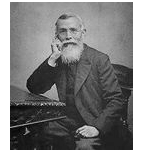
- a)Veerasalingam
- b)Ishwar Chandra Vidya sagar
- c)Bankim Chandra Chatterjee
- d)Dadabai Naoroji
Correct answer is option 'D'. Can you explain this answer?
Considered as the Grand Old Man of India, he is one of the co-founders of the Indian National Congress, he also fought for the legal rights of women
a)
Veerasalingam
b)
Ishwar Chandra Vidya sagar
c)
Bankim Chandra Chatterjee
d)
Dadabai Naoroji
| | Srestha Banerjee answered |
Correct Answer :- d
Explanation:- Dadabhai Naoroji (4 September 1825 – 30 June 1917) also known as the "Grand Old Man of India" and "official Ambassador of India" was an Indian Parsi scholar, trader and politician who was a Liberal Party member of Parliament (MP) in the United Kingdom House of Commons between 1892 and 1895, and the first Asian to be a British MP,notwithstanding the Anglo-Indian MP David Ochterlony Dyce Sombre, who was disenfranchised for corruption after nine months. Naoroji was one of the founding members of the Indian National Congress.
Explanation:- Dadabhai Naoroji (4 September 1825 – 30 June 1917) also known as the "Grand Old Man of India" and "official Ambassador of India" was an Indian Parsi scholar, trader and politician who was a Liberal Party member of Parliament (MP) in the United Kingdom House of Commons between 1892 and 1895, and the first Asian to be a British MP,notwithstanding the Anglo-Indian MP David Ochterlony Dyce Sombre, who was disenfranchised for corruption after nine months. Naoroji was one of the founding members of the Indian National Congress.
Few important points with respect to Raja Ram Mohan Roy are given below. Select the one that is not true.- a)Through Brahmo Samaj he attempted to reform Hindu society
- b)Rajaram Mohan Roy encouraged the study of local languages and wanted to abolish Western education.
- c)He tried to show through his writings that the practice of widow burning had no sanction in ancient texts.
- d)Rabindranath Tagore called him as the Father of Indian Renaissance
Correct answer is option 'B'. Can you explain this answer?
Few important points with respect to Raja Ram Mohan Roy are given below. Select the one that is not true.
a)
Through Brahmo Samaj he attempted to reform Hindu society
b)
Rajaram Mohan Roy encouraged the study of local languages and wanted to abolish Western education.
c)
He tried to show through his writings that the practice of widow burning had no sanction in ancient texts.
d)
Rabindranath Tagore called him as the Father of Indian Renaissance
 | EduRev Class 8 answered |
Raja Ram Mohan Roy is known for his efforts in promoting modern education and rational thinking in India. Contrary to the statement in option (b), he was a proponent of Western education alongside the study of Indian languages and cultures. Roy believed in the importance of English education in India to foster scientific temper and progressive ideas. He founded the Brahmo Samaj, which aimed at reforming Hindu society by opposing idolatry, caste discrimination, and practices such as Sati. His advocacy for the abolition of Sati and his efforts in social and educational reform earned him the title of the Father of the Indian Renaissance from Rabindranath Tagore.
Most children were married off at an ____ age.- a)early
- b)late
- c)old
- d)young
Correct answer is option 'D'. Can you explain this answer?
Most children were married off at an ____ age.
a)
early
b)
late
c)
old
d)
young
| | Subham Das answered |
Understanding the Context of the Question
The phrase "Most children were married off at an ____ age" refers to a historical context where child marriage was a common practice. The options provided are key to understanding the implications of when children were married.
Explaining the Options
- a) early: This option suggests that children were married at a young stage in their lives. While this could be true in many cultures, it does not capture the essence of the question as accurately as option 'D'.
- b) late: This implies that children were married off when they were older. This is contrary to the historical practices where child marriage typically happened at much younger ages.
- c) old: Similar to option 'b', this option suggests that children were married off when they were considered "old," which does not align with the common practices of child marriage.
- d) young: This option accurately reflects the historical reality where most children, often very young, were married off. This aligns with various cultural practices where early marriages were common, sometimes leading to significant consequences for the children's development and rights.
Conclusion
In summary, option 'D' is the correct answer because it best describes the widespread occurrence of child marriage at a young age, a practice that has been documented across different cultures and times. Understanding this aspect of history is crucial for recognizing the ongoing issues surrounding child marriage today.
The phrase "Most children were married off at an ____ age" refers to a historical context where child marriage was a common practice. The options provided are key to understanding the implications of when children were married.
Explaining the Options
- a) early: This option suggests that children were married at a young stage in their lives. While this could be true in many cultures, it does not capture the essence of the question as accurately as option 'D'.
- b) late: This implies that children were married off when they were older. This is contrary to the historical practices where child marriage typically happened at much younger ages.
- c) old: Similar to option 'b', this option suggests that children were married off when they were considered "old," which does not align with the common practices of child marriage.
- d) young: This option accurately reflects the historical reality where most children, often very young, were married off. This aligns with various cultural practices where early marriages were common, sometimes leading to significant consequences for the children's development and rights.
Conclusion
In summary, option 'D' is the correct answer because it best describes the widespread occurrence of child marriage at a young age, a practice that has been documented across different cultures and times. Understanding this aspect of history is crucial for recognizing the ongoing issues surrounding child marriage today.
Name the class that belonged to the lower most strata in the social ladder of ancient India- a)Brahmans
- b)Kshatriyas
- c)Vaishyas
- d)Shudras
Correct answer is option 'D'. Can you explain this answer?
Name the class that belonged to the lower most strata in the social ladder of ancient India
a)
Brahmans
b)
Kshatriyas
c)
Vaishyas
d)
Shudras
| | Maitri Singh answered |
The Shudras: The Lower Most Strata in the Social Ladder of Ancient India
The social structure of ancient India was divided into four main classes or varnas - Brahmins, Kshatriyas, Vaishyas, and Shudras. The Shudras belonged to the lowermost strata of this social hierarchy.
Who were the Shudras?
The Shudras were the laborers and artisans of ancient India who were considered to be of low birth. They were largely dependent on the other three varnas for their livelihood and were often subjected to discrimination and exploitation.
What was the role of Shudras in ancient India?
The Shudras were primarily engaged in menial jobs such as farming, cleaning, and other manual labor. They were not allowed to receive an education, participate in religious ceremonies, or even own property. Their role in society was limited to serving the other varnas.
Why were the Shudras considered to be of low birth?
The Shudras were considered to be of low birth because they were believed to have been born from the feet of the god Vishnu. This belief was used as a justification to assign them a lower status in society.
What were the implications of being a Shudra in ancient India?
Being a Shudra in ancient India meant that one had limited opportunities for social mobility and economic advancement. They were restricted to menial jobs and were often treated with disdain and contempt by the other varnas.
In conclusion, the Shudras were the lowermost strata in the social ladder of ancient India. They were subjected to discrimination and exploitation and had limited opportunities for social mobility and economic advancement.
The social structure of ancient India was divided into four main classes or varnas - Brahmins, Kshatriyas, Vaishyas, and Shudras. The Shudras belonged to the lowermost strata of this social hierarchy.
Who were the Shudras?
The Shudras were the laborers and artisans of ancient India who were considered to be of low birth. They were largely dependent on the other three varnas for their livelihood and were often subjected to discrimination and exploitation.
What was the role of Shudras in ancient India?
The Shudras were primarily engaged in menial jobs such as farming, cleaning, and other manual labor. They were not allowed to receive an education, participate in religious ceremonies, or even own property. Their role in society was limited to serving the other varnas.
Why were the Shudras considered to be of low birth?
The Shudras were considered to be of low birth because they were believed to have been born from the feet of the god Vishnu. This belief was used as a justification to assign them a lower status in society.
What were the implications of being a Shudra in ancient India?
Being a Shudra in ancient India meant that one had limited opportunities for social mobility and economic advancement. They were restricted to menial jobs and were often treated with disdain and contempt by the other varnas.
In conclusion, the Shudras were the lowermost strata in the social ladder of ancient India. They were subjected to discrimination and exploitation and had limited opportunities for social mobility and economic advancement.
State whether the following statement is True or False:
Girls in the 19th century were mostly taught at schools established by reformers.- a)True
- b)False
Correct answer is option 'B'. Can you explain this answer?
State whether the following statement is True or False:
Girls in the 19th century were mostly taught at schools established by reformers.
Girls in the 19th century were mostly taught at schools established by reformers.
a)
True
b)
False
| | EduRev Class 8 answered |
- In the 19th century, many educated women were actually taught at home by liberal fathers or husbands.
- Some women even taught themselves.
- This means that they did not necessarily go to schools established by reformers.
- So, the statement is false. It was more common for girls to learn at home back then.
Read the statements Assertion (A) and Reasoning (R) and choose the correct option.Assertion (A): During the 19th century, when the first schools were opened for girls, people were afraid of them.Reason (R): People feared that traveling to schools would have a corrupting influence on girls.- a)Both (A) and (R) are true, and (R) is the correct explanation of (A).
- b)Both (A) and (R) are true, but (R) is not the correct explanation of (A).
- c)(A) is true, but (R) is false.
- d)Both (A) and (R) are false.
Correct answer is option 'A'. Can you explain this answer?
Read the statements Assertion (A) and Reasoning (R) and choose the correct option.
Assertion (A): During the 19th century, when the first schools were opened for girls, people were afraid of them.
Reason (R): People feared that traveling to schools would have a corrupting influence on girls.
a)
Both (A) and (R) are true, and (R) is the correct explanation of (A).
b)
Both (A) and (R) are true, but (R) is not the correct explanation of (A).
c)
(A) is true, but (R) is false.
d)
Both (A) and (R) are false.
 | Trisha Vashisht answered |
During the 19th century, society was hesitant about girls’ education. Many believed that allowing girls to travel outside for schooling could expose them to “corrupt influences” and challenge traditional gender roles. Hence, both statements are true, and (R) correctly explains (A).
Raja Rammohun Roy founded a reform association known as the _____.- a)Brahmo Sabha
- b)Arya Samaj
- c)Vishwa Hindu Parishad
- d)Ramakrishna Mission
Correct answer is option 'A'. Can you explain this answer?
Raja Rammohun Roy founded a reform association known as the _____.
a)
Brahmo Sabha
b)
Arya Samaj
c)
Vishwa Hindu Parishad
d)
Ramakrishna Mission
| | EduRev Class 8 answered |
Raja Rammohun Roy founded a reform association known as the Brahmo Sabha. This association was later known as the Brahmo Samaj. He wanted to make changes in society to make it better. Like a superhero, he fought against things that were not fair and wanted everyone to be treated well.
Who was particularly moved by the problems widows faced in their lives and began a campaign against the practice of sati?- a)Raja Ram Mohan Roy
- b)Swami Vivekananda
- c)Dayanand Saraswati
- d)Bal Gangadhar Tilak
Correct answer is option 'A'. Can you explain this answer?
Who was particularly moved by the problems widows faced in their lives and began a campaign against the practice of sati?
a)
Raja Ram Mohan Roy
b)
Swami Vivekananda
c)
Dayanand Saraswati
d)
Bal Gangadhar Tilak
| | Vaishnavi Pillai answered |
Introduction
Raja Ram Mohan Roy was a prominent social reformer in India during the early 19th century, and he is widely recognized for his efforts to combat the practice of sati, which involved the self-immolation of widows on their husbands' funeral pyres.
Understanding the Problem of Sati
- Sati was deeply rooted in social customs and traditions, leading to severe consequences for widows.
- Widows often faced social ostracism, financial instability, and were regarded as inauspicious.
Raja Ram Mohan Roy's Advocacy
- Aware of the plight of widows, Raja Ram Mohan Roy initiated a campaign focused on their rights and welfare.
- He emphasized the need for societal reform and the importance of education for women.
Key Contributions
- Formation of the Brahmo Samaj: Roy founded this socio-religious reform movement to challenge orthodox practices and promote rational thinking.
- Public Awareness: He used his writings and speeches to highlight the injustices faced by widows, aiming to change public perception.
Legislative Impact
- Roy's relentless efforts culminated in the ban on sati in 1829 by the British government, marking a significant victory for social reform.
- This legal change was a crucial step towards improving the status of women in Indian society.
Conclusion
Raja Ram Mohan Roy's dedicated campaign against sati not only aimed to alleviate the sufferings of widows but also laid the groundwork for future social reforms in India, promoting gender equality and women's rights. His legacy continues to inspire movements for social justice today.
Raja Ram Mohan Roy was a prominent social reformer in India during the early 19th century, and he is widely recognized for his efforts to combat the practice of sati, which involved the self-immolation of widows on their husbands' funeral pyres.
Understanding the Problem of Sati
- Sati was deeply rooted in social customs and traditions, leading to severe consequences for widows.
- Widows often faced social ostracism, financial instability, and were regarded as inauspicious.
Raja Ram Mohan Roy's Advocacy
- Aware of the plight of widows, Raja Ram Mohan Roy initiated a campaign focused on their rights and welfare.
- He emphasized the need for societal reform and the importance of education for women.
Key Contributions
- Formation of the Brahmo Samaj: Roy founded this socio-religious reform movement to challenge orthodox practices and promote rational thinking.
- Public Awareness: He used his writings and speeches to highlight the injustices faced by widows, aiming to change public perception.
Legislative Impact
- Roy's relentless efforts culminated in the ban on sati in 1829 by the British government, marking a significant victory for social reform.
- This legal change was a crucial step towards improving the status of women in Indian society.
Conclusion
Raja Ram Mohan Roy's dedicated campaign against sati not only aimed to alleviate the sufferings of widows but also laid the groundwork for future social reforms in India, promoting gender equality and women's rights. His legacy continues to inspire movements for social justice today.
Identify the personality based on the clues :
Born in a poor Brahmin family, he was a great Sanskrit scholar who became the Principal of a Sanskrit College
He spent his life for the upliftment of women and girls and was instrumental in the passing of Widow Remarriage Act 1856 He opposed the monopoly of the Brahmans on the study of Sanskrit- a)Ishwar chandra Vidyasagar
- b)Bankim Chandra Chatterjee
- c)Dadabai Naoroji
- d)Keshab Chandra Sen
Correct answer is option 'A'. Can you explain this answer?
Identify the personality based on the clues :
Born in a poor Brahmin family, he was a great Sanskrit scholar who became the Principal of a Sanskrit College
He spent his life for the upliftment of women and girls and was instrumental in the passing of Widow Remarriage Act 1856 He opposed the monopoly of the Brahmans on the study of Sanskrit
Born in a poor Brahmin family, he was a great Sanskrit scholar who became the Principal of a Sanskrit College
He spent his life for the upliftment of women and girls and was instrumental in the passing of Widow Remarriage Act 1856 He opposed the monopoly of the Brahmans on the study of Sanskrit
a)
Ishwar chandra Vidyasagar
b)
Bankim Chandra Chatterjee
c)
Dadabai Naoroji
d)
Keshab Chandra Sen
 | Pallavi Rane answered |
Personality: Ishwar Chandra Vidyasagar
Background:
- Born in a poor Brahmin family
- Great Sanskrit scholar
- Became the Principal of a Sanskrit College
Contributions:
- Upliftment of women and girls
- Instrumental in the passing of Widow Remarriage Act 1856
- Opposed the monopoly of the Brahmans on the study of Sanskrit
Explanation:
Ishwar Chandra Vidyasagar was a renowned Indian personality who was born into a poor Brahmin family. He was a great Sanskrit scholar who went on to become the Principal of a Sanskrit College. However, his contributions to society went far beyond his academic achievements.
Vidyasagar was an advocate for the upliftment of women and girls in India. He was instrumental in the passing of the Widow Remarriage Act of 1856, which allowed Hindu widows to remarry. This was a significant step towards ending the social stigma associated with widowhood in India.
Moreover, Vidyasagar was a strong critic of the monopoly that Brahmans had on the study of Sanskrit. He argued that Sanskrit was a language for all, not just for the privileged few. He also worked towards making education more accessible to the masses.
In conclusion, Ishwar Chandra Vidyasagar was a multifaceted personality who made significant contributions to Indian society. He was a scholar, a social reformer, and an advocate for the rights of women and girls. His legacy continues to inspire and influence generations of Indians.
Background:
- Born in a poor Brahmin family
- Great Sanskrit scholar
- Became the Principal of a Sanskrit College
Contributions:
- Upliftment of women and girls
- Instrumental in the passing of Widow Remarriage Act 1856
- Opposed the monopoly of the Brahmans on the study of Sanskrit
Explanation:
Ishwar Chandra Vidyasagar was a renowned Indian personality who was born into a poor Brahmin family. He was a great Sanskrit scholar who went on to become the Principal of a Sanskrit College. However, his contributions to society went far beyond his academic achievements.
Vidyasagar was an advocate for the upliftment of women and girls in India. He was instrumental in the passing of the Widow Remarriage Act of 1856, which allowed Hindu widows to remarry. This was a significant step towards ending the social stigma associated with widowhood in India.
Moreover, Vidyasagar was a strong critic of the monopoly that Brahmans had on the study of Sanskrit. He argued that Sanskrit was a language for all, not just for the privileged few. He also worked towards making education more accessible to the masses.
In conclusion, Ishwar Chandra Vidyasagar was a multifaceted personality who made significant contributions to Indian society. He was a scholar, a social reformer, and an advocate for the rights of women and girls. His legacy continues to inspire and influence generations of Indians.
An image of a popular reformer who founded a reform association Brahmo Samaj is given below. Name this personality.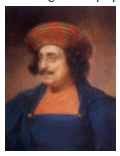
- a)Raja Ram Mohan Roy
- b)Ramakrishna Paramhamsa
- c)Gopal Krishna Gokhale
- d)Madan Mohan Malaviya
Correct answer is option 'A'. Can you explain this answer?
An image of a popular reformer who founded a reform association Brahmo Samaj is given below. Name this personality.
a)
Raja Ram Mohan Roy
b)
Ramakrishna Paramhamsa
c)
Gopal Krishna Gokhale
d)
Madan Mohan Malaviya
 | Adhvika Sivam answered |
OPTION A IS THE CORRECT ANSWER ,
Chapter doubts & questions for Women, Caste and Reform - Social Studies (SST) Class 8 2026 is part of Class 8 exam preparation. The chapters have been prepared according to the Class 8 exam syllabus. The Chapter doubts & questions, notes, tests & MCQs are made for Class 8 2026 Exam. Find important definitions, questions, notes, meanings, examples, exercises, MCQs and online tests here.
Chapter doubts & questions of Women, Caste and Reform - Social Studies (SST) Class 8 in English & Hindi are available as part of Class 8 exam. Download more important topics, notes, lectures and mock test series for Class 8 Exam by signing up for free.
Social Studies (SST) Class 886 videos|559 docs|53 tests |
