


All Exams > Class 8 > Social Studies (SST) Class 8 > All Questions
All questions of Colonialism and the City: The Story Of An Imperial Capital (Old NCERT) for Class 8 Exam
What is Urbanisation ?- a)The process of annexing one state after the other
- b)The process of demolishing a city
- c)The process by which more and more people begin to reside in towns and cities.
- d)The process of reorganization of the administrative set up
Correct answer is option 'C'. Can you explain this answer?
What is Urbanisation ?
a)
The process of annexing one state after the other
b)
The process of demolishing a city
c)
The process by which more and more people begin to reside in towns and cities.
d)
The process of reorganization of the administrative set up
| | Jennifer Karwasra answered |
Answer is option C.Urbanisation occurs mainly because people move from rural areas to urban areas and it results in growth in the size of urban population and the extent of urban areas.

What is the tomb of a Sufi saint called?- a)Dargah
- b)Idgah
- c)khanqah
- d)Cul-de-sac
Correct answer is option 'C'. Can you explain this answer?
What is the tomb of a Sufi saint called?
a)
Dargah
b)
Idgah
c)
khanqah
d)
Cul-de-sac
 | Anisha Menon answered |
The tomb of a Sufi saint is called Durgah.
A dargah (Persian: درگاه dargâh or درگه dargah, Turkish dergâh, also in Urdu and Bengali: দরগাহ dorgah) is a shrine built over the grave of a revered religious figure, often a Sufi saint or dervish.
From the list of options given below, which cities were de-urbanised during the 19th century?- a)Machalipatnam, Surat, Vishakhapatnam
- b)Machalipatnam, Surat, Seringapatnam
- c)Bombay, Surat, Calcutta
- d)Vishakapatnam, Surat, Seringapatnam
Correct answer is option 'B'. Can you explain this answer?
From the list of options given below, which cities were de-urbanised during the 19th century?
a)
Machalipatnam, Surat, Vishakhapatnam
b)
Machalipatnam, Surat, Seringapatnam
c)
Bombay, Surat, Calcutta
d)
Vishakapatnam, Surat, Seringapatnam
 | Ishita Kulkarni answered |
Cities that were de-urbanized during the 19th century:
Machalipatnam:
- Machalipatnam, also known as Masulipatnam, was an important port city in Andhra Pradesh during the early modern period.
- However, by the 19th century, the city had lost its prominence due to the decline of the European trade and the rise of other port cities like Madras and Calcutta.
- The city faced several challenges, including natural disasters and political instability, which further contributed to its de-urbanization.
Surat:
- Surat was one of the most prosperous and important cities in India during the 16th and 17th centuries.
- It was a major center for trade, especially in textiles, and attracted merchants from all over the world.
- However, in the 19th century, Surat experienced a decline in its economic and political significance.
- The shifting of trade routes, the decline of the Mughal Empire, and the rise of other port cities like Bombay led to the de-urbanization of Surat.
Seringapatnam:
- Seringapatnam, located near Mysore in present-day Karnataka, was the capital of the Kingdom of Mysore during the 18th century.
- It was an important political and cultural center, known for its architectural achievements and strategic location.
- However, in 1799, the city was captured by the British East India Company, and its significance gradually declined.
- The British shifted the capital of Mysore to Bangalore, and Seringapatnam lost its political and administrative importance, leading to its de-urbanization.
Conclusion:
- Based on the given options, the cities that were de-urbanized during the 19th century are Machalipatnam, Surat, and Seringapatnam (option B).
- These cities experienced a decline in their economic, political, and cultural significance due to various factors such as shifting trade routes, political instability, and the rise of other cities.
Machalipatnam:
- Machalipatnam, also known as Masulipatnam, was an important port city in Andhra Pradesh during the early modern period.
- However, by the 19th century, the city had lost its prominence due to the decline of the European trade and the rise of other port cities like Madras and Calcutta.
- The city faced several challenges, including natural disasters and political instability, which further contributed to its de-urbanization.
Surat:
- Surat was one of the most prosperous and important cities in India during the 16th and 17th centuries.
- It was a major center for trade, especially in textiles, and attracted merchants from all over the world.
- However, in the 19th century, Surat experienced a decline in its economic and political significance.
- The shifting of trade routes, the decline of the Mughal Empire, and the rise of other port cities like Bombay led to the de-urbanization of Surat.
Seringapatnam:
- Seringapatnam, located near Mysore in present-day Karnataka, was the capital of the Kingdom of Mysore during the 18th century.
- It was an important political and cultural center, known for its architectural achievements and strategic location.
- However, in 1799, the city was captured by the British East India Company, and its significance gradually declined.
- The British shifted the capital of Mysore to Bangalore, and Seringapatnam lost its political and administrative importance, leading to its de-urbanization.
Conclusion:
- Based on the given options, the cities that were de-urbanized during the 19th century are Machalipatnam, Surat, and Seringapatnam (option B).
- These cities experienced a decline in their economic, political, and cultural significance due to various factors such as shifting trade routes, political instability, and the rise of other cities.
Long ago, how many capital cities were founded in a small area on the left bank of river Jamuna ?- a)10
- b)14
- c)25
- d)30
Correct answer is option 'B'. Can you explain this answer?
Long ago, how many capital cities were founded in a small area on the left bank of river Jamuna ?
a)
10
b)
14
c)
25
d)
30
| | Gayatri Basak answered |
Capital Cities on the Left Bank of River Jamuna
In a small area on the left bank of the river Jamuna, 14 capital cities were founded a long time ago. This region has a rich historical significance and has been witness to the rise and fall of various empires and kingdoms.
Importance of the Area
The area on the left bank of the river Jamuna has been a strategic location for rulers and emperors due to its fertile lands, proximity to the river for water resources, and natural defenses. As a result, many capital cities were established in this region over time.
Historical Significance
Each of the 14 capital cities founded in this area played a crucial role in shaping the history and culture of the region. They served as centers of power, administration, culture, and commerce, attracting people from far and wide.
Archaeological Discoveries
Archaeological excavations in this region have unearthed remnants of the ancient capital cities, including palaces, temples, marketplaces, and fortifications. These discoveries provide valuable insights into the urban planning, architecture, and daily life of the people who once inhabited these cities.
Cultural Heritage
The legacy of the 14 capital cities on the left bank of the river Jamuna continues to influence the cultural landscape of the region. Their historical significance is celebrated through festivals, monuments, and museums that showcase the rich heritage of the area.
Conclusion
The founding of 14 capital cities in a small area on the left bank of the river Jamuna highlights the region's historical importance and cultural legacy. Exploring these ancient cities not only offers a glimpse into the past but also helps us understand the complexities of governance, society, and civilization in that era.
Name the mosque converted into a bakery by the British ?- a)Moth Ki Masjid
- b)Jama Masjid
- c)Zinat-al-Masjid
- d)Fathehpuri Masjid
Correct answer is option 'C'. Can you explain this answer?
Name the mosque converted into a bakery by the British ?
a)
Moth Ki Masjid
b)
Jama Masjid
c)
Zinat-al-Masjid
d)
Fathehpuri Masjid
 | Aditi Saxena answered |
Correct, option 'C' "Zinat-al-Masjid" is the mosque that was converted into a bakery by the British. The mosque was located in Delhi, India. The Zinat-al-Masjid was built by Zinat-un-nisa Begum, wife of Bahadur Shah Zafar II, the last Mughal emperor of India. And it was converted into a bakery by the British during the colonial rule in India.
Complete the following. In the late 18th century, Calcutta, Bombay and ______________ rose in importance as Presidency cities and were the centres of British power- a)Hyderabad
- b)Nagpur
- c)Madras
- d)Kanpur
Correct answer is option 'C'. Can you explain this answer?
Complete the following. In the late 18th century, Calcutta, Bombay and ______________ rose in importance as Presidency cities and were the centres of British power
a)
Hyderabad
b)
Nagpur
c)
Madras
d)
Kanpur
 | EduRev Class 8 answered |
Answer:
Introduction:
In the late 18th century, Calcutta, Bombay, and Madras rose in importance as Presidency cities and were the centers of British power in India.
Explanation:
During this period, the British East India Company established its dominance over various regions in India, and these Presidency cities became significant centers of administration, trade, and power. Here is a detailed explanation of the cities mentioned:
1. Calcutta:
- Calcutta, now known as Kolkata, was the capital of British India until 1911.
- It was the most important center of British trade and administration in Eastern India.
- The city served as a major port and played a crucial role in the British colonial economy.
- It was also a hub of cultural, intellectual, and political activities.
2. Bombay:
- Bombay, now known as Mumbai, was an important center of British power on the western coast of India.
- The city served as a major port and played a crucial role in the British colonial economy, particularly in cotton and textile trade.
- Bombay was also a significant center for manufacturing and industry.
- It became the capital of the Bombay Presidency in 1818.
3. Madras:
- Madras, now known as Chennai, was the capital of the Madras Presidency.
- It served as a major center for trade and administration in South India.
- Madras was an important hub for shipbuilding, textile industries, and trade in goods like spices and indigo.
- The city's strategic location on the Coromandel Coast made it a vital center for British power in the region.
Conclusion:
During the late 18th century, Calcutta, Bombay, and Madras emerged as Presidency cities and centers of British power in India. These cities played significant roles in trade, administration, and the overall colonial economy.
Introduction:
In the late 18th century, Calcutta, Bombay, and Madras rose in importance as Presidency cities and were the centers of British power in India.
Explanation:
During this period, the British East India Company established its dominance over various regions in India, and these Presidency cities became significant centers of administration, trade, and power. Here is a detailed explanation of the cities mentioned:
1. Calcutta:
- Calcutta, now known as Kolkata, was the capital of British India until 1911.
- It was the most important center of British trade and administration in Eastern India.
- The city served as a major port and played a crucial role in the British colonial economy.
- It was also a hub of cultural, intellectual, and political activities.
2. Bombay:
- Bombay, now known as Mumbai, was an important center of British power on the western coast of India.
- The city served as a major port and played a crucial role in the British colonial economy, particularly in cotton and textile trade.
- Bombay was also a significant center for manufacturing and industry.
- It became the capital of the Bombay Presidency in 1818.
3. Madras:
- Madras, now known as Chennai, was the capital of the Madras Presidency.
- It served as a major center for trade and administration in South India.
- Madras was an important hub for shipbuilding, textile industries, and trade in goods like spices and indigo.
- The city's strategic location on the Coromandel Coast made it a vital center for British power in the region.
Conclusion:
During the late 18th century, Calcutta, Bombay, and Madras emerged as Presidency cities and centers of British power in India. These cities played significant roles in trade, administration, and the overall colonial economy.
After 1857 for how many years no worship was not allowed ?- a)5
- b)8
- c)10
- d)20
Correct answer is option 'A'. Can you explain this answer?
After 1857 for how many years no worship was not allowed ?
a)
5
b)
8
c)
10
d)
20
| | EduRev Class 8 answered |
After 1857, for how many years was worship not allowed?
The correct answer is option A: 5 years.
Here is a detailed explanation:
Background:
The year 1857 is significant in Indian history as it marked the beginning of the Indian Rebellion against British rule, also known as the Sepoy Mutiny or the First War of Independence. The rebellion was a widespread uprising against British colonial rule in India.
Impact on Worship:
During and after the rebellion, there were several changes and restrictions imposed by the British authorities. One of the significant impacts was the restrictions on religious practices and worship. The British administration implemented measures to suppress any potential uprisings or rebellions in the future.
Duration of Worship Restrictions:
The worship restrictions after 1857 were in place for a certain period of time. The correct answer states that worship was not allowed for 5 years. This means that religious ceremonies, rituals, and public worship were prohibited during this period.
Other Options:
The other options provided in the question are 8, 10, and 20 years. However, the correct answer is 5 years.
In conclusion, after the events of 1857, worship was not allowed for a period of 5 years. This restriction was part of the British administration's efforts to maintain control and prevent any future uprisings.
The correct answer is option A: 5 years.
Here is a detailed explanation:
Background:
The year 1857 is significant in Indian history as it marked the beginning of the Indian Rebellion against British rule, also known as the Sepoy Mutiny or the First War of Independence. The rebellion was a widespread uprising against British colonial rule in India.
Impact on Worship:
During and after the rebellion, there were several changes and restrictions imposed by the British authorities. One of the significant impacts was the restrictions on religious practices and worship. The British administration implemented measures to suppress any potential uprisings or rebellions in the future.
Duration of Worship Restrictions:
The worship restrictions after 1857 were in place for a certain period of time. The correct answer states that worship was not allowed for 5 years. This means that religious ceremonies, rituals, and public worship were prohibited during this period.
Other Options:
The other options provided in the question are 8, 10, and 20 years. However, the correct answer is 5 years.
In conclusion, after the events of 1857, worship was not allowed for a period of 5 years. This restriction was part of the British administration's efforts to maintain control and prevent any future uprisings.
What is the period from 1830 to 1857 genreally referrd to as with respect to Delhi ?- a)Delhi Renaissance
- b)Delhi Globalisation
- c)Delhi Massacre
- d)Delhi Urbanisation
Correct answer is option 'A'. Can you explain this answer?
What is the period from 1830 to 1857 genreally referrd to as with respect to Delhi ?
a)
Delhi Renaissance
b)
Delhi Globalisation
c)
Delhi Massacre
d)
Delhi Urbanisation
| | EduRev Class 8 answered |
The period from 1830 to 1857 in Delhi is generally referred to as the Delhi Renaissance.
The Delhi Renaissance refers to a period of cultural, intellectual, and artistic revival that took place in Delhi during the mid-19th century. This period saw significant developments and changes in various aspects of Delhi's society and culture. Here are the key points to understand this period:
1. Socio-cultural revival:
During this time, Delhi witnessed a revival of its socio-cultural life, with the establishment of literary and cultural societies, intellectual discussions, and the promotion of traditional arts and crafts.
2. Literary and intellectual activities:
Prominent poets, writers, and intellectuals emerged during this period, contributing to the development of Urdu and Persian literature. Delhi became a center for literary activities and intellectual discussions.
3. Educational reforms:
Efforts were made to modernize education in Delhi, with the establishment of schools and colleges. Western education and scientific ideas started to gain prominence.
4. Architectural developments:
Several architectural projects were undertaken during this period, combining traditional and modern architectural styles. The construction of public buildings, mosques, and palaces showcased the architectural renaissance in Delhi.
5. Economic growth:
Delhi witnessed economic growth during this period, with the expansion of trade and commerce. The introduction of modern infrastructure and transportation systems contributed to the economic development of the city.
6. Influence of European ideas:
European ideas and thoughts started to influence the intellectual and cultural landscape of Delhi. The exchange of ideas with European scholars and travelers brought new perspectives to Delhi's society.
Overall, the Delhi Renaissance from 1830 to 1857 marked a period of cultural, intellectual, and artistic revival in Delhi, showcasing the city's rich heritage and its ability to adapt and embrace new ideas.
The Delhi Renaissance refers to a period of cultural, intellectual, and artistic revival that took place in Delhi during the mid-19th century. This period saw significant developments and changes in various aspects of Delhi's society and culture. Here are the key points to understand this period:
1. Socio-cultural revival:
During this time, Delhi witnessed a revival of its socio-cultural life, with the establishment of literary and cultural societies, intellectual discussions, and the promotion of traditional arts and crafts.
2. Literary and intellectual activities:
Prominent poets, writers, and intellectuals emerged during this period, contributing to the development of Urdu and Persian literature. Delhi became a center for literary activities and intellectual discussions.
3. Educational reforms:
Efforts were made to modernize education in Delhi, with the establishment of schools and colleges. Western education and scientific ideas started to gain prominence.
4. Architectural developments:
Several architectural projects were undertaken during this period, combining traditional and modern architectural styles. The construction of public buildings, mosques, and palaces showcased the architectural renaissance in Delhi.
5. Economic growth:
Delhi witnessed economic growth during this period, with the expansion of trade and commerce. The introduction of modern infrastructure and transportation systems contributed to the economic development of the city.
6. Influence of European ideas:
European ideas and thoughts started to influence the intellectual and cultural landscape of Delhi. The exchange of ideas with European scholars and travelers brought new perspectives to Delhi's society.
Overall, the Delhi Renaissance from 1830 to 1857 marked a period of cultural, intellectual, and artistic revival in Delhi, showcasing the city's rich heritage and its ability to adapt and embrace new ideas.
Which is this building in Delhi, supposed to be one of the finest pieces of architecture with minarets and full domes 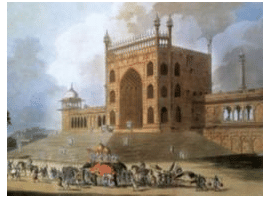
- a)Humayun's tomb
- b)Qutb Minar
- c)Jama Masjid
- d)Red Fort
Correct answer is option 'C'. Can you explain this answer?
Which is this building in Delhi, supposed to be one of the finest pieces of architecture with minarets and full domes
a)
Humayun's tomb
b)
Qutb Minar
c)
Jama Masjid
d)
Red Fort
 | Rhea Reddy answered |
Built in 1656, it is an eloquent reminder of the Mughal religious fervour. Its spacious courtyard holds thousands of the faithful who offer their prayers here. It's also known as 'Masjid-i-Jahanuma' or 'Mosque commanding view of the world'. It was designed as Emperor Shahjahan's principal mosque.
What is an open prayer place of Muslims meant for Id prayers called?- a)Idgah
- b)Khangah
- c)Cul-de-sac
- d)Dargah
Correct answer is option 'A'. Can you explain this answer?
What is an open prayer place of Muslims meant for Id prayers called?
a)
Idgah
b)
Khangah
c)
Cul-de-sac
d)
Dargah
 | Atharva Mukherjee answered |
The correct answer is option 'A' - Idgah.
Explanation:
An open prayer place of Muslims meant for Id prayers is called Idgah. It is a designated outdoor area where Muslims gather to perform Eid prayers. Idgah is a traditional feature of Muslim towns and cities.
Here are some key points related to Idgah:
• The word "Idgah" is derived from the Arabic word "Eidgah" which means "the place of Eid prayer".
• Idgah is an open-air ground or a large space, usually located outside the city or town, where Muslims gather to offer Eid prayers.
• Idgah is typically an empty plot of land, usually covered with grass or sand, that is reserved for Eid prayers.
• Idgah is used only for Eid prayers and is not used for regular daily prayers.
• Idgah is a public space and is open to all Muslims, regardless of their sect or school of thought.
• In some countries, Idgah is also used for other community events such as fairs, religious gatherings, and public meetings.
In conclusion, Idgah is an important part of Muslim culture and is used to celebrate Eid, which is one of the most important festivals in Islam.
Explanation:
An open prayer place of Muslims meant for Id prayers is called Idgah. It is a designated outdoor area where Muslims gather to perform Eid prayers. Idgah is a traditional feature of Muslim towns and cities.
Here are some key points related to Idgah:
• The word "Idgah" is derived from the Arabic word "Eidgah" which means "the place of Eid prayer".
• Idgah is an open-air ground or a large space, usually located outside the city or town, where Muslims gather to offer Eid prayers.
• Idgah is typically an empty plot of land, usually covered with grass or sand, that is reserved for Eid prayers.
• Idgah is used only for Eid prayers and is not used for regular daily prayers.
• Idgah is a public space and is open to all Muslims, regardless of their sect or school of thought.
• In some countries, Idgah is also used for other community events such as fairs, religious gatherings, and public meetings.
In conclusion, Idgah is an important part of Muslim culture and is used to celebrate Eid, which is one of the most important festivals in Islam.
What is the festival of flowers called ?- a)Idgah
- b)Gulfaroshan
- c)Khanqah
- d)Dargah
Correct answer is option 'B'. Can you explain this answer?
What is the festival of flowers called ?
a)
Idgah
b)
Gulfaroshan
c)
Khanqah
d)
Dargah
| | EduRev Class 8 answered |
The Festival of Flowers
The festival of flowers is called Gulfaroshan. It is a popular celebration that revolves around the beauty and fragrance of flowers. Here are some key details about this festival:
Meaning and Significance
- Gulfaroshan is a Persian term that translates to "flower seller" in English.
- The festival is a celebration of the vibrant colors and delicate fragrances of flowers.
- It is a way to appreciate the beauty of nature and the joy it brings to our lives.
Traditions and Customs
- Gulfaroshan is typically celebrated during the spring season when flowers are in full bloom.
- People decorate their homes, temples, and public spaces with various flowers.
- Flower markets are set up where people can buy and sell different types of flowers.
- Floral arrangements and garlands are made to adorn idols, shrines, and altars.
- Flower shows and competitions are organized to showcase the best flower displays.
- People also exchange flower bouquets and gifts as a symbol of love and affection.
Cultural Significance
- Gulfaroshan is not only a celebration of flowers but also a reflection of the culture and traditions of the community.
- It promotes a sense of unity and joy as people come together to appreciate the beauty of nature.
- The festival also holds religious significance for some communities, where flowers are offered as a form of worship.
Conclusion
Gulfaroshan, also known as the festival of flowers, is a vibrant celebration that showcases the beauty and fragrance of nature. It is a time for people to come together, decorate their surroundings, and appreciate the joy that flowers bring to their lives. The festival holds cultural and religious significance, making it an important part of the community's traditions.
The streets of Delhi aren't mere streets, they are the album of a painter. Name the poet who wrote these words.- a)Mirza Ghalib
- b)Kabir Das
- c)Mir Taqi Mir
- d)Sur Das
Correct answer is option 'C'. Can you explain this answer?
The streets of Delhi aren't mere streets, they are the album of a painter. Name the poet who wrote these words.
a)
Mirza Ghalib
b)
Kabir Das
c)
Mir Taqi Mir
d)
Sur Das
| | Itoo Arbi answered |
Mir Taqi Mir wrote "The streets of Delhi are not mere streets,they are the album of the painter".
From the following list of options, what is a Street with a dead end called?- a)Cul-de-sac
- b)Khangah
- c)Dargah
- d)Idgah
Correct answer is option 'A'. Can you explain this answer?
From the following list of options, what is a Street with a dead end called?
a)
Cul-de-sac
b)
Khangah
c)
Dargah
d)
Idgah
 | Om Mehra answered |
**Cul-de-sac: A Street with a Dead End**
A street with a dead end is commonly known as a cul-de-sac. This term is widely used in urban planning and street design to describe a type of road layout that has no outlet, meaning it does not connect to any other streets at one end. Instead, it terminates in a circular or U-shaped turnaround, allowing vehicles to reverse and exit the same way they entered.
**Explanation:**
1. **Definition of a Cul-de-sac:** A cul-de-sac is a street or road that is closed at one end, preventing through traffic from passing through. It is designed to provide a safe and quiet neighborhood environment by reducing traffic flow and creating a sense of community.
2. **Origin of the Term:** The term "cul-de-sac" is derived from French and translates to "bottom of a sack." This description reflects the fact that a cul-de-sac resembles the bottom or dead end of a bag or sack.
3. **Characteristics of a Cul-de-sac:** Cul-de-sacs typically have the following characteristics:
- They are designed as dead-end streets with limited or no through traffic.
- They often feature a circular or U-shaped turnaround at the closed end.
- They provide a residential enclave with reduced traffic volume and increased safety for pedestrians.
- They may have landscaped or communal areas in the center of the turnaround, creating a sense of community.
4. **Benefits of Cul-de-sacs:**
- Reduced Traffic: Cul-de-sacs limit traffic flow, making them quieter and safer for residents, particularly children who can play in the street without the risk of high-speed traffic.
- Privacy and Security: Cul-de-sacs offer a sense of privacy and security as they are only accessible to local residents and their visitors.
- Community Interaction: The circular layout of cul-de-sacs encourages community interaction and socialization among neighbors, as there is less through traffic and more opportunities for informal gatherings.
5. **Criticism and Alternatives:**
- Some urban planners argue that cul-de-sacs can increase car dependency and make it less convenient for pedestrians or cyclists to access amenities.
- Alternatives such as grid patterns or connected street networks are often recommended to promote better traffic flow, improve connectivity, and reduce the reliance on cul-de-sacs.
In conclusion, a street with a dead end is commonly referred to as a cul-de-sac. It is a type of road layout that provides a closed-off residential environment, reducing traffic flow and creating a sense of community and safety for residents. While cul-de-sacs have their benefits, alternative street designs are also considered to promote better connectivity and transportation options.
A street with a dead end is commonly known as a cul-de-sac. This term is widely used in urban planning and street design to describe a type of road layout that has no outlet, meaning it does not connect to any other streets at one end. Instead, it terminates in a circular or U-shaped turnaround, allowing vehicles to reverse and exit the same way they entered.
**Explanation:**
1. **Definition of a Cul-de-sac:** A cul-de-sac is a street or road that is closed at one end, preventing through traffic from passing through. It is designed to provide a safe and quiet neighborhood environment by reducing traffic flow and creating a sense of community.
2. **Origin of the Term:** The term "cul-de-sac" is derived from French and translates to "bottom of a sack." This description reflects the fact that a cul-de-sac resembles the bottom or dead end of a bag or sack.
3. **Characteristics of a Cul-de-sac:** Cul-de-sacs typically have the following characteristics:
- They are designed as dead-end streets with limited or no through traffic.
- They often feature a circular or U-shaped turnaround at the closed end.
- They provide a residential enclave with reduced traffic volume and increased safety for pedestrians.
- They may have landscaped or communal areas in the center of the turnaround, creating a sense of community.
4. **Benefits of Cul-de-sacs:**
- Reduced Traffic: Cul-de-sacs limit traffic flow, making them quieter and safer for residents, particularly children who can play in the street without the risk of high-speed traffic.
- Privacy and Security: Cul-de-sacs offer a sense of privacy and security as they are only accessible to local residents and their visitors.
- Community Interaction: The circular layout of cul-de-sacs encourages community interaction and socialization among neighbors, as there is less through traffic and more opportunities for informal gatherings.
5. **Criticism and Alternatives:**
- Some urban planners argue that cul-de-sacs can increase car dependency and make it less convenient for pedestrians or cyclists to access amenities.
- Alternatives such as grid patterns or connected street networks are often recommended to promote better traffic flow, improve connectivity, and reduce the reliance on cul-de-sacs.
In conclusion, a street with a dead end is commonly referred to as a cul-de-sac. It is a type of road layout that provides a closed-off residential environment, reducing traffic flow and creating a sense of community and safety for residents. While cul-de-sacs have their benefits, alternative street designs are also considered to promote better connectivity and transportation options.
Which were the three important Presidency regions set up by the British for administrative purposes?- a)Bombay ,Madras and Bengal
- b)Bombay, Madras and Delhi
- c)Delhi, Travancore and Seringapatnam
- d)Delhi, Bombay and Bengal
Correct answer is option 'A'. Can you explain this answer?
Which were the three important Presidency regions set up by the British for administrative purposes?
a)
Bombay ,Madras and Bengal
b)
Bombay, Madras and Delhi
c)
Delhi, Travancore and Seringapatnam
d)
Delhi, Bombay and Bengal
| | Manasa Joshi answered |
The three important Presidency regions set up by the British for administrative purposes were Bombay, Madras, and Bengal. These presidencies played a crucial role in the British colonial administration in India. Let's discuss each presidency region in detail:
1. Bombay Presidency:
- Bombay Presidency was established in 1618 and its administrative headquarters were in Bombay (now Mumbai).
- It included parts of present-day Maharashtra, Gujarat, and Karnataka.
- The region was strategically important for trade and commerce, serving as a major port for the British East India Company.
- Bombay Presidency had a diverse population including Marathas, Gujaratis, Parsis, and other communities.
- The region witnessed significant economic development, with the establishment of textile mills, railways, and educational institutions.
2. Madras Presidency:
- Madras Presidency was established in 1653 with its administrative headquarters in Madras (now Chennai).
- It covered parts of present-day Tamil Nadu, Andhra Pradesh, Kerala, and Karnataka.
- Madras Presidency played a crucial role in the British administration in South India.
- The region had a rich cultural heritage and was home to various Dravidian languages and traditions.
- Madras Presidency witnessed the establishment of several educational institutions, including the prestigious Madras University.
3. Bengal Presidency:
- Bengal Presidency was established in 1765, with Calcutta (now Kolkata) as its administrative center.
- It included parts of present-day West Bengal, Bihar, Odisha, and Bangladesh.
- Bengal Presidency was the most important and influential of the three presidencies.
- It was the center of British power in India and witnessed significant political, economic, and social changes.
- The region was known for its thriving textile industry, which attracted European traders.
- Bengal Presidency was also the birthplace of the Bengal Renaissance, a period of intellectual and cultural revival.
These three presidencies were crucial in the British colonial administration in India. They helped the British in establishing their control over different regions, facilitating trade and commerce, and implementing administrative policies. The presidencies also witnessed significant social and cultural developments, leaving a lasting impact on the history of India.
1. Bombay Presidency:
- Bombay Presidency was established in 1618 and its administrative headquarters were in Bombay (now Mumbai).
- It included parts of present-day Maharashtra, Gujarat, and Karnataka.
- The region was strategically important for trade and commerce, serving as a major port for the British East India Company.
- Bombay Presidency had a diverse population including Marathas, Gujaratis, Parsis, and other communities.
- The region witnessed significant economic development, with the establishment of textile mills, railways, and educational institutions.
2. Madras Presidency:
- Madras Presidency was established in 1653 with its administrative headquarters in Madras (now Chennai).
- It covered parts of present-day Tamil Nadu, Andhra Pradesh, Kerala, and Karnataka.
- Madras Presidency played a crucial role in the British administration in South India.
- The region had a rich cultural heritage and was home to various Dravidian languages and traditions.
- Madras Presidency witnessed the establishment of several educational institutions, including the prestigious Madras University.
3. Bengal Presidency:
- Bengal Presidency was established in 1765, with Calcutta (now Kolkata) as its administrative center.
- It included parts of present-day West Bengal, Bihar, Odisha, and Bangladesh.
- Bengal Presidency was the most important and influential of the three presidencies.
- It was the center of British power in India and witnessed significant political, economic, and social changes.
- The region was known for its thriving textile industry, which attracted European traders.
- Bengal Presidency was also the birthplace of the Bengal Renaissance, a period of intellectual and cultural revival.
These three presidencies were crucial in the British colonial administration in India. They helped the British in establishing their control over different regions, facilitating trade and commerce, and implementing administrative policies. The presidencies also witnessed significant social and cultural developments, leaving a lasting impact on the history of India.
From the following options, which one refer to De-urbanisation ?- a)Migration of people from an urban area for economic or social reasons.
- b)The veto power of the administration in times of emergency .
- c)Introduction of English education
- d)A feeling of unity among the people
Correct answer is option 'A'. Can you explain this answer?
From the following options, which one refer to De-urbanisation ?
a)
Migration of people from an urban area for economic or social reasons.
b)
The veto power of the administration in times of emergency .
c)
Introduction of English education
d)
A feeling of unity among the people
| | EduRev Class 8 answered |
De-urbanisation refers to the migration of people from an urban area for economic or social reasons.
Here is a detailed explanation:
Definition:
De-urbanisation refers to the process of population movement from urban areas to rural areas, resulting in a decline in the urban population.
Explanation:
De-urbanisation occurs when people choose to leave urban areas for various reasons, including economic or social factors. Some possible reasons for de-urbanisation include:
- Lack of employment opportunities: People may move away from urban areas if they are unable to find suitable employment or job prospects are better in rural areas.
- High cost of living: Urban areas often have a higher cost of living, including housing, transportation, and basic necessities. This can lead individuals or families to relocate to more affordable rural areas.
- Quality of life: Some people may prefer the quieter and less crowded lifestyle offered by rural areas, leading them to leave urban areas.
- Environmental factors: Concerns about pollution, congestion, and the negative impacts of urbanization on the environment may prompt individuals to seek a more sustainable and environmentally friendly lifestyle in rural areas.
- Social networks: People may choose to move back to their rural hometowns or ancestral villages to be closer to family and friends or to maintain cultural and community ties.
Conclusion:
De-urbanisation refers to the migration of people from urban areas to rural areas due to various economic or social factors. This process can result in a decline in the urban population and has implications for urban planning, infrastructure development, and resource allocation.
Here is a detailed explanation:
Definition:
De-urbanisation refers to the process of population movement from urban areas to rural areas, resulting in a decline in the urban population.
Explanation:
De-urbanisation occurs when people choose to leave urban areas for various reasons, including economic or social factors. Some possible reasons for de-urbanisation include:
- Lack of employment opportunities: People may move away from urban areas if they are unable to find suitable employment or job prospects are better in rural areas.
- High cost of living: Urban areas often have a higher cost of living, including housing, transportation, and basic necessities. This can lead individuals or families to relocate to more affordable rural areas.
- Quality of life: Some people may prefer the quieter and less crowded lifestyle offered by rural areas, leading them to leave urban areas.
- Environmental factors: Concerns about pollution, congestion, and the negative impacts of urbanization on the environment may prompt individuals to seek a more sustainable and environmentally friendly lifestyle in rural areas.
- Social networks: People may choose to move back to their rural hometowns or ancestral villages to be closer to family and friends or to maintain cultural and community ties.
Conclusion:
De-urbanisation refers to the migration of people from urban areas to rural areas due to various economic or social factors. This process can result in a decline in the urban population and has implications for urban planning, infrastructure development, and resource allocation.
From the outline map of India, identify this place marked in red circle. This city began to grow when the East India Company stared using this place as its main port in Western India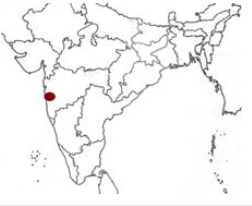
- a)Madras
- b)Delhi
- c)Calcutta
- d)Bombay
Correct answer is option 'D'. Can you explain this answer?
From the outline map of India, identify this place marked in red circle. This city began to grow when the East India Company stared using this place as its main port in Western India
a)
Madras
b)
Delhi
c)
Calcutta
d)
Bombay
| | Sreeram answered |
Its Bombay At present Mumbai
Before Delhi was made the cpaital of India, which was the other city that was the capital of British India ?- a)Madras
- b)Calcutta
- c)Kanpur
- d)Bombay
Correct answer is option 'B'. Can you explain this answer?
Before Delhi was made the cpaital of India, which was the other city that was the capital of British India ?
a)
Madras
b)
Calcutta
c)
Kanpur
d)
Bombay
| | EduRev Class 8 answered |
Before Delhi was made the capital of India, the other city that was the capital of British India was Calcutta.
Explanation:
- British India refers to the period when India was under the direct rule of the British Empire from 1858 to 1947.
- During this time, the capital of British India changed several times.
- Calcutta, now known as Kolkata, was the first city to serve as the capital of British India.
- Calcutta became the capital in 1772 and remained so until 1911.
- The British East India Company established its headquarters in Calcutta, and it became a major center for trade and administration.
- Calcutta was strategically located on the eastern coast of India, making it a convenient base for British operations in the region.
- However, in 1911, the capital was shifted from Calcutta to Delhi for various reasons, including political and administrative considerations.
- Delhi was seen as a more central location and had historical significance as the seat of power for many previous Indian empires.
- The decision to make Delhi the capital was announced during the Delhi Durbar in 1911, and the transition was completed in 1912.
- Since then, Delhi has remained the capital of India, both during the British colonial period and after India gained independence in 1947.
Key Points:
- Calcutta served as the capital of British India from 1772 to 1911.
- Delhi became the capital of India in 1911, replacing Calcutta.
- Calcutta was strategically located and a major center for trade and administration.
- The decision to shift the capital to Delhi was made for political and administrative reasons.
- Delhi has remained the capital of India since 1911.
Explanation:
- British India refers to the period when India was under the direct rule of the British Empire from 1858 to 1947.
- During this time, the capital of British India changed several times.
- Calcutta, now known as Kolkata, was the first city to serve as the capital of British India.
- Calcutta became the capital in 1772 and remained so until 1911.
- The British East India Company established its headquarters in Calcutta, and it became a major center for trade and administration.
- Calcutta was strategically located on the eastern coast of India, making it a convenient base for British operations in the region.
- However, in 1911, the capital was shifted from Calcutta to Delhi for various reasons, including political and administrative considerations.
- Delhi was seen as a more central location and had historical significance as the seat of power for many previous Indian empires.
- The decision to make Delhi the capital was announced during the Delhi Durbar in 1911, and the transition was completed in 1912.
- Since then, Delhi has remained the capital of India, both during the British colonial period and after India gained independence in 1947.
Key Points:
- Calcutta served as the capital of British India from 1772 to 1911.
- Delhi became the capital of India in 1911, replacing Calcutta.
- Calcutta was strategically located and a major center for trade and administration.
- The decision to shift the capital to Delhi was made for political and administrative reasons.
- Delhi has remained the capital of India since 1911.
Which building was made of red stone near Delhi, which was built as a palace fort in Shajahanabad, also a residence of Mughal emperors of India?- a)Lal Darwaza
- b)Kotla Ferozabad
- c)Begampuri Masjid
- d)Red Fort
Correct answer is option 'D'. Can you explain this answer?
Which building was made of red stone near Delhi, which was built as a palace fort in Shajahanabad, also a residence of Mughal emperors of India?
a)
Lal Darwaza
b)
Kotla Ferozabad
c)
Begampuri Masjid
d)
Red Fort
 | Swara Das answered |
The Red Fort, which is also known as Lal Qila, is a historical fort in Delhi, India. It was built by the Mughal Emperor Shah Jahan in 1639 as the palace fort of his new capital, Shahjahanabad. The fort served as the residence of the Mughal emperors of India for around 200 years, until the British colonial era.
Construction and Architecture:
The Red Fort was constructed using red sandstone and is an excellent example of Mughal architecture. The fort covers an area of about 254 acres and features some of the most impressive structures of the Mughal era. The fort has several buildings, including the Diwan-i-Aam, Diwan-i-Khas, Moti Masjid, and many others.
Historical Significance:
The Red Fort has played a significant role in Indian history. It was the site of many important events, including the Indian Rebellion of 1857, when Indian soldiers rebelled against British rule. The fort has also been the site of many Independence Day celebrations, and the Prime Minister of India delivers a speech there every year on August 15th.
Tourist Attraction:
The Red Fort is now a UNESCO World Heritage Site and a popular tourist attraction. Visitors can explore the fort and learn about its rich history and architecture. The fort also houses several museums that display artwork, artifacts, and other historical items.
In conclusion, The Red Fort is a magnificent historical structure that has stood the test of time. Its rich history, stunning architecture, and cultural significance make it a must-visit destination for anyone interested in Indian history and culture.
Construction and Architecture:
The Red Fort was constructed using red sandstone and is an excellent example of Mughal architecture. The fort covers an area of about 254 acres and features some of the most impressive structures of the Mughal era. The fort has several buildings, including the Diwan-i-Aam, Diwan-i-Khas, Moti Masjid, and many others.
Historical Significance:
The Red Fort has played a significant role in Indian history. It was the site of many important events, including the Indian Rebellion of 1857, when Indian soldiers rebelled against British rule. The fort has also been the site of many Independence Day celebrations, and the Prime Minister of India delivers a speech there every year on August 15th.
Tourist Attraction:
The Red Fort is now a UNESCO World Heritage Site and a popular tourist attraction. Visitors can explore the fort and learn about its rich history and architecture. The fort also houses several museums that display artwork, artifacts, and other historical items.
In conclusion, The Red Fort is a magnificent historical structure that has stood the test of time. Its rich history, stunning architecture, and cultural significance make it a must-visit destination for anyone interested in Indian history and culture.
What is the importance of Jama Masjid, situated in Delhi?- a)The office of archeological survey of India
- b)One of the important residences of the Mughal emperors of India
- c)One of the largest and grandest mosques in India
- d)The office of the electorate of India
Correct answer is option 'C'. Can you explain this answer?
What is the importance of Jama Masjid, situated in Delhi?
a)
The office of archeological survey of India
b)
One of the important residences of the Mughal emperors of India
c)
One of the largest and grandest mosques in India
d)
The office of the electorate of India
 | Alok Unni answered |
Importance of Jama Masjid in Delhi
Importance of Jama Masjid in India lies in its historical and cultural significance. It is one of the largest and grandest mosques in India, attracting both tourists and worshippers.
Historical Significance
- Jama Masjid was built by the Mughal Emperor Shah Jahan between 1644 and 1656.
- It is a symbol of Mughal architecture and represents the rich cultural heritage of India.
Religious Significance
- The mosque is an important place of worship for Muslims in Delhi and is known for its grand Friday prayers.
- It can accommodate thousands of worshippers at a time, making it a significant religious site.
Tourist Attraction
- Jama Masjid is a popular tourist destination in Delhi, attracting visitors from all around the world.
- Tourists are drawn to its magnificent architecture, intricate designs, and panoramic views of the city from its minarets.
Cultural Heritage
- The mosque is a reflection of the cultural diversity and religious tolerance in India.
- It serves as a reminder of the Mughal era and their contributions to art, architecture, and religion in India.
In conclusion, Jama Masjid in Delhi is not only a place of worship but also a symbol of India's rich history, culture, and architectural brilliance. Its importance transcends religious boundaries and makes it a must-visit destination for anyone interested in India's heritage.
Importance of Jama Masjid in India lies in its historical and cultural significance. It is one of the largest and grandest mosques in India, attracting both tourists and worshippers.
Historical Significance
- Jama Masjid was built by the Mughal Emperor Shah Jahan between 1644 and 1656.
- It is a symbol of Mughal architecture and represents the rich cultural heritage of India.
Religious Significance
- The mosque is an important place of worship for Muslims in Delhi and is known for its grand Friday prayers.
- It can accommodate thousands of worshippers at a time, making it a significant religious site.
Tourist Attraction
- Jama Masjid is a popular tourist destination in Delhi, attracting visitors from all around the world.
- Tourists are drawn to its magnificent architecture, intricate designs, and panoramic views of the city from its minarets.
Cultural Heritage
- The mosque is a reflection of the cultural diversity and religious tolerance in India.
- It serves as a reminder of the Mughal era and their contributions to art, architecture, and religion in India.
In conclusion, Jama Masjid in Delhi is not only a place of worship but also a symbol of India's rich history, culture, and architectural brilliance. Its importance transcends religious boundaries and makes it a must-visit destination for anyone interested in India's heritage.
Name this historic imperial city that became a dusty provincial town in the 19th century before it was rebuilt as the capital of British India after 1912.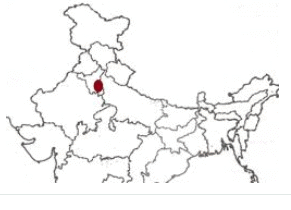
- a)Calcutta
- b)Madras
- c)Bombay
- d)Delhi
Correct answer is option 'D'. Can you explain this answer?
Name this historic imperial city that became a dusty provincial town in the 19th century before it was rebuilt as the capital of British India after 1912.
a)
Calcutta
b)
Madras
c)
Bombay
d)
Delhi
 | Niti Singh answered |
Delhi, located in modern-day India, has a rich and complex history that spans back thousands of years. In the 19th century, the city was in a state of decline and had lost much of its former glory as an imperial city. However, in 1912, the British government decided to rebuild Delhi as the capital of British India, and the city underwent significant modernization and reconstruction efforts. The city was redesigned with new infrastructure, buildings, and monuments that reflected its status as the capital of one of the largest and most powerful empires in the world. Today, Delhi remains one of the largest and most important cities in India and continues to be a symbol of the country's rich history and cultural heritage.
Complete the following. After defeating the ____________, British gained controlof Delhui in 1803.- a)Mauryans
- b)Pandyas
- c)Marathas
- d)Cheras
Correct answer is option 'C'. Can you explain this answer?
Complete the following. After defeating the ____________, British gained controlof Delhui in 1803.
a)
Mauryans
b)
Pandyas
c)
Marathas
d)
Cheras
| | EduRev Class 8 answered |
Defeating the Marathas
The British gained control of Delhi in 1803 after defeating the Marathas. Here is a detailed explanation:
1. Background:
- The Marathas were a Hindu warrior group who established a powerful empire in India during the 17th and 18th centuries.
- By the late 18th century, the Marathas had become the dominant power in India and controlled a large part of the subcontinent.
2. British Expansion in India:
- The British East India Company had been expanding its influence in India since the early 17th century.
- The company gradually gained control over various regions through alliances, diplomacy, and warfare.
3. Conflict with the Marathas:
- The British and the Marathas had several conflicts, especially over territorial control and trade.
- The Marathas, under the leadership of Mahadji Scindia and the Peshwas, posed a significant challenge to British expansion in India.
4. Battle of Delhi:
- In 1803, the British forces, led by General Gerard Lake, launched an attack on Delhi, which was then under the control of the Marathas.
- The Maratha forces, commanded by Daulat Rao Scindia, were defeated by the superior British military tactics and firepower.
- After the battle, the British gained control of Delhi and the surrounding territories.
5. Consequences:
- The defeat of the Marathas at Delhi was a significant blow to their power and influence in northern India.
- It paved the way for further British expansion and consolidation of their rule in the region.
- The British established a residency in Delhi, which became a symbol of their authority over the Mughal Empire.
In conclusion, the British gained control of Delhi in 1803 after defeating the Marathas in the Battle of Delhi. This victory furthered the British expansion in India and marked a decline in the Maratha power.
The British gained control of Delhi in 1803 after defeating the Marathas. Here is a detailed explanation:
1. Background:
- The Marathas were a Hindu warrior group who established a powerful empire in India during the 17th and 18th centuries.
- By the late 18th century, the Marathas had become the dominant power in India and controlled a large part of the subcontinent.
2. British Expansion in India:
- The British East India Company had been expanding its influence in India since the early 17th century.
- The company gradually gained control over various regions through alliances, diplomacy, and warfare.
3. Conflict with the Marathas:
- The British and the Marathas had several conflicts, especially over territorial control and trade.
- The Marathas, under the leadership of Mahadji Scindia and the Peshwas, posed a significant challenge to British expansion in India.
4. Battle of Delhi:
- In 1803, the British forces, led by General Gerard Lake, launched an attack on Delhi, which was then under the control of the Marathas.
- The Maratha forces, commanded by Daulat Rao Scindia, were defeated by the superior British military tactics and firepower.
- After the battle, the British gained control of Delhi and the surrounding territories.
5. Consequences:
- The defeat of the Marathas at Delhi was a significant blow to their power and influence in northern India.
- It paved the way for further British expansion and consolidation of their rule in the region.
- The British established a residency in Delhi, which became a symbol of their authority over the Mughal Empire.
In conclusion, the British gained control of Delhi in 1803 after defeating the Marathas in the Battle of Delhi. This victory furthered the British expansion in India and marked a decline in the Maratha power.
What term from the list given below can be given to the rebirth of art and living. It is often described as a period of high creativity.- a)De-urbanisation
- b)Urbanisation
- c)Globalisation
- d)Renaissance
Correct answer is option 'D'. Can you explain this answer?
What term from the list given below can be given to the rebirth of art and living. It is often described as a period of high creativity.
a)
De-urbanisation
b)
Urbanisation
c)
Globalisation
d)
Renaissance
| | EduRev Class 8 answered |
Answer:
The term from the given list that can be given to the rebirth of art and living, often described as a period of high creativity, is the Renaissance.
Explanation:
During the Renaissance, which occurred between the 14th and 17th centuries, there was a significant cultural and intellectual movement in Europe. This period marked a transition from the medieval to the modern world and saw a renewed interest in classical learning, humanism, and artistic expression.
The Renaissance was characterized by several key factors:
1. Artistic Revival: The Renaissance witnessed a revival of interest in the arts, including painting, sculpture, and architecture. Artists such as Leonardo da Vinci, Michelangelo, and Raphael emerged during this period, producing timeless masterpieces.
2. Humanism: Humanism became a central philosophy during the Renaissance, emphasizing the importance of human potential and achievement. It celebrated human intellect, education, and individualism.
3. Scientific Advancements: The Renaissance was marked by advancements in science, with scholars like Galileo Galilei and Nicolaus Copernicus challenging traditional beliefs and revolutionizing our understanding of the natural world.
4. Literary and Intellectual Progress: The Renaissance also saw a flourishing of literature, with prominent writers like William Shakespeare and Dante Alighieri contributing significantly to the literary canon.
5. Social and Political Changes: The Renaissance was not solely an artistic and intellectual movement but also brought about social and political transformations. It led to the rise of powerful city-states, the growth of the merchant class, and the spread of ideas through the printing press.
The Renaissance marked a period of immense creativity and innovation, with its impact still being felt today. It is often regarded as one of the most significant periods in human history, influencing art, culture, and society in profound ways.
The term from the given list that can be given to the rebirth of art and living, often described as a period of high creativity, is the Renaissance.
Explanation:
During the Renaissance, which occurred between the 14th and 17th centuries, there was a significant cultural and intellectual movement in Europe. This period marked a transition from the medieval to the modern world and saw a renewed interest in classical learning, humanism, and artistic expression.
The Renaissance was characterized by several key factors:
1. Artistic Revival: The Renaissance witnessed a revival of interest in the arts, including painting, sculpture, and architecture. Artists such as Leonardo da Vinci, Michelangelo, and Raphael emerged during this period, producing timeless masterpieces.
2. Humanism: Humanism became a central philosophy during the Renaissance, emphasizing the importance of human potential and achievement. It celebrated human intellect, education, and individualism.
3. Scientific Advancements: The Renaissance was marked by advancements in science, with scholars like Galileo Galilei and Nicolaus Copernicus challenging traditional beliefs and revolutionizing our understanding of the natural world.
4. Literary and Intellectual Progress: The Renaissance also saw a flourishing of literature, with prominent writers like William Shakespeare and Dante Alighieri contributing significantly to the literary canon.
5. Social and Political Changes: The Renaissance was not solely an artistic and intellectual movement but also brought about social and political transformations. It led to the rise of powerful city-states, the growth of the merchant class, and the spread of ideas through the printing press.
The Renaissance marked a period of immense creativity and innovation, with its impact still being felt today. It is often regarded as one of the most significant periods in human history, influencing art, culture, and society in profound ways.
How was the western walls of Shahjahanabad broken ?- a)The western wall was broken to establish the railway and to allow the city to expand beyond the walls.
- b)The western walls were broken as the Parliamnet hosue was to be constructed there
- c)The western wall was broken by a firece battle betwene the British and the rebels
- d)The western wall was broken as the British Governorn Genrela wanted to construct his residential suite here.
Correct answer is option 'A'. Can you explain this answer?
How was the western walls of Shahjahanabad broken ?
a)
The western wall was broken to establish the railway and to allow the city to expand beyond the walls.
b)
The western walls were broken as the Parliamnet hosue was to be constructed there
c)
The western wall was broken by a firece battle betwene the British and the rebels
d)
The western wall was broken as the British Governorn Genrela wanted to construct his residential suite here.
| | EduRev Class 8 answered |
Explanation:
The western walls of Shahjahanabad were broken for several reasons.
Reasons for breaking the western walls:
- Railway construction: The western wall was broken to establish a railway line, which required the expansion of the city beyond the walls. This was done to improve transportation and connectivity in the region.
- City expansion: Breaking the western walls allowed the city to expand beyond its confined boundaries, accommodating the growing population and urban development.
- Construction of the Parliament House: It is not mentioned in the given options but one of the reasons for breaking the western walls was to construct the Parliament House. This decision was made to establish a central government institution and facilitate administrative activities.
- British residential suite: Another reason for breaking the western walls was to construct a residential suite for the British Governor General. This was done to provide suitable housing for the British administrative authorities.
Conclusion:
The western walls of Shahjahanabad were broken primarily to establish a railway line and allow the city to expand. However, other reasons like the construction of the Parliament House and the British Governor General's residential suite also contributed to the decision.
The western walls of Shahjahanabad were broken for several reasons.
Reasons for breaking the western walls:
- Railway construction: The western wall was broken to establish a railway line, which required the expansion of the city beyond the walls. This was done to improve transportation and connectivity in the region.
- City expansion: Breaking the western walls allowed the city to expand beyond its confined boundaries, accommodating the growing population and urban development.
- Construction of the Parliament House: It is not mentioned in the given options but one of the reasons for breaking the western walls was to construct the Parliament House. This decision was made to establish a central government institution and facilitate administrative activities.
- British residential suite: Another reason for breaking the western walls was to construct a residential suite for the British Governor General. This was done to provide suitable housing for the British administrative authorities.
Conclusion:
The western walls of Shahjahanabad were broken primarily to establish a railway line and allow the city to expand. However, other reasons like the construction of the Parliament House and the British Governor General's residential suite also contributed to the decision.
When the angry lions entered the town, they killed helpless. ''And burned houses. Hordes on men and women, commoners and noblemem, poured out of Delhi from the three gates and took shelter in small communities and tombs outside the city ''. Who is the poet Ghalib referring to as angry lions here ?- a)British
- b)Chinese
- c)Indians
- d)French
Correct answer is option 'A'. Can you explain this answer?
When the angry lions entered the town, they killed helpless. ''And burned houses. Hordes on men and women, commoners and noblemem, poured out of Delhi from the three gates and took shelter in small communities and tombs outside the city ''. Who is the poet Ghalib referring to as angry lions here ?
a)
British
b)
Chinese
c)
Indians
d)
French
| | Om Malik answered |
Explanation:
- The poet Ghalib is referring to the British as angry lions in this context.
- This is because during the Indian Rebellion of 1857, also known as the First War of Independence, the British forces entered Delhi and brutally suppressed the rebellion.
- The "angry lions" symbolize the violence and destruction caused by the British forces as they entered the town.
- The rebellion was a major uprising against British rule in India, and the British responded with extreme force, killing thousands of rebels and civilians.
- The reference to burning houses and the killing of helpless people further emphasizes the brutality of the British forces.
- The reference to hordes of men and women taking shelter outside the city suggests the widespread fear and displacement caused by the British invasion.
- Overall, Ghalib's use of the metaphor of angry lions highlights the violent and oppressive nature of British rule in India during this time.
Practice Quiz or MCQ (Multiple Choice Questions) with solutions are available for Practice, which would help you prepare for chapter Colonialism and the City, Class 8, SST History. You can practice these practice quizzes as per your speed and improvise the topic. Q.The image given below is an artists impression of an important port town of 17th century in the state of Andhra Pradesh today. But later as new ports were set up by the British in Bombay, Madras , Calcutta etc, this one lost its importance . Identify this port town. This port was also deurbanized during 19th century.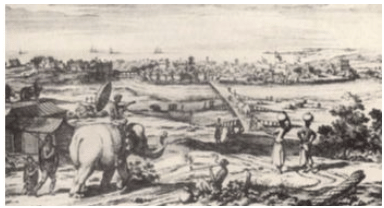
- a)Machlipatnam
- b)Gangavaram
- c)Kakinada
- d)Krishnapatnam
Correct answer is option 'A'. Can you explain this answer?
Practice Quiz or MCQ (Multiple Choice Questions) with solutions are available for Practice, which would help you prepare for chapter Colonialism and the City, Class 8, SST History. You can practice these practice quizzes as per your speed and improvise the topic.
Q.
The image given below is an artists impression of an important port town of 17th century in the state of Andhra Pradesh today. But later as new ports were set up by the British in Bombay, Madras , Calcutta etc, this one lost its importance . Identify this port town. This port was also deurbanized during 19th century.
a)
Machlipatnam
b)
Gangavaram
c)
Kakinada
d)
Krishnapatnam
 | Mamali . answered |
Machilipatnam ,also known as Masulipatnam and Bandar, is a town in Krishna district of the Indian state of Andhra Pradesh. It is a municipal corporation and the administrative headquarters of Krishna district. It is also the mandal headquarters of Machilipatnam mandal in Machilipatnam revenue division of the district.The ancient port town served as the settlement of European traders from the 16th century, and it was a major trading port for the British, Dutch and French in the seventeenth century.
Which was the most splendid capital built by Shah Jahan?- a)Machilpatnam
- b)Seringaptanam
- c)Shajahanabad
- d)Surat
Correct answer is option 'C'. Can you explain this answer?
Which was the most splendid capital built by Shah Jahan?
a)
Machilpatnam
b)
Seringaptanam
c)
Shajahanabad
d)
Surat
| | Hiral Chauhan answered |
Shah Jahan, the Mughal emperor, built many magnificent buildings and cities in his reign. However, the most splendid capital built by him was Shajahanabad, also known as Old Delhi.
Architecture and Design of Shajahanabad:
- Shajahanabad was designed by the Mughal architect, Ustad Ahmad Lahauri.
- The city was built in a grid-like pattern with wide, straight streets and lanes.
- The main street of the city, Chandni Chowk, was 1.5 miles long and 40 yards wide.
- The city was surrounded by a high wall with 14 gates.
- The Red Fort was the centerpiece of the city and was built using red sandstone.
Monuments and Buildings in Shajahanabad:
- Jama Masjid: One of the largest mosques in India, built by Shah Jahan in 1656.
- Red Fort: The residence of the Mughal emperors, built by Shah Jahan in 1639.
- Chandni Chowk: The main market of the city, lined with shops and vendors.
- Fatehpuri Masjid: A mosque built by Shah Jahan's wife, Fatehpuri Begum.
- Shri Digambar Jain Lal Mandir: A Jain temple built in the 17th century.
Importance of Shajahanabad:
- Shajahanabad was the capital of the Mughal Empire for over 200 years.
- It was an important center of trade and commerce.
- The city was a symbol of the power and wealth of the Mughal Empire.
- The monuments and buildings in Shajahanabad are a testament to the rich cultural heritage of India.
In conclusion, Shajahanabad was the most splendid capital built by Shah Jahan. The architecture, design, and monuments of the city are a reflection of the grandeur and opulence of the Mughal Empire. Today, Shajahanabad is an important historical and cultural site in India and attracts tourists from all over the world.
Architecture and Design of Shajahanabad:
- Shajahanabad was designed by the Mughal architect, Ustad Ahmad Lahauri.
- The city was built in a grid-like pattern with wide, straight streets and lanes.
- The main street of the city, Chandni Chowk, was 1.5 miles long and 40 yards wide.
- The city was surrounded by a high wall with 14 gates.
- The Red Fort was the centerpiece of the city and was built using red sandstone.
Monuments and Buildings in Shajahanabad:
- Jama Masjid: One of the largest mosques in India, built by Shah Jahan in 1656.
- Red Fort: The residence of the Mughal emperors, built by Shah Jahan in 1639.
- Chandni Chowk: The main market of the city, lined with shops and vendors.
- Fatehpuri Masjid: A mosque built by Shah Jahan's wife, Fatehpuri Begum.
- Shri Digambar Jain Lal Mandir: A Jain temple built in the 17th century.
Importance of Shajahanabad:
- Shajahanabad was the capital of the Mughal Empire for over 200 years.
- It was an important center of trade and commerce.
- The city was a symbol of the power and wealth of the Mughal Empire.
- The monuments and buildings in Shajahanabad are a testament to the rich cultural heritage of India.
In conclusion, Shajahanabad was the most splendid capital built by Shah Jahan. The architecture, design, and monuments of the city are a reflection of the grandeur and opulence of the Mughal Empire. Today, Shajahanabad is an important historical and cultural site in India and attracts tourists from all over the world.
A Sufi lodge often used as a rest house for travellers and a place where people come to discuss spiritual matters, get the blessings of saints and hear sufi music. What is this place called?- a)Cul-de-sac
- b)Idgah
- c)Khangah
- d)Dargah
Correct answer is option 'C'. Can you explain this answer?
A Sufi lodge often used as a rest house for travellers and a place where people come to discuss spiritual matters, get the blessings of saints and hear sufi music. What is this place called?
a)
Cul-de-sac
b)
Idgah
c)
Khangah
d)
Dargah
| | Jyoti Sen answered |
What is a Sufi lodge called?
A Sufi lodge is often referred to as a Khangah. Let's delve deeper into what a Khangah represents and its significance.
Significance of a Khangah:
- A Khangah serves as a resting place for travellers, offering them shelter and hospitality.
- It is a place where individuals come together to engage in discussions about spiritual matters, seeking guidance and wisdom from Sufi saints.
- People visit Khangahs to receive blessings from the saints, known for their piety and spiritual insight.
- Sufi music, known for its transcendent and mystical qualities, is often performed in Khangahs, creating an atmosphere conducive to spiritual contemplation.
Role of a Khangah:
- Khangahs play a crucial role in fostering a sense of community among Sufi followers, providing a space for collective worship and reflection.
- They serve as centers for spiritual learning and growth, where individuals can deepen their understanding of Sufi teachings and practices.
- Khangahs also function as hubs of cultural expression, preserving and promoting Sufi music, poetry, and art.
Conclusion:
In essence, a Khangah is not just a physical space but a spiritual sanctuary where individuals can connect with the divine, seek enlightenment, and experience the transformative power of Sufi traditions.
In which year did Delhi became the capital of British India ?- a)1911
- b)1931
- c)1941
- d)1947
Correct answer is option 'A'. Can you explain this answer?
In which year did Delhi became the capital of British India ?
a)
1911
b)
1931
c)
1941
d)
1947
| | EduRev Class 8 answered |
Delhi becoming the capital of British India
Reasons for the shift:
- Strategic Location: Delhi was located at the center of British India, making it a more suitable administrative capital.
- Symbolic Importance: Delhi had historical and cultural significance as the capital of various empires throughout history, including the Mughals. The British saw this as an opportunity to establish their authority and showcase their power.
- Modern Infrastructure: The British government wanted to develop Delhi as a modern city with improved infrastructure, such as wide roads, railway connections, and government buildings.
- Political Considerations: Shifting the capital to Delhi also aimed to balance the influence of Calcutta, which was a center for Indian nationalism and anti-British sentiment.
- Coronation Durbar: The shift in capital was announced during the Coronation Durbar of King George V in 1911, which was held in Delhi. This grand event marked the formal declaration of Delhi as the capital of British India.
In the year 1911, Delhi became the capital of British India. This decision was made by the British government during the reign of King George V. The capital was shifted from Calcutta (now Kolkata) to Delhi for various reasons:
Reasons for the shift:
- Strategic Location: Delhi was located at the center of British India, making it a more suitable administrative capital.
- Symbolic Importance: Delhi had historical and cultural significance as the capital of various empires throughout history, including the Mughals. The British saw this as an opportunity to establish their authority and showcase their power.
- Modern Infrastructure: The British government wanted to develop Delhi as a modern city with improved infrastructure, such as wide roads, railway connections, and government buildings.
- Political Considerations: Shifting the capital to Delhi also aimed to balance the influence of Calcutta, which was a center for Indian nationalism and anti-British sentiment.
- Coronation Durbar: The shift in capital was announced during the Coronation Durbar of King George V in 1911, which was held in Delhi. This grand event marked the formal declaration of Delhi as the capital of British India.
Overall, the decision to make Delhi the capital of British India in 1911 had both practical and political motivations. It played a significant role in shaping the city's development and its subsequent importance as the capital of independent India after 1947.
Over 100,000 Indian princes and British officers gathered at this place. In the image given. What was the occasion for this Durbar?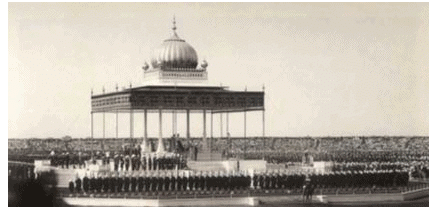
- a)Announcement of India's first Prime Minister
- b)Announcement of the end of British rule in India
- c)Announcement that the East India Company was abolished
- d)The Coronation Durbar of King George V
Correct answer is option 'D'. Can you explain this answer?
Over 100,000 Indian princes and British officers gathered at this place. In the image given. What was the occasion for this Durbar?
a)
Announcement of India's first Prime Minister
b)
Announcement of the end of British rule in India
c)
Announcement that the East India Company was abolished
d)
The Coronation Durbar of King George V
| | Aditi Saxena answered |
The correct answer is option 'D'. The image you provided is of The Coronation Durbar of King George V. It was a grand event held in Delhi in December 1911 to celebrate the coronation of King George V and Queen Mary as Emperor and Empress of India. Over 100,000 Indian princes and British officers gathered at this place to witness the event. The Durbar was a showcase of British power and prestige in India and it served as a reminder of the British Raj's authority over the Indian subcontinent.
Where did the British exile Bahdadur Shah Zafar to ?- a)Sril Lanka
- b)China
- c)Burma
- d)Pakistan
Correct answer is option 'C'. Can you explain this answer?
Where did the British exile Bahdadur Shah Zafar to ?
a)
Sril Lanka
b)
China
c)
Burma
d)
Pakistan
| | EduRev Class 8 answered |
British exile of Bahadur Shah Zafar
Bahadur Shah Zafar, the last Mughal emperor of India, was exiled by the British after the Indian Rebellion of 1857. He was sent to Burma (now Myanmar) where he spent the remainder of his life.
Reasons for exile
- Bahadur Shah Zafar was seen as a figurehead and symbol of the rebellion against British rule in India.
- The British held him responsible for the uprising and wanted to remove any potential threat to their control.
- Exiling him to Burma was a way to isolate him from his supporters and prevent any further rebellion.
Life in exile
- Zafar was taken as a prisoner by the British and transported to Rangoon (now Yangon) in Burma.
- He lived in captivity in a small house with limited freedom.
- Despite his exile, Zafar continued to be revered by many Indians, who saw him as a symbol of resistance against British oppression.
- Zafar passed away in 1862 in Rangoon, and his tomb is now a place of pilgrimage for those who still remember his struggle.
Therefore, the correct answer is C: Burma (now Myanmar).
Chapter doubts & questions for Colonialism and the City: The Story Of An Imperial Capital (Old NCERT) - Social Studies (SST) Class 8 2026 is part of Class 8 exam preparation. The chapters have been prepared according to the Class 8 exam syllabus. The Chapter doubts & questions, notes, tests & MCQs are made for Class 8 2026 Exam. Find important definitions, questions, notes, meanings, examples, exercises, MCQs and online tests here.
Chapter doubts & questions of Colonialism and the City: The Story Of An Imperial Capital (Old NCERT) - Social Studies (SST) Class 8 in English & Hindi are available as part of Class 8 exam. Download more important topics, notes, lectures and mock test series for Class 8 Exam by signing up for free.
Social Studies (SST) Class 886 videos|559 docs|53 tests |
