


All Exams > UPSC > Additional Study Material for UPSC > All Questions
All questions of Tests for UPSC CSE Exam

Consider the following statements regarding Zero Budget Natural Farming:
1. It is a method of chemical-free agriculture based on traditional Indian practices.
2. It encourages intensive irrigation and deep ploughing of the fields.
Which of the above statement is/are correct?- a)1 only
- b)2 only
- c)Both 1 and 2
- d)Neither 1 nor 2
Correct answer is option 'A'. Can you explain this answer?
Consider the following statements regarding Zero Budget Natural Farming:
1. It is a method of chemical-free agriculture based on traditional Indian practices.
2. It encourages intensive irrigation and deep ploughing of the fields.
Which of the above statement is/are correct?
1. It is a method of chemical-free agriculture based on traditional Indian practices.
2. It encourages intensive irrigation and deep ploughing of the fields.
Which of the above statement is/are correct?
a)
1 only
b)
2 only
c)
Both 1 and 2
d)
Neither 1 nor 2
 | Prakrity Vats answered |
1
Direction: Banku is making a list of things whose length will be in centimeters and a list whose length will be in meters. Find the odd one among them in the following questions: Things which will be in meters.- a)Depth of a pond
- b)Height of a tree
- c)Height of a cat
- d)Distance in a room
Correct answer is option 'C'. Can you explain this answer?
Direction: Banku is making a list of things whose length will be in centimeters and a list whose length will be in meters. Find the odd one among them in the following questions: Things which will be in meters.
a)
Depth of a pond
b)
Height of a tree
c)
Height of a cat
d)
Distance in a room
 | Hiral Sengupta answered |
Since, height of a cat will be in meters. Therefore, the answer is option (c) Height of a cot.
Which of the following factors may result in an Earthquake?
1. Volcanic eruptions
2. Faulting Activity
3. Reservoirs
4. Tsunami
5. Mining
6. Landslides
Select the correct answer using the code given below:- a)1, 3, 5 and 6 only
- b)2, 4 and 5 only
- c)1, 2, 3 and 5 only
- d)1, 2, 3, 4, and 6 only
Correct answer is option 'C'. Can you explain this answer?
Which of the following factors may result in an Earthquake?
1. Volcanic eruptions
2. Faulting Activity
3. Reservoirs
4. Tsunami
5. Mining
6. Landslides
Select the correct answer using the code given below:
1. Volcanic eruptions
2. Faulting Activity
3. Reservoirs
4. Tsunami
5. Mining
6. Landslides
Select the correct answer using the code given below:
a)
1, 3, 5 and 6 only
b)
2, 4 and 5 only
c)
1, 2, 3 and 5 only
d)
1, 2, 3, 4, and 6 only
 | Abhishek Singh answered |
I think the main reason and the factor which lead to a earthquake is volcanic eruption.So the correct answer in my opinion is C'
Time shown by a clock is 1: 15. It is also read as __________- a)Quarter past 1
- b)45 minutes to 2
- c)15 minutes to 1
- d)either A or B
Correct answer is option 'D'. Can you explain this answer?
Time shown by a clock is 1: 15. It is also read as __________
a)
Quarter past 1
b)
45 minutes to 2
c)
15 minutes to 1
d)
either A or B
 | Gopal Chakraborty answered |
**Explanation:**
The time shown by the clock is 1:15. We need to read this time in words.
**Option A: Quarter past 1**
When we say "quarter past 1", it means that the time is 15 minutes past 1 o'clock. Since the time shown on the clock is 1:15, this option is correct.
**Option B: 45 minutes to 2**
When we say "45 minutes to 2", it means that the time is 45 minutes before 2 o'clock. Since the time shown on the clock is 1:15, this option is not correct.
**Option C: 15 minutes to 1**
When we say "15 minutes to 1", it means that the time is 15 minutes before 1 o'clock. Since the time shown on the clock is 1:15, this option is not correct.
Therefore, the correct answer is option D, which states that the time shown on the clock can be read as either "quarter past 1" or "45 minutes to 2".
The time shown by the clock is 1:15. We need to read this time in words.
**Option A: Quarter past 1**
When we say "quarter past 1", it means that the time is 15 minutes past 1 o'clock. Since the time shown on the clock is 1:15, this option is correct.
**Option B: 45 minutes to 2**
When we say "45 minutes to 2", it means that the time is 45 minutes before 2 o'clock. Since the time shown on the clock is 1:15, this option is not correct.
**Option C: 15 minutes to 1**
When we say "15 minutes to 1", it means that the time is 15 minutes before 1 o'clock. Since the time shown on the clock is 1:15, this option is not correct.
Therefore, the correct answer is option D, which states that the time shown on the clock can be read as either "quarter past 1" or "45 minutes to 2".
Early Tamil literature like Sangam texts mentions different categories of people living in villages. In this context, consider the following statements.
1. A large landowner was referred to as ‘Uzhavar’.
2. A ploughman was referred to as ‘Vellalar’.
3. A slave was referred to as ‘Adimai’.
4. The landless agricultural labourer were referred to as ‘Kammakaras’.
Which of the statements given above is/are correct?- a)1, 2 and 4 only
- b)3 and 4 only
- c)1, 3 and 4 only
- d)1 and 4 only
Correct answer is option 'B'. Can you explain this answer?
Early Tamil literature like Sangam texts mentions different categories of people living in villages. In this context, consider the following statements.
1. A large landowner was referred to as ‘Uzhavar’.
2. A ploughman was referred to as ‘Vellalar’.
3. A slave was referred to as ‘Adimai’.
4. The landless agricultural labourer were referred to as ‘Kammakaras’.
Which of the statements given above is/are correct?
1. A large landowner was referred to as ‘Uzhavar’.
2. A ploughman was referred to as ‘Vellalar’.
3. A slave was referred to as ‘Adimai’.
4. The landless agricultural labourer were referred to as ‘Kammakaras’.
Which of the statements given above is/are correct?
a)
1, 2 and 4 only
b)
3 and 4 only
c)
1, 3 and 4 only
d)
1 and 4 only
 | Vikram Verma answered |
According to Tamil literature (Sangam texts), there were various kinds of people staying in the village which shows that there was inequality based on differential access to land and labour.
Statement 1 is incorrect. A large landowner was referred to as ‘Vellalar’.
Statement 2 is incorrect. A ploughman was referred to as ‘Uzhavar’.
Statement 3 is correct. Slaves were referred to as ‘Adimai’.
Statement 4 is correct. ‘Kammakaras’ refers to the landless agricultural labourers.
Statement 1 is incorrect. A large landowner was referred to as ‘Vellalar’.
Statement 2 is incorrect. A ploughman was referred to as ‘Uzhavar’.
Statement 3 is correct. Slaves were referred to as ‘Adimai’.
Statement 4 is correct. ‘Kammakaras’ refers to the landless agricultural labourers.
Consider the following pairs:1. Earth - It is the fifth-largest planet.
2. Moon - Its diameter is only one quarter that of the earth.
3. Mercury - It is considered as ‘Earth-Twin’Q. Which of the pairs given above is are correct? - a)1 and 2
- b)1 and 3
- c)2 and 3
- d)None of these
Correct answer is option 'A'. Can you explain this answer?
Consider the following pairs:
1. Earth - It is the fifth-largest planet.
2. Moon - Its diameter is only one quarter that of the earth.
3. Mercury - It is considered as ‘Earth-Twin’
2. Moon - Its diameter is only one quarter that of the earth.
3. Mercury - It is considered as ‘Earth-Twin’
Q. Which of the pairs given above is are correct?
a)
1 and 2
b)
1 and 3
c)
2 and 3
d)
None of these
| | Sanvi Kapoor answered |
►Pair 1 is correct - The Earth is the third nearest planet to the Sun. In size, it is the fifth-largest planet.
►Pair 2 is correct- The moon is a bit more than one-fourth (27 percent) the size of Earth, a much smaller ratio (1:4) than any other planets and their moons.
►Pair 3 is incorrect- Venus is considered as ‘Earth-Twin’ because its size and shape are very much similar to that of the Earth.
Consider the following statements
1. Article 124 of the Indian Constitution deals with ‘Establishment and Constitution of Supreme Court’
2. Article 217 of the Indian Constitution deals with the ‘Ancillary powers of Supreme Court’
Select the correct statements- a)1 Only
- b)2 Only
- c)Both 1 and 2
- d)Neither 1 nor 2
Correct answer is option 'A'. Can you explain this answer?
Consider the following statements
1. Article 124 of the Indian Constitution deals with ‘Establishment and Constitution of Supreme Court’
2. Article 217 of the Indian Constitution deals with the ‘Ancillary powers of Supreme Court’
Select the correct statements
1. Article 124 of the Indian Constitution deals with ‘Establishment and Constitution of Supreme Court’
2. Article 217 of the Indian Constitution deals with the ‘Ancillary powers of Supreme Court’
Select the correct statements
a)
1 Only
b)
2 Only
c)
Both 1 and 2
d)
Neither 1 nor 2
| | Ujwal Unni answered |
The establishment and organization of the Supreme Court of India.
2. The Supreme Court of India is the highest judicial authority in the country.
3. The President of India appoints the judges of the Supreme Court in consultation with the Chief Justice of India and other senior judges.
4. The retirement age for judges of the Supreme Court is 65 years.
5. The Supreme Court has the power of judicial review and can strike down laws or government actions that are unconstitutional.
All of these statements are true.
2. The Supreme Court of India is the highest judicial authority in the country.
3. The President of India appoints the judges of the Supreme Court in consultation with the Chief Justice of India and other senior judges.
4. The retirement age for judges of the Supreme Court is 65 years.
5. The Supreme Court has the power of judicial review and can strike down laws or government actions that are unconstitutional.
All of these statements are true.
Consider the following statements :
Low soil fertility in Rainy Tropics can be caused by
1. high temperature and heavy rainfall.
2. eluviation and leaching.
3. the existence of an extremely active bacterial life on the forest floor.Of these Statements- a)1, 2 and 3 are correct
- b)1 and 2 are correct
- c)2 and 3 are correct
- d)1 and 3 are correct
Correct answer is option 'B'. Can you explain this answer?
Consider the following statements :
Low soil fertility in Rainy Tropics can be caused by
1. high temperature and heavy rainfall.
2. eluviation and leaching.
3. the existence of an extremely active bacterial life on the forest floor.
Low soil fertility in Rainy Tropics can be caused by
1. high temperature and heavy rainfall.
2. eluviation and leaching.
3. the existence of an extremely active bacterial life on the forest floor.
Of these Statements
a)
1, 2 and 3 are correct
b)
1 and 2 are correct
c)
2 and 3 are correct
d)
1 and 3 are correct
| | Vijay Kumar answered |
The correct option is B.
soil erosion is a major problem as year after year a few inches of fertile topsoil is lost.If soil erosion is controlled both soil and water are conserved.Because of high temperature the soil organic matter gets oxidized.Maintaining good amount of organic matter in soil is a challenge in tropical soils.Because of high intensity rains the basic cations may also be leached leading to decrease in soil pH.Also because of high temperatures and consequent high evapo-transpiration the salt may also builds up in some soils.Maintaining continuous crop cover or vegetation cover on land is important. But the limitations of low rainfall and high summer temperatures may pose problems.
soil erosion is a major problem as year after year a few inches of fertile topsoil is lost.If soil erosion is controlled both soil and water are conserved.Because of high temperature the soil organic matter gets oxidized.Maintaining good amount of organic matter in soil is a challenge in tropical soils.Because of high intensity rains the basic cations may also be leached leading to decrease in soil pH.Also because of high temperatures and consequent high evapo-transpiration the salt may also builds up in some soils.Maintaining continuous crop cover or vegetation cover on land is important. But the limitations of low rainfall and high summer temperatures may pose problems.
Which of the following is not a Mahajanapada during the sixth century B.C.?- a)Vatsa
- b)Surasena
- c)Assaka
- d)Gandhara
- e)Besanagar
Correct answer is option 'E'. Can you explain this answer?
Which of the following is not a Mahajanapada during the sixth century B.C.?
a)
Vatsa
b)
Surasena
c)
Assaka
d)
Gandhara
e)
Besanagar
| | Prakhya Shrivastava answered |
There were 16 mahajanpadas between 600-300 BCE Gandhara, Kambhoja, Kuru, Vatsa, Magadh, Vajji, Surasena, panchala, matsya, Malla, Asmaka, Anga, Kashi, Kosala, Avanti, Chedi. Besanagar was not Mahajanpada hence option E is correct.
In India, the central bank’s function as the ‘lender of last resort’ usually refers to which of the following?(1) Lending to trade and industry bodies when they fail to borrow from other sources.
(2) Providing liquidity to the banks having a temporary crisis.
(3) Lending to governments to finance budgetary deficits.Select the correct answer using the code given below:- a)1 and 2
- b)2 only
- c)2 and 3
- d)3 only
Correct answer is option 'B'. Can you explain this answer?
In India, the central bank’s function as the ‘lender of last resort’ usually refers to which of the following?
(1) Lending to trade and industry bodies when they fail to borrow from other sources.
(2) Providing liquidity to the banks having a temporary crisis.
(3) Lending to governments to finance budgetary deficits.
(2) Providing liquidity to the banks having a temporary crisis.
(3) Lending to governments to finance budgetary deficits.
Select the correct answer using the code given below:
a)
1 and 2
b)
2 only
c)
2 and 3
d)
3 only
| | Aashna Desai answered |
Is known as the Reserve Bank of India (RBI). It was established on April 1, 1935, under the Reserve Bank of India Act, 1934.
The RBI is the country's apex monetary authority and regulator of the banking sector. Its main functions include:
1. Formulating and implementing monetary policy
2. Regulating and supervising banks and other financial institutions
3. Issuing and managing currency
4. Managing the country's foreign exchange reserves
5. Act as the banker and debt manager to the government
6. Promoting financial inclusion and development
The RBI is governed by a central board of directors that is appointed by the government. The current Governor of the RBI is Shaktikanta Das.
The RBI is the country's apex monetary authority and regulator of the banking sector. Its main functions include:
1. Formulating and implementing monetary policy
2. Regulating and supervising banks and other financial institutions
3. Issuing and managing currency
4. Managing the country's foreign exchange reserves
5. Act as the banker and debt manager to the government
6. Promoting financial inclusion and development
The RBI is governed by a central board of directors that is appointed by the government. The current Governor of the RBI is Shaktikanta Das.
Consider the following statements regarding ' Election Commission':
1. The Constitution has prescribed qualifications and terms of the members of the Election Commission.
2. Retiring election commissioners are debarred from any further appointment by the government.
Which of the statements given above is/are correct?- a)1 only
- b)2 only
- c)Both 1 and 2
- d)Neither 1 nor 2
Correct answer is option 'D'. Can you explain this answer?
Consider the following statements regarding ' Election Commission':
1. The Constitution has prescribed qualifications and terms of the members of the Election Commission.
2. Retiring election commissioners are debarred from any further appointment by the government.
Which of the statements given above is/are correct?
1. The Constitution has prescribed qualifications and terms of the members of the Election Commission.
2. Retiring election commissioners are debarred from any further appointment by the government.
Which of the statements given above is/are correct?
a)
1 only
b)
2 only
c)
Both 1 and 2
d)
Neither 1 nor 2
| | Suresh Reddy answered |
The Constitution has sought to safeguard and ensure the independence and impartiality of the Election Commission. However,
- The Constitution has not prescribed the qualifications (legal, educational, administrative or judicial) of the members of the Election Commission. Hence statement 1 is not correct.
- The Constitution has not specified the term of the members of the Election Commission,
- The Constitution has not debarred the retiring election commissioners from any further appointment by the government. Hence statement 2 is not correct .

Consider the following statements.
1. Jizya, a revenue tax on non - Muslims was imposed by Aurangzeb.
2. Sikh Guru, Guru Arjan Dev was executed during Shahjahan’s reign.
3. Din-e-ilahi was religious belief which was propagated by Akbar.
Which of the statements given above is/are incorrect?- a)1 and 2 only
- b)2 only
- c)3 only
- d)1, 2 and 3
Correct answer is option 'A'. Can you explain this answer?
Consider the following statements.
1. Jizya, a revenue tax on non - Muslims was imposed by Aurangzeb.
2. Sikh Guru, Guru Arjan Dev was executed during Shahjahan’s reign.
3. Din-e-ilahi was religious belief which was propagated by Akbar.
Which of the statements given above is/are incorrect?
1. Jizya, a revenue tax on non - Muslims was imposed by Aurangzeb.
2. Sikh Guru, Guru Arjan Dev was executed during Shahjahan’s reign.
3. Din-e-ilahi was religious belief which was propagated by Akbar.
Which of the statements given above is/are incorrect?
a)
1 and 2 only
b)
2 only
c)
3 only
d)
1, 2 and 3
| | Manish Singh answered |
The Dīn-i Ilāhī (Persian: دين إله, lit. "Religion of God")[1][2] or Divine Faith was a syncretic religion propounded by the Mughal emperor Akbar in 1582
A vehicle which helps to travel across river is called ____________.- a)Train
- b)Bus
- c)Boat
- d)Car
Correct answer is option 'C'. Can you explain this answer?
A vehicle which helps to travel across river is called ____________.
a)
Train
b)
Bus
c)
Boat
d)
Car
| | Krish Chatterjee answered |
Explanation:
The correct answer is option 'C' - Boat.
Boat
- A boat is a watercraft that is specifically designed to travel across rivers, lakes, and other bodies of water.
- It is a vehicle that is buoyant and is capable of floating on water.
- Boats are generally powered by oars, sails, or engines, which help in propelling them through the water.
- They come in various sizes and shapes, depending on their purpose and the specific body of water they are meant to travel on.
- Boats are commonly used for transportation, fishing, recreation, and even for emergency services.
Trains, Buses, and Cars
- Trains, buses, and cars are vehicles that are primarily designed for land transportation.
- Trains run on railway tracks and are used for long-distance travel, commuting, and transporting goods and passengers.
- Buses are road vehicles that are designed to transport a large number of passengers between different locations.
- Cars are personal vehicles that are used for individual or family transportation on roads.
Choosing the Correct Answer
- In the given options, the only vehicle that is specifically designed for traveling across rivers is a boat.
- Trains, buses, and cars are not suitable for traveling across rivers as they are not designed for water travel.
- While some trains and cars can be transported across rivers using specialized methods like ferries or bridges, they are not inherently capable of traveling across rivers on their own.
Therefore, the correct answer is option 'C' - Boat.
'Right to Freedom of Religion' under the Indian Constitution provides that:
1. A person cannot be forced to attend religious instruction in a state-recognized educational institution.
2. A fee or tax cannot be levied by governments on religious endowments and pilgrims.
Select the correct answer using the code given below.- a)1 only
- b)2 only
- c)Both 1 and 2
- d)Neither 1 nor 2
Correct answer is option 'A'. Can you explain this answer?
'Right to Freedom of Religion' under the Indian Constitution provides that:
1. A person cannot be forced to attend religious instruction in a state-recognized educational institution.
2. A fee or tax cannot be levied by governments on religious endowments and pilgrims.
Select the correct answer using the code given below.
1. A person cannot be forced to attend religious instruction in a state-recognized educational institution.
2. A fee or tax cannot be levied by governments on religious endowments and pilgrims.
Select the correct answer using the code given below.
a)
1 only
b)
2 only
c)
Both 1 and 2
d)
Neither 1 nor 2
 | Teja Simha answered |
Option. A
Consider the following statements concerning the Indus script:
1. The script has more than two thousand signs.
2. The script was usually written left to right.
Which of the statements given above is/are correct?- a)1 only
- b)2 only
- c)Both 1 and 2
- d)Neither 1 nor 2
Correct answer is option 'D'. Can you explain this answer?
Consider the following statements concerning the Indus script:
1. The script has more than two thousand signs.
2. The script was usually written left to right.
Which of the statements given above is/are correct?
1. The script has more than two thousand signs.
2. The script was usually written left to right.
Which of the statements given above is/are correct?
a)
1 only
b)
2 only
c)
Both 1 and 2
d)
Neither 1 nor 2
| | Arun Khatri answered |
► Statement 1 is incorrect - The script is pictographic and more than four hundred signs have been identified. However, it remains un-deciphered.
► Statement 2 is incorrect - The script was usually written right to left and sometimes followed the boustrophedon method of writing.
With reference to the ordinance-making power of the President, consider the following statements:
1. This power is parallel to and coextensive with the legislative powers of Parliament.
2. The President can withdraw an ordinance only on the advice of the council of ministers.
Which of the statements given above is/are correct?- a)1 only
- b)2 only
- c)Both 1 and 2
- d)Neither 1 nor 2
Correct answer is option 'B'. Can you explain this answer?
With reference to the ordinance-making power of the President, consider the following statements:
1. This power is parallel to and coextensive with the legislative powers of Parliament.
2. The President can withdraw an ordinance only on the advice of the council of ministers.
Which of the statements given above is/are correct?
1. This power is parallel to and coextensive with the legislative powers of Parliament.
2. The President can withdraw an ordinance only on the advice of the council of ministers.
Which of the statements given above is/are correct?
a)
1 only
b)
2 only
c)
Both 1 and 2
d)
Neither 1 nor 2
 | Ankita Tamori answered |
C, Both 1and 2
Which of the following is not correct?- a)India is a founder member of the International Labour Organization (ILO), which came into existence in 1919.
- b)ILO sets International labour standardsin the form of conventions and recommendations. They are legal instruments. Conventions are legally binding international treaties that may be ratified by member states while recommendations serve as non-binding guidelines.
- c)The ILO's Governing Body has identified six conventions as "fundamental" or Core. They cover subjects that are considered as fundamental principles and rights at work.
- d)With ratification of these two core ILO conventions, India has now ratified 6 out of 8 core ILO conventions.
Correct answer is option 'C'. Can you explain this answer?
Which of the following is not correct?
a)
India is a founder member of the International Labour Organization (ILO), which came into existence in 1919.
b)
ILO sets International labour standardsin the form of conventions and recommendations. They are legal instruments. Conventions are legally binding international treaties that may be ratified by member states while recommendations serve as non-binding guidelines.
c)
The ILO's Governing Body has identified six conventions as "fundamental" or Core. They cover subjects that are considered as fundamental principles and rights at work.
d)
With ratification of these two core ILO conventions, India has now ratified 6 out of 8 core ILO conventions.
 | Mira Sharma answered |
Fundamental Conventions
The ILO's Governing Body has identified eight conventions as "fundamental", covering subjects that are considered as fundamental principles and rights at work: freedom of association and the effective recognition of the right to collective bargaining; the elimination of all forms of forced or compulsory labour; the effective abolition of child labour; and the elimination of discrimination in respect of employment and occupation. These principles are also covered in the ILO's Declaration on Fundamental Principles and Rights at Work (1998). There are currently over 1,367 ratifications of these conventions, representing 91,4% of the possible number of ratifications. A further 129 ratifications are still required to meet the objective of universal ratification of all the fundamental.
The eight fundamental Conventions are:
1. Freedom of Association and Protection of the Right to Organise Convention, 1948 (No. 87)
2. Right to Organise and Collective Bargaining Convention, 1949 (No. 98)
3. Forced Labour Convention, 1930 (No. 29)
4. Abolition of Forced Labour Convention, 1957 (No. 105)
5. Minimum Age Convention, 1973 (No. 138)
6. Worst Forms of Child Labour Convention, 1999 (No. 182)
7. Equal Remuneration Convention, 1951 (No. 100)
8. Discrimination (Employment and Occupation) Convention, 1958 (No. 111)
Which of the following is not a Constitutionalprerogative of the President of India?- a)Returning a Legislative Bill for reconsideration
- b)Returning of Financial Bill for reconsidersation
- c)Dissolving the Lok Sabha
- d)Summoning the Rajya Sabha
Correct answer is option 'B'. Can you explain this answer?
Which of the following is not a Constitutionalprerogative of the President of India?
a)
Returning a Legislative Bill for reconsideration
b)
Returning of Financial Bill for reconsidersation
c)
Dissolving the Lok Sabha
d)
Summoning the Rajya Sabha
 | Rajesh Khatri answered |
Under Article 111 of the Indian Constitution the president cannot return finance bill for reconsideration. Other 3 options are constitutional prerogative of the president of India.
Which of the following is not a terrestrial planet?- a)Venus
- b)Mercury
- c)Jupiter
- d)Mars
Correct answer is option 'C'. Can you explain this answer?
Which of the following is not a terrestrial planet?
a)
Venus
b)
Mercury
c)
Jupiter
d)
Mars
 | Kavita Shah answered |
Terrestrial planets also called as inner planets include Mercury, Venus, Earth and Mars. They are near to the sun and are mostly made up of dense metallic materials.
Consider the following statements with regard to the Vice-President of India
1. He acts as President during the absence of the President.
2. He acts as the President for the remaining period of the tenure of the President in case the President resigns.
3. While acting as President, the Vice-President does not get the salary and other allowances of the President.Q. Which of the above is/are correct?- a)Only 1
- b)Only 2
- c)Only 3
- d)1 and 2
Correct answer is option 'A'. Can you explain this answer?
Consider the following statements with regard to the Vice-President of India
1. He acts as President during the absence of the President.
2. He acts as the President for the remaining period of the tenure of the President in case the President resigns.
3. While acting as President, the Vice-President does not get the salary and other allowances of the President.
1. He acts as President during the absence of the President.
2. He acts as the President for the remaining period of the tenure of the President in case the President resigns.
3. While acting as President, the Vice-President does not get the salary and other allowances of the President.
Q. Which of the above is/are correct?
a)
Only 1
b)
Only 2
c)
Only 3
d)
1 and 2
| | Balaraj Bagoji answered |
Statement 2 is wrong, because whenever President resigns, the Vice President becomes acting President upto next election of President. It must be noted here that the elections must be conducted within 6 months.
Statement 3 is wrong, because acting President is same as actual President and he is entitled to all allowances that President has.
Statement 3 is wrong, because acting President is same as actual President and he is entitled to all allowances that President has.
With respect to Electronically Transmitted Postal Ballot System (ETPBS), consider the following statements:
1. ETPBS is developed by Bharat Electronics Limited and Electronics Corporation of India Limited.
2. It enables the entitled voters to cast their vote using an electronically received postal ballot from anywhere outside their constituency.
3. Persons employed under Government of India on posts outside India can use ETPBS to cast their vote.Select the correct answer using the code given below.- a)2 only
- b)1, 2 and 3
- c)3 only
- d)2 and 3 only
Correct answer is option 'D'. Can you explain this answer?
With respect to Electronically Transmitted Postal Ballot System (ETPBS), consider the following statements:
1. ETPBS is developed by Bharat Electronics Limited and Electronics Corporation of India Limited.
2. It enables the entitled voters to cast their vote using an electronically received postal ballot from anywhere outside their constituency.
3. Persons employed under Government of India on posts outside India can use ETPBS to cast their vote.
1. ETPBS is developed by Bharat Electronics Limited and Electronics Corporation of India Limited.
2. It enables the entitled voters to cast their vote using an electronically received postal ballot from anywhere outside their constituency.
3. Persons employed under Government of India on posts outside India can use ETPBS to cast their vote.
Select the correct answer using the code given below.
a)
2 only
b)
1, 2 and 3
c)
3 only
d)
2 and 3 only
| | Ankit Kumar answered |
Correct Answer:- D ( 2 and 3 only)
With the motto of “no voter to be left behind”, Election Commission of India’s ETPBS has empowered and ensured all eligible service electors with their constitutional power to vote while performing their duty for the nation
Electronically Transmitted Postal Ballot Ststem (ETPBS) is developed by Election Commission Of India with the help of Centre for Development of Advanced Computing (C-DAC) for the use of Service Voters.
Persons working in paramilitary forces and the military and government officials deployed in diplomatic missions outside India are classified as Service Voters.
Through this system the service voters cast their vote on an electronically received postal ballot, from anywhere outside their constituency, thus reducing the chances of losing the voting opportunity. The purpose of the online system was to create convenient and easy-to-use online system for Defense Personnel to become Service Voters.
Significance and benefits:
This system enables the entitled service voters to cast their vote using an electronically received postal ballot from anywhere outside their constituency.
The voters who make such a choice will be entitled for Postal Ballot delivered through Electronic Media for a particular election.
The developed System is implemented inline with the existing Postal Ballot System. Postal Ballot will be transmitted through Electronic Means to the voters.
It enables the voters to cast their vote on an electronically received postal ballot from their preferred location, which is outside their originally assigned voting constituency.
This system would be an easier option of facilitating voting by the electors as the time constraint for dispatch of postal ballot has been addressed using this system.
Class of Electors who are eligible for ETPBS:
Service Voters, other than those who opt for proxy voting (Classified Service Voters).
The wife of a Service Voter who ordinarily resides with him.
Overseas Voters.
Features:
Service voters can avail this service from anywhere outside their constituency.
System facilitates creation of service voter electoral roll data.
Easy, Efficient and Hassle free.
It is a secure system, having two layer security.
OTP is required to download encrypted Electronically Transmitted Postal Ballot file.
Secrecy is maintained and no duplicate of casted ETPB is possible due to QR code.
PIN is required to decrypt, print and deliver ETPB.
With the motto of “no voter to be left behind”, Election Commission of India’s ETPBS has empowered and ensured all eligible service electors with their constitutional power to vote while performing their duty for the nation
Electronically Transmitted Postal Ballot Ststem (ETPBS) is developed by Election Commission Of India with the help of Centre for Development of Advanced Computing (C-DAC) for the use of Service Voters.
Persons working in paramilitary forces and the military and government officials deployed in diplomatic missions outside India are classified as Service Voters.
Through this system the service voters cast their vote on an electronically received postal ballot, from anywhere outside their constituency, thus reducing the chances of losing the voting opportunity. The purpose of the online system was to create convenient and easy-to-use online system for Defense Personnel to become Service Voters.
Significance and benefits:
This system enables the entitled service voters to cast their vote using an electronically received postal ballot from anywhere outside their constituency.
The voters who make such a choice will be entitled for Postal Ballot delivered through Electronic Media for a particular election.
The developed System is implemented inline with the existing Postal Ballot System. Postal Ballot will be transmitted through Electronic Means to the voters.
It enables the voters to cast their vote on an electronically received postal ballot from their preferred location, which is outside their originally assigned voting constituency.
This system would be an easier option of facilitating voting by the electors as the time constraint for dispatch of postal ballot has been addressed using this system.
Class of Electors who are eligible for ETPBS:
Service Voters, other than those who opt for proxy voting (Classified Service Voters).
The wife of a Service Voter who ordinarily resides with him.
Overseas Voters.
Features:
Service voters can avail this service from anywhere outside their constituency.
System facilitates creation of service voter electoral roll data.
Easy, Efficient and Hassle free.
It is a secure system, having two layer security.
OTP is required to download encrypted Electronically Transmitted Postal Ballot file.
Secrecy is maintained and no duplicate of casted ETPB is possible due to QR code.
PIN is required to decrypt, print and deliver ETPB.
Consider the following statements about Pradhan Mantri Vaya Vandana Yojana (PMVVY).
1. PMVVY is a Pension Scheme exclusively for the senior women citizens aged 60 years and above.
2. Scheme provides an assured return of 8% p.a. for 10 years.
3. The scheme also allows for premature exit for the treatment of any critical/
terminal illness of self or spouse.Which of the above statements is/are correct?- a)1, 2
- b)2, 3
- c)1, 3
- d)1, 2, 3
Correct answer is option 'B'. Can you explain this answer?
Consider the following statements about Pradhan Mantri Vaya Vandana Yojana (PMVVY).
1. PMVVY is a Pension Scheme exclusively for the senior women citizens aged 60 years and above.
2. Scheme provides an assured return of 8% p.a. for 10 years.
3. The scheme also allows for premature exit for the treatment of any critical/
terminal illness of self or spouse.
1. PMVVY is a Pension Scheme exclusively for the senior women citizens aged 60 years and above.
2. Scheme provides an assured return of 8% p.a. for 10 years.
3. The scheme also allows for premature exit for the treatment of any critical/
terminal illness of self or spouse.
Which of the above statements is/are correct?
a)
1, 2
b)
2, 3
c)
1, 3
d)
1, 2, 3
| | Sanvi Kapoor answered |
1. Pradhan Mantri Vaya Vandana Yojana (PMVVY), is a pension scheme exclusively for senior citizens aged 60 years and above.
2. The Scheme can be purchased offline as well as online through Life Insurance Corporation (LIC) of India which has been given the sole privilege to operate this Scheme.
3. Scheme provides an assured return of 8% p.a. for 10 years.
4. Pension is payable as per the frequency of monthly/ quarterly/ half-yearly/ yearly as chosen by the pensioner at the time of purchase.
5. The scheme is exempted from Service Tax/ GST.
6. On survival of the pensioner to the end of the policy term of 10 years, Purchase price along with final pension instalment shall be payable.
7. Loan upto 75% of Purchase Price shall be allowed after 3 policy years (to meet the liquidity needs). Loan interest shall be recovered from the pension instalments and loan to be recovered from claim proceeds.
8. The scheme also allows for premature exit for the treatment of any critical/ terminal illness of self or spouse. On such premature exit, 98% of the Purchase Price shall be refunded.
9. On death of the pensioner during the policy term of 10 years, the Purchase Price shall be paid to the beneficiary.
2. The Scheme can be purchased offline as well as online through Life Insurance Corporation (LIC) of India which has been given the sole privilege to operate this Scheme.
3. Scheme provides an assured return of 8% p.a. for 10 years.
4. Pension is payable as per the frequency of monthly/ quarterly/ half-yearly/ yearly as chosen by the pensioner at the time of purchase.
5. The scheme is exempted from Service Tax/ GST.
6. On survival of the pensioner to the end of the policy term of 10 years, Purchase price along with final pension instalment shall be payable.
7. Loan upto 75% of Purchase Price shall be allowed after 3 policy years (to meet the liquidity needs). Loan interest shall be recovered from the pension instalments and loan to be recovered from claim proceeds.
8. The scheme also allows for premature exit for the treatment of any critical/ terminal illness of self or spouse. On such premature exit, 98% of the Purchase Price shall be refunded.
9. On death of the pensioner during the policy term of 10 years, the Purchase Price shall be paid to the beneficiary.
Which of the following Mauryan rulers is believed to have conquered the Deccan? - a)Chandragupta
- b)Ashoka
- c)Bindusara
- d)None of the above
Correct answer is option 'A'. Can you explain this answer?
Which of the following Mauryan rulers is believed to have conquered the Deccan?
a)
Chandragupta
b)
Ashoka
c)
Bindusara
d)
None of the above
 | Lohit Matani answered |
After defeating Selucus Nicator, Chandragupta Maurya is said to have expanded his kingdom towards the South.
A “Moriya '' war in the south is referred to three times in the Tamil work Ahananuru and once in Phananuru. These literary works of the Sangham era mention how Moriya army chariots cut through rocks,but it is unclear if this refers to Chandragupta Maurya or the Moriyas in the Deccan region of 5th century CE.
A “Moriya '' war in the south is referred to three times in the Tamil work Ahananuru and once in Phananuru. These literary works of the Sangham era mention how Moriya army chariots cut through rocks,but it is unclear if this refers to Chandragupta Maurya or the Moriyas in the Deccan region of 5th century CE.
Consider the following about Lord Macaulay.
1. He emphasised the need to teach vernacular languages to Indians to promote oriental studies.
2. Following Macaulay’s minute, the English Education Act of 1835 was introduced.
3. He issued the order for Wood’s Despatch to India.
Select the correct answer using the codes below.- a)1 and 3 only
- b)2 only
- c)1 only
- d)2 and 3 only
Correct answer is option 'B'. Can you explain this answer?
Consider the following about Lord Macaulay.
1. He emphasised the need to teach vernacular languages to Indians to promote oriental studies.
2. Following Macaulay’s minute, the English Education Act of 1835 was introduced.
3. He issued the order for Wood’s Despatch to India.
Select the correct answer using the codes below.
1. He emphasised the need to teach vernacular languages to Indians to promote oriental studies.
2. Following Macaulay’s minute, the English Education Act of 1835 was introduced.
3. He issued the order for Wood’s Despatch to India.
Select the correct answer using the codes below.
a)
1 and 3 only
b)
2 only
c)
1 only
d)
2 and 3 only
 | Preity answered |
First statement is incorrect. Macaulay fostered the concept of western education in India and delimited the langauges such as sanskrit.
Also, first and second statement are the opposite of each other, conceptually. Only one of them can be true.
Lord Dalhousie had issued the order for Wood's Despatch to India. This emphasized on both vernacular and western languages.
Which of the following animal was not found on the seal depicting the male deity (Pasupati Mahadeva)?- a)Deer
- b)Rhinocerous
- c)Elephant
- d)Cow
Correct answer is option 'D'. Can you explain this answer?
Which of the following animal was not found on the seal depicting the male deity (Pasupati Mahadeva)?
a)
Deer
b)
Rhinocerous
c)
Elephant
d)
Cow
 | Krishan Kumar answered |
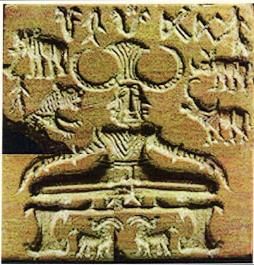
Pashupati Seal depicts a figure seated cross-legged in a yogic posture with a horned headdress. The figure is surrounded by an elephant &a tiger are there on the right side of the figure while a rhinoceros and buffalo are seen on the left side, two antelopes/deer are shown below the seat of the figure. It is believed to be a representation of Proto Shiva.
With reference to the Zonal Councils in India consider the following statements:1. The States have been divided into four zones.
2. The Zonal Councils are headed by the Union Home Minister.
3. The Zonal Councils are extraconstitutional bodies.Which of the statements given above are correct?- a)1 and 2 only
- b)2 and 3 only
- c)1 and 3 only
- d)1, 2 and 3
Correct answer is option 'B'. Can you explain this answer?
With reference to the Zonal Councils in India consider the following statements:
1. The States have been divided into four zones.
2. The Zonal Councils are headed by the Union Home Minister.
3. The Zonal Councils are extraconstitutional bodies.
2. The Zonal Councils are headed by the Union Home Minister.
3. The Zonal Councils are extraconstitutional bodies.
Which of the statements given above are correct?
a)
1 and 2 only
b)
2 and 3 only
c)
1 and 3 only
d)
1, 2 and 3
| | Amit Sharma answered |
- The Zonal Councils provide a forum where irritants between the Centre and the States and among the States themselves can be resolved through free and frank discussions and consultations.
- The States have been divided into five zones and each zone has its Council comprising the Chief Minister, two Ministers and the Chief Secretary of each State.
- The Zonal Councils are headed by the Union Home Minister and each zone nominates one Chief Minister as its Vice-Chairman on rotation basis.
- The Zonal Councils are statutory (and not constitutional) bodies. They are established by an Act of the Parliament, that is, the States Reorganisation Act of 1956.
- The Act divided the country into five zones (Northern, Central, Eastern, Western and Southern) and provided a Zonal Council for each zone.
- The North Eastern Council was created by a separate Act of the Parliament — the North Eastern Council Act of 1971. Its members include Assam, Manipur, Mizoram, Arunachal Pradesh, Nagaland, Meghalaya, Tripura and Sikkim. Its functions are similar to those of the Zonal Councils, but with a few additions. It has to formulate a unified and co-ordinated regional plan covering the matters of common importance. It has to review, from time to time, the measures taken by the member states for the maintenance of security and public order in the region.
Which number makes the equation true? 1508 + 1125 = 2407 +?- a)226
- b)216
- c)126
- d)116
Correct answer is option 'A'. Can you explain this answer?
Which number makes the equation true? 1508 + 1125 = 2407 +?
a)
226
b)
216
c)
126
d)
116
| | Neha Singh answered |
1508 + 1125 = 2407 + 226 = 2633
Consider the following statements, with reference to Jatakas:
1. Jatakas are the compilation of the stories from the previous birth of Buddha.
2. These are also associated with the stories Bodhisattva or future Buddha.
3. Jatakas are Canonical Literature, which is a part of Buddhist Literature.
Which of the statements given above is/are correct?- a)1 and 2 only
- b)2 and 3 only
- c)1 and 3 both
- d)1, 2 and 3
Correct answer is option 'A'. Can you explain this answer?
Consider the following statements, with reference to Jatakas:
1. Jatakas are the compilation of the stories from the previous birth of Buddha.
2. These are also associated with the stories Bodhisattva or future Buddha.
3. Jatakas are Canonical Literature, which is a part of Buddhist Literature.
Which of the statements given above is/are correct?
1. Jatakas are the compilation of the stories from the previous birth of Buddha.
2. These are also associated with the stories Bodhisattva or future Buddha.
3. Jatakas are Canonical Literature, which is a part of Buddhist Literature.
Which of the statements given above is/are correct?
a)
1 and 2 only
b)
2 and 3 only
c)
1 and 3 both
d)
1, 2 and 3
| | Aditya Kumar answered |
Jatakas:
Statement 3 is incorrect. The Jatakas are the best example of Buddhist non-canonical literature. These are a compilation of stories from the previous births of Buddha.
Statement 1 is correct. The stories of the Bodhisattva or the (future) would-be Buddha are also discussed in these Jatakas.
Statement 2 is correct. Although these stories propagate Buddhist religious doctrines, they are available in Sanskrit and Pali. Each story of the birth of the Buddha is equivalent to a Jataka tale. It was believed that Buddha passed through 550 births before he was born as Gautama. These tales combine the popular tales, ancient mythology as well as sociopolitical conditions in North India between 600 BC and 200 BC. The great epic Buddhacharita by Aswaghosha (78 A.D.) is another example of Buddhist literature in Sanskrit.
Statement 3 is incorrect. The Jatakas are the best example of Buddhist non-canonical literature. These are a compilation of stories from the previous births of Buddha.
Statement 1 is correct. The stories of the Bodhisattva or the (future) would-be Buddha are also discussed in these Jatakas.
Statement 2 is correct. Although these stories propagate Buddhist religious doctrines, they are available in Sanskrit and Pali. Each story of the birth of the Buddha is equivalent to a Jataka tale. It was believed that Buddha passed through 550 births before he was born as Gautama. These tales combine the popular tales, ancient mythology as well as sociopolitical conditions in North India between 600 BC and 200 BC. The great epic Buddhacharita by Aswaghosha (78 A.D.) is another example of Buddhist literature in Sanskrit.
With reference to the Indus river system of the following four rivers, three of them pour intoone of them, which joins the Indus direct. Among the following, which one is such river thatjoins the Indus direct?- a)Chenab
- b)Jhelum
- c)Ravi
- d)Sutlej
Correct answer is option 'A'. Can you explain this answer?
With reference to the Indus river system of the following four rivers, three of them pour intoone of them, which joins the Indus direct. Among the following, which one is such river thatjoins the Indus direct?
a)
Chenab
b)
Jhelum
c)
Ravi
d)
Sutlej
| | Meera Kapoor answered |
Chenab is the only river in which “three” of them pour
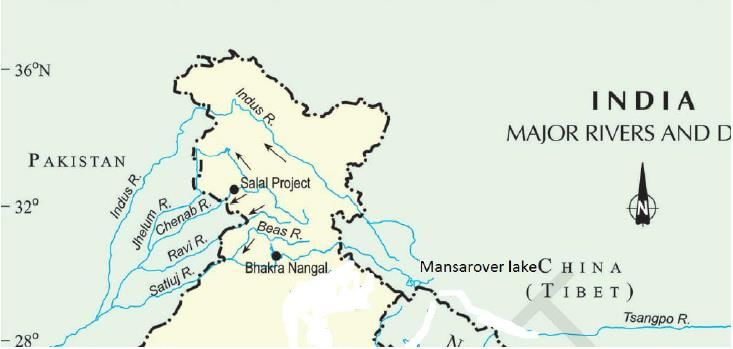
Therefore, the correct answer is (a).
What is Jeevamrutha?- a)A new anti-malerial drug.
- b)A mixture used in Zero Budget Natural Farming.
- c)New Government scheme for livestock.
- d)None of the above
Correct answer is option 'B'. Can you explain this answer?
What is Jeevamrutha?
a)
A new anti-malerial drug.
b)
A mixture used in Zero Budget Natural Farming.
c)
New Government scheme for livestock.
d)
None of the above
| | Anita Desai answered |
Option (b) is correct: Jeevamrutha is a mixture of fresh desi cow dung and aged desi cow urine, jaggery, pulse flour, water and soil. It is used in Zero budget natural farming (ZBNF).
Supplementary notes:
Zero Budget Natural Farming
Supplementary notes:
Zero Budget Natural Farming
- Zero budget natural farming (ZBNF) is a method of chemical-free agriculture drawing from traditional Indian practices.
- It was originally promoted by Maharashtrian agriculturist and Padma Shri recipient Subhash Palekar, who developed it in the mid-1990s as an alternative to the Green Revolution’s methods driven by chemical fertilizers and pesticides and intensive irrigation.
- It promotes the application of jeevamrutha — a mixture of fresh desi cow dung and aged desi cow urine, jaggery, pulse flour, water and soil — on farmland.
- It is a fermented microbial culture that adds nutrients to the soil, and acts as a catalytic agent to promote the activity of microorganisms and earthworms in the soil.
- It also promotes soil aeration, minimal watering, intercropping, bunds and topsoil mulching and discourages intensive irrigation and deep ploughing.
- A similar mixture, called bijamrita, is used to treat seeds, while concoctions using neem leaves and pulp, tobacco and green chillis are prepared for insect and pest management.
The Rajya Sabha has exclusive jurisdiction in- a)approving a proclamation of emergency
- b)the creation and abolition of state
- c)the election of the Vice-President
- d)authorising Parliament to legislate on a subject in the state list
Correct answer is option 'D'. Can you explain this answer?
The Rajya Sabha has exclusive jurisdiction in
a)
approving a proclamation of emergency
b)
the creation and abolition of state
c)
the election of the Vice-President
d)
authorising Parliament to legislate on a subject in the state list
| | Sakshi Nambiar answered |
Rajya Sabha in India’s Parliament has certain exclusive powers with respect to the following:
- Enable the parliament to make law on a matter of state list
- Creation of new All India Services
- Enforcing proclamation of emergency when Lok Sabha is dissolved
Rajya Sabha being a federal chamber enjoys certain special powers under the Constitution. All the subjects/areas regarding legislation have been divided into three Lists – Union List, State List and concurrent List. Union and State Lists are mutually exclusive – one cannot legislate on a matter placed in the sphere of the other. However, if Rajya Sabha passes a resolution by a majority of not less than two-thirds of members present and voting saying that it is “necessary or expedient in the national interest” that Parliament should make a law on a matter enumerated in the State List, Parliament becomes empowered to make a law on the subject specified in the resolution, for the whole or any part of the territory of India. Such a resolution remains in force for a maximum period of one year but this period can be extended by one year at a time by passing a similar resolution further.
Which of the following statements is correct?- a)The Constitution clearly lays down what its basic structure is
- b)The Supreme Court has elaborately defined the basic structure of the Constitution
- c)The Law Commission of India with the help of Attorney General of India has defined the basic structure of the Constitution.
- d)Neither the Supreme Court nor the Parliament have defined the basic structure of the Constitution
Correct answer is option 'B'. Can you explain this answer?
Which of the following statements is correct?
a)
The Constitution clearly lays down what its basic structure is
b)
The Supreme Court has elaborately defined the basic structure of the Constitution
c)
The Law Commission of India with the help of Attorney General of India has defined the basic structure of the Constitution.
d)
Neither the Supreme Court nor the Parliament have defined the basic structure of the Constitution
 | Puja Iyer answered |
The Basic Structure of the Constitution
The basic structure of the Indian Constitution refers to the fundamental principles and features that form the core of the Constitution. It is believed that these principles cannot be altered by the Parliament through the amendment process as they are essential for the functioning of the Constitution.
Supreme Court's Elaboration
The correct statement is option B, which states that the Supreme Court has elaborately defined the basic structure of the Constitution. The concept of the basic structure was first introduced by the Supreme Court in the landmark case of Kesavananda Bharati vs State of Kerala in 1973. The court held that the Parliament's power to amend the Constitution is not unlimited and that it cannot alter the basic structure of the Constitution.
The court did not provide an exhaustive list of the principles that constitute the basic structure but identified some fundamental features such as:
- Supremacy of the Constitution
- Rule of law
- Separation of powers
- Independence of the judiciary
- Federalism
- Secularism
- Sovereign, democratic, and republican nature of the Constitution
- Free and fair elections
The Supreme Court's decision in Kesavananda Bharati case has been followed in several subsequent cases, and the concept of the basic structure has now become an integral part of the Indian Constitution.
Conclusion
In conclusion, the correct statement is that the Supreme Court has elaborately defined the basic structure of the Constitution. The concept of the basic structure is significant as it limits the Parliament's power to amend the Constitution and ensures that the fundamental principles and features of the Constitution remain intact.
The basic structure of the Indian Constitution refers to the fundamental principles and features that form the core of the Constitution. It is believed that these principles cannot be altered by the Parliament through the amendment process as they are essential for the functioning of the Constitution.
Supreme Court's Elaboration
The correct statement is option B, which states that the Supreme Court has elaborately defined the basic structure of the Constitution. The concept of the basic structure was first introduced by the Supreme Court in the landmark case of Kesavananda Bharati vs State of Kerala in 1973. The court held that the Parliament's power to amend the Constitution is not unlimited and that it cannot alter the basic structure of the Constitution.
The court did not provide an exhaustive list of the principles that constitute the basic structure but identified some fundamental features such as:
- Supremacy of the Constitution
- Rule of law
- Separation of powers
- Independence of the judiciary
- Federalism
- Secularism
- Sovereign, democratic, and republican nature of the Constitution
- Free and fair elections
The Supreme Court's decision in Kesavananda Bharati case has been followed in several subsequent cases, and the concept of the basic structure has now become an integral part of the Indian Constitution.
Conclusion
In conclusion, the correct statement is that the Supreme Court has elaborately defined the basic structure of the Constitution. The concept of the basic structure is significant as it limits the Parliament's power to amend the Constitution and ensures that the fundamental principles and features of the Constitution remain intact.
E-2025 Initiative, recently in the news, is related to which of the following diseases?- a)Tuberculosis
- b)AIDS
- c)Hepatitis
- d)Malaria
Correct answer is option 'D'. Can you explain this answer?
E-2025 Initiative, recently in the news, is related to which of the following diseases?
a)
Tuberculosis
b)
AIDS
c)
Hepatitis
d)
Malaria
 | Nikita Singh answered |
In News: Recently, the World Health Organization (WHO) has released the report titled “Zeroing in on Malaria Elimination”, prior to World Malaria Day (25th April).
Option D is correct: The report brings out progress made through the E-2025 Initiative of the WHO, which has identified 25 countries with the potential to eradicate Malaria by 2025. The WHO and its partners will provide specialised support and technical guidance to them to enable them to achieve the target. Countries are expected to participate in elimination forums, conduct surveillance assessments, audit their elimination programmes annually and share malaria case data periodically.
Option D is correct: The report brings out progress made through the E-2025 Initiative of the WHO, which has identified 25 countries with the potential to eradicate Malaria by 2025. The WHO and its partners will provide specialised support and technical guidance to them to enable them to achieve the target. Countries are expected to participate in elimination forums, conduct surveillance assessments, audit their elimination programmes annually and share malaria case data periodically.
Which of the following directed the ladies to leave the hall of learning where some principles of gynaecology were explained, which are indelicate for the female ear?- a)Taittiya Aryanka, Aiteriya Upanishads
- b)Satpatha Brahmana
- c)Dharmasutras
- d)Chandogya Upanishad
Correct answer is option 'A'. Can you explain this answer?
Which of the following directed the ladies to leave the hall of learning where some principles of gynaecology were explained, which are indelicate for the female ear?
a)
Taittiya Aryanka, Aiteriya Upanishads
b)
Satpatha Brahmana
c)
Dharmasutras
d)
Chandogya Upanishad
| | Ujwal Unni answered |
The correct answer is option A) Taittiya Aryanka, Aiteriya Upanishads.
Explanation:
The Taittiya Aryanka and Aiteriya Upanishads directed the ladies to leave the hall of learning where some principles of gynaecology were explained, as these principles were considered indelicate for the female ear. Let's understand this in more detail.
1. Taittiya Aryanka:
The Taittiya Aryanka is a part of the Taittiriya Shakha of the Krishna Yajur Veda. It consists of explanations and rituals related to the Yajurveda. The Taittiya Aryanka contains sections called Brahmanas, which provide explanations of the rituals mentioned in the Yajur Veda.
2. Aiteriya Upanishads:
The Aiteriya Upanishads is a collection of ancient Sanskrit texts that are part of the Aitareya Shakha of the Rig Veda. It is one of the oldest Upanishads and contains philosophical and spiritual teachings. The Aiteriya Upanishads discuss various topics such as the nature of the soul, the nature of reality, and the path to enlightenment.
Indelicate Principles of Gynaecology:
In ancient times, certain principles of gynaecology were considered indelicate or inappropriate for the female ear. This may have been due to cultural norms and beliefs surrounding women's roles and societal expectations. These principles might have been related to reproductive health, childbirth, or other aspects of women's bodies and health.
The Direction to Leave the Hall of Learning:
The Taittiya Aryanka and Aiteriya Upanishads directed the ladies to leave the hall of learning when these indelicate principles of gynaecology were being explained. It is important to note that this directive does not imply that women were considered inferior or unworthy of knowledge. Rather, it reflects the cultural norms and customs of that time period.
Conclusion:
In conclusion, the Taittiya Aryanka and Aiteriya Upanishads directed the ladies to leave the hall of learning where indelicate principles of gynaecology were being explained. This directive was likely based on the cultural norms and beliefs surrounding women's roles and societal expectations during that time period.
Explanation:
The Taittiya Aryanka and Aiteriya Upanishads directed the ladies to leave the hall of learning where some principles of gynaecology were explained, as these principles were considered indelicate for the female ear. Let's understand this in more detail.
1. Taittiya Aryanka:
The Taittiya Aryanka is a part of the Taittiriya Shakha of the Krishna Yajur Veda. It consists of explanations and rituals related to the Yajurveda. The Taittiya Aryanka contains sections called Brahmanas, which provide explanations of the rituals mentioned in the Yajur Veda.
2. Aiteriya Upanishads:
The Aiteriya Upanishads is a collection of ancient Sanskrit texts that are part of the Aitareya Shakha of the Rig Veda. It is one of the oldest Upanishads and contains philosophical and spiritual teachings. The Aiteriya Upanishads discuss various topics such as the nature of the soul, the nature of reality, and the path to enlightenment.
Indelicate Principles of Gynaecology:
In ancient times, certain principles of gynaecology were considered indelicate or inappropriate for the female ear. This may have been due to cultural norms and beliefs surrounding women's roles and societal expectations. These principles might have been related to reproductive health, childbirth, or other aspects of women's bodies and health.
The Direction to Leave the Hall of Learning:
The Taittiya Aryanka and Aiteriya Upanishads directed the ladies to leave the hall of learning when these indelicate principles of gynaecology were being explained. It is important to note that this directive does not imply that women were considered inferior or unworthy of knowledge. Rather, it reflects the cultural norms and customs of that time period.
Conclusion:
In conclusion, the Taittiya Aryanka and Aiteriya Upanishads directed the ladies to leave the hall of learning where indelicate principles of gynaecology were being explained. This directive was likely based on the cultural norms and beliefs surrounding women's roles and societal expectations during that time period.
Consider the following statements: 1. The President ca n not function without the Union Council of the Ministers2. The Solicitor-General is the highest legal authority of the Union Government3. The Union Council of Ministers can function for sometime even after death or resignation of the Prime Minister4. In the absence of the Prime Minister, only the Home Minister can preside over emergency meetings of the Union Council of Ministers.Which of these is/are correct - a)1 Only
- b)3 and 4
- c)1, 2 and 4
- d)1, 2, 3 and 4
Correct answer is option 'A'. Can you explain this answer?
Consider the following statements:
1. The President ca n not function without the Union Council of the Ministers
2. The Solicitor-General is the highest legal authority of the Union Government
3. The Union Council of Ministers can function for sometime even after death or resignation of the Prime Minister
4. In the absence of the Prime Minister, only the Home Minister can preside over emergency meetings of the Union Council of Ministers.
Which of these is/are correct
a)
1 Only
b)
3 and 4
c)
1, 2 and 4
d)
1, 2, 3 and 4
| | Kabir Verma answered |
Option 1 is correct as the president took a decision on the advice of the council of ministers
Option 2 is wrong as attorney general is the highest legal authority of the center and solicitor general work on behalf of attorney general as he is unable to present at many places in a single day.
Option 3 is wrong because the council of minister works under the leadership of prime minister if he dies or resigns the council of ministers dissolves.
Option 4 emergency meetings of the council in the absence of prime minister is headed by the seniormost person by rank in the council right now the second rank is of the home minister.
Option 2 is wrong as attorney general is the highest legal authority of the center and solicitor general work on behalf of attorney general as he is unable to present at many places in a single day.
Option 3 is wrong because the council of minister works under the leadership of prime minister if he dies or resigns the council of ministers dissolves.
Option 4 emergency meetings of the council in the absence of prime minister is headed by the seniormost person by rank in the council right now the second rank is of the home minister.
The Minister-Civil Servant relationship in India emerged as a result of- a)Government of India Act, 1935
- b)Montagu-Chelmsford Reforms, 1919
- c)Indian Constitution, 1950
- d)Morley-Minto Reforms, 1909
Correct answer is option 'B'. Can you explain this answer?
The Minister-Civil Servant relationship in India emerged as a result of
a)
Government of India Act, 1935
b)
Montagu-Chelmsford Reforms, 1919
c)
Indian Constitution, 1950
d)
Morley-Minto Reforms, 1909
| | Aurora Knowledge answered |
During the World War Britain and her allies had said that they were fighting the war for the freedom of nations. Many Indian leaders believed that after the war was over, India would be given Swaraj. The British government, however, had no intention of conceding the demands of the Indian people. Changes were introduced in the administrative system as a result of the Montagu-Chelmsford Reforms, called the Government of India Act, 1919.
An impartial civil service is responsible not only to the government of the day but to the Constitution of the land to which they have taken an oath of loyalty. At the same time, implementing the policies of the duly elected government is a core function of civil servants. That is why the division of responsibility between the civil servants and ministers needs to be more clearly defined.
An impartial civil service is responsible not only to the government of the day but to the Constitution of the land to which they have taken an oath of loyalty. At the same time, implementing the policies of the duly elected government is a core function of civil servants. That is why the division of responsibility between the civil servants and ministers needs to be more clearly defined.
In 1883, there was a furore over the attempt by the government to introduce the Ilbert Bill. Why was this so?- a)The bill provided for the confiscation of arms possessed by the Indians.
- b)The bill increased the revenue assessment of the forthcoming years and imposed a huge burden on the treasury and people.
- c)The bill sought equality between Indian and European judges.
- d)The bill declared any anti-British organization as illegal and provided for its immediate closure.
Correct answer is option 'C'. Can you explain this answer?
In 1883, there was a furore over the attempt by the government to introduce the Ilbert Bill. Why was this so?
a)
The bill provided for the confiscation of arms possessed by the Indians.
b)
The bill increased the revenue assessment of the forthcoming years and imposed a huge burden on the treasury and people.
c)
The bill sought equality between Indian and European judges.
d)
The bill declared any anti-British organization as illegal and provided for its immediate closure.
 | BT Educators answered |
Learning: The bill provided for the trial of British or European persons
by Indians, and sought equality between British and Indian judges in the
country.
But when white opposition forced the government to withdraw the bill,
Indians were enraged.
The event highlighted the racial attitudes of the British in India.
by Indians, and sought equality between British and Indian judges in the
country.
But when white opposition forced the government to withdraw the bill,
Indians were enraged.
The event highlighted the racial attitudes of the British in India.
Q Source: Page 142: History Standard 8th NCERT: Our pasts: Part II
Consider the following statements regarding 97th Constitutional Amendment Act of 2011:
1. It made right to form co-operative societies a Fundamental Right.
2. It included a new DPSP on promotion of co-operative societies.
Which of the statements given above is/are not correct?- a)1 only
- b)2 only
- c)Both 1 and 2
- d)Neither 1 nor 2
Correct answer is option 'D'. Can you explain this answer?
Consider the following statements regarding 97th Constitutional Amendment Act of 2011:
1. It made right to form co-operative societies a Fundamental Right.
2. It included a new DPSP on promotion of co-operative societies.
Which of the statements given above is/are not correct?
1. It made right to form co-operative societies a Fundamental Right.
2. It included a new DPSP on promotion of co-operative societies.
Which of the statements given above is/are not correct?
a)
1 only
b)
2 only
c)
Both 1 and 2
d)
Neither 1 nor 2
 | Eduskill Classes answered |
The 97th Constitutional Amendment Act of 2011 provisioned for:
- It made the right to form co-operative societies a Fundamental Right under Article 19.
- It included new Directive Principle of State Policy on promotion of co -operative societies under Article 43-B.
- It added a new Part IX-B in the Constitution which is entitled as ‘The Co-operative Societies’ under Article 243-ZH to 243-ZT.
Consider the following statements with respect to ‘Sexual Harassment electronic Box or SHe-Box:
1. SHe-Box is an online complaint management system for registering complaints related to sexual harassment of women at the workplace
2. Only working woman complaint in this portal
Which of the following below given codes are correct?- a)1 only
- b)2 only
- c)Both 1 and 2
- d)Neither 1 Nor 2
Correct answer is option 'A'. Can you explain this answer?
Consider the following statements with respect to ‘Sexual Harassment electronic Box or SHe-Box:
1. SHe-Box is an online complaint management system for registering complaints related to sexual harassment of women at the workplace
2. Only working woman complaint in this portal
Which of the following below given codes are correct?
1. SHe-Box is an online complaint management system for registering complaints related to sexual harassment of women at the workplace
2. Only working woman complaint in this portal
Which of the following below given codes are correct?
a)
1 only
b)
2 only
c)
Both 1 and 2
d)
Neither 1 Nor 2
 | Papali Pradhan answered |
The government of India has enacted to the protection of woman from sexual harassment of wark place , create a self and secure wark pace for women free from sexual harassment
Consider the following statements:1. The entire part of South America lies within the tropical zone.
2. Campos and Llanos are temperate grasslands which are found in South America.
3. Both the latitudes Equator and Tropic of Capricorn pass through Brazil.Which of the above statements is/are correct?- a)1 only
- b)3 only
- c)1 and 2 only
- d)1, 2 and 3
Correct answer is option 'B'. Can you explain this answer?
Consider the following statements:
1. The entire part of South America lies within the tropical zone.
2. Campos and Llanos are temperate grasslands which are found in South America.
3. Both the latitudes Equator and Tropic of Capricorn pass through Brazil.
2. Campos and Llanos are temperate grasslands which are found in South America.
3. Both the latitudes Equator and Tropic of Capricorn pass through Brazil.
Which of the above statements is/are correct?
a)
1 only
b)
3 only
c)
1 and 2 only
d)
1, 2 and 3
| | Anjali Rao answered |
The greater part (NOT the entire part) of South America lies within the tropical zone.
Campos and Llanos are tropical grasslands found in South America.
Campos and Llanos are tropical grasslands found in South America.
With reference to Fishing cats, recently seen in the news, consider the following statements:1. In India, this species is only found in Sundarbans and on the foothills of the Himalayas along the Ganga.
2. These are listed as ‘endangered’ on the International Union for Conserva-tion of Nature’s Red List.Which of the statements given above is/are correct?- a)1 only
- b)2 only
- c)Both 1 and 2
- d)Neither 1 nor 2
Correct answer is option 'D'. Can you explain this answer?
With reference to Fishing cats, recently seen in the news, consider the following statements:
1. In India, this species is only found in Sundarbans and on the foothills of the Himalayas along the Ganga.
2. These are listed as ‘endangered’ on the International Union for Conserva-tion of Nature’s Red List.
2. These are listed as ‘endangered’ on the International Union for Conserva-tion of Nature’s Red List.
Which of the statements given above is/are correct?
a)
1 only
b)
2 only
c)
Both 1 and 2
d)
Neither 1 nor 2
| | Nikita Singh answered |
In News: The Fishing Cat Conservation Alliance will start a worldwide month-long campaign in February to raise awareness and garner support across the globe to conserve Fishing Cat.
- In India, fishing cats are mainly found in the mangrove forests of the Sundarbans, foothills of the Himalayas along the Ganga and Brahmaputra river valleys and in the Western Ghats and along the Eastern Ghats as well. So, option 1 is not correct.
- It is listed as ‘vulnerable’ on the International Union for Conservation of Nature’s Red List. So, option 2 is not correct.
Regarding the Chairman of Finance Commission which of the following is not true?- a)In 1951 K.C. Niyogi became its first Chairman.
- b)In 1956 A.K. Chandra become its Chairman.
- c)In 1992 K.C. Pant was its Chairman
- d)In 2003 C. Rangarajan was its Chairman
Correct answer is option 'B'. Can you explain this answer?
Regarding the Chairman of Finance Commission which of the following is not true?
a)
In 1951 K.C. Niyogi became its first Chairman.
b)
In 1956 A.K. Chandra become its Chairman.
c)
In 1992 K.C. Pant was its Chairman
d)
In 2003 C. Rangarajan was its Chairman
| | Siddharth Dasgupta answered |
The Chairman of Finance Commission
Introduction:
The Finance Commission is a constitutional body that is constituted by the President of India every five years. The Commission is responsible for recommending the distribution of tax revenues between the Centre and the States. The Chairman of the Finance Commission plays a crucial role in the functioning of the Commission.
Explanation:
a) In 1951, K.C. Niyogi became the first Chairman of the Finance Commission. He served in this position until 1955.
b) The statement "In 1956, A.K. Chandra became its Chairman" is incorrect. There was no Chairman of the Finance Commission by this name.
c) In 1992, K.C. Pant served as the Chairman of the Finance Commission. He was a former Union Finance Minister and played a key role in shaping India's economic policies.
d) In 2003, C. Rangarajan served as the Chairman of the Finance Commission. He was a renowned economist and served as the Governor of the Reserve Bank of India.
Conclusion:
The Finance Commission plays a significant role in the Indian federal system by ensuring the equitable distribution of resources between the Centre and the States. The Chairman of the Finance Commission is a crucial position, and the person holding this post has a significant impact on the Commission's recommendations.
Introduction:
The Finance Commission is a constitutional body that is constituted by the President of India every five years. The Commission is responsible for recommending the distribution of tax revenues between the Centre and the States. The Chairman of the Finance Commission plays a crucial role in the functioning of the Commission.
Explanation:
a) In 1951, K.C. Niyogi became the first Chairman of the Finance Commission. He served in this position until 1955.
b) The statement "In 1956, A.K. Chandra became its Chairman" is incorrect. There was no Chairman of the Finance Commission by this name.
c) In 1992, K.C. Pant served as the Chairman of the Finance Commission. He was a former Union Finance Minister and played a key role in shaping India's economic policies.
d) In 2003, C. Rangarajan served as the Chairman of the Finance Commission. He was a renowned economist and served as the Governor of the Reserve Bank of India.
Conclusion:
The Finance Commission plays a significant role in the Indian federal system by ensuring the equitable distribution of resources between the Centre and the States. The Chairman of the Finance Commission is a crucial position, and the person holding this post has a significant impact on the Commission's recommendations.

India was recently granted a NATO ally-like status. In this regard, consider the following statements: 1. The status would result in increased Indo-US defense cooperation in the Indian Ocean. 2. Major non-NATO allies (MNNA) are only involved in strategic working partnerships with NATO countries.Which of the above statements is/are correct?- a)1 only
- b)2 only
- c)Both 1 and 2
- d)Neither 1 nor 2
Correct answer is option 'C'. Can you explain this answer?
India was recently granted a NATO ally-like status. In this regard, consider the following statements: 1. The status would result in increased Indo-US defense cooperation in the Indian Ocean. 2. Major non-NATO allies (MNNA) are only involved in strategic working partnerships with NATO countries.Which of the above statements is/are correct?
a)
1 only
b)
2 only
c)
Both 1 and 2
d)
Neither 1 nor 2
| | Hemant Kumar answered |
C
The Qualifications for the members of Finance Commission- a)are laid down in the Constitution of India
- b)can be prescribed by the Parliament of India
- c)can be prescribed by the President of India
- d)can be prescribed by Union Finance Minister
Correct answer is option 'B'. Can you explain this answer?
The Qualifications for the members of Finance Commission
a)
are laid down in the Constitution of India
b)
can be prescribed by the Parliament of India
c)
can be prescribed by the President of India
d)
can be prescribed by Union Finance Minister
 | Sevitha Srinu answered |
Answer is b , because the india can prescribed by the india

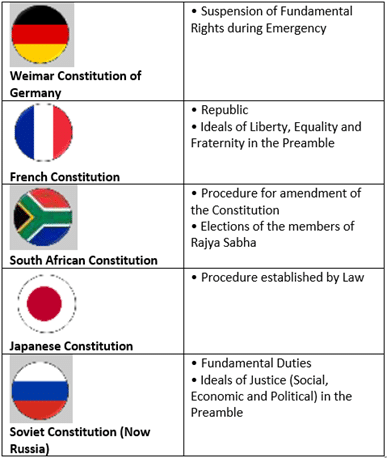
Which of the following atmospheric parameters increase as we move up in the mountains?
1. Temperature
2. Density of air
3. Pressure
Select the correct answer using the code given below.- a)2 and 3 only
- b)2 only
- c)1 and 3 only
- d)None
Correct answer is option 'D'. Can you explain this answer?
Which of the following atmospheric parameters increase as we move up in the mountains?
1. Temperature
2. Density of air
3. Pressure
Select the correct answer using the code given below.
1. Temperature
2. Density of air
3. Pressure
Select the correct answer using the code given below.
a)
2 and 3 only
b)
2 only
c)
1 and 3 only
d)
None
| | Abhishek Phogat answered |
Temperature pressure and density of air decreases when we move up....
Chapter doubts & questions for Tests - Additional Study Material for UPSC 2026 is part of UPSC CSE exam preparation. The chapters have been prepared according to the UPSC CSE exam syllabus. The Chapter doubts & questions, notes, tests & MCQs are made for UPSC CSE 2026 Exam. Find important definitions, questions, notes, meanings, examples, exercises, MCQs and online tests here.
Chapter doubts & questions of Tests - Additional Study Material for UPSC in English & Hindi are available as part of UPSC CSE exam. Download more important topics, notes, lectures and mock test series for UPSC CSE Exam by signing up for free.
Additional Study Material for UPSC18 videos|561 docs|160 tests |
