


All Exams > NEET > NCERT Textbooks, Tests & Solutions > All Questions
All questions of Plant Kingdom for NEET Exam
IMF द्वारा क्रय शक्ति समता की गणना के लिए आमतौर पर किस पद्धति का उपयोग किया जाता है?- a)सकल राष्ट्रीय उत्पाद
- b)शुद्ध घरेलू उत्पाद
- c)सकल राष्ट्रीय उत्पाद
- d)सकल घरेलु उत्पाद
Correct answer is option 'A'. Can you explain this answer?
IMF द्वारा क्रय शक्ति समता की गणना के लिए आमतौर पर किस पद्धति का उपयोग किया जाता है?
a)
सकल राष्ट्रीय उत्पाद
b)
शुद्ध घरेलू उत्पाद
c)
सकल राष्ट्रीय उत्पाद
d)
सकल घरेलु उत्पाद
 | Pranjal Mukherjee answered |
Method used by IMF to calculate purchasing power parity
The International Monetary Fund (IMF) uses the method of Gross Domestic Product (GDP) at Purchasing Power Parity (PPP) to calculate purchasing power parity. This method involves comparing the prices of goods and services in different countries to determine the relative value of currencies.
Explanation
Purchasing power parity is a measure of the economic productivity of a country that takes into account the differences in prices between countries. It is used to compare the standard of living of different countries by calculating the amount of goods and services that can be purchased with a given amount of money.
The method used by the IMF to calculate PPP involves the following steps:
1. Comparing prices: The prices of a basket of goods and services are compared between different countries. This basket of goods includes food, clothing, housing, and other consumer goods.
2. Measuring currency exchange rates: The exchange rates between currencies are measured to determine the relative value of currencies.
3. Calculating GDP: The GDP of each country is calculated based on the prices of the basket of goods and services and the exchange rates.
4. Adjusting for inflation: The GDP figures are adjusted for inflation to ensure that the prices of goods and services remain constant over time.
5. Comparing GDP: The GDP figures are then compared between countries to determine the purchasing power parity.
Conclusion
The method used by the IMF to calculate purchasing power parity is a useful tool for comparing the standard of living between countries. It takes into account the differences in prices and exchange rates and provides a more accurate picture of the relative value of currencies.
The International Monetary Fund (IMF) uses the method of Gross Domestic Product (GDP) at Purchasing Power Parity (PPP) to calculate purchasing power parity. This method involves comparing the prices of goods and services in different countries to determine the relative value of currencies.
Explanation
Purchasing power parity is a measure of the economic productivity of a country that takes into account the differences in prices between countries. It is used to compare the standard of living of different countries by calculating the amount of goods and services that can be purchased with a given amount of money.
The method used by the IMF to calculate PPP involves the following steps:
1. Comparing prices: The prices of a basket of goods and services are compared between different countries. This basket of goods includes food, clothing, housing, and other consumer goods.
2. Measuring currency exchange rates: The exchange rates between currencies are measured to determine the relative value of currencies.
3. Calculating GDP: The GDP of each country is calculated based on the prices of the basket of goods and services and the exchange rates.
4. Adjusting for inflation: The GDP figures are adjusted for inflation to ensure that the prices of goods and services remain constant over time.
5. Comparing GDP: The GDP figures are then compared between countries to determine the purchasing power parity.
Conclusion
The method used by the IMF to calculate purchasing power parity is a useful tool for comparing the standard of living between countries. It takes into account the differences in prices and exchange rates and provides a more accurate picture of the relative value of currencies.

Why are bryophytes referred to as "amphibians of the plant kingdom"?- a)They can live both on land and in water.
- b)They can change their reproductive methods.
- c)They have adaptations for both sexual and asexual reproduction.
- d)They are capable of moving between different habitats.
Correct answer is option 'A'. Can you explain this answer?
Why are bryophytes referred to as "amphibians of the plant kingdom"?
a)
They can live both on land and in water.
b)
They can change their reproductive methods.
c)
They have adaptations for both sexual and asexual reproduction.
d)
They are capable of moving between different habitats.
 | Saranya Joshi answered |
**Answer:**
The prominent phase in the life cycle of bryophytes is the **gametophyte**. Bryophytes are non-vascular plants that include mosses, liverworts, and hornworts. They have a unique life cycle that involves alternating generations of two distinct phases: the gametophyte and the sporophyte.
**Gametophyte Phase:**
The gametophyte is the dominant phase in the life cycle of bryophytes. It is the haploid (having one set of chromosomes) and gamete-producing phase. The gametophyte is the visible, leafy part of the plant that we commonly recognize as the moss or liverwort. It is the phase that carries out photosynthesis and produces the sex organs.
During the gametophyte phase, the moss or liverwort produces archegonia and antheridia. The archegonia are female sex organs that produce eggs, while the antheridia are male sex organs that produce sperm. The sperm requires water for fertilization to occur because they swim to the eggs through a film of water.
After fertilization, the zygote is formed, which develops into the sporophyte phase.
**Sporophyte Phase:**
The sporophyte phase is the diploid (having two sets of chromosomes) and spore-producing phase in the bryophyte life cycle. It is dependent on the gametophyte phase for nutrition and support.
The sporophyte phase develops from the fertilized zygote and remains attached to the gametophyte. It is a small, non-photosynthetic structure that consists of a foot, seta, and capsule. The foot is embedded in the gametophyte and absorbs nutrients. The seta is the stalk-like structure that elevates the capsule. The capsule contains sporogenous tissue, which undergoes meiosis to produce haploid spores.
When the spores are mature, the sporophyte releases them into the environment. These spores are dispersed by wind or water and, upon landing in a suitable environment, germinate to form new gametophytes. The spores give rise to protonemata, which are thread-like structures that develop into new gametophytes.
**Conclusion:**
In conclusion, the gametophyte phase is the prominent phase in the life cycle of bryophytes. It is the leafy, haploid phase that carries out photosynthesis and produces the sex organs. The sporophyte phase, although important for spore production, remains dependent on the gametophyte phase for nutrition and support.
The prominent phase in the life cycle of bryophytes is the **gametophyte**. Bryophytes are non-vascular plants that include mosses, liverworts, and hornworts. They have a unique life cycle that involves alternating generations of two distinct phases: the gametophyte and the sporophyte.
**Gametophyte Phase:**
The gametophyte is the dominant phase in the life cycle of bryophytes. It is the haploid (having one set of chromosomes) and gamete-producing phase. The gametophyte is the visible, leafy part of the plant that we commonly recognize as the moss or liverwort. It is the phase that carries out photosynthesis and produces the sex organs.
During the gametophyte phase, the moss or liverwort produces archegonia and antheridia. The archegonia are female sex organs that produce eggs, while the antheridia are male sex organs that produce sperm. The sperm requires water for fertilization to occur because they swim to the eggs through a film of water.
After fertilization, the zygote is formed, which develops into the sporophyte phase.
**Sporophyte Phase:**
The sporophyte phase is the diploid (having two sets of chromosomes) and spore-producing phase in the bryophyte life cycle. It is dependent on the gametophyte phase for nutrition and support.
The sporophyte phase develops from the fertilized zygote and remains attached to the gametophyte. It is a small, non-photosynthetic structure that consists of a foot, seta, and capsule. The foot is embedded in the gametophyte and absorbs nutrients. The seta is the stalk-like structure that elevates the capsule. The capsule contains sporogenous tissue, which undergoes meiosis to produce haploid spores.
When the spores are mature, the sporophyte releases them into the environment. These spores are dispersed by wind or water and, upon landing in a suitable environment, germinate to form new gametophytes. The spores give rise to protonemata, which are thread-like structures that develop into new gametophytes.
**Conclusion:**
In conclusion, the gametophyte phase is the prominent phase in the life cycle of bryophytes. It is the leafy, haploid phase that carries out photosynthesis and produces the sex organs. The sporophyte phase, although important for spore production, remains dependent on the gametophyte phase for nutrition and support.
Mycorrhizal roots of ____ are associated with some fungal symbionts.- a)Pinus
- b)Cedrus
- c)Cycas
- d)Ginkgo
Correct answer is option 'A'. Can you explain this answer?
Mycorrhizal roots of ____ are associated with some fungal symbionts.
a)
Pinus
b)
Cedrus
c)
Cycas
d)
Ginkgo
 | Nayanika Menon answered |
The mycorrhizal roots of Pinus are associated with some fungal symbionts.
Mycorrhizal roots are a type of root system that form a mutualistic association with certain fungi. This symbiotic relationship benefits both the plant and the fungi involved. The mycorrhizal association enhances the plant's ability to absorb nutrients from the soil, particularly phosphorus, while the fungi receive carbohydrates from the plant.
Pinus and Mycorrhizal Association:
Pinus, commonly known as pine trees, are known to form mycorrhizal associations with certain fungi. In particular, they form ectomycorrhizal associations, which involve fungal hyphae forming a sheath around the root tips without penetrating the root cells.
Benefits of Mycorrhizal Association for Pinus:
1. Enhanced Nutrient Absorption: The fungal hyphae extend into the soil, greatly increasing the surface area available for nutrient absorption. This allows Pinus to access nutrients, such as phosphorus, that are typically less available in the soil.
2. Water Uptake: The mycorrhizal association also improves the plant's ability to take up water from the soil. The extensive fungal network helps in the absorption and transportation of water to the plant roots.
3. Disease Resistance: The fungi involved in the mycorrhizal association can provide a level of protection against soil-borne pathogens. They may compete with pathogens for resources or produce compounds that inhibit their growth.
4. Environmental Adaptation: The mycorrhizal association can help Pinus trees adapt to various environmental conditions, such as drought or nutrient-poor soils. The fungi enhance the plant's ability to withstand stress and improve its overall fitness.
Other Options:
- Cedrus: Cedrus, commonly known as cedar trees, also form mycorrhizal associations. However, the specific fungal symbionts may differ from those associated with Pinus.
- Cycas: Cycas, a type of gymnosperm, also forms mycorrhizal associations. However, the specific fungal symbionts may differ from those associated with Pinus.
- Ginkgo: Ginkgo, another gymnosperm, is known to form mycorrhizal associations. However, the specific fungal symbionts may differ from those associated with Pinus.
In conclusion, the mycorrhizal roots of Pinus are associated with certain fungal symbionts, forming an ectomycorrhizal association. This association provides numerous benefits to the plant, including enhanced nutrient absorption, water uptake, disease resistance, and environmental adaptation.
Mycorrhizal roots are a type of root system that form a mutualistic association with certain fungi. This symbiotic relationship benefits both the plant and the fungi involved. The mycorrhizal association enhances the plant's ability to absorb nutrients from the soil, particularly phosphorus, while the fungi receive carbohydrates from the plant.
Pinus and Mycorrhizal Association:
Pinus, commonly known as pine trees, are known to form mycorrhizal associations with certain fungi. In particular, they form ectomycorrhizal associations, which involve fungal hyphae forming a sheath around the root tips without penetrating the root cells.
Benefits of Mycorrhizal Association for Pinus:
1. Enhanced Nutrient Absorption: The fungal hyphae extend into the soil, greatly increasing the surface area available for nutrient absorption. This allows Pinus to access nutrients, such as phosphorus, that are typically less available in the soil.
2. Water Uptake: The mycorrhizal association also improves the plant's ability to take up water from the soil. The extensive fungal network helps in the absorption and transportation of water to the plant roots.
3. Disease Resistance: The fungi involved in the mycorrhizal association can provide a level of protection against soil-borne pathogens. They may compete with pathogens for resources or produce compounds that inhibit their growth.
4. Environmental Adaptation: The mycorrhizal association can help Pinus trees adapt to various environmental conditions, such as drought or nutrient-poor soils. The fungi enhance the plant's ability to withstand stress and improve its overall fitness.
Other Options:
- Cedrus: Cedrus, commonly known as cedar trees, also form mycorrhizal associations. However, the specific fungal symbionts may differ from those associated with Pinus.
- Cycas: Cycas, a type of gymnosperm, also forms mycorrhizal associations. However, the specific fungal symbionts may differ from those associated with Pinus.
- Ginkgo: Ginkgo, another gymnosperm, is known to form mycorrhizal associations. However, the specific fungal symbionts may differ from those associated with Pinus.
In conclusion, the mycorrhizal roots of Pinus are associated with certain fungal symbionts, forming an ectomycorrhizal association. This association provides numerous benefits to the plant, including enhanced nutrient absorption, water uptake, disease resistance, and environmental adaptation.
______ systems of classification were based on natural affinities among the organisms.- a)Artificial
- b)Natural
- c)Phylogenetic
- d)Sexual
Correct answer is option 'B'. Can you explain this answer?
______ systems of classification were based on natural affinities among the organisms.
a)
Artificial
b)
Natural
c)
Phylogenetic
d)
Sexual
 | Pranav Choudhary answered |
Natural systems of classification:
Natural systems of classification are based on the natural affinities among organisms rather than arbitrary characteristics. These systems aim to reflect the evolutionary relationships between different species.
Characteristics of natural systems:
- Natural systems group organisms based on their shared evolutionary history and genetic similarities.
- They consider morphological, anatomical, embryological, and molecular characteristics to determine relationships between organisms.
- Natural systems aim to reflect the true evolutionary relationships between species, resulting in a more accurate classification.
Importance of natural systems:
- Natural systems provide a more accurate understanding of the evolutionary history and relationships between organisms.
- They help in studying the diversity of life forms and understanding how different species are related to each other.
- Natural systems help in identifying common ancestors and tracing the evolutionary pathways of different species.
Example of natural system:
The classification system developed by Carl Linnaeus, which is based on shared physical characteristics, is an example of a natural system of classification. This system has been further refined using molecular data to reflect the true evolutionary relationships between organisms.
Identify the plans shown in figure and select correct option.
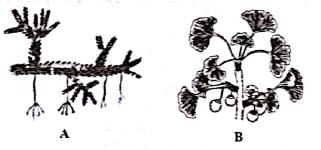
A
(a) Sphagnum
(b) Selaginella
(c) Selsginella
(d) Cycas
B
(a) Dictyota
(b) Ginkgo
(c) Salvinia
(d) Ginkgo- a)a
- b)b
- c)c
- d)d
Correct answer is option 'B'. Can you explain this answer?
Identify the plans shown in figure and select correct option.
A
(a) Sphagnum
(b) Selaginella
(c) Selsginella
(d) Cycas
B
(a) Dictyota
(b) Ginkgo
(c) Salvinia
(d) Ginkgo
A
(a) Sphagnum
(b) Selaginella
(c) Selsginella
(d) Cycas
B
(a) Dictyota
(b) Ginkgo
(c) Salvinia
(d) Ginkgo
a)
a
b)
b
c)
c
d)
d
 | Vivek Patel answered |
Plants given in the figure are A- Selaginella and B-Ginkgo respectively. Selaginella is a trailing, hanging or erect evergreen lycopod(Pteridophyte).
Ginkgo biloba(a Gymnosperm) has not changed for the last several millions of years since its appearance in triassic period. It is also called living fossil. The plant has survived due to interest shown by horticulturists. It has natural immunity to several plant diseases.
Ginkgo biloba(a Gymnosperm) has not changed for the last several millions of years since its appearance in triassic period. It is also called living fossil. The plant has survived due to interest shown by horticulturists. It has natural immunity to several plant diseases.
Read the given statements and select the correct options. Statement 1: Bryophytes play a significant role in plant succession on bare rocks and soil.Statement 2: They contribute to the breakdown of rocks and enrich the soil, making it more suitable for higher plants.- a)Both statements 1 and 2 are correct and statement is the correct explanation of statement 1.
- b)Both statement 1 and 2 are correct but statement is not the correct explanation of statement 1.
- c)Statement 1 is correct and statement 2 is incorrect.
- d)Both statement 1 and 2 are incorrect.
Correct answer is option 'A'. Can you explain this answer?
Read the given statements and select the correct options.
Statement 1: Bryophytes play a significant role in plant succession on bare rocks and soil.
Statement 2: They contribute to the breakdown of rocks and enrich the soil, making it more suitable for higher plants.
a)
Both statements 1 and 2 are correct and statement is the correct explanation of statement 1.
b)
Both statement 1 and 2 are correct but statement is not the correct explanation of statement 1.
c)
Statement 1 is correct and statement 2 is incorrect.
d)
Both statement 1 and 2 are incorrect.
| | Vivek Patel answered |
Bryophytes are known as 'amphibians of plane kingdom' because they are adapted to land as well as water habitats. In their vegetative structure, bryophytes, have become adapted to land. But they depend on water for sexual reproduction because the swimming habit is retained by their sperms.
Batrachospermum is a- a)red algae of sea
- b)brown algae
- c)blue algae
- d)red algae of freshwater
Correct answer is option 'D'. Can you explain this answer?
Batrachospermum is a
a)
red algae of sea
b)
brown algae
c)
blue algae
d)
red algae of freshwater
| | Anjali Chauhan answered |
Extracted Compounds from Red and Brown Algae
Algae are diverse and abundant photosynthetic organisms found in aquatic environments. They belong to the plant kingdom and can be divided into different groups based on their pigmentation. Two common types of algae that are commercially important are red algae (Rhodophyta) and brown algae (Phaeophyta). These algae are known for their unique biochemical composition, which allows for the extraction of various commercially valuable compounds.
Algin and Carrageen
One of the most commercially extracted compounds from red and brown algae are alginates and carrageenans. These compounds are polysaccharides, which are long chains of sugar molecules. Alginates are extracted from brown algae, while carrageenans are extracted from red algae.
1. Alginates:
- Alginates are extracted from brown algae such as kelp and bladderwrack.
- They have various industrial applications due to their unique properties, including being highly water-absorbent and having a gel-like consistency.
- Alginates are commonly used as thickeners, stabilizers, and emulsifiers in the food industry.
- They are also used in pharmaceuticals, textiles, and as a component in dental impressions.
2. Carrageenans:
- Carrageenans are extracted from red algae like Irish moss and Chondrus crispus.
- They are used as gelling agents, thickeners, and stabilizers in the food industry.
- Carrageenans have different types (kappa, iota, and lambda) with varying gelling properties, making them suitable for a wide range of food products.
- Apart from food applications, carrageenans are used in cosmetics, pharmaceuticals, and even in some scientific research applications.
Other Extracted Compounds
While alginates and carrageenans are the most commercially important compounds extracted from red and brown algae, these algae also contain other valuable compounds:
1. Glucose and Sucrose:
- Algae, including red and brown algae, can produce glucose and sucrose through photosynthesis.
- Glucose and sucrose are simple sugars that serve as a source of energy for the algae themselves.
- However, these sugars are not typically commercially extracted from algae, as they are readily available from other sources such as sugarcane and corn.
2. Starch and Cellulose:
- Starch and cellulose are polysaccharides found in many plants, including algae.
- While they can be extracted from some types of algae, their commercial extraction is more commonly done from terrestrial sources such as corn, wheat, and potatoes.
- Starch is widely used in the food industry as a thickener and stabilizer, while cellulose is used for various applications such as paper production and in the pharmaceutical industry.
3. Chlorophyll and Carotenoids:
- Chlorophyll and carotenoids are pigments responsible for the characteristic colors of algae.
- These compounds are not typically commercially extracted from algae, as their extraction requires extensive processing and purification.
- Instead, commercially available chlorophyll and carotenoids are often derived from other sources such as spinach and carrots.
In conclusion, the commercially extracted compounds from certain red and brown algae are alginates and carrageenans. These polysaccharides have unique properties that make them valuable in various industries such as
Algae are diverse and abundant photosynthetic organisms found in aquatic environments. They belong to the plant kingdom and can be divided into different groups based on their pigmentation. Two common types of algae that are commercially important are red algae (Rhodophyta) and brown algae (Phaeophyta). These algae are known for their unique biochemical composition, which allows for the extraction of various commercially valuable compounds.
Algin and Carrageen
One of the most commercially extracted compounds from red and brown algae are alginates and carrageenans. These compounds are polysaccharides, which are long chains of sugar molecules. Alginates are extracted from brown algae, while carrageenans are extracted from red algae.
1. Alginates:
- Alginates are extracted from brown algae such as kelp and bladderwrack.
- They have various industrial applications due to their unique properties, including being highly water-absorbent and having a gel-like consistency.
- Alginates are commonly used as thickeners, stabilizers, and emulsifiers in the food industry.
- They are also used in pharmaceuticals, textiles, and as a component in dental impressions.
2. Carrageenans:
- Carrageenans are extracted from red algae like Irish moss and Chondrus crispus.
- They are used as gelling agents, thickeners, and stabilizers in the food industry.
- Carrageenans have different types (kappa, iota, and lambda) with varying gelling properties, making them suitable for a wide range of food products.
- Apart from food applications, carrageenans are used in cosmetics, pharmaceuticals, and even in some scientific research applications.
Other Extracted Compounds
While alginates and carrageenans are the most commercially important compounds extracted from red and brown algae, these algae also contain other valuable compounds:
1. Glucose and Sucrose:
- Algae, including red and brown algae, can produce glucose and sucrose through photosynthesis.
- Glucose and sucrose are simple sugars that serve as a source of energy for the algae themselves.
- However, these sugars are not typically commercially extracted from algae, as they are readily available from other sources such as sugarcane and corn.
2. Starch and Cellulose:
- Starch and cellulose are polysaccharides found in many plants, including algae.
- While they can be extracted from some types of algae, their commercial extraction is more commonly done from terrestrial sources such as corn, wheat, and potatoes.
- Starch is widely used in the food industry as a thickener and stabilizer, while cellulose is used for various applications such as paper production and in the pharmaceutical industry.
3. Chlorophyll and Carotenoids:
- Chlorophyll and carotenoids are pigments responsible for the characteristic colors of algae.
- These compounds are not typically commercially extracted from algae, as their extraction requires extensive processing and purification.
- Instead, commercially available chlorophyll and carotenoids are often derived from other sources such as spinach and carrots.
In conclusion, the commercially extracted compounds from certain red and brown algae are alginates and carrageenans. These polysaccharides have unique properties that make them valuable in various industries such as
Cup-shaped chloroplast is present in- a)Spirogyra
- b)Chlamydomonas
- c)Ulothrix
- d)Chara
Correct answer is option 'B'. Can you explain this answer?
Cup-shaped chloroplast is present in
a)
Spirogyra
b)
Chlamydomonas
c)
Ulothrix
d)
Chara
| | Shounak Dasgupta answered |
Ulothrix
Ulothrix is an example of a filamentous alga. It is a green alga that belongs to the class of Chlorophyceae.
Characteristics of Ulothrix:
- Ulothrix is a filamentous alga that forms long chains or filaments of cells.
- Each cell contains a single chloroplast.
- It reproduces asexually through zoospores that are released from specialized cells called zoosporangia.
- Ulothrix can also reproduce sexually through the fusion of gametes.
- It is commonly found in freshwater habitats such as ponds, lakes, and streams.
Comparison with other options:
- Volvox is a colonial green alga that forms spherical colonies of cells.
- Porphyra is a red alga that is commonly known as nori and is used in the production of sushi wraps.
- Fucus is a brown alga commonly known as rockweed or bladderwrack.
Therefore, among the options provided, Ulothrix is the example of a filamentous alga.
Ulothrix is an example of a filamentous alga. It is a green alga that belongs to the class of Chlorophyceae.
Characteristics of Ulothrix:
- Ulothrix is a filamentous alga that forms long chains or filaments of cells.
- Each cell contains a single chloroplast.
- It reproduces asexually through zoospores that are released from specialized cells called zoosporangia.
- Ulothrix can also reproduce sexually through the fusion of gametes.
- It is commonly found in freshwater habitats such as ponds, lakes, and streams.
Comparison with other options:
- Volvox is a colonial green alga that forms spherical colonies of cells.
- Porphyra is a red alga that is commonly known as nori and is used in the production of sushi wraps.
- Fucus is a brown alga commonly known as rockweed or bladderwrack.
Therefore, among the options provided, Ulothrix is the example of a filamentous alga.
Major photosynthetic pigments in green algae are- a)Chl a and b
- b)Chl a, c and fucoxanthin
- c)Chl a, d and phycoerythrin
- d)Chl a and c
Correct answer is option 'A'. Can you explain this answer?
Major photosynthetic pigments in green algae are
a)
Chl a and b
b)
Chl a, c and fucoxanthin
c)
Chl a, d and phycoerythrin
d)
Chl a and c
 | Sneha Datta answered |
Photosynthetic pigments in Green Algae
Green algae are photosynthetic organisms that contain various pigments that enable them to carry out photosynthesis. The major photosynthetic pigments in green algae are as follows:
Chlorophyll a and b
- Chlorophyll a is the most important pigment in green algae, as it is responsible for capturing light energy during photosynthesis.
- Chlorophyll b is an accessory pigment that helps in capturing light energy and transferring it to chlorophyll a.
- These pigments give green algae their characteristic green color.
Other pigments
- Carotenoids: These are pigments that are responsible for the yellow, orange, and red colors seen in some species of green algae.
- Xanthophylls: These are yellow pigments that, like chlorophyll b, help in capturing light energy and transferring it to chlorophyll a.
Function of photosynthetic pigments in green algae
Photosynthetic pigments in green algae play a crucial role in capturing light energy and converting it into chemical energy during photosynthesis. Chlorophyll a is the primary pigment responsible for this process, while other pigments such as chlorophyll b, carotenoids, and xanthophylls play supporting roles.
Conclusion
In conclusion, the major photosynthetic pigments in green algae are chlorophyll a and b, which give them their characteristic green color. These pigments are responsible for capturing light energy during photosynthesis and converting it into chemical energy. Other pigments such as carotenoids and xanthophylls also play important roles in supporting this process.
Green algae are photosynthetic organisms that contain various pigments that enable them to carry out photosynthesis. The major photosynthetic pigments in green algae are as follows:
Chlorophyll a and b
- Chlorophyll a is the most important pigment in green algae, as it is responsible for capturing light energy during photosynthesis.
- Chlorophyll b is an accessory pigment that helps in capturing light energy and transferring it to chlorophyll a.
- These pigments give green algae their characteristic green color.
Other pigments
- Carotenoids: These are pigments that are responsible for the yellow, orange, and red colors seen in some species of green algae.
- Xanthophylls: These are yellow pigments that, like chlorophyll b, help in capturing light energy and transferring it to chlorophyll a.
Function of photosynthetic pigments in green algae
Photosynthetic pigments in green algae play a crucial role in capturing light energy and converting it into chemical energy during photosynthesis. Chlorophyll a is the primary pigment responsible for this process, while other pigments such as chlorophyll b, carotenoids, and xanthophylls play supporting roles.
Conclusion
In conclusion, the major photosynthetic pigments in green algae are chlorophyll a and b, which give them their characteristic green color. These pigments are responsible for capturing light energy during photosynthesis and converting it into chemical energy. Other pigments such as carotenoids and xanthophylls also play important roles in supporting this process.
Read the given statements about algae and select the correct option.
(i) Plant body is thalloid.
(ii) largely aquatic.
(iii) Reproduction by vegetative, asexual and sexual methods.
(iv) Chlamydomonas, Volvox and Ulothrix are the multicellular algae.- a)Statements (i) and (ii) are true
- b)Statements (ii) and (iii) are true
- c)Statements (i), (ii) and (iii) are true
- d)All statements are true
Correct answer is option 'C'. Can you explain this answer?
Read the given statements about algae and select the correct option.
(i) Plant body is thalloid.
(ii) largely aquatic.
(iii) Reproduction by vegetative, asexual and sexual methods.
(iv) Chlamydomonas, Volvox and Ulothrix are the multicellular algae.
(i) Plant body is thalloid.
(ii) largely aquatic.
(iii) Reproduction by vegetative, asexual and sexual methods.
(iv) Chlamydomonas, Volvox and Ulothrix are the multicellular algae.
a)
Statements (i) and (ii) are true
b)
Statements (ii) and (iii) are true
c)
Statements (i), (ii) and (iii) are true
d)
All statements are true
 | Megha Joshi answered |
Answer:
Algae are a diverse group of photosynthetic organisms that belong to the kingdom Protista. They are found in a variety of habitats including freshwater, marine environments, and even on land. The given statements about algae are as follows:
(i) Plant body is thalloid:
The term "thalloid" refers to the body structure of algae. Algae do not have true roots, stems, or leaves like higher plants. Instead, they have a simple, undifferentiated thallus that can be unicellular or multicellular. The thallus is the primary site of photosynthesis in algae.
(ii) Largely aquatic:
Most algae are aquatic organisms, meaning they primarily live in water. They can be found in various aquatic environments such as freshwater lakes, rivers, ponds, and oceans. However, some algae are also capable of surviving in moist terrestrial habitats.
(iii) Reproduction by vegetative, asexual, and sexual methods:
Algae exhibit a wide range of reproductive strategies. They can reproduce vegetatively through fragmentation, where a portion of the thallus breaks off and develops into a new individual. Algae can also reproduce asexually through processes like binary fission or spore formation. Additionally, algae can reproduce sexually through the fusion of gametes.
(iv) Chlamydomonas, Volvox, and Ulothrix are multicellular algae:
Chlamydomonas, Volvox, and Ulothrix are examples of multicellular algae. Chlamydomonas is a unicellular green alga, while Volvox and Ulothrix are filamentous multicellular algae. These organisms demonstrate the diversity of algae in terms of their cellular organization.
Conclusion:
Based on the given statements, option (c) "Statements (i), (ii), and (iii) are true" is the correct answer. The statements accurately describe various characteristics of algae, including their thalloid plant body, largely aquatic habitat, and the ability to reproduce through vegetative, asexual, and sexual methods. Furthermore, the statement about Chlamydomonas, Volvox, and Ulothrix being multicellular algae is also correct.
Algae are a diverse group of photosynthetic organisms that belong to the kingdom Protista. They are found in a variety of habitats including freshwater, marine environments, and even on land. The given statements about algae are as follows:
(i) Plant body is thalloid:
The term "thalloid" refers to the body structure of algae. Algae do not have true roots, stems, or leaves like higher plants. Instead, they have a simple, undifferentiated thallus that can be unicellular or multicellular. The thallus is the primary site of photosynthesis in algae.
(ii) Largely aquatic:
Most algae are aquatic organisms, meaning they primarily live in water. They can be found in various aquatic environments such as freshwater lakes, rivers, ponds, and oceans. However, some algae are also capable of surviving in moist terrestrial habitats.
(iii) Reproduction by vegetative, asexual, and sexual methods:
Algae exhibit a wide range of reproductive strategies. They can reproduce vegetatively through fragmentation, where a portion of the thallus breaks off and develops into a new individual. Algae can also reproduce asexually through processes like binary fission or spore formation. Additionally, algae can reproduce sexually through the fusion of gametes.
(iv) Chlamydomonas, Volvox, and Ulothrix are multicellular algae:
Chlamydomonas, Volvox, and Ulothrix are examples of multicellular algae. Chlamydomonas is a unicellular green alga, while Volvox and Ulothrix are filamentous multicellular algae. These organisms demonstrate the diversity of algae in terms of their cellular organization.
Conclusion:
Based on the given statements, option (c) "Statements (i), (ii), and (iii) are true" is the correct answer. The statements accurately describe various characteristics of algae, including their thalloid plant body, largely aquatic habitat, and the ability to reproduce through vegetative, asexual, and sexual methods. Furthermore, the statement about Chlamydomonas, Volvox, and Ulothrix being multicellular algae is also correct.
Which of the following is classified as eukaryotic?- a)Bacteria
- b)Archaea
- c)Prokaryotes
- d)Protista
Correct answer is option 'D'. Can you explain this answer?
Which of the following is classified as eukaryotic?
a)
Bacteria
b)
Archaea
c)
Prokaryotes
d)
Protista
| | Swati Verma answered |
All species can be defined as either prokaryotes or eukaryotes. Prokaryotes are always single-celled and have no membrane-bound organelles. All bacteria and archaea are prokaryotes. Eukaryotes can be unicellular or multicellular and have membrane-bound organelles, including a nucleus. Protista is a sub-category of eukaryotes that are unicellular.
Select the incorrect pair.- a)Numerical taxonomy - All observable characteristics
- b)Cytotaxonomy - Cytological information
- c)Chemotaxonomy - Chromosome number and structure
- d)Cladistic taxonomy - Origin from a common ancestor
Correct answer is option 'C'. Can you explain this answer?
Select the incorrect pair.
a)
Numerical taxonomy - All observable characteristics
b)
Cytotaxonomy - Cytological information
c)
Chemotaxonomy - Chromosome number and structure
d)
Cladistic taxonomy - Origin from a common ancestor
 | Geetika Shah answered |
Chemotaxonomy is based upon the characteristics of various chemical constituents of organisms. Chemical constituents of plant species have been found to be unvarying and do not change easily. Chemical characters have also helped in establishing relationships and statistical evaluation of taxonomic information.
The "seaweeds" that form the under water forest are- a)Kelps
- b)Laminaria
- c)Macrocystis
- d)All of these
Correct answer is option 'D'. Can you explain this answer?
The "seaweeds" that form the under water forest are
a)
Kelps
b)
Laminaria
c)
Macrocystis
d)
All of these
| | Rajeev Shah answered |
Types of Seaweeds in the Underwater Forest:
Kelps:
Kelps are large brown seaweeds that belong to the order Laminariales. They are commonly found in cold and nutrient-rich waters, forming dense underwater forests. Kelps provide habitat and food for a variety of marine organisms.
Laminaria:
Laminaria is a genus of brown seaweeds that are commonly known as kelp. They are characterized by their large size and complex structure, which provide shelter and protection for many marine species.
Macrocystis:
Macrocystis is a genus of giant kelp that can grow up to 60 meters in length. These seaweeds are vital components of underwater ecosystems, supporting a diverse range of marine life.
All of these:
All of the above-mentioned seaweeds play a crucial role in the formation of underwater forests. They provide oxygen, food, and shelter for numerous marine organisms, contributing to the overall health and biodiversity of marine ecosystems. The presence of these seaweeds is essential for maintaining the balance and stability of underwater habitats.
Kelps:
Kelps are large brown seaweeds that belong to the order Laminariales. They are commonly found in cold and nutrient-rich waters, forming dense underwater forests. Kelps provide habitat and food for a variety of marine organisms.
Laminaria:
Laminaria is a genus of brown seaweeds that are commonly known as kelp. They are characterized by their large size and complex structure, which provide shelter and protection for many marine species.
Macrocystis:
Macrocystis is a genus of giant kelp that can grow up to 60 meters in length. These seaweeds are vital components of underwater ecosystems, supporting a diverse range of marine life.
All of these:
All of the above-mentioned seaweeds play a crucial role in the formation of underwater forests. They provide oxygen, food, and shelter for numerous marine organisms, contributing to the overall health and biodiversity of marine ecosystems. The presence of these seaweeds is essential for maintaining the balance and stability of underwater habitats.
The spread of living pteridophytes is limited and is restricted to narrow geographical region because of - a)gametophytic growth needs cool, damp and shady places
- b)requirement of water for fertilization
- c)absence of stomata in leaf and absence of vascular tissue
- d)both (a) and (b)
Correct answer is option 'D'. Can you explain this answer?
The spread of living pteridophytes is limited and is restricted to narrow geographical region because of
a)
gametophytic growth needs cool, damp and shady places
b)
requirement of water for fertilization
c)
absence of stomata in leaf and absence of vascular tissue
d)
both (a) and (b)
| | Aditi Datta answered |
Introduction:
The spread of living pteridophytes is limited and restricted to narrow geographical regions due to certain requirements and limitations in their growth and reproduction. The correct answer is option 'D', which states that the spread of living pteridophytes is limited due to the need for cool, damp, and shady places for gametophytic growth, as well as the requirement of water for fertilization. Let's delve into the details of each of these factors.
Explanation:
Gametophytic growth needs cool, damp, and shady places:
- The gametophytic phase of pteridophytes is an independent, free-living phase where fertilization occurs.
- The gametophytes of pteridophytes require a suitable environment to grow and reproduce.
- Cool, damp, and shady places provide the necessary conditions for the survival and growth of gametophytes.
- These conditions ensure sufficient moisture and protection from direct sunlight, which can be detrimental to gametophytic growth.
- Therefore, the spread of living pteridophytes is limited to regions that offer such environments, restricting their geographical distribution.
Requirement of water for fertilization:
- Pteridophytes are non-flowering plants, and their reproductive process involves the need for water for fertilization.
- The male gametes (sperm) are flagellated and require water to swim to the female gametes (eggs) for fertilization.
- This water-dependent mode of fertilization restricts the dispersal of pteridophyte species.
- Pteridophytes cannot reproduce in dry environments or areas lacking sufficient water bodies.
- Therefore, the geographical spread of living pteridophytes is limited to regions with abundant water sources, such as near rivers, streams, or damp habitats.
Conclusion:
The limited spread of living pteridophytes is primarily due to the requirement of cool, damp, and shady places for gametophytic growth and the necessity of water for fertilization. These factors restrict their geographical distribution and confine them to specific regions that offer suitable environmental conditions for their survival and reproduction.
The spread of living pteridophytes is limited and restricted to narrow geographical regions due to certain requirements and limitations in their growth and reproduction. The correct answer is option 'D', which states that the spread of living pteridophytes is limited due to the need for cool, damp, and shady places for gametophytic growth, as well as the requirement of water for fertilization. Let's delve into the details of each of these factors.
Explanation:
Gametophytic growth needs cool, damp, and shady places:
- The gametophytic phase of pteridophytes is an independent, free-living phase where fertilization occurs.
- The gametophytes of pteridophytes require a suitable environment to grow and reproduce.
- Cool, damp, and shady places provide the necessary conditions for the survival and growth of gametophytes.
- These conditions ensure sufficient moisture and protection from direct sunlight, which can be detrimental to gametophytic growth.
- Therefore, the spread of living pteridophytes is limited to regions that offer such environments, restricting their geographical distribution.
Requirement of water for fertilization:
- Pteridophytes are non-flowering plants, and their reproductive process involves the need for water for fertilization.
- The male gametes (sperm) are flagellated and require water to swim to the female gametes (eggs) for fertilization.
- This water-dependent mode of fertilization restricts the dispersal of pteridophyte species.
- Pteridophytes cannot reproduce in dry environments or areas lacking sufficient water bodies.
- Therefore, the geographical spread of living pteridophytes is limited to regions with abundant water sources, such as near rivers, streams, or damp habitats.
Conclusion:
The limited spread of living pteridophytes is primarily due to the requirement of cool, damp, and shady places for gametophytic growth and the necessity of water for fertilization. These factors restrict their geographical distribution and confine them to specific regions that offer suitable environmental conditions for their survival and reproduction.
The given diagram shows: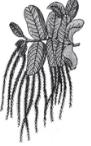
- a)An alga that lacks flagellated cells
- b)A liverwort
- c) A heterosporous pteridophyte
- d)A gymnosperm with non motile sperms
Correct answer is option 'C'. Can you explain this answer?
The given diagram shows:
a)
An alga that lacks flagellated cells
b)
A liverwort
c)
A heterosporous pteridophyte
d)
A gymnosperm with non motile sperms
 | Ambition Institute answered |
Genera like Selaginella and Salvinia which produce two kinds of spores, macro (large) and micro (small) spores, are known as heterosporous. The megaspores and microspores germinate and give rise to female and male gametophytes, respectively
A heterosporous pteridophyte
SALVINIA
SALVINIA
Green algae usually have a rigid cell wall made of an inner layer of _______ and an outer layer of ________- a)cellulose, cellulose
- b)pectose, pectose
- c)pectose, cellulose
- d)cellulose, pectose
Correct answer is option 'D'. Can you explain this answer?
Green algae usually have a rigid cell wall made of an inner layer of _______ and an outer layer of ________
a)
cellulose, cellulose
b)
pectose, pectose
c)
pectose, cellulose
d)
cellulose, pectose
| | Devansh Rane answered |
Green algae are a diverse group of eukaryotic algae that are primarily aquatic, photosynthetic, and contain chlorophyll a and b. They are characterized by their rigid cell wall structure, which is composed of different materials. The rigid cell wall is a crucial feature that provides structural support and protection to the cell.
Composition of cell wall:
The cell wall of green algae consists of two distinct layers, an inner layer made of cellulose and an outer layer made of pectose.
Cellulose:
Cellulose is a complex carbohydrate that is the primary component of the plant cell wall. It is a linear polymer of glucose molecules and forms a strong, rigid structure that provides mechanical strength to the cell wall.
Pectose:
Pectose is another complex polysaccharide that is found in the outer layer of the cell wall of green algae. It is composed of galacturonic acid and other sugars and is responsible for imparting flexibility and elasticity to the cell wall.
Functions of cell wall:
The cell wall of green algae plays several important functions, including:
- Providing structural support and protection to the cell
- Regulating the exchange of materials between the cell and its environment
- Maintaining the shape of the cell
- Preventing the cell from bursting due to osmotic pressure
Conclusion:
In conclusion, the cell wall of green algae is composed of an inner layer of cellulose and an outer layer of pectose. This rigid cell wall provides structural support and protection to the cell, allowing it to maintain its shape and prevent it from bursting due to osmotic pressure.
Composition of cell wall:
The cell wall of green algae consists of two distinct layers, an inner layer made of cellulose and an outer layer made of pectose.
Cellulose:
Cellulose is a complex carbohydrate that is the primary component of the plant cell wall. It is a linear polymer of glucose molecules and forms a strong, rigid structure that provides mechanical strength to the cell wall.
Pectose:
Pectose is another complex polysaccharide that is found in the outer layer of the cell wall of green algae. It is composed of galacturonic acid and other sugars and is responsible for imparting flexibility and elasticity to the cell wall.
Functions of cell wall:
The cell wall of green algae plays several important functions, including:
- Providing structural support and protection to the cell
- Regulating the exchange of materials between the cell and its environment
- Maintaining the shape of the cell
- Preventing the cell from bursting due to osmotic pressure
Conclusion:
In conclusion, the cell wall of green algae is composed of an inner layer of cellulose and an outer layer of pectose. This rigid cell wall provides structural support and protection to the cell, allowing it to maintain its shape and prevent it from bursting due to osmotic pressure.
Read the following statements and select the incorrect ones:(a) Mosses have an elaborate mechanism of spore dispersal.
(b) In liverworts, the haploid free-living sporophyte is formed by spore germination.
(c) Vegetative reproduction in Polytrichum occurs by budding in the secondary protonema.
(d) Marchantia is a heterosporous bryophyte.
(e) Growth of bog moss ultimately fills ponds and lakes with soil
- a)(a), (b) and (c)
- b)(d) and (e) only
- c)(b) and (d) only
- d)All except (a)
Correct answer is option 'C'. Can you explain this answer?
Read the following statements and select the incorrect ones:
(a) Mosses have an elaborate mechanism of spore dispersal.
(b) In liverworts, the haploid free-living sporophyte is formed by spore germination.
(c) Vegetative reproduction in Polytrichum occurs by budding in the secondary protonema.
(d) Marchantia is a heterosporous bryophyte.
(e) Growth of bog moss ultimately fills ponds and lakes with soil
(b) In liverworts, the haploid free-living sporophyte is formed by spore germination.
(c) Vegetative reproduction in Polytrichum occurs by budding in the secondary protonema.
(d) Marchantia is a heterosporous bryophyte.
(e) Growth of bog moss ultimately fills ponds and lakes with soil
a)
(a), (b) and (c)
b)
(d) and (e) only
c)
(b) and (d) only
d)
All except (a)
 | Arien Instructors answered |
Correct answer: 3. (b) and (d) only
Explanation:
- Statement (b) is incorrect because liverworts have a haploid gametophyte and a diploid sporophyte. The sporophyte is not free-living and does not form by spore germination.
- Statement (d) is incorrect because Marchantia is not a heterosporous bryophyte; it is a homosporous liverwort.
- Statement (a) is correct; mosses do have an elaborate mechanism of spore dispersal.
- Statement (c) is correct; vegetative reproduction in Polytrichum occurs by budding in the secondary protonema.
- Statement (e) is correct; bog moss growth can contribute to the formation of peatlands by filling ponds and lakes with soil.
Which type of sexual reproduction is found in Volvox?- a)Isogamous
- b)Anisogamous
- c)Oogamous
- d)All of these
Correct answer is option 'C'. Can you explain this answer?
Which type of sexual reproduction is found in Volvox?
a)
Isogamous
b)
Anisogamous
c)
Oogamous
d)
All of these
| | Sharmila Banerjee answered |
**Oogamous Sexual Reproduction in Volvox**
**Introduction:**
Volvox is a colonial green algae that exhibits a complex life cycle and sexual reproduction. It is a multicellular organism composed of numerous individual cells that are interconnected to form a spherical colony.
**Types of Sexual Reproduction:**
There are three types of sexual reproduction commonly found in algae, including Volvox:
**1. Isogamous Reproduction:**
In isogamous reproduction, the gametes are morphologically similar and indistinguishable. They are usually motile and flagellated. However, Volvox does not undergo isogamous reproduction.
**2. Anisogamous Reproduction:**
In anisogamous reproduction, the gametes are morphologically different. There are two types of gametes: smaller non-motile gametes (eggs) and larger motile gametes (sperm). They are involved in the fertilization process. However, Volvox does not undergo anisogamous reproduction.
**3. Oogamous Reproduction:**
In oogamous reproduction, the gametes are morphologically distinct. There are two types of gametes: smaller non-motile eggs and larger motile sperm. The sperm is usually flagellated and actively moves towards the egg for fertilization. Volvox undergoes oogamous reproduction.
**Oogamous Reproduction in Volvox:**
Volvox exhibits oogamous reproduction, where the female colonies produce eggs and the male colonies produce sperm. The male colonies release their sperm into the surrounding water, and the sperm actively swim towards the female colonies. The sperm then fuse with the eggs to form zygotes. The zygotes develop into new colonies that are released from the parent colonies.
This type of sexual reproduction ensures genetic diversity among the offspring and increases the chances of successful reproduction. It also allows for the exchange of genetic material between different colonies, contributing to the overall genetic variation within the species.
In conclusion, the correct answer is option 'c' - oogamous. Volvox exhibits oogamous sexual reproduction, where female colonies produce eggs and male colonies produce sperm. The sperm actively swim towards the eggs for fertilization, resulting in the formation of zygotes and the development of new colonies.
**Introduction:**
Volvox is a colonial green algae that exhibits a complex life cycle and sexual reproduction. It is a multicellular organism composed of numerous individual cells that are interconnected to form a spherical colony.
**Types of Sexual Reproduction:**
There are three types of sexual reproduction commonly found in algae, including Volvox:
**1. Isogamous Reproduction:**
In isogamous reproduction, the gametes are morphologically similar and indistinguishable. They are usually motile and flagellated. However, Volvox does not undergo isogamous reproduction.
**2. Anisogamous Reproduction:**
In anisogamous reproduction, the gametes are morphologically different. There are two types of gametes: smaller non-motile gametes (eggs) and larger motile gametes (sperm). They are involved in the fertilization process. However, Volvox does not undergo anisogamous reproduction.
**3. Oogamous Reproduction:**
In oogamous reproduction, the gametes are morphologically distinct. There are two types of gametes: smaller non-motile eggs and larger motile sperm. The sperm is usually flagellated and actively moves towards the egg for fertilization. Volvox undergoes oogamous reproduction.
**Oogamous Reproduction in Volvox:**
Volvox exhibits oogamous reproduction, where the female colonies produce eggs and the male colonies produce sperm. The male colonies release their sperm into the surrounding water, and the sperm actively swim towards the female colonies. The sperm then fuse with the eggs to form zygotes. The zygotes develop into new colonies that are released from the parent colonies.
This type of sexual reproduction ensures genetic diversity among the offspring and increases the chances of successful reproduction. It also allows for the exchange of genetic material between different colonies, contributing to the overall genetic variation within the species.
In conclusion, the correct answer is option 'c' - oogamous. Volvox exhibits oogamous sexual reproduction, where female colonies produce eggs and male colonies produce sperm. The sperm actively swim towards the eggs for fertilization, resulting in the formation of zygotes and the development of new colonies.
In Ulothrix, sexual reproduction is by- a)isogamy
- b)anisogamy
- c)oogamy
- d)conjugation
Correct answer is option 'A'. Can you explain this answer?
In Ulothrix, sexual reproduction is by
a)
isogamy
b)
anisogamy
c)
oogamy
d)
conjugation
| | Sonal Chakraborty answered |
Isogamy in Ulothrix:
Isogamy is the type of sexual reproduction in Ulothrix where gametes are of similar size and shape. In this process, two gametes, usually motile, fuse to form a zygote.
Explanation:
- In Ulothrix, isogamy involves the fusion of two gametes that are identical in size and morphology.
- This process is common in green algae like Ulothrix, where gametes are produced by both the male and female gametangia.
- Isogamy ensures genetic diversity as it allows for the exchange of genetic material between individuals.
- The fusion of isogametes results in the formation of a zygote, which develops into a new Ulothrix individual.
Advantages of Isogamy:
- Isogamy allows for genetic recombination, leading to increased genetic diversity within the population.
- It promotes adaptability to changing environmental conditions and helps in the survival of the species.
- Isogamy also ensures the exchange of genetic material between different individuals, reducing the risk of genetic disorders due to inbreeding.
Conclusion:
In Ulothrix, sexual reproduction occurs through isogamy, where gametes are similar in size and morphology. This process plays a crucial role in maintaining genetic diversity and ensuring the survival of the species in varying environmental conditions.
The leaves in pteridophyta are small (microphylls) as in ________or large (macrophylls) as in _________.- a)Selaginella, ferns
- b)ferns,Selaginella
- c)Selaginella, equisetum
- d)salvinia, equisetum
Correct answer is option 'A'. Can you explain this answer?
The leaves in pteridophyta are small (microphylls) as in ________or large (macrophylls) as in _________.
a)
Selaginella, ferns
b)
ferns,Selaginella
c)
Selaginella, equisetum
d)
salvinia, equisetum
 | Stepway Academy answered |
The leaves in pteridophyta are small (microphylls) as in Selaginella or large (macrophylls) as in ferns. The sporophytes bear sporangia that are subtended by leaf-like appendages called sporophylls.
Question:
Which of the following statements about gymnosperms is correct?- Gymnosperms are homosporous and produce only microspores.
- The reduced male gametophyte in gymnosperms is known as the microsporangia.
- The female strobili bear megasporophylls with ovule or megasporangia.
- The multicellular female gametophyte develops within the megasporangium and is retained there.
- a)1 and 2
- b)2 and 3
- c)3 and 4
- d)1 and 4
Correct answer is option 'C'. Can you explain this answer?
Question:
Which of the following statements about gymnosperms is correct?
Which of the following statements about gymnosperms is correct?
- Gymnosperms are homosporous and produce only microspores.
- The reduced male gametophyte in gymnosperms is known as the microsporangia.
- The female strobili bear megasporophylls with ovule or megasporangia.
- The multicellular female gametophyte develops within the megasporangium and is retained there.
a)
1 and 2
b)
2 and 3
c)
3 and 4
d)
1 and 4
 | Ritika Reddy answered |
Understanding Gymnosperms
Gymnosperms are a group of seed-producing plants characterized by their unique reproductive structures and lifecycle. Let's analyze the statements to identify the correct ones.
Statement Analysis
- Statement 1: "Gymnosperms are homosporous and produce only microspores."
- This statement is incorrect. Gymnosperms are generally heterosporous, producing both microspores (male gametophytes) and megaspores (female gametophytes).
- Statement 2: "The reduced male gametophyte in gymnosperms is known as the microsporangia."
- This statement is also incorrect. The reduced male gametophyte is called the pollen grain, not microsporangia. Microsporangia are the structures that produce microspores.
- Statement 3: "The female strobili bear megasporophylls with ovule or megasporangia."
- This statement is correct. Female strobili (cones) contain megasporophylls, which bear ovules (megasporangia) where the female gametophytes develop.
- Statement 4: "The multicellular female gametophyte develops within the megasporangium and is retained there."
- This statement is also correct. In gymnosperms, the female gametophyte develops inside the megasporangium (ovule) and remains attached.
Correct Answer
Based on the analysis:
- The correct statements are 3 and 4. Therefore, the answer is option C.
Understanding these aspects of gymnosperms highlights their unique reproductive strategies and structures.
Gymnosperms are a group of seed-producing plants characterized by their unique reproductive structures and lifecycle. Let's analyze the statements to identify the correct ones.
Statement Analysis
- Statement 1: "Gymnosperms are homosporous and produce only microspores."
- This statement is incorrect. Gymnosperms are generally heterosporous, producing both microspores (male gametophytes) and megaspores (female gametophytes).
- Statement 2: "The reduced male gametophyte in gymnosperms is known as the microsporangia."
- This statement is also incorrect. The reduced male gametophyte is called the pollen grain, not microsporangia. Microsporangia are the structures that produce microspores.
- Statement 3: "The female strobili bear megasporophylls with ovule or megasporangia."
- This statement is correct. Female strobili (cones) contain megasporophylls, which bear ovules (megasporangia) where the female gametophytes develop.
- Statement 4: "The multicellular female gametophyte develops within the megasporangium and is retained there."
- This statement is also correct. In gymnosperms, the female gametophyte develops inside the megasporangium (ovule) and remains attached.
Correct Answer
Based on the analysis:
- The correct statements are 3 and 4. Therefore, the answer is option C.
Understanding these aspects of gymnosperms highlights their unique reproductive strategies and structures.
Consider the following statements regarding bryophytes:I. Bryophytes are also called amphibians of the plant kingdom because they are dependent on water for sexual reproduction.II. They play an important role in plant succession on bare rocks.III. They lack true roots, stem or leaves.IV. The sex organs in bryophytes are multicelluar.V. They produce biflagellate zoospres.VI. Archegonium is flask-shaped and produces a single egg.The number of corrected statements is- a)3
- b)4
- c)5
- d)6
Correct answer is option 'C'. Can you explain this answer?
Consider the following statements regarding bryophytes:
I. Bryophytes are also called amphibians of the plant kingdom because they are dependent on water for sexual reproduction.
II. They play an important role in plant succession on bare rocks.
III. They lack true roots, stem or leaves.
IV. The sex organs in bryophytes are multicelluar.
V. They produce biflagellate zoospres.
VI. Archegonium is flask-shaped and produces a single egg.
The number of corrected statements is
a)
3
b)
4
c)
5
d)
6
 | Top Rankers answered |
- Statement I: Bryophytes are indeed referred to as the amphibians of the plant kingdom because they rely on water for sexual reproduction, needing moisture for the sperm to swim to the egg.
- Statement II: Bryophytes do contribute significantly to plant succession on barren rocks by initiating soil formation and providing a habitat for other plant species.
- Statement III: Bryophytes lack true roots, stems, and leaves. Instead, they have structures that serve similar functions but are not as complex.
- Statement IV: The sex organs in bryophytes are indeed multicellular, aiding in the reproductive process.
- Statement VI: The archegonium in bryophytes is flask-shaped and produces a single egg, crucial for sexual reproduction.To determine the correct statements about bryophytes:
- Bryophytes produce biflagellate antherozoids not zoospores.
Correct statements:
- I. Bryophytes are also called amphibians of the plant kingdom because they are dependent on water for sexual reproduction.
- II. They play an important role in plant succession on bare rocks.
- III. They lack true roots, stem or leaves.
- IV. The sex organs in bryophytes are multicellular.
- VI. Archegonium is flask-shaped and produces a single egg.
Therefore, the number of correct statements is 5 (option C).
- Statement II: Bryophytes do contribute significantly to plant succession on barren rocks by initiating soil formation and providing a habitat for other plant species.
- Statement III: Bryophytes lack true roots, stems, and leaves. Instead, they have structures that serve similar functions but are not as complex.
- Statement IV: The sex organs in bryophytes are indeed multicellular, aiding in the reproductive process.
- Statement VI: The archegonium in bryophytes is flask-shaped and produces a single egg, crucial for sexual reproduction.To determine the correct statements about bryophytes:
- Bryophytes produce biflagellate antherozoids not zoospores.
Correct statements:
- I. Bryophytes are also called amphibians of the plant kingdom because they are dependent on water for sexual reproduction.
- II. They play an important role in plant succession on bare rocks.
- III. They lack true roots, stem or leaves.
- IV. The sex organs in bryophytes are multicellular.
- VI. Archegonium is flask-shaped and produces a single egg.
Therefore, the number of correct statements is 5 (option C).
Artificial systems of classification were based upon- a)vegetative characters
- b)androecium structure
- c)habit and habitat
- d)all of these
Correct answer is option 'D'. Can you explain this answer?
Artificial systems of classification were based upon
a)
vegetative characters
b)
androecium structure
c)
habit and habitat
d)
all of these
| | Jyoti Sengupta answered |
Artificial systems of classification were based upon morphological characters (such as habit, habitat, colour, number and shape of leaves, etc.) for grouping of organisms, They were mainly based on vegetative characters or on the androecium structure. These systems separated the closely related species since they were based only on a few characteristics. This was not acceptable because vegetative characters are more easily affected by environment
Question:
Read the following statements about the life cycle of a moss and identify the number of incorrect statements:- The predominant stage of the life cycle of a moss is the gametophyte.
- The protonema stage is the second stage of the gametophyte, which develops from the leafy stage.
- The leafy stage develops from the secondary protonema as a lateral bud.
- The leafy stage is attached to the soil through multicellular and branched rhizoids.
How many of the above statements are incorrect?
- a)One
- b)Two
- c)Three
- d)Four
Correct answer is option 'B'. Can you explain this answer?
Question:
Read the following statements about the life cycle of a moss and identify the number of incorrect statements:
Read the following statements about the life cycle of a moss and identify the number of incorrect statements:
- The predominant stage of the life cycle of a moss is the gametophyte.
- The protonema stage is the second stage of the gametophyte, which develops from the leafy stage.
- The leafy stage develops from the secondary protonema as a lateral bud.
- The leafy stage is attached to the soil through multicellular and branched rhizoids.
How many of the above statements are incorrect?
a)
One
b)
Two
c)
Three
d)
Four
 | Bs Academy answered |
Correct answer: Two
Explanation:
- Statement 2 is incorrect because the protonema stage is the first stage of the gametophyte, not the second.
- Statement 3 is correct as it accurately describes the development of the leafy stage from the secondary protonema.
- Statement 4 is correct and describes the attachment of the leafy stage to the soil through rhizoids.
At least a half of the total CO2 fixation on earth is carried out through photosynthesis by- a)angiosperms
- b)gymnosperms
- c)algae
- d)bryophytes
Correct answer is option 'C'. Can you explain this answer?
At least a half of the total CO2 fixation on earth is carried out through photosynthesis by
a)
angiosperms
b)
gymnosperms
c)
algae
d)
bryophytes
 | Riya Banerjee answered |
Nearly 50% of total carbondioxide fixation or photosynthesis of world is carried out by algae Photosynthesis by algae releases oxygen in the immediate aquatic environment. It is essential for respiration of aquatic life. Algae are primary producers of food in large bodies of fresh, brackish and sea water.
The embryonic development in bryophytes takes place in the- a)protonema
- b)sporangium
- c)antheridium
- d)archegonium
Correct answer is option 'D'. Can you explain this answer?
The embryonic development in bryophytes takes place in the
a)
protonema
b)
sporangium
c)
antheridium
d)
archegonium
| | Vivek Patel answered |
In bryophytes, the zygote develops into a multicellular, undifferentiated structure called embryo. The embryo, within venter of archegonium, by further segmentation and differentiation finally develops into a full fledged sporophyte called sporogonium.
Peat, obtained from Sphagnum moss, is used as- a)fuel
- b)manure
- c)corrosive
- d)both (a) and (b)
Correct answer is option 'D'. Can you explain this answer?
Peat, obtained from Sphagnum moss, is used as
a)
fuel
b)
manure
c)
corrosive
d)
both (a) and (b)
| | Swati Verma answered |
Peat consists of deposits of vegetable matter which have accumulated in bogs and swamps and slowly decomposed, becoming somewhat carbonised and compacted. It is dark brown in colour. Peat is built by Sphagnum moss, for this reason, Sphagnum is called peat moss. Peat is used as fuel and manure.
What distinguishes gymnosperms from bryophytes and pteridophytes regarding the male and female gametophytes?- a)They have independent free-living existence.
- b)They remain within the sporangia retained on the sporophytes.
- c)They are carried by water currents.
- d)They develop into fruits directly.
Correct answer is option 'B'. Can you explain this answer?
What distinguishes gymnosperms from bryophytes and pteridophytes regarding the male and female gametophytes?
a)
They have independent free-living existence.
b)
They remain within the sporangia retained on the sporophytes.
c)
They are carried by water currents.
d)
They develop into fruits directly.
 | Mohit Rajpoot answered |
Unlike bryophytes and pteridophytes, in gymnosperms the male and the female gametophytes do not have an independent free-living existence. They remain within the sporangia retained on the sporophytes.
Read the following statements :A. The male or female cones or strobili may be borne on same tree in Pinus.B. In Cycas male cones and megasporophylls are borne on different trees.C. Stem of Cycas is branched and of Pinus and Cedrus is unbranched.D. In gymnosperms generally tap roots are found.Select the correct statements.- a)A, B
- b). A, B, D
- c)A, B, C
- d). C, D
Correct answer is option 'B'. Can you explain this answer?
Read the following statements :
A. The male or female cones or strobili may be borne on same tree in Pinus.
B. In Cycas male cones and megasporophylls are borne on different trees.
C. Stem of Cycas is branched and of Pinus and Cedrus is unbranched.
D. In gymnosperms generally tap roots are found.
Select the correct statements.
a)
A, B
b)
. A, B, D
c)
A, B, C
d)
. C, D
| | Top Rankers answered |
Correct answer:. A, B, D
Explanation:
- Statement A is correct: In Pinus, male and female cones are typically borne on the same tree (monoecious).
- Statement B is correct: In Cycas, male cones and megasporophylls (female cones) are borne on different trees (dioecious).
- Statement C is incorrect: The stem of Cycas is unbranched, while the stems of Pinus and Cedrus can be branched.
- Statement D is correct: Gymnosperms generally have tap roots.
Canada balsam, a mounting agent used to make permanent slides is obtained from the species of- a)Abies
- b)Cedrus
- c)Pinus
- d)Juniperus
Correct answer is option 'A'. Can you explain this answer?
Canada balsam, a mounting agent used to make permanent slides is obtained from the species of
a)
Abies
b)
Cedrus
c)
Pinus
d)
Juniperus
| | Vivek Patel answered |
Canada balsam is obtained from Abies balsams The resin does not crystallise or granulate on drying. It has a high refractive index as that of glass and is used as a mounting medium for microscopic object and as a cement for lenses in optical work.
Algae may occur- a)Moist Stones
- b)Moist Soils and moist wood
- c)Occur in association with fungi
- d)All of these
Correct answer is option 'D'. Can you explain this answer?
Algae may occur
a)
Moist Stones
b)
Moist Soils and moist wood
c)
Occur in association with fungi
d)
All of these
| | Stepway Academy answered |
Algae are chlorophyll-bearing, simple, thalloid, autotrophic and largely aquatic (both fresh water and marine) organisms. They occur in a variety of other habitats: moist stones, soils and wood.
The members of Phaeophyceae or brown lagae are found primarily in/on- a)fresh water
- b)marine habitat
- c)terrestrial habitat
- d)rock
Correct answer is option 'B'. Can you explain this answer?
The members of Phaeophyceae or brown lagae are found primarily in/on
a)
fresh water
b)
marine habitat
c)
terrestrial habitat
d)
rock
| | Lekshmi Nair answered |
Phaeophyceae or brown algae are a group of multicellular, photosynthetic algae that are primarily found in marine habitats. Here are some reasons why:
Marine environment
- Brown algae typically require a marine environment to survive and thrive. They are adapted to the unique conditions of this environment, including the salinity of seawater and the presence of other marine organisms.
Shallow depths
- Many brown algae are found in shallow depths, where there is enough light for photosynthesis to occur. Some species can grow in deeper waters, but they may need to be able to tolerate lower light levels.
Rocky substrates
- Brown algae often grow on rocky substrates, where they can attach themselves using holdfasts. The rocky substrate provides stability and support for the algae, and also helps to protect them from strong currents and waves.
Seaweed forests
- In some areas, brown algae can form dense "seaweed forests" that provide habitat for a variety of marine organisms. These forests can be important for ecosystem health and biodiversity.
Overall, the marine environment provides a unique set of conditions that are well-suited to the growth and survival of brown algae. While some species may be able to survive in other habitats, their primary range is in the ocean.
Marine environment
- Brown algae typically require a marine environment to survive and thrive. They are adapted to the unique conditions of this environment, including the salinity of seawater and the presence of other marine organisms.
Shallow depths
- Many brown algae are found in shallow depths, where there is enough light for photosynthesis to occur. Some species can grow in deeper waters, but they may need to be able to tolerate lower light levels.
Rocky substrates
- Brown algae often grow on rocky substrates, where they can attach themselves using holdfasts. The rocky substrate provides stability and support for the algae, and also helps to protect them from strong currents and waves.
Seaweed forests
- In some areas, brown algae can form dense "seaweed forests" that provide habitat for a variety of marine organisms. These forests can be important for ecosystem health and biodiversity.
Overall, the marine environment provides a unique set of conditions that are well-suited to the growth and survival of brown algae. While some species may be able to survive in other habitats, their primary range is in the ocean.
Natural system of classification differs from artificial system in- a)employing only one floral trait
- b)employing only one vegetative trait
- c)bringing out similarities and dissimilarities
- d)developing evolutionary trends
Correct answer is option 'C'. Can you explain this answer?
Natural system of classification differs from artificial system in
a)
employing only one floral trait
b)
employing only one vegetative trait
c)
bringing out similarities and dissimilarities
d)
developing evolutionary trends
| | Sakshi Gupta answered |
Natural system of classification differs from artificial system in bringing out similarities and dissimilarities.
The natural system of classification in biology is based on the concept of evolution and seeks to arrange organisms into groups that reflect their evolutionary relationships. On the other hand, the artificial system of classification is based on arbitrary characteristics chosen by humans and does not necessarily reflect evolutionary relationships.
Bringing out similarities and dissimilarities:
1. Natural system of classification:
- The natural system of classification aims to bring out the similarities and dissimilarities between organisms based on their evolutionary history. It considers various characteristics such as morphology, anatomy, physiology, and genetics to determine these relationships.
- It groups organisms based on shared characteristics that are inherited from a common ancestor. This helps in understanding the evolutionary history of different species and their relationships with each other.
- For example, in the natural system of classification, organisms with similar genetic sequences or anatomical structures are grouped together, indicating a closer evolutionary relationship.
2. Artificial system of classification:
- The artificial system of classification, on the other hand, does not consider evolutionary relationships. It is based on a single or a few selected traits that are not necessarily indicative of evolutionary history.
- Artificial classification may focus on easily observable traits like color, size, or number of limbs. These traits may not have any evolutionary significance but are chosen for convenience or practical purposes.
- For example, in an artificial classification system, all red-flowered plants may be grouped together regardless of their evolutionary relationships or other characteristics.
Significance of bringing out similarities and dissimilarities:
1. Evolutionary history:
- The natural system of classification provides valuable insights into the evolutionary history of organisms. By identifying similarities and dissimilarities between species, scientists can reconstruct the evolutionary tree of life and understand the relationships between different groups of organisms.
- This information helps in understanding the origins and diversification of life on Earth.
2. Predicting traits and behaviors:
- Similarities and dissimilarities between organisms can also provide insights into their shared traits and behaviors. Organisms that are closely related are more likely to have similar adaptations and behaviors due to their shared evolutionary history.
- By studying the similarities and dissimilarities between species, scientists can make predictions about the traits and behaviors of different organisms, even if they have not been studied extensively.
3. Conservation and biodiversity:
- Understanding the similarities and dissimilarities between organisms is crucial for conservation efforts and preserving biodiversity.
- By identifying evolutionary relationships, scientists can identify key species and ecosystems that are important for maintaining overall biodiversity. This information can help in prioritizing conservation efforts and protecting vulnerable species.
In conclusion, the natural system of classification differs from the artificial system in its focus on bringing out similarities and dissimilarities based on evolutionary relationships. This approach provides valuable insights into the evolutionary history, traits, and behaviors of organisms and is essential for understanding and conserving biodiversity.
The natural system of classification in biology is based on the concept of evolution and seeks to arrange organisms into groups that reflect their evolutionary relationships. On the other hand, the artificial system of classification is based on arbitrary characteristics chosen by humans and does not necessarily reflect evolutionary relationships.
Bringing out similarities and dissimilarities:
1. Natural system of classification:
- The natural system of classification aims to bring out the similarities and dissimilarities between organisms based on their evolutionary history. It considers various characteristics such as morphology, anatomy, physiology, and genetics to determine these relationships.
- It groups organisms based on shared characteristics that are inherited from a common ancestor. This helps in understanding the evolutionary history of different species and their relationships with each other.
- For example, in the natural system of classification, organisms with similar genetic sequences or anatomical structures are grouped together, indicating a closer evolutionary relationship.
2. Artificial system of classification:
- The artificial system of classification, on the other hand, does not consider evolutionary relationships. It is based on a single or a few selected traits that are not necessarily indicative of evolutionary history.
- Artificial classification may focus on easily observable traits like color, size, or number of limbs. These traits may not have any evolutionary significance but are chosen for convenience or practical purposes.
- For example, in an artificial classification system, all red-flowered plants may be grouped together regardless of their evolutionary relationships or other characteristics.
Significance of bringing out similarities and dissimilarities:
1. Evolutionary history:
- The natural system of classification provides valuable insights into the evolutionary history of organisms. By identifying similarities and dissimilarities between species, scientists can reconstruct the evolutionary tree of life and understand the relationships between different groups of organisms.
- This information helps in understanding the origins and diversification of life on Earth.
2. Predicting traits and behaviors:
- Similarities and dissimilarities between organisms can also provide insights into their shared traits and behaviors. Organisms that are closely related are more likely to have similar adaptations and behaviors due to their shared evolutionary history.
- By studying the similarities and dissimilarities between species, scientists can make predictions about the traits and behaviors of different organisms, even if they have not been studied extensively.
3. Conservation and biodiversity:
- Understanding the similarities and dissimilarities between organisms is crucial for conservation efforts and preserving biodiversity.
- By identifying evolutionary relationships, scientists can identify key species and ecosystems that are important for maintaining overall biodiversity. This information can help in prioritizing conservation efforts and protecting vulnerable species.
In conclusion, the natural system of classification differs from the artificial system in its focus on bringing out similarities and dissimilarities based on evolutionary relationships. This approach provides valuable insights into the evolutionary history, traits, and behaviors of organisms and is essential for understanding and conserving biodiversity.
Each character is given equal importance and at the same time hundreds of characters can be considered in - a)cytotaxonomy
- b)morphotaxonomy
- c)chemotaxonomy
- d)numerical taxonomy
Correct answer is option 'D'. Can you explain this answer?
Each character is given equal importance and at the same time hundreds of characters can be considered in
a)
cytotaxonomy
b)
morphotaxonomy
c)
chemotaxonomy
d)
numerical taxonomy
 | Stuti Shah answered |
Numerical Taxonomy and Equal Importance of Characters
Numerical taxonomy is a method of classification based on quantitative analysis of characters. It involves the use of statistical techniques to analyze the similarities and differences between organisms based on a set of characters. In numerical taxonomy, each character is given equal importance, and hundreds of characters can be considered.
Equal Importance of Characters
In numerical taxonomy, each character is given equal importance. This means that all characters are treated as equally important in determining the relationships between organisms. This is different from other methods of classification, where some characters may be considered more important than others.
Hundreds of Characters
Numerical taxonomy can consider hundreds of characters in the analysis. This is because the method is based on quantitative analysis, which can handle large amounts of data. By considering a large number of characters, it is possible to capture more of the variation between organisms and create a more detailed classification.
Conclusion
Numerical taxonomy is a method of classification that involves the use of statistical techniques to analyze the similarities and differences between organisms based on a set of characters. In numerical taxonomy, each character is given equal importance, and hundreds of characters can be considered. By using this method, it is possible to create a more detailed classification that captures more of the variation between organisms.
Numerical taxonomy is a method of classification based on quantitative analysis of characters. It involves the use of statistical techniques to analyze the similarities and differences between organisms based on a set of characters. In numerical taxonomy, each character is given equal importance, and hundreds of characters can be considered.
Equal Importance of Characters
In numerical taxonomy, each character is given equal importance. This means that all characters are treated as equally important in determining the relationships between organisms. This is different from other methods of classification, where some characters may be considered more important than others.
Hundreds of Characters
Numerical taxonomy can consider hundreds of characters in the analysis. This is because the method is based on quantitative analysis, which can handle large amounts of data. By considering a large number of characters, it is possible to capture more of the variation between organisms and create a more detailed classification.
Conclusion
Numerical taxonomy is a method of classification that involves the use of statistical techniques to analyze the similarities and differences between organisms based on a set of characters. In numerical taxonomy, each character is given equal importance, and hundreds of characters can be considered. By using this method, it is possible to create a more detailed classification that captures more of the variation between organisms.
During the reproductive process of gymnosperms:A. The megaspore mother cell is differentiated from one of the cells of the nucellus
B. The nucellus is protected by envelopes, forming the ovule.
C. The ovules are borne on megasporophylls which may be clustered to form the female conesD. The megaspore mother cell divides meiotically to form four megaspores. One of the megaspores enclosed within the megasporangium develops into a multicellular female gametophyte that bears two or more archegonia or female sex organsHow many correct statements?- a)two
- b)one
- c)None
- d)Four
Correct answer is option 'D'. Can you explain this answer?
During the reproductive process of gymnosperms:
A. The megaspore mother cell is differentiated from one of the cells of the nucellus
B. The nucellus is protected by envelopes, forming the ovule.
C. The ovules are borne on megasporophylls which may be clustered to form the female cones
B. The nucellus is protected by envelopes, forming the ovule.
C. The ovules are borne on megasporophylls which may be clustered to form the female cones
D. The megaspore mother cell divides meiotically to form four megaspores. One of the megaspores enclosed within the megasporangium develops into a multicellular female gametophyte that bears two or more archegonia or female sex organs
How many correct statements?
a)
two
b)
one
c)
None
d)
Four
| | Akshita Tiwari answered |
Overview of Gymnosperm Reproduction
Gymnosperms have a unique reproductive process that involves several key components and steps. The statements provided in the question each accurately describe various aspects of gymnosperm reproduction.
Statement Analysis
Conclusion
All four statements are correct, making the total number of correct statements four. Therefore, the correct answer is option 'D'. This comprehensive understanding of gymnosperm reproduction highlights the intricate processes involved in their life cycle, contributing to their evolutionary success.
Gymnosperms have a unique reproductive process that involves several key components and steps. The statements provided in the question each accurately describe various aspects of gymnosperm reproduction.
Statement Analysis
- A. The megaspore mother cell is differentiated from one of the cells of the nucellus: This is correct as the megaspore mother cell (megasporocyte) originates from the nucellus, which is part of the ovule.
- B. The nucellus is protected by envelopes, forming the ovule: This statement is also true. The nucellus, surrounded by integuments, forms the ovule, providing protection to the developing gametophyte.
- C. The ovules are borne on megasporophylls which may be clustered to form the female cones: Correct again; megasporophylls are leaf-like structures that bear ovules and can cluster to form female cones in gymnosperms.
- D. The megaspore mother cell divides meiotically to form four megaspores. One of the megaspores enclosed within the megasporangium develops into a multicellular female gametophyte that bears two or more archegonia or female sex organs: This statement is accurate as well; the megaspore mother cell undergoes meiosis, leading to the formation of megaspores, and one of them develops into the female gametophyte, which indeed produces archegonia.
Conclusion
All four statements are correct, making the total number of correct statements four. Therefore, the correct answer is option 'D'. This comprehensive understanding of gymnosperm reproduction highlights the intricate processes involved in their life cycle, contributing to their evolutionary success.
Which among the following is incorrect about artificial classification of plantae kingdom?- a)This classification is mainly based on external features of a plant than that of their internal features
- b)It laid the concept of classification in plants
- c)Sexual organs are given more preference than vegetative organs
- d)Artificial classification classifies closely related species
Correct answer is option 'C'. Can you explain this answer?
Which among the following is incorrect about artificial classification of plantae kingdom?
a)
This classification is mainly based on external features of a plant than that of their internal features
b)
It laid the concept of classification in plants
c)
Sexual organs are given more preference than vegetative organs
d)
Artificial classification classifies closely related species
| | Stepway Academy answered |
Answer: c
The earliest systems of classification used only gross superficial morphological characters such as habit, colour, number and shape of leaves, etc. They were based mainly on vegetative characters or on the androecium structure (system given by Linnaeus). Such systems were artificial; they separated the closely related species since they were based on a few characteristics. Also, the artificial systems gave equal weightage to vegetative and sexual characteristics; this is not acceptable since we know that often the vegetative characters are more easily affected by environment.
The earliest systems of classification used only gross superficial morphological characters such as habit, colour, number and shape of leaves, etc. They were based mainly on vegetative characters or on the androecium structure (system given by Linnaeus). Such systems were artificial; they separated the closely related species since they were based on a few characteristics. Also, the artificial systems gave equal weightage to vegetative and sexual characteristics; this is not acceptable since we know that often the vegetative characters are more easily affected by environment.
Assertion (A): The development of zygotes into young embryos takes place within the female gametophytes.
Reason (R): This event is a precursor to the seed habit, considered an important step in evolution- a)Both A and R are true, and R is the correct explanation of A.
- b)Both A and R are true, but R is not the correct explanation of A
- c)A is true, but R is false.
- d)A is false, but R is true
Correct answer is option 'A'. Can you explain this answer?
Assertion (A): The development of zygotes into young embryos takes place within the female gametophytes.
Reason (R): This event is a precursor to the seed habit, considered an important step in evolution
Reason (R): This event is a precursor to the seed habit, considered an important step in evolution
a)
Both A and R are true, and R is the correct explanation of A.
b)
Both A and R are true, but R is not the correct explanation of A
c)
A is true, but R is false.
d)
A is false, but R is true
| | Stepway Academy answered |
Solution:
Correct answer: 1. Both A and R are true, and R is the correct explanation of A.
Correct answer: 1. Both A and R are true, and R is the correct explanation of A.
Explanation: The development of the zygote within the female gametophyte provides protection and nourishment to the embryo, which is a key evolutionary step leading to the development of seeds in higher plants. Thus, both the assertion and reason are true, and the reason correctly explains the assertion.
Line in NCERT: "The development of the zygotes into young embryos take place within the female gametophytes. This event is a precursor to the seed habit considered an important step in evolution."
Gametophyte in the pteridophytes(i) Small, inconspicuous.
(ii) unicellular.
(iii) Mostly photosynthetic thalloid
(iv) need water for fertilisationHow many statements are correct with respect to gametophyte?- a) Two
- b)Three
- c)Four
- d)One
Correct answer is option 'B'. Can you explain this answer?
Gametophyte in the pteridophytes
(i) Small, inconspicuous.
(ii) unicellular.
(iii) Mostly photosynthetic thalloid
(iv) need water for fertilisation
(ii) unicellular.
(iii) Mostly photosynthetic thalloid
(iv) need water for fertilisation
How many statements are correct with respect to gametophyte?
a)
Two
b)
Three
c)
Four
d)
One
 | Infinity Academy answered |
The correct answer is B: Three.
The spores germinate to give rise to inconspicuous, small but multicellular, free-living, mostly photosynthetic thalloid gametophytes called prothallus. These gametophytes require cool, damp, shady places to grow. Because of this specific restricted requirement and the need for water for fertilisation, the spread of living pteridophytes is limited and restricted to narrow geographical regions.
Therefore, three statements are correct regarding the gametophyte in pteridophytes.
The spores germinate to give rise to inconspicuous, small but multicellular, free-living, mostly photosynthetic thalloid gametophytes called prothallus. These gametophytes require cool, damp, shady places to grow. Because of this specific restricted requirement and the need for water for fertilisation, the spread of living pteridophytes is limited and restricted to narrow geographical regions.
Therefore, three statements are correct regarding the gametophyte in pteridophytes.
Match Column-I with Column-ll and select the correct option from the codes given below.
Column-I
(A) Non-vascular cryptogams
(B) Vascular cryptogams
(C) Phanerogams
Column-II
(i) Gymnosperms, angiosperms
(ii) Pteridophytes
(iii) Algae, bryophytes- a)A-(iii), B-(ii), C-(i)
- b)A-(ii), B-(i), C-(iii)
- c)A-(i), B-(ii), C-(iii)
- d)A-(ii), B-(iii), C-(i)
Correct answer is option 'A'. Can you explain this answer?
Match Column-I with Column-ll and select the correct option from the codes given below.
Column-I
(A) Non-vascular cryptogams
(B) Vascular cryptogams
(C) Phanerogams
Column-II
(i) Gymnosperms, angiosperms
(ii) Pteridophytes
(iii) Algae, bryophytes
Column-I
(A) Non-vascular cryptogams
(B) Vascular cryptogams
(C) Phanerogams
Column-II
(i) Gymnosperms, angiosperms
(ii) Pteridophytes
(iii) Algae, bryophytes
a)
A-(iii), B-(ii), C-(i)
b)
A-(ii), B-(i), C-(iii)
c)
A-(i), B-(ii), C-(iii)
d)
A-(ii), B-(iii), C-(i)
| | Nishtha Joshi answered |
Matching Column-I with Column-II:
Column-I Column-II
(A) Non-vascular cryptogams (iii) Algae, bryophytes
(B) Vascular cryptogams (ii) Pteridophytes
(C) Phanerogams (i) Gymnosperms, angiosperms
The correct option is (a) A-(iii), B-(ii), C-(i)
Explanation:
(A) Non-vascular cryptogams include organisms that do not have specialized tissues to conduct water and nutrients and reproduce through spores.
(iii) Algae and bryophytes are examples of non-vascular cryptogams.
(B) Vascular cryptogams include organisms that have specialized tissues to conduct water and nutrients but reproduce through spores.
(ii) Pteridophytes are examples of vascular cryptogams.
(C) Phanerogams include organisms that have specialized tissues to conduct water and nutrients and reproduce through seeds.
(i) Gymnosperms and angiosperms are examples of phanerogams.
Therefore, option (a) A-(iii), B-(ii), C-(i) is the correct match between Column-I and Column-II.
Column-I Column-II
(A) Non-vascular cryptogams (iii) Algae, bryophytes
(B) Vascular cryptogams (ii) Pteridophytes
(C) Phanerogams (i) Gymnosperms, angiosperms
The correct option is (a) A-(iii), B-(ii), C-(i)
Explanation:
(A) Non-vascular cryptogams include organisms that do not have specialized tissues to conduct water and nutrients and reproduce through spores.
(iii) Algae and bryophytes are examples of non-vascular cryptogams.
(B) Vascular cryptogams include organisms that have specialized tissues to conduct water and nutrients but reproduce through spores.
(ii) Pteridophytes are examples of vascular cryptogams.
(C) Phanerogams include organisms that have specialized tissues to conduct water and nutrients and reproduce through seeds.
(i) Gymnosperms and angiosperms are examples of phanerogams.
Therefore, option (a) A-(iii), B-(ii), C-(i) is the correct match between Column-I and Column-II.
देश के सकल घरेलू उत्पाद के निम्नलिखित कथनों पर विचार करें:(i) सकल राष्ट्रीय उत्पाद एक देश की जीडीपी है जिसे विदेशों से आय के साथ जोड़ा जाता है।(ii) जीएनपी हमेशा अपने जीडीपी से कम होता है।(iii) भारत में, जीएनपी हमेशा अपने जीडीपी से अधिक हैइनमें से कौन सा कथन सही है?- a)केवल 1
- b)केवल 1 और 3
- c)केवल 1 और 2
- d)ऊपर के सभी
Correct answer is option 'A'. Can you explain this answer?
देश के सकल घरेलू उत्पाद के निम्नलिखित कथनों पर विचार करें:
(i) सकल राष्ट्रीय उत्पाद एक देश की जीडीपी है जिसे विदेशों से आय के साथ जोड़ा जाता है।
(ii) जीएनपी हमेशा अपने जीडीपी से कम होता है।
(iii) भारत में, जीएनपी हमेशा अपने जीडीपी से अधिक है
इनमें से कौन सा कथन सही है?
a)
केवल 1
b)
केवल 1 और 3
c)
केवल 1 और 2
d)
ऊपर के सभी
| | Pranav Shah answered |
Gross Domestic Product (GDP) and Gross National Product (GNP) are both important measures of a country's economic performance. In this question, we are asked to identify the correct relationship between GDP and GNP.
1. GDP:
GDP is the total value of all goods and services produced within a country's borders during a specific period, usually a year. It is calculated by adding up the value of consumer spending, government spending, investment, and net exports (exports minus imports). GDP represents the economic output of a country and is commonly used to measure its overall economic health.
2. GNP:
GNP, on the other hand, is the total value of all goods and services produced by a country's residents, whether within the country or abroad, during a specific period. GNP includes the income earned by a country's residents from their investments and work abroad. It also takes into account the income earned by foreign residents within the country. GNP provides a broader view of a country's economic performance as it includes both domestic and international economic activities involving its residents.
3. Relationship between GDP and GNP:
Based on the definitions of GDP and GNP, it is clear that GNP includes GDP as a component. This is because GNP takes into account the income earned by a country's residents from their investments and work abroad, which is already included in GDP. Therefore, we can say that GDP is a subset of GNP.
Answer: a) 1
In conclusion, GDP is a measure of the total value of goods and services produced within a country's borders, while GNP takes into account the income earned by a country's residents from their investments and work abroad. Since GNP includes GDP as a component, the correct relationship between GDP and GNP is that GDP is a subset of GNP.
1. GDP:
GDP is the total value of all goods and services produced within a country's borders during a specific period, usually a year. It is calculated by adding up the value of consumer spending, government spending, investment, and net exports (exports minus imports). GDP represents the economic output of a country and is commonly used to measure its overall economic health.
2. GNP:
GNP, on the other hand, is the total value of all goods and services produced by a country's residents, whether within the country or abroad, during a specific period. GNP includes the income earned by a country's residents from their investments and work abroad. It also takes into account the income earned by foreign residents within the country. GNP provides a broader view of a country's economic performance as it includes both domestic and international economic activities involving its residents.
3. Relationship between GDP and GNP:
Based on the definitions of GDP and GNP, it is clear that GNP includes GDP as a component. This is because GNP takes into account the income earned by a country's residents from their investments and work abroad, which is already included in GDP. Therefore, we can say that GDP is a subset of GNP.
Answer: a) 1
In conclusion, GDP is a measure of the total value of goods and services produced within a country's borders, while GNP takes into account the income earned by a country's residents from their investments and work abroad. Since GNP includes GDP as a component, the correct relationship between GDP and GNP is that GDP is a subset of GNP.
Read the given statements and select the correct options.
Statement 1: Each sperm of moss has two flagella.
Statement 2: Water is essential for fertilization is mosses.- a)Both statements 1 and 2 are correct and statement is the correct explanation of statement 1.
- b)Both statements 1 and 2 are correct but statement 2 is not the correct explanation of statement 1.
- c)Statement 1 is correct and statement 2 is incorrect.
- d)Both statements 1 and 2 are incorrect.
Correct answer is option 'B'. Can you explain this answer?
Read the given statements and select the correct options.
Statement 1: Each sperm of moss has two flagella.
Statement 2: Water is essential for fertilization is mosses.
Statement 1: Each sperm of moss has two flagella.
Statement 2: Water is essential for fertilization is mosses.
a)
Both statements 1 and 2 are correct and statement is the correct explanation of statement 1.
b)
Both statements 1 and 2 are correct but statement 2 is not the correct explanation of statement 1.
c)
Statement 1 is correct and statement 2 is incorrect.
d)
Both statements 1 and 2 are incorrect.
| | Mansi Gupta answered |
Statement 1: Each sperm of moss has two flagella.
Statement 2: Water is essential for fertilization in mosses.
Explanation:
The correct answer is option 'B' - Both statements 1 and 2 are correct but statement 2 is not the correct explanation of statement 1.
1. Importance of Water in Moss Fertilization:
- Mosses are non-vascular plants that reproduce through the process of fertilization.
- In order for fertilization to occur in mosses, water is essential.
- Mosses require a moist environment for the male and female gametes to come in contact with each other.
- The presence of water is necessary for the sperm to swim from the male reproductive structure (antheridium) to the female reproductive structure (archegonium) where fertilization takes place.
- Water acts as a medium for the movement of sperm and facilitates the union of gametes, leading to fertilization.
2. Flagella in Moss Sperm:
- Mosses are unique in that they have swimming sperm, unlike most other plants where fertilization occurs through passive pollen transfer.
- The sperm of mosses are flagellated, meaning they possess whip-like structures called flagella that enable them to move in a liquid environment.
- Each sperm of moss possesses two flagella, which provide the necessary motility for the sperm to swim through the water to reach the egg for fertilization.
- The flagella help the sperm to navigate in the water towards the female reproductive structure and increase the chances of successful fertilization.
Explanation of the Correct Answer (Option B):
Both statements 1 and 2 are correct, as moss sperm do have two flagella and water is indeed essential for fertilization in mosses. However, statement 2 is not the correct explanation of statement 1.
Statement 1 simply states a fact about moss sperm having two flagella, whereas statement 2 provides the reason behind the requirement of water for fertilization in mosses. The two statements are related but not interdependent on each other.
Statement 2: Water is essential for fertilization in mosses.
Explanation:
The correct answer is option 'B' - Both statements 1 and 2 are correct but statement 2 is not the correct explanation of statement 1.
1. Importance of Water in Moss Fertilization:
- Mosses are non-vascular plants that reproduce through the process of fertilization.
- In order for fertilization to occur in mosses, water is essential.
- Mosses require a moist environment for the male and female gametes to come in contact with each other.
- The presence of water is necessary for the sperm to swim from the male reproductive structure (antheridium) to the female reproductive structure (archegonium) where fertilization takes place.
- Water acts as a medium for the movement of sperm and facilitates the union of gametes, leading to fertilization.
2. Flagella in Moss Sperm:
- Mosses are unique in that they have swimming sperm, unlike most other plants where fertilization occurs through passive pollen transfer.
- The sperm of mosses are flagellated, meaning they possess whip-like structures called flagella that enable them to move in a liquid environment.
- Each sperm of moss possesses two flagella, which provide the necessary motility for the sperm to swim through the water to reach the egg for fertilization.
- The flagella help the sperm to navigate in the water towards the female reproductive structure and increase the chances of successful fertilization.
Explanation of the Correct Answer (Option B):
Both statements 1 and 2 are correct, as moss sperm do have two flagella and water is indeed essential for fertilization in mosses. However, statement 2 is not the correct explanation of statement 1.
Statement 1 simply states a fact about moss sperm having two flagella, whereas statement 2 provides the reason behind the requirement of water for fertilization in mosses. The two statements are related but not interdependent on each other.
How do mosses primarily reproduce vegetatively?- a)By seeds
- b)By bulbs
- c)By fragmentation and budding
- d)By spores
Correct answer is option 'C'. Can you explain this answer?
How do mosses primarily reproduce vegetatively?
a)
By seeds
b)
By bulbs
c)
By fragmentation and budding
d)
By spores
 | Sanaya Mishra answered |
Understanding Moss Reproduction
Mosses, as non-flowering plants, primarily reproduce through vegetative methods, specifically via fragmentation and budding. This allows them to spread and colonize new areas effectively.
Methods of Vegetative Reproduction
- Fragmentation:
- Mosses can break into smaller pieces, where each fragment can grow into a new individual. This process often occurs naturally when environmental conditions are favorable, or through physical disturbances.
- Budding:
- In some moss species, small outgrowths or buds can form on the parent plant. These buds eventually detach and develop into new moss plants. Budding is a form of asexual reproduction, allowing for rapid population increases.
Advantages of Vegetative Reproduction
- Rapid Colonization:
- Mosses can quickly occupy new habitats, as each fragment or bud can establish itself independently.
- Genetic Uniformity:
- Since the offspring are clones of the parent, they are well-adapted to the same environment. This can be beneficial in stable habitats.
Comparison with Other Methods
- Seeds:
- Mosses do not reproduce by seeds; they primarily use spores for sexual reproduction.
- Bulbs:
- Bulb formation is not a characteristic of mosses; it is more common in certain flowering plants.
In conclusion, the correct answer to how mosses primarily reproduce vegetatively is by fragmentation and budding, making option 'C' the right choice. This reproductive strategy plays a crucial role in the survival and distribution of mosses in various ecosystems.
Mosses, as non-flowering plants, primarily reproduce through vegetative methods, specifically via fragmentation and budding. This allows them to spread and colonize new areas effectively.
Methods of Vegetative Reproduction
- Fragmentation:
- Mosses can break into smaller pieces, where each fragment can grow into a new individual. This process often occurs naturally when environmental conditions are favorable, or through physical disturbances.
- Budding:
- In some moss species, small outgrowths or buds can form on the parent plant. These buds eventually detach and develop into new moss plants. Budding is a form of asexual reproduction, allowing for rapid population increases.
Advantages of Vegetative Reproduction
- Rapid Colonization:
- Mosses can quickly occupy new habitats, as each fragment or bud can establish itself independently.
- Genetic Uniformity:
- Since the offspring are clones of the parent, they are well-adapted to the same environment. This can be beneficial in stable habitats.
Comparison with Other Methods
- Seeds:
- Mosses do not reproduce by seeds; they primarily use spores for sexual reproduction.
- Bulbs:
- Bulb formation is not a characteristic of mosses; it is more common in certain flowering plants.
In conclusion, the correct answer to how mosses primarily reproduce vegetatively is by fragmentation and budding, making option 'C' the right choice. This reproductive strategy plays a crucial role in the survival and distribution of mosses in various ecosystems.
The features seen in the gymnosperm Cycas include:I. Coralloid rootsII. Unbranched stemsIII. Pinnate persistent leaves for a few yearsIV. Male cones and megasporophyllys borne on same plant- a)I and II only
- b) I and IV only
- c) I, II and III only
- d)I, II, III, and IV
Correct answer is option 'C'. Can you explain this answer?
The features seen in the gymnosperm Cycas include:
I. Coralloid roots
II. Unbranched stems
III. Pinnate persistent leaves for a few years
IV. Male cones and megasporophyllys borne on same plant
a)
I and II only
b)
I and IV only
c)
I, II and III only
d)
I, II, III, and IV
 | Ciel Knowledge answered |
The correct answer is: C: I, II, and III only
- I. Coralloid roots: Gymnosperm Cycas has coralloid roots that contain symbiotic cyanobacteria, aiding in nitrogen fixation.
- II. Unbranched stems: Cycas exhibits unbranched stems, which is a characteristic feature of this gymnosperm.
- III. Pinnate persistent leaves for a few years: Cycas has pinnate leaves that persist for several years, contributing to its distinct appearance.
- IV. Male cones and megasporophylls borne on the same plant: This option is incorrect as male and female reproductive structures are typically on separate Cycas plants.
- I. Coralloid roots: Gymnosperm Cycas has coralloid roots that contain symbiotic cyanobacteria, aiding in nitrogen fixation.
- II. Unbranched stems: Cycas exhibits unbranched stems, which is a characteristic feature of this gymnosperm.
- III. Pinnate persistent leaves for a few years: Cycas has pinnate leaves that persist for several years, contributing to its distinct appearance.
- IV. Male cones and megasporophylls borne on the same plant: This option is incorrect as male and female reproductive structures are typically on separate Cycas plants.
Question: Identify the incorrect statement regarding liverworts- a)Liverworts typically grow in moist, shady habitats such as the banks of streams, marshy ground, and damp soil.
- b)The plant body of a liverwort is thalloid and dorsiventral, as seen in Marchantia.
- c)Asexual reproduction in liverworts occurs through the fragmentation of thalli or the formation of gemmae.
- d)The sporophyte in liverworts is differentiated into a foot, seta, and rhizoid.
Correct answer is option 'D'. Can you explain this answer?
Question: Identify the incorrect statement regarding liverworts
a)
Liverworts typically grow in moist, shady habitats such as the banks of streams, marshy ground, and damp soil.
b)
The plant body of a liverwort is thalloid and dorsiventral, as seen in Marchantia.
c)
Asexual reproduction in liverworts occurs through the fragmentation of thalli or the formation of gemmae.
d)
The sporophyte in liverworts is differentiated into a foot, seta, and rhizoid.
| | Sounak Saini answered |
Incorrect Statement Analysis
The correct answer is option 'D', which states: "The sporophyte in liverworts is differentiated into a foot, seta, and rhizoid." This statement is incorrect due to the following reasons:
Structure of Liverwort Sporophyte
- Unlike true mosses and higher plants, the sporophyte of liverworts is not well-differentiated.
- In liverworts, particularly in the thalloid forms like Marchantia, the sporophyte consists mainly of a foot that anchors it to the gametophyte and a capsule where spores are produced.
- There is no seta (stalk) present as seen in more advanced plants.
Comparison with Other Bryophytes
- In contrast, in mosses, the sporophyte is clearly differentiated into a foot, seta, and capsule.
- The absence of a seta in liverworts signifies their simpler structure compared to other bryophytes.
Summary of Liverwort Characteristics
- Habitat: Liverworts thrive in moist, shady environments such as stream banks and damp soils.
- Plant Body: The plant body is typically thalloid and dorsiventral, as observed in Marchantia.
- Asexual Reproduction: Asexual reproduction occurs through fragmentation and the formation of gemmae, which are specialized structures for asexual propagation.
In conclusion, option 'D' is incorrect because liverworts do not possess a differentiated sporophyte structure akin to that of mosses, making it clear that their sporophyte is simpler and lacks a seta.
The correct answer is option 'D', which states: "The sporophyte in liverworts is differentiated into a foot, seta, and rhizoid." This statement is incorrect due to the following reasons:
Structure of Liverwort Sporophyte
- Unlike true mosses and higher plants, the sporophyte of liverworts is not well-differentiated.
- In liverworts, particularly in the thalloid forms like Marchantia, the sporophyte consists mainly of a foot that anchors it to the gametophyte and a capsule where spores are produced.
- There is no seta (stalk) present as seen in more advanced plants.
Comparison with Other Bryophytes
- In contrast, in mosses, the sporophyte is clearly differentiated into a foot, seta, and capsule.
- The absence of a seta in liverworts signifies their simpler structure compared to other bryophytes.
Summary of Liverwort Characteristics
- Habitat: Liverworts thrive in moist, shady environments such as stream banks and damp soils.
- Plant Body: The plant body is typically thalloid and dorsiventral, as observed in Marchantia.
- Asexual Reproduction: Asexual reproduction occurs through fragmentation and the formation of gemmae, which are specialized structures for asexual propagation.
In conclusion, option 'D' is incorrect because liverworts do not possess a differentiated sporophyte structure akin to that of mosses, making it clear that their sporophyte is simpler and lacks a seta.
What is the predominant stage of the moss life cycle?- a)Sporophyte stage
- b)Protonema stage
- c)Gametophyte stage
- d)Leafy stage
Correct answer is option 'C'. Can you explain this answer?
What is the predominant stage of the moss life cycle?
a)
Sporophyte stage
b)
Protonema stage
c)
Gametophyte stage
d)
Leafy stage
| | Infinity Academy answered |
In the life cycle of a moss, the predominant stage is the gametophyte stage. This stage consists of two main stages: the protonema stage and the leafy stage. The protonema stage is the first stage, developing directly from a spore, while the leafy stage develops from the secondary protonema as a lateral bud. The gametophyte stage bears the sex organs and is crucial for the reproductive cycle of mosses.
Where does the development of pollen grains take place?- a)Microsporangia
- b)Megasporangiate cones
- c)Nucellus
- d)Ovules
Correct answer is option 'A'. Can you explain this answer?
Where does the development of pollen grains take place?
a)
Microsporangia
b)
Megasporangiate cones
c)
Nucellus
d)
Ovules
| | Garima Basu answered |
Development of Pollen Grains
The development of pollen grains is a crucial process in the life cycle of seed plants, particularly in the formation of male gametophytes. Let's explore where this development takes place.
Microsporangia
- Pollen grains are produced in structures called microsporangia, which are typically found within the anthers of flowering plants.
- Each microsporangium contains diploid microsporocytes (microspore mother cells) that undergo meiosis to produce haploid microspores.
- These microspores then undergo mitosis to develop into pollen grains, representing the male gametophyte.
Role of Microsporangia
- Microsporangia serve as the site for the entire process of pollen formation, ensuring the production of numerous pollen grains necessary for fertilization.
- The pollen grains are then released from the microsporangia during the process of pollination, allowing for the transfer of male gametes to female reproductive structures.
Other Options Explained
- Megasporangiate cones: These are involved in the development of female gametes and are not the site of pollen grain development.
- Nucellus: This is part of the ovule and plays a role in female gametophyte development, not in pollen formation.
- Ovules: While critical for reproduction, they are sites for the development of female gametophytes and not pollen grains.
In conclusion, the correct answer is option 'A' because pollen grains are specifically developed in the microsporangia, making them essential for male gamete production in plants.
The development of pollen grains is a crucial process in the life cycle of seed plants, particularly in the formation of male gametophytes. Let's explore where this development takes place.
Microsporangia
- Pollen grains are produced in structures called microsporangia, which are typically found within the anthers of flowering plants.
- Each microsporangium contains diploid microsporocytes (microspore mother cells) that undergo meiosis to produce haploid microspores.
- These microspores then undergo mitosis to develop into pollen grains, representing the male gametophyte.
Role of Microsporangia
- Microsporangia serve as the site for the entire process of pollen formation, ensuring the production of numerous pollen grains necessary for fertilization.
- The pollen grains are then released from the microsporangia during the process of pollination, allowing for the transfer of male gametes to female reproductive structures.
Other Options Explained
- Megasporangiate cones: These are involved in the development of female gametes and are not the site of pollen grain development.
- Nucellus: This is part of the ovule and plays a role in female gametophyte development, not in pollen formation.
- Ovules: While critical for reproduction, they are sites for the development of female gametophytes and not pollen grains.
In conclusion, the correct answer is option 'A' because pollen grains are specifically developed in the microsporangia, making them essential for male gamete production in plants.
In which one of the following, the male and female gametophytes don't have free-living independent existence?- a) Pteris
- b)Funaria
- c) Polytrichum
- d)Cedrus
Correct answer is option 'D'. Can you explain this answer?
In which one of the following, the male and female gametophytes don't have free-living independent existence?
a)
Pteris
b)
Funaria
c)
Polytrichum
d)
Cedrus
| | Bs Academy answered |
The correct answer is:
Option 4: Cedrus
Explanation: In Cedrus (a gymnosperm), the male and female gametophytes do not have a free-living independent existence. Instead, they are dependent on the sporophyte for nourishment and protection. In contrast, in Pteris (a fern), Funaria (a moss), and Polytrichum (another moss), the gametophytes are free-living and independent.
Which of the following represents the correct sequence of events during fertilization and seed formation in gymnosperms?A.The pollen tube carrying the male gametes grows towards archegonia in the ovules
B. Pollen grains are released from the microsporangium.
C..FertilisationD. Zygote develops into an embryo.Ovules develop into seeds- a)C→A→B→D
- b)B→A→C→D
- c)D→C→A→B
- d)C→D→B→A
Correct answer is option 'B'. Can you explain this answer?
Which of the following represents the correct sequence of events during fertilization and seed formation in gymnosperms?
A.The pollen tube carrying the male gametes grows towards archegonia in the ovules
B. Pollen grains are released from the microsporangium.
C..Fertilisation
B. Pollen grains are released from the microsporangium.
C..Fertilisation
D. Zygote develops into an embryo.Ovules develop into seeds
a)
C→A→B→D
b)
B→A→C→D
c)
D→C→A→B
d)
C→D→B→A
| | Avik Patel answered |
Sequence of Events in Gymnosperms Fertilization and Seed Formation
The correct sequence of events during fertilization and seed formation in gymnosperms is crucial to understanding their reproductive cycle. Here’s a breakdown of the steps involved:
1. Pollen Grain Release
- Pollen grains are produced in the microsporangium (the male reproductive structure).
- These grains are then released into the environment, often carried by wind.
2. Pollen Tube Growth
- Once a pollen grain lands on a receptive female cone, it germinates and forms a pollen tube.
- This tube grows towards the archegonia (female reproductive structure) located in the ovules.
3. Fertilization
- The male gametes travel down the pollen tube to reach the egg cell in the archegonia.
- Fertilization occurs when one of the male gametes fuses with the egg cell, resulting in the formation of a zygote.
4. Embryo Development
- The zygote then develops into an embryo, which is the early stage of a new plant.
5. Seed Formation
- Finally, the fertilized ovule develops into a seed, encapsulating the embryo and providing it with nourishment.
Conclusion
In summary, the correct sequence is:
- B (Pollen grains are released from the microsporangium)
- A (The pollen tube carrying the male gametes grows towards archegonia in the ovules)
- C (Fertilization)
- D (Zygote develops into an embryo, and ovules develop into seeds).
This sequence emphasizes the essential steps from pollen release to seed development in gymnosperms, confirming that option B is indeed the correct answer.
The correct sequence of events during fertilization and seed formation in gymnosperms is crucial to understanding their reproductive cycle. Here’s a breakdown of the steps involved:
1. Pollen Grain Release
- Pollen grains are produced in the microsporangium (the male reproductive structure).
- These grains are then released into the environment, often carried by wind.
2. Pollen Tube Growth
- Once a pollen grain lands on a receptive female cone, it germinates and forms a pollen tube.
- This tube grows towards the archegonia (female reproductive structure) located in the ovules.
3. Fertilization
- The male gametes travel down the pollen tube to reach the egg cell in the archegonia.
- Fertilization occurs when one of the male gametes fuses with the egg cell, resulting in the formation of a zygote.
4. Embryo Development
- The zygote then develops into an embryo, which is the early stage of a new plant.
5. Seed Formation
- Finally, the fertilized ovule develops into a seed, encapsulating the embryo and providing it with nourishment.
Conclusion
In summary, the correct sequence is:
- B (Pollen grains are released from the microsporangium)
- A (The pollen tube carrying the male gametes grows towards archegonia in the ovules)
- C (Fertilization)
- D (Zygote develops into an embryo, and ovules develop into seeds).
This sequence emphasizes the essential steps from pollen release to seed development in gymnosperms, confirming that option B is indeed the correct answer.
The leaves of gymnosperms are well-adapted to withstand ‘ extremes of temperature, humidity and wind, because of which of the following features?- a)Needle like leaves
- b)Thick cuticle
- c)Sunken stomata
- d)All of these
Correct answer is option 'D'. Can you explain this answer?
The leaves of gymnosperms are well-adapted to withstand ‘ extremes of temperature, humidity and wind, because of which of the following features?
a)
Needle like leaves
b)
Thick cuticle
c)
Sunken stomata
d)
All of these
| | Swati Verma answered |
Conifers have a number of xerophytic characters such as needle -like (e.g., Pinus), scale-like (e.g., Thuja) or small and leathery leaves (e.g., Araucarias), thick cuticle, sclerenchymatous hypodermis and sunken stomata to reduce transpiration. They are, thus, well adapted to tide over the winter period when the soil becomes frozen and availability of water is very little.
Stipe, hold fast and frond are the terms associated with- a)Gracilaria
- b)Polysiphonia
- c)Laminaria
- d)Chara
Correct answer is option 'C'. Can you explain this answer?
Stipe, hold fast and frond are the terms associated with
a)
Gracilaria
b)
Polysiphonia
c)
Laminaria
d)
Chara
| | Manisha Choudhury answered |
Explanation:
Laminaria:
- Holdfast, hold fast, and frond are terms associated with Laminaria.
- Laminaria is a genus of brown algae commonly known as kelp.
- Holdfast is a root-like structure that anchors the algae to the substrate.
- Frond refers to the leaf-like structure of the algae that contains the photosynthetic pigments.
Therefore, the correct answer is option C) Laminaria.
Laminaria:
- Holdfast, hold fast, and frond are terms associated with Laminaria.
- Laminaria is a genus of brown algae commonly known as kelp.
- Holdfast is a root-like structure that anchors the algae to the substrate.
- Frond refers to the leaf-like structure of the algae that contains the photosynthetic pigments.
Therefore, the correct answer is option C) Laminaria.
Chapter doubts & questions for Plant Kingdom - NCERT Textbooks, Tests & Solutions 2026 is part of NEET exam preparation. The chapters have been prepared according to the NEET exam syllabus. The Chapter doubts & questions, notes, tests & MCQs are made for NEET 2026 Exam. Find important definitions, questions, notes, meanings, examples, exercises, MCQs and online tests here.
Chapter doubts & questions of Plant Kingdom - NCERT Textbooks, Tests & Solutions in English & Hindi are available as part of NEET exam. Download more important topics, notes, lectures and mock test series for NEET Exam by signing up for free.
NCERT Textbooks, Tests & Solutions238 docs|243 tests |
