


All Exams > Class 8 > Online Quizzes for Class 8 > All Questions
All questions of Social Studies (SST) for Class 8 Exam
Name the oldest occupation known to humans- a)Agriculture
- b)Trading
- c)Mining
- d)Hunting
Correct answer is option 'A'. Can you explain this answer?
Name the oldest occupation known to humans
a)
Agriculture
b)
Trading
c)
Mining
d)
Hunting
 | Mona Ghosh answered |
1 Agriculture bcz.A poor person can also do.
2 A non educational person also can do.
3 In a traditional manner they can do.

The Constitution of India recognises the right to water as being a part of the- a)Right to Information
- b)Right to Essentials
- c)Right to Life
- d)Right to Drink
Correct answer is option 'C'. Can you explain this answer?
The Constitution of India recognises the right to water as being a part of the
a)
Right to Information
b)
Right to Essentials
c)
Right to Life
d)
Right to Drink
 | Manish Singh answered |
Right to water is indirectly refer to life. And article 21 refers to Right to life
Complete the following : On the basis of their development and Use, resources can be classified as Actual and ________ Resources- a)Potential
- b)Abiotic
- c)Biotic
- d)Renewable
Correct answer is option 'A'. Can you explain this answer?
Complete the following : On the basis of their development and Use, resources can be classified as Actual and ________ Resources
a)
Potential
b)
Abiotic
c)
Biotic
d)
Renewable
 | Kavya Saxena answered |
Biotic and abiotic resources are classified on the basis of origin.renewable resources are on the basis of exhaustion., but on the basis of their use resources can be classified as actual. potential developed and stock.
Minerals are________resource.- a)Renewable
- b)Non-renewable
- c)Biotic
- d)None of these
Correct answer is option 'B'. Can you explain this answer?
Minerals are________resource.
a)
Renewable
b)
Non-renewable
c)
Biotic
d)
None of these
 | Aditya Shah answered |
Renewable resources are those which get renewed or replenished quickly. for ex- wind energy, solar energy etc.
From the given list of options, which one can be considered as an example of a Natural Resource?- a)Railway Tracks
- b)Bridges
- c)Sunlight
- d)Roads
Correct answer is option 'C'. Can you explain this answer?
From the given list of options, which one can be considered as an example of a Natural Resource?
a)
Railway Tracks
b)
Bridges
c)
Sunlight
d)
Roads
 | Akshita Bose answered |
Natural resources are materials or substances that occur in nature and are utilized by humans for various purposes. They are essentially derived from the environment and can be classified into renewable and nonrenewable resources. Examples of natural resources include air, water, soil, minerals, and sunlight.
Among the given options, option 'C' - Sunlight can be considered as an example of a natural resource. Let's delve into the reasons why sunlight fits the definition of a natural resource:
1. Importance in sustaining life: Sunlight is essential for various biological processes and is a fundamental requirement for the survival of all living organisms, including human beings. It plays a crucial role in photosynthesis, which is the process through which plants convert sunlight into energy to grow and produce oxygen.
2. Energy source: Sunlight is a significant source of renewable energy. Through technologies such as solar panels and solar cells, sunlight can be harnessed and converted into electricity to power homes, industries, and even vehicles. This renewable energy source helps reduce reliance on nonrenewable resources like fossil fuels.
3. Environmental benefits: Sunlight is a clean and sustainable energy source, unlike fossil fuels that release harmful pollutants when burned. By utilizing sunlight as an energy resource, we can reduce air pollution, greenhouse gas emissions, and mitigate the impacts of climate change.
4. Economic value: Sunlight has significant economic value as it can be utilized for various purposes. Besides generating electricity, sunlight is used in industries such as agriculture (for crop growth), manufacturing (solar-powered devices), and tourism (solar-powered attractions). It also supports the solar energy industry, creating job opportunities and contributing to economic growth.
5. Recreation and well-being: Sunlight plays a vital role in human well-being by providing vitamin D, improving mood, and supporting overall health. It also offers recreational opportunities, as people engage in outdoor activities and enjoy the warmth and beauty of the sun.
In conclusion, sunlight is an example of a natural resource due to its importance in sustaining life, its role as an energy source, its environmental benefits, economic value, and its positive impact on human well-being. Utilizing sunlight efficiently and harnessing its potential can contribute to a more sustainable and environmentally friendly future.
Among the given options, option 'C' - Sunlight can be considered as an example of a natural resource. Let's delve into the reasons why sunlight fits the definition of a natural resource:
1. Importance in sustaining life: Sunlight is essential for various biological processes and is a fundamental requirement for the survival of all living organisms, including human beings. It plays a crucial role in photosynthesis, which is the process through which plants convert sunlight into energy to grow and produce oxygen.
2. Energy source: Sunlight is a significant source of renewable energy. Through technologies such as solar panels and solar cells, sunlight can be harnessed and converted into electricity to power homes, industries, and even vehicles. This renewable energy source helps reduce reliance on nonrenewable resources like fossil fuels.
3. Environmental benefits: Sunlight is a clean and sustainable energy source, unlike fossil fuels that release harmful pollutants when burned. By utilizing sunlight as an energy resource, we can reduce air pollution, greenhouse gas emissions, and mitigate the impacts of climate change.
4. Economic value: Sunlight has significant economic value as it can be utilized for various purposes. Besides generating electricity, sunlight is used in industries such as agriculture (for crop growth), manufacturing (solar-powered devices), and tourism (solar-powered attractions). It also supports the solar energy industry, creating job opportunities and contributing to economic growth.
5. Recreation and well-being: Sunlight plays a vital role in human well-being by providing vitamin D, improving mood, and supporting overall health. It also offers recreational opportunities, as people engage in outdoor activities and enjoy the warmth and beauty of the sun.
In conclusion, sunlight is an example of a natural resource due to its importance in sustaining life, its role as an energy source, its environmental benefits, economic value, and its positive impact on human well-being. Utilizing sunlight efficiently and harnessing its potential can contribute to a more sustainable and environmentally friendly future.
Name the type of resources which have the capacity or ability to reproduce or renew quickly .- a)Localised Resources
- b)Non-Renewable Resources
- c)Renewable Resources
- d)Ubiquitous Resources
Correct answer is option 'C'. Can you explain this answer?
Name the type of resources which have the capacity or ability to reproduce or renew quickly .
a)
Localised Resources
b)
Non-Renewable Resources
c)
Renewable Resources
d)
Ubiquitous Resources
| | Amit Sharma answered |
Renewable energy never runs out, example: solar energy is powered by heat the sun and never runs out. Examples include oxygen, fresh water, solar energy and biomass. New resources may include goods or commodities such as paper and leather.
Fascinated by dates, who often debated about the dates on which the rulers were crowned, or battles were fought etc- a)Kings
- b)Common Man
- c)Administrative rulers
- d)Historians
Correct answer is option 'D'. Can you explain this answer?
Fascinated by dates, who often debated about the dates on which the rulers were crowned, or battles were fought etc
a)
Kings
b)
Common Man
c)
Administrative rulers
d)
Historians
 | Rahul Mehta answered |
Historians are those who always survey and search dates about the events that happened in past and not only dates also many things.
Some important examples of the classification of land based on the relief are given below, select the one that does not belong to this category.- a)Plateau
- b)Rivers
- c)Mountains
- d)Plains
Correct answer is option 'B'. Can you explain this answer?
Some important examples of the classification of land based on the relief are given below, select the one that does not belong to this category.
a)
Plateau
b)
Rivers
c)
Mountains
d)
Plains
| | Ananya Das answered |
The classification of land based on relief typically includes geographical features such as plateaus, mountains, and plains. However, rivers are not considered a landform or feature of relief themselves. Rivers are water bodies that flow through various types of landforms, including plateaus, mountains, and plains. Therefore, rivers do not belong to the category of land classification based on relief.
On the basis of the development of that area, land can be classified as _________ and __________.Fertile and Barren LandRural and Urban LandPrivate and Government owned landPlateau and Plains- a)Fertile and Barren Land
- b)Rural and Urban Land
- c)Private and Government owned land
- d)Plateau and Plains
Correct answer is option 'B'. Can you explain this answer?
On the basis of the development of that area, land can be classified as _________ and __________.
Fertile and Barren Land
Rural and Urban Land
Private and Government owned land
Plateau and Plains
a)
Fertile and Barren Land
b)
Rural and Urban Land
c)
Private and Government owned land
d)
Plateau and Plains
| | Kavya Saxena answered |
A rural area is an open swath of land that has few homes or other buildings, and not very many people. A rural areas population density is very low. Many people live in a city, or urban area.Hamlets, villages, towns, and other small settlements are in or surrounded by rural areas.
Human beings, flora and fauna, fisheries, and livestock are_____________.- a)Abiotic resources
- b)Biotic resources
- c)Potential resources
- d)Actual resources
Correct answer is option 'B'. Can you explain this answer?
Human beings, flora and fauna, fisheries, and livestock are_____________.
a)
Abiotic resources
b)
Biotic resources
c)
Potential resources
d)
Actual resources
 | Vivek Rana answered |
The living components of an ecosystem are known as biotic resources. These include human beings, flora, and fauna, fisheries, and livestock. Flora means the plants and fauna mean the animals of the particular area. The ecosystem components interact with each other and are interdependent on each other for their need for survival. Human activities like deforestation and pollution are a significant threat to biotic resources.
State whether the following statement is True or False:The British easily defeated all the rebel forces during the uprising of 1857.- a)True
- b)False
Correct answer is option 'B'. Can you explain this answer?
State whether the following statement is True or False:
The British easily defeated all the rebel forces during the uprising of 1857.
a)
True
b)
False
 | EduRev Class 8 answered |
- The statement is False. During the uprising of 1857, the British faced difficulties in defeating the rebel forces. It was not an easy victory for the British. Many leaders like Rani Lakshmibai, Rani Avantibai, and Tantia Tope led strong resistance against the British.
- Even after some initial defeats, the rebels continued to fight back, making it a tough challenge for the British forces.
- So, the British did not easily defeat all the rebel forces during the uprising.
Can you explain the answer of this question belowHistorians often compared Past with the Present and always referred to _________. i.e. Before and After.A: EventB: TimeC: PeriodD: PhaseThe answer is B.
Historians often compared Past with the Present and always referred to _________. i.e. Before and After.
A: Event
B: Time
C: Period
D: Phase
| | Jhanvi Rane answered |
Explanation:
Historians often compare the past with the present and refer to the time before and after a particular event or period. The correct answer to the question is option B, which is Time. Here are the reasons why:
Comparison of the Past and Present:
Historians often compare the past and present to understand how things have changed over time. They analyze various aspects of society, such as politics, economics, culture, and technology, to identify similarities and differences between the two.
Reference to Time:
When historians compare the past and present, they often refer to specific time periods. For example, they may compare the political systems of ancient Greece and modern-day America, or they may compare the economic conditions of the Great Depression and the 2008 financial crisis.
Before and After:
Historians use the concept of before and after to help them understand how events have impacted society over time. For example, they may study the period before and after the Industrial Revolution to understand how it transformed the economy and society.
Conclusion:
In conclusion, historians often compare the past with the present and refer to time to understand how society has changed over time. They use the concept of before and after to analyze the impact of specific events or periods on society.
Historians often compare the past with the present and refer to the time before and after a particular event or period. The correct answer to the question is option B, which is Time. Here are the reasons why:
Comparison of the Past and Present:
Historians often compare the past and present to understand how things have changed over time. They analyze various aspects of society, such as politics, economics, culture, and technology, to identify similarities and differences between the two.
Reference to Time:
When historians compare the past and present, they often refer to specific time periods. For example, they may compare the political systems of ancient Greece and modern-day America, or they may compare the economic conditions of the Great Depression and the 2008 financial crisis.
Before and After:
Historians use the concept of before and after to help them understand how events have impacted society over time. For example, they may study the period before and after the Industrial Revolution to understand how it transformed the economy and society.
Conclusion:
In conclusion, historians often compare the past with the present and refer to time to understand how society has changed over time. They use the concept of before and after to analyze the impact of specific events or periods on society.
Land covers only about ____ percent of the total area of the earth’s surface- a)20
- b)25
- c)30
- d)35
Correct answer is option 'C'. Can you explain this answer?
Land covers only about ____ percent of the total area of the earth’s surface
a)
20
b)
25
c)
30
d)
35
| | Rahul Choudhury answered |
Area of land: 148 326 000 km2 (57 268 900 square miles), this are 30% of the total surface of Planet Earth. Area of water: 361 740 000 km2 (139 668 500 square miles), this are 71% of the total surface of the Earth. 97 percent is salt water and only 3 percent is fresh water.
State whether true or false:
Official documents help us understand what the people of the country think.- a)True
- b)False
Correct answer is option 'B'. Can you explain this answer?
State whether true or false:
Official documents help us understand what the people of the country think.
Official documents help us understand what the people of the country think.
a)
True
b)
False
 | Ankita Shah answered |
False
Official documents do not necessarily reflect the true thoughts and opinions of the people of a country. Here's why:
- Official documents may be biased: The information presented in official documents is often influenced by the government or organization producing them. They may choose to highlight certain perspectives while neglecting others, leading to a biased representation of public opinion.
- Official documents may not capture diverse viewpoints: The views of a population are diverse and multifaceted. Official documents may not always encompass this diversity, providing a limited understanding of what the people really think.
- Official documents may be manipulated: Governments or organizations may manipulate official documents to serve their own agendas, distorting the true sentiments of the people.
- Official documents may not be transparent: The process of creating official documents is often opaque, making it difficult to ascertain whether they accurately reflect public opinion.
- Alternative sources should be considered: To truly understand what the people of a country think, it is important to consider a wide range of sources, including surveys, interviews, social media, and other forms of public expression.
In conclusion, while official documents may provide some insights into the thoughts of the people, they should be approached with caution and supplemented with other sources to gain a more comprehensive understanding.
Official documents do not necessarily reflect the true thoughts and opinions of the people of a country. Here's why:
- Official documents may be biased: The information presented in official documents is often influenced by the government or organization producing them. They may choose to highlight certain perspectives while neglecting others, leading to a biased representation of public opinion.
- Official documents may not capture diverse viewpoints: The views of a population are diverse and multifaceted. Official documents may not always encompass this diversity, providing a limited understanding of what the people really think.
- Official documents may be manipulated: Governments or organizations may manipulate official documents to serve their own agendas, distorting the true sentiments of the people.
- Official documents may not be transparent: The process of creating official documents is often opaque, making it difficult to ascertain whether they accurately reflect public opinion.
- Alternative sources should be considered: To truly understand what the people of a country think, it is important to consider a wide range of sources, including surveys, interviews, social media, and other forms of public expression.
In conclusion, while official documents may provide some insights into the thoughts of the people, they should be approached with caution and supplemented with other sources to gain a more comprehensive understanding.
On the basis of their distribution, Natural resources can be classified as____________ and ________.- a)Ubiquitous and Localised resources
- b)Biotic and Abiotic resources
- c)Actual and Potential resources
- d)Renewable and Non Renewable
Correct answer is option 'A'. Can you explain this answer?
On the basis of their distribution, Natural resources can be classified as____________ and ________.
a)
Ubiquitous and Localised resources
b)
Biotic and Abiotic resources
c)
Actual and Potential resources
d)
Renewable and Non Renewable
 | Malavika Basu answered |
Natural resources can be classified on the basis of their level of development and use, origin, stock and distribution.
Classification of natural resources on the basis of distribution:
Ubiquitous Resource: Resources which are available everywhere on the earth are called ubiquitous resources, e.g. air and water.
Localised Resource: Resources which are available at select locations on the earth are called localized resources, e.g. coal mines in Jharkhand. Topography, climate and altitude are the major factors which affect the distribution of natural resources.
Article 21 includesa)Right against Exploitationb) Right to Speechc)Right to personal libertyd)Right to worshipCorrect answer is option 'C'. Can you explain this answer?
a)Right against Exploitation
b) Right to Speech
c)Right to personal liberty
d)Right to worship
Correct answer is option 'C'. Can you explain this answer?
 | Pooja Shah answered |
Article 21 of the Constitution of India, 1950 provides that, “No person shall be deprived of his life or personal liberty except according to procedure established by law.” ‘Life’ in Article 21 of the Constitution is not merely the physical act of breathing. It does not connote mere animal existence or continued drudgery through life. It has a much wider meaning which includes right to live with human dignity, right to livelihood, right to health, right to pollution free air, etc.
Fill in the blanks.
On the basis of the availability of supply, Natural resources can be classified as __________ and ________.
- a)Renewable and Non Renewable
- b)Biotic and Abiotic resources
- c)Ubiquitous and Localised resources
- d)Actual and Potential resources
Correct answer is option 'A'. Can you explain this answer?
Fill in the blanks.
On the basis of the availability of supply, Natural resources can be classified as __________ and ________.
On the basis of the availability of supply, Natural resources can be classified as __________ and ________.
a)
Renewable and Non Renewable
b)
Biotic and Abiotic resources
c)
Ubiquitous and Localised resources
d)
Actual and Potential resources
| | Aruna Singh answered |
1.Renewable resources -These can be renewed or reproduced by physical, chemical and mechanical processes. For example, water , forests, wildlife, etc.
2.Non-Renewable resources -These occur over a very long geological time and take millions of years in their formation. For example, minerals and fossil fuels
Nitrogen fixation can be done by - a)Industries
- b)Rhizobium
- c)Lightening
- d)All of the above
Correct answer is option 'D'. Can you explain this answer?
Nitrogen fixation can be done by
a)
Industries
b)
Rhizobium
c)
Lightening
d)
All of the above
 | Suresh Reddy answered |
A relatively small amount of ammonia is produced by lightning. Some ammonia also is produced industrially by the Haber-Bosch process, using an iron-based catalyst, very high pressures and fairly high temperature. But the major conversion of N2 into ammonia, and thence into proteins, is achieved by microorganisms in the process called nitrogen fixation (or dinitrogen fixation).
The organisms utilize the enzyme nitrogenase to catalyze the conversion of atmospheric nitrogen (N2) to ammonia (NH3). Plants can readily assimilate NH3 to produce the aforementioned nitrogenous biomolecules. These prokaryotes include aquatic organisms, such as cyanobacteria, free-living soil bacteria, such as Azotobacter, bacteria that form associative relationships with plants, such as Azospirillum, and most importantly, bacteria, such as Rhizobium.
The organisms utilize the enzyme nitrogenase to catalyze the conversion of atmospheric nitrogen (N2) to ammonia (NH3). Plants can readily assimilate NH3 to produce the aforementioned nitrogenous biomolecules. These prokaryotes include aquatic organisms, such as cyanobacteria, free-living soil bacteria, such as Azotobacter, bacteria that form associative relationships with plants, such as Azospirillum, and most importantly, bacteria, such as Rhizobium.
From the outline map of India, identify the place marked A in black circle. Situated on the banks of Ganges, in Uttar Pradesh also known as Varanasi or Kasi where the Hindu College was established in 1791.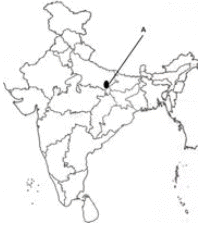
- a)Agra
- b)Kanpur
- c)Jhansi
- d)Benares
Correct answer is option 'D'. Can you explain this answer?
From the outline map of India, identify the place marked A in black circle. Situated on the banks of Ganges, in Uttar Pradesh also known as Varanasi or Kasi where the Hindu College was established in 1791.
a)
Agra
b)
Kanpur
c)
Jhansi
d)
Benares
 | Manish Aggarwal answered |
Varanasi, also called Benares, Banaras, or Kashi, city, southeastern Uttar Pradesh state, northern India. It is located on the left bank of the Ganges (Ganga) River and is one of the seven sacred cities of Hinduism. Pop. (2001) city, 1,091,918; urban agglom., 1,203,961; (2011) city, 1,198,491; urban agglom., 1,432,280.
Banaras Hindu University, formerly Central Hindu College, is a public central university located in Varanasi, Uttar Pradesh. It was established jointly in 1916 by the Maharaja of Darbhanga Rameshwar Singh, Pandit Madan Mohan Malaviya, Sir Sunder Lal and British Theosophist and Home Rule League founder Annie Besant.
Banaras Hindu University, formerly Central Hindu College, is a public central university located in Varanasi, Uttar Pradesh. It was established jointly in 1916 by the Maharaja of Darbhanga Rameshwar Singh, Pandit Madan Mohan Malaviya, Sir Sunder Lal and British Theosophist and Home Rule League founder Annie Besant.
In what way did James Mill periodize Indian history in his work "A History of British India"?- a)He divided Indian history into three periods based on dynasties.
- b)He categorized Indian history into Hindu, Muslim, and British periods.
- c)He structured Indian history around colonial impacts.
- d)He separated Indian history into ancient, medieval, and modern eras.
Correct answer is option 'B'. Can you explain this answer?
In what way did James Mill periodize Indian history in his work "A History of British India"?
a)
He divided Indian history into three periods based on dynasties.
b)
He categorized Indian history into Hindu, Muslim, and British periods.
c)
He structured Indian history around colonial impacts.
d)
He separated Indian history into ancient, medieval, and modern eras.
 | Ishaan Mehra answered |
Explanation:
Periodization in "A History of British India"
James Mill periodized Indian history in his work "A History of British India" by categorizing it into Hindu, Muslim, and British periods.
Explanation of Periodization
- Hindu Period: Mill identified the Hindu period as the time before the Muslim conquests in India. This period was characterized by the rule of various Hindu dynasties and the development of Hindu culture and traditions.
- Muslim Period: The Muslim period in Indian history began with the arrival of Muslim rulers and the establishment of Muslim dynasties in India. This period saw the fusion of Indian and Islamic cultures and the flourishing of art, architecture, and literature.
- British Period: The British period refers to the time when the British East India Company and later the British Crown ruled over India. This period was marked by British colonialism, the spread of Western education and culture, and the Indian struggle for independence.
Significance of Periodization
- Mill's periodization of Indian history helped in understanding the different phases of Indian society and culture under various rulers.
- It also highlighted the impact of different ruling powers on Indian society and the changes that occurred over time.
- By dividing Indian history into distinct periods, Mill provided a framework for analyzing the evolution of Indian civilization and the interactions between different cultural influences.
In conclusion, James Mill's periodization of Indian history into Hindu, Muslim, and British periods in "A History of British India" offers a structured approach to studying the diverse historical experiences of India under different ruling powers.
Periodization in "A History of British India"
James Mill periodized Indian history in his work "A History of British India" by categorizing it into Hindu, Muslim, and British periods.
Explanation of Periodization
- Hindu Period: Mill identified the Hindu period as the time before the Muslim conquests in India. This period was characterized by the rule of various Hindu dynasties and the development of Hindu culture and traditions.
- Muslim Period: The Muslim period in Indian history began with the arrival of Muslim rulers and the establishment of Muslim dynasties in India. This period saw the fusion of Indian and Islamic cultures and the flourishing of art, architecture, and literature.
- British Period: The British period refers to the time when the British East India Company and later the British Crown ruled over India. This period was marked by British colonialism, the spread of Western education and culture, and the Indian struggle for independence.
Significance of Periodization
- Mill's periodization of Indian history helped in understanding the different phases of Indian society and culture under various rulers.
- It also highlighted the impact of different ruling powers on Indian society and the changes that occurred over time.
- By dividing Indian history into distinct periods, Mill provided a framework for analyzing the evolution of Indian civilization and the interactions between different cultural influences.
In conclusion, James Mill's periodization of Indian history into Hindu, Muslim, and British periods in "A History of British India" offers a structured approach to studying the diverse historical experiences of India under different ruling powers.
Apart from the Forest Regulation Act, which was the other Act passed by the British in 1871 which labeled all the adivasi groups that rebelled against the British as criminals.- a)Illegal Tribes Act
- b)Illegal societies Act
- c)Criminal Societies Act
- d)Criminal Tribes Act
Correct answer is option 'D'. Can you explain this answer?
Apart from the Forest Regulation Act, which was the other Act passed by the British in 1871 which labeled all the adivasi groups that rebelled against the British as criminals.
a)
Illegal Tribes Act
b)
Illegal societies Act
c)
Criminal Societies Act
d)
Criminal Tribes Act
| | Pooja Shah answered |
The British colonisers passed the Criminal Tribes Act, labelling them, along with 198 other nomadic and forest groups, “criminal”. A stroke of the pen turned 14 million people into criminals in their own land. The Criminal Tribes Act 1871 was one of the many laws passed by the British colonial government that applied to Indians based on their religion and caste identification.
With limited capital, a food processing unit is set up in a particular village in Gujarat. This unit generates employment to that particular village. Name the type of classification of industry under which this food processing unit will come under.- a)Forest based industry
- b)Agro based industry
- c)Small Scale industry
- d)Large Scale industry
Correct answer is option 'C'. Can you explain this answer?
With limited capital, a food processing unit is set up in a particular village in Gujarat. This unit generates employment to that particular village. Name the type of classification of industry under which this food processing unit will come under.
a)
Forest based industry
b)
Agro based industry
c)
Small Scale industry
d)
Large Scale industry
 | Afruyash answered |
Small scale industry.
A few reasons as to why a Constitution is required in a country are given below. Pick out the inappropriate one.- a)To have unity in a country as people belonging to different ethnic groups, language , religions etc coexist in a country .
- b)A constitution is framed to protect the interests of the higher and influential section of the society.
- c)A constitution gives guidelines to the government as well as to the citizens
- d)A constitution denotes the nature of the political system of a country.
Correct answer is option 'B'. Can you explain this answer?
A few reasons as to why a Constitution is required in a country are given below. Pick out the inappropriate one.
a)
To have unity in a country as people belonging to different ethnic groups, language , religions etc coexist in a country .
b)
A constitution is framed to protect the interests of the higher and influential section of the society.
c)
A constitution gives guidelines to the government as well as to the citizens
d)
A constitution denotes the nature of the political system of a country.
 | Gaya Sawale answered |
Constitituon of india is law of land of our country. according to article 14 of Indian constitution protect eqality of all people and no one can be discriminated on the ground of religions race cast creed and sex .
some more article like 12 to 32 protect basic tights which are also called fundamental rights hencs I support B
some more article like 12 to 32 protect basic tights which are also called fundamental rights hencs I support B
Name the term given to the commercial rearing of silk worms to supplement the income of the farmer.- a)Horticulture
- b)Viticulture
- c)Sericulture
- d)Pisciculture
Correct answer is option 'C'. Can you explain this answer?
Name the term given to the commercial rearing of silk worms to supplement the income of the farmer.
a)
Horticulture
b)
Viticulture
c)
Sericulture
d)
Pisciculture
| | Maitri Patel answered |
Sericulture
Sericulture is the term given to the commercial rearing of silk worms to supplement the income of the farmer. It is a lucrative business and is practiced mainly in the rural areas of India. The practice of sericulture involves the cultivation of mulberry trees, which provide the food for the silk worms.
Process of Sericulture
The process involves the following steps:
1. Mulberry cultivation: Farmers cultivate mulberry trees to provide food for the silk worms.
2. Egg production: Female silk moths lay eggs which are collected and kept in a cool place until they hatch.
3. Rearing of silk worms: The eggs hatch into silk worms, which are then reared in trays. The silk worms are fed with fresh mulberry leaves every day.
4. Cocoon formation: After about 25-30 days, the silk worms stop eating and start spinning cocoons around themselves.
5. Silk extraction: After about 10-12 days, the cocoons are ready to be harvested. The silk is extracted from the cocoons by boiling them in water.
6. Weaving: The silk is then spun into thread and woven into fabric.
Benefits of Sericulture
Sericulture has several benefits:
1. It provides a source of income for farmers.
2. It is an eco-friendly activity as it involves the cultivation of mulberry trees.
3. It provides employment opportunities for rural communities.
4. It is a renewable resource as the silk worms can be reared again and again.
5. It is a high-value product that has a huge demand in both domestic and international markets.
Conclusion
Sericulture is an important activity that has the potential to transform the lives of farmers in rural areas. It is a sustainable and eco-friendly activity that provides a source of income and employment to rural communities. With proper training and support, sericulture can be a profitable business for farmers.
Sericulture is the term given to the commercial rearing of silk worms to supplement the income of the farmer. It is a lucrative business and is practiced mainly in the rural areas of India. The practice of sericulture involves the cultivation of mulberry trees, which provide the food for the silk worms.
Process of Sericulture
The process involves the following steps:
1. Mulberry cultivation: Farmers cultivate mulberry trees to provide food for the silk worms.
2. Egg production: Female silk moths lay eggs which are collected and kept in a cool place until they hatch.
3. Rearing of silk worms: The eggs hatch into silk worms, which are then reared in trays. The silk worms are fed with fresh mulberry leaves every day.
4. Cocoon formation: After about 25-30 days, the silk worms stop eating and start spinning cocoons around themselves.
5. Silk extraction: After about 10-12 days, the cocoons are ready to be harvested. The silk is extracted from the cocoons by boiling them in water.
6. Weaving: The silk is then spun into thread and woven into fabric.
Benefits of Sericulture
Sericulture has several benefits:
1. It provides a source of income for farmers.
2. It is an eco-friendly activity as it involves the cultivation of mulberry trees.
3. It provides employment opportunities for rural communities.
4. It is a renewable resource as the silk worms can be reared again and again.
5. It is a high-value product that has a huge demand in both domestic and international markets.
Conclusion
Sericulture is an important activity that has the potential to transform the lives of farmers in rural areas. It is a sustainable and eco-friendly activity that provides a source of income and employment to rural communities. With proper training and support, sericulture can be a profitable business for farmers.
In the early nineteenth century, how were important documents like letters and reports typically reproduced for preservation?- a)They were digitally scanned and stored in electronic databases
- b)Multiple copies were printed using modern printing presses
- c)Documents were meticulously copied out by calligraphists
- d)They were engraved on metal plates for durability
Correct answer is option 'C'. Can you explain this answer?
In the early nineteenth century, how were important documents like letters and reports typically reproduced for preservation?
a)
They were digitally scanned and stored in electronic databases
b)
Multiple copies were printed using modern printing presses
c)
Documents were meticulously copied out by calligraphists
d)
They were engraved on metal plates for durability
 | Yakshitha Ranaa answered |
Correct option is C
Dark soils of the Deccan plateau in Maharashtra is a good example of ____________- a)Renewable Resources
- b)Actual Resources
- c)Potential Resources
- d)Human made Resources
Correct answer is option 'B'. Can you explain this answer?
Dark soils of the Deccan plateau in Maharashtra is a good example of ____________
a)
Renewable Resources
b)
Actual Resources
c)
Potential Resources
d)
Human made Resources
| | Rajesh Khatri answered |
Actual resources :-
The actual resources are those that have been surveyed and put to good use and their total quantity and quality is determined and they are being used in the present times.
Example of Actual resources -
# The petroleum which is obtained from Mumbai High.
# The rich deposits of coal in Ruhr in Germany.
# The dark soil of the Deccan Plateau in Maharashtra.
Name the type of farming practiced to meet the needs of the farmer's family i.e.- a)Mixed Farming
- b)Subsistence Farming
- c)Commercial Farming
- d)Plantation agriculture
Correct answer is option 'B'. Can you explain this answer?
Name the type of farming practiced to meet the needs of the farmer's family i.e.
a)
Mixed Farming
b)
Subsistence Farming
c)
Commercial Farming
d)
Plantation agriculture
| | Pooja Choudhury answered |
Subsistence farming, form of farming in which nearly all of the crops or livestock raised are used to maintain the farmer and the farmer's family, leaving little, if any, surplus for sale or trade.
Name the important scholar who studied Sanskrit and found it to be the most scientific language of the world. He also translated the important works Shakuntala and Manusmriti into English- a)Charles Wood
- b)William Jones
- c)Nathaniel Halhed
- d)Max Muller
Correct answer is option 'B'. Can you explain this answer?
Name the important scholar who studied Sanskrit and found it to be the most scientific language of the world. He also translated the important works Shakuntala and Manusmriti into English
a)
Charles Wood
b)
William Jones
c)
Nathaniel Halhed
d)
Max Muller
| | Priya Menon answered |
Sir William Jones was an Anglo-Welsh phiologist and scholar of ancient India, particularly known for his proposition of the existence of a relationship among Indo-European languages. he postulated the common ancestry of Sanskrit, Latin, and Greek, his findings providing the impetus for the development of comparative linguistics in the early 19th century.
A few factors affecting the location of industries are given below. Complete the list, by choosing the one that can be added to this list . 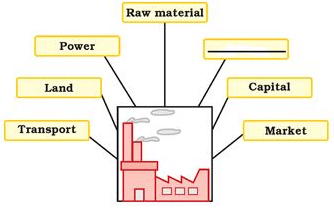
- a)Policy decisions
- b)Size
- c)Ownership
- d)Labour
Correct answer is option 'D'. Can you explain this answer?
A few factors affecting the location of industries are given below. Complete the list, by choosing the one that can be added to this list .
a)
Policy decisions
b)
Size
c)
Ownership
d)
Labour
| | Amit Kumar answered |
As the main factor of the industry is labour. Labour is the only factor that carries out the work. Thus labour is an important factor of industry.
What would you call resources of limited stock ?- a)Renewable Resources
- b)Localised Resources
- c)Human-made Resources
- d)Non-renewable Resources
Correct answer is option 'D'. Can you explain this answer?
What would you call resources of limited stock ?
a)
Renewable Resources
b)
Localised Resources
c)
Human-made Resources
d)
Non-renewable Resources
| | Sanvi Kapoor answered |
The term 'non-renewable' suggests the limited nature of a natural resource. Essentially, the term can be used for any resource that cannot be recovered from the earth readily, after once it has been exhausted. For example: Coal:- it takes thousands of years for coal to form in-between the rocky layers of earth from organic materials that have decomposed. Whereas wind is a renewable resource, it is not limited.
Can you explain the answer of this question below:Pick out the correct word from the given list of options and complete the following statement: A_________________ is anything that can be used to satisfy human wants and has a value.- A:Potential
- B:Resource
- C:Skill
- D:Patent
The answer is B.
Pick out the correct word from the given list of options and complete the following statement: A_________________ is anything that can be used to satisfy human wants and has a value.
A:
Potential
B:
Resource
C:
Skill
D:
Patent
| | Sahana Patel answered |
Resource is the correct answer.
Explanation:
A resource is anything that can be used to satisfy human wants and has a value. In economics, resources refer to all the factors of production that are used in the production process to create goods and services. Resources can be broadly classified into three categories:
1. Natural resources: These are the resources that are found in nature and can be used in their natural form or after processing. Examples include land, water, air, minerals, and forests.
2. Human resources: These are the resources that are created by human beings through education, training, and experience. Examples include labor, knowledge, and skills.
3. Capital resources: These are the resources that are created by human beings to aid in the production process. Examples include machinery, equipment, and tools.
Resources play a critical role in the economy, as they are used to produce goods and services that satisfy human wants and needs. The availability and efficient use of resources are key determinants of economic growth and development.
Explanation:
A resource is anything that can be used to satisfy human wants and has a value. In economics, resources refer to all the factors of production that are used in the production process to create goods and services. Resources can be broadly classified into three categories:
1. Natural resources: These are the resources that are found in nature and can be used in their natural form or after processing. Examples include land, water, air, minerals, and forests.
2. Human resources: These are the resources that are created by human beings through education, training, and experience. Examples include labor, knowledge, and skills.
3. Capital resources: These are the resources that are created by human beings to aid in the production process. Examples include machinery, equipment, and tools.
Resources play a critical role in the economy, as they are used to produce goods and services that satisfy human wants and needs. The availability and efficient use of resources are key determinants of economic growth and development.
High speed winds, solar energy, bio waste etc were all considered as potential sources of energy in the past, but today they are all examples of ___________- a)Non-Renewable Resources
- b)Actual Resources
- c)Ubiquitous Resources
- d)Localised Resources
Correct answer is option 'B'. Can you explain this answer?
High speed winds, solar energy, bio waste etc were all considered as potential sources of energy in the past, but today they are all examples of ___________
a)
Non-Renewable Resources
b)
Actual Resources
c)
Ubiquitous Resources
d)
Localised Resources
| | Amit Sharma answered |
Due to increasing demand in this fast moving world and rapid industrialization, there is substantial increase in usage of natural biotic resources which are offcourse limited. With increasing the cost of these resources, people started to look after other renewable resources not just because of availability but also to reduce the hazards i.e. Air Pollution, Water Pollution etc. caused by resources like fossil fuels and petroleum. So more the renewable energy got into picture, people started to understand it's importance and as a result due to even low cost these are getting status of actual resources. Summarising in following points to the answer - 1. Limited Biotic Resources 2. Health and Environmental hazards by Nuclear Energy and Pollution 3. Wind Power, Bio Waste and Solar Energy are cheap and renewable. 4. Also these are unharmful to environment.
Name the person who founded the Theosophical Society in India.- a)Annie Besant
- b)Sarojini Naidu
- c)Rama Bai Ranade
- d)Raja Ram Mohan Roy
Correct answer is option 'A'. Can you explain this answer?
Name the person who founded the Theosophical Society in India.
a)
Annie Besant
b)
Sarojini Naidu
c)
Rama Bai Ranade
d)
Raja Ram Mohan Roy
| | Krish Sengupta answered |
Founder of Theosophical Society in India:
Annie Besant
Explanation:
The Theosophical Society was founded in New York City in 1875 by Helena Petrovna Blavatsky, Henry Steel Olcott, William Quan Judge, and others. Annie Besant, a British social reformer, joined the Society in 1889 and became its leader in 1907. She founded the Theosophical Society in India in 1893 along with Henry Steel Olcott.
Life of Annie Besant:
Annie Besant was born in London, England in 1847. She was a social reformer, women's rights activist, and theosophist. In 1873, she became a member of the National Secular Society and started writing for their publication, The National Reformer. She also became involved in the trade union movement and the Fabian Society.
Contribution of Annie Besant:
Annie Besant's contribution to the Theosophical Society in India was immense. She was instrumental in establishing the society's headquarters in Adyar, Chennai. She also founded the Central Hindu College in Benares (now Varanasi), which later became the Banaras Hindu University. She was a strong advocate of Indian self-rule and worked closely with Indian leaders like Bal Gangadhar Tilak and Mahatma Gandhi.
Conclusion:
Annie Besant's contribution to the Theosophical Society in India and her work for the Indian independence movement have made her a prominent figure in Indian history. Her legacy continues to inspire social reformers and activists today.
Annie Besant
Explanation:
The Theosophical Society was founded in New York City in 1875 by Helena Petrovna Blavatsky, Henry Steel Olcott, William Quan Judge, and others. Annie Besant, a British social reformer, joined the Society in 1889 and became its leader in 1907. She founded the Theosophical Society in India in 1893 along with Henry Steel Olcott.
Life of Annie Besant:
Annie Besant was born in London, England in 1847. She was a social reformer, women's rights activist, and theosophist. In 1873, she became a member of the National Secular Society and started writing for their publication, The National Reformer. She also became involved in the trade union movement and the Fabian Society.
Contribution of Annie Besant:
Annie Besant's contribution to the Theosophical Society in India was immense. She was instrumental in establishing the society's headquarters in Adyar, Chennai. She also founded the Central Hindu College in Benares (now Varanasi), which later became the Banaras Hindu University. She was a strong advocate of Indian self-rule and worked closely with Indian leaders like Bal Gangadhar Tilak and Mahatma Gandhi.
Conclusion:
Annie Besant's contribution to the Theosophical Society in India and her work for the Indian independence movement have made her a prominent figure in Indian history. Her legacy continues to inspire social reformers and activists today.
All living organisms including the flora and fauna are classified under- a)Renewable Resources
- b)Potential Resources
- c)Biotic Resources
- d)Abiotic Resources
Correct answer is option 'C'. Can you explain this answer?
All living organisms including the flora and fauna are classified under
a)
Renewable Resources
b)
Potential Resources
c)
Biotic Resources
d)
Abiotic Resources
| | Ananya Das answered |
Biotic resources are resources derived from the biosphere such as living things and from forest and the materials derived from them. This mainly include fossil fuels like petroleum, coal gas, etc. Abiotic means other than living things that mean non-living things examples are fresh air, land ,heavy metal.
In which year was the Permanent Settlement System abolished?- a)1900
- b)1885
- c)1890
- d)1793
Correct answer is option 'D'. Can you explain this answer?
In which year was the Permanent Settlement System abolished?
a)
1900
b)
1885
c)
1890
d)
1793
 | Tejas Datta answered |
Abolition of Permanent Settlement System
The Permanent Settlement System was introduced by Lord Cornwallis in 1793 in Bengal, Bihar, and Odisha. It was a land revenue system that fixed the land revenue demand in perpetuity, based on the expectation of a stable increase in agricultural production and thus, revenue. However, this system was not successful in achieving its objectives, as it led to the exploitation of farmers and the concentration of land in the hands of a few landlords.
Abolition of Permanent Settlement System
In 1833, the Governor-General of India, Lord William Bentinck, abolished the Permanent Settlement System in all the provinces of India, except for Bengal, as it was a major source of revenue for the British East India Company. However, in 1855, the Bengal Tenancy Act was passed, which introduced some reforms to protect the rights of tenants and regulate the relationship between landlords and tenants.
Finally, in 1951, the Permanent Settlement System was abolished in Bengal, and a new system of land revenue was introduced, which was based on the assessment of the land's productivity and the market value of crops. This system was more equitable and transparent and helped in the development of agriculture and the welfare of farmers.
Conclusion
Thus, the Permanent Settlement System was abolished in 1951 in Bengal, after being in operation for almost 158 years. It was replaced by a more equitable and transparent system of land revenue that helped in the development of agriculture and the welfare of farmers.
The Permanent Settlement System was introduced by Lord Cornwallis in 1793 in Bengal, Bihar, and Odisha. It was a land revenue system that fixed the land revenue demand in perpetuity, based on the expectation of a stable increase in agricultural production and thus, revenue. However, this system was not successful in achieving its objectives, as it led to the exploitation of farmers and the concentration of land in the hands of a few landlords.
Abolition of Permanent Settlement System
In 1833, the Governor-General of India, Lord William Bentinck, abolished the Permanent Settlement System in all the provinces of India, except for Bengal, as it was a major source of revenue for the British East India Company. However, in 1855, the Bengal Tenancy Act was passed, which introduced some reforms to protect the rights of tenants and regulate the relationship between landlords and tenants.
Finally, in 1951, the Permanent Settlement System was abolished in Bengal, and a new system of land revenue was introduced, which was based on the assessment of the land's productivity and the market value of crops. This system was more equitable and transparent and helped in the development of agriculture and the welfare of farmers.
Conclusion
Thus, the Permanent Settlement System was abolished in 1951 in Bengal, after being in operation for almost 158 years. It was replaced by a more equitable and transparent system of land revenue that helped in the development of agriculture and the welfare of farmers.
Name the important Western industrial region in India- a)Chottanagpur belt
- b)Damodar Valley belt
- c)Delhi ,Gurgaon- Meerut region
- d)Ahmedabad- Vadodara region
Correct answer is option 'D'. Can you explain this answer?
Name the important Western industrial region in India
a)
Chottanagpur belt
b)
Damodar Valley belt
c)
Delhi ,Gurgaon- Meerut region
d)
Ahmedabad- Vadodara region
| | Malavika Basu answered |
India has several industrial regionslike Mumbai- Pune cluster, Bangalore-Tamil Nadu region, Hugli region, Ahmedabad-Baroda region, Chottanagpur industrial belt, Vishakhapatnam-Guntur belt, Gurgaon-Delhi-Meerut region and the Kollam Thiruvanathapuram industrial cluster.
Shakti and Tantric traditions in- a)Orissa and Assam
- b)Bengal and Kerala
- c)Bengal and Assam
- d)Kerala and Orissa
Correct answer is option 'C'. Can you explain this answer?
Shakti and Tantric traditions in
a)
Orissa and Assam
b)
Bengal and Kerala
c)
Bengal and Assam
d)
Kerala and Orissa
| | Amit Sharma answered |
The most common aspects of Devi found in Shaktism include Durga, Kali, Saraswati, Lakshmi, Parvati and Tripurasundari. The Goddess-focused tradition is very popular in Northeastern India particularly West Bengal and Assam, which it celebrates festivals such as the Durga puja, which is popular in West Bengal.
Judiciary system provide mechanism for resolving disputes between ______- a)Citizens
- b)Citizens & government
- c)Two state government
- d)All of these
Correct answer is option 'D'. Can you explain this answer?
Judiciary system provide mechanism for resolving disputes between ______
a)
Citizens
b)
Citizens & government
c)
Two state government
d)
All of these
 | Roshni Roy answered |
Understanding the Judiciary System
The judiciary system plays a crucial role in maintaining law and order in a society. It offers a structured mechanism for resolving disputes arising from various interactions among individuals, governments, and other entities.
Mechanisms for Dispute Resolution
The judiciary provides a platform for addressing grievances and ensuring justice through the following avenues:
Comprehensive Coverage
The correct answer to the question is option 'D' - all of these. The judiciary's inclusive nature ensures that:
This comprehensive mechanism fosters a sense of justice and stability within the legal system, ensuring that every individual and entity can access the judiciary for dispute resolution. By doing so, it reinforces the rule of law and protects the rights of citizens while facilitating cooperation among governmental entities.
The judiciary system plays a crucial role in maintaining law and order in a society. It offers a structured mechanism for resolving disputes arising from various interactions among individuals, governments, and other entities.
Mechanisms for Dispute Resolution
The judiciary provides a platform for addressing grievances and ensuring justice through the following avenues:
- Citizens: Individuals can seek legal redress against other citizens. This includes civil suits, criminal cases, and family law matters.
- Citizens & Government: The judiciary acts as an arbiter in disputes between citizens and government entities. This can involve issues related to administrative actions, violations of rights, and public interest litigation.
- Two State Governments: The judiciary also resolves disputes between different state governments. This can involve issues such as boundary disputes, resource sharing, and inter-state commerce conflicts.
Comprehensive Coverage
The correct answer to the question is option 'D' - all of these. The judiciary's inclusive nature ensures that:
- All citizens have the right to seek legal recourse.
- Government accountability is enforced through legal channels.
- Inter-state disputes are addressed to maintain federal harmony.
This comprehensive mechanism fosters a sense of justice and stability within the legal system, ensuring that every individual and entity can access the judiciary for dispute resolution. By doing so, it reinforces the rule of law and protects the rights of citizens while facilitating cooperation among governmental entities.
When did our Constitution was adopted ?- a)26 January, 1951
- b)15 August, 1947
- c)2 October, 1950
- d)26 November, 1949
Correct answer is option 'D'. Can you explain this answer?
When did our Constitution was adopted ?
a)
26 January, 1951
b)
15 August, 1947
c)
2 October, 1950
d)
26 November, 1949
 | Shreya Mishra answered |
Adoption and Enforcement of the Constitution:
- Adoption Date: The Constitution of India was adopted on 26 November, 1949.
- Enforcement Date: The Constitution came into effect and was enforced on 26 January, 1950.
- Significance: This date is celebrated every year in India as Republic Day, marking the day when the country officially became a republic with a democratic government system.
- Constitutional Assembly: The process of drafting the Constitution began in 1946 and took almost three years to complete, with the Constituent Assembly adopting the final draft on 26 November 1949.
Which of the following is not the region where very few people live?- a)High altitudes areas
- b)Plains
- c)Dry desert areas
- d)Equatorial forest area
Correct answer is option 'B'. Can you explain this answer?
Which of the following is not the region where very few people live?
a)
High altitudes areas
b)
Plains
c)
Dry desert areas
d)
Equatorial forest area
 | Nidhi Bhatt answered |
In plains, a large number of people live.
This is due to several factors:
- Fertile soil: Plains often have rich soil, making them ideal for agriculture.
- Climate: The climate in plains is usually more moderate, attracting more residents.
- Water availability: Access to fresh water sources supports larger populations.
- Economic opportunities: Plains are often hubs for farming, manufacturing, and services, providing jobs.
In contrast, regions like high altitudes, deserts, and equatorial forests tend to have fewer inhabitants due to harsh living conditions.
Which of the following is/are considered a renewable source of energy?(i) Wind Energy(ii) Solar Energy(iii) Nuclear Energy- a)Only (i)
- b)Only (iii)
- c)All (i), (ii) and (iii)
- d)None of these
Correct answer is option 'C'. Can you explain this answer?
Which of the following is/are considered a renewable source of energy?
(i) Wind Energy
(ii) Solar Energy
(iii) Nuclear Energy
a)
Only (i)
b)
Only (iii)
c)
All (i), (ii) and (iii)
d)
None of these
| | Vivek Rana answered |
Energy generated by using wind, tides, solar, geothermal heat, and nuclear energy are renewable and inexhaustible sources of energy.
Solar energy: Energy from the sun is called solar energy and it is the most abundant source of energy.
Wind energy: Energy generated by wind. India ranks fifth in wind energy generation. Energy obtained from radioactive elements is called nuclear energy. Name is so called because the nucleus of the atom releases energy by emitting radiation. Such atoms which release energy are called radioactive elements.
A thing becomes a resource when it's _____ has been identified.- a)Character
- b)Area
- c)Utility
- d)Availability
Correct answer is option 'C'. Can you explain this answer?
A thing becomes a resource when it's _____ has been identified.
a)
Character
b)
Area
c)
Utility
d)
Availability
| | Shubham Sharma answered |
Things become resources when they have value. A resource gains its value by how it used or its utility.
From the following list of the names of the leaders, who did not belong to the trio- Lal-Bal-Pal?- a)Bal Gangadhar Tilak
- b)Bipin Chandra Pal
- c)Gopal Krishna Gokhlae
- d)Lala Lajpat Rai
Correct answer is option 'C'. Can you explain this answer?
From the following list of the names of the leaders, who did not belong to the trio- Lal-Bal-Pal?
a)
Bal Gangadhar Tilak
b)
Bipin Chandra Pal
c)
Gopal Krishna Gokhlae
d)
Lala Lajpat Rai
| | Suresh Reddy answered |
Lal Bal Pal (Lala Lajpat Rai, Bal Gangadhar Tilak, and Bipin Chandra Pal) were a triumvirate of assertive nationalists in British-ruled India in the early 20th century, from 1906 to 1918
Some important techniques to cope with Land slide are given below. Pick out the one that is not applicable.- a)Construction of retention wall to stop land from slipping.
- b)Implementation of the surface drainage control
- c)Decrease in vegetation cover
- d)Hazard mapping locate areas prone to landslides
Correct answer is option 'C'. Can you explain this answer?
Some important techniques to cope with Land slide are given below. Pick out the one that is not applicable.
a)
Construction of retention wall to stop land from slipping.
b)
Implementation of the surface drainage control
c)
Decrease in vegetation cover
d)
Hazard mapping locate areas prone to landslides
 | C Singh answered |
Increase in vegetation help in binding soil, that will further prevent land slide.
The temples of darkness that were falling of themselves into decay. Who said these words about the Calcutta Madrasa and Benares Sanskrit College?- a)Lord William Bentick
- b)Lord Dalhousie
- c)Lord Ripon
- d)Lord Macaulay
Correct answer is option 'D'. Can you explain this answer?
The temples of darkness that were falling of themselves into decay. Who said these words about the Calcutta Madrasa and Benares Sanskrit College?
a)
Lord William Bentick
b)
Lord Dalhousie
c)
Lord Ripon
d)
Lord Macaulay
| | EduRev Class 8 answered |
The correct answer is:
- Lord Macaulay
Lord Macaulay made this statement about the Calcutta Madrasa and Benares Sanskrit College. He played a significant role in promoting English education in India through his famous Minute on Indian Education in 1835. Macaulay advocated for Western education over traditional Indian learning systems. This move had a lasting impact on the education system in India, leading to the decline of traditional institutions like the Calcutta Madrasa and Benares Sanskrit College.
- Lord Macaulay
Lord Macaulay made this statement about the Calcutta Madrasa and Benares Sanskrit College. He played a significant role in promoting English education in India through his famous Minute on Indian Education in 1835. Macaulay advocated for Western education over traditional Indian learning systems. This move had a lasting impact on the education system in India, leading to the decline of traditional institutions like the Calcutta Madrasa and Benares Sanskrit College.
A few physical factors that determine the use of land are given below. Pick out the one that is not a physical factor- a)Availability of capital
- b)Minerals and Availability of Water
- c)Topography and Soil
- d)Climate
Correct answer is option 'A'. Can you explain this answer?
A few physical factors that determine the use of land are given below. Pick out the one that is not a physical factor
a)
Availability of capital
b)
Minerals and Availability of Water
c)
Topography and Soil
d)
Climate
| | Deepa Iyer answered |
The use of land is determined by physical factors such as topography, soil,climate, minerals and availability of water. Human factors such as population density, available of capital and technology are also important determinants of land use pattern.
What is a key difference between the secularism practiced in the U.S. and in India?- a)Indian secularism allows for some state intervention in religious affairs
- b)Government buildings and institutions do not display religious symbols.
- c)Indian secularism promotes state sponsorship of religious groups
- d)U.S. secularism requires state control of religious practices
Correct answer is option 'A'. Can you explain this answer?
What is a key difference between the secularism practiced in the U.S. and in India?
a)
Indian secularism allows for some state intervention in religious affairs
b)
Government buildings and institutions do not display religious symbols.
c)
Indian secularism promotes state sponsorship of religious groups
d)
U.S. secularism requires state control of religious practices
| | EduRev Class 8 answered |
A key difference is that Indian secularism allows for some state intervention in religious affairs to uphold constitutional values and prevent discrimination, whereas U.S. secularism maintains a strict separation between state and religion without such interventions.
With respect to ancient India, a list of statements related to the untouchables are given below. Point out the one that is not TRUE.- a)They were not allowed to draw water from the wells used by the upper castes
- b)They were not considered as inferior human beings
- c)They were not allowed to bathe in ponds where the upper caste bathed
- d)They were not allowed to enter temples
Correct answer is option 'B'. Can you explain this answer?
With respect to ancient India, a list of statements related to the untouchables are given below. Point out the one that is not TRUE.
a)
They were not allowed to draw water from the wells used by the upper castes
b)
They were not considered as inferior human beings
c)
They were not allowed to bathe in ponds where the upper caste bathed
d)
They were not allowed to enter temples
| | Neha Khanna answered |
Untouchables are considered as inferior social beings and therefore not entitled to any individual rights i.e., civic, religious, political and economic. In fact, the disabilities are so severe that they are physically and socially isolated and excluded from the the rest of the Hindu society.
This particular classification of industry requires large amounts of capital, huge machines and modern and superior technology to manufacture goods. Employing huge number of employees like the iron and steel industry , the production is on a mass scale and is voluminous. Mention the type of industry to which this classification belong to- a)Small Scale industries
- b)Medium Scale industries
- c)Large Scale industries
- d)Cottage industries
Correct answer is option 'C'. Can you explain this answer?
This particular classification of industry requires large amounts of capital, huge machines and modern and superior technology to manufacture goods. Employing huge number of employees like the iron and steel industry , the production is on a mass scale and is voluminous. Mention the type of industry to which this classification belong to
a)
Small Scale industries
b)
Medium Scale industries
c)
Large Scale industries
d)
Cottage industries
| | Sanvi Kapoor answered |
If this much material is used and professionals are from different sectors surely it belongs to large scale industry.
Chapter doubts & questions for Social Studies (SST) - Online Quizzes for Class 8 2026 is part of Class 8 exam preparation. The chapters have been prepared according to the Class 8 exam syllabus. The Chapter doubts & questions, notes, tests & MCQs are made for Class 8 2026 Exam. Find important definitions, questions, notes, meanings, examples, exercises, MCQs and online tests here.
Chapter doubts & questions of Social Studies (SST) - Online Quizzes for Class 8 in English & Hindi are available as part of Class 8 exam. Download more important topics, notes, lectures and mock test series for Class 8 Exam by signing up for free.
