


All Exams > Class 9 > Physics for Class 9 > All Questions
All questions of Gravitation for Class 9 Exam


1 kg wt is equal to- a)9.8 N
- b)980 N
- c)98 N
- d)None of these
Correct answer is option 'A'. Can you explain this answer?
1 kg wt is equal to
a)
9.8 N
b)
980 N
c)
98 N
d)
None of these
 | Saikat Shah answered |
Conversion of 1 kg wt to Newtons
Definition of kilogram weight (kg wt)
Kilogram weight (kg wt) is a unit of force used in the metric system. It is defined as the weight of a kilogram mass under standard gravity.
Definition of Newton (N)
Newton (N) is the SI unit of force. It is defined as the force required to accelerate a mass of one kilogram at a rate of one meter per second per second.
Formula for conversion of kg wt to N
The formula for converting kg wt to N is:
1 kg wt = 9.8 N
Explanation of the formula
The conversion factor for kg wt to N is the acceleration due to gravity (g). In SI units, the value of g is approximately 9.8 m/s2. Therefore, the weight of a mass of 1 kg under standard gravity is:
Weight = Mass x Acceleration due to gravity
= 1 kg x 9.8 m/s2
= 9.8 N
Conclusion
Therefore, 1 kg wt is equal to 9.8 N. This conversion factor is used to convert between units of force in the metric system.
Definition of kilogram weight (kg wt)
Kilogram weight (kg wt) is a unit of force used in the metric system. It is defined as the weight of a kilogram mass under standard gravity.
Definition of Newton (N)
Newton (N) is the SI unit of force. It is defined as the force required to accelerate a mass of one kilogram at a rate of one meter per second per second.
Formula for conversion of kg wt to N
The formula for converting kg wt to N is:
1 kg wt = 9.8 N
Explanation of the formula
The conversion factor for kg wt to N is the acceleration due to gravity (g). In SI units, the value of g is approximately 9.8 m/s2. Therefore, the weight of a mass of 1 kg under standard gravity is:
Weight = Mass x Acceleration due to gravity
= 1 kg x 9.8 m/s2
= 9.8 N
Conclusion
Therefore, 1 kg wt is equal to 9.8 N. This conversion factor is used to convert between units of force in the metric system.
Weight of a body on earth is 48 N; its weight on moon is- a)98 N
- b)48 N
- c)9.8 N
- d)8 N
Correct answer is option 'D'. Can you explain this answer?
Weight of a body on earth is 48 N; its weight on moon is
a)
98 N
b)
48 N
c)
9.8 N
d)
8 N
| | Himaja Ammu answered |
Weight on moon=1/6of weight on earth =1/6×48 =8N
Apple falls towards the earth but the earth does not move towards the apple because- a)only earth exerts force on apple, apple does not exert force on earth
- b)apple experiences greater force than the earth
- c)only apple exerts force on earth, earth does not exert force on apple
- d)acceleration is inversely proportional to mass, so acceleration of earth is negligible.
Correct answer is option 'D'. Can you explain this answer?
Apple falls towards the earth but the earth does not move towards the apple because
a)
only earth exerts force on apple, apple does not exert force on earth
b)
apple experiences greater force than the earth
c)
only apple exerts force on earth, earth does not exert force on apple
d)
acceleration is inversely proportional to mass, so acceleration of earth is negligible.
 | Vikram Khanna answered |
Apple falls towards the earth, but the earth does not move towards the apple because acceleration is inversely proportional to mass. Earth’s mass being extremly large as compared to apple, it has negligible acceleration towards the apple.
Maximum weight of a body is- a)At the centre of the earth
- b)Inside the earth
- c)On the surface of the earth
- d)Above the surface of earth
Correct answer is option 'C'. Can you explain this answer?
Maximum weight of a body is
a)
At the centre of the earth
b)
Inside the earth
c)
On the surface of the earth
d)
Above the surface of earth
 | Ritu Saxena answered |
At the center gravity is 0 ,gravity decreases as we go down into the earth ,also it decreases as we go above the surface of earth.
So weight w = mg is maximum on the surface because at surface the value of g is maximum.
So weight w = mg is maximum on the surface because at surface the value of g is maximum.
Mass of oil is 11040 kg and volume is 12 m³, its density would be- a)92 kg m-3
- b)920 kg m-3
- c)9.2 kg m-3
- d)1.08 × 10⁻³
Correct answer is option 'B'. Can you explain this answer?
Mass of oil is 11040 kg and volume is 12 m³, its density would be
a)
92 kg m-3
b)
920 kg m-3
c)
9.2 kg m-3
d)
1.08 × 10⁻³
 | Gaurav Kumar answered |
Density,
ρ = M / V = 11040 / 12
= 920 kg/m³
ρ = M / V = 11040 / 12
= 920 kg/m³
A body is weighed at the poles and then at the equator. The weight- a)At the equator will be greater than at the poles
- b)At the poles will be greater than at the equator
- c)At the poles will be equal to the weight at the equator
- d)Depends upon the object
Correct answer is option 'B'. Can you explain this answer?
A body is weighed at the poles and then at the equator. The weight
a)
At the equator will be greater than at the poles
b)
At the poles will be greater than at the equator
c)
At the poles will be equal to the weight at the equator
d)
Depends upon the object
| | Seema Bajpai answered |
B is the key to success
A ball is thrown vertically upwards with a velocity ‘u’. The velocity with which it falls to the earth again is:- a)Greater than ‘u’
- b)Greater than or equal to ‘u’
- c)Equal to ‘u’
- d)Less than ‘u’
Correct answer is option 'C'. Can you explain this answer?
A ball is thrown vertically upwards with a velocity ‘u’. The velocity with which it falls to the earth again is:
a)
Greater than ‘u’
b)
Greater than or equal to ‘u’
c)
Equal to ‘u’
d)
Less than ‘u’
 | Anita Menon answered |
For vertically upward motion: g is negative as it opposes the motion.
v = u – gt
0 = u – gt
t = u/g (1)
For vertically downward motion: g is positive as it is in the direction of motion.
v = u + gt
v = 0 + gt
t = v/g (2)
From equation 1 and 2
v = u
What is the mass of a body whose weight is 59 N? Take g = 9.8 m/s2- a)5 kg
- b)9 kg
- c)6 kg
- d)50 kg
Correct answer is 'C'. Can you explain this answer?
What is the mass of a body whose weight is 59 N? Take g = 9.8 m/s2
a)
5 kg
b)
9 kg
c)
6 kg
d)
50 kg
 | Nirali Shah answered |
To find the mass of a body, we can use the formula:
Weight = mass × acceleration due to gravity (g)
Given that the weight of the body is 59 N and the acceleration due to gravity is 9.8 m/s^2, we can rearrange the formula to solve for mass:
mass = weight / acceleration due to gravity
Substituting the given values:
mass = 59 N / 9.8 m/s^2
Calculating this equation gives us:
mass ≈ 6 kg
Therefore, the mass of the body is approximately 6 kg.
Explanation:
- Weight is the force exerted by a body due to gravity, and it is measured in Newtons (N).
- The acceleration due to gravity, denoted by 'g', is the acceleration an object experiences due to the gravitational force. On Earth, the average value of g is approximately 9.8 m/s^2.
- The formula weight = mass × acceleration due to gravity relates weight, mass, and acceleration due to gravity.
- To find the mass, we rearrange the formula and divide both sides by acceleration due to gravity.
- By substituting the given values of weight (59 N) and acceleration due to gravity (9.8 m/s^2) into the formula, we can calculate the mass.
- The final result is approximately 6 kg.
Weight = mass × acceleration due to gravity (g)
Given that the weight of the body is 59 N and the acceleration due to gravity is 9.8 m/s^2, we can rearrange the formula to solve for mass:
mass = weight / acceleration due to gravity
Substituting the given values:
mass = 59 N / 9.8 m/s^2
Calculating this equation gives us:
mass ≈ 6 kg
Therefore, the mass of the body is approximately 6 kg.
Explanation:
- Weight is the force exerted by a body due to gravity, and it is measured in Newtons (N).
- The acceleration due to gravity, denoted by 'g', is the acceleration an object experiences due to the gravitational force. On Earth, the average value of g is approximately 9.8 m/s^2.
- The formula weight = mass × acceleration due to gravity relates weight, mass, and acceleration due to gravity.
- To find the mass, we rearrange the formula and divide both sides by acceleration due to gravity.
- By substituting the given values of weight (59 N) and acceleration due to gravity (9.8 m/s^2) into the formula, we can calculate the mass.
- The final result is approximately 6 kg.
If the mass of a body is M on the sufrace of the earth, then its mass on the surface of the moon will be- a)M/6
- b)M
- c)M + 6
- d)Zero
Correct answer is option 'B'. Can you explain this answer?
If the mass of a body is M on the sufrace of the earth, then its mass on the surface of the moon will be
a)
M/6
b)
M
c)
M + 6
d)
Zero
 | Aaditya Saini answered |
Mass of body on surface of Earth vs. Moon
Explanation:
On the surface of the Earth, the gravitational force acting on a body is given by:
F = mg
where F is the force of attraction due to gravity, m is the mass of the body and g is the acceleration due to gravity.
On the surface of the Moon, the acceleration due to gravity is much lower than on Earth. The value of g on the surface of the Moon is approximately 1/6th of its value on Earth.
Therefore, the force of attraction due to gravity on the surface of the Moon is given by:
F' = mg/6
where m is the same as the mass of the body on Earth.
The mass of the body, however, remains the same on the surface of the Moon as it was on the surface of the Earth, since mass is an intrinsic property of an object and does not change with location.
Hence, the correct answer is option B, which states that the mass of the body on the surface of the Moon is the same as its mass on the surface of the Earth.
Explanation:
On the surface of the Earth, the gravitational force acting on a body is given by:
F = mg
where F is the force of attraction due to gravity, m is the mass of the body and g is the acceleration due to gravity.
On the surface of the Moon, the acceleration due to gravity is much lower than on Earth. The value of g on the surface of the Moon is approximately 1/6th of its value on Earth.
Therefore, the force of attraction due to gravity on the surface of the Moon is given by:
F' = mg/6
where m is the same as the mass of the body on Earth.
The mass of the body, however, remains the same on the surface of the Moon as it was on the surface of the Earth, since mass is an intrinsic property of an object and does not change with location.
Hence, the correct answer is option B, which states that the mass of the body on the surface of the Moon is the same as its mass on the surface of the Earth.
Consider a satellite going round the earth in a circular orbit. Which of the following statements is wrong ?- a)It is a freely falling body
- b)It is moving with constant speed
- c)It is acted upon by a force directed away from the centre of the earth which counter -balances the gravitational pull.
- d)It is an accelerated motion.
Correct answer is option 'C'. Can you explain this answer?
Consider a satellite going round the earth in a circular orbit. Which of the following statements is wrong ?
a)
It is a freely falling body
b)
It is moving with constant speed
c)
It is acted upon by a force directed away from the centre of the earth which counter -balances the gravitational pull.
d)
It is an accelerated motion.
| | Adarsh Mohora answered |
Speed can be constant but velocity may not be and thus acceleration
force of gravity pulls the satellite towards earth
and a centripetal force produces an acceleration to keep the satellite in their orbits
hence option c)
force of gravity pulls the satellite towards earth
and a centripetal force produces an acceleration to keep the satellite in their orbits
hence option c)
The magnitude of gravitational force between the earth and 10 kg body is:- a)98 N
- b)90 N
- c)9.8 N
- d)100 N
Correct answer is option 'A'. Can you explain this answer?
The magnitude of gravitational force between the earth and 10 kg body is:
a)
98 N
b)
90 N
c)
9.8 N
d)
100 N
 | Achal Chinavalkar answered |
Gravity of earth is 9.8 N acceleration due to gravity is also 9.8 N gravitational force is nothing but the force applied by earth Therefore, f = m*a f,= 10*9.8 f= 98 N
A framed structure as shown fig. is a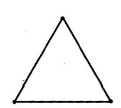
- a)perfect frame
- b)deficient frame
- c)redundant frame
- d)none of the above
Correct answer is option 'A'. Can you explain this answer?
A framed structure as shown fig. is a
a)
perfect frame
b)
deficient frame
c)
redundant frame
d)
none of the above
 | Bhushana Rao Kona answered |
A truss is said to be perfect or rigid if
M+3= 2J where M= no of members and N=no of joints.
in the given truss M=3 and J= 3 so 6=6. this is a perfect frme
M+3= 2J where M= no of members and N=no of joints.
in the given truss M=3 and J= 3 so 6=6. this is a perfect frme
A geostationary satellite- a)Moves faster than the near earth satellite
- b)Has a time period less that of a near earth satellite
- c)Revolves about the polar axis
- d)Is stationary in space
Correct answer is option 'C'. Can you explain this answer?
A geostationary satellite
a)
Moves faster than the near earth satellite
b)
Has a time period less that of a near earth satellite
c)
Revolves about the polar axis
d)
Is stationary in space
| | Vikram Khanna answered |
A geostationary satellite revolves around the earth with the same angular velocity and in the same sense as done by the earth about its own axis, i.e. west-east direction. A polar satellite revolves around the earth's pole in north-south direction.
The mass of the Jupiter is 1.9 × 1027 kg and that of the sun is 1.99 × 1038 kg. The mean distance of theJupiter from the sun is 7.8 × 10¹¹ m. Speed of the Jupiter is (assuming that Jupiter moves in a circular orbitaround the sun)- a)1.304 × 10⁴ m/sec
- b)13.04 × 10⁴ m/sec
- c)1.304 × 10⁶ m/sec
- d)1.304 × 10² m/sec
Correct answer is option 'A'. Can you explain this answer?
The mass of the Jupiter is 1.9 × 1027 kg and that of the sun is 1.99 × 1038 kg. The mean distance of the
Jupiter from the sun is 7.8 × 10¹¹ m. Speed of the Jupiter is (assuming that Jupiter moves in a circular orbit
around the sun)
a)
1.304 × 10⁴ m/sec
b)
13.04 × 10⁴ m/sec
c)
1.304 × 10⁶ m/sec
d)
1.304 × 10² m/sec
| | Hansa Sharma answered |
F = GMm / r²
= 6.67×10-¹¹ × (1.99×10³⁰) × (1.9×10²⁷) / (7.8×10¹¹)²
= 4.14×10²³ N
Now let its speed of jupiter be v, then
F = mv² / R
⇒ v =√(FR / m)
=√{(7.8×10¹¹)×(4.10×10²³) / (1.9×10²⁷)}
= 1.304×10⁴ m/sec
= 6.67×10-¹¹ × (1.99×10³⁰) × (1.9×10²⁷) / (7.8×10¹¹)²
= 4.14×10²³ N
Now let its speed of jupiter be v, then
F = mv² / R
⇒ v =√(FR / m)
=√{(7.8×10¹¹)×(4.10×10²³) / (1.9×10²⁷)}
= 1.304×10⁴ m/sec

The force of gravitation between two bodies varies with r as:- a)r2
- b)1/r2
- c)r
- d)1/r
Correct answer is option 'B'. Can you explain this answer?
The force of gravitation between two bodies varies with r as:
a)
r2
b)
1/r2
c)
r
d)
1/r
| | Arvind Singh answered |
Force of gravitation is inversely proportional to square of distance 1/r^2
Weight of an object is highest at- a)Center of earth
- b)Poles
- c)Above the earth’s surface
- d)Equator
Correct answer is option 'B'. Can you explain this answer?
Weight of an object is highest at
a)
Center of earth
b)
Poles
c)
Above the earth’s surface
d)
Equator
| | Sarita Reddy answered |
Earth is not a perfect sphere. Its radius at equator is greater than poles. Acceleration due to gravity is inversely proportional to the square of its radius. So, the acceleration due to gravity is greatest at poles. Hence, from relation, W = mg, it is clear that weight is highest at the poles.
If the distance between two masses be doubled, then the force between them will become- a)1/4 times
- b)4 times
- c)1/2 times
- d)2 times
Correct answer is option 'A'. Can you explain this answer?
If the distance between two masses be doubled, then the force between them will become
a)
1/4 times
b)
4 times
c)
1/2 times
d)
2 times
 | Daksh Shroty answered |
Yes, by coulombs law
where force is inversely proportional to distance between two bodies or masses.
where force is inversely proportional to distance between two bodies or masses.
A missile is launched with a velocity less than the escape velocity. The sum of its kinetic and potential energy is- a)Positive
- b)Negative
- c)Zero
- d)May be positive or negative depending upon its initial velocity
Correct answer is option 'B'. Can you explain this answer?
A missile is launched with a velocity less than the escape velocity. The sum of its kinetic and potential energy is
a)
Positive
b)
Negative
c)
Zero
d)
May be positive or negative depending upon its initial velocity
| | Ananya Sharma answered |
Kinetic energy would be obvious = 0.5mv^2
and the potential Energy would be= -Gm/r^2
Now total energy = 0.5mv^2 – Gm/r^2 hence would be negative as r approaches infinity.
The value of acceleration due to gravity at the poles- a)Is more than at the equator
- b)Same as at the equator
- c)Is less than at the equator
- d)zero
Correct answer is option 'A'. Can you explain this answer?
The value of acceleration due to gravity at the poles
a)
Is more than at the equator
b)
Same as at the equator
c)
Is less than at the equator
d)
zero
| | Arvind Singh answered |
In combination, the equatorial bulge and the effects of the surface centrifugal force due to rotation mean that sea-level effective gravity increases from about 9.780 m/s2 at the Equator to about 9.832 m/s2 at the poles, so an object will weigh about 0.5% more at the poles than at the Equator.
Gravitational force which acts on 1 kg is- a)9.8 N
- b)1/9.8 N
- c)980 N
- d)none of these
Correct answer is option 'A'. Can you explain this answer?
Gravitational force which acts on 1 kg is
a)
9.8 N
b)
1/9.8 N
c)
980 N
d)
none of these
| | Bethany Fernandes answered |
To covert kg to N , we have to multiply the kg value by 9.8 . So 1x9.8=9.8. hence the answer A is correct
Practice Test/Quiz or MCQ (Multiple Choice Questions) with Solutions of Chapter "Gravitation" are available for CBSE Class 9 Science and have been compiled as per the syllabus of CBSE Class 9 Science Q. If a rock is brought from the surface of the moon,- a)Its mass will change
- b)Its weight will change but not mass
- c)Both mass and weight will change
- d)Its mass and weight both will remain same
Correct answer is option 'B'. Can you explain this answer?
Practice Test/Quiz or MCQ (Multiple Choice Questions) with Solutions of Chapter "Gravitation" are available for CBSE Class 9 Science and have been compiled as per the syllabus of CBSE Class 9 Science
Q. If a rock is brought from the surface of the moon,
a)
Its mass will change
b)
Its weight will change but not mass
c)
Both mass and weight will change
d)
Its mass and weight both will remain same
 | Sameer Singh answered |
Becuse weight is just a force which may vari due the less mass of moon but mass is a quantiy of matter contained my any object ..thus it is
Which of the following is true of two objects of different masses falling freely near the surface of the moon?- a)They both have different accelerations.
- b)They have the same velocities at any instant
- c)They experience forces of the same magnitude
- d)They change their inertia
Correct answer is option 'B'. Can you explain this answer?
Which of the following is true of two objects of different masses falling freely near the surface of the moon?
a)
They both have different accelerations.
b)
They have the same velocities at any instant
c)
They experience forces of the same magnitude
d)
They change their inertia
 | Vrinda Singh answered |
Understanding Free Fall on the Moon
When two objects of different masses fall freely near the surface of the moon, it's essential to understand how gravity and motion work in this context.
Key Principles of Free Fall
- Uniform Acceleration: On the moon, the acceleration due to gravity is approximately 1.6 m/s², which is much weaker than Earth's 9.8 m/s². However, this gravitational force acts equally on all objects, regardless of mass.
- Newton's Second Law: According to this law, the acceleration of an object is directly proportional to the net force acting on it and inversely proportional to its mass (F=ma). However, when considering free fall, the force of gravity is the only force acting on the objects.
Why They Have the Same Velocities
- Acceleration is Constant: Both objects, regardless of their masses, experience the same constant acceleration due to the moon's gravity. This means that they will gain speed at the same rate.
- Initial Conditions: If both objects are dropped from the same height at the same time, they will have the same initial velocities (which is zero if dropped). As they fall, they will continue to have the same velocity at any given moment because they accelerate uniformly.
Conclusion
Thus, the correct answer is option 'B': They have the same velocities at any instant. This phenomenon illustrates the fundamental principle that in a vacuum (or near a celestial body like the moon), the mass of an object does not influence its rate of fall. All objects fall at the same rate under gravity when air resistance is negligible.
When two objects of different masses fall freely near the surface of the moon, it's essential to understand how gravity and motion work in this context.
Key Principles of Free Fall
- Uniform Acceleration: On the moon, the acceleration due to gravity is approximately 1.6 m/s², which is much weaker than Earth's 9.8 m/s². However, this gravitational force acts equally on all objects, regardless of mass.
- Newton's Second Law: According to this law, the acceleration of an object is directly proportional to the net force acting on it and inversely proportional to its mass (F=ma). However, when considering free fall, the force of gravity is the only force acting on the objects.
Why They Have the Same Velocities
- Acceleration is Constant: Both objects, regardless of their masses, experience the same constant acceleration due to the moon's gravity. This means that they will gain speed at the same rate.
- Initial Conditions: If both objects are dropped from the same height at the same time, they will have the same initial velocities (which is zero if dropped). As they fall, they will continue to have the same velocity at any given moment because they accelerate uniformly.
Conclusion
Thus, the correct answer is option 'B': They have the same velocities at any instant. This phenomenon illustrates the fundamental principle that in a vacuum (or near a celestial body like the moon), the mass of an object does not influence its rate of fall. All objects fall at the same rate under gravity when air resistance is negligible.
How does the pressure exerted by a nail change when it is compared to a flat surface?- a)It remains the same
- b)It decreases
- c)It increases
- d)It fluctuates
Correct answer is option 'C'. Can you explain this answer?
a)
It remains the same
b)
It decreases
c)
It increases
d)
It fluctuates
 | Shivani Kaur answered |
Understanding Pressure
Pressure is defined as the force applied per unit area. It is given by the formula:
Pressure = Force / Area
Comparison Between a Nail and a Flat Surface
When comparing a nail to a flat surface, it is essential to consider how force is distributed over an area.
Surface Area
- A nail has a small surface area at its pointed end.
- A flat surface has a larger surface area.
Force Concentration
- When a nail is driven into a surface, it exerts a force over its small area.
- This small area leads to a higher concentration of force, resulting in increased pressure.
Effect of Pressure
- The increased pressure from the nail allows it to penetrate materials like wood or drywall more effectively than a flat object, which would distribute the same force over a larger area.
- The higher pressure is what makes nails efficient for fastening objects together.
Conclusion
- Therefore, when comparing the pressure exerted by a nail to that of a flat surface, the pressure exerted by the nail increases due to its smaller area.
- This is why nails are more effective for penetrating surfaces compared to flat objects.
In summary, the correct answer is option 'C': It increases.
Pressure is defined as the force applied per unit area. It is given by the formula:
Pressure = Force / Area
Comparison Between a Nail and a Flat Surface
When comparing a nail to a flat surface, it is essential to consider how force is distributed over an area.
Surface Area
- A nail has a small surface area at its pointed end.
- A flat surface has a larger surface area.
Force Concentration
- When a nail is driven into a surface, it exerts a force over its small area.
- This small area leads to a higher concentration of force, resulting in increased pressure.
Effect of Pressure
- The increased pressure from the nail allows it to penetrate materials like wood or drywall more effectively than a flat object, which would distribute the same force over a larger area.
- The higher pressure is what makes nails efficient for fastening objects together.
Conclusion
- Therefore, when comparing the pressure exerted by a nail to that of a flat surface, the pressure exerted by the nail increases due to its smaller area.
- This is why nails are more effective for penetrating surfaces compared to flat objects.
In summary, the correct answer is option 'C': It increases.
SI unit of g is- a)m2/s
- b)s/m2
- c)m/s2
- d)m/s
Correct answer is option 'C'. Can you explain this answer?
SI unit of g is
a)
m2/s
b)
s/m2
c)
m/s2
d)
m/s
 | Garima Desai answered |
SI unit of g is m/s2
Explanation:
- Definition of g: g is the acceleration due to gravity, which is the force that pulls objects towards the center of the earth.
- SI unit of acceleration is m/s2, which represents the change in velocity per unit time.
- Therefore, the SI unit of g is also m/s2.
- This unit is commonly used in physics and engineering to describe the acceleration of objects under the influence of gravity.
- Other units of acceleration include km/h2, cm/s2, and ft/s2, but these are not part of the SI system.
Explanation:
- Definition of g: g is the acceleration due to gravity, which is the force that pulls objects towards the center of the earth.
- SI unit of acceleration is m/s2, which represents the change in velocity per unit time.
- Therefore, the SI unit of g is also m/s2.
- This unit is commonly used in physics and engineering to describe the acceleration of objects under the influence of gravity.
- Other units of acceleration include km/h2, cm/s2, and ft/s2, but these are not part of the SI system.
Weight- a)Is a vector quantity
- b)Of a body in interplanetary space is maximum
- c)Increases when the bodies go up
- d)None of these
Correct answer is option 'A'. Can you explain this answer?
Weight
a)
Is a vector quantity
b)
Of a body in interplanetary space is maximum
c)
Increases when the bodies go up
d)
None of these
| | Radha Iyer answered |
Weight is a fundamental concept in physics that refers to the force exerted on an object due to gravity. Here is a detailed explanation of the given statement:
Weight is the force experienced by an object due to the gravitational pull of the Earth or any other celestial body. It is a vector quantity because it has both magnitude and direction. The direction of the weight vector is always towards the center of the celestial body.
-
- Weight is a vector quantity because it has both magnitude and direction. The magnitude of weight is equal to the product of the mass of the object and the acceleration due to gravity. The direction of weight is always towards the center of the celestial body.
-
- Weight is directly proportional to the mass of the object. In interplanetary space, where the gravitational field is weak or negligible, the weight of a body would be much less compared to its weight on Earth. Therefore, the weight of a body in interplanetary space is not maximum.
-
- As bodies go up in the Earth's atmosphere, they move farther away from the center of the Earth. The distance between the body and the center of the Earth increases, which leads to a decrease in the acceleration due to gravity. Consequently, the weight of the body decreases as it goes up, rather than increasing.
-
- The correct answer is not "D: None of these" because option A, which states that weight is a vector quantity, is correct.
Weight:
Weight is the force experienced by an object due to the gravitational pull of the Earth or any other celestial body. It is a vector quantity because it has both magnitude and direction. The direction of the weight vector is always towards the center of the celestial body.
Explanation of the given options:
-
A: Is a vector quantity:
- Weight is a vector quantity because it has both magnitude and direction. The magnitude of weight is equal to the product of the mass of the object and the acceleration due to gravity. The direction of weight is always towards the center of the celestial body.
-
B: Of a body in interplanetary space is maximum:
- Weight is directly proportional to the mass of the object. In interplanetary space, where the gravitational field is weak or negligible, the weight of a body would be much less compared to its weight on Earth. Therefore, the weight of a body in interplanetary space is not maximum.
-
C: Increases when the bodies go up:
- As bodies go up in the Earth's atmosphere, they move farther away from the center of the Earth. The distance between the body and the center of the Earth increases, which leads to a decrease in the acceleration due to gravity. Consequently, the weight of the body decreases as it goes up, rather than increasing.
-
D: None of these:
- The correct answer is not "D: None of these" because option A, which states that weight is a vector quantity, is correct.
The value of g near the earth's surface is- a)8.9 m/s2
- b)8.9 m/s
- c)9.8 m/s2
- d)9.8 m/s
Correct answer is option 'C'. Can you explain this answer?
The value of g near the earth's surface is
a)
8.9 m/s2
b)
8.9 m/s
c)
9.8 m/s2
d)
9.8 m/s
 | Rajesh Yadav answered |
Explanation:
Gravitational Acceleration:
- The value of gravitational acceleration, denoted as 'g', near the Earth's surface is approximately 9.8 m/s^2.
- This value represents the acceleration experienced by an object due to the Earth's gravitational pull.
Acceleration Due to Gravity:
- The acceleration due to gravity is the acceleration that an object experiences when it is in free fall near the Earth's surface.
- It is approximately 9.8 m/s^2, which means that every second an object in free fall near the Earth's surface will increase its velocity by 9.8 m/s.
Variation in g:
- The value of g can vary slightly depending on the location on Earth, altitude, and other factors.
- However, for most practical purposes, a value of 9.8 m/s^2 is commonly used as the standard value of g near the Earth's surface.
Conclusion:
- Therefore, the correct value of g near the Earth's surface is 9.8 m/s^2, making option 'C' the correct answer.
When an object is thrown up, the force of gravity- a)Acts in the direction of the motion
- b)Acts in the opposite direction of the motion
- c)Remains constant as the body moves up
- d)Increases as the body moves up
Correct answer is option 'B'. Can you explain this answer?
When an object is thrown up, the force of gravity
a)
Acts in the direction of the motion
b)
Acts in the opposite direction of the motion
c)
Remains constant as the body moves up
d)
Increases as the body moves up
| | वर्तिका answered |
Towards the centre of Earth means acts in the opposite direction of motion.
The value of G does not depend on- a)Nature of the interacting bodies
- b)Size of the interacting bodies
- c)Mass of the interacting bodies
- d)All of these
Correct answer is option 'D'. Can you explain this answer?
The value of G does not depend on
a)
Nature of the interacting bodies
b)
Size of the interacting bodies
c)
Mass of the interacting bodies
d)
All of these
 | Krithika Saha answered |
Explanation:
Introduction:
The value of G is the universal gravitational constant. It is a fundamental constant of nature that appears in the law of gravitation along with the masses of the two interacting bodies and the distance between them. It is a measure of the strength of the gravitational force between two objects.
Nature of the interacting bodies:
The value of G is independent of the nature of the interacting bodies. This means that the gravitational force between two objects, no matter what they are made of, follows the same law of gravitation and is determined by the same value of G. This is because the force of gravity is a fundamental force of nature that acts between all objects with mass, regardless of their composition or properties.
Size of the interacting bodies:
The value of G is also independent of the size of the interacting bodies. This means that the gravitational force between two objects, no matter how large or small they are, follows the same law of gravitation and is determined by the same value of G. This is because the gravitational force depends on the masses of the objects, not on their size or volume.
Mass of the interacting bodies:
The value of G is determined by the masses of the interacting bodies. This means that the gravitational force between two objects increases as their masses increase, and it decreases as the distance between them increases. However, the value of G itself is independent of the masses of the objects. This is because G is a constant of nature that relates the masses of the objects to the strength of the gravitational force between them.
Conclusion:
In summary, the value of G is independent of the nature and size of the interacting bodies, but it is determined by their masses. This makes G a fundamental constant of nature that has a universal value and applies to all objects with mass, no matter what their composition or properties.
Introduction:
The value of G is the universal gravitational constant. It is a fundamental constant of nature that appears in the law of gravitation along with the masses of the two interacting bodies and the distance between them. It is a measure of the strength of the gravitational force between two objects.
Nature of the interacting bodies:
The value of G is independent of the nature of the interacting bodies. This means that the gravitational force between two objects, no matter what they are made of, follows the same law of gravitation and is determined by the same value of G. This is because the force of gravity is a fundamental force of nature that acts between all objects with mass, regardless of their composition or properties.
Size of the interacting bodies:
The value of G is also independent of the size of the interacting bodies. This means that the gravitational force between two objects, no matter how large or small they are, follows the same law of gravitation and is determined by the same value of G. This is because the gravitational force depends on the masses of the objects, not on their size or volume.
Mass of the interacting bodies:
The value of G is determined by the masses of the interacting bodies. This means that the gravitational force between two objects increases as their masses increase, and it decreases as the distance between them increases. However, the value of G itself is independent of the masses of the objects. This is because G is a constant of nature that relates the masses of the objects to the strength of the gravitational force between them.
Conclusion:
In summary, the value of G is independent of the nature and size of the interacting bodies, but it is determined by their masses. This makes G a fundamental constant of nature that has a universal value and applies to all objects with mass, no matter what their composition or properties.
The value of ‘g’ is minimum:- a)on hills
- b)in mines
- c)at equator of earth
- d)at poles of earth
Correct answer is option 'C'. Can you explain this answer?
The value of ‘g’ is minimum:
a)
on hills
b)
in mines
c)
at equator of earth
d)
at poles of earth
| | Vikram Khanna answered |
The value of 'g' that is gravity is greater at the poles because the gravitational pull is maximum at the poles and decreases as it comes down toward the equator.
Which of the following is true when a Mango falls from a Mango Tree?- a)Only the Earth attracts the Mango.
- b)Only the Mango attracts the Earth.
- c)Both Mango and Earth attract each other
- d)Both Mango and Earth repel each other
Correct answer is option 'C'. Can you explain this answer?
Which of the following is true when a Mango falls from a Mango Tree?
a)
Only the Earth attracts the Mango.
b)
Only the Mango attracts the Earth.
c)
Both Mango and Earth attract each other
d)
Both Mango and Earth repel each other
 | Trisha Vashisht answered |
When a Mango falls from the tree, both Mango and Earth attract each other.
Which of the following statements is true of the value of acceleration due to gravity?- a)The value is the same on the equator and poles
- b)The value is least on poles
- c)The value increases from the equator to the poles.
- d)The value increases from pole to equator
Correct answer is option 'C'. Can you explain this answer?
Which of the following statements is true of the value of acceleration due to gravity?
a)
The value is the same on the equator and poles
b)
The value is least on poles
c)
The value increases from the equator to the poles.
d)
The value increases from pole to equator
 | Jithin Desai answered |
Understanding Acceleration Due to Gravity
Acceleration due to gravity (g) varies across the surface of the Earth. The value of g is influenced by several factors, including the Earth's shape and rotation.
1. Earth's Shape and Rotation
- The Earth is not a perfect sphere; it is an oblate spheroid, meaning it is slightly flattened at the poles and bulging at the equator.
- Due to this shape, the distance from the Earth's center to the surface is greater at the equator than at the poles.
2. Gravitational Force Variation
- Gravitational force decreases with increasing distance from the center of the Earth.
- Therefore, because you are farther from the center at the equator, the force of gravity (and thus g) is slightly less there compared to the poles.
3. Centrifugal Force Influence
- The Earth's rotation causes a centrifugal force that counteracts gravity. This force is strongest at the equator due to the higher rotational speed.
- As a result, the effective acceleration due to gravity is less at the equator than at the poles.
4. Conclusion
- The value of acceleration due to gravity is indeed least at the equator and greatest at the poles.
- This leads to the conclusion that the value of g increases from the equator to the poles, making option 'C' the correct answer.
Understanding these concepts can help clarify why gravity behaves differently across the globe, providing insight into the dynamics of our planet.
Acceleration due to gravity (g) varies across the surface of the Earth. The value of g is influenced by several factors, including the Earth's shape and rotation.
1. Earth's Shape and Rotation
- The Earth is not a perfect sphere; it is an oblate spheroid, meaning it is slightly flattened at the poles and bulging at the equator.
- Due to this shape, the distance from the Earth's center to the surface is greater at the equator than at the poles.
2. Gravitational Force Variation
- Gravitational force decreases with increasing distance from the center of the Earth.
- Therefore, because you are farther from the center at the equator, the force of gravity (and thus g) is slightly less there compared to the poles.
3. Centrifugal Force Influence
- The Earth's rotation causes a centrifugal force that counteracts gravity. This force is strongest at the equator due to the higher rotational speed.
- As a result, the effective acceleration due to gravity is less at the equator than at the poles.
4. Conclusion
- The value of acceleration due to gravity is indeed least at the equator and greatest at the poles.
- This leads to the conclusion that the value of g increases from the equator to the poles, making option 'C' the correct answer.
Understanding these concepts can help clarify why gravity behaves differently across the globe, providing insight into the dynamics of our planet.
What is the mass of a body whose weight is 59 N? Take g = 9.8 m/s2- a)5 kg
- b)9 kg
- c)6 kg
- d)50 kg
Correct answer is option 'C'. Can you explain this answer?
What is the mass of a body whose weight is 59 N? Take g = 9.8 m/s2
a)
5 kg
b)
9 kg
c)
6 kg
d)
50 kg
 | Ayush Aryan answered |
W = mg
mg = W
m=W÷g
m = 59÷9.8
m = 6.02 or 6 ( Approx )
mg = W
m=W÷g
m = 59÷9.8
m = 6.02 or 6 ( Approx )
Why does a plastic bottle float in water when it is closed and empty?- a)The plastic bottle is denser than water
- b)The plastic bottle displaces more water than its weight
- c)The plastic bottle has a high buoyant force
- d)The plastic bottle is lighter than water
Correct answer is option 'B'. Can you explain this answer?
a)
The plastic bottle is denser than water
b)
The plastic bottle displaces more water than its weight
c)
The plastic bottle has a high buoyant force
d)
The plastic bottle is lighter than water
 | Let's Tute answered |
A closed and empty plastic bottle floats in water because it displaces a volume of water whose weight is greater than the weight of the bottle. The buoyant force on the bottle, which is equal to the weight of the displaced water, is sufficient to counteract the weight of the bottle, causing it to float.
What does Archimedes’ Principle state about the buoyant force on an immersed object?- a)It is equal to the weight of the object
- b)It is equal to the volume of the object
- c)It is equal to the weight of the fluid displaced by the object
- d)It is directly proportional to the density of the object
Correct answer is option 'C'. Can you explain this answer?
a)
It is equal to the weight of the object
b)
It is equal to the volume of the object
c)
It is equal to the weight of the fluid displaced by the object
d)
It is directly proportional to the density of the object
 | Shraddha Mishra answered |
Understanding Archimedes’ Principle
Archimedes' Principle is a fundamental concept in fluid mechanics that explains the behavior of objects when submerged in a fluid. It specifically addresses the buoyant force acting on an immersed object.
What is Buoyant Force?
- Buoyant force is the upward force exerted by a fluid on an object that is submerged or floating in it.
Key Statement of Archimedes’ Principle
- The principle states that *the buoyant force on an immersed object is equal to the weight of the fluid displaced by the object*.
Why Option C is Correct
- When an object is placed in a fluid, it pushes some of that fluid out of the way, or displaces it. The amount of fluid displaced depends on the volume of the object submerged in the fluid.
- The weight of the displaced fluid can be calculated using the density of the fluid and the volume of the fluid displaced. This weight is what determines the buoyant force acting on the object.
Examples of Archimedes’ Principle
- Floating Objects: When a ship floats, it displaces a volume of water equal to its weight, allowing it to stay afloat.
- Sinking Objects: If an object is denser than the fluid, it will displace some fluid but may not displace enough to counteract its weight, causing it to sink.
Conclusion
- In summary, Archimedes' Principle highlights that the buoyant force is directly linked to the weight of the fluid displaced, making option C the correct choice. Understanding this principle is crucial in various applications, including shipbuilding, swimming, and designing underwater vehicles.
Archimedes' Principle is a fundamental concept in fluid mechanics that explains the behavior of objects when submerged in a fluid. It specifically addresses the buoyant force acting on an immersed object.
What is Buoyant Force?
- Buoyant force is the upward force exerted by a fluid on an object that is submerged or floating in it.
Key Statement of Archimedes’ Principle
- The principle states that *the buoyant force on an immersed object is equal to the weight of the fluid displaced by the object*.
Why Option C is Correct
- When an object is placed in a fluid, it pushes some of that fluid out of the way, or displaces it. The amount of fluid displaced depends on the volume of the object submerged in the fluid.
- The weight of the displaced fluid can be calculated using the density of the fluid and the volume of the fluid displaced. This weight is what determines the buoyant force acting on the object.
Examples of Archimedes’ Principle
- Floating Objects: When a ship floats, it displaces a volume of water equal to its weight, allowing it to stay afloat.
- Sinking Objects: If an object is denser than the fluid, it will displace some fluid but may not displace enough to counteract its weight, causing it to sink.
Conclusion
- In summary, Archimedes' Principle highlights that the buoyant force is directly linked to the weight of the fluid displaced, making option C the correct choice. Understanding this principle is crucial in various applications, including shipbuilding, swimming, and designing underwater vehicles.
Choose the correct statement of the following:- a)All bodies repel each other in this universe
- b)Our earth does not behave like a magnet
- c)Acceleration due to gravity is 8.9 m/s2
- d)All bodies fall at the same rate in vacuum
Correct answer is option 'D'. Can you explain this answer?
Choose the correct statement of the following:
a)
All bodies repel each other in this universe
b)
Our earth does not behave like a magnet
c)
Acceleration due to gravity is 8.9 m/s2
d)
All bodies fall at the same rate in vacuum
 | Ruchi Banerjee answered |
In option D, since we know the attractive force F between two bodies of masses m₁ and m₂, separated by distance r given by F = Gm₁m₂ / r²,
Considering M as the mass of earth, the acceleration on a particle of mass m would be g = F/m = GM / r².
Since this acceleration is independent of mass of the body, in vacuum, all bodies fall at the same rate under free fall.
Considering M as the mass of earth, the acceleration on a particle of mass m would be g = F/m = GM / r².
Since this acceleration is independent of mass of the body, in vacuum, all bodies fall at the same rate under free fall.
Which of the following factors does the acceleration due to gravity on the Earth depend upon?- a)Mass of the Body
- b)Mass of the Earth
- c)The volume of the Body
- d)Shape and Size of the Body
Correct answer is option 'B'. Can you explain this answer?
Which of the following factors does the acceleration due to gravity on the Earth depend upon?
a)
Mass of the Body
b)
Mass of the Earth
c)
The volume of the Body
d)
Shape and Size of the Body
 | EduRev Class 9 answered |
The acceleration due to gravity on the Earth depends upon the mass of the Earth.
What does Pascal’s Law state about the pressure in confined fluids?- a)Pressure is not transmitted through fluids
- b)Pressure varies according to the density of the fluid
- c)Pressure is transmitted undiminished in all directions
- d)Pressure is reduced by the fluid’s temperature
Correct answer is option 'C'. Can you explain this answer?
a)
Pressure is not transmitted through fluids
b)
Pressure varies according to the density of the fluid
c)
Pressure is transmitted undiminished in all directions
d)
Pressure is reduced by the fluid’s temperature
| | EduRev Class 9 answered |
Pascal’s Law states that pressure applied to a confined fluid is transmitted undiminished in all directions. This principle is crucial in hydraulic systems, where an applied force can be magnified through the fluid, demonstrating how pressure changes are uniformly distributed throughout the fluid.
The gravitational force between two bodies does not depend on- a)their masses
- b)their separation
- c)the product of their masses
- d)the medium between two bodies
Correct answer is option 'D'. Can you explain this answer?
The gravitational force between two bodies does not depend on
a)
their masses
b)
their separation
c)
the product of their masses
d)
the medium between two bodies
 | Imk Pathshala answered |
The gravitational force between two bodies does not depend on the medium between the two bodies.
What principle explains why a ship made of iron floats on water while a sheet of the same material sinks?- a)Archimedes’ Principle
- b)Pascal’s Law
- c)Newton’s Third Law
- d)Bernoulli’s Principle
Correct answer is option 'A'. Can you explain this answer?
a)
Archimedes’ Principle
b)
Pascal’s Law
c)
Newton’s Third Law
d)
Bernoulli’s Principle
| | EduRev Class 9 answered |
Archimedes’ Principle explains why a ship made of iron floats on water while a sheet of the same material sinks. According to this principle, an object will float if the buoyant force (equal to the weight of the displaced fluid) is greater than or equal to the weight of the object. A ship has a large volume, which displaces a substantial amount of water, generating a buoyant force that supports its weight. Conversely, a thin sheet of iron displaces less water, resulting in insufficient buoyant force to counteract its weight, causing it to sink.
The law of gravitation describes the gravitational force between- a)any two bodies having mass
- b)earth and point mass only
- c)earth and Sun only
- d)two charged bodies only
Correct answer is option 'A'. Can you explain this answer?
The law of gravitation describes the gravitational force between
a)
any two bodies having mass
b)
earth and point mass only
c)
earth and Sun only
d)
two charged bodies only
| | EduRev Class 9 answered |
The law of gravitation describes the gravitational force between any two bodies having mass.
The weight of an object on the Moon’s surface is- a)1/3 rd of the weight on Earth
- b)1/5 rd of the weight on Earth
- c)1/6th of the weight on Earth
- d)1/2 nd of the weight on Earth
Correct answer is option 'C'. Can you explain this answer?
The weight of an object on the Moon’s surface is
a)
1/3 rd of the weight on Earth
b)
1/5 rd of the weight on Earth
c)
1/6th of the weight on Earth
d)
1/2 nd of the weight on Earth
| | Let's Tute answered |
The weight of an object on the Moon’s surface is 1/6th of the weight on Earth.
Weight is- a)measured by a spring balance
- b)measured by a beam balance
- c)measured in kg
- d)a scalar quantity
Correct answer is option 'A'. Can you explain this answer?
Weight is
a)
measured by a spring balance
b)
measured by a beam balance
c)
measured in kg
d)
a scalar quantity
| | Divyansh Yadav answered |
Explanation:
Weight is the force with which an object is attracted towards the center of the earth due to gravity. It is measured in newtons (N) or in pounds (lb). The correct option is A, which says that weight is measured by a spring balance.
What is a spring balance?
A spring balance is a device that measures weight or force by the extension or compression of a spring. When an object is hung from the spring balance, the spring stretches, and the extension of the spring is proportional to the weight of the object. The spring balance has a calibrated scale that indicates the weight of the object in newtons or pounds.
Why is a spring balance used to measure weight?
A spring balance is used to measure weight because it is simple, accurate, and easy to use. The spring balance is portable and can be carried to different locations, making it useful for measuring weight in the field. Also, the spring balance does not require a level surface to measure weight, unlike a beam balance, which requires a level surface.
Can weight be measured in kg?
Weight is not measured in kg. Kg is a unit of mass, whereas weight is a force. Weight is measured in newtons (N) or pounds (lb). However, the mass of an object can be measured in kg using a balance.
Is weight a scalar or vector quantity?
Weight is a vector quantity because it has both magnitude and direction. The direction of weight is always towards the center of the earth. However, in most cases, weight is treated as a scalar quantity because its direction is always downwards and does not change.
Weight is the force with which an object is attracted towards the center of the earth due to gravity. It is measured in newtons (N) or in pounds (lb). The correct option is A, which says that weight is measured by a spring balance.
What is a spring balance?
A spring balance is a device that measures weight or force by the extension or compression of a spring. When an object is hung from the spring balance, the spring stretches, and the extension of the spring is proportional to the weight of the object. The spring balance has a calibrated scale that indicates the weight of the object in newtons or pounds.
Why is a spring balance used to measure weight?
A spring balance is used to measure weight because it is simple, accurate, and easy to use. The spring balance is portable and can be carried to different locations, making it useful for measuring weight in the field. Also, the spring balance does not require a level surface to measure weight, unlike a beam balance, which requires a level surface.
Can weight be measured in kg?
Weight is not measured in kg. Kg is a unit of mass, whereas weight is a force. Weight is measured in newtons (N) or pounds (lb). However, the mass of an object can be measured in kg using a balance.
Is weight a scalar or vector quantity?
Weight is a vector quantity because it has both magnitude and direction. The direction of weight is always towards the center of the earth. However, in most cases, weight is treated as a scalar quantity because its direction is always downwards and does not change.
According to Newton's Universal Law of Gravitation, the force of gravitational attraction between two objects is:- a)Directly proportional to the square of the distance between them.
- b)Inversely proportional to the product of their masses.
- c)Directly proportional to the product of their masses and inversely proportional to the square of the distance between them.
- d)Independent of the distance between them.
Correct answer is option 'C'. Can you explain this answer?
According to Newton's Universal Law of Gravitation, the force of gravitational attraction between two objects is:
a)
Directly proportional to the square of the distance between them.
b)
Inversely proportional to the product of their masses.
c)
Directly proportional to the product of their masses and inversely proportional to the square of the distance between them.
d)
Independent of the distance between them.
| | EduRev Class 9 answered |
Answer: C) Directly proportional to the product of their masses and inversely proportional to the square of the distance between them.
Solution: The Universal Law of Gravitation states that the gravitational force between two objects is directly proportional to the product of their masses and inversely proportional to the square of the distance separating them. This relationship is fundamental to understanding gravitational interactions.
Solution: The Universal Law of Gravitation states that the gravitational force between two objects is directly proportional to the product of their masses and inversely proportional to the square of the distance separating them. This relationship is fundamental to understanding gravitational interactions.
In which scenario would you expect the pressure exerted by a block of wood to be greatest?- a)When the block is on a side with the largest area
- b)When the block is on a side with the smallest area
- c)When the block is suspended in the air
- d)When the block is in a container filled with water
Correct answer is option 'B'. Can you explain this answer?
a)
When the block is on a side with the largest area
b)
When the block is on a side with the smallest area
c)
When the block is suspended in the air
d)
When the block is in a container filled with water
 | C K Academy answered |
The pressure exerted by the block of wood is greatest when it is on a side with the smallest area. This is because pressure increases as the contact area decreases, assuming the force (thrust) remains constant. A smaller area means that the same force is concentrated in a smaller space, leading to higher pressure.
What is the value of the acceleration due to gravity on the surface of the Earth?- a)9.8 m/s2
- b)18.8 m/s2
- c)4 m/s2
- d)12 m/s2
Correct answer is option 'A'. Can you explain this answer?
What is the value of the acceleration due to gravity on the surface of the Earth?
a)
9.8 m/s2
b)
18.8 m/s2
c)
4 m/s2
d)
12 m/s2
| | Trisha Vashisht answered |
The value of the acceleration due to gravity on the surface of the Earth is 9.8 m/s2.
What is the primary reason for using wide foundations in buildings?- a)To reduce the weight of the building
- b)To increase the pressure exerted on the ground
- c)To distribute the weight of the building over a larger area
- d)To make the building aesthetically pleasing
Correct answer is option 'C'. Can you explain this answer?
a)
To reduce the weight of the building
b)
To increase the pressure exerted on the ground
c)
To distribute the weight of the building over a larger area
d)
To make the building aesthetically pleasing
| | Let's Tute answered |
Wide foundations are used in buildings to distribute the weight of the building over a larger area. This distribution reduces the pressure exerted on the ground, preventing the building from sinking or causing excessive stress on the foundation soil. By spreading the load, the building's stability is enhanced.
The force of gravitation between two bodies depend upon- a)Their separation
- b)Gravitational constant
- c)Product of their masses
- d)All of these
Correct answer is option 'D'. Can you explain this answer?
The force of gravitation between two bodies depend upon
a)
Their separation
b)
Gravitational constant
c)
Product of their masses
d)
All of these
 | Divey Sethi answered |
Explanation:
The force of gravitation between two bodies is determined by the following factors:
1. Their separation:
The force of gravitation between two bodies is inversely proportional to the square of the distance between them. As the separation between the bodies increases, the gravitational force decreases. Similarly, as the separation decreases, the gravitational force increases.
2. Gravitational constant:
The force of gravitation also depends on the gravitational constant. The gravitational constant, denoted by G, is a fundamental constant in physics that determines the strength of the gravitational force. It is a universal constant and has the same value throughout the universe.
3. Product of their masses:
The force of gravitation is directly proportional to the product of the masses of the two bodies. If the masses of the bodies increase, the gravitational force between them increases. Similarly, if the masses decrease, the gravitational force decreases.
Therefore, the force of gravitation between two bodies depends on their separation, the gravitational constant, and the product of their masses. All of these factors contribute to the overall strength of the gravitational force.
Answer: D. All of these.
The force of gravitation between two bodies is determined by the following factors:
1. Their separation:
The force of gravitation between two bodies is inversely proportional to the square of the distance between them. As the separation between the bodies increases, the gravitational force decreases. Similarly, as the separation decreases, the gravitational force increases.
2. Gravitational constant:
The force of gravitation also depends on the gravitational constant. The gravitational constant, denoted by G, is a fundamental constant in physics that determines the strength of the gravitational force. It is a universal constant and has the same value throughout the universe.
3. Product of their masses:
The force of gravitation is directly proportional to the product of the masses of the two bodies. If the masses of the bodies increase, the gravitational force between them increases. Similarly, if the masses decrease, the gravitational force decreases.
Therefore, the force of gravitation between two bodies depends on their separation, the gravitational constant, and the product of their masses. All of these factors contribute to the overall strength of the gravitational force.
Answer: D. All of these.
Chapter doubts & questions for Gravitation - Physics for Class 9 2026 is part of Class 9 exam preparation. The chapters have been prepared according to the Class 9 exam syllabus. The Chapter doubts & questions, notes, tests & MCQs are made for Class 9 2026 Exam. Find important definitions, questions, notes, meanings, examples, exercises, MCQs and online tests here.
Chapter doubts & questions of Gravitation - Physics for Class 9 in English & Hindi are available as part of Class 9 exam. Download more important topics, notes, lectures and mock test series for Class 9 Exam by signing up for free.
Physics for Class 927 videos|154 docs|27 tests |
