


All Exams > Class 9 > Cyber Olympiad for Class 9 > All Questions
All questions of Introduction to Python 3.11 for Class 9 Exam
What will be the output of the following Python code?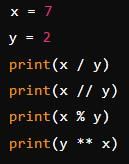
- a)3.5, 3, 1, 49
- b)3.5, 3, 1, 128
- c)3.5, 3, 1, 64
- d)3.5, 3, 1, 32
Correct answer is option 'A'. Can you explain this answer?
What will be the output of the following Python code?
a)
3.5, 3, 1, 49
b)
3.5, 3, 1, 128
c)
3.5, 3, 1, 64
d)
3.5, 3, 1, 32
 | Imk Pathshala answered |
The first `print (x / y)` outputs `3.5`.
The second `print(x // y)` outputs `3` (integer division).
The third `print(x % y)` outputs `1` (remainder).
The fourth `print(y ** x)` outputs `49` (power calculation).
The second `print(x // y)` outputs `3` (integer division).
The third `print(x % y)` outputs `1` (remainder).
The fourth `print(y ** x)` outputs `49` (power calculation).

What is the output of the following Python code?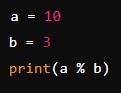
- a)1
- b)2
- c)3
- d)0
Correct answer is option 'A'. Can you explain this answer?
What is the output of the following Python code?
a)
1
b)
2
c)
3
d)
0
 | Let's Tute answered |
`a % b` calculates the remainder of `10` divided by `3`, which is `1`.
What will be the output of the following Python code?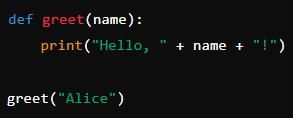
- a)Hello, Alice!
- b)Hello,
Alice! - c)Hello, + name + !
- d)Error: missing argument for greet()
Correct answer is option 'A'. Can you explain this answer?
What will be the output of the following Python code?
a)
Hello, Alice!
b)
Hello,
Alice!
Alice!
c)
Hello, + name + !
d)
Error: missing argument for greet()
| | Let's Tute answered |
The function `greet("Alice") `prints ` "Hello, Alice!" `.
What is the output of the following Python code?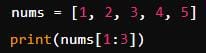
- a)[1, 2]
- b)[2, 3]
- c)[2, 3, 4]
- d)[2, 3, 4, 5]
Correct answer is option 'B'. Can you explain this answer?
What is the output of the following Python code?
a)
[1, 2]
b)
[2, 3]
c)
[2, 3, 4]
d)
[2, 3, 4, 5]
 | EduRev Class 9 answered |
'nums[1:3]' extracts elements from index '1' to '2' (exclusive of index '3'), so it prints '[2, 3]'.
What will be the output of the following Python code?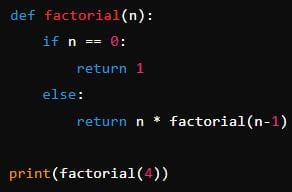
- a)4
- b)8
- c)12
- d)24
Correct answer is option 'D'. Can you explain this answer?
What will be the output of the following Python code?
a)
4
b)
8
c)
12
d)
24
| | Let's Tute answered |
'factorial(4)' computes '4 * 3 * 2 * 1' which equals '24'.
What is the output of the following Python code?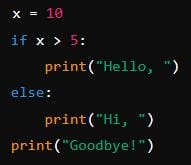
- a)Hello, Goodbye!
- b)Hi, Goodbye!
- c)Hello,Goodbye!
- d)Hi,Goodbye!
Correct answer is option 'A'. Can you explain this answer?
What is the output of the following Python code?
a)
Hello, Goodbye!
b)
Hi, Goodbye!
c)
Hello,
Goodbye!
d)
Hi,
Goodbye!
| | EduRev Class 9 answered |
The condition 'x > 5' evaluates to 'True', so it prints ' "Hello, " ' followed by ' "Goodbye!" '.
What is the output of the following Python code?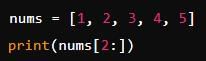
- a)[1, 2, 3, 4]
- b)[2, 3, 4, 5]
- c)[3, 4, 5]
- d)[4, 5]
Correct answer is option 'C'. Can you explain this answer?
What is the output of the following Python code?
a)
[1, 2, 3, 4]
b)
[2, 3, 4, 5]
c)
[3, 4, 5]
d)
[4, 5]
 | C K Academy answered |
`nums[2:]` slices the list from index `2` to the end, so it prints `[3, 4, 5]`.
What will be the output of the following Python code?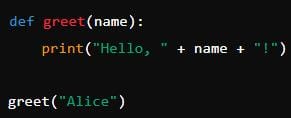
- a)Hello, Alice!
- b)Hello,Alice!
- c)Hello, + name + !
- d)Error: missing argument for greet()
Correct answer is option 'A'. Can you explain this answer?
What will be the output of the following Python code?
a)
Hello, Alice!
b)
Hello,
Alice!
c)
Hello, + name + !
d)
Error: missing argument for greet()
| | EduRev Class 9 answered |
The function 'greet("Alice")' prints ' "Hello, Alice!" '.
What does the following Python code print?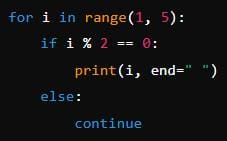
- a)1 2
- b)2 4
- c)2 3
- d)1 3
Correct answer is option 'B'. Can you explain this answer?
What does the following Python code print?
a)
1 2
b)
2 4
c)
2 3
d)
1 3
| | Let's Tute answered |
The loop iterates through numbers from '1' to '4'. It prints even numbers ('2' and '4') due to the 'if i % 2 == 0' condition.
What will be the output of the following Python code?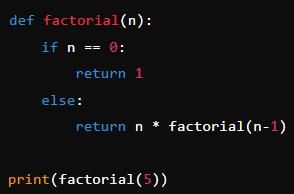
- a)10
- b)24
- c)120
- d)720
Correct answer is option 'C'. Can you explain this answer?
What will be the output of the following Python code?
a)
10
b)
24
c)
120
d)
720
| | C K Academy answered |
`factorial(5)` computes `5 * 4 * 3 * 2 * 1` which equals `120`.
What does the following Python code print?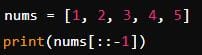
- a)[5, 4, 3, 2, 1]
- b)[1, 2, 3, 4, 5]
- c)[5, 4, 3, 2]
- d)[4, 3, 2, 1]
Correct answer is option 'A'. Can you explain this answer?
What does the following Python code print?
a)
[5, 4, 3, 2, 1]
b)
[1, 2, 3, 4, 5]
c)
[5, 4, 3, 2]
d)
[4, 3, 2, 1]
| | Let's Tute answered |
`nums[::-1]` reverses the list `nums`, so it prints `[5, 4, 3, 2, 1]`.
What is the output of the following Python code?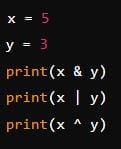
- a)1, 7, 6
- b)2, 8, 7
- c)1, 8, 7
- d)2, 7, 6
Correct answer is option 'C'. Can you explain this answer?
What is the output of the following Python code?
a)
1, 7, 6
b)
2, 8, 7
c)
1, 8, 7
d)
2, 7, 6
| | Let's Tute answered |
- `x & y` performs bitwise AND (`0101 & 0011`), resulting in `0001` which is `1`.
- `x | y` performs bitwise OR (`0101 | 0011`), resulting in `1000` which is `8`.
- `x ^ y` performs bitwise XOR (`0101 ^ 0011`), resulting in `0110` which is `6`.
What will be the output of the following Python code?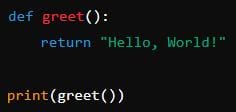
- a)Hello, World!
- b)Hello,
World! - c)Error: greet() missing argument
- d)None
Correct answer is option 'A'. Can you explain this answer?
What will be the output of the following Python code?
a)
Hello, World!
b)
Hello,
World!
World!
c)
Error: greet() missing argument
d)
None
| | Let's Tute answered |
The function `greet()` returns ` "Hello, World!" ` which is then printed.
What is the output of the following Python code?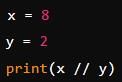
- a)4.0
- b)4
- c)3.0
- d)3
Correct answer is option 'B'. Can you explain this answer?
What is the output of the following Python code?
a)
4.0
b)
4
c)
3.0
d)
3
| | Imk Pathshala answered |
`x // y` performs integer division of `8` by `2`, resulting in `4`.
What will be the output of the following Python code?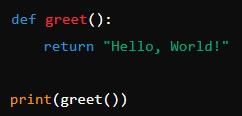
- a)Hello, World!
- b)Hello,
World! - c)Error: greet() missing argument
- d)None
Correct answer is option 'A'. Can you explain this answer?
What will be the output of the following Python code?
a)
Hello, World!
b)
Hello,
World!
World!
c)
Error: greet() missing argument
d)
None
| | EduRev Class 9 answered |
The function `greet()` returns ` "Hello, World!" `which is then printed.
What will be the output of the following Python code?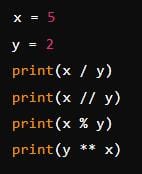
- a)2.5
- b)2, 2, 1, 25
- c)2, 2, 1, 32
- d)2, 2, 0, 25
Correct answer is option 'C'. Can you explain this answer?
What will be the output of the following Python code?
a)
2.5
b)
2, 2, 1, 25
c)
2, 2, 1, 32
d)
2, 2, 0, 25
| | EduRev Class 9 answered |
- The first 'print(x / y)' outputs '2.5'.
- The second 'print(x // y)' outputs '2' (integer division).
- The third 'print(x % y)' outputs '1' (remainder).
- The fourth 'print(y ** x)' outputs '32' (power calculation).
What is the output of the following Python code?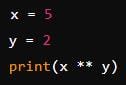
- a)7
- b)10
- c)25
- d)2
Correct answer is option 'C'. Can you explain this answer?
What is the output of the following Python code?
a)
7
b)
10
c)
25
d)
2
| | Let's Tute answered |
`x ** y` calculates `5` raised to the power `2`, resulting in `25`.
What is the output of the following Python code?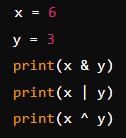
- a)2, 7, 8
- b)1, 8, 7
- c)2, 7, 5
- d)1, 8, 6
Correct answer is option 'C'. Can you explain this answer?
What is the output of the following Python code?
a)
2, 7, 8
b)
1, 8, 7
c)
2, 7, 5
d)
1, 8, 6
| | Imk Pathshala answered |
- `x & y` performs bitwise AND (`0110 & 0011`), resulting in `0010` which is `2`.
- `x | y` performs bitwise OR (`0110 | 0011`), resulting in `0111` which is `7`.
- `x ^ y` performs bitwise XOR (`0110 ^ 0011`), resulting in `0101` which is `5`.
What does the following Python code print?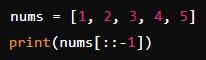
- a)[5, 4, 3, 2, 1]
- b)[1, 2, 3, 4, 5]
- c)[5, 4, 3, 2]
- d)[4, 3, 2, 1]
Correct answer is option 'A'. Can you explain this answer?
What does the following Python code print?
a)
[5, 4, 3, 2, 1]
b)
[1, 2, 3, 4, 5]
c)
[5, 4, 3, 2]
d)
[4, 3, 2, 1]
| | Imk Pathshala answered |
`nums[::-1]` reverses the list `nums`, so it prints `[5, 4, 3, 2, 1]`.
What does the following Python code print?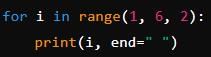
- a)1 2 3 4 5
- b)1 3 5
- c)2 4 6
- d)1 3
Correct answer is option 'B'. Can you explain this answer?
What does the following Python code print?
a)
1 2 3 4 5
b)
1 3 5
c)
2 4 6
d)
1 3
| | EduRev Class 9 answered |
The `range(1, 6, 2)` generates numbers `1, 3, 5`. The loop prints these numbers with a space in between.
Chapter doubts & questions for Introduction to Python 3.11 - Cyber Olympiad for Class 9 2026 is part of Class 9 exam preparation. The chapters have been prepared according to the Class 9 exam syllabus. The Chapter doubts & questions, notes, tests & MCQs are made for Class 9 2026 Exam. Find important definitions, questions, notes, meanings, examples, exercises, MCQs and online tests here.
Chapter doubts & questions of Introduction to Python 3.11 - Cyber Olympiad for Class 9 in English & Hindi are available as part of Class 9 exam. Download more important topics, notes, lectures and mock test series for Class 9 Exam by signing up for free.
Cyber Olympiad for Class 97 videos|28 docs|69 tests |
