


All Exams >
Class 3 >
Class 3 Quizzes – Improve Skills in all Subjects >
All Questions
All questions of Mathematics (Maths Mela) for Class 3 Exam
Which of the following numbers is 75 more than 150?- a)175
- b)200
- c)225
- d)250
Correct answer is option 'C'. Can you explain this answer?
a)
175
b)
200
c)
225
d)
250

|
Indu Gupta answered |
Adding 75 to 150 gives us 225.

How many faces does a cylinder have?- a)2
- b)3
- c)4
- d)6
Correct answer is option 'B'. Can you explain this answer?
a)
2
b)
3
c)
4
d)
6
|
|
Indu Gupta answered |
A cylinder has 3 faces—a circular top, a circular bottom, and a curved surface.
Rahul has 18 chocolates. He wants to share them equally with his 3 friends. How many chocolates will each friend get?- a)4 chocolates
- b)5 chocolates
- c)6 chocolates
- d)7 chocolates
Correct answer is option 'C'. Can you explain this answer?
a)
4 chocolates
b)
5 chocolates
c)
6 chocolates
d)
7 chocolates

|
Glitz Classes answered |
To find the number of chocolates each friend will get, we need to divide the total number of chocolates (18) by the number of friends (3).
18 chocolates ÷ 3 friends = 6 chocolates per friend
18 chocolates ÷ 3 friends = 6 chocolates per friend
A teacher has 24 pencils to distribute equally among 8 students. How many pencils will each student get?- a)2 pencils
- b)3 pencils
- c)4 pencils
- d)5 pencils
Correct answer is option 'B'. Can you explain this answer?
a)
2 pencils
b)
3 pencils
c)
4 pencils
d)
5 pencils
|
|
Glitz Classes answered |
To find the number of pencils each student will get, we need to divide the total number of pencils (24) by the number of students (8).
24 pencils ÷ 8 students = 3 pencils per student
24 pencils ÷ 8 students = 3 pencils per student
How did Soni and Avi find their way to the Chaupal in the Surajkund fair?- a)They followed the red lane and turned left.
- b)They followed the blue lane, turned right, and then followed the green lane.
- c)They followed the yellow lane and turned left.
- d)They followed the green lane, turned left, and then found the Chaupal.
Correct answer is option 'B'. Can you explain this answer?
How did Soni and Avi find their way to the Chaupal in the Surajkund fair?
a)
They followed the red lane and turned left.
b)
They followed the blue lane, turned right, and then followed the green lane.
c)
They followed the yellow lane and turned left.
d)
They followed the green lane, turned left, and then found the Chaupal.

|
Torcia Education answered |
Soni and Avi started by walking on the blue lane, then turned right onto the green lane. They followed the directions to reach the Chaupal. Following these directions on the map helped them reunite with their grandparents.
Which shape is formed by combining cylinders for the body, cones for the top or nose, rectangles for fins, and circles for windows or portholes ?
- a)Drum
- b)House
- c)tree
- d)Rocket
Correct answer is option 'D'. Can you explain this answer?
Which shape is formed by combining cylinders for the body, cones for the top or nose, rectangles for fins, and circles for windows or portholes ?
a)
Drum
b)
House
c)
tree
d)
Rocket
|
|
Indu Gupta answered |
The description indicates that a rocket is made by combining cylinders, cones, rectangles, and circles, with cylinders representing the body.
How many letters are in the word "five"?- a)3
- b)4
- c)5
- d)6
Correct answer is option 'B'. Can you explain this answer?
a)
3
b)
4
c)
5
d)
6
|
|
Glitz Classes answered |
Counting each letter in "five," we find that there are 4 letters (F-I-V-E). Therefore, the correct answer is Option B.
If you want to measure the height of a basketball hoop, which unit would you use?- a)Meter
- b)Kilometer
- c)Centimeter
- d)Inch
Correct answer is option 'A'. Can you explain this answer?
a)
Meter
b)
Kilometer
c)
Centimeter
d)
Inch
|
|
Glitz Classes answered |
Meters would be used to measure the height of a basketball hoop, as it's a larger measurement than centimeters and inches.
How many letters are there in the name "Anisha"?- a)4
- b)6
- c)5
- d)7
Correct answer is option 'B'. Can you explain this answer?
How many letters are there in the name "Anisha"?
a)
4
b)
6
c)
5
d)
7
|
|
Indu Gupta answered |
Counting each letter individually in "Anisha," we find that there are 6 letters (A-N-I-S-H-A). Therefore, the correct answer is Option B.
Which shape has no curved surfaces?- a)Sphere
- b)Cylinder
- c)Cone
- d)Cube
Correct answer is option 'D'. Can you explain this answer?
a)
Sphere
b)
Cylinder
c)
Cone
d)
Cube
|
|
Indu Gupta answered |
A cube has only flat, square faces and no curved surfaces.
How many meters are there in one kilometer?- a)10
- b)100
- c)1000
- d)10000
Correct answer is option 'C'. Can you explain this answer?
a)
10
b)
100
c)
1000
d)
10000
|
|
Glitz Classes answered |
There are 1000 meters in one kilometer.
Which 3D shape has only one corner (vertex)?- a)Cube
- b)Sphere
- c)Cone
- d)Cylinder
Correct answer is option 'C'. Can you explain this answer?
a)
Cube
b)
Sphere
c)
Cone
d)
Cylinder
|
|
Indu Gupta answered |
A cone has one corner, called the vertex, where the curved surface and base meet.
Which of the following shapes is symmetrical?- a)Circle
- b)Irregular polygon
- c)Random curve
- d)Zigzag line
Correct answer is option 'A'. Can you explain this answer?
a)
Circle
b)
Irregular polygon
c)
Random curve
d)
Zigzag line
|
|
Glitz Classes answered |
A circle is a symmetrical shape because it can be divided along any diameter, and both sides will be identical.
Which unit would you use to measure the length of a small toy car?- a)Meter
- b)Kilometer
- c)Centimeter
- d)Inch
Correct answer is option 'C'. Can you explain this answer?
a)
Meter
b)
Kilometer
c)
Centimeter
d)
Inch
|
|
Indu Gupta answered |
Centimeters would be appropriate for measuring the length of a small toy car.
What is the value of the digit 7 in the number 8792?
- a)7000
- b)700
- c)7
- d)70
Correct answer is option 'B'. Can you explain this answer?
What is the value of the digit 7 in the number 8792?
a)
7000
b)
700
c)
7
d)
70
|
|
Glitz Classes answered |
The digit 7 is in the tens place, so its value is 70.
Joy is hopping on the tiles at the fair. Can you guess how many candies are in the fourth box if the total number of candies in 4 boxes is 282, and the first three boxes have 72, 85, and 67 candies?- a)40
- b)75
- c)86
- d)58
Correct answer is option 'D'. Can you explain this answer?
Joy is hopping on the tiles at the fair. Can you guess how many candies are in the fourth box if the total number of candies in 4 boxes is 282, and the first three boxes have 72, 85, and 67 candies?
a)
40
b)
75
c)
86
d)
58

|
Palak Chaudhary answered |
Total Number of Candies
The total number of candies in all four boxes is given as 282.
Candies in the First Three Boxes
The candies in the first three boxes are:
- Box 1: 72 candies
- Box 2: 85 candies
- Box 3: 67 candies
Calculating the Total in the First Three Boxes
To find out how many candies are in the first three boxes, we add them together:
- 72 + 85 + 67
Calculating this step-by-step:
- First, add 72 and 85:
- 72 + 85 = 157
- Next, add 67 to 157:
- 157 + 67 = 224
So, the total number of candies in the first three boxes is 224.
Finding the Number of Candies in the Fourth Box
Now, to find out how many candies are in the fourth box, we subtract the total number of candies in the first three boxes from the total number of candies:
- Total candies = 282
- Total in the first three boxes = 224
Now, calculate the candies in the fourth box:
- 282 - 224 = 58
Conclusion
Therefore, the number of candies in the fourth box is 58.
The correct answer is option 'D', which confirms that Joy will find 58 candies in the fourth box!
The total number of candies in all four boxes is given as 282.
Candies in the First Three Boxes
The candies in the first three boxes are:
- Box 1: 72 candies
- Box 2: 85 candies
- Box 3: 67 candies
Calculating the Total in the First Three Boxes
To find out how many candies are in the first three boxes, we add them together:
- 72 + 85 + 67
Calculating this step-by-step:
- First, add 72 and 85:
- 72 + 85 = 157
- Next, add 67 to 157:
- 157 + 67 = 224
So, the total number of candies in the first three boxes is 224.
Finding the Number of Candies in the Fourth Box
Now, to find out how many candies are in the fourth box, we subtract the total number of candies in the first three boxes from the total number of candies:
- Total candies = 282
- Total in the first three boxes = 224
Now, calculate the candies in the fourth box:
- 282 - 224 = 58
Conclusion
Therefore, the number of candies in the fourth box is 58.
The correct answer is option 'D', which confirms that Joy will find 58 candies in the fourth box!
Fill in the box with the correct number to make the statements equal:
373 + 23 = ____ + 10- a)373
- b)386
- c)240
- d)204
Correct answer is option 'B'. Can you explain this answer?
Fill in the box with the correct number to make the statements equal:
373 + 23 = ____ + 10
373 + 23 = ____ + 10
a)
373
b)
386
c)
240
d)
204
|
|
Glitz Classes answered |
- The equation 373 + 23 = ____ + 10 requires finding a number that balances both sides.
- Calculate the left side: 373 + 23 = 396.
- To find the missing number on the right side, set up the equation: 396 = ____ + 10.
- Subtract 10 from 396: 396 - 10 = 386.
- Thus, the missing number is 386, which is option B.
- Calculate the left side: 373 + 23 = 396.
- To find the missing number on the right side, set up the equation: 396 = ____ + 10.
- Subtract 10 from 396: 396 - 10 = 386.
- Thus, the missing number is 386, which is option B.
A school has a requirement to distribute 900 notebooks to students. They have already distributed 475 notebooks. How many more notebooks need to be distributed?- a)325
- b)400
- c)450
- d)425
Correct answer is option 'D'. Can you explain this answer?
A school has a requirement to distribute 900 notebooks to students. They have already distributed 475 notebooks. How many more notebooks need to be distributed?
a)
325
b)
400
c)
450
d)
425

|
Sparsh Chavan answered |
Understanding the Problem
To determine how many more notebooks need to be distributed, we start with the total number of notebooks required and subtract the number already distributed.
Total Notebooks Required
- The school needs to distribute a total of 900 notebooks.
Notebooks Already Distributed
- The school has already distributed 475 notebooks.
Calculating Remaining Notebooks
- To find out how many more notebooks need to be distributed, we perform the following calculation:
- Remaining Notebooks = Total Notebooks Required - Notebooks Already Distributed
- Plugging in the numbers:
- Remaining Notebooks = 900 - 475
- This simplifies to:
- Remaining Notebooks = 425
Conclusion
- Therefore, the school needs to distribute 425 more notebooks to meet the requirement of 900 notebooks.
Correct Answer
- The correct answer is option D (425).
This calculation helps ensure that all students receive the necessary materials they need for their studies.
To determine how many more notebooks need to be distributed, we start with the total number of notebooks required and subtract the number already distributed.
Total Notebooks Required
- The school needs to distribute a total of 900 notebooks.
Notebooks Already Distributed
- The school has already distributed 475 notebooks.
Calculating Remaining Notebooks
- To find out how many more notebooks need to be distributed, we perform the following calculation:
- Remaining Notebooks = Total Notebooks Required - Notebooks Already Distributed
- Plugging in the numbers:
- Remaining Notebooks = 900 - 475
- This simplifies to:
- Remaining Notebooks = 425
Conclusion
- Therefore, the school needs to distribute 425 more notebooks to meet the requirement of 900 notebooks.
Correct Answer
- The correct answer is option D (425).
This calculation helps ensure that all students receive the necessary materials they need for their studies.
What is the smallest 3-digit number that can be formed with the digits 3, 7, and 2?- a)237
- b)372
- c)723
- d)732
Correct answer is option 'A'. Can you explain this answer?
What is the smallest 3-digit number that can be formed with the digits 3, 7, and 2?
a)
237
b)
372
c)
723
d)
732

|
Soumya Choudhary answered |
Understanding the Problem
To find the smallest 3-digit number using the digits 3, 7, and 2, we need to consider the placement of each digit in the hundreds, tens, and units places.
Analyzing the Digits
We have three digits:
- 2
- 3
- 7
To form a 3-digit number, the leftmost digit (hundreds place) must be the smallest digit to ensure the overall number is minimized.
Choosing the Smallest Digit
- The smallest digit among 2, 3, and 7 is 2.
- Therefore, 2 should occupy the hundreds place.
Forming the Number
Now that we have placed 2 in the hundreds place, we have the following remaining digits to arrange in the tens and units places:
- Remaining digits: 3 and 7.
To keep the number as small as possible, we should place the next smallest digit in the tens place:
- Place 3 in the tens place.
- Finally, place 7 in the units place.
Thus, the number formed is 237.
Conclusion
So, the smallest 3-digit number that can be formed with the digits 3, 7, and 2 is:
- 237 (Option A)
Hence, the correct answer is option 'A'.
To find the smallest 3-digit number using the digits 3, 7, and 2, we need to consider the placement of each digit in the hundreds, tens, and units places.
Analyzing the Digits
We have three digits:
- 2
- 3
- 7
To form a 3-digit number, the leftmost digit (hundreds place) must be the smallest digit to ensure the overall number is minimized.
Choosing the Smallest Digit
- The smallest digit among 2, 3, and 7 is 2.
- Therefore, 2 should occupy the hundreds place.
Forming the Number
Now that we have placed 2 in the hundreds place, we have the following remaining digits to arrange in the tens and units places:
- Remaining digits: 3 and 7.
To keep the number as small as possible, we should place the next smallest digit in the tens place:
- Place 3 in the tens place.
- Finally, place 7 in the units place.
Thus, the number formed is 237.
Conclusion
So, the smallest 3-digit number that can be formed with the digits 3, 7, and 2 is:
- 237 (Option A)
Hence, the correct answer is option 'A'.
What time is it when the minute hand is on 12 and the hour hand is on 5?- a)4:00
- b)5:00
- c)6:00
- d)12:00
Correct answer is option 'B'. Can you explain this answer?
a)
4:00
b)
5:00
c)
6:00
d)
12:00
|
|
Glitz Classes answered |
When the minute hand is on 12 and the hour hand is on 5, it is exactly 5:00.
If Aditya's score is 378, Priya's score is 421, Rohan's score is 356, and Aisha's score is 245, who has the highest score?- a)Aditya
- b)Priya
- c)Rohan
- d)Aisha
Correct answer is option 'B'. Can you explain this answer?
a)
Aditya
b)
Priya
c)
Rohan
d)
Aisha
|
|
Nilesh Khanna answered |
Understanding the Scores
To determine who has the highest score among Aditya, Priya, Rohan, and Aisha, we need to look at each person's score:
- Aditya's score: 378
- Priya's score: 421
- Rohan's score: 356
- Aisha's score: 245
Comparing the Scores
Let's compare each score to find the highest:
- Aditya (378) < priya="">
- Rohan (356) < priya="">
- Aisha (245) < priya="">
From the comparisons, it's clear that Priya's score of 421 is higher than all the others.
Conclusion
Therefore, Priya has the highest score among the four individuals.
- The scores in order from highest to lowest are:
- Priya: 421
- Aditya: 378
- Rohan: 356
- Aisha: 245
This confirms that the correct answer is option 'B': Priya has the highest score.
To determine who has the highest score among Aditya, Priya, Rohan, and Aisha, we need to look at each person's score:
- Aditya's score: 378
- Priya's score: 421
- Rohan's score: 356
- Aisha's score: 245
Comparing the Scores
Let's compare each score to find the highest:
- Aditya (378) < priya="">
- Rohan (356) < priya="">
- Aisha (245) < priya="">
From the comparisons, it's clear that Priya's score of 421 is higher than all the others.
Conclusion
Therefore, Priya has the highest score among the four individuals.
- The scores in order from highest to lowest are:
- Priya: 421
- Aditya: 378
- Rohan: 356
- Aisha: 245
This confirms that the correct answer is option 'B': Priya has the highest score.
If you have 85 sticks and you want to make bundles of 10, how many bundles can you create?- a) 8 bundles
- b) 9 bundles
- c) 7 bundles
- d) 10 bundles
Correct answer is option 'A'. Can you explain this answer?
If you have 85 sticks and you want to make bundles of 10, how many bundles can you create?
a)
8 bundles
b)
9 bundles
c)
7 bundles
d)
10 bundles
|
|
Glitz Classes answered |
To find the number of bundles, divide the total number of sticks by 10: 85 ÷ 10 = 8 bundles with 5 sticks remaining. This division exercise highlights the importance of understanding how to break down larger quantities into smaller, manageable groups.
What is the sum of 15 + 9?
- a)24
- b)22
- c)20
- d)26
Correct answer is option 'A'. Can you explain this answer?
What is the sum of 15 + 9?
a)
24
b)
22
c)
20
d)
26

|
Chirag Ghoshal answered |
Understanding the Addition Problem
When we look at the problem of adding 15 and 9, we are essentially combining two quantities to find a total.
Breaking Down the Numbers
- First Number: 15
- This represents a quantity that we start with.
- Second Number: 9
- This is the quantity we want to add to the first number.
Performing the Addition
To find the sum of 15 and 9, we perform the following steps:
1. Align the Numbers:
- Write 15 above 9 to visualize the addition.
2. Add the Units Place:
- The units place of 15 is 5, and for 9, it is 9.
- 5 + 9 = 14.
- Write down 4 and carry over 1 to the next column (the tens place).
3. Add the Tens Place:
- The tens place of 15 is 1 (10), and we add the carry over, which is 1.
- 1 + 1 = 2.
4. Combine the Results:
- The result from the tens place is 2 and from the units place is 4.
- This gives us a final sum of 24.
Final Answer
Thus, when you add 15 and 9 together, the sum is 24.
- The correct answer is option 'A' (24).
This exercise demonstrates basic addition skills that are essential for understanding more complex mathematical concepts as students progress in their studies.
When we look at the problem of adding 15 and 9, we are essentially combining two quantities to find a total.
Breaking Down the Numbers
- First Number: 15
- This represents a quantity that we start with.
- Second Number: 9
- This is the quantity we want to add to the first number.
Performing the Addition
To find the sum of 15 and 9, we perform the following steps:
1. Align the Numbers:
- Write 15 above 9 to visualize the addition.
2. Add the Units Place:
- The units place of 15 is 5, and for 9, it is 9.
- 5 + 9 = 14.
- Write down 4 and carry over 1 to the next column (the tens place).
3. Add the Tens Place:
- The tens place of 15 is 1 (10), and we add the carry over, which is 1.
- 1 + 1 = 2.
4. Combine the Results:
- The result from the tens place is 2 and from the units place is 4.
- This gives us a final sum of 24.
Final Answer
Thus, when you add 15 and 9 together, the sum is 24.
- The correct answer is option 'A' (24).
This exercise demonstrates basic addition skills that are essential for understanding more complex mathematical concepts as students progress in their studies.
Which type of lines are used to draw a circle?- a)Zigzag lines
- b)Straight lines
- c)Dotted lines
- d)Curved lines
Correct answer is option 'D'. Can you explain this answer?
a)
Zigzag lines
b)
Straight lines
c)
Dotted lines
d)
Curved lines

|
Deepika Menon answered |
Understanding the Shape of a Circle
A circle is a unique geometric shape characterized by its smooth, round form. To comprehend why curved lines are essential in drawing a circle, let’s break it down.
What Defines a Circle?
- A circle is defined as the set of all points in a plane that are equidistant from a fixed center point.
- This equidistance creates a perfectly round shape, which cannot be achieved with straight lines or any other type of line.
Reasons for Using Curved Lines
- Smoothness: Curved lines allow for a smooth transition around the center, creating the continuous arc that is fundamental to a circle.
- No Sharp Edges: Unlike straight lines, which form angles and corners, curved lines do not have any sharp edges, making them ideal for representing the round nature of a circle.
- Mathematical Definition: In geometry, a circle is represented mathematically using curves. The formula for a circle involves curves, emphasizing their importance.
Comparison with Other Line Types
- Zigzag Lines: These create a jagged appearance and are not suitable for forming a smooth round shape.
- Straight Lines: They connect two points directly and can only create angles, not curves.
- Dotted Lines: While they can suggest a shape, they do not create a complete form, as they are made of separate segments.
Conclusion
In conclusion, the use of curved lines is essential for accurately drawing a circle. Their ability to create a seamless, round shape distinguishes them from all other line types, making them the correct choice for this task.
A circle is a unique geometric shape characterized by its smooth, round form. To comprehend why curved lines are essential in drawing a circle, let’s break it down.
What Defines a Circle?
- A circle is defined as the set of all points in a plane that are equidistant from a fixed center point.
- This equidistance creates a perfectly round shape, which cannot be achieved with straight lines or any other type of line.
Reasons for Using Curved Lines
- Smoothness: Curved lines allow for a smooth transition around the center, creating the continuous arc that is fundamental to a circle.
- No Sharp Edges: Unlike straight lines, which form angles and corners, curved lines do not have any sharp edges, making them ideal for representing the round nature of a circle.
- Mathematical Definition: In geometry, a circle is represented mathematically using curves. The formula for a circle involves curves, emphasizing their importance.
Comparison with Other Line Types
- Zigzag Lines: These create a jagged appearance and are not suitable for forming a smooth round shape.
- Straight Lines: They connect two points directly and can only create angles, not curves.
- Dotted Lines: While they can suggest a shape, they do not create a complete form, as they are made of separate segments.
Conclusion
In conclusion, the use of curved lines is essential for accurately drawing a circle. Their ability to create a seamless, round shape distinguishes them from all other line types, making them the correct choice for this task.
Arrange the following numbers in descending order:
946, 712, 835, 689.
- a)946, 712, 835, 689
- b)946, 835, 689, 712
- c)946, 712, 689, 835
- d)946, 835, 712, 689
Correct answer is option 'D'. Can you explain this answer?
Arrange the following numbers in descending order:
946, 712, 835, 689.
946, 712, 835, 689.
a)
946, 712, 835, 689
b)
946, 835, 689, 712
c)
946, 712, 689, 835
d)
946, 835, 712, 689
|
|
Shalini Mishra answered |
Understanding Descending Order
Descending order means arranging numbers from the largest to the smallest. To determine the correct order, we need to compare the given numbers one by one.
Given Numbers
- 946
- 712
- 835
- 689
Step-by-Step Comparison
1. Identify the Largest Number:
- The largest number among the four is 946.
2. Next Largest Number:
- After 946, we compare the remaining numbers: 712, 835, and 689.
- The next largest is 835.
3. Continuing the Comparison:
- Now, we compare 712 and 689.
- The larger of these is 712.
4. Smallest Number:
- Finally, the smallest number is 689.
Final Arrangement
After comparing all the numbers, we can now arrange them in descending order:
- 946
- 835
- 712
- 689
Thus, the correct order is 946, 835, 712, and 689.
Correct Answer
- The correct option is d) 946, 835, 712, 689.
This structured approach helps in understanding how to arrange numbers in descending order clearly and logically.
Descending order means arranging numbers from the largest to the smallest. To determine the correct order, we need to compare the given numbers one by one.
Given Numbers
- 946
- 712
- 835
- 689
Step-by-Step Comparison
1. Identify the Largest Number:
- The largest number among the four is 946.
2. Next Largest Number:
- After 946, we compare the remaining numbers: 712, 835, and 689.
- The next largest is 835.
3. Continuing the Comparison:
- Now, we compare 712 and 689.
- The larger of these is 712.
4. Smallest Number:
- Finally, the smallest number is 689.
Final Arrangement
After comparing all the numbers, we can now arrange them in descending order:
- 946
- 835
- 712
- 689
Thus, the correct order is 946, 835, 712, and 689.
Correct Answer
- The correct option is d) 946, 835, 712, 689.
This structured approach helps in understanding how to arrange numbers in descending order clearly and logically.
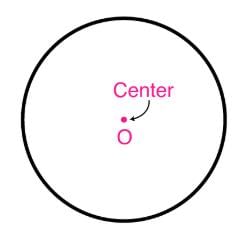
What is the center of a circle called?- a)Radius
- b)Edge
- c)Diameter
- d)Center
Correct answer is option 'D'. Can you explain this answer?
What is the center of a circle called?
a)
Radius
b)
Edge
c)
Diameter
d)
Center
|
|
Glitz Classes answered |
The center of a circle is the point exactly in the middle, equidistant from all points on the edge.
Which of the following correctly expresses 124 as a number reduced from a larger base value?- a)24 less than 150
- b)36 less than 150
- c)76 less than 200
- d)124 less than 0
Correct answer is option 'C'. Can you explain this answer?
Which of the following correctly expresses 124 as a number reduced from a larger base value?
a)
24 less than 150
b)
36 less than 150
c)
76 less than 200
d)
124 less than 0

|
Arnab Banerjee answered |
Understanding the Question
The question asks us to express the number 124 in terms of how much less it is than a larger base value.
Options Analysis
Let's analyze each option to see which one accurately represents 124:
- Option A: 24 less than 150
- Calculation: 150 - 24 = 126
- Conclusion: This does not equal 124.
- Option B: 36 less than 150
- Calculation: 150 - 36 = 114
- Conclusion: This does not equal 124.
- Option C: 76 less than 200
- Calculation: 200 - 76 = 124
- Conclusion: This is correct as it equals 124.
- Option D: 124 less than 0
- Calculation: 0 - 124 = -124
- Conclusion: This does not equal 124.
Correct Answer
Thus, the correct answer is Option C: 76 less than 200.
Why It Matters
Understanding how to express numbers in terms of differences can help build foundational math skills. This concept is crucial for:
- Arithmetic operations
- Critical thinking
- Problem-solving skills
Using comparisons like "less than" enhances numerical literacy and comprehension of basic mathematics, a key part of early education.
The question asks us to express the number 124 in terms of how much less it is than a larger base value.
Options Analysis
Let's analyze each option to see which one accurately represents 124:
- Option A: 24 less than 150
- Calculation: 150 - 24 = 126
- Conclusion: This does not equal 124.
- Option B: 36 less than 150
- Calculation: 150 - 36 = 114
- Conclusion: This does not equal 124.
- Option C: 76 less than 200
- Calculation: 200 - 76 = 124
- Conclusion: This is correct as it equals 124.
- Option D: 124 less than 0
- Calculation: 0 - 124 = -124
- Conclusion: This does not equal 124.
Correct Answer
Thus, the correct answer is Option C: 76 less than 200.
Why It Matters
Understanding how to express numbers in terms of differences can help build foundational math skills. This concept is crucial for:
- Arithmetic operations
- Critical thinking
- Problem-solving skills
Using comparisons like "less than" enhances numerical literacy and comprehension of basic mathematics, a key part of early education.
If a glass can hold 250 mL of juice, how many glasses would be needed to hold 1 liter of juice?- a)2
- b)3
- c)4
- d)5
Correct answer is option 'C'. Can you explain this answer?
a)
2
b)
3
c)
4
d)
5
|
|
Yash Banerjee answered |
Understanding the Problem
To start, we need to understand the volumes involved. We know that:
- A glass can hold 250 mL of juice.
- We need to hold 1 liter of juice.
Volume Conversion
Let's convert 1 liter to milliliters to make the comparison easier:
- 1 liter = 1000 mL
Calculating the Number of Glasses
Now, we can find out how many glasses are needed to hold this amount of juice.
- To do this, we divide the total volume of juice (1000 mL) by the volume of one glass (250 mL):
- Number of glasses = Total volume / Volume of one glass
- Number of glasses = 1000 mL / 250 mL = 4
Conclusion
Therefore, we need 4 glasses to hold 1 liter of juice.
- This means that the correct answer is option C.
Summary
- Glass capacity: 250 mL
- Total juice: 1 liter = 1000 mL
- Calculation: 1000 mL / 250 mL = 4 glasses
In conclusion, to hold 1 liter of juice, you would indeed need 4 glasses.
To start, we need to understand the volumes involved. We know that:
- A glass can hold 250 mL of juice.
- We need to hold 1 liter of juice.
Volume Conversion
Let's convert 1 liter to milliliters to make the comparison easier:
- 1 liter = 1000 mL
Calculating the Number of Glasses
Now, we can find out how many glasses are needed to hold this amount of juice.
- To do this, we divide the total volume of juice (1000 mL) by the volume of one glass (250 mL):
- Number of glasses = Total volume / Volume of one glass
- Number of glasses = 1000 mL / 250 mL = 4
Conclusion
Therefore, we need 4 glasses to hold 1 liter of juice.
- This means that the correct answer is option C.
Summary
- Glass capacity: 250 mL
- Total juice: 1 liter = 1000 mL
- Calculation: 1000 mL / 250 mL = 4 glasses
In conclusion, to hold 1 liter of juice, you would indeed need 4 glasses.
What would you use to measure the length of a ribbon?- a)Metre rod
- b)Ruler
- c)Measuring tape
- d)Stopwatch
Correct answer is option 'C'. Can you explain this answer?
What would you use to measure the length of a ribbon?
a)
Metre rod
b)
Ruler
c)
Measuring tape
d)
Stopwatch
|
|
Gitanjali Nair answered |
Understanding the Best Tool for Measuring Ribbon Length
When it comes to measuring the length of a ribbon, using the right tool is essential for accuracy and convenience.
Why Measuring Tape is Ideal
- Flexibility: Measuring tapes are designed to be flexible, allowing them to easily wrap around and conform to the shape of the ribbon.
- Length Capacity: Most measuring tapes can measure longer lengths than a standard ruler or metre rod, making them suitable for various ribbon sizes.
- Ease of Use: Measuring tapes typically come with a locking mechanism, which helps keep the tape in place while you measure. This is particularly useful for longer ribbons that may be difficult to hold still.
Comparison with Other Tools
- Metre Rod: While a metre rod is precise, its rigidity makes it difficult to measure flexible items like ribbons, which can easily bend and twist.
- Ruler: A ruler is limited in length (usually 30 cm or 12 inches), making it impractical for longer ribbons. It also lacks the flexibility needed to measure curves or non-linear shapes.
- Stopwatch: A stopwatch is not a measuring tool; it is used for timing events. It has no application in measuring length and is not relevant in this context.
Conclusion
In summary, a measuring tape is the most suitable tool for measuring the length of a ribbon due to its flexibility, capacity for longer measurements, and user-friendly design. Always choose the right tool to ensure accurate measurements!
When it comes to measuring the length of a ribbon, using the right tool is essential for accuracy and convenience.
Why Measuring Tape is Ideal
- Flexibility: Measuring tapes are designed to be flexible, allowing them to easily wrap around and conform to the shape of the ribbon.
- Length Capacity: Most measuring tapes can measure longer lengths than a standard ruler or metre rod, making them suitable for various ribbon sizes.
- Ease of Use: Measuring tapes typically come with a locking mechanism, which helps keep the tape in place while you measure. This is particularly useful for longer ribbons that may be difficult to hold still.
Comparison with Other Tools
- Metre Rod: While a metre rod is precise, its rigidity makes it difficult to measure flexible items like ribbons, which can easily bend and twist.
- Ruler: A ruler is limited in length (usually 30 cm or 12 inches), making it impractical for longer ribbons. It also lacks the flexibility needed to measure curves or non-linear shapes.
- Stopwatch: A stopwatch is not a measuring tool; it is used for timing events. It has no application in measuring length and is not relevant in this context.
Conclusion
In summary, a measuring tape is the most suitable tool for measuring the length of a ribbon due to its flexibility, capacity for longer measurements, and user-friendly design. Always choose the right tool to ensure accurate measurements!
How often does a leap year occur?- a)Every 2 years
- b)Every 3 years
- c)Every 4 years
- d)Every 5 years
Correct answer is option 'C'. Can you explain this answer?
a)
Every 2 years
b)
Every 3 years
c)
Every 4 years
d)
Every 5 years
|
|
Glitz Classes answered |
A leap year occurs every 4 years to account for the extra 0.25 days in the Earth's rotation around the Sun each year.
In a garden, there are 5 rows of flowers. Each row has 6 flowers. How many flowers are there in total?- a)24 flowers
- b)28 flowers
- c)30 flowers
- d)35 flowers
Correct answer is option 'C'. Can you explain this answer?
a)
24 flowers
b)
28 flowers
c)
30 flowers
d)
35 flowers
|
|
Glitz Classes answered |
To find the total number of flowers, we need to multiply the number of rows (5) by the number of flowers in each row (6).
5 rows × 6 flowers per row = 30 flowers
5 rows × 6 flowers per row = 30 flowers
In a classroom, there are 4 rows of desks. Each row has 6 desks. How many desks are there in total?- a)18 desks
- b)20 desks
- c)24 desks
- d)28 desks
Correct answer is option 'C'. Can you explain this answer?
a)
18 desks
b)
20 desks
c)
24 desks
d)
28 desks
|
|
Glitz Classes answered |
To find the total number of desks, we need to multiply the number of rows (4) by the number of desks in each row (6).
4 rows × 6 desks per row = 24 desks
4 rows × 6 desks per row = 24 desks
A bakery has 27 cupcakes. They need to pack them in boxes, with 3 cupcakes in each box. How many boxes will they need?- a)7 boxes
- b)8 boxes
- c)9 boxes
- d)10 boxes
Correct answer is option 'C'. Can you explain this answer?
a)
7 boxes
b)
8 boxes
c)
9 boxes
d)
10 boxes
|
|
Kavya Kaur answered |
Understanding the Problem
To determine how many boxes the bakery needs, we start with the total number of cupcakes and the number of cupcakes that can fit in each box.
Total Cupcakes: 27
Cupcakes per Box: 3
Calculation Process
To find out how many boxes are needed, we will divide the total number of cupcakes by the number of cupcakes per box.
Formula:
Total Boxes Needed = Total Cupcakes ÷ Cupcakes per Box
Applying the Numbers:
Total Boxes Needed = 27 ÷ 3
Performing the Division:
When we divide 27 by 3, we get:
- 27 ÷ 3 = 9
Conclusion
The bakery will need 9 boxes to pack all 27 cupcakes, with each box containing 3 cupcakes.
Final Answer: Option 'C' - 9 boxes.
This means the bakery can efficiently pack all their cupcakes without any leftover.
To determine how many boxes the bakery needs, we start with the total number of cupcakes and the number of cupcakes that can fit in each box.
Total Cupcakes: 27
Cupcakes per Box: 3
Calculation Process
To find out how many boxes are needed, we will divide the total number of cupcakes by the number of cupcakes per box.
Formula:
Total Boxes Needed = Total Cupcakes ÷ Cupcakes per Box
Applying the Numbers:
Total Boxes Needed = 27 ÷ 3
Performing the Division:
When we divide 27 by 3, we get:
- 27 ÷ 3 = 9
Conclusion
The bakery will need 9 boxes to pack all 27 cupcakes, with each box containing 3 cupcakes.
Final Answer: Option 'C' - 9 boxes.
This means the bakery can efficiently pack all their cupcakes without any leftover.
If you have 10 chocolates and your friend has twice as many, how many chocolates does your friend have?- a)10
- b)15
- c)20
- d)25
Correct answer is option 'C'. Can you explain this answer?
a)
10
b)
15
c)
20
d)
25
|
|
Jithin Malik answered |
Understanding the Problem
You have 10 chocolates, and your friend has twice as many chocolates as you do. To find out how many chocolates your friend has, we need to multiply the number of chocolates you have by 2.
The Calculation
- You have: 10 chocolates
- Your friend's chocolates: 2 times your chocolates
To calculate:
- Your friend's chocolates = 10 x 2
Performing the Multiplication
- 10 x 2 = 20
Conclusion
This means your friend has 20 chocolates.
Answer Options
- a) 10
- b) 15
- c) 20
- d) 25
Since we calculated that your friend has 20 chocolates, the correct answer is option 'C'.
Key Takeaways
- Always read the problem carefully.
- Identify the quantities involved.
- Use multiplication for "twice as many" scenarios.
- Verify your calculations to ensure accuracy.
This process helps in understanding basic math concepts like multiplication and comparison, which are essential for problem-solving in daily life.
You have 10 chocolates, and your friend has twice as many chocolates as you do. To find out how many chocolates your friend has, we need to multiply the number of chocolates you have by 2.
The Calculation
- You have: 10 chocolates
- Your friend's chocolates: 2 times your chocolates
To calculate:
- Your friend's chocolates = 10 x 2
Performing the Multiplication
- 10 x 2 = 20
Conclusion
This means your friend has 20 chocolates.
Answer Options
- a) 10
- b) 15
- c) 20
- d) 25
Since we calculated that your friend has 20 chocolates, the correct answer is option 'C'.
Key Takeaways
- Always read the problem carefully.
- Identify the quantities involved.
- Use multiplication for "twice as many" scenarios.
- Verify your calculations to ensure accuracy.
This process helps in understanding basic math concepts like multiplication and comparison, which are essential for problem-solving in daily life.
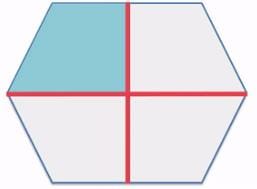
If you divide a square into four equal parts and shade one of them, what fraction of the whole square is shaded?
- a)1/2
- b)1/4
- c)3/4
- d)1/3
Correct answer is option 'B'. Can you explain this answer?
If you divide a square into four equal parts and shade one of them, what fraction of the whole square is shaded?
a)
1/2
b)
1/4
c)
3/4
d)
1/3
|
|
Indu Gupta answered |
Since one out of four equal parts is shaded, the shaded fraction is 1/4.
What fraction represents one-quarter of a whole pizza?- a)1/2
- b)1/4
- c)3/4
- d)1/3
Correct answer is option 'B'. Can you explain this answer?
a)
1/2
b)
1/4
c)
3/4
d)
1/3
|
|
Prateek Pillai answered |
Representation of one-quarter of a whole pizza
One-quarter of a whole pizza is represented by the fraction 1/4. This means that if you were to divide a pizza into four equal parts, each of those parts would be one-quarter of the whole pizza.
Understanding fractions
Fractions are a way of representing parts of a whole. The top number of a fraction (numerator) represents how many parts you have, while the bottom number (denominator) represents how many equal parts the whole is divided into. In this case, the fraction 1/4 means you have one part out of four equal parts.
Visual representation
If you imagine a pizza cut into four slices, each slice would represent one-quarter of the pizza. So, if you were to take one of those slices, you would have one-quarter of the whole pizza.
Therefore, the correct answer to the question "What fraction represents one-quarter of a whole pizza?" is option B) 1/4.
One-quarter of a whole pizza is represented by the fraction 1/4. This means that if you were to divide a pizza into four equal parts, each of those parts would be one-quarter of the whole pizza.
Understanding fractions
Fractions are a way of representing parts of a whole. The top number of a fraction (numerator) represents how many parts you have, while the bottom number (denominator) represents how many equal parts the whole is divided into. In this case, the fraction 1/4 means you have one part out of four equal parts.
Visual representation
If you imagine a pizza cut into four slices, each slice would represent one-quarter of the pizza. So, if you were to take one of those slices, you would have one-quarter of the whole pizza.
Therefore, the correct answer to the question "What fraction represents one-quarter of a whole pizza?" is option B) 1/4.
How many hours are there in a day?- a)10
- b)12
- c)24
- d)48
Correct answer is option 'C'. Can you explain this answer?
a)
10
b)
12
c)
24
d)
48
|
|
Gautam mehta answered |
Understanding Hours in a Day
The concept of time is fundamental in our daily lives, and knowing how many hours are in a day is essential for understanding schedules, routines, and activities.
Standard Measurement of a Day
- A day is traditionally defined as the period of time it takes for the Earth to complete one full rotation on its axis.
- This rotation causes the cycle of day and night, which is why we measure time in hours.
Breaking Down the Hours
- Each day is divided into 24 hours.
- These 24 hours are further divided into minutes and seconds for more precise timekeeping:
- 1 hour = 60 minutes
- 1 minute = 60 seconds
Why 24 Hours?
- The choice of 24 hours comes from ancient civilizations, particularly the Egyptians, who divided day and night into 12 parts each.
- This historical division has been adopted worldwide and remains the standard.
Practical Implications
- Knowing that there are 24 hours in a day helps us manage our time effectively.
- It allows us to plan our activities, work schedules, and personal time accordingly.
Conclusion
In summary, the correct answer to the question of how many hours are in a day is option 'C', which is 24. This understanding not only helps in academic contexts but also in everyday life, promoting better time management and planning.
The concept of time is fundamental in our daily lives, and knowing how many hours are in a day is essential for understanding schedules, routines, and activities.
Standard Measurement of a Day
- A day is traditionally defined as the period of time it takes for the Earth to complete one full rotation on its axis.
- This rotation causes the cycle of day and night, which is why we measure time in hours.
Breaking Down the Hours
- Each day is divided into 24 hours.
- These 24 hours are further divided into minutes and seconds for more precise timekeeping:
- 1 hour = 60 minutes
- 1 minute = 60 seconds
Why 24 Hours?
- The choice of 24 hours comes from ancient civilizations, particularly the Egyptians, who divided day and night into 12 parts each.
- This historical division has been adopted worldwide and remains the standard.
Practical Implications
- Knowing that there are 24 hours in a day helps us manage our time effectively.
- It allows us to plan our activities, work schedules, and personal time accordingly.
Conclusion
In summary, the correct answer to the question of how many hours are in a day is option 'C', which is 24. This understanding not only helps in academic contexts but also in everyday life, promoting better time management and planning.
If you divide 20 candies into four equal parts, how many candies are in each part?- a)3
- b)4
- c)5
- d)6
Correct answer is option 'C'. Can you explain this answer?
a)
3
b)
4
c)
5
d)
6
|
|
Indu Gupta answered |
Dividing 20 candies into four equal parts means each part has 20 divided by 4, which equals 5 candies.
You have 20 candies, and you give away three-quarters of them. How many candies do you have left?- a)5
- b)10
- c)15
- d)20
Correct answer is option 'A'. Can you explain this answer?
a)
5
b)
10
c)
15
d)
20
|
|
Glitz Classes answered |
Three-quarters of 20 candies is 20 multiplied by 3/4, which equals 15. Subtracting 15 from 20 leaves you with 5 candies.
A farmer has 18 pumpkins. He wants to put them in equal crates, with 6 pumpkins in each crate. How many crates will he need?- a)2 crates
- b)3 crates
- c)4 crates
- d)5 crates
Correct answer is option 'B'. Can you explain this answer?
a)
2 crates
b)
3 crates
c)
4 crates
d)
5 crates
|
|
Indu Gupta answered |
To find the number of crates needed, we need to divide the total number of pumpkins (18) by the number of pumpkins in each crate (6).
18 pumpkins ÷ 6 pumpkins per crate = 3 crates
18 pumpkins ÷ 6 pumpkins per crate = 3 crates
How many edges does a cuboid have?
- a)12
- b)6
- c)8
- d)0
Correct answer is option 'A'. Can you explain this answer?
How many edges does a cuboid have?
a)
12
b)
6
c)
8
d)
0
|
|
Indu Gupta answered |
A sphere doesn't have any edges because it's smooth all around.
What would be a practical use of measuring in milliliters?- a)Weighing a bag of rice
- b)Measuring water for a recipe
- c)Measuring the height of a wall
- d)Measuring the speed of a car
Correct answer is option 'B'. Can you explain this answer?
a)
Weighing a bag of rice
b)
Measuring water for a recipe
c)
Measuring the height of a wall
d)
Measuring the speed of a car
|
|
Glitz Classes answered |
Milliliters are commonly used in cooking to measure small amounts of liquids, such as water or oil.
You have 10 toys, and your friend has three times as many. How many toys does your friend have?- a)13
- b)20
- c)30
- d)40
Correct answer is option 'C'. Can you explain this answer?
a)
13
b)
20
c)
30
d)
40
|
|
Glitz Classes answered |
Since your friend has three times as many toys as you, they have 3 times 10 toys, which equals 30 toys.
If Nisha collected 85 sticks and Nandni collected 67 sticks, how many more sticks did Nisha collect than Nandni?- a) 15 sticks
- b) 18 sticks
- c) 20 sticks
- d) 25 sticks
Correct answer is option 'B'. Can you explain this answer?
If Nisha collected 85 sticks and Nandni collected 67 sticks, how many more sticks did Nisha collect than Nandni?
a)
15 sticks
b)
18 sticks
c)
20 sticks
d)
25 sticks
|
|
Glitz Classes answered |
To find out how many more sticks Nisha collected than Nandni, subtract the number of sticks Nandni has from the number of sticks Nisha has: 85 - 67 = 18. This subtraction illustrates the concept of comparison in quantities, which is a foundational skill in mathematics.
Chapter doubts & questions for Mathematics (Maths Mela) - Class 3 Quizzes – Improve Skills in all Subjects 2026 is part of Class 3 exam preparation. The chapters have been prepared according to the Class 3 exam syllabus. The Chapter doubts & questions, notes, tests & MCQs are made for Class 3 2026 Exam. Find important definitions, questions, notes, meanings, examples, exercises, MCQs and online tests here.
Chapter doubts & questions of Mathematics (Maths Mela) - Class 3 Quizzes – Improve Skills in all Subjects in English & Hindi are available as part of Class 3 exam.
Download more important topics, notes, lectures and mock test series for Class 3 Exam by signing up for free.
