


All Exams > Year 4 > Science for Year 4 > All Questions
All questions of Forces for Year 4 Exam
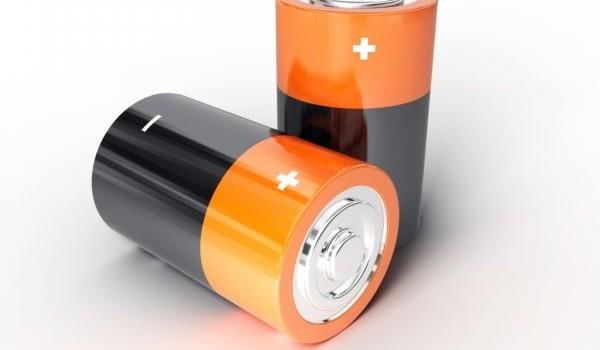
In a battery cell, energy is stored in the form of- a)electrical energy.
- b)muscular energy.
- c)chemical energy.
- d)solar energy.
Correct answer is option 'C'. Can you explain this answer?
In a battery cell, energy is stored in the form of
a)
electrical energy.
b)
muscular energy.
c)
chemical energy.
d)
solar energy.
 | Edu Impact answered |
In a battery cell, energy stored is in the form of chemical energy.

Which of the following statements is NOT true?- a)Machines make work easy.
- b)Machines increase the speed of doing work.
- c)Machines change the direction of force
- d)Machines produce energy.
Correct answer is option 'D'. Can you explain this answer?
Which of the following statements is NOT true?
a)
Machines make work easy.
b)
Machines increase the speed of doing work.
c)
Machines change the direction of force
d)
Machines produce energy.
 | Sudhir Mehta answered |
Machines work when energy is provided to them and it does not produce energy.
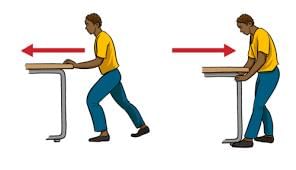
Radha pushed a heavy table but failed to move it. Which of the following is TRUE of the above statement?- a)Energy is not spent but work is done.
- b)Energy is spent but work is not done.
- c)Energy is not spent and work is not done.
- d)Energy is spent and work is done.
Correct answer is option 'B'. Can you explain this answer?
Radha pushed a heavy table but failed to move it. Which of the following is TRUE of the above statement?
a)
Energy is not spent but work is done.
b)
Energy is spent but work is not done.
c)
Energy is not spent and work is not done.
d)
Energy is spent and work is done.
| | Sudhir Mehta answered |
Work is said to be done when an object is displaced or moved from one place to another by the application of force.
The ultimate source of our energy is- a)the sun.
- b)coal.
- c)wind.
- d)plants.
Correct answer is option 'A'. Can you explain this answer?
The ultimate source of our energy is
a)
the sun.
b)
coal.
c)
wind.
d)
plants.
| | Sudhir Mehta answered |
The ultimate source of energy is the sun.
To do work, we need- a)force.
- b)energy.
- c)hands.
- d)muscles.
Correct answer is option 'B'. Can you explain this answer?
To do work, we need
a)
force.
b)
energy.
c)
hands.
d)
muscles.
| | Sudhir Mehta answered |
We need energy to do work.
If Ravi is able to move the table through a distance, then ____ is said to be done.- a)work
- b)force
- c)energy
- d)muscles
Correct answer is option 'A'. Can you explain this answer?
If Ravi is able to move the table through a distance, then ____ is said to be done.
a)
work
b)
force
c)
energy
d)
muscles
| | Sudhir Mehta answered |
Work is said to be done only when a push or pull moves something that has weight, through a distance.
When we throw a ball into air, it falls back. The force responsible for this is- a)Muscular force.
- b)Gravitational force.
- c)Mechanical force.
- d)none of these
Correct answer is option 'B'. Can you explain this answer?
When we throw a ball into air, it falls back. The force responsible for this is
a)
Muscular force.
b)
Gravitational force.
c)
Mechanical force.
d)
none of these
 | Akash Tiwari answered |
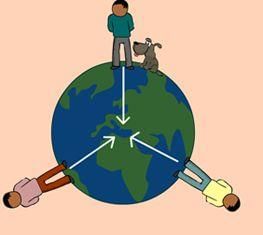
The gravitational force of the earth pulls objects towards it.
How does friction help in daily activities?- a)It allows objects to slide easily without resistance.
- b)It helps us grip surfaces and move effectively.
- c)It increases the speed of objects.
- d)It reduces the force required to push objects.
Correct answer is option 'B'. Can you explain this answer?
a)
It allows objects to slide easily without resistance.
b)
It helps us grip surfaces and move effectively.
c)
It increases the speed of objects.
d)
It reduces the force required to push objects.
 | Bespoke Classes answered |
Friction helps in gripping surfaces and moving effectively. It provides the necessary resistance to prevent slipping and enables control during movement.
What is the role of energy in a moving car?- a)It keeps the car stationary.
- b)It allows the car to remain in a fixed position.
- c)It is converted into kinetic energy to move the car.
- d)It prevents the car from moving.
Correct answer is option 'C'. Can you explain this answer?
a)
It keeps the car stationary.
b)
It allows the car to remain in a fixed position.
c)
It is converted into kinetic energy to move the car.
d)
It prevents the car from moving.
| | Edu Impact answered |
In a moving car, energy is converted into kinetic energy, which is used to propel the car forward. This energy is essential for the car's movement and operation.
What happens to the energy of an object when it is lifted to a higher position?- a)The energy decreases.
- b)The energy remains the same.
- c)The energy increases as potential energy.
- d)The energy changes into chemical energy.
Correct answer is option 'C'. Can you explain this answer?
a)
The energy decreases.
b)
The energy remains the same.
c)
The energy increases as potential energy.
d)
The energy changes into chemical energy.
 | Riya Singh answered |
When an object is lifted to a higher position, its potential energy increases. This is because it has the potential to do more work due to its elevated position.
When a pin wheel is placed against wind, it begins to spin. This proves that- a)moving air has energy
- b)pin wheel has life
- c)pin has energy
- d)moving air has no energy.
Correct answer is option 'A'. Can you explain this answer?
When a pin wheel is placed against wind, it begins to spin. This proves that
a)
moving air has energy
b)
pin wheel has life
c)
pin has energy
d)
moving air has no energy.
| | Sudhir Mehta answered |
Moving air has energy. Since moving air can make a pin-wheel move, it has energy.
Which of the following activities would need energy the most?- a)Riding a bicycle up a hill
- b)Walking
- c)Riding a bicycle on a level ground
- d)Doing homework
Correct answer is option 'A'. Can you explain this answer?
Which of the following activities would need energy the most?
a)
Riding a bicycle up a hill
b)
Walking
c)
Riding a bicycle on a level ground
d)
Doing homework
| | Sudhir Mehta answered |
Riding a bicycle up a hill need more energy.
Energy can be defined as- a)the capacity to do work.
- b)work done in unit time.
- c)a push or a pull.
- d)attraction between two oppositely charged particles.
Correct answer is option 'A'. Can you explain this answer?
Energy can be defined as
a)
the capacity to do work.
b)
work done in unit time.
c)
a push or a pull.
d)
attraction between two oppositely charged particles.
| | Sudhir Mehta answered |
Energy can be defined as the capacity to do work.
In which of the following activities is force used for pulling?- a)Blowing air into a balloon
- b)Cycling
- c)Stretching a rubber band
- d)All of the above
Correct answer is option 'C'. Can you explain this answer?
In which of the following activities is force used for pulling?
a)
Blowing air into a balloon
b)
Cycling
c)
Stretching a rubber band
d)
All of the above
| | Sudhir Mehta answered |
Stretching of a rubber band is an example of a pulling force.

X enables work to be done. There are many forms of X. What is X?- a)Energy
- b)The Sun
- c)Heat
- d)Sound
Correct answer is option 'A'. Can you explain this answer?
X enables work to be done. There are many forms of X. What is X?
a)
Energy
b)
The Sun
c)
Heat
d)
Sound
| | Sudhir Mehta answered |
The capacity to do work is called energy. Energy is available in different forms such as heat energy, light energy etc.
What is the primary difference between work and energy?- a)Work is the transfer of energy, while energy is the ability to do work.
- b)Work and energy are the same thing.
- c)Energy is a measure of distance, while work is a measure of force.
- d)Work is the power required to do a task, while energy is the speed of the task.
Correct answer is option 'A'. Can you explain this answer?
a)
Work is the transfer of energy, while energy is the ability to do work.
b)
Work and energy are the same thing.
c)
Energy is a measure of distance, while work is a measure of force.
d)
Work is the power required to do a task, while energy is the speed of the task.
| | Prasad Joshi answered |
Understanding the Difference Between Work and Energy
The concepts of work and energy are fundamental in physics and are closely related but distinct.
Definition of Work
- Work is defined as the transfer of energy that occurs when a force is applied to an object, causing it to move.
- The formula for work is: Work = Force × Distance × cos(θ), where θ is the angle between the force and the direction of movement.
Definition of Energy
- Energy is the ability or capacity to do work. It exists in various forms, such as kinetic, potential, thermal, and more.
- Energy can be stored or transferred, and it is conserved in a closed system.
Relationship Between Work and Energy
- When work is done on an object, energy is transferred to that object, allowing it to change its state or position. For example, lifting a book off the ground requires work, which transfers energy to the book as gravitational potential energy.
- Conversely, when an object does work (like a falling object hitting the ground), it transfers energy away.
Why Option A is Correct
- Option A clearly states that "Work is the transfer of energy, while energy is the ability to do work." This statement accurately captures the essence of both concepts.
- The other options incorrectly define or confuse the terms, making option A the only accurate choice.
Understanding these differences helps in grasping how forces and movements interact in our physical world.
The concepts of work and energy are fundamental in physics and are closely related but distinct.
Definition of Work
- Work is defined as the transfer of energy that occurs when a force is applied to an object, causing it to move.
- The formula for work is: Work = Force × Distance × cos(θ), where θ is the angle between the force and the direction of movement.
Definition of Energy
- Energy is the ability or capacity to do work. It exists in various forms, such as kinetic, potential, thermal, and more.
- Energy can be stored or transferred, and it is conserved in a closed system.
Relationship Between Work and Energy
- When work is done on an object, energy is transferred to that object, allowing it to change its state or position. For example, lifting a book off the ground requires work, which transfers energy to the book as gravitational potential energy.
- Conversely, when an object does work (like a falling object hitting the ground), it transfers energy away.
Why Option A is Correct
- Option A clearly states that "Work is the transfer of energy, while energy is the ability to do work." This statement accurately captures the essence of both concepts.
- The other options incorrectly define or confuse the terms, making option A the only accurate choice.
Understanding these differences helps in grasping how forces and movements interact in our physical world.
State whether the following statement is True or False:Muscular force is the force that uses the power of our muscles when we push or pull something.- a)True
- b)False
Correct answer is option 'A'. Can you explain this answer?
State whether the following statement is True or False:
Muscular force is the force that uses the power of our muscles when we push or pull something.
a)
True
b)
False
 | Bhargavi Iyer answered |
Understanding Muscular Force
Muscular force refers to the strength exerted by our muscles when we engage in activities such as pushing, pulling, lifting, or carrying objects. This type of force is fundamental to our daily movements and activities.
Key Points about Muscular Force:
- Definition: Muscular force is the physical power generated by our muscles to perform work on an object.
- Application: We use muscular force whenever we engage in physical tasks, like:
- Pushing a door open
- Pulling a heavy bag
- Lifting weights
- Energy Source: This force relies on the energy produced by our body, which is fueled by food and oxygen.
- Importance: Muscular force is crucial for:
- Daily activities (e.g., walking, running)
- Sports and exercise
- Completing tasks that require strength
Conclusion
The statement that "muscular force is the force that uses the power of our muscles when we push or pull something" is indeed true. Muscular force is the essence of how we interact physically with our environment, showcasing the importance of strength and movement in our lives. Understanding this concept helps appreciate the mechanics of physical activities better.
Muscular force refers to the strength exerted by our muscles when we engage in activities such as pushing, pulling, lifting, or carrying objects. This type of force is fundamental to our daily movements and activities.
Key Points about Muscular Force:
- Definition: Muscular force is the physical power generated by our muscles to perform work on an object.
- Application: We use muscular force whenever we engage in physical tasks, like:
- Pushing a door open
- Pulling a heavy bag
- Lifting weights
- Energy Source: This force relies on the energy produced by our body, which is fueled by food and oxygen.
- Importance: Muscular force is crucial for:
- Daily activities (e.g., walking, running)
- Sports and exercise
- Completing tasks that require strength
Conclusion
The statement that "muscular force is the force that uses the power of our muscles when we push or pull something" is indeed true. Muscular force is the essence of how we interact physically with our environment, showcasing the importance of strength and movement in our lives. Understanding this concept helps appreciate the mechanics of physical activities better.
What can happen if you walk on a smooth tiled floor where water has been spilled?- a)You can jump higher
- b)You can slide easily
- c)You can run faster
- d)You can feel warmer
Correct answer is option 'B'. Can you explain this answer?
What can happen if you walk on a smooth tiled floor where water has been spilled?
a)
You can jump higher
b)
You can slide easily
c)
You can run faster
d)
You can feel warmer
 | Glitz Classes answered |
When you walk on a smooth tiled floor with water on it, you might slip and slide easily. This is because the smooth surface combined with water makes it very slippery, so it's important to be careful and not run on such a floor to avoid falling down.
State whether the following statement is True or False:
The sun is the greatest source of energy on Earth.- a)True
- b)False
Correct answer is option 'A'. Can you explain this answer?
State whether the following statement is True or False:
The sun is the greatest source of energy on Earth.
The sun is the greatest source of energy on Earth.
a)
True
b)
False
| | Riya Singh answered |
- The sun is like a big ball of fire in the sky. It gives us light and warmth every day.
- Plants use the light from the sun to make food, and this food gives us energy to do things like play and learn.
- So, the sun is a very important source of energy for us.
- It's like a big battery in the sky that keeps everything on Earth alive and moving.
Friction is not always bad. We are able to walk because of friction between our feet and the ______.- a)air
- b)water
- c)ground
- d)fire
Correct answer is option 'C'. Can you explain this answer?
Friction is not always bad. We are able to walk because of friction between our feet and the ______.
a)
air
b)
water
c)
ground
d)
fire
 | Learning Enablers answered |
Friction helps us walk by providing grip between our feet and the ground. Without this grip from friction, we would slip and fall. So, friction between our feet and the ground is important for walking safely.
What force pulls everything towards the earth?- a)Muscular Force
- b)Gravitational Force
- c)Magnetic Force
- d)Friction
Correct answer is option 'B'. Can you explain this answer?
What force pulls everything towards the earth?
a)
Muscular Force
b)
Gravitational Force
c)
Magnetic Force
d)
Friction
| | Riya Singh answered |
- Gravitational force is the force that pulls everything towards the earth.
- Imagine the earth is like a big magnet that pulls everything down towards it.
- This force is why things fall to the ground instead of floating in the air.
- So, when you drop something, like a ball, it comes down because of this gravitational force.
Chapter doubts & questions for Forces - Science for Year 4 2026 is part of Year 4 exam preparation. The chapters have been prepared according to the Year 4 exam syllabus. The Chapter doubts & questions, notes, tests & MCQs are made for Year 4 2026 Exam. Find important definitions, questions, notes, meanings, examples, exercises, MCQs and online tests here.
Chapter doubts & questions of Forces - Science for Year 4 in English & Hindi are available as part of Year 4 exam. Download more important topics, notes, lectures and mock test series for Year 4 Exam by signing up for free.
Science for Year 422 videos|33 docs|11 tests |
