


All Exams > Class 3 > Computer Science for Class 3 > All Questions
All questions of Fundamentals of Computer for Class 3 Exam
The first computer programmer was __________.- a) Charles Babbage
- b) Lady Ada Lovelace
- c) Bill Gates
- d) Seymour Papert
Correct answer is option 'B'. Can you explain this answer?
The first computer programmer was __________.
a)
Charles Babbage
b)
Lady Ada Lovelace
c)
Bill Gates
d)
Seymour Papert
 | Ipsita Yadav answered |
**Lady Ada Lovelace**
**Introduction:**
Lady Ada Lovelace, born Augusta Ada Byron, is widely regarded as the first computer programmer. She was an English mathematician and writer, and her work laid the foundation for modern computing.
**Early Life:**
Ada Lovelace was born on December 10, 1815, in London, England. She was the only legitimate child of the poet Lord Byron and his wife, Anne Isabella Milbanke. Due to her father's reputation and her mother's interest in mathematics, Ada was exposed to both literature and mathematics from a young age.
**Collaboration with Charles Babbage:**
Ada Lovelace's most significant contribution to computing was her collaboration with Charles Babbage, an English mathematician, and inventor. Babbage designed the Analytical Engine, a mechanical computer that was never built during his lifetime. Ada Lovelace became fascinated with Babbage's work and began working closely with him.
**The Analytical Engine:**
The Analytical Engine was a revolutionary concept that could perform complex calculations and store data. It was considered the precursor to modern computers. Ada Lovelace recognized the potential of the Analytical Engine and wrote extensive notes about its capabilities and possibilities.
**Ada's Contribution:**
Ada Lovelace's notes on the Analytical Engine, published in 1843, included an algorithm to calculate Bernoulli numbers. This algorithm is considered the first computer program ever written. Ada's understanding of the machine's potential went beyond Babbage's own vision, and she even speculated that the Analytical Engine could be used to create music and art.
**Legacy:**
While the Analytical Engine was never built, Ada Lovelace's ideas and notes were influential in the field of computing. Her work on the Analytical Engine demonstrated the concept of a machine capable of more than just calculations, laying the foundation for modern computer programming.
**Conclusion:**
Lady Ada Lovelace's collaboration with Charles Babbage and her extensive notes on the Analytical Engine make her the first computer programmer. Her visionary ideas and understanding of the potential of computing technologies have had a lasting impact on the field of computer science and programming.
**Introduction:**
Lady Ada Lovelace, born Augusta Ada Byron, is widely regarded as the first computer programmer. She was an English mathematician and writer, and her work laid the foundation for modern computing.
**Early Life:**
Ada Lovelace was born on December 10, 1815, in London, England. She was the only legitimate child of the poet Lord Byron and his wife, Anne Isabella Milbanke. Due to her father's reputation and her mother's interest in mathematics, Ada was exposed to both literature and mathematics from a young age.
**Collaboration with Charles Babbage:**
Ada Lovelace's most significant contribution to computing was her collaboration with Charles Babbage, an English mathematician, and inventor. Babbage designed the Analytical Engine, a mechanical computer that was never built during his lifetime. Ada Lovelace became fascinated with Babbage's work and began working closely with him.
**The Analytical Engine:**
The Analytical Engine was a revolutionary concept that could perform complex calculations and store data. It was considered the precursor to modern computers. Ada Lovelace recognized the potential of the Analytical Engine and wrote extensive notes about its capabilities and possibilities.
**Ada's Contribution:**
Ada Lovelace's notes on the Analytical Engine, published in 1843, included an algorithm to calculate Bernoulli numbers. This algorithm is considered the first computer program ever written. Ada's understanding of the machine's potential went beyond Babbage's own vision, and she even speculated that the Analytical Engine could be used to create music and art.
**Legacy:**
While the Analytical Engine was never built, Ada Lovelace's ideas and notes were influential in the field of computing. Her work on the Analytical Engine demonstrated the concept of a machine capable of more than just calculations, laying the foundation for modern computer programming.
**Conclusion:**
Lady Ada Lovelace's collaboration with Charles Babbage and her extensive notes on the Analytical Engine make her the first computer programmer. Her visionary ideas and understanding of the potential of computing technologies have had a lasting impact on the field of computer science and programming.


A computer should be protected from ______.- a)Dust
- b) Liquid items
- c)Light
- d) Both [A] and [B]
Correct answer is option 'D'. Can you explain this answer?
A computer should be protected from ______.
a)
Dust
b)
Liquid items
c)
Light
d)
Both [A] and [B]
| | Rishabh Gupta answered |
Introduction:
A computer is an electronic device that is susceptible to various types of damage. Protecting a computer from potential hazards is crucial to ensure its optimal performance and longevity. Two common threats that can cause significant harm to a computer are dust and liquid items. Therefore, protecting a computer from both dust and liquid items is essential.
Dust:
Dust is one of the most common and harmful substances that can enter a computer. When dust accumulates inside a computer, it can block the airflow and cause overheating. Over time, the accumulation of dust can lead to the malfunctioning of various components, such as the cooling fans, causing the computer to overheat and potentially damage sensitive electronic parts. Dust particles can also interfere with the connections between different components, resulting in poor performance or even complete system failure. Hence, protecting a computer from dust is crucial to maintain its functionality and prevent potential damage.
Liquid Items:
Liquid items, such as water or any other type of liquid, pose a significant threat to a computer's functionality. If liquid spills onto a computer or its components, it can cause immediate damage. Liquid can short-circuit the sensitive electronic circuits and components, leading to irreversible damage. The liquid can also corrode the metal parts and cause rusting, which can further deteriorate the computer's performance and functionality. Protecting a computer from liquid items is vital to prevent any accidental spills or water damage.
Light:
In contrast to dust and liquid items, light does not directly harm a computer. However, prolonged exposure to direct sunlight or intense light can cause damage indirectly. Excessive heat generated by intense light can overheat the computer and its components, resulting in malfunctions or even permanent damage. Additionally, UV rays present in sunlight can cause discoloration and fading of the computer's external components, such as the plastic casing. Therefore, it is advisable to protect a computer from direct sunlight or intense light to prevent any potential damage.
Conclusion:
To ensure the optimal performance and longevity of a computer, it is crucial to protect it from potential hazards such as dust and liquid items. Dust can block airflow and interfere with connections, while liquid items can cause immediate damage and corrosion. While light does not directly harm a computer, prolonged exposure to intense light or direct sunlight can lead to overheating and discoloration. Therefore, protecting a computer from both dust and liquid items is essential for its proper functioning and longevity.
A computer is an electronic device that is susceptible to various types of damage. Protecting a computer from potential hazards is crucial to ensure its optimal performance and longevity. Two common threats that can cause significant harm to a computer are dust and liquid items. Therefore, protecting a computer from both dust and liquid items is essential.
Dust:
Dust is one of the most common and harmful substances that can enter a computer. When dust accumulates inside a computer, it can block the airflow and cause overheating. Over time, the accumulation of dust can lead to the malfunctioning of various components, such as the cooling fans, causing the computer to overheat and potentially damage sensitive electronic parts. Dust particles can also interfere with the connections between different components, resulting in poor performance or even complete system failure. Hence, protecting a computer from dust is crucial to maintain its functionality and prevent potential damage.
Liquid Items:
Liquid items, such as water or any other type of liquid, pose a significant threat to a computer's functionality. If liquid spills onto a computer or its components, it can cause immediate damage. Liquid can short-circuit the sensitive electronic circuits and components, leading to irreversible damage. The liquid can also corrode the metal parts and cause rusting, which can further deteriorate the computer's performance and functionality. Protecting a computer from liquid items is vital to prevent any accidental spills or water damage.
Light:
In contrast to dust and liquid items, light does not directly harm a computer. However, prolonged exposure to direct sunlight or intense light can cause damage indirectly. Excessive heat generated by intense light can overheat the computer and its components, resulting in malfunctions or even permanent damage. Additionally, UV rays present in sunlight can cause discoloration and fading of the computer's external components, such as the plastic casing. Therefore, it is advisable to protect a computer from direct sunlight or intense light to prevent any potential damage.
Conclusion:
To ensure the optimal performance and longevity of a computer, it is crucial to protect it from potential hazards such as dust and liquid items. Dust can block airflow and interfere with connections, while liquid items can cause immediate damage and corrosion. While light does not directly harm a computer, prolonged exposure to intense light or direct sunlight can lead to overheating and discoloration. Therefore, protecting a computer from both dust and liquid items is essential for its proper functioning and longevity.
Which of the following statements hold(s) true about the given device?
Statement 1: It contains all the functions of CPU.
Statement 2: Its working is compared with an engine, as an engine is the first one to start when you start your car, similarly it starts working when you turn on your computer.- a)Only Statement 1
- b)Only Statement 2
- c)Both Statement 1 and Statement 2
- d)Neither Statement 1 nor Statement 2
Correct answer is option 'C'. Can you explain this answer?
Which of the following statements hold(s) true about the given device?
Statement 1: It contains all the functions of CPU.
Statement 2: Its working is compared with an engine, as an engine is the first one to start when you start your car, similarly it starts working when you turn on your computer.
Statement 1: It contains all the functions of CPU.
Statement 2: Its working is compared with an engine, as an engine is the first one to start when you start your car, similarly it starts working when you turn on your computer.
a)
Only Statement 1
b)
Only Statement 2
c)
Both Statement 1 and Statement 2
d)
Neither Statement 1 nor Statement 2
 | Nikhil Singh answered |
Statement 1: It contains all the functions of CPU.
Statement 2: Its working is compared with an engine, as an engine is the first one to start when you start your car, similarly it starts working when you turn on your computer.
Correct answer: Both Statement 1 and Statement 2
Explanation:
The given device is most likely referring to the CPU (Central Processing Unit) of a computer. Let's analyze each statement separately to understand why both of them hold true.
Statement 1: It contains all the functions of CPU.
The CPU is the central component of a computer that performs most of the processing inside the computer. It contains various functions and components that enable it to execute instructions, perform calculations, manage memory, and control input/output operations. Therefore, this statement is true as the CPU indeed contains all the essential functions required for a computer to operate.
Statement 2: Its working is compared with an engine, as an engine is the first one to start when you start your car, similarly it starts working when you turn on your computer.
The comparison between the working of a CPU and an engine is based on the concept of starting up. When you start your car, the engine is the first component to activate and begin functioning, enabling the vehicle to operate. Similarly, when you turn on your computer, the CPU is the first component to start working, initializing the boot process and allowing the computer to function. Therefore, this statement is also true as the working of the CPU can be compared to the engine's role in starting a car.
Hence, both Statement 1 and Statement 2 hold true about the given device, making option C the correct answer. The CPU contains all the functions required for computer operation, and its working can be compared to an engine's role in starting a car.
Statement 2: Its working is compared with an engine, as an engine is the first one to start when you start your car, similarly it starts working when you turn on your computer.
Correct answer: Both Statement 1 and Statement 2
Explanation:
The given device is most likely referring to the CPU (Central Processing Unit) of a computer. Let's analyze each statement separately to understand why both of them hold true.
Statement 1: It contains all the functions of CPU.
The CPU is the central component of a computer that performs most of the processing inside the computer. It contains various functions and components that enable it to execute instructions, perform calculations, manage memory, and control input/output operations. Therefore, this statement is true as the CPU indeed contains all the essential functions required for a computer to operate.
Statement 2: Its working is compared with an engine, as an engine is the first one to start when you start your car, similarly it starts working when you turn on your computer.
The comparison between the working of a CPU and an engine is based on the concept of starting up. When you start your car, the engine is the first component to activate and begin functioning, enabling the vehicle to operate. Similarly, when you turn on your computer, the CPU is the first component to start working, initializing the boot process and allowing the computer to function. Therefore, this statement is also true as the working of the CPU can be compared to the engine's role in starting a car.
Hence, both Statement 1 and Statement 2 hold true about the given device, making option C the correct answer. The CPU contains all the functions required for computer operation, and its working can be compared to an engine's role in starting a car.
Which of the following jumbled words is NOT related to characteristics of a computer?- a)RACUACTE
- b)TAFS
- c)TIVELERSA
- d) TOMNONOY
Correct answer is option 'D'. Can you explain this answer?
Which of the following jumbled words is NOT related to characteristics of a computer?
a)
RACUACTE
b)
TAFS
c)
TIVELERSA
d)
TOMNONOY
| | Shilpa Choudhury answered |
Unjumbled words in sequence are: Accurate, Fast, Versatile and Monotony. A computer never gets bored, so monotony is not related to its Characteristics
The wires shown here are used to _______.
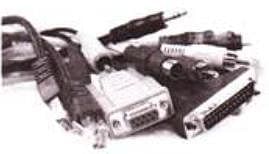
- a)Connect different parts of computer
- b)Open the CPU cabinet
- c)Set date and time
- d)None of these
Correct answer is option 'A'. Can you explain this answer?
The wires shown here are used to _______.
a)
Connect different parts of computer
b)
Open the CPU cabinet
c)
Set date and time
d)
None of these
 | Anjali Gupta answered |
A computer is made up of many different parts and these parts are connected with the computer with different types of cables.
The list of computing technologies that had been arrived before the development of first generation computers is given here. Arrange them in the increasing order of their arrivals.1. Abacus
2. Pascaline
3. Napier's Bones
4. Stepped Reckoner
5. Babbage's Analytical engine- a)1, 2, 3, 4, 5
- b)1, 3, 2, 4, 5
- c)2, 3, 1, 4, 5
- d)4, 5, 3, 2, 1
Correct answer is option 'B'. Can you explain this answer?
The list of computing technologies that had been arrived before the development of first generation computers is given here. Arrange them in the increasing order of their arrivals.
1. Abacus
2. Pascaline
3. Napier's Bones
4. Stepped Reckoner
5. Babbage's Analytical engine
2. Pascaline
3. Napier's Bones
4. Stepped Reckoner
5. Babbage's Analytical engine
a)
1, 2, 3, 4, 5
b)
1, 3, 2, 4, 5
c)
2, 3, 1, 4, 5
d)
4, 5, 3, 2, 1
 | Rahul Desai answered |
The devices mentioned in the question and the time they were invented/ designed is shown below. Abacus-1300 A.D., Pascaline-1642-1645, Napier's Bones- 1617, Stepped Reckoner-1672-1694, Analytical Engine -1837 According to the given information, the machines will be arranged as follows: Abacus, Napier's Bones, Pascaline, Stepped Reckoner, and Babbage?s Analytical Engine.
Which of the following statements hold(s) true about the given type of computer?
 Statement 1: It is a general purpose computer.
Statement 2: It has display, keyboard, touchpad, CD/DVD drive and hard drive all in a battery operated package.- a)Only Statement 1
- b)Only Statement 2
- c)Both Statement 1 and Statement 2
- d)Neither Statement 1 nor Statement 2
Correct answer is option 'C'. Can you explain this answer?
Which of the following statements hold(s) true about the given type of computer?
Statement 1: It is a general purpose computer.
Statement 2: It has display, keyboard, touchpad, CD/DVD drive and hard drive all in a battery operated package.
Statement 2: It has display, keyboard, touchpad, CD/DVD drive and hard drive all in a battery operated package.
a)
Only Statement 1
b)
Only Statement 2
c)
Both Statement 1 and Statement 2
d)
Neither Statement 1 nor Statement 2
 | Naina Sharma answered |
The image shown in the question is of laptop, which is a battery operated general purpose microcomputer. So, both the statements are true about it.
What is the name of the device invented by John Napier?- a)Napier's Bones
- b)Napier's Stones
- c)Napier's Rows
- d)Napier's Beads
Correct answer is option 'A'. Can you explain this answer?
What is the name of the device invented by John Napier?
a)
Napier's Bones
b)
Napier's Stones
c)
Napier's Rows
d)
Napier's Beads
| | Rahul Verma answered |
Napier's bones is a manually-operated calculating device created by John Napier.
Which of the following is a microcomputer?
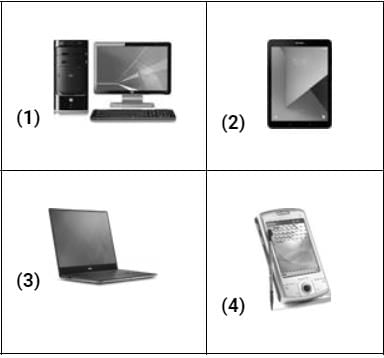
- a)Only (1) and (3)
- b)Only (2) and (4)
- c)Only (1), (3) and (4)
- d)All of these
Correct answer is option 'D'. Can you explain this answer?
Which of the following is a microcomputer?
a)
Only (1) and (3)
b)
Only (2) and (4)
c)
Only (1), (3) and (4)
d)
All of these
| | Anjali Gupta answered |
A computer which is designed for individual use and contains a microprocessor as its Central Processing Unit, is called a microcomputer. All four options 1, 2, 3 and 4 shown in the question are designed for individual us and have microprocessor. So, option [D] is the correct answer.
Chapter doubts & questions for Fundamentals of Computer - Computer Science for Class 3 2026 is part of Class 3 exam preparation. The chapters have been prepared according to the Class 3 exam syllabus. The Chapter doubts & questions, notes, tests & MCQs are made for Class 3 2026 Exam. Find important definitions, questions, notes, meanings, examples, exercises, MCQs and online tests here.
Chapter doubts & questions of Fundamentals of Computer - Computer Science for Class 3 in English & Hindi are available as part of Class 3 exam. Download more important topics, notes, lectures and mock test series for Class 3 Exam by signing up for free.
Computer Science for Class 37 videos|19 docs|12 tests |
