


All Exams > SSC CGL > SSC CGL Previous Year Papers > All Questions
All questions of 2014 for SSC CGL Exam
In each of the following questions, select the related word/letters/number from the given alternatives.17 : 24 : : 153 : ?- a)213
- b)216
- c)118
- d)198
Correct answer is option 'B'. Can you explain this answer?
In each of the following questions, select the related word/letters/number from the given alternatives.
17 : 24 : : 153 : ?
a)
213
b)
216
c)
118
d)
198
 | Rhea Reddy answered |
Expression = 17 : 24 : : 153 : ?
The pattern followed is that both the numbers are multiplied by 9
Eg : 17×9=153
Similarly,24×9=216

In each of the following questions, select the missing number from the given responses.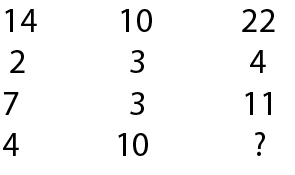
- a)2
- b)4
- c)6
- d)8
Correct answer is option 'D'. Can you explain this answer?
In each of the following questions, select the missing number from the given responses.
a)
2
b)
4
c)
6
d)
8
| | Rajesh Khanna answered |
let the missing term be y
as we can see that in 1st and 2nd column
product of 1st two elements = product of last two elements
14 x 2 = 7 x 4 (in 1st column)
and, 10 x 3 = 3 x 10 (in 2nd column)
so in 3rd column it will also follow
and hence , 22 x 4 = 11 x y
y = 8
Select the related word/letters/number from the given alternatives.EIGK : EACY : : RVTY : ?- a)RVSQ
- b)RNPL
- c)RWUY
- d)RMPL
Correct answer is option 'A'. Can you explain this answer?
Select the related word/letters/number from the given alternatives.
EIGK : EACY : : RVTY : ?
a)
RVSQ
b)
RNPL
c)
RWUY
d)
RMPL
 | Sanju. Kumar answered |
E-5 I-9 G-7 K-11 ,,,,,(K11-6=5)E
(G7-6=1)A..(I9-6=3)C......(E5-6=25)Y
Y(25-6=19)S...T(20-6=14)N...V(21-6=15)o
R(18-6=12)L
SNOL CORRECT ANSWER ........
(G7-6=1)A..(I9-6=3)C......(E5-6=25)Y
Y(25-6=19)S...T(20-6=14)N...V(21-6=15)o
R(18-6=12)L
SNOL CORRECT ANSWER ........
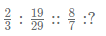
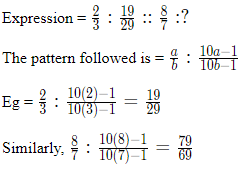
From the given alternative words, select the word which cannot be formed using the letters of the given word.THERMODYNAMICS- a)MATHEMATICS
- b)MOTHER
- c)MODERN
- d)DYNAMO
Correct answer is option 'A'. Can you explain this answer?
From the given alternative words, select the word which cannot be formed using the letters of the given word.
THERMODYNAMICS
a)
MATHEMATICS
b)
MOTHER
c)
MODERN
d)
DYNAMO
 | Pranab Goyal answered |
Explanation:
THERMODYNAMICS
- The word "THERMODYNAMICS" contains all the necessary letters to form the words "MATHEMATICS," "MOTHER," "MODERN," and "DYNAMO."
Words that can be formed:
- MATHEMATICS
- MOTHER
- MODERN
- DYNAMO
Word that cannot be formed:
- The word "MATHEMATICS" cannot be formed using the letters of "THERMODYNAMICS" as it requires an additional "I" which is not present in the given word.
THERMODYNAMICS
- The word "THERMODYNAMICS" contains all the necessary letters to form the words "MATHEMATICS," "MOTHER," "MODERN," and "DYNAMO."
Words that can be formed:
- MATHEMATICS
- MOTHER
- MODERN
- DYNAMO
Word that cannot be formed:
- The word "MATHEMATICS" cannot be formed using the letters of "THERMODYNAMICS" as it requires an additional "I" which is not present in the given word.
Select the related word/letters/number from the given alternatives.720 : 840 : : 60 : ?- a)76
- b)80
- c)70
- d)74
Correct answer is option 'C'. Can you explain this answer?
Select the related word/letters/number from the given alternatives.
720 : 840 : : 60 : ?
a)
76
b)
80
c)
70
d)
74
 | Arnav Saini answered |
Finding the Missing Number in the Series
Given: 720 : 840 : : 60 : ?
To find out the missing number in the series, we need to identify the pattern followed in the given series. Let's analyze the given series and try to find the pattern.
720 : 840
If we observe the above numbers, we can see that 840 is greater than 720 by 120 (840 - 720 = 120).
60 : ?
Similarly, in the second pair of numbers, we need to find a number that is greater than 60 by 120.
Now, we can apply the same difference to 60 to get the missing number.
60 + 120 = 180
Hence, the missing number in the series is 180.
Therefore, option (c) 70 is incorrect. Option (a) 76 is incorrect. Option (b) 80 is incorrect. Option (d) 74 is incorrect. The correct option is (c) 70.
Given: 720 : 840 : : 60 : ?
To find out the missing number in the series, we need to identify the pattern followed in the given series. Let's analyze the given series and try to find the pattern.
720 : 840
If we observe the above numbers, we can see that 840 is greater than 720 by 120 (840 - 720 = 120).
60 : ?
Similarly, in the second pair of numbers, we need to find a number that is greater than 60 by 120.
Now, we can apply the same difference to 60 to get the missing number.
60 + 120 = 180
Hence, the missing number in the series is 180.
Therefore, option (c) 70 is incorrect. Option (a) 76 is incorrect. Option (b) 80 is incorrect. Option (d) 74 is incorrect. The correct option is (c) 70.
If ‘INDUS’ is coded as ‘03865’ and ‘TENNIS’ is coded as ‘243305’, then what will be the code for ‘STUDENT ?- a)5628342
- b)5648324
- c)5268432
- d)5642832
Correct answer is option 'C'. Can you explain this answer?
If ‘INDUS’ is coded as ‘03865’ and ‘TENNIS’ is coded as ‘243305’, then what will be the code for ‘STUDENT ?
a)
5628342
b)
5648324
c)
5268432
d)
5642832
 | Malavika Rane answered |
Understanding the Coding System
To decode the words 'INDUS' and 'TENNIS' into numbers, we need to analyze the pattern used in the coding.
Decoding 'INDUS'
- The letters are converted to numbers based on their positions in the English alphabet:
- I = 9
- N = 14
- D = 4
- U = 21
- S = 19
- The code '03865' suggests a transformation:
- I is coded as 0.
- N is coded as 3.
- D is coded as 8 (which is not its position, indicating a shift).
- U is coded as 6.
- S is coded as 5.
Decoding 'TENNIS'
- Letters and their positions:
- T = 20
- E = 5
- N = 14
- N = 14
- I = 9
- S = 19
- The code '243305' indicates:
- T is coded as 2.
- E is coded as 4.
- N is coded as 3 (for the first N).
- N is coded as 0 (for the second N).
- I is coded as 5.
- S is coded as 0.
Applying the Pattern to 'STUDENT'
- Letters and their positions:
- S = 19
- T = 20
- U = 21
- D = 4
- E = 5
- N = 14
- T = 20
Using the established coding pattern, we find:
- S: likely 5
- T: likely 6
- U: likely 8
- D: likely 4
- E: likely 2
- N: likely 3
- T: likely 4
Thus, putting these together, we get the code for 'STUDENT' as '5268432'.
Conclusion
The correct answer is option 'C' – 5268432, matching the patterns observed in the previous codes.
To decode the words 'INDUS' and 'TENNIS' into numbers, we need to analyze the pattern used in the coding.
Decoding 'INDUS'
- The letters are converted to numbers based on their positions in the English alphabet:
- I = 9
- N = 14
- D = 4
- U = 21
- S = 19
- The code '03865' suggests a transformation:
- I is coded as 0.
- N is coded as 3.
- D is coded as 8 (which is not its position, indicating a shift).
- U is coded as 6.
- S is coded as 5.
Decoding 'TENNIS'
- Letters and their positions:
- T = 20
- E = 5
- N = 14
- N = 14
- I = 9
- S = 19
- The code '243305' indicates:
- T is coded as 2.
- E is coded as 4.
- N is coded as 3 (for the first N).
- N is coded as 0 (for the second N).
- I is coded as 5.
- S is coded as 0.
Applying the Pattern to 'STUDENT'
- Letters and their positions:
- S = 19
- T = 20
- U = 21
- D = 4
- E = 5
- N = 14
- T = 20
Using the established coding pattern, we find:
- S: likely 5
- T: likely 6
- U: likely 8
- D: likely 4
- E: likely 2
- N: likely 3
- T: likely 4
Thus, putting these together, we get the code for 'STUDENT' as '5268432'.
Conclusion
The correct answer is option 'C' – 5268432, matching the patterns observed in the previous codes.
Directions (Q. Nos. 151-155) In the following questions, some parts of the sentence have errors and some are correct. Find out which part of a sentence has an error. If a sentence is free from error, mark (d) as your answer.
With our great annoyance / we found the ground / filled with broken glasses. - a)With our great annoyance
- b)we found the ground
- c)filled with broken glasses
- d)No error
Correct answer is option 'A'. Can you explain this answer?
Directions (Q. Nos. 151-155) In the following questions, some parts of the sentence have errors and some are correct. Find out which part of a sentence has an error. If a sentence is free from error, mark (d) as your answer.
With our great annoyance / we found the ground / filled with broken glasses.
a)
With our great annoyance
b)
we found the ground
c)
filled with broken glasses
d)
No error
 | Aarav Sharma answered |
Identifying Errors in a Sentence
Explanation:
The given sentence contains an error in part (a). It should be "With great annoyance" instead of "With our great annoyance". The usage of the word "our" is incorrect here. The correct phrase is "with great annoyance", which means to be irritated or bothered by something.
Correct sentence: With great annoyance, we found the ground filled with broken glasses.
Explanation:
The given sentence contains an error in part (a). It should be "With great annoyance" instead of "With our great annoyance". The usage of the word "our" is incorrect here. The correct phrase is "with great annoyance", which means to be irritated or bothered by something.
Correct sentence: With great annoyance, we found the ground filled with broken glasses.
Select the missing number from the given responses. 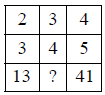
- a)31
- b)46
- c)23
- d)25
Correct answer is option 'D'. Can you explain this answer?
Select the missing number from the given responses.
a)
31
b)
46
c)
23
d)
25
 | Ramlal Meghwal answered |
In 1st column, 2*3 = 6*2 = 12+1 = 13
in 3rd column, 4*5 = 20*2 = 40+1 = 41
similarly, in 2nd column, 3*4 = 12*2= 24+1= 25 (ans).
in 3rd column, 4*5 = 20*2 = 40+1 = 41
similarly, in 2nd column, 3*4 = 12*2= 24+1= 25 (ans).
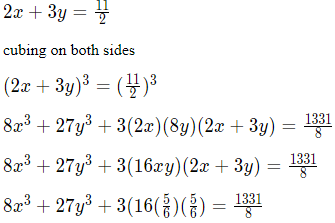
 then the value of then the value of 8x3+273 is
Directions (Q. Nos. 16-18) In the Following questions, a series is given,with one term missing.Choose the correct alternative from the given ones that will complete the series.1, 0, 3, 2, 5, 6, ?, 12, 9, 20- a)9
- b)10
- c)7
- d)8
Correct answer is option 'C'. Can you explain this answer?
Directions (Q. Nos. 16-18) In the Following questions, a series is given,with one term missing.
Choose the correct alternative from the given ones that will complete the series.
1, 0, 3, 2, 5, 6, ?, 12, 9, 20
a)
9
b)
10
c)
7
d)
8
| | Arnav Saini answered |
The given series is: 1, 0, 3, 2, 5, 6, ?, 12, 9, 20
To find the missing term, we need to identify the pattern in the given series.
Let's analyze the series step by step:
1st term: 1
2nd term: 0 (1 - 1)
3rd term: 3 (1 + 2)
4th term: 2 (3 - 1)
5th term: 5 (3 + 2)
6th term: 6 (5 + 1)
From the above analysis, we can observe that the series alternates between addition and subtraction.
- The odd-numbered terms are obtained by adding the previous term with a specific number:
1st term + 2 = 3
3rd term + 2 = 5
5th term + 2 = 7
- The even-numbered terms are obtained by subtracting the previous term with a specific number:
2nd term - 1 = -1
4th term - 1 = 1
6th term - 1 = 5
Now, let's find the missing term in the series.
7th term: ? (6 + 1) = 7
Therefore, the missing term in the series is 7.
Hence, the correct answer is option C) 7.
To find the missing term, we need to identify the pattern in the given series.
Let's analyze the series step by step:
1st term: 1
2nd term: 0 (1 - 1)
3rd term: 3 (1 + 2)
4th term: 2 (3 - 1)
5th term: 5 (3 + 2)
6th term: 6 (5 + 1)
From the above analysis, we can observe that the series alternates between addition and subtraction.
- The odd-numbered terms are obtained by adding the previous term with a specific number:
1st term + 2 = 3
3rd term + 2 = 5
5th term + 2 = 7
- The even-numbered terms are obtained by subtracting the previous term with a specific number:
2nd term - 1 = -1
4th term - 1 = 1
6th term - 1 = 5
Now, let's find the missing term in the series.
7th term: ? (6 + 1) = 7
Therefore, the missing term in the series is 7.
Hence, the correct answer is option C) 7.
Select the related word/letters/number from the given alternatives.225 : 256 : : 289 : ?- a)234
- b)361
- c)324
- d)432
Correct answer is option 'C'. Can you explain this answer?
Select the related word/letters/number from the given alternatives.
225 : 256 : : 289 : ?
a)
234
b)
361
c)
324
d)
432
 | Nilesh Banerjee answered |
Pattern:
The pattern in the given series is as follows:
- The numbers are perfect squares.
- The first digit of each number is the same as the square root of the last two digits.
Explanation:
Let's analyze the given series step by step:
1. 225: This is a perfect square of 15. (15 * 15 = 225)
2. 256: This is a perfect square of 16. (16 * 16 = 256)
From the above two steps, we can observe that the first digit of each number is the square root of the last two digits.
Following the same pattern, let's find the next number in the series:
3. 289: The square root of the last two digits is 17. So the next number in the series should be a perfect square of 17.
Answer:
Out of the given options, only option C (324) is a perfect square of 18. (18 * 18 = 324)
Therefore, the correct answer is option C) 324.
The pattern in the given series is as follows:
- The numbers are perfect squares.
- The first digit of each number is the same as the square root of the last two digits.
Explanation:
Let's analyze the given series step by step:
1. 225: This is a perfect square of 15. (15 * 15 = 225)
2. 256: This is a perfect square of 16. (16 * 16 = 256)
From the above two steps, we can observe that the first digit of each number is the square root of the last two digits.
Following the same pattern, let's find the next number in the series:
3. 289: The square root of the last two digits is 17. So the next number in the series should be a perfect square of 17.
Answer:
Out of the given options, only option C (324) is a perfect square of 18. (18 * 18 = 324)
Therefore, the correct answer is option C) 324.
In the following questions, out of the four alternatives, choose the one which can be substituted for the given words/sentence.A person who studies the origin and history of words- a)Ethnologist
- b)Polyglot
- c)Grammarian
- d)Etymologist
Correct answer is option 'D'. Can you explain this answer?
In the following questions, out of the four alternatives, choose the one which can be substituted for the given words/sentence.
A person who studies the origin and history of words
a)
Ethnologist
b)
Polyglot
c)
Grammarian
d)
Etymologist
| | Malavika Rane answered |
Etymologist
An etymologist is a person who studies the origin and history of words. This involves tracing the roots of words back to their original languages and understanding how they have evolved over time. Here are some key points to remember about etymologists:
- Study of Word Origins: Etymologists delve into the history of words to uncover their origins and meanings.
- Language Analysis: They analyze languages to identify connections between words and track their development.
- Evolution of Vocabulary: Etymologists examine how words have changed in form and meaning across different languages and cultures.
- Word Etymology: They focus on the etymology of words, which is the study of their origins and development.
- Importance of Etymology: Understanding the history of words can provide insights into the cultural, social, and historical contexts in which they were used.
In conclusion, an etymologist plays a crucial role in unraveling the fascinating history behind the words we use every day.
An etymologist is a person who studies the origin and history of words. This involves tracing the roots of words back to their original languages and understanding how they have evolved over time. Here are some key points to remember about etymologists:
- Study of Word Origins: Etymologists delve into the history of words to uncover their origins and meanings.
- Language Analysis: They analyze languages to identify connections between words and track their development.
- Evolution of Vocabulary: Etymologists examine how words have changed in form and meaning across different languages and cultures.
- Word Etymology: They focus on the etymology of words, which is the study of their origins and development.
- Importance of Etymology: Understanding the history of words can provide insights into the cultural, social, and historical contexts in which they were used.
In conclusion, an etymologist plays a crucial role in unraveling the fascinating history behind the words we use every day.
Annaimudi peak is located in the- a)Sahyadri
- b)Eastern Ghats
- c)Nilgiri hills
- d)Palni hills
Correct answer is option 'A'. Can you explain this answer?
Annaimudi peak is located in the
a)
Sahyadri
b)
Eastern Ghats
c)
Nilgiri hills
d)
Palni hills
 | Abhiram Mehra answered |
Annaimudi peak is located in the Sahyadri
Annaimudi peak is located in the Sahyadri mountain range in India. It is the highest peak in the Western Ghats and South India, with an elevation of 2,695 meters (8,842 feet). The Sahyadri mountain range, also known as the Western Ghats, is a UNESCO World Heritage Site and is one of the eight "hottest hotspots" of biological diversity in the world.
The Sahyadri Mountain Range
The Sahyadri mountain range stretches parallel to the western coast of India, covering the states of Maharashtra, Goa, Karnataka, Kerala, and Tamil Nadu. It is known for its rich biodiversity, with numerous endemic species of flora and fauna. The range is an important watershed for many major rivers in South India, including the Godavari, Krishna, and Kaveri rivers.
Annaimudi Peak
Annaimudi peak is located in Eravikulam National Park in the Idukki district of Kerala, India. It is part of the Anamalai sub-cluster, which is a component of the Sahyadri mountain range. The peak is a popular trekking destination and offers breathtaking views of the surrounding valleys, tea plantations, and lush green forests.
Flora and Fauna
The Sahyadri mountain range is home to a diverse range of flora and fauna. It is known for its evergreen forests, grasslands, and shola forests. The region is rich in biodiversity, with many endemic and endangered species. Some of the iconic species found in the area include the Nilgiri tahr, lion-tailed macaque, Malabar giant squirrel, and a variety of bird species.
Conservation Efforts
Due to its ecological significance, the Sahyadri mountain range has been designated as a UNESCO World Heritage Site. Several national parks and wildlife sanctuaries have been established in the region to protect its unique biodiversity. Eravikulam National Park, where Annaimudi peak is located, is one such protected area. Efforts are being made to conserve the fragile ecosystems and promote sustainable tourism in the region.
In conclusion, Annaimudi peak is located in the Sahyadri mountain range, which is known for its rich biodiversity and scenic beauty. It is an important part of the Western Ghats and South India's natural heritage.
Annaimudi peak is located in the Sahyadri mountain range in India. It is the highest peak in the Western Ghats and South India, with an elevation of 2,695 meters (8,842 feet). The Sahyadri mountain range, also known as the Western Ghats, is a UNESCO World Heritage Site and is one of the eight "hottest hotspots" of biological diversity in the world.
The Sahyadri Mountain Range
The Sahyadri mountain range stretches parallel to the western coast of India, covering the states of Maharashtra, Goa, Karnataka, Kerala, and Tamil Nadu. It is known for its rich biodiversity, with numerous endemic species of flora and fauna. The range is an important watershed for many major rivers in South India, including the Godavari, Krishna, and Kaveri rivers.
Annaimudi Peak
Annaimudi peak is located in Eravikulam National Park in the Idukki district of Kerala, India. It is part of the Anamalai sub-cluster, which is a component of the Sahyadri mountain range. The peak is a popular trekking destination and offers breathtaking views of the surrounding valleys, tea plantations, and lush green forests.
Flora and Fauna
The Sahyadri mountain range is home to a diverse range of flora and fauna. It is known for its evergreen forests, grasslands, and shola forests. The region is rich in biodiversity, with many endemic and endangered species. Some of the iconic species found in the area include the Nilgiri tahr, lion-tailed macaque, Malabar giant squirrel, and a variety of bird species.
Conservation Efforts
Due to its ecological significance, the Sahyadri mountain range has been designated as a UNESCO World Heritage Site. Several national parks and wildlife sanctuaries have been established in the region to protect its unique biodiversity. Eravikulam National Park, where Annaimudi peak is located, is one such protected area. Efforts are being made to conserve the fragile ecosystems and promote sustainable tourism in the region.
In conclusion, Annaimudi peak is located in the Sahyadri mountain range, which is known for its rich biodiversity and scenic beauty. It is an important part of the Western Ghats and South India's natural heritage.
An aspect of Input/Output controller of data logic is called- a)General Buffering
- b)Zero Buffering
- c)Buffering
- d)Data Buffering
Correct answer is option 'C'. Can you explain this answer?
An aspect of Input/Output controller of data logic is called
a)
General Buffering
b)
Zero Buffering
c)
Buffering
d)
Data Buffering
| | Malavika Rane answered |
Buffering in Input/Output controller of data logic
Buffering is an essential aspect of the Input/Output controller of data logic. It involves temporarily storing data while it is being transferred between devices. This process helps in managing the flow of data and ensuring smooth communication between different components of a system.
General Buffering
General buffering refers to the overall concept of storing data temporarily in a buffer. It allows for efficient data transfer and prevents data loss or corruption during communication.
Importance of Buffering
- Prevents data loss: Buffering helps in preventing data loss by temporarily storing data during transfer.
- Smooth data flow: It ensures a steady flow of data between devices, preventing bottlenecks or delays.
- Improves system performance: By managing data transfer efficiently, buffering enhances the overall performance of the system.
Data Buffering
Data buffering specifically refers to the storage of data in a buffer during input/output operations. It plays a crucial role in ensuring that data is processed in a timely and organized manner.
Zero Buffering
Zero buffering implies the absence of any buffer in the data transfer process. This can lead to issues such as data loss, delays, and inefficiencies in communication.
In conclusion, buffering is a critical aspect of the Input/Output controller of data logic as it ensures smooth and efficient data transfer between devices. By temporarily storing data in a buffer, it helps in managing the flow of data and preventing potential issues that may arise during communication.
Buffering is an essential aspect of the Input/Output controller of data logic. It involves temporarily storing data while it is being transferred between devices. This process helps in managing the flow of data and ensuring smooth communication between different components of a system.
General Buffering
General buffering refers to the overall concept of storing data temporarily in a buffer. It allows for efficient data transfer and prevents data loss or corruption during communication.
Importance of Buffering
- Prevents data loss: Buffering helps in preventing data loss by temporarily storing data during transfer.
- Smooth data flow: It ensures a steady flow of data between devices, preventing bottlenecks or delays.
- Improves system performance: By managing data transfer efficiently, buffering enhances the overall performance of the system.
Data Buffering
Data buffering specifically refers to the storage of data in a buffer during input/output operations. It plays a crucial role in ensuring that data is processed in a timely and organized manner.
Zero Buffering
Zero buffering implies the absence of any buffer in the data transfer process. This can lead to issues such as data loss, delays, and inefficiencies in communication.
In conclusion, buffering is a critical aspect of the Input/Output controller of data logic as it ensures smooth and efficient data transfer between devices. By temporarily storing data in a buffer, it helps in managing the flow of data and preventing potential issues that may arise during communication.

Mr. Mani’s age is 47 yr and John’s age is 13 yr. In how many years will Mr. Mani’s age be double of John’s age?- a)20
- b)21
- c)10
- d)15
Correct answer is option 'B'. Can you explain this answer?
Mr. Mani’s age is 47 yr and John’s age is 13 yr. In how many years will Mr. Mani’s age be double of John’s age?
a)
20
b)
21
c)
10
d)
15
| | Nilesh Banerjee answered |
Understanding the Problem
To determine when Mr. Manis's age will be double that of John's, we need to establish their current ages and the relationship between their future ages.
- Current age of Mr. Manis: 47 years
- Current age of John: 13 years
Setting Up the Equation
Let "x" represent the number of years from now. In "x" years:
- Mr. Manis's age will be: 47 + x
- John's age will be: 13 + x
We need to find when Mr. Manis's age will be double John's age:
Formulating the Equation
(47 + x) = 2(13 + x)
Solving the Equation
1. Distributing the 2:
- 47 + x = 26 + 2x
2. Rearranging the equation:
- 47 - 26 = 2x - x
- 21 = x
Thus, in 21 years, Mr. Manis will be double John's age.
Verification
- In 21 years:
- Mr. Manis's age: 47 + 21 = 68
- John's age: 13 + 21 = 34
- Check if Mr. Manis's age is double John's:
- 68 is indeed double 34.
Conclusion
The correct answer is option 'B' (21 years). In 21 years, Mr. Manis will be double John's age, confirming the calculation is accurate.
To determine when Mr. Manis's age will be double that of John's, we need to establish their current ages and the relationship between their future ages.
- Current age of Mr. Manis: 47 years
- Current age of John: 13 years
Setting Up the Equation
Let "x" represent the number of years from now. In "x" years:
- Mr. Manis's age will be: 47 + x
- John's age will be: 13 + x
We need to find when Mr. Manis's age will be double John's age:
Formulating the Equation
(47 + x) = 2(13 + x)
Solving the Equation
1. Distributing the 2:
- 47 + x = 26 + 2x
2. Rearranging the equation:
- 47 - 26 = 2x - x
- 21 = x
Thus, in 21 years, Mr. Manis will be double John's age.
Verification
- In 21 years:
- Mr. Manis's age: 47 + 21 = 68
- John's age: 13 + 21 = 34
- Check if Mr. Manis's age is double John's:
- 68 is indeed double 34.
Conclusion
The correct answer is option 'B' (21 years). In 21 years, Mr. Manis will be double John's age, confirming the calculation is accurate.
In the certain examination, 77% candidates passed in English and 34% failed in Mathematics. If 13% failed in both the subjects and 784 candidates passed in both the subjects, then the total number of candidates was- a)1600
- b)1800
- c)1200
- d)1400
Correct answer is option 'D'. Can you explain this answer?
In the certain examination, 77% candidates passed in English and 34% failed in Mathematics. If 13% failed in both the subjects and 784 candidates passed in both the subjects, then the total number of candidates was
a)
1600
b)
1800
c)
1200
d)
1400
| | Abhiram Mehra answered |
Understanding the Problem
To solve the problem, we need to analyze the given percentages of candidates passing and failing in English and Mathematics.
Given Data
- Percentage of candidates passing in English: 77%
- Percentage of candidates failing in Mathematics: 34%
- Percentage of candidates failing in both subjects: 13%
- Candidates passing in both subjects: 784
Calculating Candidates Passing in Each Subject
1. Candidates Passing in Mathematics:
Since 34% failed in Mathematics, it means:
- Candidates passing in Mathematics = 100% - 34% = 66%
2. Using the Inclusion-Exclusion Principle:
Let the total number of candidates be x.
- Candidates passing in English = 0.77x
- Candidates passing in Mathematics = 0.66x
- Candidates failing in both subjects = 0.13x
3. Candidates Passing in Either or Both Subjects:
- Candidates passing in at least one subject = (Candidates passing in English) + (Candidates passing in Mathematics) - (Candidates passing in both subjects)
- We know:
Candidates passing in at least one subject = x - (Candidates failing in both subjects) = x - 0.13x = 0.87x
Setting Up the Equation
- From the Inclusion-Exclusion Principle:
0.77x + 0.66x - 784 = 0.87x
- Rearranging gives:
1.43x - 784 = 0.87x
0.56x = 784
x = 784 / 0.56
x = 1400
Conclusion
Thus, the total number of candidates is 1400, confirming that the correct answer is option 'D'.
To solve the problem, we need to analyze the given percentages of candidates passing and failing in English and Mathematics.
Given Data
- Percentage of candidates passing in English: 77%
- Percentage of candidates failing in Mathematics: 34%
- Percentage of candidates failing in both subjects: 13%
- Candidates passing in both subjects: 784
Calculating Candidates Passing in Each Subject
1. Candidates Passing in Mathematics:
Since 34% failed in Mathematics, it means:
- Candidates passing in Mathematics = 100% - 34% = 66%
2. Using the Inclusion-Exclusion Principle:
Let the total number of candidates be x.
- Candidates passing in English = 0.77x
- Candidates passing in Mathematics = 0.66x
- Candidates failing in both subjects = 0.13x
3. Candidates Passing in Either or Both Subjects:
- Candidates passing in at least one subject = (Candidates passing in English) + (Candidates passing in Mathematics) - (Candidates passing in both subjects)
- We know:
Candidates passing in at least one subject = x - (Candidates failing in both subjects) = x - 0.13x = 0.87x
Setting Up the Equation
- From the Inclusion-Exclusion Principle:
0.77x + 0.66x - 784 = 0.87x
- Rearranging gives:
1.43x - 784 = 0.87x
0.56x = 784
x = 784 / 0.56
x = 1400
Conclusion
Thus, the total number of candidates is 1400, confirming that the correct answer is option 'D'.
Rajesh is in-charge of buying bread rolls and buns for a party. There are 10 buns in each box of buns and 8 bread rolls in each box of bread rolls. Rajesh wants to buy exactly the same number of buns and bread rolls. What is the smallest number of boxes he should buy for buns alone?- a)10
- b)8
- c)4
- d)5
Correct answer is option 'C'. Can you explain this answer?
Rajesh is in-charge of buying bread rolls and buns for a party. There are 10 buns in each box of buns and 8 bread rolls in each box of bread rolls. Rajesh wants to buy exactly the same number of buns and bread rolls. What is the smallest number of boxes he should buy for buns alone?
a)
10
b)
8
c)
4
d)
5
| | Nilesh Banerjee answered |
Given information:
- There are 10 buns in each box of buns.
- There are 8 bread rolls in each box of bread rolls.
- Rajesh wants to buy exactly the same number of buns and bread rolls.
To find:
The smallest number of boxes Rajesh should buy for buns alone.
Explanation:
Let's assume Rajesh wants to buy 'n' boxes of buns. Since there are 10 buns in each box, the total number of buns will be 10n.
Since Rajesh wants to buy the same number of buns and bread rolls, the total number of bread rolls will also be 10n.
Now, let's calculate the total number of bread rolls in terms of boxes. We know that there are 8 bread rolls in each box, so the total number of bread rolls will be 8 multiplied by the number of boxes (8n).
Since the total number of bread rolls is equal to 10n, we can write the equation:
8n = 10n
Simplifying the equation, we get:
10n - 8n = 0
2n = 0
n = 0
This implies that Rajesh needs to buy 0 boxes of buns to have an equal number of buns and bread rolls, which is not possible.
Conclusion:
Since it is not possible to buy 0 boxes of buns, the smallest number of boxes Rajesh should buy for buns alone is 1. Therefore, the correct answer is option C) 4.
- There are 10 buns in each box of buns.
- There are 8 bread rolls in each box of bread rolls.
- Rajesh wants to buy exactly the same number of buns and bread rolls.
To find:
The smallest number of boxes Rajesh should buy for buns alone.
Explanation:
Let's assume Rajesh wants to buy 'n' boxes of buns. Since there are 10 buns in each box, the total number of buns will be 10n.
Since Rajesh wants to buy the same number of buns and bread rolls, the total number of bread rolls will also be 10n.
Now, let's calculate the total number of bread rolls in terms of boxes. We know that there are 8 bread rolls in each box, so the total number of bread rolls will be 8 multiplied by the number of boxes (8n).
Since the total number of bread rolls is equal to 10n, we can write the equation:
8n = 10n
Simplifying the equation, we get:
10n - 8n = 0
2n = 0
n = 0
This implies that Rajesh needs to buy 0 boxes of buns to have an equal number of buns and bread rolls, which is not possible.
Conclusion:
Since it is not possible to buy 0 boxes of buns, the smallest number of boxes Rajesh should buy for buns alone is 1. Therefore, the correct answer is option C) 4.
If a job is to be completed in 10 days, it requires 270 persons. If 180 persons take up the same job, they will finish it in - a)27 days
- b)12 days
- c)15 days
- d)18 days
Correct answer is option 'C'. Can you explain this answer?
If a job is to be completed in 10 days, it requires 270 persons. If 180 persons take up the same job, they will finish it in
a)
27 days
b)
12 days
c)
15 days
d)
18 days
 | Ishaan Roy answered |
Given:
Number of persons required to complete the job in 10 days = 270
Number of persons available to complete the job = 180
To find:
Number of days required to complete the job with 180 persons
Let's assume that the amount of work required to be done is W.
The number of persons required to complete a job is inversely proportional to the number of days taken to complete the job. This can be represented as:
P₁ * D₁ = P₂ * D₂
Where:
P₁ = Number of persons for the first scenario
D₁ = Number of days for the first scenario
P₂ = Number of persons for the second scenario
D₂ = Number of days for the second scenario
Using the given information, we can set up the equation as:
270 * 10 = 180 * D₂
Simplifying the equation:
2700 = 180 * D₂
Dividing both sides by 180:
D₂ = 2700/180
D₂ = 15
Therefore, the job will be completed in 15 days with 180 persons.
Hence, the correct answer is option 'C' - 15 days.
Number of persons required to complete the job in 10 days = 270
Number of persons available to complete the job = 180
To find:
Number of days required to complete the job with 180 persons
Let's assume that the amount of work required to be done is W.
The number of persons required to complete a job is inversely proportional to the number of days taken to complete the job. This can be represented as:
P₁ * D₁ = P₂ * D₂
Where:
P₁ = Number of persons for the first scenario
D₁ = Number of days for the first scenario
P₂ = Number of persons for the second scenario
D₂ = Number of days for the second scenario
Using the given information, we can set up the equation as:
270 * 10 = 180 * D₂
Simplifying the equation:
2700 = 180 * D₂
Dividing both sides by 180:
D₂ = 2700/180
D₂ = 15
Therefore, the job will be completed in 15 days with 180 persons.
Hence, the correct answer is option 'C' - 15 days.
Radii of two circles are 6.3 cm and3.6 cm. If they touch each other internally then, the distance between their centres is- a)9.1cm
- b)2.7cm
- c)3.7cm
- d)10.1cm
Correct answer is option 'B'. Can you explain this answer?
Radii of two circles are 6.3 cm and3.6 cm. If they touch each other internally then, the distance between their centres is
a)
9.1cm
b)
2.7cm
c)
3.7cm
d)
10.1cm
| | Pranab Goyal answered |
Solution:
Given, the radii of the two circles are 6.3 cm and 3.6 cm respectively.
Let the distance between the centres of the two circles be 'd'.
Formula: Distance between the centres of two circles = (Sum of their radii)
Therefore, d = (6.3 + 3.6) cm = 9.9 cm
But the circles touch each other internally.
Formula: Distance between the centres of two circles when they touch each other internally = (Difference of their radii)
Therefore, d = (6.3 - 3.6) cm = 2.7 cm
Hence, the distance between their centres is 2.7 cm.
Therefore, the correct option is (b) 2.7 cm.
Given, the radii of the two circles are 6.3 cm and 3.6 cm respectively.
Let the distance between the centres of the two circles be 'd'.
Formula: Distance between the centres of two circles = (Sum of their radii)
Therefore, d = (6.3 + 3.6) cm = 9.9 cm
But the circles touch each other internally.
Formula: Distance between the centres of two circles when they touch each other internally = (Difference of their radii)
Therefore, d = (6.3 - 3.6) cm = 2.7 cm
Hence, the distance between their centres is 2.7 cm.
Therefore, the correct option is (b) 2.7 cm.
Select the one which is different from other three alternatives.- a)Bay
- b)Cape
- c)Peninsula
- d)Island
Correct answer is option 'B'. Can you explain this answer?
Select the one which is different from other three alternatives.
a)
Bay
b)
Cape
c)
Peninsula
d)
Island
| | Pranab Goyal answered |
The correct answer is option 'B' (Cape) because it is different from the other three alternatives (Bay, Peninsula, and Island) in terms of its geographical characteristics.
1. Bay:
- A bay is a body of water that is partially enclosed by land.
- It is typically smaller than a gulf and larger than a cove.
- Bays can be found along coastlines and are often formed by erosion or tectonic activity.
- Examples of famous bays include the San Francisco Bay, the Chesapeake Bay, and the Bay of Bengal.
2. Peninsula:
- A peninsula is a landform that is surrounded by water on three sides.
- It is connected to the mainland by a narrow strip of land called an isthmus.
- Peninsulas can be large or small and can be found on various continents.
- Examples of well-known peninsulas include the Iberian Peninsula, the Arabian Peninsula, and the Korean Peninsula.
3. Island:
- An island is a landmass that is completely surrounded by water.
- It can be formed by volcanic activity, tectonic shifts, or erosion.
- Islands can vary in size, ranging from small islets to large landmasses like Greenland or Australia.
- Popular examples of islands include Hawaii, the Maldives, and the British Isles.
4. Cape:
- A cape is a pointed piece of land that extends into a body of water, such as a sea or an ocean.
- It is usually smaller than a peninsula and is characterized by its narrow and elongated shape.
- Capes are often formed by coastal erosion or deposition of sediment.
- Examples of well-known capes include Cape Horn, Cape of Good Hope, and Cape Cod.
Therefore, the correct answer is option 'B' (Cape) as it is different from the other three alternatives in terms of its geographical characteristics and shape.
1. Bay:
- A bay is a body of water that is partially enclosed by land.
- It is typically smaller than a gulf and larger than a cove.
- Bays can be found along coastlines and are often formed by erosion or tectonic activity.
- Examples of famous bays include the San Francisco Bay, the Chesapeake Bay, and the Bay of Bengal.
2. Peninsula:
- A peninsula is a landform that is surrounded by water on three sides.
- It is connected to the mainland by a narrow strip of land called an isthmus.
- Peninsulas can be large or small and can be found on various continents.
- Examples of well-known peninsulas include the Iberian Peninsula, the Arabian Peninsula, and the Korean Peninsula.
3. Island:
- An island is a landmass that is completely surrounded by water.
- It can be formed by volcanic activity, tectonic shifts, or erosion.
- Islands can vary in size, ranging from small islets to large landmasses like Greenland or Australia.
- Popular examples of islands include Hawaii, the Maldives, and the British Isles.
4. Cape:
- A cape is a pointed piece of land that extends into a body of water, such as a sea or an ocean.
- It is usually smaller than a peninsula and is characterized by its narrow and elongated shape.
- Capes are often formed by coastal erosion or deposition of sediment.
- Examples of well-known capes include Cape Horn, Cape of Good Hope, and Cape Cod.
Therefore, the correct answer is option 'B' (Cape) as it is different from the other three alternatives in terms of its geographical characteristics and shape.
Select the related word/letters/number from the given alternatives.Money : Misappropriation : : Writing : ?- a)Deception
- b)Mistake
- c)Plagiarism
- d)Theft
Correct answer is option 'C'. Can you explain this answer?
Select the related word/letters/number from the given alternatives.
Money : Misappropriation : : Writing : ?
a)
Deception
b)
Mistake
c)
Plagiarism
d)
Theft
| | Arnav Saini answered |
Explanation:
In this analogy, we need to identify the relationship between the words "Money" and "Misappropriation" and apply the same relationship to the word "Writing".
The word "Misappropriation" refers to the wrongful or dishonest use or appropriation of something, typically funds or property. It implies an act of misuse or theft.
Similarly, the word "Plagiarism" refers to the act of taking someone else's work, ideas, or words and passing them off as one's own. It involves copying or stealing someone else's writing without giving proper credit or acknowledgment.
Therefore, the correct answer is option C) Plagiarism, as it is synonymous with misappropriation in the context of writing.
Summary:
The relationship between "Money" and "Misappropriation" is the same as the relationship between "Writing" and "Plagiarism". Both "Misappropriation" and "Plagiarism" involve wrongful or dishonest acts of theft or misuse, in the context of money and writing respectively.
In this analogy, we need to identify the relationship between the words "Money" and "Misappropriation" and apply the same relationship to the word "Writing".
The word "Misappropriation" refers to the wrongful or dishonest use or appropriation of something, typically funds or property. It implies an act of misuse or theft.
Similarly, the word "Plagiarism" refers to the act of taking someone else's work, ideas, or words and passing them off as one's own. It involves copying or stealing someone else's writing without giving proper credit or acknowledgment.
Therefore, the correct answer is option C) Plagiarism, as it is synonymous with misappropriation in the context of writing.
Summary:
The relationship between "Money" and "Misappropriation" is the same as the relationship between "Writing" and "Plagiarism". Both "Misappropriation" and "Plagiarism" involve wrongful or dishonest acts of theft or misuse, in the context of money and writing respectively.
Buddha means- a)Great Conqueror
- b)Great Saint
- c)Wise one
- d)Enlightened one
Correct answer is option 'D'. Can you explain this answer?
Buddha means
a)
Great Conqueror
b)
Great Saint
c)
Wise one
d)
Enlightened one
| | Nilesh Banerjee answered |
Meaning of Buddha
The term "Buddha" is derived from the ancient Indian language of Sanskrit, where it means "the Enlightened One." This title signifies a profound spiritual awakening and understanding.
Significance of Enlightenment
- Awakening to Reality: The Buddha, specifically Siddhartha Gautama, attained enlightenment through deep meditation and insight into the nature of suffering, existence, and the path to liberation.
- Understanding of Suffering: The Buddha's teachings focus on the Four Noble Truths, which highlight the existence of suffering, its origin, cessation, and the path leading to its cessation.
The Path to Enlightenment
- The Middle Way: Buddha advocated for a balanced approach to spiritual practice, avoiding extremes of self-indulgence and self-mortification.
- Noble Eightfold Path: This is the practical guide to ethical and mental development, leading to enlightenment. It includes Right Understanding, Right Intent, Right Speech, Right Action, Right Livelihood, Right Effort, Right Mindfulness, and Right Concentration.
Conclusion
In essence, the term "Buddha" encapsulates the journey from ignorance to enlightenment, emphasizing wisdom and the realization of ultimate truth. It represents not just a historical figure but a universal aspiration for spiritual awakening and liberation from suffering. The correct answer, therefore, is option 'D' — "Enlightened one."
The term "Buddha" is derived from the ancient Indian language of Sanskrit, where it means "the Enlightened One." This title signifies a profound spiritual awakening and understanding.
Significance of Enlightenment
- Awakening to Reality: The Buddha, specifically Siddhartha Gautama, attained enlightenment through deep meditation and insight into the nature of suffering, existence, and the path to liberation.
- Understanding of Suffering: The Buddha's teachings focus on the Four Noble Truths, which highlight the existence of suffering, its origin, cessation, and the path leading to its cessation.
The Path to Enlightenment
- The Middle Way: Buddha advocated for a balanced approach to spiritual practice, avoiding extremes of self-indulgence and self-mortification.
- Noble Eightfold Path: This is the practical guide to ethical and mental development, leading to enlightenment. It includes Right Understanding, Right Intent, Right Speech, Right Action, Right Livelihood, Right Effort, Right Mindfulness, and Right Concentration.
Conclusion
In essence, the term "Buddha" encapsulates the journey from ignorance to enlightenment, emphasizing wisdom and the realization of ultimate truth. It represents not just a historical figure but a universal aspiration for spiritual awakening and liberation from suffering. The correct answer, therefore, is option 'D' — "Enlightened one."
In the following questions, some parts of the sentences have errors and some are correct. Find out which part of a sentence has an error. The number of that part is the answer. If a sentence is free from error, your answer is d) i.e. No error.Q. The new device (a)/ aims at eliminating (b)/ the risk of short - circuiting. (c) / No error (d)- a)The new device
- b)aims at eliminating.
- c)the risk of short - circuiting
- d)No error
Correct answer is option 'C'. Can you explain this answer?
In the following questions, some parts of the sentences have errors and some are correct. Find out which part of a sentence has an error. The number of that part is the answer. If a sentence is free from error, your answer is d) i.e. No error.
Q. The new device (a)/ aims at eliminating (b)/ the risk of short - circuiting. (c) / No error (d)
a)
The new device
b)
aims at eliminating.
c)
the risk of short - circuiting
d)
No error
 | Sagar Sharma answered |
Explanation:
Error Analysis:
The error is in part (a) of the sentence. The correct article "the" should be used before "new device" to make the sentence grammatically correct.
Corrected Sentence:
The new device aims at eliminating the risk of short-circuiting.
Error Analysis:
The error is in part (a) of the sentence. The correct article "the" should be used before "new device" to make the sentence grammatically correct.
Corrected Sentence:
The new device aims at eliminating the risk of short-circuiting.
In which Rock Edict Ashoka mentions about the casualties of Kalinga War and declares the renunciation of war ?- a)Maski Edict
- b)Rock Edict XIII
- c)Rock Edict XI
- d)Rock Edict X
Correct answer is option 'B'. Can you explain this answer?
In which Rock Edict Ashoka mentions about the casualties of Kalinga War and declares the renunciation of war ?
a)
Maski Edict
b)
Rock Edict XIII
c)
Rock Edict XI
d)
Rock Edict X
| | Pranab Goyal answered |
Rock Edict XIII
Rock Edict XIII is where Ashoka mentions the casualties of the Kalinga War and declares the renunciation of war. Here is a detailed explanation:
Kalinga War Casualties
- In Rock Edict XIII, Ashoka mentions the suffering caused by the Kalinga War, where hundreds of thousands of people died and many more were deported or made captive.
- He expresses deep remorse and sorrow for the devastation and loss of life that occurred during the war.
Renunciation of War
- Ashoka declares his renunciation of war in Rock Edict XIII, stating that he will no longer engage in military conquests.
- He emphasizes the importance of practicing Dhamma (righteousness) and peace, and expresses his desire for the welfare and happiness of all his subjects.
Embracing Non-Violence
- Ashoka's declaration of renunciation of war marks a significant shift in his policies, as he adopts a more peaceful and compassionate approach to governance.
- He promotes non-violence, tolerance, and respect for all religious beliefs, encouraging his subjects to live harmoniously with one another.
Legacy of Rock Edict XIII
- Rock Edict XIII highlights Ashoka's transformation from a ruthless conqueror to a compassionate ruler who prioritizes the well-being of his people.
- This edict is seen as a key moment in Ashoka's reign, shaping his legacy as a promoter of peace and moral governance.
In conclusion, Rock Edict XIII is a pivotal edict where Ashoka reflects on the consequences of war, expresses remorse for the suffering caused, and declares his commitment to non-violence and peace.
Rock Edict XIII is where Ashoka mentions the casualties of the Kalinga War and declares the renunciation of war. Here is a detailed explanation:
Kalinga War Casualties
- In Rock Edict XIII, Ashoka mentions the suffering caused by the Kalinga War, where hundreds of thousands of people died and many more were deported or made captive.
- He expresses deep remorse and sorrow for the devastation and loss of life that occurred during the war.
Renunciation of War
- Ashoka declares his renunciation of war in Rock Edict XIII, stating that he will no longer engage in military conquests.
- He emphasizes the importance of practicing Dhamma (righteousness) and peace, and expresses his desire for the welfare and happiness of all his subjects.
Embracing Non-Violence
- Ashoka's declaration of renunciation of war marks a significant shift in his policies, as he adopts a more peaceful and compassionate approach to governance.
- He promotes non-violence, tolerance, and respect for all religious beliefs, encouraging his subjects to live harmoniously with one another.
Legacy of Rock Edict XIII
- Rock Edict XIII highlights Ashoka's transformation from a ruthless conqueror to a compassionate ruler who prioritizes the well-being of his people.
- This edict is seen as a key moment in Ashoka's reign, shaping his legacy as a promoter of peace and moral governance.
In conclusion, Rock Edict XIII is a pivotal edict where Ashoka reflects on the consequences of war, expresses remorse for the suffering caused, and declares his commitment to non-violence and peace.
A computer virus is a type of malware that, when executed, replicates by inserting copies of itself into other computer programs, data files, or the boot sector of the hard drive. However, not all viruses carry a destructive payload or attempt to hide themselves—the defining characteristic of viruses is that they are self-replicating computer programs which install themselves without the user’s consent. Virus writers use social engineering and exploit detailed knowledge of security vulnerabilities to gain access to their host’s computing resources. The vast majority of viruses (over 99%) target systems running Microsoft Windows employing a variety of mechanisms to infect new hosts, and often using complex anti-detection/stealth strategies to evade antivirus software. Motives for creating viruses can include seeking profit, desire to send a political message, personal amusement, to demonstrate that a vulnerability exists in software, for sabotage and denial of service, or simply because they wish to explore artificial life and evolutionary algorithms.Q. How do virus writers gain access to computing resources ?- a)By executing malwares
- b)By employing a variety of mechanisms
- c)By using social engineering
- d)By affecting computing networks
Correct answer is option 'C'. Can you explain this answer?
A computer virus is a type of malware that, when executed, replicates by inserting copies of itself into other computer programs, data files, or the boot sector of the hard drive. However, not all viruses carry a destructive payload or attempt to hide themselves—the defining characteristic of viruses is that they are self-replicating computer programs which install themselves without the user’s consent. Virus writers use social engineering and exploit detailed knowledge of security vulnerabilities to gain access to their host’s computing resources. The vast majority of viruses (over 99%) target systems running Microsoft Windows employing a variety of mechanisms to infect new hosts, and often using complex anti-detection/stealth strategies to evade antivirus software. Motives for creating viruses can include seeking profit, desire to send a political message, personal amusement, to demonstrate that a vulnerability exists in software, for sabotage and denial of service, or simply because they wish to explore artificial life and evolutionary algorithms.
Q. How do virus writers gain access to computing resources ?
a)
By executing malwares
b)
By employing a variety of mechanisms
c)
By using social engineering
d)
By affecting computing networks
| | Nilesh Banerjee answered |
How do virus writers gain access to computing resources?
Social Engineering:
Virus writers often use social engineering techniques to trick users into installing malware on their systems. This could involve sending phishing emails, creating fake websites, or impersonating trusted entities to deceive users into downloading malicious software.
Exploiting Security Vulnerabilities:
Virus writers exploit detailed knowledge of security vulnerabilities in software and operating systems. They may exploit loopholes in outdated software, weak passwords, or unsecured network connections to gain access to computing resources.
Creating Backdoors:
Some virus writers create backdoors in systems, allowing them to bypass security measures and gain unauthorized access to computing resources. These backdoors can be used to remotely control infected systems, steal sensitive data, or launch further attacks.
Using Remote Access Tools:
Virus writers may use remote access tools to gain access to computing resources. These tools allow attackers to remotely control infected systems, view and manipulate files, and carry out malicious activities without the user's knowledge.
Exploiting Zero-Day Vulnerabilities:
Zero-day vulnerabilities are security flaws that are unknown to the software vendor and have not been patched. Virus writers may exploit these vulnerabilities to gain access to computing resources before a fix is released, making it difficult for antivirus software to detect and prevent attacks.
Social Engineering:
Virus writers often use social engineering techniques to trick users into installing malware on their systems. This could involve sending phishing emails, creating fake websites, or impersonating trusted entities to deceive users into downloading malicious software.
Exploiting Security Vulnerabilities:
Virus writers exploit detailed knowledge of security vulnerabilities in software and operating systems. They may exploit loopholes in outdated software, weak passwords, or unsecured network connections to gain access to computing resources.
Creating Backdoors:
Some virus writers create backdoors in systems, allowing them to bypass security measures and gain unauthorized access to computing resources. These backdoors can be used to remotely control infected systems, steal sensitive data, or launch further attacks.
Using Remote Access Tools:
Virus writers may use remote access tools to gain access to computing resources. These tools allow attackers to remotely control infected systems, view and manipulate files, and carry out malicious activities without the user's knowledge.
Exploiting Zero-Day Vulnerabilities:
Zero-day vulnerabilities are security flaws that are unknown to the software vendor and have not been patched. Virus writers may exploit these vulnerabilities to gain access to computing resources before a fix is released, making it difficult for antivirus software to detect and prevent attacks.
Choose the correct alternative from the given ones that will complete the series.7, 8, 18, 57, ?, 1165- a)174
- b)232
- c)224
- d)228
Correct answer is option 'B'. Can you explain this answer?
Choose the correct alternative from the given ones that will complete the series.
7, 8, 18, 57, ?, 1165
a)
174
b)
232
c)
224
d)
228
| | Ishaan Roy answered |
The given series is 7, 8, 18, 57, ?, 1165.
To find the missing term, let's analyze the pattern in the series:
The first term is 7.
The second term is obtained by adding 1 to the first term: 7 + 1 = 8.
The third term is obtained by multiplying the second term by 2 and then adding 2: (8 * 2) + 2 = 18.
The fourth term is obtained by multiplying the third term by 3 and then subtracting 3: (18 * 3) - 3 = 57.
So, the pattern seems to be:
Term 1: 7
Term 2: (Term 1 + 1)
Term 3: (Term 2 * 2) + 2
Term 4: (Term 3 * 3) - 3
To find the missing term, we can apply the same pattern:
Term 5: (Term 4 * 4) + 4
= (57 * 4) + 4
= 228 + 4
= 232
Therefore, the missing term in the series is 232.
Hence, the correct alternative is option B) 232.
To find the missing term, let's analyze the pattern in the series:
The first term is 7.
The second term is obtained by adding 1 to the first term: 7 + 1 = 8.
The third term is obtained by multiplying the second term by 2 and then adding 2: (8 * 2) + 2 = 18.
The fourth term is obtained by multiplying the third term by 3 and then subtracting 3: (18 * 3) - 3 = 57.
So, the pattern seems to be:
Term 1: 7
Term 2: (Term 1 + 1)
Term 3: (Term 2 * 2) + 2
Term 4: (Term 3 * 3) - 3
To find the missing term, we can apply the same pattern:
Term 5: (Term 4 * 4) + 4
= (57 * 4) + 4
= 228 + 4
= 232
Therefore, the missing term in the series is 232.
Hence, the correct alternative is option B) 232.
A certain number of men can finish a piece of work in 100 days. However, if there were 10 men less, then it would take 10 days more for the work to be finished How many men were there originally?- a)110
- b)75
- c)50
- d)100
Correct answer is option 'A'. Can you explain this answer?
A certain number of men can finish a piece of work in 100 days. However, if there were 10 men less, then it would take 10 days more for the work to be finished How many men were there originally?
a)
110
b)
75
c)
50
d)
100
| | Pranab Goyal answered |
Given:
- Number of men required to finish the work in 100 days = x
- If there were 10 men less, then it would take 10 days more to finish the work
To Find:
- Number of men originally
Assumption:
- The amount of work is the same throughout the process
Explanation:
Let's assume that the total work is represented by W.
1. Work completed per day by x men = W/100
2. Work completed per day by (x-10) men = W/(100+10) = W/110
Since the amount of work is the same, we can equate these two expressions:
W/100 = W/110
Solving the equation:
Cross-multiplying the equation, we get:
110W = 100W
Simplifying the equation, we get:
10W = 0
Since the equation is not possible, it means that our assumption was wrong.
Conclusion:
We cannot determine the number of men originally based on the given information. The information provided is contradictory and does not lead to a valid solution.
Therefore, the correct answer is none of the given options.
- Number of men required to finish the work in 100 days = x
- If there were 10 men less, then it would take 10 days more to finish the work
To Find:
- Number of men originally
Assumption:
- The amount of work is the same throughout the process
Explanation:
Let's assume that the total work is represented by W.
1. Work completed per day by x men = W/100
2. Work completed per day by (x-10) men = W/(100+10) = W/110
Since the amount of work is the same, we can equate these two expressions:
W/100 = W/110
Solving the equation:
Cross-multiplying the equation, we get:
110W = 100W
Simplifying the equation, we get:
10W = 0
Since the equation is not possible, it means that our assumption was wrong.
Conclusion:
We cannot determine the number of men originally based on the given information. The information provided is contradictory and does not lead to a valid solution.
Therefore, the correct answer is none of the given options.
If tan θ = 3/4 and 0 < θ < π/2 and 25x sin2θ cos θ = tan2 θ, then the value of x is - a)7/64
- b)9/64
- c)3/64
- d)5/64
Correct answer is option 'D'. Can you explain this answer?
If tan θ = 3/4 and 0 < θ < π/2 and 25x sin2θ cos θ = tan2 θ, then the value of x is
a)
7/64
b)
9/64
c)
3/64
d)
5/64
| | Nilesh Banerjee answered |
Introduction
To find the value of x given the equation 25x sin²θ cos θ = tan²θ, where tan θ = 3/4, we can follow these steps.
Step 1: Calculate sin²θ and cos²θ
Since tan θ = sin θ / cos θ, we have:
- sin θ = 3k
- cos θ = 4k
Using the Pythagorean identity: sin²θ + cos²θ = 1:
- (3k)² + (4k)² = 1
- 9k² + 16k² = 1
- 25k² = 1
- k² = 1/25
- k = 1/5
Now, we can find sin θ and cos θ:
- sin θ = 3/5
- cos θ = 4/5
Step 2: Find sin²θ and cos θ
Now we calculate:
- sin²θ = (3/5)² = 9/25
- cos θ = 4/5
Step 3: Substitute values into the equation
Now we substitute sin²θ and cos θ into the equation 25x sin²θ cos θ = tan²θ:
- tan²θ = (3/4)² = 9/16
Substituting the values:
25x (9/25)(4/5) = 9/16
Step 4: Simplify the equation
Now, simplify the left side:
- 25x * (9/25) * (4/5) = 9x * 4/5 = (36x)/5
Setting both sides equal gives:
(36x)/5 = 9/16
Step 5: Solve for x
Cross-multiplying gives:
36x * 16 = 9 * 5
- 576x = 45
Now, solving for x:
- x = 45 / 576
- x = 5 / 64
Conclusion
Thus, the value of x is 5/64, confirming that the correct answer is option 'D'.
To find the value of x given the equation 25x sin²θ cos θ = tan²θ, where tan θ = 3/4, we can follow these steps.
Step 1: Calculate sin²θ and cos²θ
Since tan θ = sin θ / cos θ, we have:
- sin θ = 3k
- cos θ = 4k
Using the Pythagorean identity: sin²θ + cos²θ = 1:
- (3k)² + (4k)² = 1
- 9k² + 16k² = 1
- 25k² = 1
- k² = 1/25
- k = 1/5
Now, we can find sin θ and cos θ:
- sin θ = 3/5
- cos θ = 4/5
Step 2: Find sin²θ and cos θ
Now we calculate:
- sin²θ = (3/5)² = 9/25
- cos θ = 4/5
Step 3: Substitute values into the equation
Now we substitute sin²θ and cos θ into the equation 25x sin²θ cos θ = tan²θ:
- tan²θ = (3/4)² = 9/16
Substituting the values:
25x (9/25)(4/5) = 9/16
Step 4: Simplify the equation
Now, simplify the left side:
- 25x * (9/25) * (4/5) = 9x * 4/5 = (36x)/5
Setting both sides equal gives:
(36x)/5 = 9/16
Step 5: Solve for x
Cross-multiplying gives:
36x * 16 = 9 * 5
- 576x = 45
Now, solving for x:
- x = 45 / 576
- x = 5 / 64
Conclusion
Thus, the value of x is 5/64, confirming that the correct answer is option 'D'.
Find out the number of all those people who can speak Tamil or Telugu ?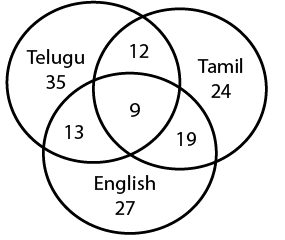
- a)3
- b)59
- c)21
- d)112
Correct answer is option 'D'. Can you explain this answer?
Find out the number of all those people who can speak Tamil or Telugu ?
a)
3
b)
59
c)
21
d)
112
 | Pioneer Academy answered |
All those people who can speak Tamil or telugu = 35+13+12+9+24+19 = 112
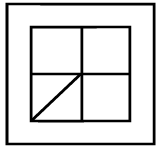
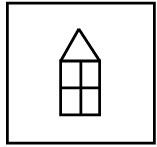
From the given answer figures. select the one in which the question figure is hidden/embedded. 
- a)

- b)
- c)
- d)
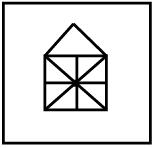
Correct answer is option 'D'. Can you explain this answer?
From the given answer figures. select the one in which the question figure is hidden/embedded.
a)
b)
c)
d)
| | Aisha Gupta answered |
It can be seen that the figure in option D contains the question figure.
Buddha died in the year- a)483 BC
- b)438 BC
- c)453 BC
- d)468 BC
Correct answer is option 'A'. Can you explain this answer?
Buddha died in the year
a)
483 BC
b)
438 BC
c)
453 BC
d)
468 BC
| | Arnav Saini answered |
Background:
Buddha, also known as Siddhartha Gautama, was a spiritual leader and the founder of Buddhism. He lived in the 6th to 5th century BC in what is now Nepal and India.
Year of Death:
Buddha passed away in the year 483 BC.
Significance of the Year:
- Buddha's death, also known as Parinirvana, is a significant event in Buddhism.
- It marks the end of his earthly life and his attainment of Nirvana, the ultimate state of enlightenment.
Legacy of Buddha:
- Buddha's teachings on the Four Noble Truths and the Eightfold Path continue to guide millions of followers around the world.
- His emphasis on compassion, mindfulness, and the pursuit of inner peace has had a profound impact on the development of Buddhism as a major world religion.
Spread of Buddhism:
- After Buddha's death, his disciples carried on his teachings and helped spread Buddhism across Asia and eventually to other parts of the world.
- Today, Buddhism is one of the major world religions with millions of adherents.
In conclusion, Buddha's death in 483 BC marked a significant moment in the history of Buddhism and his teachings continue to inspire and guide people seeking spiritual enlightenment and inner peace.
Buddha, also known as Siddhartha Gautama, was a spiritual leader and the founder of Buddhism. He lived in the 6th to 5th century BC in what is now Nepal and India.
Year of Death:
Buddha passed away in the year 483 BC.
Significance of the Year:
- Buddha's death, also known as Parinirvana, is a significant event in Buddhism.
- It marks the end of his earthly life and his attainment of Nirvana, the ultimate state of enlightenment.
Legacy of Buddha:
- Buddha's teachings on the Four Noble Truths and the Eightfold Path continue to guide millions of followers around the world.
- His emphasis on compassion, mindfulness, and the pursuit of inner peace has had a profound impact on the development of Buddhism as a major world religion.
Spread of Buddhism:
- After Buddha's death, his disciples carried on his teachings and helped spread Buddhism across Asia and eventually to other parts of the world.
- Today, Buddhism is one of the major world religions with millions of adherents.
In conclusion, Buddha's death in 483 BC marked a significant moment in the history of Buddhism and his teachings continue to inspire and guide people seeking spiritual enlightenment and inner peace.
Directions (Q. Nos. 7-11) Select the one which is different from other three alternatives.- a)Rival
- b)Opponent
- c)Foe
- d)Ally
Correct answer is option 'D'. Can you explain this answer?
Directions (Q. Nos. 7-11) Select the one which is different from other three alternatives.
a)
Rival
b)
Opponent
c)
Foe
d)
Ally
| | Ishaan Roy answered |
In this question, we are given four options - Rival, Opponent, Foe, and Ally - and we need to identify the one which is different from the other three alternatives. Let's analyze each option to determine the correct answer.
a) Rival: A rival is someone who competes or vies with another person or group for the same objective or goal. They are seen as opponents or competitors.
b) Opponent: An opponent is someone who competes or opposes another person or group in a contest, game, or conflict. They are adversaries or rivals.
c) Foe: A foe is an enemy or adversary, someone who is opposed to or in conflict with another person or group.
d) Ally: An ally is someone who joins or cooperates with another person or group for a common purpose or goal. They are partners or supporters.
From the above analysis, we can see that all options except 'd) Ally' represent individuals or groups who are in opposition or conflict with each other. 'Ally' is the only option that represents a positive relationship where two parties come together and cooperate for a shared objective.
Therefore, the correct answer is option 'D' - Ally, as it is different from the other three alternatives.
a) Rival: A rival is someone who competes or vies with another person or group for the same objective or goal. They are seen as opponents or competitors.
b) Opponent: An opponent is someone who competes or opposes another person or group in a contest, game, or conflict. They are adversaries or rivals.
c) Foe: A foe is an enemy or adversary, someone who is opposed to or in conflict with another person or group.
d) Ally: An ally is someone who joins or cooperates with another person or group for a common purpose or goal. They are partners or supporters.
From the above analysis, we can see that all options except 'd) Ally' represent individuals or groups who are in opposition or conflict with each other. 'Ally' is the only option that represents a positive relationship where two parties come together and cooperate for a shared objective.
Therefore, the correct answer is option 'D' - Ally, as it is different from the other three alternatives.
In the following series, how many KGN occur in such a way that ‘G’ is in the middle and ‘K’ and ‘N’ are adjacent to it on both sides?A K G L M N D Q K G C S N G K T G K G N D Z P U X G K E- a)3
- b)5
- c)1
- d)2
Correct answer is option 'D'. Can you explain this answer?
In the following series, how many KGN occur in such a way that ‘G’ is in the middle and ‘K’ and ‘N’ are adjacent to it on both sides?
A K G L M N D Q K G C S N G K T G K G N D Z P U X G K E
a)
3
b)
5
c)
1
d)
2
| | Nilesh Banerjee answered |
Explanation:
To find the number of occurrences of the sequence "KGN" where "G" is in the middle and "K" and "N" are adjacent to it on both sides, we need to scan through the given series and count the valid occurrences.
Here is the given series:
A K G L M N D Q K G C S N G K T G K G N D Z P U X G K E
Step 1: Scan through the series and identify the occurrences of the sequence "KGN".
A K G L M N D Q K G C S N G K T G K G N D Z P U X G K E
Step 2: Count the number of valid occurrences.
There are a total of 2 valid occurrences where "G" is in the middle and "K" and "N" are adjacent to it on both sides.
Therefore, the correct answer is option 'D' - 2.
To find the number of occurrences of the sequence "KGN" where "G" is in the middle and "K" and "N" are adjacent to it on both sides, we need to scan through the given series and count the valid occurrences.
Here is the given series:
A K G L M N D Q K G C S N G K T G K G N D Z P U X G K E
Step 1: Scan through the series and identify the occurrences of the sequence "KGN".
A K G L M N D Q K G C S N G K T G K G N D Z P U X G K E
Step 2: Count the number of valid occurrences.
There are a total of 2 valid occurrences where "G" is in the middle and "K" and "N" are adjacent to it on both sides.
Therefore, the correct answer is option 'D' - 2.
Find out which part of a sentence has an error. If a sentence is free from error, mark (d) as your answer.The new device / aims at eliminating / the risk of short-circuiting.- a)The new device
- b)aims at eliminating
- c)the risk of short-circuiting.
- d)No error
Correct answer is option 'C'. Can you explain this answer?
Find out which part of a sentence has an error. If a sentence is free from error, mark (d) as your answer.
The new device / aims at eliminating / the risk of short-circuiting.
a)
The new device
b)
aims at eliminating
c)
the risk of short-circuiting.
d)
No error
| | Pranab Goyal answered |
The Sentence Structure
The sentence in question is: "The new device aims at eliminating the risk of short-circuiting."
Identifying the Error
- The phrase "the risk of short-circuiting" is grammatically correct, but the issue lies in the construction of the sentence regarding the use of the term "short-circuiting."
Understanding Short-Circuiting
- "Short-circuiting" generally refers to an electrical fault that occurs when a current travels along an unintended path.
- In this context, it’s crucial to differentiate between the risk of short-circuiting and the more common terminology used to describe such risks.
Correct Usage
- The phrase should ideally be adjusted for clarity and precision. Instead of "the risk of short-circuiting," a more appropriate expression could be "the risk of a short circuit" or "the risk of short-circuits."
- This adjustment improves clarity, as it specifies that the risk is related to short circuits, which is a more standard term in technical contexts.
Conclusion
- Therefore, the error is located in part "c," where the phrase could be improved for better understanding and accuracy.
- The sentence would read better as: "The new device aims at eliminating the risk of a short circuit."
This minor adjustment enhances the overall clarity and correctness of the sentence.
The sentence in question is: "The new device aims at eliminating the risk of short-circuiting."
Identifying the Error
- The phrase "the risk of short-circuiting" is grammatically correct, but the issue lies in the construction of the sentence regarding the use of the term "short-circuiting."
Understanding Short-Circuiting
- "Short-circuiting" generally refers to an electrical fault that occurs when a current travels along an unintended path.
- In this context, it’s crucial to differentiate between the risk of short-circuiting and the more common terminology used to describe such risks.
Correct Usage
- The phrase should ideally be adjusted for clarity and precision. Instead of "the risk of short-circuiting," a more appropriate expression could be "the risk of a short circuit" or "the risk of short-circuits."
- This adjustment improves clarity, as it specifies that the risk is related to short circuits, which is a more standard term in technical contexts.
Conclusion
- Therefore, the error is located in part "c," where the phrase could be improved for better understanding and accuracy.
- The sentence would read better as: "The new device aims at eliminating the risk of a short circuit."
This minor adjustment enhances the overall clarity and correctness of the sentence.
A square lawn has path 4 m wide around it. If the area of the path is196 m2, then each side of the lawn is- a)7.25 m
- b)9.25 m
- c)8.25 m
- d)8 m
Correct answer is option 'C'. Can you explain this answer?
A square lawn has path 4 m wide around it. If the area of the path is196 m2, then each side of the lawn is
a)
7.25 m
b)
9.25 m
c)
8.25 m
d)
8 m
| | Nilesh Banerjee answered |
Solution:
Let's assume the side length of the square lawn is 'x' meters.
Area of the square lawn:
The area of a square is given by the formula A = s^2, where A is the area and s is the side length.
So, the area of the square lawn without the path is x^2.
Area of the square lawn with the path:
The area of the square lawn with the path is the area of the larger square minus the area of the smaller square.
The larger square has a side length of (x + 4) meters, and the smaller square has a side length of x meters.
The area of the larger square is (x + 4)^2, and the area of the smaller square is x^2.
Therefore, the area of the path is (x + 4)^2 - x^2.
Given that the area of the path is 196 m^2, we can set up the following equation:
(x + 4)^2 - x^2 = 196
Solving the equation:
Expanding the equation, we get:
(x^2 + 8x + 16) - x^2 = 196
8x + 16 = 196
Subtracting 16 from both sides of the equation, we get:
8x = 180
Dividing both sides of the equation by 8, we get:
x = 22.5
Calculating the side length:
The side length of the square lawn is 22.5 meters.
Since the question asks for the answer in meters, we can round the side length to the nearest meter.
So, the side length of the square lawn is approximately 22 meters.
Therefore, the correct option is (c) 22 meters.
Let's assume the side length of the square lawn is 'x' meters.
Area of the square lawn:
The area of a square is given by the formula A = s^2, where A is the area and s is the side length.
So, the area of the square lawn without the path is x^2.
Area of the square lawn with the path:
The area of the square lawn with the path is the area of the larger square minus the area of the smaller square.
The larger square has a side length of (x + 4) meters, and the smaller square has a side length of x meters.
The area of the larger square is (x + 4)^2, and the area of the smaller square is x^2.
Therefore, the area of the path is (x + 4)^2 - x^2.
Given that the area of the path is 196 m^2, we can set up the following equation:
(x + 4)^2 - x^2 = 196
Solving the equation:
Expanding the equation, we get:
(x^2 + 8x + 16) - x^2 = 196
8x + 16 = 196
Subtracting 16 from both sides of the equation, we get:
8x = 180
Dividing both sides of the equation by 8, we get:
x = 22.5
Calculating the side length:
The side length of the square lawn is 22.5 meters.
Since the question asks for the answer in meters, we can round the side length to the nearest meter.
So, the side length of the square lawn is approximately 22 meters.
Therefore, the correct option is (c) 22 meters.
 BOC,
BOC, 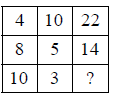
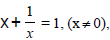 then the value of
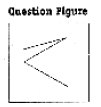
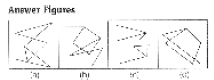
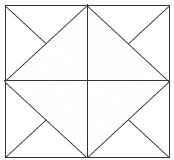
Chapter doubts & questions for 2014 - SSC CGL Previous Year Papers 2026 is part of SSC CGL exam preparation. The chapters have been prepared according to the SSC CGL exam syllabus. The Chapter doubts & questions, notes, tests & MCQs are made for SSC CGL 2026 Exam. Find important definitions, questions, notes, meanings, examples, exercises, MCQs and online tests here.
Chapter doubts & questions of 2014 - SSC CGL Previous Year Papers in English & Hindi are available as part of SSC CGL exam. Download more important topics, notes, lectures and mock test series for SSC CGL Exam by signing up for free.
SSC CGL Previous Year Papers313 docs|325 tests |
