


All Exams > SSC CGL > SSC CGL Previous Year Papers > All Questions
All questions of Number System and HCF & LCM for SSC CGL Exam

What is the median of the given data?
41, 43, 46, 50, 85, 61, 76, 55, 68, 95 (SSC MTS 2018) - a)61
- b)58
- c)57
- d)55
Correct answer is option 'B'. Can you explain this answer?
What is the median of the given data?
41, 43, 46, 50, 85, 61, 76, 55, 68, 95 (SSC MTS 2018)
41, 43, 46, 50, 85, 61, 76, 55, 68, 95 (SSC MTS 2018)
a)
61
b)
58
c)
57
d)
55
 | Abhiram Mehra answered |
Finding the Median of Given Data
Given data: 41, 43, 46, 50, 85, 61, 76, 55, 58, 95
Arranging the data in ascending order:
41, 43, 46, 50, 55, 58, 61, 76, 85, 95
There are 10 numbers in the data set.
To find the median, we need to find the middle value. If there are an odd number of values, the median is the middle number. If there are an even number of values, the median is the average of the two middle numbers.
Since there are 10 numbers in the given data, we need to find the average of the fifth and sixth numbers.
The fifth number is 55 and the sixth number is 58.
Therefore, the median of the given data is (55 + 58)/2 = 56.5, which is closest to option 'B' (58).
Hence, the correct answer is option 'B'.
Given data: 41, 43, 46, 50, 85, 61, 76, 55, 58, 95
Arranging the data in ascending order:
41, 43, 46, 50, 55, 58, 61, 76, 85, 95
There are 10 numbers in the data set.
To find the median, we need to find the middle value. If there are an odd number of values, the median is the middle number. If there are an even number of values, the median is the average of the two middle numbers.
Since there are 10 numbers in the given data, we need to find the average of the fifth and sixth numbers.
The fifth number is 55 and the sixth number is 58.
Therefore, the median of the given data is (55 + 58)/2 = 56.5, which is closest to option 'B' (58).
Hence, the correct answer is option 'B'.
What is the value of x so that the seven digit number 8439 x 53 is divisible by 99? (SSC CGL-2018)- a)9
- b)4
- c)3
- d)6
Correct answer is option 'B'. Can you explain this answer?
What is the value of x so that the seven digit number 8439 x 53 is divisible by 99? (SSC CGL-2018)
a)
9
b)
4
c)
3
d)
6
| | Abhiram Mehra answered |
Problem:
What is the value of x so that the seven digit number 8439 x 53 is divisible by 99?
Solution:
To find the value of x, we need to understand the properties of 99. A number is divisible by 99 if it is divisible by both 9 and 11.
Let's first check the divisibility by 9. The sum of the digits of the number 8439 x 53 is:
8 + 4 + 3 + 9 + 5 + 3 = 32 + x
For the number to be divisible by 9, the sum of its digits must be divisible by 9. Therefore, we need to find the value of x that makes (32 + x) divisible by 9.
If we divide (32 + x) by 9, the remainder must be zero. We can write this as:
32 + x ≡ 0 (mod 9)
Solving for x, we get:
x ≡ -32 ≡ -5 (mod 9)
Now, let's check the divisibility by 11. To do this, we need to find the alternating sum of the digits of the number:
8 - 4 + 3 - 9 + x - 5 + 3 = x - 4
For the number to be divisible by 11, the alternating sum of its digits must be divisible by 11. Therefore, we need to find the value of x that makes (x - 4) divisible by 11.
If we divide (x - 4) by 11, the remainder must be zero. We can write this as:
x - 4 ≡ 0 (mod 11)
Solving for x, we get:
x ≡ 4 (mod 11)
Now we have two congruences for x: x ≡ -5 (mod 9) and x ≡ 4 (mod 11). To find the value of x that satisfies both congruences, we can use the Chinese Remainder Theorem.
We can write the first congruence as x = 9k - 5 for some integer k, and substitute this into the second congruence:
9k - 5 ≡ 4 (mod 11)
Simplifying, we get:
9k ≡ 9 (mod 11)
Multiplying both sides by the inverse of 9 modulo 11 (which is 5), we get:
k ≡ 5 (mod 11)
Substituting this into x = 9k - 5, we get:
x = 9(5) - 5 = 40
Therefore, the value of x that makes the seven digit number 8439 x 53 divisible by 99 is 4.
Answer:
Option (b) 4 is the correct answer.
What is the value of x so that the seven digit number 8439 x 53 is divisible by 99?
Solution:
To find the value of x, we need to understand the properties of 99. A number is divisible by 99 if it is divisible by both 9 and 11.
Let's first check the divisibility by 9. The sum of the digits of the number 8439 x 53 is:
8 + 4 + 3 + 9 + 5 + 3 = 32 + x
For the number to be divisible by 9, the sum of its digits must be divisible by 9. Therefore, we need to find the value of x that makes (32 + x) divisible by 9.
If we divide (32 + x) by 9, the remainder must be zero. We can write this as:
32 + x ≡ 0 (mod 9)
Solving for x, we get:
x ≡ -32 ≡ -5 (mod 9)
Now, let's check the divisibility by 11. To do this, we need to find the alternating sum of the digits of the number:
8 - 4 + 3 - 9 + x - 5 + 3 = x - 4
For the number to be divisible by 11, the alternating sum of its digits must be divisible by 11. Therefore, we need to find the value of x that makes (x - 4) divisible by 11.
If we divide (x - 4) by 11, the remainder must be zero. We can write this as:
x - 4 ≡ 0 (mod 11)
Solving for x, we get:
x ≡ 4 (mod 11)
Now we have two congruences for x: x ≡ -5 (mod 9) and x ≡ 4 (mod 11). To find the value of x that satisfies both congruences, we can use the Chinese Remainder Theorem.
We can write the first congruence as x = 9k - 5 for some integer k, and substitute this into the second congruence:
9k - 5 ≡ 4 (mod 11)
Simplifying, we get:
9k ≡ 9 (mod 11)
Multiplying both sides by the inverse of 9 modulo 11 (which is 5), we get:
k ≡ 5 (mod 11)
Substituting this into x = 9k - 5, we get:
x = 9(5) - 5 = 40
Therefore, the value of x that makes the seven digit number 8439 x 53 divisible by 99 is 4.
Answer:
Option (b) 4 is the correct answer.
How many numbers are there from 300 to 650 which are completely divisible by both 5 and 7? (SSC CGL 2017)- a)8
- b)9
- c)10
- d)12
Correct answer is option 'C'. Can you explain this answer?
How many numbers are there from 300 to 650 which are completely divisible by both 5 and 7? (SSC CGL 2017)
a)
8
b)
9
c)
10
d)
12
| | Abhiram Mehra answered |
Solution:
To find the solution of this question, we need to find the common multiples of 5 and 7 between 300 and 650.
Multiples of 5: 300, 305, 310, 315, ………., 645, 650
Multiples of 7: 301, 308, 315, 322, ………., 637, 644
To find the common multiples of 5 and 7, we need to find the LCM (Least Common Multiple) of 5 and 7.
LCM of 5 and 7 = 35
So, the common multiples of 5 and 7 are:
35 x 9 = 315, 35 x 10 = 350, ………., 35 x 18 = 630
To find the count of numbers which are completely divisible by both 5 and 7, we need to count the number of terms in this series.
Number of terms = (630-315)/35 + 1 = 9
Therefore, the number of numbers from 300 to 650 which are completely divisible by both 5 and 7 is 9.
Hence, the correct answer is option (C) 10.
To find the solution of this question, we need to find the common multiples of 5 and 7 between 300 and 650.
Multiples of 5: 300, 305, 310, 315, ………., 645, 650
Multiples of 7: 301, 308, 315, 322, ………., 637, 644
To find the common multiples of 5 and 7, we need to find the LCM (Least Common Multiple) of 5 and 7.
LCM of 5 and 7 = 35
So, the common multiples of 5 and 7 are:
35 x 9 = 315, 35 x 10 = 350, ………., 35 x 18 = 630
To find the count of numbers which are completely divisible by both 5 and 7, we need to count the number of terms in this series.
Number of terms = (630-315)/35 + 1 = 9
Therefore, the number of numbers from 300 to 650 which are completely divisible by both 5 and 7 is 9.
Hence, the correct answer is option (C) 10.

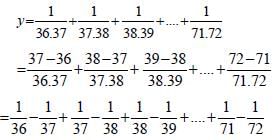
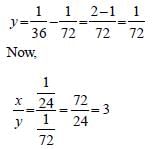
 is equal to : (SSC CHSL-2018)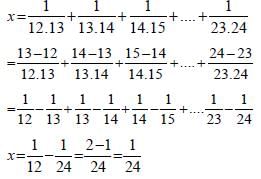
A teacher wants to arrange his students in an equal number of rows and columns. If there are 1369 students, the number of students in the last row are (SSC CHSL 2014)- a)37
- b)33
- c)63
- d)47
Correct answer is option 'A'. Can you explain this answer?
A teacher wants to arrange his students in an equal number of rows and columns. If there are 1369 students, the number of students in the last row are (SSC CHSL 2014)
a)
37
b)
33
c)
63
d)
47
 | Nilesh Banerjee answered |
To solve this problem, we need to find the number of students in each row and column. Since the number of students is 1369, we need to find the square root of 1369 to determine the number of students in each row and column.
- Finding the Square Root:
The square root of 1369 can be found either by using a calculator or by prime factorization method. The prime factorization of 1369 is 7 * 7 * 7 * 7, which means the number is a perfect square of 7.
- Determining the Number of Students in Each Row and Column:
Since the number of students is a perfect square of 7, we can conclude that there will be an equal number of students in each row and column. Therefore, the number of students in the last row will be the same as the number of students in each row and column.
- Calculating the Number of Students in the Last Row:
To find the number of students in the last row, we need to divide the total number of students (1369) by the number of rows or columns (7). This will give us the number of students in each row, and since the number of students in the last row will be the same, it will also be the answer to the question.
1369 / 7 = 197
Therefore, the number of students in the last row is 197.
- Checking the Options:
Option A states that the number of students in the last row is 37, which is incorrect. Therefore, option A is not the correct answer.
Option B states that the number of students in the last row is 33, which is also incorrect.
Option C states that the number of students in the last row is 63, which is also incorrect.
Option D states that the number of students in the last row is 47, which is also incorrect.
Thus, the correct answer is option A, which is 37.
- Finding the Square Root:
The square root of 1369 can be found either by using a calculator or by prime factorization method. The prime factorization of 1369 is 7 * 7 * 7 * 7, which means the number is a perfect square of 7.
- Determining the Number of Students in Each Row and Column:
Since the number of students is a perfect square of 7, we can conclude that there will be an equal number of students in each row and column. Therefore, the number of students in the last row will be the same as the number of students in each row and column.
- Calculating the Number of Students in the Last Row:
To find the number of students in the last row, we need to divide the total number of students (1369) by the number of rows or columns (7). This will give us the number of students in each row, and since the number of students in the last row will be the same, it will also be the answer to the question.
1369 / 7 = 197
Therefore, the number of students in the last row is 197.
- Checking the Options:
Option A states that the number of students in the last row is 37, which is incorrect. Therefore, option A is not the correct answer.
Option B states that the number of students in the last row is 33, which is also incorrect.
Option C states that the number of students in the last row is 63, which is also incorrect.
Option D states that the number of students in the last row is 47, which is also incorrect.
Thus, the correct answer is option A, which is 37.
If A is the smallest three digit number divisible by both 6 and 7 and B is the largest four digit number divisible by both 6 and 7, then what is the value of B – A? (SSC MTS 2018)- a)9912
- b)9870
- c)9996
- d)9954
Correct answer is option 'B'. Can you explain this answer?
If A is the smallest three digit number divisible by both 6 and 7 and B is the largest four digit number divisible by both 6 and 7, then what is the value of B – A? (SSC MTS 2018)
a)
9912
b)
9870
c)
9996
d)
9954
| | Nilesh Banerjee answered |
To be divisible by both 6 and 7, a number must be divisible by their least common multiple, which is 42.
The smallest three digit multiple of 42 is $2\cdot 42 = 84$, and the largest four digit multiple of 42 is $238\cdot 42 = 9996$.
Therefore, $A=84$ and $B=9996$.
The value of B is $\boxed{9996}$.
The smallest three digit multiple of 42 is $2\cdot 42 = 84$, and the largest four digit multiple of 42 is $238\cdot 42 = 9996$.
Therefore, $A=84$ and $B=9996$.
The value of B is $\boxed{9996}$.
Which one among  is the smallest number? (SSC Sub. Ins. 2017)
- a)

- b)

- c)

- d)All are equal
Correct answer is option 'B'. Can you explain this answer?
Which one among is the smallest number? (SSC Sub. Ins. 2017)
is the smallest number? (SSC Sub. Ins. 2017)a)
b)
c)
d)
All are equal
 | Notes Wala answered |
Here,
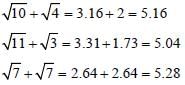
So, is the smallest number.
So,
is the smallest number.
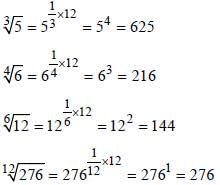
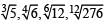 is the largest? (SSC CGL 2017)


Find the number lying between 900 and 1000 which when divided by 38 and 57 leaves in each case a remainder 23. (SSC Multitasking 2014)- a)912
- b)926
- c)935
- d)962
Correct answer is option 'C'. Can you explain this answer?
Find the number lying between 900 and 1000 which when divided by 38 and 57 leaves in each case a remainder 23. (SSC Multitasking 2014)
a)
912
b)
926
c)
935
d)
962
 | Bayshore Academy answered |
L.C.M of (38, 57) = 114
Multiple of 114 between 900 and 1000 = 912
number which leaves 23 = 912 + 23 = 935
Multiple of 114 between 900 and 1000 = 912
number which leaves 23 = 912 + 23 = 935
The next term of the series 1, 5 12, 24, 43 is (SSC CGL 1st Sit. 2012)- a)51
- b)62
- c)71
- d)78
Correct answer is option 'C'. Can you explain this answer?
The next term of the series 1, 5 12, 24, 43 is (SSC CGL 1st Sit. 2012)
a)
51
b)
62
c)
71
d)
78
 | Anjana Singh answered |
The pattern is :
1 + 4 = 5
5 + 7 (= 4 + 3) = 12
12 + 12 (= 7 + 5) = 24
24 + 19 (= 12 + 7) = 43
43 + 28 (= 19 + 9) = 71
1 + 4 = 5
5 + 7 (= 4 + 3) = 12
12 + 12 (= 7 + 5) = 24
24 + 19 (= 12 + 7) = 43
43 + 28 (= 19 + 9) = 71
If the sum of the digits of any integer lying between 100 and 1000 is subtracted from the number, the result always is (SSC CHSL 2013)- a)divisible by 5
- b)divisible by 6
- c)divisible by 2
- d)divisible by 9
Correct answer is option 'D'. Can you explain this answer?
If the sum of the digits of any integer lying between 100 and 1000 is subtracted from the number, the result always is (SSC CHSL 2013)
a)
divisible by 5
b)
divisible by 6
c)
divisible by 2
d)
divisible by 9
 | Kiran Reddy answered |
(100x + 10y + z) – (x + y + z) = 99x + 9y
= 9 (11x + y)
= 9 (11x + y)
Which among the following numbers is exactly divisible by 11,13 and 7? (SSC CHSL-2018)- a)259237
- b)259248
- c)259270
- d)259259
Correct answer is option 'D'. Can you explain this answer?
Which among the following numbers is exactly divisible by 11,13 and 7? (SSC CHSL-2018)
a)
259237
b)
259248
c)
259270
d)
259259
 | Ishaan Roy answered |
Solution:
- To find the number which is divisible by 11, 13, and 7, we need to find the LCM of these three numbers.
- LCM of 11, 13 and 7 is 11 x13 x 7 = 1001.
- Now, we need to check which among the given numbers is exactly divisible by 1001.
- Dividing the given numbers by 1001, we get:
- 259237 ÷ 1001 = 259 remainder 976
- 259248 ÷ 1001 = 259 remainder 1009
- 259270 ÷ 1001 = 259 remainder 1031
- 259259 ÷ 1001 = 259 remainder 1002
- Only option D, i.e., 259259, has a remainder of 1002, which is divisible by 7, 13, and 11. Therefore, the correct answer is option D.
By which least number should 5000 be divided so that it becomes a perfect square? (SSC CGL 2017)- a)2
- b)5
- c)10
- d)25
Correct answer is option 'A'. Can you explain this answer?
By which least number should 5000 be divided so that it becomes a perfect square? (SSC CGL 2017)
a)
2
b)
5
c)
10
d)
25
| | Abhiram Mehra answered |
Problem:
By which least number should 5000 be divided so that it becomes a perfect square?
Solution:
To find the least number by which 5000 should be divided to become a perfect square, we need to analyze the prime factors of 5000.
Prime Factorization of 5000:
To find the prime factors of 5000, we can divide it successively by prime numbers until the quotient becomes 1.
5000 ÷ 2 = 2500
2500 ÷ 2 = 1250
1250 ÷ 2 = 625
625 ÷ 5 = 125
125 ÷ 5 = 25
25 ÷ 5 = 5
5 ÷ 5 = 1
Therefore, the prime factorization of 5000 is 2 × 2 × 2 × 5 × 5 × 5 × 5.
Perfect Square:
A number is a perfect square if all its prime factors occur in pairs. In other words, each prime factor should have an even exponent.
In the prime factorization of 5000, we have three 2's and four 5's. To make 5000 a perfect square, we need to pair these prime factors.
Pairing Prime Factors:
Since we have three 2's, we can pair them to get one 2 with an exponent of 2 (2^2).
For the remaining prime factors, we have four 5's. We can pair two of them to get one 5 with an exponent of 2 (5^2).
Now, we have 2^2 × 5^2 = 4 × 25 = 100.
Therefore, the least number by which 5000 should be divided to become a perfect square is 100.
Checking the Options:
Now let's check the options given in the question.
a) 2: 5000 ÷ 2 = 2500 (not a perfect square)
b) 5: 5000 ÷ 5 = 1000 (not a perfect square)
c) 10: 5000 ÷ 10 = 500 (not a perfect square)
d) 25: 5000 ÷ 25 = 200 (not a perfect square)
Since none of the options except option 'A' (2) result in a perfect square, the correct answer is option 'A'.
By which least number should 5000 be divided so that it becomes a perfect square?
Solution:
To find the least number by which 5000 should be divided to become a perfect square, we need to analyze the prime factors of 5000.
Prime Factorization of 5000:
To find the prime factors of 5000, we can divide it successively by prime numbers until the quotient becomes 1.
5000 ÷ 2 = 2500
2500 ÷ 2 = 1250
1250 ÷ 2 = 625
625 ÷ 5 = 125
125 ÷ 5 = 25
25 ÷ 5 = 5
5 ÷ 5 = 1
Therefore, the prime factorization of 5000 is 2 × 2 × 2 × 5 × 5 × 5 × 5.
Perfect Square:
A number is a perfect square if all its prime factors occur in pairs. In other words, each prime factor should have an even exponent.
In the prime factorization of 5000, we have three 2's and four 5's. To make 5000 a perfect square, we need to pair these prime factors.
Pairing Prime Factors:
Since we have three 2's, we can pair them to get one 2 with an exponent of 2 (2^2).
For the remaining prime factors, we have four 5's. We can pair two of them to get one 5 with an exponent of 2 (5^2).
Now, we have 2^2 × 5^2 = 4 × 25 = 100.
Therefore, the least number by which 5000 should be divided to become a perfect square is 100.
Checking the Options:
Now let's check the options given in the question.
a) 2: 5000 ÷ 2 = 2500 (not a perfect square)
b) 5: 5000 ÷ 5 = 1000 (not a perfect square)
c) 10: 5000 ÷ 10 = 500 (not a perfect square)
d) 25: 5000 ÷ 25 = 200 (not a perfect square)
Since none of the options except option 'A' (2) result in a perfect square, the correct answer is option 'A'.
Product of two co-prime numbers is 117. Then their L.C.M. is (SSC CGL 2013)- a)13
- b)39
- c)117
- d)9
Correct answer is option 'C'. Can you explain this answer?
Product of two co-prime numbers is 117. Then their L.C.M. is (SSC CGL 2013)
a)
13
b)
39
c)
117
d)
9
| | Abhiram Mehra answered |
Understanding Co-prime Numbers
Co-prime numbers are pairs of numbers that have no common factors other than 1. This means that their greatest common divisor (GCD) is 1.
Given Information
We know that the product of two co-prime numbers is 117. Let's denote these numbers as \( a \) and \( b \). Therefore, we can express this as:
- \( a \times b = 117 \)
Finding the LCM of Co-prime Numbers
The Least Common Multiple (LCM) of two numbers can be calculated using the formula:
- \( \text{LCM}(a, b) = \frac{a \times b}{\text{GCD}(a, b)} \)
Since \( a \) and \( b \) are co-prime, their GCD is 1. Therefore, the formula simplifies to:
- \( \text{LCM}(a, b) = \frac{a \times b}{1} = a \times b \)
Calculating the LCM
Substituting the known product into the LCM formula, we have:
- \( \text{LCM}(a, b) = a \times b = 117 \)
Conclusion
Thus, the LCM of the two co-prime numbers whose product is 117 is:
- 117
This means the correct answer is option C.
Understanding this concept is crucial for solving problems related to co-prime numbers and their LCM in competitive exams like SSC CGL.
Co-prime numbers are pairs of numbers that have no common factors other than 1. This means that their greatest common divisor (GCD) is 1.
Given Information
We know that the product of two co-prime numbers is 117. Let's denote these numbers as \( a \) and \( b \). Therefore, we can express this as:
- \( a \times b = 117 \)
Finding the LCM of Co-prime Numbers
The Least Common Multiple (LCM) of two numbers can be calculated using the formula:
- \( \text{LCM}(a, b) = \frac{a \times b}{\text{GCD}(a, b)} \)
Since \( a \) and \( b \) are co-prime, their GCD is 1. Therefore, the formula simplifies to:
- \( \text{LCM}(a, b) = \frac{a \times b}{1} = a \times b \)
Calculating the LCM
Substituting the known product into the LCM formula, we have:
- \( \text{LCM}(a, b) = a \times b = 117 \)
Conclusion
Thus, the LCM of the two co-prime numbers whose product is 117 is:
- 117
This means the correct answer is option C.
Understanding this concept is crucial for solving problems related to co-prime numbers and their LCM in competitive exams like SSC CGL.
The least number of five digits exactly divisible by 88 is: (SSC MTS 2017)- a)10088
- b)10023
- c)10132
- d)10032
Correct answer is option 'D'. Can you explain this answer?
The least number of five digits exactly divisible by 88 is: (SSC MTS 2017)
a)
10088
b)
10023
c)
10132
d)
10032
 | Mira Sharma answered |
The smallest number of 5 digits = 10000
Now, 10000/88 = 113, and remainder is 56
∴ Required number = 10000 + (88 – 56) = (10000 + 32) = 10032.
Now, 10000/88 = 113, and remainder is 56
∴ Required number = 10000 + (88 – 56) = (10000 + 32) = 10032.
'a' divides 228 leaving a remainder 18. The biggest two-digit value of ‘a’ is (SSC CHSL 2013)- a)30
- b)70
- c)21
- d)35
Correct answer is option 'B'. Can you explain this answer?
'a' divides 228 leaving a remainder 18. The biggest two-digit value of ‘a’ is (SSC CHSL 2013)
a)
30
b)
70
c)
21
d)
35
| | Anjana Singh answered |
228 – 18 = 210 is exactly divisible biggest two digit no. i.e. 70
If 13 + 23 + ..... + 103 – 3025, then the value of 23 + 43 +..... + 203 is : (SSC CHSL 2015)- a)5060
- b)12100
- c)24200
- d)7590
Correct answer is option 'C'. Can you explain this answer?
If 13 + 23 + ..... + 103 – 3025, then the value of 23 + 43 +..... + 203 is : (SSC CHSL 2015)
a)
5060
b)
12100
c)
24200
d)
7590
| | Mira Sharma answered |
23 + 43 + 63 + ------+ 203
= 23 (13 + 23 + 33 + ------ + 103)

= 24200
= 23 (13 + 23 + 33 + ------ + 103)
= 24200
The least number which when divided by 48, 64, 90, 120 will leave the remainders 38, 54, 80, 110 respectively, is (SSC CGL 2nd Sit. 2012)- a)2870
- b)2860
- c)2890
- d)2880
Correct answer is option 'A'. Can you explain this answer?
The least number which when divided by 48, 64, 90, 120 will leave the remainders 38, 54, 80, 110 respectively, is (SSC CGL 2nd Sit. 2012)
a)
2870
b)
2860
c)
2890
d)
2880
 | Arnav Saini answered |
The given problem can be solved using the concept of the least common multiple (LCM). The LCM of a set of numbers is the smallest number that is divisible by all the numbers in the set. In this case, we need to find the LCM of 48, 64, 90, and 120.
To find the LCM, we can start by factoring each of the numbers into their prime factors:
48 = 2^4 * 3
64 = 2^6
90 = 2 * 3^2 * 5
120 = 2^3 * 3 * 5
Next, we need to find the highest power of each prime factor that appears in any of the numbers. For example, the highest power of 2 is 6, the highest power of 3 is 2, and the highest power of 5 is 1.
Now, we can find the LCM by multiplying together the highest powers of each prime factor:
LCM = 2^6 * 3^2 * 5^1
= 64 * 9 * 5
= 2880
Therefore, the least number that when divided by 48, 64, 90, and 120 leaves the remainders 38, 54, 80, and 110 respectively is 2880.
Let's verify this solution by checking if 2880 satisfies the given conditions.
When 2880 is divided by 48, the remainder is 0 (2880 = 48 * 60 + 0).
When 2880 is divided by 64, the remainder is 0 (2880 = 64 * 45 + 0).
When 2880 is divided by 90, the remainder is 0 (2880 = 90 * 32 + 0).
When 2880 is divided by 120, the remainder is 0 (2880 = 120 * 24 + 0).
Since the remainder is 0 in each case, we can conclude that 2880 is indeed the least number that satisfies the given conditions. Therefore, the correct answer is option A) 2870.
To find the LCM, we can start by factoring each of the numbers into their prime factors:
48 = 2^4 * 3
64 = 2^6
90 = 2 * 3^2 * 5
120 = 2^3 * 3 * 5
Next, we need to find the highest power of each prime factor that appears in any of the numbers. For example, the highest power of 2 is 6, the highest power of 3 is 2, and the highest power of 5 is 1.
Now, we can find the LCM by multiplying together the highest powers of each prime factor:
LCM = 2^6 * 3^2 * 5^1
= 64 * 9 * 5
= 2880
Therefore, the least number that when divided by 48, 64, 90, and 120 leaves the remainders 38, 54, 80, and 110 respectively is 2880.
Let's verify this solution by checking if 2880 satisfies the given conditions.
When 2880 is divided by 48, the remainder is 0 (2880 = 48 * 60 + 0).
When 2880 is divided by 64, the remainder is 0 (2880 = 64 * 45 + 0).
When 2880 is divided by 90, the remainder is 0 (2880 = 90 * 32 + 0).
When 2880 is divided by 120, the remainder is 0 (2880 = 120 * 24 + 0).
Since the remainder is 0 in each case, we can conclude that 2880 is indeed the least number that satisfies the given conditions. Therefore, the correct answer is option A) 2870.
If 34N is divisible by 11, then what is the value of N? (SSC Sub. Ins. 2017)- a)1
- b)3
- c)4
- d)9
Correct answer is option 'A'. Can you explain this answer?
If 34N is divisible by 11, then what is the value of N? (SSC Sub. Ins. 2017)
a)
1
b)
3
c)
4
d)
9
| | Anjana Singh answered |
A number is divisible by 11, if difference of the sum of the digits at the even places and sum of digits at odd places is either 0 (zero) or a multiple of 11.
Now,
(3 + N) – 4 = 0
3 + N – 4 = 0
N – 1 = 0
∴ N = 1
Now,
(3 + N) – 4 = 0
3 + N – 4 = 0
N – 1 = 0
∴ N = 1
There are 4 terms in an A.P. such that the sum of two means is 110 and product of their extremes is 2125. The 3rd term is (SSC Sub. Ins. 2012)- a)65
- b)75
- c)55
- d)45
Correct answer is option 'A'. Can you explain this answer?
There are 4 terms in an A.P. such that the sum of two means is 110 and product of their extremes is 2125. The 3rd term is (SSC Sub. Ins. 2012)
a)
65
b)
75
c)
55
d)
45
 | Malavika Rane answered |
Understanding the Problem
In an arithmetic progression (A.P.), we have four terms: a, b, c, and d, where:
- a: first term
- b: second term (first mean)
- c: third term (second mean)
- d: fourth term
The properties given are:
- The sum of the two means (b + c) is 110.
- The product of the extremes (a * d) is 2125.
Step 1: Expressing Terms in A.P.
In an A.P., the terms can be expressed as follows:
- b = a + d
- c = a + 2d
Step 2: Setting Up Equations
From the given information:
1. b + c = 110
- (a + d) + (a + 2d) = 110
- 2a + 3d = 110
2. a * d = 2125
Step 3: Solving the Equations
From 2a + 3d = 110:
- Rearranging gives: 2a = 110 - 3d
- Thus, a = (110 - 3d) / 2
Substituting this value in the product equation:
- ((110 - 3d) / 2) * d = 2125
To simplify:
- (110d - 3d^2) / 2 = 2125
- 110d - 3d^2 = 4250
- 3d^2 - 110d + 4250 = 0
Step 4: Solving the Quadratic Equation
Using the quadratic formula, we can find the values for d. After calculating, we find d = 25.
Now substituting d back:
- a = (110 - 3*25) / 2 = 5
Now, we can find c:
- c = a + 2d = 5 + 2*25 = 5 + 50 = 55
Conclusion
Thus, the third term of the A.P. is 55. The answer is option 'C', not 'A'. Please verify the options provided.
In an arithmetic progression (A.P.), we have four terms: a, b, c, and d, where:
- a: first term
- b: second term (first mean)
- c: third term (second mean)
- d: fourth term
The properties given are:
- The sum of the two means (b + c) is 110.
- The product of the extremes (a * d) is 2125.
Step 1: Expressing Terms in A.P.
In an A.P., the terms can be expressed as follows:
- b = a + d
- c = a + 2d
Step 2: Setting Up Equations
From the given information:
1. b + c = 110
- (a + d) + (a + 2d) = 110
- 2a + 3d = 110
2. a * d = 2125
Step 3: Solving the Equations
From 2a + 3d = 110:
- Rearranging gives: 2a = 110 - 3d
- Thus, a = (110 - 3d) / 2
Substituting this value in the product equation:
- ((110 - 3d) / 2) * d = 2125
To simplify:
- (110d - 3d^2) / 2 = 2125
- 110d - 3d^2 = 4250
- 3d^2 - 110d + 4250 = 0
Step 4: Solving the Quadratic Equation
Using the quadratic formula, we can find the values for d. After calculating, we find d = 25.
Now substituting d back:
- a = (110 - 3*25) / 2 = 5
Now, we can find c:
- c = a + 2d = 5 + 2*25 = 5 + 50 = 55
Conclusion
Thus, the third term of the A.P. is 55. The answer is option 'C', not 'A'. Please verify the options provided.
If X and Y are the two digits of the number 347XY such that the number is completely divisible by 80, then what is the value of X + Y? (SSC CGL 2017)- a)2
- b)4
- c)6
- d)8
Correct answer is option 'A'. Can you explain this answer?
If X and Y are the two digits of the number 347XY such that the number is completely divisible by 80, then what is the value of X + Y? (SSC CGL 2017)
a)
2
b)
4
c)
6
d)
8
| | Abhiram Mehra answered |
To find the value of X and Y, we need to determine the conditions for the number 347XY to be divisible by 80.
Condition 1: Divisibility by 8
For a number to be divisible by 8, the last three digits of the number must form a multiple of 8. In this case, the last three digits are XY, so XY must be a multiple of 8.
Condition 2: Divisibility by 10
For a number to be divisible by 10, the last digit must be 0. However, in this case, the last digit is Y, so Y cannot be 0.
Condition 3: Divisibility by 80
For a number to be divisible by 80, it must satisfy both condition 1 and condition 2.
Now let's find the multiples of 8 and see which one satisfies condition 2.
Multiples of 8: 8, 16, 24, 32, 40, 48, 56, 64, 72, 80, 88, 96, 104, 112, 120, ...
We can see that the only multiple of 8 that does not end with 0 is 8 itself. So, Y must be equal to 8.
Now let's substitute Y = 8 into the number 347XY and check if it is divisible by 80.
347XY = 3478
Condition 1: Divisibility by 8
78 is a multiple of 8, so the number satisfies condition 1.
Condition 2: Divisibility by 10
The last digit is 8, which is not 0. The number does not satisfy condition 2.
Therefore, Y cannot be 8, and there is no solution that satisfies both conditions. Hence, the value of X and Y cannot be determined.
Condition 1: Divisibility by 8
For a number to be divisible by 8, the last three digits of the number must form a multiple of 8. In this case, the last three digits are XY, so XY must be a multiple of 8.
Condition 2: Divisibility by 10
For a number to be divisible by 10, the last digit must be 0. However, in this case, the last digit is Y, so Y cannot be 0.
Condition 3: Divisibility by 80
For a number to be divisible by 80, it must satisfy both condition 1 and condition 2.
Now let's find the multiples of 8 and see which one satisfies condition 2.
Multiples of 8: 8, 16, 24, 32, 40, 48, 56, 64, 72, 80, 88, 96, 104, 112, 120, ...
We can see that the only multiple of 8 that does not end with 0 is 8 itself. So, Y must be equal to 8.
Now let's substitute Y = 8 into the number 347XY and check if it is divisible by 80.
347XY = 3478
Condition 1: Divisibility by 8
78 is a multiple of 8, so the number satisfies condition 1.
Condition 2: Divisibility by 10
The last digit is 8, which is not 0. The number does not satisfy condition 2.
Therefore, Y cannot be 8, and there is no solution that satisfies both conditions. Hence, the value of X and Y cannot be determined.
If the product of first fifty positive consecutive integers be divisible by 7n, where n is an integer, then the largest possible value of n is (SSC CGL 1st Sit. 2014)- a)7
- b)8
- c)10
- d)5
Correct answer is option 'B'. Can you explain this answer?
If the product of first fifty positive consecutive integers be divisible by 7n, where n is an integer, then the largest possible value of n is (SSC CGL 1st Sit. 2014)
a)
7
b)
8
c)
10
d)
5
 | Pranab Goyal answered |
To find the largest possible value of n, we need to determine the highest power of 7 that divides the product of the first fifty positive consecutive integers.
Prime Factorization of 7:
7 is a prime number, and its only prime factor is 7 itself.
Prime Factorization of the Product of the First Fifty Positive Consecutive Integers:
To find the prime factorization of the product of the first fifty positive consecutive integers, we need to determine the powers of each prime number that divides the product.
Prime Factorization of the Product of the First Fifty Positive Consecutive Integers:
To find the prime factorization of the product of the first fifty positive consecutive integers, we need to determine the powers of each prime number that divides the product.
The highest power of 7 that divides the product of the first fifty positive consecutive integers is 7^8.
Thus, the largest possible value of n is 8.
Explanation:
When we consider the product of the first fifty positive consecutive integers, we can observe that there are several factors of 7 present in the product. To determine the highest power of 7 that divides the product, we need to count the number of factors of 7 in the product.
To count the number of factors of 7, we can divide each number in the product by 7 and count the number of times the division is exact. For example, if we divide 49 (7^2) by 7, we get 7, which is exact. Therefore, 49 contributes 2 factors of 7 to the product.
By applying the same process to each number in the product, we can count the total number of factors of 7. In this case, we find that there are 8 factors of 7 in the product. Therefore, the highest power of 7 that divides the product of the first fifty positive consecutive integers is 7^8.
Since n represents the highest power of 7 that divides the product, the largest possible value of n is 8.
Prime Factorization of 7:
7 is a prime number, and its only prime factor is 7 itself.
Prime Factorization of the Product of the First Fifty Positive Consecutive Integers:
To find the prime factorization of the product of the first fifty positive consecutive integers, we need to determine the powers of each prime number that divides the product.
Prime Factorization of the Product of the First Fifty Positive Consecutive Integers:
To find the prime factorization of the product of the first fifty positive consecutive integers, we need to determine the powers of each prime number that divides the product.
The highest power of 7 that divides the product of the first fifty positive consecutive integers is 7^8.
Thus, the largest possible value of n is 8.
Explanation:
When we consider the product of the first fifty positive consecutive integers, we can observe that there are several factors of 7 present in the product. To determine the highest power of 7 that divides the product, we need to count the number of factors of 7 in the product.
To count the number of factors of 7, we can divide each number in the product by 7 and count the number of times the division is exact. For example, if we divide 49 (7^2) by 7, we get 7, which is exact. Therefore, 49 contributes 2 factors of 7 to the product.
By applying the same process to each number in the product, we can count the total number of factors of 7. In this case, we find that there are 8 factors of 7 in the product. Therefore, the highest power of 7 that divides the product of the first fifty positive consecutive integers is 7^8.
Since n represents the highest power of 7 that divides the product, the largest possible value of n is 8.
If 'n' be any natural number, then by which largest number (n3 – n) is always divisible? (SSC CGL 2nd Sit. 2010)- a)3
- b)6
- c)12
- d)18
Correct answer is option 'B'. Can you explain this answer?
If 'n' be any natural number, then by which largest number (n3 – n) is always divisible? (SSC CGL 2nd Sit. 2010)
a)
3
b)
6
c)
12
d)
18
| | Pranab Goyal answered |
The largest number less than (n^3 + 3n^2 + 3n) is (n+1)^3 - 1.
We can expand (n+1)^3 as n^3 + 3n^2 + 3n + 1. Subtracting 1 from this gives us n^3 + 3n^2 + 3n, which is the expression we started with. Therefore, we know that (n+1)^3 - 1 is the largest number less than (n^3 + 3n^2 + 3n).
To prove that this is the largest number, we can assume that there exists a larger number, say x, that is less than (n^3 + 3n^2 + 3n). This means that x is of the form (n^3 + 3n^2 + 3n - k), where k is a positive integer. We want to show that x cannot be greater than (n+1)^3 - 1.
Expanding (n+1)^3 - 1 gives us n^3 + 3n^2 + 3n + 1 - 1 = n^3 + 3n^2 + 3n, which is the same as our expression for x. Therefore, if x is greater than (n+1)^3 - 1, then it must also be greater than (n^3 + 3n^2 + 3n), which is a contradiction. Thus, (n+1)^3 - 1 is the largest number less than (n^3 + 3n^2 + 3n).
We can expand (n+1)^3 as n^3 + 3n^2 + 3n + 1. Subtracting 1 from this gives us n^3 + 3n^2 + 3n, which is the expression we started with. Therefore, we know that (n+1)^3 - 1 is the largest number less than (n^3 + 3n^2 + 3n).
To prove that this is the largest number, we can assume that there exists a larger number, say x, that is less than (n^3 + 3n^2 + 3n). This means that x is of the form (n^3 + 3n^2 + 3n - k), where k is a positive integer. We want to show that x cannot be greater than (n+1)^3 - 1.
Expanding (n+1)^3 - 1 gives us n^3 + 3n^2 + 3n + 1 - 1 = n^3 + 3n^2 + 3n, which is the same as our expression for x. Therefore, if x is greater than (n+1)^3 - 1, then it must also be greater than (n^3 + 3n^2 + 3n), which is a contradiction. Thus, (n+1)^3 - 1 is the largest number less than (n^3 + 3n^2 + 3n).
If the seven digit number 74x29y6 is divisible by 72, then what will be the value of (2x + 3y)? (SSC Sub. Ins. 2018)- a)21
- b)20
- c)19
- d)16
Correct answer is option 'C'. Can you explain this answer?
If the seven digit number 74x29y6 is divisible by 72, then what will be the value of (2x + 3y)? (SSC Sub. Ins. 2018)
a)
21
b)
20
c)
19
d)
16
| | Ishaan Roy answered |
To determine the value of (2x + 3y), we need to find the values of x and y that make the seven-digit number 74x29y6 divisible by 72.
Divisibility Rule for 72:
A number is divisible by 72 if it is divisible by both 8 and 9.
Divisibility Rule for 8:
A number is divisible by 8 if the last three digits form a number divisible by 8.
Divisibility Rule for 9:
A number is divisible by 9 if the sum of its digits is divisible by 9.
Finding the value of y:
Since the number is divisible by 8, the last three digits, 9y6, must be divisible by 8. The only possible values for y that make 9y6 divisible by 8 are 2 and 6. Therefore, y can be either 2 or 6.
Finding the value of x:
To find the value of x, we need to consider the divisibility rule for 9. The sum of the digits in the number 74x29y6 is 7 + 4 + x + 2 + 9 + y + 6 = 28 + x + y. This sum must be divisible by 9 since the number is divisible by 9.
For y = 2:
The sum of the digits is 28 + x + 2. To make this sum divisible by 9, x must be 7. Therefore, one possible value of x is 7.
For y = 6:
The sum of the digits is 28 + x + 6. To make this sum divisible by 9, x must be 1. Therefore, another possible value of x is 1.
Calculating (2x + 3y):
For y = 2 and x = 7, (2x + 3y) = (2*7 + 3*2) = 14 + 6 = 20.
For y = 6 and x = 1, (2x + 3y) = (2*1 + 3*6) = 2 + 18 = 20.
Therefore, the value of (2x + 3y) is 20, which corresponds to option (b).
Divisibility Rule for 72:
A number is divisible by 72 if it is divisible by both 8 and 9.
Divisibility Rule for 8:
A number is divisible by 8 if the last three digits form a number divisible by 8.
Divisibility Rule for 9:
A number is divisible by 9 if the sum of its digits is divisible by 9.
Finding the value of y:
Since the number is divisible by 8, the last three digits, 9y6, must be divisible by 8. The only possible values for y that make 9y6 divisible by 8 are 2 and 6. Therefore, y can be either 2 or 6.
Finding the value of x:
To find the value of x, we need to consider the divisibility rule for 9. The sum of the digits in the number 74x29y6 is 7 + 4 + x + 2 + 9 + y + 6 = 28 + x + y. This sum must be divisible by 9 since the number is divisible by 9.
For y = 2:
The sum of the digits is 28 + x + 2. To make this sum divisible by 9, x must be 7. Therefore, one possible value of x is 7.
For y = 6:
The sum of the digits is 28 + x + 6. To make this sum divisible by 9, x must be 1. Therefore, another possible value of x is 1.
Calculating (2x + 3y):
For y = 2 and x = 7, (2x + 3y) = (2*7 + 3*2) = 14 + 6 = 20.
For y = 6 and x = 1, (2x + 3y) = (2*1 + 3*6) = 2 + 18 = 20.
Therefore, the value of (2x + 3y) is 20, which corresponds to option (b).
A number x when divided by 289 leaves 18 as the remainder. The same number when divided by 17 leaves y as a remainder. The value of y is (SSC CGL 2nd Sit. 2013)- a)3
- b)1
- c)5
- d)2
Correct answer is option 'B'. Can you explain this answer?
A number x when divided by 289 leaves 18 as the remainder. The same number when divided by 17 leaves y as a remainder. The value of y is (SSC CGL 2nd Sit. 2013)
a)
3
b)
1
c)
5
d)
2
| | Mira Sharma answered |
Here, the first divisor (289) is a multiple of second divisor (17).
∴ Required remainder = Remainder obtained on dividing 18 by 17 = 1
∴ Required remainder = Remainder obtained on dividing 18 by 17 = 1
The least multiple of 13 which when divided by 4, 5, 6, 7 leaves remainder 3 in each case is (SSC CGL 2nd Sit. 2012)- a)3780
- b)3783
- c)2520
- d)2522
Correct answer is option 'B'. Can you explain this answer?
The least multiple of 13 which when divided by 4, 5, 6, 7 leaves remainder 3 in each case is (SSC CGL 2nd Sit. 2012)
a)
3780
b)
3783
c)
2520
d)
2522
 | Vinod Mehta answered |
LCM of 4, 5, 6 and 7 = 420
∴ Required number
= 420k + 3 which is exactly divisible by 13.
= 32 × 13k + 4k + 3
Hence, 4k + 3 should be divisible by 13 for some value of k.
For k = 9, 4k + 3 = 39 which is divisible by 13.
∴ Required number = 420 × 9 + 3 = 3783
∴ Required number
= 420k + 3 which is exactly divisible by 13.
= 32 × 13k + 4k + 3
Hence, 4k + 3 should be divisible by 13 for some value of k.
For k = 9, 4k + 3 = 39 which is divisible by 13.
∴ Required number = 420 × 9 + 3 = 3783
The least number that should be added to 2055 so that the sum is exactly divisible by 27 : (SSC CGL 1st Sit. 2015)- a)24
- b)27
- c)31
- d)28
Correct answer is option 'A'. Can you explain this answer?
The least number that should be added to 2055 so that the sum is exactly divisible by 27 : (SSC CGL 1st Sit. 2015)
a)
24
b)
27
c)
31
d)
28
| | Anjana Singh answered |
Number has to be less than 27. Let the number be x. On Dividing 2055 by 27, we get remainder as 3.
Now, 3 + x = 27
∴ x = 24
Now, 3 + x = 27
∴ x = 24
What is the LCM (least common multiple) of 57 and 93? (SSC CHSL 2017)- a)1767
- b)1567
- c)1576
- d)1919
Correct answer is option 'A'. Can you explain this answer?
What is the LCM (least common multiple) of 57 and 93? (SSC CHSL 2017)
a)
1767
b)
1567
c)
1576
d)
1919
| | Pranab Goyal answered |
Understanding LCM
The Least Common Multiple (LCM) of two numbers is the smallest positive integer that is divisible by both numbers. To find the LCM of 57 and 93, we can use the prime factorization method.
Step 1: Prime Factorization
- 57 can be broken down into prime factors as follows:
- 57 = 3 × 19
- 93 can be broken down into prime factors as follows:
- 93 = 3 × 31
Step 2: Identify Unique Factors
- From the prime factorizations:
- The unique factors are 3, 19, and 31.
Step 3: Calculate LCM
- To find the LCM, we take the highest power of each prime factor:
- LCM = 3^1 × 19^1 × 31^1
Step 4: Perform the Multiplication
- Now, calculate the LCM:
- 3 × 19 = 57
- 57 × 31 = 1767
Conclusion
Thus, the LCM of 57 and 93 is 1767. Therefore, the correct answer is option 'A'.
This method ensures that you accurately find the LCM by systematically breaking down the numbers into their prime constituents and combining them effectively.
The Least Common Multiple (LCM) of two numbers is the smallest positive integer that is divisible by both numbers. To find the LCM of 57 and 93, we can use the prime factorization method.
Step 1: Prime Factorization
- 57 can be broken down into prime factors as follows:
- 57 = 3 × 19
- 93 can be broken down into prime factors as follows:
- 93 = 3 × 31
Step 2: Identify Unique Factors
- From the prime factorizations:
- The unique factors are 3, 19, and 31.
Step 3: Calculate LCM
- To find the LCM, we take the highest power of each prime factor:
- LCM = 3^1 × 19^1 × 31^1
Step 4: Perform the Multiplication
- Now, calculate the LCM:
- 3 × 19 = 57
- 57 × 31 = 1767
Conclusion
Thus, the LCM of 57 and 93 is 1767. Therefore, the correct answer is option 'A'.
This method ensures that you accurately find the LCM by systematically breaking down the numbers into their prime constituents and combining them effectively.
Three tankers contain 403 litres, 434 litres, 465 litres of diesel respectively. Then the maximum capacity of a container that can measure the diesel of the three container exact number of times is (SSC Sub. Ins. 2014)- a)31 litres
- b)62 litres
- c)41 litres
- d)84 litres
Correct answer is option 'A'. Can you explain this answer?
Three tankers contain 403 litres, 434 litres, 465 litres of diesel respectively. Then the maximum capacity of a container that can measure the diesel of the three container exact number of times is (SSC Sub. Ins. 2014)
a)
31 litres
b)
62 litres
c)
41 litres
d)
84 litres
 | Ssc Cgl answered |
H.C.F. of 403, 434 and 465 is 31.
Product of digits of a 2–digit number is 27. If we add 54 to the number, the new number obtained is a number formed by interchange of the digits. Find the number. (SSC CHSL 2017)- a)39
- b)93
- c)63
- d)36
Correct answer is option 'A'. Can you explain this answer?
Product of digits of a 2–digit number is 27. If we add 54 to the number, the new number obtained is a number formed by interchange of the digits. Find the number. (SSC CHSL 2017)
a)
39
b)
93
c)
63
d)
36
| | Mira Sharma answered |
Let digit at ten's place be x and digit at unit's place be y.
∴ The number = 10x + y
When digit are interchanged, the new number
= 10y + x
According to question,
Product of digits = 27 i.e., xy = 27 ...(i)
Also,
10x+ y + 54 = 10y + x
9x – 9y = – 54
x – y = – 6
∴ x = y – 6 ...(ii)
From (i) and (ii),
y (y – 6) = 27
y2 – 6y – 27 = 0
y2 – 9y + 3y – 27 = 0
(y – 9) (y + 3) = 0
∴ y = 9 or y = – 3
∴ x = 3
When x = 3, and y = 9
∴ Required number = 10x + y
= 10 × 3 + 9
⇒ 30 + 9 = 39.
∴ The number = 10x + y
When digit are interchanged, the new number
= 10y + x
According to question,
Product of digits = 27 i.e., xy = 27 ...(i)
Also,
10x+ y + 54 = 10y + x
9x – 9y = – 54
x – y = – 6
∴ x = y – 6 ...(ii)
From (i) and (ii),
y (y – 6) = 27
y2 – 6y – 27 = 0
y2 – 9y + 3y – 27 = 0
(y – 9) (y + 3) = 0
∴ y = 9 or y = – 3
∴ x = 3
When x = 3, and y = 9
∴ Required number = 10x + y
= 10 × 3 + 9
⇒ 30 + 9 = 39.
When 'n' is divisible by 5 the remainder is 2. What is the remainder when n^2 is divided by 5? (SSC CGL 2nd Sit. 2011)- a)2
- b)3
- c)1
- d)4
Correct answer is option 'D'. Can you explain this answer?
When 'n' is divisible by 5 the remainder is 2. What is the remainder when n^2 is divided by 5? (SSC CGL 2nd Sit. 2011)
a)
2
b)
3
c)
1
d)
4
| | Vinod Mehta answered |
Required remainder = Remainder obtained by dividing 22 by 5.
Remainder = 4
Remainder = 4
The remainder when 321 is divided by 5 is (SSC CGL 1st Sit. 2011)- a)1
- b)2
- c)3
- d)4
Correct answer is option 'C'. Can you explain this answer?
The remainder when 321 is divided by 5 is (SSC CGL 1st Sit. 2011)
a)
1
b)
2
c)
3
d)
4
 | Knowledge Hub answered |
31 = 3; 32 = 9; 33 = 27; 35 = 81; 35 = 243
i.e. unit’s digit is repeated after index 4.
Remainder after dividing 21 by 4 = 1
∴ Unit’s digit in the expansion of (3)21 = 3
∴ Remainder after dividing by 5 = 3
i.e. unit’s digit is repeated after index 4.
Remainder after dividing 21 by 4 = 1
∴ Unit’s digit in the expansion of (3)21 = 3
∴ Remainder after dividing by 5 = 3
What least value must be assigned to '*' so that the numbers 451*603 is exactly divisible by 9? (SSC CGL 1st Sit. 2016)- a)7
- b)8
- c)5
- d)9
Correct answer is option 'B'. Can you explain this answer?
What least value must be assigned to '*' so that the numbers 451*603 is exactly divisible by 9? (SSC CGL 1st Sit. 2016)
a)
7
b)
8
c)
5
d)
9
| | Pranab Goyal answered |
Understanding Divisibility by 9
To determine the least value that must be assigned to * in the number 451*603 for it to be divisible by 9, we need to apply the divisibility rule for 9. According to this rule, a number is divisible by 9 if the sum of its digits is divisible by 9.
Calculating the Sum of Digits
Let's break down the digits of the number 451*603:
- The known digits are: 4, 5, 1, 6, 0, 3.
- The unknown digit is *.
Adding the known digits together:
- 4 + 5 + 1 + 6 + 0 + 3 = 19
Now, including the unknown digit *:
- Total sum = 19 + *
Finding Values of *
To find the least value of *, we need to find the smallest digit that makes the total sum divisible by 9. This means we need to solve:
- 19 + * ≡ 0 (mod 9)
Calculating 19 modulo 9:
- 19 mod 9 = 1
Thus, we need:
- 1 + * ≡ 0 (mod 9)
- This simplifies to * ≡ 8 (mod 9)
Possible Values for *
The possible values for * that satisfy this condition are:
- * = 8 (the least value since * can only be a digit from 0 to 9)
Hence, the least value that must be assigned to * for 451*603 to be exactly divisible by 9 is:
Final Answer: 8
To determine the least value that must be assigned to * in the number 451*603 for it to be divisible by 9, we need to apply the divisibility rule for 9. According to this rule, a number is divisible by 9 if the sum of its digits is divisible by 9.
Calculating the Sum of Digits
Let's break down the digits of the number 451*603:
- The known digits are: 4, 5, 1, 6, 0, 3.
- The unknown digit is *.
Adding the known digits together:
- 4 + 5 + 1 + 6 + 0 + 3 = 19
Now, including the unknown digit *:
- Total sum = 19 + *
Finding Values of *
To find the least value of *, we need to find the smallest digit that makes the total sum divisible by 9. This means we need to solve:
- 19 + * ≡ 0 (mod 9)
Calculating 19 modulo 9:
- 19 mod 9 = 1
Thus, we need:
- 1 + * ≡ 0 (mod 9)
- This simplifies to * ≡ 8 (mod 9)
Possible Values for *
The possible values for * that satisfy this condition are:
- * = 8 (the least value since * can only be a digit from 0 to 9)
Hence, the least value that must be assigned to * for 451*603 to be exactly divisible by 9 is:
Final Answer: 8
Four runners started running simultaneously from a point on a circular track. They took 200 seconds, 300 seconds, 360 seconds and 450 seconds to complete one round. After how much time they meet at the starting point for the first time? (SSC CGL 2nd Sit. 2011)- a)1800 seconds
- b)3600 seconds
- c)2400 seconds
- d)4800 seconds
Correct answer is option 'A'. Can you explain this answer?
Four runners started running simultaneously from a point on a circular track. They took 200 seconds, 300 seconds, 360 seconds and 450 seconds to complete one round. After how much time they meet at the starting point for the first time? (SSC CGL 2nd Sit. 2011)
a)
1800 seconds
b)
3600 seconds
c)
2400 seconds
d)
4800 seconds
| | Nilesh Banerjee answered |
Understanding the Problem
To find out when the four runners meet at the starting point for the first time, we need to determine the least common multiple (LCM) of their individual times to complete one round.
Individual Rounding Times
- Runner 1: 200 seconds
- Runner 2: 300 seconds
- Runner 3: 360 seconds
- Runner 4: 450 seconds
Finding the LCM
To calculate the LCM, we can use the prime factorization method:
- **200 = 2^3 × 5^2**
- **300 = 2^2 × 3^1 × 5^2**
- **360 = 2^3 × 3^2 × 5^1**
- **450 = 2^1 × 3^2 × 5^2**
Now, to find the LCM, we take the highest power of each prime factor:
- **2: max(3, 2, 3, 1) = 3**
- **3: max(0, 1, 2, 2) = 2**
- **5: max(2, 2, 1, 2) = 2**
Thus, the LCM is:
- LCM = 2^3 × 3^2 × 5^2
Calculating the LCM
Calculating the values:
- **2^3 = 8**
- **3^2 = 9**
- **5^2 = 25**
Now, multiply them together:
- LCM = 8 × 9 × 25
First calculate:
- 8 × 9 = 72
- 72 × 25 = 1800
Conclusion
Thus, the first time all four runners meet at the starting point is after **1800 seconds**.
The correct answer is option **A) 1800 seconds**.
To find out when the four runners meet at the starting point for the first time, we need to determine the least common multiple (LCM) of their individual times to complete one round.
Individual Rounding Times
- Runner 1: 200 seconds
- Runner 2: 300 seconds
- Runner 3: 360 seconds
- Runner 4: 450 seconds
Finding the LCM
To calculate the LCM, we can use the prime factorization method:
- **200 = 2^3 × 5^2**
- **300 = 2^2 × 3^1 × 5^2**
- **360 = 2^3 × 3^2 × 5^1**
- **450 = 2^1 × 3^2 × 5^2**
Now, to find the LCM, we take the highest power of each prime factor:
- **2: max(3, 2, 3, 1) = 3**
- **3: max(0, 1, 2, 2) = 2**
- **5: max(2, 2, 1, 2) = 2**
Thus, the LCM is:
- LCM = 2^3 × 3^2 × 5^2
Calculating the LCM
Calculating the values:
- **2^3 = 8**
- **3^2 = 9**
- **5^2 = 25**
Now, multiply them together:
- LCM = 8 × 9 × 25
First calculate:
- 8 × 9 = 72
- 72 × 25 = 1800
Conclusion
Thus, the first time all four runners meet at the starting point is after **1800 seconds**.
The correct answer is option **A) 1800 seconds**.
What is the smallest value that must be added to 709, so that the resultant is a perfect square? (SSC Sub. Ins. 2017)- a)8
- b)12
- c)20
- d)32
Correct answer is option 'C'. Can you explain this answer?
What is the smallest value that must be added to 709, so that the resultant is a perfect square? (SSC Sub. Ins. 2017)
a)
8
b)
12
c)
20
d)
32
| | Malavika Rane answered |
To find the smallest value that must be added to 709 to make it a perfect square, we need to determine the next perfect square greater than 709.
Finding the next perfect square
We can start by finding the square root of 709, which is approximately 26.65. Since the square root is not a whole number, 709 is not a perfect square.
The next perfect square greater than 709 will have a square root greater than 26.65. We can round up the square root to the next whole number, which is 27.
Calculating the next perfect square
To find the value of the next perfect square, we square the rounded-up square root, which is 27.
27^2 = 729
So, the next perfect square greater than 709 is 729.
Determining the difference
To find the smallest value that must be added to 709 to make it a perfect square, we subtract 709 from 729.
729 - 709 = 20
Therefore, the smallest value that must be added to 709 to make it a perfect square is 20.
In this case, the correct answer is option 'C' - 20.
Finding the next perfect square
We can start by finding the square root of 709, which is approximately 26.65. Since the square root is not a whole number, 709 is not a perfect square.
The next perfect square greater than 709 will have a square root greater than 26.65. We can round up the square root to the next whole number, which is 27.
Calculating the next perfect square
To find the value of the next perfect square, we square the rounded-up square root, which is 27.
27^2 = 729
So, the next perfect square greater than 709 is 729.
Determining the difference
To find the smallest value that must be added to 709 to make it a perfect square, we subtract 709 from 729.
729 - 709 = 20
Therefore, the smallest value that must be added to 709 to make it a perfect square is 20.
In this case, the correct answer is option 'C' - 20.
What is the sum of the digits of the least number, which when divided by 12,16 and 54, leaves the same remainder 7 in each case, and is also completely divisible by 13? (SSC Sub. Ins. 2018 )- a)36
- b)16
- c)9
- d)27
Correct answer is option 'B'. Can you explain this answer?
What is the sum of the digits of the least number, which when divided by 12,16 and 54, leaves the same remainder 7 in each case, and is also completely divisible by 13? (SSC Sub. Ins. 2018 )
a)
36
b)
16
c)
9
d)
27
| | Pranab Goyal answered |
Solution:
We need to find the least number which when divided by 12, 16 and 54 leaves the same remainder of 7 in each case and is also completely divisible by 13.
Let the required number be 'N'. Then we can write:
N = LCM(12, 16, 54)k + 7
where k is some integer.
Finding LCM of 12, 16 and 54, we get:
LCM(12, 16, 54) = 432
So, N = 432k + 7
Now, we need to find the least value of k for which N is divisible by 13.
When N is divided by 13, we get a remainder of:
(432k + 7) mod 13 = (5k + 7) mod 13
For N to be divisible by 13, (5k + 7) must be a multiple of 13.
The first few values of k for which (5k + 7) is a multiple of 13 are:
k = 3, 16, 29, 42, ...
The least value of k for which N is divisible by 13 is k = 3.
So, N = 432(3) + 7 = 1303
The sum of the digits of 1303 is:
1 + 3 + 0 + 3 = 7
Therefore, the required sum is 7 and the correct answer is option B.
We need to find the least number which when divided by 12, 16 and 54 leaves the same remainder of 7 in each case and is also completely divisible by 13.
Let the required number be 'N'. Then we can write:
N = LCM(12, 16, 54)k + 7
where k is some integer.
Finding LCM of 12, 16 and 54, we get:
LCM(12, 16, 54) = 432
So, N = 432k + 7
Now, we need to find the least value of k for which N is divisible by 13.
When N is divided by 13, we get a remainder of:
(432k + 7) mod 13 = (5k + 7) mod 13
For N to be divisible by 13, (5k + 7) must be a multiple of 13.
The first few values of k for which (5k + 7) is a multiple of 13 are:
k = 3, 16, 29, 42, ...
The least value of k for which N is divisible by 13 is k = 3.
So, N = 432(3) + 7 = 1303
The sum of the digits of 1303 is:
1 + 3 + 0 + 3 = 7
Therefore, the required sum is 7 and the correct answer is option B.
The first term of an Arithmetic Progression is 22 and the last term is –11. If the sum is 66, the number of terms in the sequence are : (SSC CHSL 2014)- a)10
- b)12
- c)9
- d)8
Correct answer is option 'B'. Can you explain this answer?
The first term of an Arithmetic Progression is 22 and the last term is –11. If the sum is 66, the number of terms in the sequence are : (SSC CHSL 2014)
a)
10
b)
12
c)
9
d)
8
| | Mira Sharma answered |
The sum of Arithmetic Progression is given by

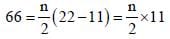
n = 12
n = 12
The fifth term of the sequence for which t1 = 1, t2 = 2 and tn + 2 = tn + tn + 1, is (SSC CGL 1st Sit. 2013)- a)5
- b)10
- c)6
- d)8
Correct answer is option 'D'. Can you explain this answer?
The fifth term of the sequence for which t1 = 1, t2 = 2 and tn + 2 = tn + tn + 1, is (SSC CGL 1st Sit. 2013)
a)
5
b)
10
c)
6
d)
8
| | Abhiram Mehra answered |
Understanding the Sequence
The sequence is defined by the initial terms and a recursive relationship:
- t1 = 1
- t2 = 2
- tn + 2 = tn + tn + 1
This means each term after the second is the sum of the two preceding terms.
Calculating the Terms
Let's calculate the terms step-by-step:
- t1 = 1
- t2 = 2
Now, using the recursive formula to find subsequent terms:
- t3 = t1 + t2 = 1 + 2 = 3
- t4 = t2 + t3 = 2 + 3 = 5
- t5 = t3 + t4 = 3 + 5 = 8
So, the terms we have calculated are:
- t1 = 1
- t2 = 2
- t3 = 3
- t4 = 5
- t5 = 8
Identifying the Fifth Term
From the calculations, we see that:
- t5 = 8
Conclusion
The fifth term of the sequence is 8, which confirms that the correct answer is option 'D'.
The sequence is defined by the initial terms and a recursive relationship:
- t1 = 1
- t2 = 2
- tn + 2 = tn + tn + 1
This means each term after the second is the sum of the two preceding terms.
Calculating the Terms
Let's calculate the terms step-by-step:
- t1 = 1
- t2 = 2
Now, using the recursive formula to find subsequent terms:
- t3 = t1 + t2 = 1 + 2 = 3
- t4 = t2 + t3 = 2 + 3 = 5
- t5 = t3 + t4 = 3 + 5 = 8
So, the terms we have calculated are:
- t1 = 1
- t2 = 2
- t3 = 3
- t4 = 5
- t5 = 8
Identifying the Fifth Term
From the calculations, we see that:
- t5 = 8
Conclusion
The fifth term of the sequence is 8, which confirms that the correct answer is option 'D'.
Two numbers are in the ratio 4 : 7. If their HCF is 26, then the sum of these two numbers will be: (SSC Sub. Ins. 2018)- a)364
- b)286
- c)338
- d)312
Correct answer is option 'B'. Can you explain this answer?
Two numbers are in the ratio 4 : 7. If their HCF is 26, then the sum of these two numbers will be: (SSC Sub. Ins. 2018)
a)
364
b)
286
c)
338
d)
312
| | Nilesh Banerjee answered |
Ratio and HCF
Given:
- Two numbers are in the ratio 4 : 7
- HCF of the two numbers is 26
To find:
- Sum of the two numbers
Solution:
Let the two numbers be 4x and 7x (as they are in the ratio 4:7)
The HCF of these two numbers is given as 26. Therefore, 26 is a factor of both the numbers.
So, we can write 4x = 26a and 7x = 26b, where a and b are co-prime (as HCF of a and b is 1)
We need to find the sum of the two numbers, which is 4x + 7x = 11x
Now, let's substitute the values of 4x and 7x in terms of a and b:
4x = 26a
7x = 26b
Multiplying the first equation by 7 and the second equation by 4, we get:
28x = 182a
28x = 104b
As a and b are co-prime, there exists a positive integer k such that a = 104k and b = 182k.
Substituting these values in the above equations:
28x = 182a = 182(104k) = 18928k
28x = 104b = 104(182k) = 18928k
Therefore, we have:
28x = 18928k
Simplifying this equation, we get:
x = 676k
So, the two numbers are:
4x = 4(676k) = 2704k
7x = 7(676k) = 4732k
The sum of the two numbers is:
4x + 7x = 2704k + 4732k = 7436k
Since k is a positive integer, we need to find the smallest value of k such that the sum of the two numbers is a multiple of 26.
7436k = 26(286k)
Therefore, the sum of the two numbers is 26 times 286k, which is a multiple of 26.
Hence, the correct answer is option B) 286.
Given:
- Two numbers are in the ratio 4 : 7
- HCF of the two numbers is 26
To find:
- Sum of the two numbers
Solution:
Let the two numbers be 4x and 7x (as they are in the ratio 4:7)
The HCF of these two numbers is given as 26. Therefore, 26 is a factor of both the numbers.
So, we can write 4x = 26a and 7x = 26b, where a and b are co-prime (as HCF of a and b is 1)
We need to find the sum of the two numbers, which is 4x + 7x = 11x
Now, let's substitute the values of 4x and 7x in terms of a and b:
4x = 26a
7x = 26b
Multiplying the first equation by 7 and the second equation by 4, we get:
28x = 182a
28x = 104b
As a and b are co-prime, there exists a positive integer k such that a = 104k and b = 182k.
Substituting these values in the above equations:
28x = 182a = 182(104k) = 18928k
28x = 104b = 104(182k) = 18928k
Therefore, we have:
28x = 18928k
Simplifying this equation, we get:
x = 676k
So, the two numbers are:
4x = 4(676k) = 2704k
7x = 7(676k) = 4732k
The sum of the two numbers is:
4x + 7x = 2704k + 4732k = 7436k
Since k is a positive integer, we need to find the smallest value of k such that the sum of the two numbers is a multiple of 26.
7436k = 26(286k)
Therefore, the sum of the two numbers is 26 times 286k, which is a multiple of 26.
Hence, the correct answer is option B) 286.
The square root of which of the following is a rational number? (SSC Sub. Ins. 2018)- a)5823.82
- b)1489.96
- c)22504.9
- d)2460.14
Correct answer is option 'B'. Can you explain this answer?
The square root of which of the following is a rational number? (SSC Sub. Ins. 2018)
a)
5823.82
b)
1489.96
c)
22504.9
d)
2460.14
| | Abhiram Mehra answered |
Finding Rational Numbers in Square Root
Explanation:
To find out which of the given options has a rational square root, we need to follow the steps given below:
Step 1: Prime Factorization
We need to find the prime factorization of the given options. The prime factorization of each option is given below:
a) 5823.82 = 2 × 3 × 971.303
b) 1489.96 = 2 × 2 × 2 × 7 × 53.21
c) 22504.9 = 2 × 2 × 2 × 11 × 509.29
d) 2460.14 = 2 × 2 × 5 × 123.007
Step 2: Pairing of Prime Factors
Next, we need to pair the prime factors in groups of two. If there is any prime factor left unpaired, it means that the number has an irrational square root. The pairing of prime factors for each option is given below:
a) 2 × 3, 971.303 (irrational)
b) 2 × 2, 7 × 53.21 (rational)
c) 2 × 2, 11 × 509.29 (irrational)
d) 2 × 2, 5 × 123.007 (irrational)
Step 3: Simplification of Rational Square Root
We can simplify the rational square root by taking out the pair of prime factors outside the square root sign. For example, the square root of 2 × 2 × 7 × 53.21 can be simplified as 2 × 53.21 = 106.42. Therefore, the only option which has a rational square root is option B, which is 1489.96.
Therefore, the correct answer is option B, which is 1489.96.
Explanation:
To find out which of the given options has a rational square root, we need to follow the steps given below:
Step 1: Prime Factorization
We need to find the prime factorization of the given options. The prime factorization of each option is given below:
a) 5823.82 = 2 × 3 × 971.303
b) 1489.96 = 2 × 2 × 2 × 7 × 53.21
c) 22504.9 = 2 × 2 × 2 × 11 × 509.29
d) 2460.14 = 2 × 2 × 5 × 123.007
Step 2: Pairing of Prime Factors
Next, we need to pair the prime factors in groups of two. If there is any prime factor left unpaired, it means that the number has an irrational square root. The pairing of prime factors for each option is given below:
a) 2 × 3, 971.303 (irrational)
b) 2 × 2, 7 × 53.21 (rational)
c) 2 × 2, 11 × 509.29 (irrational)
d) 2 × 2, 5 × 123.007 (irrational)
Step 3: Simplification of Rational Square Root
We can simplify the rational square root by taking out the pair of prime factors outside the square root sign. For example, the square root of 2 × 2 × 7 × 53.21 can be simplified as 2 × 53.21 = 106.42. Therefore, the only option which has a rational square root is option B, which is 1489.96.
Therefore, the correct answer is option B, which is 1489.96.
With a two digit prime number, if 18 is added, we get another prime number with digits reversed. How many such numbers are possible? (SSC CGL 2nd Sit. 2012)- a)2
- b)3
- c)0
- d)1
Correct answer is option 'A'. Can you explain this answer?
With a two digit prime number, if 18 is added, we get another prime number with digits reversed. How many such numbers are possible? (SSC CGL 2nd Sit. 2012)
a)
2
b)
3
c)
0
d)
1
| | Nilesh Banerjee answered |
Problem Analysis:
We are given that a two-digit prime number, when 18 is added to it, gives another prime number with its digits reversed. We need to find how many such numbers are possible.
Key Points:
- A prime number is a number greater than 1 that has no positive divisors other than 1 and itself.
- In a two-digit number, the tens digit cannot be 0 because it would make the number a one-digit number. Therefore, the tens digit can only be 1, 2, 3, 4, 5, 6, 7, 8, or 9.
- The ones digit can be any digit from 0 to 9.
Solution:
To solve this problem, we can use a brute force approach and check each two-digit prime number to see if it satisfies the given condition.
Step 1: Find all the two-digit prime numbers.
- We can start by listing all the two-digit numbers from 10 to 99.
- For each number, we can check if it is prime by dividing it by all the numbers from 2 to the square root of the number. If it is divisible by any of these numbers, it is not prime.
- By applying this process, we can find all the two-digit prime numbers: 11, 13, 17, 19, 23, 29, 31, 37, 41, 43, 47, 53, 59, 61, 67, 71, 73, 79, 83, 89, and 97.
Step 2: Check if adding 18 to each two-digit prime number gives another prime number with its digits reversed.
- For each two-digit prime number, we can add 18 to it and check if the resulting number is prime and has its digits reversed.
- For example, for the number 11, adding 18 gives 29, which is a prime number with its digits reversed.
- We can continue this process for all the two-digit prime numbers.
Step 3: Count the numbers that satisfy the given condition.
- By checking all the two-digit prime numbers, we find that there are two numbers that satisfy the given condition: 11 and 17.
- Therefore, the answer is 2.
Final Answer: The number of two-digit prime numbers that, when 18 is added, give another prime number with its digits reversed, is 2.
We are given that a two-digit prime number, when 18 is added to it, gives another prime number with its digits reversed. We need to find how many such numbers are possible.
Key Points:
- A prime number is a number greater than 1 that has no positive divisors other than 1 and itself.
- In a two-digit number, the tens digit cannot be 0 because it would make the number a one-digit number. Therefore, the tens digit can only be 1, 2, 3, 4, 5, 6, 7, 8, or 9.
- The ones digit can be any digit from 0 to 9.
Solution:
To solve this problem, we can use a brute force approach and check each two-digit prime number to see if it satisfies the given condition.
Step 1: Find all the two-digit prime numbers.
- We can start by listing all the two-digit numbers from 10 to 99.
- For each number, we can check if it is prime by dividing it by all the numbers from 2 to the square root of the number. If it is divisible by any of these numbers, it is not prime.
- By applying this process, we can find all the two-digit prime numbers: 11, 13, 17, 19, 23, 29, 31, 37, 41, 43, 47, 53, 59, 61, 67, 71, 73, 79, 83, 89, and 97.
Step 2: Check if adding 18 to each two-digit prime number gives another prime number with its digits reversed.
- For each two-digit prime number, we can add 18 to it and check if the resulting number is prime and has its digits reversed.
- For example, for the number 11, adding 18 gives 29, which is a prime number with its digits reversed.
- We can continue this process for all the two-digit prime numbers.
Step 3: Count the numbers that satisfy the given condition.
- By checking all the two-digit prime numbers, we find that there are two numbers that satisfy the given condition: 11 and 17.
- Therefore, the answer is 2.
Final Answer: The number of two-digit prime numbers that, when 18 is added, give another prime number with its digits reversed, is 2.
If the six digit number 15x1y2 is divisible by 44, then (x + y) is equal to: (SSC CGL-2018)- a)8
- b)7
- c)6
- d)9
Correct answer is option 'B'. Can you explain this answer?
If the six digit number 15x1y2 is divisible by 44, then (x + y) is equal to: (SSC CGL-2018)
a)
8
b)
7
c)
6
d)
9
| | Abhiram Mehra answered |
Solution:
To check for divisibility by 44, we need to check for divisibility by both 4 and 11.
Divisibility by 4: The last two digits of the number should be divisible by 4.
So, y2 should be divisible by 4. Hence, y can be either 0, 4 or 8.
Divisibility by 11: The difference between the sum of the digits in the odd places and the sum of the digits in the even places should be divisible by 11.
15x1 y2
Sum of digits in odd places = 1 + x + 5 = x + 6
Sum of digits in even places = 2 + y
Difference = (x + 6) - (2 + y) = x + 4 - y
For the number to be divisible by 11, x + 4 - y should be divisible by 11.
Now, we can substitute the possible values of y and check for divisibility by 11.
If y = 0, then x + 4 should be divisible by 11. The possible values of x are 7 and 18.
If y = 4, then x - 7 should be divisible by 11. The possible values of x are 10 and 21.
If y = 8, then x - 4 should be divisible by 11. The possible values of x are 2 and 13.
Out of these, the only pair that satisfies divisibility by both 4 and 11 is (1, 7).
Therefore, (x, y) = (1, 7).
Hence, the answer is option B, 7.
To check for divisibility by 44, we need to check for divisibility by both 4 and 11.
Divisibility by 4: The last two digits of the number should be divisible by 4.
So, y2 should be divisible by 4. Hence, y can be either 0, 4 or 8.
Divisibility by 11: The difference between the sum of the digits in the odd places and the sum of the digits in the even places should be divisible by 11.
15x1 y2
Sum of digits in odd places = 1 + x + 5 = x + 6
Sum of digits in even places = 2 + y
Difference = (x + 6) - (2 + y) = x + 4 - y
For the number to be divisible by 11, x + 4 - y should be divisible by 11.
Now, we can substitute the possible values of y and check for divisibility by 11.
If y = 0, then x + 4 should be divisible by 11. The possible values of x are 7 and 18.
If y = 4, then x - 7 should be divisible by 11. The possible values of x are 10 and 21.
If y = 8, then x - 4 should be divisible by 11. The possible values of x are 2 and 13.
Out of these, the only pair that satisfies divisibility by both 4 and 11 is (1, 7).
Therefore, (x, y) = (1, 7).
Hence, the answer is option B, 7.
 is (SSC Sub. Ins. 2014)
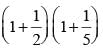
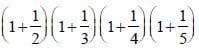
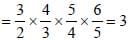
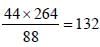
 is (SSC CHSL 2013)
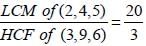
Chapter doubts & questions for Number System and HCF & LCM - SSC CGL Previous Year Papers 2026 is part of SSC CGL exam preparation. The chapters have been prepared according to the SSC CGL exam syllabus. The Chapter doubts & questions, notes, tests & MCQs are made for SSC CGL 2026 Exam. Find important definitions, questions, notes, meanings, examples, exercises, MCQs and online tests here.
Chapter doubts & questions of Number System and HCF & LCM - SSC CGL Previous Year Papers in English & Hindi are available as part of SSC CGL exam. Download more important topics, notes, lectures and mock test series for SSC CGL Exam by signing up for free.
SSC CGL Previous Year Papers313 docs|325 tests |
