


All Exams > UPSC > Mechanical Engineering Optional Notes for UPSC > All Questions
All questions of Vibrations for UPSC CSE Exam
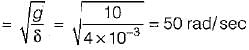

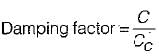
Whirling speed of a shaft coincides with the natural frequency of its- a)longitudinal vibration
- b)transverse vibration
- c)torsional vibration
- d)coupled bending torsional vibration
Correct answer is option 'B'. Can you explain this answer?
Whirling speed of a shaft coincides with the natural frequency of its
a)
longitudinal vibration
b)
transverse vibration
c)
torsional vibration
d)
coupled bending torsional vibration
 | Devansh Sengupta answered |
Whirling of shaft occurs when the natural frequency of transverse vibration matches with the frequency of rotating shaft.
All of the following statements are correct, except,- a)the interval of time taken by a vibrating body to complete a cycle is called period.
- b)the natural frequency of a spring-mass system increases if it is made to operate at a very high altitude.
- c)in the normal or principal mode of vibration all the moving parts of the system oscillate in phase with the same frequency.
- d)the phenomenon of resonance manifests when the frequency of external exciting force coincides with the natural frequency of the system.
Correct answer is option 'B'. Can you explain this answer?
All of the following statements are correct, except,
a)
the interval of time taken by a vibrating body to complete a cycle is called period.
b)
the natural frequency of a spring-mass system increases if it is made to operate at a very high altitude.
c)
in the normal or principal mode of vibration all the moving parts of the system oscillate in phase with the same frequency.
d)
the phenomenon of resonance manifests when the frequency of external exciting force coincides with the natural frequency of the system.
 | Isha Nambiar answered |
Mass does not depend on altitude, so natural frequency remains unaffected.
Select the WRONG statement:- a)vibrations in machines may be due to loose fittings and lack of balance
- b)free vibrations have external force applied at the ends only
- c)forced vibrations are independent of natural frequency of vibration
- d)a vibrating system is said to be stable if the amplitude of vibration decrease With time
Correct answer is option 'B'. Can you explain this answer?
Select the WRONG statement:
a)
vibrations in machines may be due to loose fittings and lack of balance
b)
free vibrations have external force applied at the ends only
c)
forced vibrations are independent of natural frequency of vibration
d)
a vibrating system is said to be stable if the amplitude of vibration decrease With time
 | Aaditya Jain answered |
In free or natural vibrations, no force acts on the body after an initial displacement has been imparted to it.
A flexible rotor-shaft system comprises of a 10 kg rotor disc placed in the middle of a massless shaft of diameter 30 mm and length 500 mm between bearings (shaft is being taken massless as the equivalent mass of the shaft is included in the rotor mass) mounted at the ends. The shaft is made of steel for which the value of E is 2.1 x 10¹¹ Pa. What is the critical speed of rotation of the shaft.- a)60 Hz
- b)90 Hz
- c)135 Hz
- d)180 Hz
Correct answer is option 'B'. Can you explain this answer?
A flexible rotor-shaft system comprises of a 10 kg rotor disc placed in the middle of a massless shaft of diameter 30 mm and length 500 mm between bearings (shaft is being taken massless as the equivalent mass of the shaft is included in the rotor mass) mounted at the ends. The shaft is made of steel for which the value of E is 2.1 x 10¹¹ Pa. What is the critical speed of rotation of the shaft.
a)
60 Hz
b)
90 Hz
c)
135 Hz
d)
180 Hz
 | Atharva Majumdar answered |
For shaft loaded at middle with mass M
Deflection
Moment of inertia

So deflection of shaft
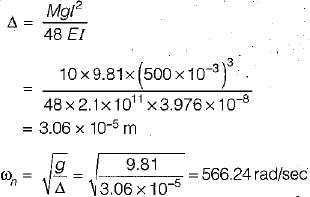
Deflection
Moment of inertia
So deflection of shaft
The rate of decay of oscillations is known as- a)Critical damping
- b)Damping factor
- c)Logarithmic decrement
- d)Damping coefficient
Correct answer is option 'C'. Can you explain this answer?
The rate of decay of oscillations is known as
a)
Critical damping
b)
Damping factor
c)
Logarithmic decrement
d)
Damping coefficient
| | Divya Banerjee answered |
Natural logarithm of the amplitude reduction factor is known as logarithmic decrement.
A vibrating machine is isolated from the floor using springs, if the ratio of excitation frequency of vibration of machine to the natural frequency of the isolation system is equal to 0.5, the transmissibility ratio of isolation is- a)1/2
- b)3/4
- c)4/3
- d)2
Correct answer is option 'C'. Can you explain this answer?
A vibrating machine is isolated from the floor using springs, if the ratio of excitation frequency of vibration of machine to the natural frequency of the isolation system is equal to 0.5, the transmissibility ratio of isolation is
a)
1/2
b)
3/4
c)
4/3
d)
2
 | Sagarika Dey answered |
Given r = 0.5
Due to isolation ξ = 0
Transmissibility ratio,
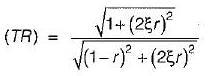
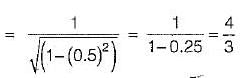
Due to isolation ξ = 0
Transmissibility ratio,
If the damping factor for a vibrating system is unity then the system is- a)Critically damped
- b)Over damped
- c)Under damped
- d)Undamped
Correct answer is option 'A'. Can you explain this answer?
If the damping factor for a vibrating system is unity then the system is
a)
Critically damped
b)
Over damped
c)
Under damped
d)
Undamped
 | Amrita Chauhan answered |

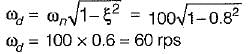
It means that system is critically damped and C = Cc
During torsional vibration of a shaft, the node is characterized by the- a)maximum angular velocity
- b)maximum angular displacement .
- c)maximum angular acceleration
- d)zero angular displacement
Correct answer is option 'D'. Can you explain this answer?
During torsional vibration of a shaft, the node is characterized by the
a)
maximum angular velocity
b)
maximum angular displacement .
c)
maximum angular acceleration
d)
zero angular displacement
| | Sagarika Dey answered |
Node in Torsional Vibration of a Shaft
In torsional vibration of a shaft, the node is characterized by zero angular displacement. To understand why this is the case, let's first define what torsional vibration is and how it occurs in a shaft.
Torsional vibration is a type of mechanical vibration that occurs in rotating systems, such as shafts. It is caused by the twisting or torsion of the shaft due to various factors, including unbalanced forces, misalignment, or sudden changes in torque.
When a shaft undergoes torsional vibration, it experiences alternating torsional forces and moments along its length. These forces and moments cause the shaft to twist back and forth, resulting in angular displacement, angular velocity, and angular acceleration at different points along its length.
The node in torsional vibration refers to a point along the shaft where the angular displacement is zero. In other words, it is a point where the shaft does not twist or rotate. The node is typically located at the center of the shaft, where the torsional forces and moments balance each other out.
Explanation:
- Torsional Vibration: Torsional vibration is a type of mechanical vibration that occurs in rotating systems, such as shafts. It is caused by the twisting or torsion of the shaft due to various factors, including unbalanced forces, misalignment, or sudden changes in torque.
- Angular Displacement: Angular displacement is the change in angle or rotation of an object. In the case of torsional vibration, the angular displacement of the shaft refers to the twisting or rotation of the shaft caused by the torsional forces and moments.
- Angular Velocity: Angular velocity is the rate at which an object rotates or changes its angle per unit time. In the case of torsional vibration, the angular velocity of the shaft refers to the speed at which the shaft twists or rotates due to the torsional forces and moments.
- Angular Acceleration: Angular acceleration is the rate at which the angular velocity of an object changes per unit time. In the case of torsional vibration, the angular acceleration of the shaft refers to the change in the speed at which the shaft twists or rotates due to the torsional forces and moments.
Reasoning:
- Maximum Angular Velocity: The maximum angular velocity occurs at a point along the shaft where the twisting or rotation is at its fastest. This point is typically not the node, as the node is characterized by zero angular displacement.
- Maximum Angular Displacement: The maximum angular displacement occurs at a point along the shaft where the twisting or rotation is at its maximum. This point is typically not the node, as the node is characterized by zero angular displacement.
- Maximum Angular Acceleration: The maximum angular acceleration occurs at a point along the shaft where the change in the speed of twisting or rotation is at its fastest. This point is typically not the node, as the node is characterized by zero angular displacement.
- Zero Angular Displacement: The node in torsional vibration refers to a point along the shaft where the angular displacement is zero. This means that the shaft does not twist or rotate at the node, making it the correct answer.
In conclusion, during torsional vibration of a shaft, the node is characterized by zero angular displacement. This means that the shaft does not twist or rotate at the node, distinguishing it from other points along the shaft where maximum angular velocity, maximum angular displacement, or maximum angular acceleration may occur.
In torsional vibration of a shaft, the node is characterized by zero angular displacement. To understand why this is the case, let's first define what torsional vibration is and how it occurs in a shaft.
Torsional vibration is a type of mechanical vibration that occurs in rotating systems, such as shafts. It is caused by the twisting or torsion of the shaft due to various factors, including unbalanced forces, misalignment, or sudden changes in torque.
When a shaft undergoes torsional vibration, it experiences alternating torsional forces and moments along its length. These forces and moments cause the shaft to twist back and forth, resulting in angular displacement, angular velocity, and angular acceleration at different points along its length.
The node in torsional vibration refers to a point along the shaft where the angular displacement is zero. In other words, it is a point where the shaft does not twist or rotate. The node is typically located at the center of the shaft, where the torsional forces and moments balance each other out.
Explanation:
- Torsional Vibration: Torsional vibration is a type of mechanical vibration that occurs in rotating systems, such as shafts. It is caused by the twisting or torsion of the shaft due to various factors, including unbalanced forces, misalignment, or sudden changes in torque.
- Angular Displacement: Angular displacement is the change in angle or rotation of an object. In the case of torsional vibration, the angular displacement of the shaft refers to the twisting or rotation of the shaft caused by the torsional forces and moments.
- Angular Velocity: Angular velocity is the rate at which an object rotates or changes its angle per unit time. In the case of torsional vibration, the angular velocity of the shaft refers to the speed at which the shaft twists or rotates due to the torsional forces and moments.
- Angular Acceleration: Angular acceleration is the rate at which the angular velocity of an object changes per unit time. In the case of torsional vibration, the angular acceleration of the shaft refers to the change in the speed at which the shaft twists or rotates due to the torsional forces and moments.
Reasoning:
- Maximum Angular Velocity: The maximum angular velocity occurs at a point along the shaft where the twisting or rotation is at its fastest. This point is typically not the node, as the node is characterized by zero angular displacement.
- Maximum Angular Displacement: The maximum angular displacement occurs at a point along the shaft where the twisting or rotation is at its maximum. This point is typically not the node, as the node is characterized by zero angular displacement.
- Maximum Angular Acceleration: The maximum angular acceleration occurs at a point along the shaft where the change in the speed of twisting or rotation is at its fastest. This point is typically not the node, as the node is characterized by zero angular displacement.
- Zero Angular Displacement: The node in torsional vibration refers to a point along the shaft where the angular displacement is zero. This means that the shaft does not twist or rotate at the node, making it the correct answer.
In conclusion, during torsional vibration of a shaft, the node is characterized by zero angular displacement. This means that the shaft does not twist or rotate at the node, distinguishing it from other points along the shaft where maximum angular velocity, maximum angular displacement, or maximum angular acceleration may occur.
The equation: 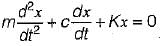 represents
- a)free vibration
- b)forced vibration
- c)free, damped vibration
- d)none of these
Correct answer is option 'C'. Can you explain this answer?
The equation: represents
representsa)
free vibration
b)
forced vibration
c)
free, damped vibration
d)
none of these
 | Rhea Reddy answered |
Since excitation force is absent in the equation hence it is the equation of free, damped vibration.
When there is a reduction in amplitude over every cycle of vibration, then the body is said to have- a)free vibration
- b)damped vibration
- c)forced vibration
- d)none of the mentioned
Correct answer is option 'B'. Can you explain this answer?
When there is a reduction in amplitude over every cycle of vibration, then the body is said to have
a)
free vibration
b)
damped vibration
c)
forced vibration
d)
none of the mentioned
 | Neha Joshi answered |
When no external force acts on the body, after giving it an initial displacement, then the body is said to be under free or natural vibrations. The frequency of the free vibrations is called free or natural frequency.
When there is a reduction in amplitude over every cycle of vibration, the motion is said to be damped vibration.
When there is a reduction in amplitude over every cycle of vibration, the motion is said to be damped vibration.
The critical speed of the shaft depends upon- a)mass
- b)stiffness
- c)mass and stiffness
- d)mass, stiffness and eccentricity
Correct answer is option 'C'. Can you explain this answer?
The critical speed of the shaft depends upon
a)
mass
b)
stiffness
c)
mass and stiffness
d)
mass, stiffness and eccentricity
 | Hrishikesh Chakraborty answered |
Understanding Critical Speed of a Shaft
The critical speed of a rotating shaft is the speed at which the shaft experiences resonance, leading to excessive vibrations and potential failure. It is influenced by several factors, primarily mass and stiffness.
Factors Influencing Critical Speed
- Mass: The mass of the shaft plays a crucial role in determining its inertia. A heavier shaft will have a different response to rotational forces compared to a lighter one.
- Stiffness: The stiffness of the shaft refers to its ability to resist deformation under load. A stiffer shaft can withstand higher speeds without bending or vibrating excessively.
- Combined Effect of Mass and Stiffness: The relationship between mass and stiffness is vital in calculating critical speed. The critical speed increases with higher stiffness and decreases with increased mass. This interplay dictates how the shaft behaves at various rotational speeds.
Eccentricity and Its Impact
While eccentricity (the offset of the center of mass) can influence vibrations, it is not a primary determinant of critical speed. However, when combined with mass and stiffness, eccentricity can exacerbate vibrational issues at certain speeds.
Conclusion
In conclusion, the critical speed of a shaft is primarily dependent on both mass and stiffness. Understanding this relationship is essential for engineers to design shafts that can operate safely and efficiently at required speeds without encountering resonance issues. Therefore, the correct answer is option 'C': mass and stiffness.
The critical speed of a rotating shaft is the speed at which the shaft experiences resonance, leading to excessive vibrations and potential failure. It is influenced by several factors, primarily mass and stiffness.
Factors Influencing Critical Speed
- Mass: The mass of the shaft plays a crucial role in determining its inertia. A heavier shaft will have a different response to rotational forces compared to a lighter one.
- Stiffness: The stiffness of the shaft refers to its ability to resist deformation under load. A stiffer shaft can withstand higher speeds without bending or vibrating excessively.
- Combined Effect of Mass and Stiffness: The relationship between mass and stiffness is vital in calculating critical speed. The critical speed increases with higher stiffness and decreases with increased mass. This interplay dictates how the shaft behaves at various rotational speeds.
Eccentricity and Its Impact
While eccentricity (the offset of the center of mass) can influence vibrations, it is not a primary determinant of critical speed. However, when combined with mass and stiffness, eccentricity can exacerbate vibrational issues at certain speeds.
Conclusion
In conclusion, the critical speed of a shaft is primarily dependent on both mass and stiffness. Understanding this relationship is essential for engineers to design shafts that can operate safely and efficiently at required speeds without encountering resonance issues. Therefore, the correct answer is option 'C': mass and stiffness.
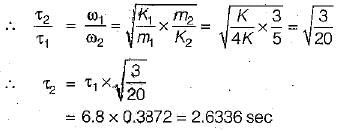
A 5 kg block, attached to the lower end of a spring whose upper end is fixed, vibrates with a period of 6.8 s. What is the period'of vib ration of a 3 kg block which is attached-to the center of the same spring if the upper and lower ends of the spring are fixed?- a)1 sec
- b)1.63 sec
- c)2 sec
- d)2.63 s
Correct answer is option 'D'. Can you explain this answer?
A 5 kg block, attached to the lower end of a spring whose upper end is fixed, vibrates with a period of 6.8 s. What is the period'of vib ration of a 3 kg block which is attached-to the center of the same spring if the upper and lower ends of the spring are fixed?
a)
1 sec
b)
1.63 sec
c)
2 sec
d)
2.63 s
| | Anuj Chauhan answered |

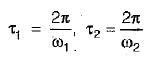
Spring constant is inversely proportional to its length
K1 = K
K2 = 2K + 2K = 4K
K2 = 2K + 2K = 4K
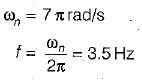
What is the maximum acceleration of a particle which moves in simple harmonic motion with an amplitude of 3 mm and frequency of 20 Hz?- a)47 m/s2
- b)48 m/s2
- c)49 m/s2
- d)50 m/s2
Correct answer is option 'A'. Can you explain this answer?
What is the maximum acceleration of a particle which moves in simple harmonic motion with an amplitude of 3 mm and frequency of 20 Hz?
a)
47 m/s2
b)
48 m/s2
c)
49 m/s2
d)
50 m/s2
 | Rashi Chauhan answered |
Maximum Acceleration in Simple Harmonic Motion
In simple harmonic motion (SHM), the acceleration of a particle can be calculated using the equation:
a = -ω^2x
where a is the acceleration, ω is the angular frequency, and x is the displacement from the equilibrium position.
Given Data:
Amplitude (A) = 3 mm = 0.003 m
Frequency (f) = 20 Hz
Calculating Angular Frequency:
The angular frequency (ω) can be calculated using the formula:
ω = 2πf
Substituting the given frequency into the formula:
ω = 2π * 20 = 40π rad/s
Calculating Maximum Acceleration:
The maximum acceleration (amax) occurs when the particle is at maximum displacement, which is equal to the amplitude (A).
Substituting the values into the acceleration equation:
amax = -ω^2A
amax = -(40π)^2 * 0.003
amax = -1600π^2 * 0.003
amax ≈ -150.796 m/s^2
Since the acceleration is a vector quantity, the negative sign indicates that the acceleration is in the opposite direction to the displacement.
Converting to Positive Value:
To find the maximum positive acceleration, we can take the magnitude of the acceleration by removing the negative sign:
|amax| = 150.796 m/s^2
Rounding the value to the nearest whole number:
|amax| ≈ 151 m/s^2
Choosing the Correct Option:
Among the given options (a) 47 m/s^2, (b) 48 m/s^2, (c) 49 m/s^2, and (d) 50 m/s^2, the closest option to the calculated value of 151 m/s^2 is (a) 47 m/s^2.
Therefore, the correct answer is option 'A' - 47 m/s^2.
In simple harmonic motion (SHM), the acceleration of a particle can be calculated using the equation:
a = -ω^2x
where a is the acceleration, ω is the angular frequency, and x is the displacement from the equilibrium position.
Given Data:
Amplitude (A) = 3 mm = 0.003 m
Frequency (f) = 20 Hz
Calculating Angular Frequency:
The angular frequency (ω) can be calculated using the formula:
ω = 2πf
Substituting the given frequency into the formula:
ω = 2π * 20 = 40π rad/s
Calculating Maximum Acceleration:
The maximum acceleration (amax) occurs when the particle is at maximum displacement, which is equal to the amplitude (A).
Substituting the values into the acceleration equation:
amax = -ω^2A
amax = -(40π)^2 * 0.003
amax = -1600π^2 * 0.003
amax ≈ -150.796 m/s^2
Since the acceleration is a vector quantity, the negative sign indicates that the acceleration is in the opposite direction to the displacement.
Converting to Positive Value:
To find the maximum positive acceleration, we can take the magnitude of the acceleration by removing the negative sign:
|amax| = 150.796 m/s^2
Rounding the value to the nearest whole number:
|amax| ≈ 151 m/s^2
Choosing the Correct Option:
Among the given options (a) 47 m/s^2, (b) 48 m/s^2, (c) 49 m/s^2, and (d) 50 m/s^2, the closest option to the calculated value of 151 m/s^2 is (a) 47 m/s^2.
Therefore, the correct answer is option 'A' - 47 m/s^2.
A shaft carrying three rotors at ends will have following number of nodes- a)3
- b)4
- c)2
- d)0
Correct answer is option 'C'. Can you explain this answer?
A shaft carrying three rotors at ends will have following number of nodes
a)
3
b)
4
c)
2
d)
0
| | Sagarika Mukherjee answered |
No. of nodes = No. of rotors - 1
= 3 - 1 = 2
= 3 - 1 = 2

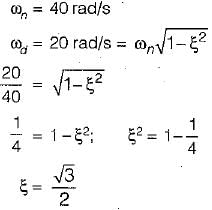
When a body is subjected ,to transverse vibration, the stress induced in the body will be- a)bending stress
- b)shear stress
- c)torsional stress
- d)no stress
Correct answer is option 'A'. Can you explain this answer?
When a body is subjected ,to transverse vibration, the stress induced in the body will be
a)
bending stress
b)
shear stress
c)
torsional stress
d)
no stress
| | Raj Kumar answered |
In case of transverse vibration, bending stresses are generated


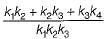
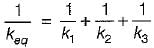
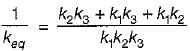
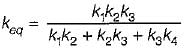


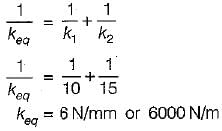
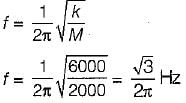
An over-damped system- a)does not vibrate at all
- b)vibrates with frequency more than natural frequency of system
- c)vibrates with frequency less than natural frequency of system
- d)vibrates with frequency equal to natural frequency of system
Correct answer is option 'A'. Can you explain this answer?
An over-damped system
a)
does not vibrate at all
b)
vibrates with frequency more than natural frequency of system
c)
vibrates with frequency less than natural frequency of system
d)
vibrates with frequency equal to natural frequency of system
 | Devansh Nambiar answered |
Explanation:
An over-damped system is a system whose damping ratio is greater than 1. In such a system, the damping force is such that it dissipates all the energy of the system before it can oscillate.
What is damping ratio?
The damping ratio is a measure of how quickly the oscillations in a system decay. It is defined as the ratio of the actual damping coefficient to the critical damping coefficient.
What is critical damping?
Critical damping is the minimum amount of damping required to prevent the system from oscillating.
What happens in an over-damped system?
In an over-damped system, the damping is so strong that the system does not oscillate at all. The system returns to its equilibrium position without any oscillation. The damping force is so strong that it dissipates all the energy of the system before it can oscillate.
Conclusion:
Hence, option 'A' is the correct answer. In an over-damped system, the system does not vibrate at all.
An over-damped system is a system whose damping ratio is greater than 1. In such a system, the damping force is such that it dissipates all the energy of the system before it can oscillate.
What is damping ratio?
The damping ratio is a measure of how quickly the oscillations in a system decay. It is defined as the ratio of the actual damping coefficient to the critical damping coefficient.
What is critical damping?
Critical damping is the minimum amount of damping required to prevent the system from oscillating.
What happens in an over-damped system?
In an over-damped system, the damping is so strong that the system does not oscillate at all. The system returns to its equilibrium position without any oscillation. The damping force is so strong that it dissipates all the energy of the system before it can oscillate.
Conclusion:
Hence, option 'A' is the correct answer. In an over-damped system, the system does not vibrate at all.
In vibration isolation system, if  the for all values of damping factor, the transmissibility will be
- a)>1
- b)= 1
- c)< 1
- d)Zero
Correct answer is option 'A'. Can you explain this answer?
In vibration isolation system, if the for all values of damping factor, the transmissibility will be
the for all values of damping factor, the transmissibility will bea)
>1
b)
= 1
c)
< 1
d)
Zero
 | Kiran Basu answered |
In vibration isolation system

Then transmissibility ratio
∈ > 1
This means that the force transmitted to the foundation through elastic support is greater than the force applied.
Then transmissibility ratio
∈ > 1
This means that the force transmitted to the foundation through elastic support is greater than the force applied.
The governing equation of a specific simple vibrating system is
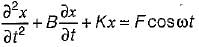
The system is subjected to- a)forced vibrations
- b)free vibrations
- c)resonance
- d)no vibrations
Correct answer is option 'A'. Can you explain this answer?
The governing equation of a specific simple vibrating system is
The system is subjected to
The system is subjected to
a)
forced vibrations
b)
free vibrations
c)
resonance
d)
no vibrations
| | Anirudh Kulkarni answered |
Since excitation force is present in the equation hence it is the equation of forced vibration.
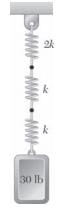
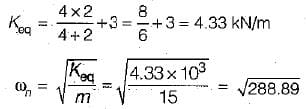
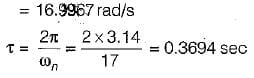
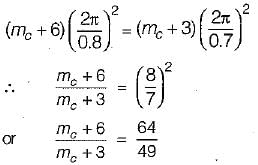
The period of vibration of the system shown is observed to be 0.8s. If block lA' is removed, the period is observed to be 0.7s. What is the mass of block ‘C’?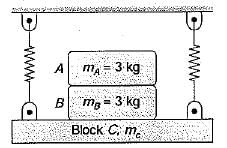
- a)4.8 kg
- b)5 kg
- c)6.8 kg
- d)8.8 kg
Correct answer is option 'C'. Can you explain this answer?
The period of vibration of the system shown is observed to be 0.8s. If block lA' is removed, the period is observed to be 0.7s. What is the mass of block ‘C’?
a)
4.8 kg
b)
5 kg
c)
6.8 kg
d)
8.8 kg
| | Akshat Mehta answered |

we have
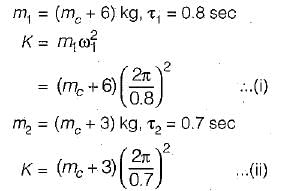
From equation (i) and (ii),

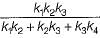
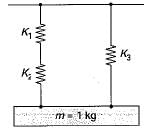
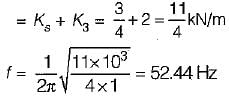
A mass of 1 kg is suspended by means of 3 springs as shown in figure. The spring constant K1, K2 and K3 are respectively 1 kN/m, 3 kN/m and 2 kN/m. The natural frequency of the system is approximately
- a)46.90 Hz
- b)52.44 Hz
- c)60.55 Hz
- d)77.46 Hz
Correct answer is option 'B'. Can you explain this answer?
A mass of 1 kg is suspended by means of 3 springs as shown in figure. The spring constant K1, K2 and K3 are respectively 1 kN/m, 3 kN/m and 2 kN/m. The natural frequency of the system is approximately
a)
46.90 Hz
b)
52.44 Hz
c)
60.55 Hz
d)
77.46 Hz
| | Meera Bose answered |

Combined stiffness
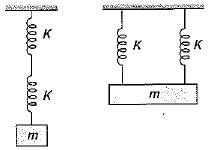
Two identical springs of constant K are connected in series and parallel as shown in the figure. A mass m is suspended from them. The ratio of their frequencies of oscillations will be
- a)2 : 1
- b)1 : 2
- c)1 : 4
- d)4 : 1
Correct answer is option 'B'. Can you explain this answer?
Two identical springs of constant K are connected in series and parallel as shown in the figure. A mass m is suspended from them. The ratio of their frequencies of oscillations will be
a)
2 : 1
b)
1 : 2
c)
1 : 4
d)
4 : 1
| | Devansh Nambiar answered |

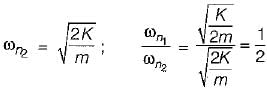
For first system Keq = K/2

For second system Keq = 2K
In a multi-rotor system of torsional vibration maximum number of nodes that can occur is- a)two
- b)equal to the number of rotor plus one
- c)equal to number of rotors
- d)equal to the number of.rotor minus one
Correct answer is option 'D'. Can you explain this answer?
In a multi-rotor system of torsional vibration maximum number of nodes that can occur is
a)
two
b)
equal to the number of rotor plus one
c)
equal to number of rotors
d)
equal to the number of.rotor minus one
| | Rajat Basu answered |
Torsional Vibration in Multi-Rotor System
Torsional vibration is a common phenomenon in rotating machinery which can cause damage to the system. In a multi-rotor system, torsional vibration can occur due to the interaction between the rotors. The vibration can be characterized by the number of nodes that occur in the system.
Maximum Number of Nodes
The maximum number of nodes that can occur in a multi-rotor system of torsional vibration is determined by the number of rotors present in the system. The correct answer to the given question is option 'D', which states that the maximum number of nodes is equal to the number of rotor minus one.
Explanation
The torsional vibration in a multi-rotor system can be analyzed using the natural frequencies and mode shapes of the system. The natural frequencies are determined by the stiffness and mass distribution of the system. The mode shapes represent the vibration pattern of the system at a particular frequency.
In a multi-rotor system, the rotors are coupled through the shaft and the frame. The interaction between the rotors can cause torsional vibration in the system. The vibration pattern is determined by the number of nodes that occur in the system.
The number of nodes is equal to the number of points in the system where the vibration amplitude is zero. In a multi-rotor system, the number of nodes is determined by the number of rotors and the coupling between them. The maximum number of nodes occurs when the rotors are in phase opposition, i.e., when the vibration amplitude is zero at the midpoint between the rotors.
The maximum number of nodes that can occur in a multi-rotor system of torsional vibration is equal to the number of rotors minus one. This is because the rotors are coupled through the shaft and the frame, and the vibration pattern is determined by the interaction between the rotors. If there are n rotors in the system, then the maximum number of nodes that can occur is n-1.
Conclusion
In summary, the maximum number of nodes that can occur in a multi-rotor system of torsional vibration is equal to the number of rotor minus one. This is because the vibration pattern is determined by the interaction between the rotors, and the coupling between them can cause the vibration amplitude to be zero at certain points in the system. Understanding the maximum number of nodes is important for designing and analyzing multi-rotor systems to prevent damage from torsional vibration.
Torsional vibration is a common phenomenon in rotating machinery which can cause damage to the system. In a multi-rotor system, torsional vibration can occur due to the interaction between the rotors. The vibration can be characterized by the number of nodes that occur in the system.
Maximum Number of Nodes
The maximum number of nodes that can occur in a multi-rotor system of torsional vibration is determined by the number of rotors present in the system. The correct answer to the given question is option 'D', which states that the maximum number of nodes is equal to the number of rotor minus one.
Explanation
The torsional vibration in a multi-rotor system can be analyzed using the natural frequencies and mode shapes of the system. The natural frequencies are determined by the stiffness and mass distribution of the system. The mode shapes represent the vibration pattern of the system at a particular frequency.
In a multi-rotor system, the rotors are coupled through the shaft and the frame. The interaction between the rotors can cause torsional vibration in the system. The vibration pattern is determined by the number of nodes that occur in the system.
The number of nodes is equal to the number of points in the system where the vibration amplitude is zero. In a multi-rotor system, the number of nodes is determined by the number of rotors and the coupling between them. The maximum number of nodes occurs when the rotors are in phase opposition, i.e., when the vibration amplitude is zero at the midpoint between the rotors.
The maximum number of nodes that can occur in a multi-rotor system of torsional vibration is equal to the number of rotors minus one. This is because the rotors are coupled through the shaft and the frame, and the vibration pattern is determined by the interaction between the rotors. If there are n rotors in the system, then the maximum number of nodes that can occur is n-1.
Conclusion
In summary, the maximum number of nodes that can occur in a multi-rotor system of torsional vibration is equal to the number of rotor minus one. This is because the vibration pattern is determined by the interaction between the rotors, and the coupling between them can cause the vibration amplitude to be zero at certain points in the system. Understanding the maximum number of nodes is important for designing and analyzing multi-rotor systems to prevent damage from torsional vibration.
The ratio of maximum displacement of forced vibration to the deflection due to the static force is known as- a)Magnification factor
- b)Transmissibility
- c)Logarithmic decrement
- d)Amplitude of vibration
Correct answer is option 'A'. Can you explain this answer?
The ratio of maximum displacement of forced vibration to the deflection due to the static force is known as
a)
Magnification factor
b)
Transmissibility
c)
Logarithmic decrement
d)
Amplitude of vibration
 | Sreemoyee Chauhan answered |
Magnification factor
The magnification factor is a dimensionless quantity that is used to determine the ratio of the maximum displacement of forced vibration to the deflection due to the static force. It is also known as the amplitude ratio or the dynamic magnification factor.
Formula
The formula for calculating the magnification factor is as follows:
Magnification factor = Maximum displacement due to forced vibration / Deflection due to static force
Significance
The magnification factor is an important parameter in the study of forced vibrations. It indicates the degree to which the amplitude of the vibration is amplified due to the application of an external force. A high magnification factor indicates that even a small external force can cause large amplitude vibrations, while a low magnification factor indicates that the amplitude of the vibration is relatively insensitive to external forces.
Applications
The magnification factor is used in the design and analysis of mechanical systems that are subjected to external forces. It helps engineers to determine the extent to which a system is likely to vibrate under different conditions, and to design the system in such a way as to minimize the effects of these vibrations.
In addition, the magnification factor is used in the analysis of structures such as bridges, buildings, and other large-scale structures. By understanding the magnification factor, engineers can design structures that are more resistant to vibrations caused by external forces such as wind, earthquakes, and other natural phenomena.
Conclusion
The magnification factor is an important parameter in the study of forced vibrations. It is used to determine the degree to which the amplitude of the vibration is amplified due to the application of an external force. By understanding the magnification factor, engineers can design mechanical systems and structures that are more resistant to vibrations caused by external forces.
The magnification factor is a dimensionless quantity that is used to determine the ratio of the maximum displacement of forced vibration to the deflection due to the static force. It is also known as the amplitude ratio or the dynamic magnification factor.
Formula
The formula for calculating the magnification factor is as follows:
Magnification factor = Maximum displacement due to forced vibration / Deflection due to static force
Significance
The magnification factor is an important parameter in the study of forced vibrations. It indicates the degree to which the amplitude of the vibration is amplified due to the application of an external force. A high magnification factor indicates that even a small external force can cause large amplitude vibrations, while a low magnification factor indicates that the amplitude of the vibration is relatively insensitive to external forces.
Applications
The magnification factor is used in the design and analysis of mechanical systems that are subjected to external forces. It helps engineers to determine the extent to which a system is likely to vibrate under different conditions, and to design the system in such a way as to minimize the effects of these vibrations.
In addition, the magnification factor is used in the analysis of structures such as bridges, buildings, and other large-scale structures. By understanding the magnification factor, engineers can design structures that are more resistant to vibrations caused by external forces such as wind, earthquakes, and other natural phenomena.
Conclusion
The magnification factor is an important parameter in the study of forced vibrations. It is used to determine the degree to which the amplitude of the vibration is amplified due to the application of an external force. By understanding the magnification factor, engineers can design mechanical systems and structures that are more resistant to vibrations caused by external forces.
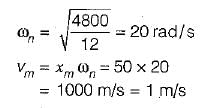
A 12 kg block is supported by the spring shown. If the block is moved horizontally rightward from its equilibrium position and released with its amplitude of 50 mm, what is the maximum velocity of block?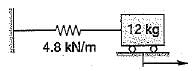
- a)0.25 m/s
- b)20 mm/s
- c)1 m/s
- d)1.2 m/s
Correct answer is option 'C'. Can you explain this answer?
A 12 kg block is supported by the spring shown. If the block is moved horizontally rightward from its equilibrium position and released with its amplitude of 50 mm, what is the maximum velocity of block?
a)
0.25 m/s
b)
20 mm/s
c)
1 m/s
d)
1.2 m/s
| | Dipika Kulkarni answered |
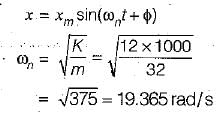
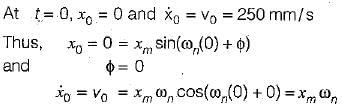
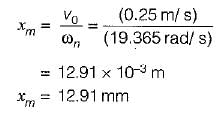
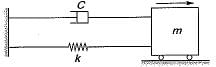
A 32 kg block is attached to a spring and can move without friction in a slot as shown.The block is in its equilibrium position when it is struck by a hammer, which imparts to the block an initial velocity of 250 mm/s.What is the amplitude of motion?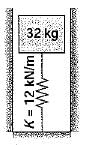
- a)11 mm
- b)13 mm
- c)11.7mm
- d)14.5mm
Correct answer is option 'B'. Can you explain this answer?
A 32 kg block is attached to a spring and can move without friction in a slot as shown.The block is in its equilibrium position when it is struck by a hammer, which imparts to the block an initial velocity of 250 mm/s.What is the amplitude of motion?
a)
11 mm
b)
13 mm
c)
11.7mm
d)
14.5mm
| | Aman Ghosh answered |
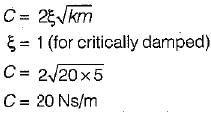
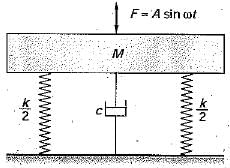


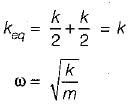
Which one of the following causes whirling of shafts?- a)non-homogeneity of shaft material
- b)misalignment of bearings .
- c)fluctuation of speed
- d)internal damping
Correct answer is option 'A'. Can you explain this answer?
Which one of the following causes whirling of shafts?
a)
non-homogeneity of shaft material
b)
misalignment of bearings .
c)
fluctuation of speed
d)
internal damping
| | Arnab Choudhury answered |
Cause of Whirling of Shafts: Non-Homogeneity of Shaft Material
Whirling of shafts refers to an undesirable phenomenon where the shaft starts to rotate in a circular or elliptical orbit instead of spinning about its axis. This can lead to various issues such as increased vibration, noise, and potential damage to the shaft and its associated components. Several factors can contribute to the whirling of shafts, and one of the main causes is the non-homogeneity of shaft material.
Non-Homogeneity of Shaft Material:
The term non-homogeneity refers to the variation in material properties within the shaft. In many cases, shafts are made of different materials or have different properties along their length. This can happen due to several reasons, such as manufacturing processes, material defects, or intentional design choices.
When a shaft has non-homogeneous material properties, it means that different sections of the shaft have different stiffness or mass distributions. This creates an imbalance within the shaft, leading to a centrifugal force acting on the rotating system. As a result, the shaft tends to move away from its initial position and starts to whirl.
Explanation:
When a shaft whirls, it experiences a dynamic unbalance due to the non-homogeneity of the material. This unbalance leads to the generation of centrifugal forces that act on the shaft, causing it to move in a circular or elliptical orbit. The whirling motion can be visualized as a combination of rotational and translational movements.
The non-homogeneity of shaft material affects the distribution of mass and stiffness along the shaft. As the shaft rotates, the centrifugal forces acting on the non-uniform sections cause varying displacements and deflections. These displacements create an imbalance in the system, resulting in whirling motion.
Implications:
Whirling of shafts can have significant implications for the performance and reliability of rotating machinery. It can lead to increased vibration levels, which can affect the overall system stability and cause excessive wear and tear on the shaft and its associated components. The whirling motion can also result in increased noise levels and reduced efficiency of the machinery.
To mitigate the whirling effect, engineers and designers need to carefully consider the material properties and the homogeneity of the shaft. By ensuring a more uniform distribution of material properties, such as stiffness and mass, the whirling phenomenon can be minimized or eliminated.
Conclusion:
The non-homogeneity of shaft material can cause the whirling of shafts. This phenomenon occurs when the shaft has varying material properties along its length, leading to an imbalance and the generation of centrifugal forces. Understanding and addressing the non-homogeneity of shaft material is crucial for ensuring the reliable and efficient operation of rotating machinery.
Whirling of shafts refers to an undesirable phenomenon where the shaft starts to rotate in a circular or elliptical orbit instead of spinning about its axis. This can lead to various issues such as increased vibration, noise, and potential damage to the shaft and its associated components. Several factors can contribute to the whirling of shafts, and one of the main causes is the non-homogeneity of shaft material.
Non-Homogeneity of Shaft Material:
The term non-homogeneity refers to the variation in material properties within the shaft. In many cases, shafts are made of different materials or have different properties along their length. This can happen due to several reasons, such as manufacturing processes, material defects, or intentional design choices.
When a shaft has non-homogeneous material properties, it means that different sections of the shaft have different stiffness or mass distributions. This creates an imbalance within the shaft, leading to a centrifugal force acting on the rotating system. As a result, the shaft tends to move away from its initial position and starts to whirl.
Explanation:
When a shaft whirls, it experiences a dynamic unbalance due to the non-homogeneity of the material. This unbalance leads to the generation of centrifugal forces that act on the shaft, causing it to move in a circular or elliptical orbit. The whirling motion can be visualized as a combination of rotational and translational movements.
The non-homogeneity of shaft material affects the distribution of mass and stiffness along the shaft. As the shaft rotates, the centrifugal forces acting on the non-uniform sections cause varying displacements and deflections. These displacements create an imbalance in the system, resulting in whirling motion.
Implications:
Whirling of shafts can have significant implications for the performance and reliability of rotating machinery. It can lead to increased vibration levels, which can affect the overall system stability and cause excessive wear and tear on the shaft and its associated components. The whirling motion can also result in increased noise levels and reduced efficiency of the machinery.
To mitigate the whirling effect, engineers and designers need to carefully consider the material properties and the homogeneity of the shaft. By ensuring a more uniform distribution of material properties, such as stiffness and mass, the whirling phenomenon can be minimized or eliminated.
Conclusion:
The non-homogeneity of shaft material can cause the whirling of shafts. This phenomenon occurs when the shaft has varying material properties along its length, leading to an imbalance and the generation of centrifugal forces. Understanding and addressing the non-homogeneity of shaft material is crucial for ensuring the reliable and efficient operation of rotating machinery.
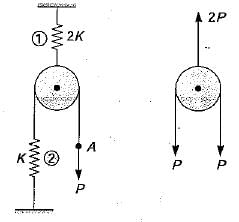
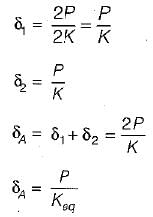
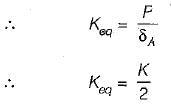
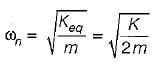
Block ‘A ’ of mass m is s upported by the spring arrangement as shown. If the mass of pulley is negligible and block is moved vertically downward from its equilibrium position and released, what is the frequency of motion?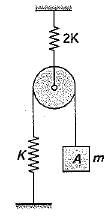
- a)

- b)

- c)

- d)

Correct answer is option 'C'. Can you explain this answer?
Block ‘A ’ of mass m is s upported by the spring arrangement as shown. If the mass of pulley is negligible and block is moved vertically downward from its equilibrium position and released, what is the frequency of motion?
a)
b)
c)
d)
| | Anirudh Banerjee answered |
and

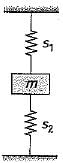
For given figure shows a spring mass system where the mass m is fixed in between two springs of stiffness s1 and s2. What is the equivalent spring stiffness
- a)s1 - s2
- b)s1 + s2
- c)

- d)

Correct answer is option 'B'. Can you explain this answer?
For given figure shows a spring mass system where the mass m is fixed in between two springs of stiffness s1 and s2. What is the equivalent spring stiffness
a)
s1 - s2
b)
s1 + s2
c)
d)
| | Saptarshi Khanna answered |
Since the springs are connected in parallel
seq = s1 + s2
seq = s1 + s2
The normal speed of rotation of a shaft is chosen to be- a)equal to natural frequency of the shaft
- b)twice the natural frequency of the shaft
- c)much above or below the natural frequency of the shaft
- d)a random multiple of natural frequency of the shaft
Correct answer is option 'C'. Can you explain this answer?
The normal speed of rotation of a shaft is chosen to be
a)
equal to natural frequency of the shaft
b)
twice the natural frequency of the shaft
c)
much above or below the natural frequency of the shaft
d)
a random multiple of natural frequency of the shaft
| | Mehul Yadav answered |
The correct answer is option 'C': much above or below the natural frequency of the shaft.
Explanation:
To understand why the normal speed of rotation of a shaft is chosen to be much above or below the natural frequency of the shaft, let's first understand what natural frequency means.
Natural frequency refers to the frequency at which a system vibrates when it is disturbed from its equilibrium position. In the case of a rotating shaft, the natural frequency is the frequency at which the shaft would naturally vibrate if it were to be displaced from its normal rotational position.
Now, let's consider the four given options:
a) Equal to the natural frequency of the shaft:
If the normal speed of rotation of the shaft is equal to its natural frequency, it can lead to resonance. Resonance occurs when the frequency of the excitation force matches the natural frequency of the system, resulting in large amplitude vibrations. This can cause excessive vibrations and potential failure of the shaft.
b) Twice the natural frequency of the shaft:
If the normal speed of rotation is chosen to be twice the natural frequency of the shaft, it can still lead to resonance at certain harmonics. Harmonics are multiples of the natural frequency. Therefore, this option does not guarantee avoidance of resonance.
c) Much above or below the natural frequency of the shaft:
Choosing the normal speed of rotation to be much above or below the natural frequency of the shaft helps in avoiding resonance. When the rotational speed is significantly different from the natural frequency, the chances of resonance are greatly reduced. This ensures that the vibrations of the shaft remain within acceptable limits and do not cause any damage.
d) A random multiple of the natural frequency of the shaft:
Choosing a random multiple of the natural frequency does not provide any specific advantage or guarantee the avoidance of resonance. It is important to have a controlled and predictable rotational speed to ensure the safe operation of the shaft.
In conclusion, option 'C' is the correct answer because choosing a normal speed of rotation that is much above or below the natural frequency of the shaft helps in avoiding resonance and maintaining the stability and integrity of the system.
Explanation:
To understand why the normal speed of rotation of a shaft is chosen to be much above or below the natural frequency of the shaft, let's first understand what natural frequency means.
Natural frequency refers to the frequency at which a system vibrates when it is disturbed from its equilibrium position. In the case of a rotating shaft, the natural frequency is the frequency at which the shaft would naturally vibrate if it were to be displaced from its normal rotational position.
Now, let's consider the four given options:
a) Equal to the natural frequency of the shaft:
If the normal speed of rotation of the shaft is equal to its natural frequency, it can lead to resonance. Resonance occurs when the frequency of the excitation force matches the natural frequency of the system, resulting in large amplitude vibrations. This can cause excessive vibrations and potential failure of the shaft.
b) Twice the natural frequency of the shaft:
If the normal speed of rotation is chosen to be twice the natural frequency of the shaft, it can still lead to resonance at certain harmonics. Harmonics are multiples of the natural frequency. Therefore, this option does not guarantee avoidance of resonance.
c) Much above or below the natural frequency of the shaft:
Choosing the normal speed of rotation to be much above or below the natural frequency of the shaft helps in avoiding resonance. When the rotational speed is significantly different from the natural frequency, the chances of resonance are greatly reduced. This ensures that the vibrations of the shaft remain within acceptable limits and do not cause any damage.
d) A random multiple of the natural frequency of the shaft:
Choosing a random multiple of the natural frequency does not provide any specific advantage or guarantee the avoidance of resonance. It is important to have a controlled and predictable rotational speed to ensure the safe operation of the shaft.
In conclusion, option 'C' is the correct answer because choosing a normal speed of rotation that is much above or below the natural frequency of the shaft helps in avoiding resonance and maintaining the stability and integrity of the system.
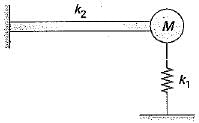
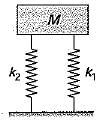
A cantilever beam of negligible weight is carrying a mass M at its free end, and is also resting on an elastic support of stiffness k1, as shown in the figure below.
If k2 represents the bending stiffness of the beam, the natural frequency (rad/s) of the system is
- a)

- b)

- c)

- d)

Correct answer is option 'C'. Can you explain this answer?
A cantilever beam of negligible weight is carrying a mass M at its free end, and is also resting on an elastic support of stiffness k1, as shown in the figure below.
If k2 represents the bending stiffness of the beam, the natural frequency (rad/s) of the system is
If k2 represents the bending stiffness of the beam, the natural frequency (rad/s) of the system is
a)
b)
c)
d)
 | Bibek Das answered |
Natural Frequency

where k = k1 + k2
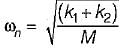
where k = k1 + k2


Chapter doubts & questions for Vibrations - Mechanical Engineering Optional Notes for UPSC 2026 is part of UPSC CSE exam preparation. The chapters have been prepared according to the UPSC CSE exam syllabus. The Chapter doubts & questions, notes, tests & MCQs are made for UPSC CSE 2026 Exam. Find important definitions, questions, notes, meanings, examples, exercises, MCQs and online tests here.
Chapter doubts & questions of Vibrations - Mechanical Engineering Optional Notes for UPSC in English & Hindi are available as part of UPSC CSE exam. Download more important topics, notes, lectures and mock test series for UPSC CSE Exam by signing up for free.
Mechanical Engineering Optional Notes for UPSC298 videos|461 docs|250 tests |
