


All Exams > Electrical Engineering (EE) > Analog and Digital Electronics > All Questions
All questions of Oscillators for Electrical Engineering (EE) Exam
Which of the following characteristics is NOT desirable for the ideal op-amp?- a)Infinity voltage gain
- b)zero slew rate
- c)zero off-set voltage
- d)Infinite Input impedance
Correct answer is option 'B'. Can you explain this answer?
Which of the following characteristics is NOT desirable for the ideal op-amp?
a)
Infinity voltage gain
b)
zero slew rate
c)
zero off-set voltage
d)
Infinite Input impedance
 | Hrishikesh Yadav answered |
Characteristics of an Ideal Op-Amp
An operational amplifier (op-amp) is a fundamental component in electronic circuits. The ideal op-amp is characterized by several key features that define its operation.
Desirable Characteristics
- Infinity Voltage Gain: An ideal op-amp should amplify any input signal without limitation, providing infinite open-loop gain.
- Zero Off-Set Voltage: The output should be zero when the input is zero, meaning there is no offset voltage. This ensures accuracy in amplification.
- Infinite Input Impedance: This characteristic implies that the op-amp does not draw any current from the input signal source, allowing for maximum signal fidelity.
Undesirable Characteristic
- Zero Slew Rate: This is the key characteristic that is NOT desirable for an ideal op-amp. The slew rate refers to the maximum rate at which the output can change in response to a sudden change in input. If the slew rate were zero, it would mean the output cannot respond to changes in input at all. This would severely limit the op-amp’s performance, especially in high-frequency applications where signals change rapidly.
Conclusion
In summary, while infinite voltage gain, zero off-set voltage, and infinite input impedance are essential for an ideal op-amp, a zero slew rate is not only undesirable but also impractical, as it would hinder the op-amp’s ability to operate effectively in real-world applications.
An operational amplifier (op-amp) is a fundamental component in electronic circuits. The ideal op-amp is characterized by several key features that define its operation.
Desirable Characteristics
- Infinity Voltage Gain: An ideal op-amp should amplify any input signal without limitation, providing infinite open-loop gain.
- Zero Off-Set Voltage: The output should be zero when the input is zero, meaning there is no offset voltage. This ensures accuracy in amplification.
- Infinite Input Impedance: This characteristic implies that the op-amp does not draw any current from the input signal source, allowing for maximum signal fidelity.
Undesirable Characteristic
- Zero Slew Rate: This is the key characteristic that is NOT desirable for an ideal op-amp. The slew rate refers to the maximum rate at which the output can change in response to a sudden change in input. If the slew rate were zero, it would mean the output cannot respond to changes in input at all. This would severely limit the op-amp’s performance, especially in high-frequency applications where signals change rapidly.
Conclusion
In summary, while infinite voltage gain, zero off-set voltage, and infinite input impedance are essential for an ideal op-amp, a zero slew rate is not only undesirable but also impractical, as it would hinder the op-amp’s ability to operate effectively in real-world applications.

The oscillator that gives good frequency stability is _____- a)Harley Oscillator
- b)Colpitts Oscillator
- c)Crystal oscillator
- d)RC phase shift oscillator
Correct answer is option 'C'. Can you explain this answer?
The oscillator that gives good frequency stability is _____
a)
Harley Oscillator
b)
Colpitts Oscillator
c)
Crystal oscillator
d)
RC phase shift oscillator
 | Cstoppers Instructors answered |
Crystal Oscillator:
A crystal oscillator is the most stable frequency oscillator.
Advantages:
- The crystal oscillator is possible to obtain a very high precise and stable frequency of oscillators
- It has very-low-frequency drift due to change in temperature and other parameters
- The Q is very high
- It has automatic amplitude control
Disadvantages:
- These are suitable for high-frequency application
- Crystals of low fundamental frequencies are not easily available
In a crystal oscillator, a crystal has thickness of t, If you reduce t by 1%, what happens to the frequency ‘f’?- a)f will increase by 2%
- b)f will decrease by 2%
- c)f will increase by 1%
- d)f will decrease by 1%
Correct answer is option 'C'. Can you explain this answer?
In a crystal oscillator, a crystal has thickness of t, If you reduce t by 1%, what happens to the frequency ‘f’?
a)
f will increase by 2%
b)
f will decrease by 2%
c)
f will increase by 1%
d)
f will decrease by 1%
 | Pioneer Academy answered |
In a crystal oscillator, the frequency(f) of the oscillator is inversely proportional to the thickness(t) of the crystal,
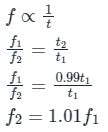
%change in the frequency is,
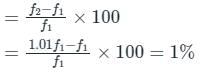
So, f will increase by 1%
For various types of oscillators, the correct statement is:- a)LC oscillators are more stable than crystal oscillators
- b)Crystal oscillators have highest Q
- c)Phase-shift oscillators have the widest range of frequency
- d)Wien bridge oscillator is used where a single frequency oscillator is required
Correct answer is option 'B'. Can you explain this answer?
For various types of oscillators, the correct statement is:
a)
LC oscillators are more stable than crystal oscillators
b)
Crystal oscillators have highest Q
c)
Phase-shift oscillators have the widest range of frequency
d)
Wien bridge oscillator is used where a single frequency oscillator is required
 | Vaibhav Mukherjee answered |
Introduction:
Crystal oscillators are widely used in various electronic devices and systems for generating stable and precise frequencies. They offer several advantages over other types of oscillators, making them the preferred choice in many applications.
Advantages of Crystal Oscillators:
1. High Quality Factor (Q): Crystal oscillators have the highest Q factor among all types of oscillators. The Q factor represents the sharpness of the resonance frequency and is a measure of the oscillator's stability and frequency accuracy. A higher Q factor indicates better frequency stability and lower phase noise.
2. Excellent Frequency Stability: Crystal oscillators provide excellent frequency stability over a wide temperature range. This stability is due to the precise and predictable mechanical and electrical properties of the crystal used in the oscillator. Crystal oscillators can maintain their frequency accuracy within a few parts per million (ppm) over a wide temperature range.
3. Low Phase Noise: Crystal oscillators have low phase noise, which is crucial in applications where low noise and high frequency accuracy are required. Phase noise represents the random fluctuations in the phase of the oscillator's output signal, and low phase noise is desirable for applications such as telecommunications, radar systems, and high-performance audio equipment.
4. Wide Frequency Range: Crystal oscillators can generate frequencies ranging from a few kilohertz to several hundred megahertz. They can be designed to operate at specific frequencies by selecting the appropriate crystal and oscillator circuit configuration.
5. Low Power Consumption: Crystal oscillators typically consume less power compared to other types of oscillators. This makes them suitable for battery-powered devices and other low-power applications.
6. Compact and Reliable: Crystal oscillators are compact in size and have a long operational lifespan. They are highly reliable and can operate continuously without significant degradation in performance.
Conclusion:
Crystal oscillators are widely used in various applications that require stable and precise frequencies. Their high Q factor, excellent frequency stability, low phase noise, wide frequency range, low power consumption, and reliability make them the preferred choice over other types of oscillators.
Crystal oscillators are widely used in various electronic devices and systems for generating stable and precise frequencies. They offer several advantages over other types of oscillators, making them the preferred choice in many applications.
Advantages of Crystal Oscillators:
1. High Quality Factor (Q): Crystal oscillators have the highest Q factor among all types of oscillators. The Q factor represents the sharpness of the resonance frequency and is a measure of the oscillator's stability and frequency accuracy. A higher Q factor indicates better frequency stability and lower phase noise.
2. Excellent Frequency Stability: Crystal oscillators provide excellent frequency stability over a wide temperature range. This stability is due to the precise and predictable mechanical and electrical properties of the crystal used in the oscillator. Crystal oscillators can maintain their frequency accuracy within a few parts per million (ppm) over a wide temperature range.
3. Low Phase Noise: Crystal oscillators have low phase noise, which is crucial in applications where low noise and high frequency accuracy are required. Phase noise represents the random fluctuations in the phase of the oscillator's output signal, and low phase noise is desirable for applications such as telecommunications, radar systems, and high-performance audio equipment.
4. Wide Frequency Range: Crystal oscillators can generate frequencies ranging from a few kilohertz to several hundred megahertz. They can be designed to operate at specific frequencies by selecting the appropriate crystal and oscillator circuit configuration.
5. Low Power Consumption: Crystal oscillators typically consume less power compared to other types of oscillators. This makes them suitable for battery-powered devices and other low-power applications.
6. Compact and Reliable: Crystal oscillators are compact in size and have a long operational lifespan. They are highly reliable and can operate continuously without significant degradation in performance.
Conclusion:
Crystal oscillators are widely used in various applications that require stable and precise frequencies. Their high Q factor, excellent frequency stability, low phase noise, wide frequency range, low power consumption, and reliability make them the preferred choice over other types of oscillators.
The gain of an operational amplifier will be maximum at-- a)1 Hz
- b)50 Hz
- c)100 Hz
- d)DC
Correct answer is option 'A'. Can you explain this answer?
The gain of an operational amplifier will be maximum at-
a)
1 Hz
b)
50 Hz
c)
100 Hz
d)
DC
 | Sanaya Basu answered |
Introduction:
An operational amplifier (op-amp) is a versatile electronic device that amplifies the difference between two input voltages. The gain of an op-amp is the ratio of the output voltage to the input voltage. The gain of an op-amp can vary depending on the frequency of the input signal. In this question, we are asked to determine at which frequency the gain of an op-amp will be maximum.
Explanation:
To understand why the gain of an op-amp is maximum at 1 Hz, let's consider a few key factors:
1. Open-loop gain:
The open-loop gain of an op-amp is the gain without any external feedback. In an ideal op-amp, the open-loop gain is infinite. However, in practical op-amps, the open-loop gain is very high but finite. The open-loop gain typically decreases with increasing frequency.
2. Unity gain frequency:
The unity gain frequency, also known as the gain-bandwidth product (GBP), is the frequency at which the open-loop gain of an op-amp drops to 1. At frequencies below the unity gain frequency, the open-loop gain is high. Above this frequency, the gain decreases.
3. Frequency response:
The frequency response of an op-amp is a graph that shows the variation of gain with frequency. It is typically represented by a Bode plot, which consists of a magnitude plot (gain) and a phase plot. The frequency response of an op-amp depends on its internal compensation and external components.
4. Gain in the frequency domain:
In the frequency domain, the gain of an op-amp can be expressed as a function of frequency. At low frequencies, the gain is high, but as the frequency increases, the gain decreases. This behavior is due to the internal compensation of the op-amp.
Why the gain is maximum at 1 Hz:
Based on the above factors, we can conclude that the gain of an op-amp is maximum at frequencies below the unity gain frequency. The unity gain frequency is the frequency at which the gain drops to 1. Since the unity gain frequency is typically higher than 1 Hz, the gain of an op-amp will be maximum at frequencies below 1 Hz.
Conclusion:
In conclusion, the gain of an operational amplifier is maximum at frequencies below the unity gain frequency. In this question, the correct answer is option 'A' because 1 Hz is the lowest frequency among the given options. At frequencies above the unity gain frequency, the gain of an op-amp decreases. It is important to consider the frequency response and open-loop gain characteristics of an op-amp when designing circuits to ensure optimal performance.
An operational amplifier (op-amp) is a versatile electronic device that amplifies the difference between two input voltages. The gain of an op-amp is the ratio of the output voltage to the input voltage. The gain of an op-amp can vary depending on the frequency of the input signal. In this question, we are asked to determine at which frequency the gain of an op-amp will be maximum.
Explanation:
To understand why the gain of an op-amp is maximum at 1 Hz, let's consider a few key factors:
1. Open-loop gain:
The open-loop gain of an op-amp is the gain without any external feedback. In an ideal op-amp, the open-loop gain is infinite. However, in practical op-amps, the open-loop gain is very high but finite. The open-loop gain typically decreases with increasing frequency.
2. Unity gain frequency:
The unity gain frequency, also known as the gain-bandwidth product (GBP), is the frequency at which the open-loop gain of an op-amp drops to 1. At frequencies below the unity gain frequency, the open-loop gain is high. Above this frequency, the gain decreases.
3. Frequency response:
The frequency response of an op-amp is a graph that shows the variation of gain with frequency. It is typically represented by a Bode plot, which consists of a magnitude plot (gain) and a phase plot. The frequency response of an op-amp depends on its internal compensation and external components.
4. Gain in the frequency domain:
In the frequency domain, the gain of an op-amp can be expressed as a function of frequency. At low frequencies, the gain is high, but as the frequency increases, the gain decreases. This behavior is due to the internal compensation of the op-amp.
Why the gain is maximum at 1 Hz:
Based on the above factors, we can conclude that the gain of an op-amp is maximum at frequencies below the unity gain frequency. The unity gain frequency is the frequency at which the gain drops to 1. Since the unity gain frequency is typically higher than 1 Hz, the gain of an op-amp will be maximum at frequencies below 1 Hz.
Conclusion:
In conclusion, the gain of an operational amplifier is maximum at frequencies below the unity gain frequency. In this question, the correct answer is option 'A' because 1 Hz is the lowest frequency among the given options. At frequencies above the unity gain frequency, the gain of an op-amp decreases. It is important to consider the frequency response and open-loop gain characteristics of an op-amp when designing circuits to ensure optimal performance.
Primary trigger for oscillation is obtained from ___________- a)DC voltage
- b)Noise voltage
- c)External trigger voltage
- d)No trigger is required
Correct answer is option 'B'. Can you explain this answer?
Primary trigger for oscillation is obtained from ___________
a)
DC voltage
b)
Noise voltage
c)
External trigger voltage
d)
No trigger is required
 | Pooja Patel answered |
The primary trigger for oscillation is obtained from noise voltage.
Which of the following are not the characteristics of a crystal oscillator?- a)Highly stable with time
- b)Highly stable with temperature
- c)Highly selective
- d)Frequency depends external resistors and capacitors
Correct answer is option 'D'. Can you explain this answer?
Which of the following are not the characteristics of a crystal oscillator?
a)
Highly stable with time
b)
Highly stable with temperature
c)
Highly selective
d)
Frequency depends external resistors and capacitors
| | Pooja Patel answered |
The crystal oscillator is highly stable with time, highly stable with temperature, highly selective. The frequency of crystal is a constant regardless of output circuits. The frequency is dependent on the crystal shape which does not differ much at all.
The value of C required for sinusoidal oscillation of frequency = 2 kHz in the given circuit is: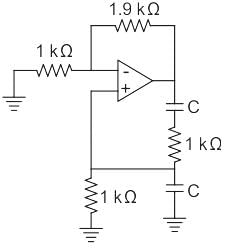
- a)

- b)

- c)

- d)None of these
Correct answer is option 'D'. Can you explain this answer?
The value of C required for sinusoidal oscillation of frequency = 2 kHz in the given circuit is:
a)
b)
c)
d)
None of these
| | Cstoppers Instructors answered |
Concept:
For sinusoidal oscillations to begin, the voltage gain of the Wien Bridge circuit must be equal to or greater than 3, i.e.
Av ≥ 3.
Av ≥ 3.
For a non-inverting op-amp configuration, this value is set by the feedback resistor network and is given as:
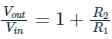 = 3 or more
Analysis:
For the given circuit, the voltage gain (non-inverting) will be:
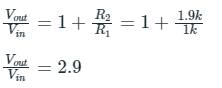
Since the voltage gain is less than 3, sinusoidal oscillation cannot start.
Electronic ohmmeter uses OP-AMP as a/an:- a)Summer
- b)Multiplier
- c)Integrator
- d)Buffer amplifier
Correct answer is option 'D'. Can you explain this answer?
Electronic ohmmeter uses OP-AMP as a/an:
a)
Summer
b)
Multiplier
c)
Integrator
d)
Buffer amplifier
| | Pooja Patel answered |
Concept of Buffer:
- A Buffer is an op-amp circuit whose output voltage straight away follows the input voltage. i.e. output voltage equivalent to the input voltage.
- The Op-amp circuit does not provide any amplification thus, its voltage gain is unity.
- The voltage follower is used as a buffer amplifier, isolation amplifier, unity gain amplifier as the output follows the input.
- The voltage follower provides no alternation or no amplification but only buffering.
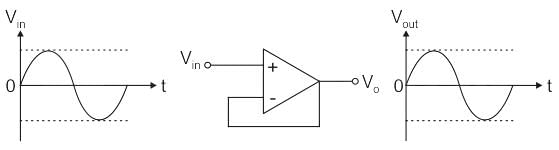
Characteristics:
- High input impedance and Low output impedance hence low loading effect and used in Electronics measuring instruments
- Current Gain & power gain high
- Voltage gain unity
For an RC phase shift oscillator, the following statements are cited:a) Amplifier gain is negativeb) Phase shift introduced by the feedback circuit is either 0 or 360°c) Amplifier gain is positived) Phase shift introduced by the feedback circuit is 180°Which of the following options is correct?- a)Only a) is correct and rest are incorrect
- b)Only c) is correct and rest are incorrect
- c)Both a) and d) are correct
- d)Both b) and c) are correct
Correct answer is option 'C'. Can you explain this answer?
For an RC phase shift oscillator, the following statements are cited:
a) Amplifier gain is negative
b) Phase shift introduced by the feedback circuit is either 0 or 360°
c) Amplifier gain is positive
d) Phase shift introduced by the feedback circuit is 180°
Which of the following options is correct?
a)
Only a) is correct and rest are incorrect
b)
Only c) is correct and rest are incorrect
c)
Both a) and d) are correct
d)
Both b) and c) are correct
 | Harshad Singh answered |
A) The statement is incorrect. In an RC phase shift oscillator, the amplifier gain is positive. This positive gain compensates for the attenuation introduced by the RC network in the feedback path, allowing the circuit to sustain oscillations.
b) The statement is correct. In an RC phase shift oscillator, the feedback circuit typically consists of a series of RC networks. Each RC network introduces a phase shift of approximately 60 degrees. Since there are 3 RC networks in the feedback path, the total phase shift introduced is 180 degrees. In addition, the amplifier itself introduces another 180 degrees of phase shift, resulting in a total phase shift of 360 degrees. This ensures positive feedback and oscillation.
b) The statement is correct. In an RC phase shift oscillator, the feedback circuit typically consists of a series of RC networks. Each RC network introduces a phase shift of approximately 60 degrees. Since there are 3 RC networks in the feedback path, the total phase shift introduced is 180 degrees. In addition, the amplifier itself introduces another 180 degrees of phase shift, resulting in a total phase shift of 360 degrees. This ensures positive feedback and oscillation.
If the oscillation amplitude decreases continuously it is called ___________- a)Overdamped
- b)Underdamped
- c)Sustained
- d)No specific name
Correct answer is option 'B'. Can you explain this answer?
If the oscillation amplitude decreases continuously it is called ___________
a)
Overdamped
b)
Underdamped
c)
Sustained
d)
No specific name
| | Pooja Patel answered |
If the oscillation amplitude decreases continuously it is called underdamped oscillation.
Clapp oscillator is an ___________- a)LC oscillator
- b)RC oscillator
- c)RL oscillator
- d)Crystal oscillator
Correct answer is option 'A'. Can you explain this answer?
Clapp oscillator is an ___________
a)
LC oscillator
b)
RC oscillator
c)
RL oscillator
d)
Crystal oscillator
| | Pooja Patel answered |
Clapp oscillator is a colpitts oscillator which has an extra capacitor series with an inductor. Hence it is an LC oscillator, with 3 capacitors and one single inductor to set its frequency, and the clap circuit is often used as a variable frequency oscillator, by making one capacitor variable.
A Hartley oscillator is commonly used in ____. - a)Radio Receivers
- b)Radio Transmitters
- c)TV Receivers
- d)TV Transmitters
Correct answer is option 'A'. Can you explain this answer?
A Hartley oscillator is commonly used in ____.
a)
Radio Receivers
b)
Radio Transmitters
c)
TV Receivers
d)
TV Transmitters
| | Pooja Patel answered |
Hartley Oscillator:
In a Hartley oscillator the positive output freed-back is inductively coupled by tank circuit consisting inductor coil with center tap.
The tank circuit of Hartley Oscillator is shown:
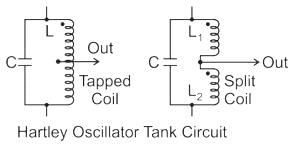
Applications
- The Hartley oscillator is to produce a sine wave with the desired frequency
- Hartley oscillators are mainly used as radio receivers
- The Hartley oscillator is Suitable for oscillations in RF (Radio-Frequency) range, up to 30MHZ
R-C phase shift oscillator and Wein bridge oscillator are the commonly used circuits for generating ________ waveform of a required frequency.- a)sine
- b)negative
- c)cosine
- d)both sine and cosine
Correct answer is option 'A'. Can you explain this answer?
R-C phase shift oscillator and Wein bridge oscillator are the commonly used circuits for generating ________ waveform of a required frequency.
a)
sine
b)
negative
c)
cosine
d)
both sine and cosine
| | Pooja Patel answered |
The R-C phase shift oscillator and Wein bridge oscillator are the commonly used circuits for generating a sinusoidal waveform of required frequency.
RC Phase shift oscillator:
The circuit diagram of the RC phase shift oscillator is shown below:
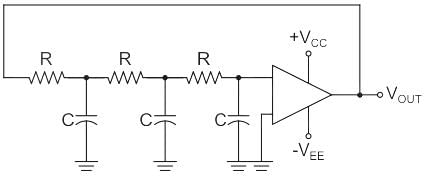
- The phase shift oscillator is a linear electronic circuit that produces a sine wave output.
- It consists of an inverting amplifier element such as a transistor or op-amp with its output feedback to its input through a phase shift network consisting of resistors and capacitors in a ladder network.
- The feedback network shifts the phase of the amplifier output by 1800 at the oscillation frequency to give positive feedback.
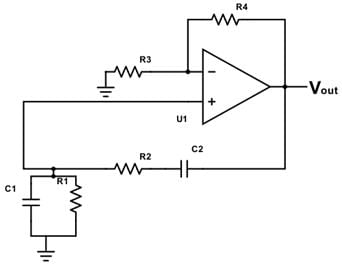
Wein bridge oscillator:
The circuit diagram of the Wein bridge oscillator is shown below:
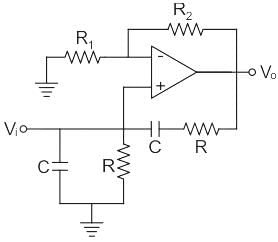
- The Wein bridge oscillator uses two RC networks connected together to produce a sinusoidal oscillator.
- The Wein bridge oscillator uses a feedback circuit consisting of a series RC circuit connected with a parallel RC of the same component values producing a phase delay or phase advance depending upon the circuit frequency
- At the resonant frequency, the phase shift is 00.
In an oscillator if phase of feedback is same as that of oscillation waveform then feedback is called ___________- a)Positive feedback
- b)Negative feedback
- c)Cannot be predicted
- d)Either positive or negative depending upon frequency
Correct answer is option 'A'. Can you explain this answer?
In an oscillator if phase of feedback is same as that of oscillation waveform then feedback is called ___________
a)
Positive feedback
b)
Negative feedback
c)
Cannot be predicted
d)
Either positive or negative depending upon frequency
 | Alok Verma answered |
Understanding Feedback in Oscillators
In oscillators, feedback plays a crucial role in determining the stability and behavior of the system. The type of feedback can significantly influence whether the oscillator sustains oscillations or not.
Positive Feedback Explained
- Positive feedback occurs when the phase of the feedback signal aligns with the phase of the oscillation waveform.
- This alignment reinforces the oscillations, causing them to grow in amplitude.
- In simple terms, as the output increases, the feedback also increases, which leads to a continuous cycle of amplification.
Role of Positive Feedback in Oscillators
- Essential for starting and maintaining oscillations in systems like sine wave oscillators and relaxation oscillators.
- It ensures that the output signal is consistently reinforced, leading to sustained oscillations.
- If the feedback is strong enough to overcome any losses in the system, the oscillator will stabilize at a particular frequency.
Comparison with Negative Feedback
- Negative feedback, on the other hand, has the opposite effect. It occurs when the feedback signal is out of phase with the oscillation waveform.
- This type of feedback tends to reduce the amplitude of oscillations, which can stabilize the system but prevent sustained oscillation.
Conclusion
In summary, when the phase of feedback matches that of the oscillation waveform, the feedback is classified as positive. This positive feedback is essential for the onset and maintenance of oscillations in many electronic applications. Understanding the distinction between positive and negative feedback is fundamental for designing effective oscillators in electrical engineering.
In oscillators, feedback plays a crucial role in determining the stability and behavior of the system. The type of feedback can significantly influence whether the oscillator sustains oscillations or not.
Positive Feedback Explained
- Positive feedback occurs when the phase of the feedback signal aligns with the phase of the oscillation waveform.
- This alignment reinforces the oscillations, causing them to grow in amplitude.
- In simple terms, as the output increases, the feedback also increases, which leads to a continuous cycle of amplification.
Role of Positive Feedback in Oscillators
- Essential for starting and maintaining oscillations in systems like sine wave oscillators and relaxation oscillators.
- It ensures that the output signal is consistently reinforced, leading to sustained oscillations.
- If the feedback is strong enough to overcome any losses in the system, the oscillator will stabilize at a particular frequency.
Comparison with Negative Feedback
- Negative feedback, on the other hand, has the opposite effect. It occurs when the feedback signal is out of phase with the oscillation waveform.
- This type of feedback tends to reduce the amplitude of oscillations, which can stabilize the system but prevent sustained oscillation.
Conclusion
In summary, when the phase of feedback matches that of the oscillation waveform, the feedback is classified as positive. This positive feedback is essential for the onset and maintenance of oscillations in many electronic applications. Understanding the distinction between positive and negative feedback is fundamental for designing effective oscillators in electrical engineering.
Negative resistance are incorporated in oscillator for ___________- a)Sustained oscillation
- b)Damped oscillation
- c)Biasing the oscillator
- d)Increasing amplitude of oscillation
Correct answer is option 'A'. Can you explain this answer?
Negative resistance are incorporated in oscillator for ___________
a)
Sustained oscillation
b)
Damped oscillation
c)
Biasing the oscillator
d)
Increasing amplitude of oscillation
| | Pooja Patel answered |
Negative resistance are incorporated in oscillator for sustained oscillation. Negative resistance will cancel the damping by positive (normal) resistance.

RFC choke is placed in Colpitts oscillator instead of resistor is to provide _________- a)High impedance to DC
- b)High resistance to DC
- c)Low resistance to DC
- d)Less bulkiness
Correct answer is option 'C'. Can you explain this answer?
RFC choke is placed in Colpitts oscillator instead of resistor is to provide _________
a)
High impedance to DC
b)
High resistance to DC
c)
Low resistance to DC
d)
Less bulkiness
| | Pooja Patel answered |
RFC choke present in Colpitts oscillator is to provide high reactance to AC oscillation and low reactance to DC supply to improve performance. If resistor is used there will be some power loss in DC biasing which is unnecessary.
Among the following, which is a fixed frequency oscillator?- a)Crystal oscillator
- b)Phase-shift oscillator
- c)Hartley oscillator
- d)Colpitt's oscillator
Correct answer is option 'A'. Can you explain this answer?
Among the following, which is a fixed frequency oscillator?
a)
Crystal oscillator
b)
Phase-shift oscillator
c)
Hartley oscillator
d)
Colpitt's oscillator
| | Pooja Patel answered |
Crystal Oscillator:
- Crystal oscillators are fixed frequency oscillators with a high Q-factor.
- It operates on the principle of the inverse piezoelectric effect in which alternating voltage applied across the crystal surfaces causes it to vibrate at its natural frequency.
- It is these vibrations that eventually get converted into oscillations.
- These oscillators are made of Quartz crystal Rochelle salt and Tourmaline.
- Quartz is inexpensive, naturally available, and mechanically strong when compared to others.
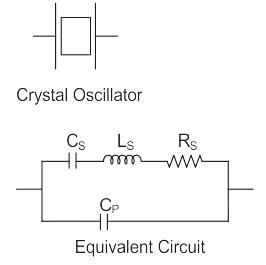
In a crystal oscillator, the crystal is suitably cut and mounted between two metallic plates as shown in the figure.
Which of these is a disadvantage of the Wien Bridge oscillator?- a)It cannot fabricate a pure tune
- b)Distortion observed in output is high
- c)It cannot be used for high resistance values
- d)There is no automatic gain control
Correct answer is option 'C'. Can you explain this answer?
Which of these is a disadvantage of the Wien Bridge oscillator?
a)
It cannot fabricate a pure tune
b)
Distortion observed in output is high
c)
It cannot be used for high resistance values
d)
There is no automatic gain control
| | Raj Desai answered |
Disadvantage of the Wien Bridge Oscillator: Cannot be used for high resistance values
The Wien Bridge Oscillator is a type of oscillator circuit that is used to generate continuous sinusoidal waveforms at a specific frequency. It is commonly used in audio applications and frequency generation circuits. Despite its advantages, the Wien Bridge Oscillator also has some disadvantages. One of these disadvantages is that it cannot be used for high resistance values.
Explanation:
1. Overview of the Wien Bridge Oscillator:
The Wien Bridge Oscillator consists of a feedback network and an amplifier. The feedback network includes a resistor (R) and a capacitor (C) connected in series, forming a high-pass filter. The amplifier amplifies the output signal from the feedback network and feeds it back to the input. The frequency of oscillation is determined by the values of R and C.
2. Theoretical limitations of the Wien Bridge Oscillator:
The Wien Bridge Oscillator is designed to operate within certain range of resistance and capacitance values. If the resistance values used in the circuit are too high, it can lead to instability and distortion in the output waveform. This is because the feedback network relies on the relationship between resistance and capacitance to maintain oscillation.
3. High resistance values and instability:
When high resistance values are used in the Wien Bridge Oscillator, it can result in instability and distortion in the output waveform. This is due to the fact that high resistance values can introduce additional phase shifts and attenuation in the feedback network. These phase shifts and attenuation can disrupt the feedback loop and prevent stable oscillation.
4. Alternative oscillator designs for high resistance values:
If high resistance values are required in an oscillator circuit, alternative designs such as the Phase Shift Oscillator or the Colpitts Oscillator can be used. These oscillator circuits are more suitable for high resistance values and can provide stable and distortion-free oscillations.
In conclusion, the Wien Bridge Oscillator has the disadvantage of not being able to be used for high resistance values. This is due to the instability and distortion that can occur in the output waveform when high resistance values are used. Alternative oscillator designs should be considered when high resistance values are required in a circuit.
The Wien Bridge Oscillator is a type of oscillator circuit that is used to generate continuous sinusoidal waveforms at a specific frequency. It is commonly used in audio applications and frequency generation circuits. Despite its advantages, the Wien Bridge Oscillator also has some disadvantages. One of these disadvantages is that it cannot be used for high resistance values.
Explanation:
1. Overview of the Wien Bridge Oscillator:
The Wien Bridge Oscillator consists of a feedback network and an amplifier. The feedback network includes a resistor (R) and a capacitor (C) connected in series, forming a high-pass filter. The amplifier amplifies the output signal from the feedback network and feeds it back to the input. The frequency of oscillation is determined by the values of R and C.
2. Theoretical limitations of the Wien Bridge Oscillator:
The Wien Bridge Oscillator is designed to operate within certain range of resistance and capacitance values. If the resistance values used in the circuit are too high, it can lead to instability and distortion in the output waveform. This is because the feedback network relies on the relationship between resistance and capacitance to maintain oscillation.
3. High resistance values and instability:
When high resistance values are used in the Wien Bridge Oscillator, it can result in instability and distortion in the output waveform. This is due to the fact that high resistance values can introduce additional phase shifts and attenuation in the feedback network. These phase shifts and attenuation can disrupt the feedback loop and prevent stable oscillation.
4. Alternative oscillator designs for high resistance values:
If high resistance values are required in an oscillator circuit, alternative designs such as the Phase Shift Oscillator or the Colpitts Oscillator can be used. These oscillator circuits are more suitable for high resistance values and can provide stable and distortion-free oscillations.
In conclusion, the Wien Bridge Oscillator has the disadvantage of not being able to be used for high resistance values. This is due to the instability and distortion that can occur in the output waveform when high resistance values are used. Alternative oscillator designs should be considered when high resistance values are required in a circuit.
The output of a stable oscillator have ___________- a)Constant amplitude
- b)Varying amplitude
- c)Constant amplitude at high frequencies only
- d)Constant amplitude at low frequencies only
Correct answer is option 'A'. Can you explain this answer?
The output of a stable oscillator have ___________
a)
Constant amplitude
b)
Varying amplitude
c)
Constant amplitude at high frequencies only
d)
Constant amplitude at low frequencies only
| | Debanshi Iyer answered |
Stable oscillators are electronic circuits that generate continuous and periodic waveforms, such as sine waves or square waves, with a constant frequency. The output of a stable oscillator has a constant amplitude, which means that the peak or maximum value of the waveform remains the same over time. This is represented by option A, "Constant amplitude".
There are several reasons why the output of a stable oscillator has a constant amplitude:
1. Feedback Mechanism:
- Stable oscillators utilize a feedback mechanism to maintain oscillations. This feedback mechanism ensures that the output signal is continuously fed back to the input, which helps in sustaining the oscillations.
- The feedback mechanism is designed to provide the necessary gain and phase shift to maintain the desired frequency and amplitude of the oscillations. It ensures that the energy required for oscillations is continuously supplied to the circuit.
2. Active Devices:
- Stable oscillators typically use active devices, such as transistors or operational amplifiers, to amplify and shape the waveform.
- These active devices are designed to operate in their linear region, where they can provide consistent amplification without distortion. This allows the oscillator to generate a constant amplitude output.
3. Resonant Circuit:
- Stable oscillators often include a resonant circuit, which consists of capacitors and inductors, to determine the frequency of oscillation.
- The resonant circuit is designed to have a specific resonance frequency, at which the circuit exhibits maximum impedance. This ensures that the oscillator operates at a specific frequency with a constant amplitude output.
4. Control Mechanisms:
- Stable oscillators may include control mechanisms, such as voltage-controlled oscillators (VCOs) or temperature-compensated crystal oscillators (TCXOs), to maintain the desired frequency and amplitude.
- These control mechanisms continuously monitor the output signal and adjust the circuit parameters, such as the bias voltage or the resonant frequency, to compensate for any variations and ensure a constant output amplitude.
In conclusion, the output of a stable oscillator has a constant amplitude because of the feedback mechanism, the use of active devices, the presence of a resonant circuit, and the inclusion of control mechanisms. These factors work together to maintain the desired frequency and amplitude of the oscillations, resulting in a stable and consistent output waveform.
There are several reasons why the output of a stable oscillator has a constant amplitude:
1. Feedback Mechanism:
- Stable oscillators utilize a feedback mechanism to maintain oscillations. This feedback mechanism ensures that the output signal is continuously fed back to the input, which helps in sustaining the oscillations.
- The feedback mechanism is designed to provide the necessary gain and phase shift to maintain the desired frequency and amplitude of the oscillations. It ensures that the energy required for oscillations is continuously supplied to the circuit.
2. Active Devices:
- Stable oscillators typically use active devices, such as transistors or operational amplifiers, to amplify and shape the waveform.
- These active devices are designed to operate in their linear region, where they can provide consistent amplification without distortion. This allows the oscillator to generate a constant amplitude output.
3. Resonant Circuit:
- Stable oscillators often include a resonant circuit, which consists of capacitors and inductors, to determine the frequency of oscillation.
- The resonant circuit is designed to have a specific resonance frequency, at which the circuit exhibits maximum impedance. This ensures that the oscillator operates at a specific frequency with a constant amplitude output.
4. Control Mechanisms:
- Stable oscillators may include control mechanisms, such as voltage-controlled oscillators (VCOs) or temperature-compensated crystal oscillators (TCXOs), to maintain the desired frequency and amplitude.
- These control mechanisms continuously monitor the output signal and adjust the circuit parameters, such as the bias voltage or the resonant frequency, to compensate for any variations and ensure a constant output amplitude.
In conclusion, the output of a stable oscillator has a constant amplitude because of the feedback mechanism, the use of active devices, the presence of a resonant circuit, and the inclusion of control mechanisms. These factors work together to maintain the desired frequency and amplitude of the oscillations, resulting in a stable and consistent output waveform.
Which of the following applications about the oscillators is FALSE?- a)It is used in alarm and buzzes.
- b)It is used to generate clock pulses for micro-processors and micro-controllers
- c)It is also used as switch debouncing.
- d)It is used in metal detectors, sun guns and ultrasonic
Correct answer is option 'C'. Can you explain this answer?
Which of the following applications about the oscillators is FALSE?
a)
It is used in alarm and buzzes.
b)
It is used to generate clock pulses for micro-processors and micro-controllers
c)
It is also used as switch debouncing.
d)
It is used in metal detectors, sun guns and ultrasonic
| | Pooja Patel answered |
Concept:
Oscillators:
1. An oscillator is a circuit that produces a continuous, repeated, alternating waveform without any input.
2. An oscillator is an amplifier with +ive feedback.
3. The source of oscillation in an oscillator is the DC switching transient noise.
4. switch debouncing → Switch debouncing in an electronic design ensures that the device that is sampling the switching waveform does not misinterpret a single button press as many.
5. an oscillator is not used as a switch debouncing. (option 3 is incorrect statement)
Which of these is incorrect for a Wien Bridge oscillator?- a)Low distortion
- b)Good stability at the resonant frequency
- c)Difficult to tune
- d)Based on frequency selective form of a Wheatstone bridge
Correct answer is option 'C'. Can you explain this answer?
Which of these is incorrect for a Wien Bridge oscillator?
a)
Low distortion
b)
Good stability at the resonant frequency
c)
Difficult to tune
d)
Based on frequency selective form of a Wheatstone bridge
| | Raj Desai answered |
Incorrect statement: c) Difficult to tune
Explanation:
A Wien Bridge oscillator is a type of oscillator circuit that is widely used in audio frequency applications. It is known for its simplicity, low distortion, and good stability at the resonant frequency. However, it is not difficult to tune.
Key points:
1. Low distortion: The Wien Bridge oscillator is designed to produce a sinusoidal waveform with low distortion. This is achieved by using a feedback network that provides high gain at the resonant frequency and attenuates the harmonics.
2. Good stability at the resonant frequency: The Wien Bridge oscillator is inherently stable at the resonant frequency. It uses a frequency selective form of a Wheatstone bridge circuit, which provides a balanced condition at the resonance. This ensures that the oscillations are sustained without any significant frequency drift.
3. Easy tuning: Unlike some other oscillator circuits, the Wien Bridge oscillator is relatively easy to tune. The frequency of oscillation can be adjusted by changing the values of the resistors and capacitors in the circuit. By carefully selecting these components, the desired frequency can be obtained.
4. Frequency selective form of a Wheatstone bridge: The Wien Bridge oscillator is based on a frequency selective form of a Wheatstone bridge circuit. The bridge consists of two resistors and two capacitors arranged in a specific configuration. This configuration provides a feedback path that allows the circuit to oscillate at the resonant frequency determined by the values of the components.
Conclusion:
In summary, the incorrect statement for a Wien Bridge oscillator is that it is difficult to tune. On the contrary, it is relatively easy to tune by adjusting the values of the resistors and capacitors in the circuit. The oscillator is designed to provide low distortion and good stability at the resonant frequency, making it suitable for audio frequency applications.
Explanation:
A Wien Bridge oscillator is a type of oscillator circuit that is widely used in audio frequency applications. It is known for its simplicity, low distortion, and good stability at the resonant frequency. However, it is not difficult to tune.
Key points:
1. Low distortion: The Wien Bridge oscillator is designed to produce a sinusoidal waveform with low distortion. This is achieved by using a feedback network that provides high gain at the resonant frequency and attenuates the harmonics.
2. Good stability at the resonant frequency: The Wien Bridge oscillator is inherently stable at the resonant frequency. It uses a frequency selective form of a Wheatstone bridge circuit, which provides a balanced condition at the resonance. This ensures that the oscillations are sustained without any significant frequency drift.
3. Easy tuning: Unlike some other oscillator circuits, the Wien Bridge oscillator is relatively easy to tune. The frequency of oscillation can be adjusted by changing the values of the resistors and capacitors in the circuit. By carefully selecting these components, the desired frequency can be obtained.
4. Frequency selective form of a Wheatstone bridge: The Wien Bridge oscillator is based on a frequency selective form of a Wheatstone bridge circuit. The bridge consists of two resistors and two capacitors arranged in a specific configuration. This configuration provides a feedback path that allows the circuit to oscillate at the resonant frequency determined by the values of the components.
Conclusion:
In summary, the incorrect statement for a Wien Bridge oscillator is that it is difficult to tune. On the contrary, it is relatively easy to tune by adjusting the values of the resistors and capacitors in the circuit. The oscillator is designed to provide low distortion and good stability at the resonant frequency, making it suitable for audio frequency applications.
A crystal oscillator generates electrical oscillation of constant frequency based on the _________ effect.- a)ultrasonic
- b)magnetic
- c)piezoelectric
- d)photoelectric
Correct answer is option 'C'. Can you explain this answer?
A crystal oscillator generates electrical oscillation of constant frequency based on the _________ effect.
a)
ultrasonic
b)
magnetic
c)
piezoelectric
d)
photoelectric
| | Pooja Patel answered |
Crystal Oscillator:
- It operates on the principle of the inverse piezoelectric effect in which alternating voltage applied across the crystal surfaces causes it to vibrate at its natural frequency.
- It is these vibrations that eventually get converted into oscillations.
- These oscillators are made of Quartz crystal Rochelle salt and Tourmaline.
- Quartz is inexpensive, naturally available, and mechanically strong when compared to others.
- In crystal oscillator, the crystal is suitably cut and mounted between two metallic plates as shown in the figure.
Rs → Low value
Ls → Large value
Cs → small value
Cp = Capacitance of electrode
- In reality, the crystal behaves like a series RLC circuit
- The Inductor L, capacitor C, and Resistor R are the analogous of mass, the compliance (reciprocal of spring constant), and the viscous damping factor of the mechanical system.
- Due to the presence of Cp, the crystal will resonate at two different frequencies.
(1) Series resonant frequency - 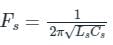
(2) Parallel resonant frequency - 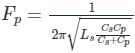
When constructing variable frequency oscillator among clapp oscillator and colpitts oscillator which one is preferred?- a)Colpitts oscillator
- b)Clapp oscillator
- c)Both of them have equal preference
- d)None of them preffered
Correct answer is option 'B'. Can you explain this answer?
When constructing variable frequency oscillator among clapp oscillator and colpitts oscillator which one is preferred?
a)
Colpitts oscillator
b)
Clapp oscillator
c)
Both of them have equal preference
d)
None of them preffered
| | Pooja Patel answered |
The stray third capacitor in the clap oscillator doesn’t have a negative effect and the frequency obtained is instead more stable and accurate than colpitt oscillator, hence the clap oscillator is preferred for a variable frequency oscillator.
The AC power of output signal is obtained by ___________- a)Input AC voltage
- b)Input DC voltage
- c)DC biasing voltage
- d)Power is generated by transistor itself
Correct answer is option 'C'. Can you explain this answer?
The AC power of output signal is obtained by ___________
a)
Input AC voltage
b)
Input DC voltage
c)
DC biasing voltage
d)
Power is generated by transistor itself
| | Pooja Patel answered |
The Ac power of output signal is obtained by DC biasing voltage of amplifier.
The output waveform of a stable oscillator have ___________- a)Constant frequency at low amplitude only
- b)Constant frequency at high amplitude only
- c)Variable frequency
- d)Constant frequency
Correct answer is option 'D'. Can you explain this answer?
The output waveform of a stable oscillator have ___________
a)
Constant frequency at low amplitude only
b)
Constant frequency at high amplitude only
c)
Variable frequency
d)
Constant frequency
| | Pooja Patel answered |
Output of a stable oscillator have constant amplitude and frequency.
Oscillation can be classified as damped and sustained on the basis of varying.- a)Input power
- b)Frequency
- c)Amplitude
- d)Noise margin
Correct answer is option 'C'. Can you explain this answer?
Oscillation can be classified as damped and sustained on the basis of varying.
a)
Input power
b)
Frequency
c)
Amplitude
d)
Noise margin
| | Pooja Patel answered |
Oscillation can be classified as damped and sustained on the basis of varying amplitude.
Which of the following is not an example of sinusoidal oscillator?- a)RC phase shift oscillator
- b)Weinbridge oscillator
- c)Crystal oscillator
- d)Blocking oscillator
Correct answer is option 'D'. Can you explain this answer?
Which of the following is not an example of sinusoidal oscillator?
a)
RC phase shift oscillator
b)
Weinbridge oscillator
c)
Crystal oscillator
d)
Blocking oscillator
| | Pooja Patel answered |
A blocking oscillator is a non-sinusoidal oscillator. It produces a free running signal-square shaped and requires only a resistor, transformer and one amplifying element to work. The transistor is blocked off for most of the duty cycle, producing periodic pulses.
For accomplishing negative resistance in oscillator we use _____________- a)Voltage divider circuit
- b)Negative feedback
- c)Positive feedback
- d)Current divider circuit
Correct answer is option 'C'. Can you explain this answer?
For accomplishing negative resistance in oscillator we use _____________
a)
Voltage divider circuit
b)
Negative feedback
c)
Positive feedback
d)
Current divider circuit
| | Pooja Patel answered |
The input or output impedance of an amplifier with positive feedback applied, can be negative. When loop gain is greater than 1, the input impedance is a negative value, over a linear range. These are also called active resistors.
Oscillator __________ an AC input for giving an AC output.- a)Doesn’t need
- b)Need
- c)Doesn’t need at lower frequencies
- d)Doesn’t need at higher frequencies
Correct answer is option 'A'. Can you explain this answer?
Oscillator __________ an AC input for giving an AC output.
a)
Doesn’t need
b)
Need
c)
Doesn’t need at lower frequencies
d)
Doesn’t need at higher frequencies
| | Pooja Patel answered |
An oscillator is an amplifier with positive feedback. It usually has a noise which is an amplifier as an oscillating output. They do not require any type of specific input to function properly.
The ratio of width of pulse to time between pulses are called ___________- a)PSRR
- b)PSR
- c)MSR
- d)CMRR
Correct answer is option 'C'. Can you explain this answer?
The ratio of width of pulse to time between pulses are called ___________
a)
PSRR
b)
PSR
c)
MSR
d)
CMRR
| | Pooja Patel answered |
The ratio of the width of pulse to time between pulses is called MSR (Mark-to-Space ratio). Other abbreviation denotes PSRR (Power Supply Rejection Ratio), PSR (Power Supply Rejection), CMRR (Common Mode Rejection Ratio).
Which type of feedback is used by Colpitts oscillator?- a)Voltage series feedback
- b)Current series feedback
- c)Voltage shunt feedback
- d)Current shunt feedback
Correct answer is option 'A'. Can you explain this answer?
Which type of feedback is used by Colpitts oscillator?
a)
Voltage series feedback
b)
Current series feedback
c)
Voltage shunt feedback
d)
Current shunt feedback
| | Pooja Patel answered |
Voltage series feedback is used in Colpitts oscillator. In voltage series feedback a part of output voltage is fed back to input.
Oscillators are used to ______ AC voltage.- a)Prevent
- b)Generate
- c)Amplify
- d)Rectify
Correct answer is option 'B'. Can you explain this answer?
Oscillators are used to ______ AC voltage.
a)
Prevent
b)
Generate
c)
Amplify
d)
Rectify
| | Pooja Patel answered |
Oscillators are used for generating AC voltage. They are often characterized by the frequency of the oscillations produced. There are two main types of electronic oscillators, linear/harmonic and nonlinear/relaxation oscillator.
Frequency of oscillation of alternator is ___________- a)100Hz
- b)50Hz
- c)1KHz
- d)200Hz
Correct answer is option 'B'. Can you explain this answer?
Frequency of oscillation of alternator is ___________
a)
100Hz
b)
50Hz
c)
1KHz
d)
200Hz
| | Pooja Patel answered |
Alternator frequency depends upon the speed of rotation and the number of pairs of rotor poles. When connected to a power system, alternators are synchronized with the grid frequencies which is either 50/60Hz depending on the geographical location.
When frequency of oscillation of a crystal oscillator becomes parallel resonance frequency reactance of crystal oscillator becomes __________- a)Zero
- b)Infinity
- c)Unpredictable
- d)Unity
Correct answer is option 'B'. Can you explain this answer?
When frequency of oscillation of a crystal oscillator becomes parallel resonance frequency reactance of crystal oscillator becomes __________
a)
Zero
b)
Infinity
c)
Unpredictable
d)
Unity
| | Pooja Patel answered |
The oscillator has two resonant frequencies, parallel and series. Parallel resonance occurs when the reactance of series leg becomes equal to that of the parallel capacitor, and during this time, impedance offered is very high, almost infinite.
Mark-to-space ratio is related with ___________- a)Saw-tooth generator
- b)LC oscillator
- c)RC oscillator
- d)Crystal oscillator
Correct answer is option 'A'. Can you explain this answer?
Mark-to-space ratio is related with ___________
a)
Saw-tooth generator
b)
LC oscillator
c)
RC oscillator
d)
Crystal oscillator
| | Pooja Patel answered |
MSR or Mark-to-space ratio is related with saw-tooth generator. It is the ratio of width of pulse to time between pulses.
The inverse of pulse repetition time gives _____________- a)PRF
- b)PRT
- c)MSR
- d)PSR
Correct answer is option 'A'. Can you explain this answer?
The inverse of pulse repetition time gives _____________
a)
PRF
b)
PRT
c)
MSR
d)
PSR
| | Pooja Patel answered |
The inverse of pulse repetition time gives the PRF- pulse repetition frequency. MSR means mark to space ratio, PRT means power repetition time, PSR is power supply rejection.
If oscillation amplitude increases continuously it is called ___________- a)Overdamped
- b)Underdamped
- c)Sustained
- d)No specific name
Correct answer is option 'A'. Can you explain this answer?
If oscillation amplitude increases continuously it is called ___________
a)
Overdamped
b)
Underdamped
c)
Sustained
d)
No specific name
| | Pooja Patel answered |
If oscillation amplitude increases continuously it is called overdamped oscillation.
The output of oscillator will not depend upon ___________- a)Feedback
- b)Amplifier
- c)Both feedback and amplifier
- d)Input voltage
Correct answer is option 'D'. Can you explain this answer?
The output of oscillator will not depend upon ___________
a)
Feedback
b)
Amplifier
c)
Both feedback and amplifier
d)
Input voltage
| | Pooja Patel answered |
The output of the oscillator will not depend upon input voltage. There is no input voltage for an oscillator.
Which oscillator is characterized by a split capacitor in its tank circuit?- a)RC phase shift oscillator
- b)Colpitts oscillator
- c)Wien bridge oscillator
- d)None of the above
Correct answer is option 'B'. Can you explain this answer?
Which oscillator is characterized by a split capacitor in its tank circuit?
a)
RC phase shift oscillator
b)
Colpitts oscillator
c)
Wien bridge oscillator
d)
None of the above
| | Pooja Patel answered |
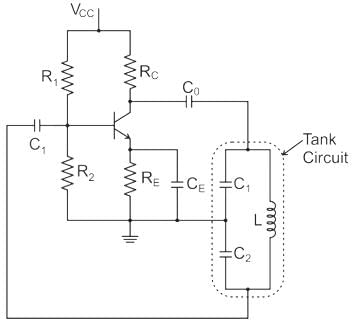
Colpitts oscillator:
- The Colpitts oscillator consists of one inductor and one split capacitor in the tank circuit.
- A capacitor with a center tap is used in the feedback system of the Colpitts oscillator
- It is used for the generation of sinusoidal output signals with very high frequencies
Damped oscillations are those oscillations which ___________ continuously with time.- a)Increasing
- b)Decreasing
- c)Increasing or decreasing
- d)Neither increasing nor decreasing
Correct answer is option 'C'. Can you explain this answer?
Damped oscillations are those oscillations which ___________ continuously with time.
a)
Increasing
b)
Decreasing
c)
Increasing or decreasing
d)
Neither increasing nor decreasing
| | Pooja Patel answered |
Damped oscillations are those oscillations which decrease or increases continuously with time.
The time between one pulse to another is known as ___________- a)MSR
- b)PRF
- c)Time delay
- d)PRT
Correct answer is option 'D'. Can you explain this answer?
The time between one pulse to another is known as ___________
a)
MSR
b)
PRF
c)
Time delay
d)
PRT
| | Pooja Patel answered |
The time between one pulse to another is known as PRT (Power Repetition Time), other abbreviations denote PRF (Power Repetition Frequency), MSR (Mark-to-Space ratio).
Chapter doubts & questions for Oscillators - Analog and Digital Electronics 2026 is part of Electrical Engineering (EE) exam preparation. The chapters have been prepared according to the Electrical Engineering (EE) exam syllabus. The Chapter doubts & questions, notes, tests & MCQs are made for Electrical Engineering (EE) 2026 Exam. Find important definitions, questions, notes, meanings, examples, exercises, MCQs and online tests here.
Chapter doubts & questions of Oscillators - Analog and Digital Electronics in English & Hindi are available as part of Electrical Engineering (EE) exam. Download more important topics, notes, lectures and mock test series for Electrical Engineering (EE) Exam by signing up for free.
Analog and Digital Electronics135 videos|183 docs|71 tests |
