Civil Engineering (CE) Exam  >  Civil Engineering (CE) Test  >  Fluid Mechanics for Civil Engineering  >  Test: Hydraulic Gradient & Total Energy Line - Civil Engineering (CE) MCQ

Hydraulic Gradient & Total Energy Line - Free MCQ Practice Test with solutions,


MCQ Practice Test & Solutions: Test: Hydraulic Gradient & Total Energy Line (10 Questions)

You can prepare effectively for Civil Engineering (CE) Fluid Mechanics for Civil Engineering with this dedicated MCQ Practice Test (available with solutions) on the important topic of "Test: Hydraulic Gradient & Total Energy Line". These 10 questions have been designed by the experts with the latest curriculum of Civil Engineering (CE) 2026, to help you master the concept.

Test Highlights:

  • - Format: Multiple Choice Questions (MCQ)
  • - Duration: 20 minutes
  • - Number of Questions: 10

Sign up on EduRev for free to attempt this test and track your preparation progress.

Test: Hydraulic Gradient & Total Energy Line - Question 1

Energy gradient line takes into consideration

Detailed Solution: Question 1
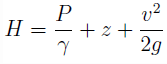
Explanation: EGL is obtained by plotting total head at various points along the axis of the pipe.

where H is the total head, P / γ is the pressure head, z is the potential head and v2 / 2g is the velocity head. Hence, EGL is also called Total Energy Line (TEL).

Test: Hydraulic Gradient & Total Energy Line - Question 2

 Hydraulic gradient line takes into consideration

Detailed Solution: Question 2

Explanation: HGL is obtained by plotting piezometric head at various points along the axis of the pipe.
Hp = P ⁄ γ + z
where Hp is the piezometric head, P ⁄ γ is the pressure head and z is the potential head.

Test: Hydraulic Gradient & Total Energy Line - Question 3

Which of the following is true?

Detailed Solution: Question 3

Explanation: EGL is obtained by plotting total head at various points along the axis of the pipe. Since the total head decreases in the direction of flow, EGL will always drop in that direction.

Test: Hydraulic Gradient & Total Energy Line - Question 4

Which of the following is true?

Detailed Solution: Question 4

Explanation: HGL is obtained by plotting piezometric head at various points along the axis of the pipe. Since pressure may either rise or fall in the direction of flow, HGL may or may not change in that direction.

Test: Hydraulic Gradient & Total Energy Line - Question 5

Which of the following is true?

Detailed Solution: Question 5

Explanation: EGL is obtained by plotting total head and HGL is obtained by plotting piezometric head at various points along the axis of the pipe.

Hp = P ⁄ γ + z
where H is the total head, P ⁄ γ is the pressure head, z is the potential head, Hp is the piezometric head, and v2 / 2g is the velocity head.
H = Hp + v2 / 2g Since Hp < H, HGL can never be above EGL.

Test: Hydraulic Gradient & Total Energy Line - Question 6

The vertical intercept between EGL and HGL is equal to

Detailed Solution: Question 6

Explanation: EGL is obtained by plotting total head and HGL is obtained by plotting piezometric head at various points along the axis of the pipe.

Hp = P ⁄ γ + z
where H is the total head, P ⁄ γ is the pressure head, z is the potential head, Hp is the piezometric head, and v2 / 2g is the velocity head.
H – Hp = v2 / 2g, the vertical intercept between EGL and HGL is equal to the kinetic head.

Test: Hydraulic Gradient & Total Energy Line - Question 7

 The slope of HGL will be

Detailed Solution: Question 7

Explanation: The vertical intercept between EGL and HGL is equal to the kinetic head. For a pipe of uniform cross-section, there will be no change in the velocity of flow across the pipe. Since the kinetic head remian constant, the slope of HGL will be equal than that of EGL.

Test: Hydraulic Gradient & Total Energy Line - Question 8

For a nozzle, the vertical intercept between EGL and HGL

Detailed Solution: Question 8

Explanation: The vertical intercept between EGL and HGL is equal to the kinetic head. For a nozzle, the cross-sectional area decreases in the direction of flow leading to an increase in the velocity of flow across the pipe. Since the kinetic head increases, the vertical intercept between EGL and HGL will increase.

Test: Hydraulic Gradient & Total Energy Line - Question 9

For a diffuser, the vertical intercept between EGL and HGL

Detailed Solution: Question 9

Explanation: The vertical intercept between EGL and HGL is equal to the kinetic head. For a diffuser, the cross-sectional area increases in the direction of flow leading to a decrease in the velocity of flow across the pipe. Since the kinetic head decreases, the vertical intercept between EGL and HGL will decrease.

Test: Hydraulic Gradient & Total Energy Line - Question 10

Which of the following is true?

Detailed Solution: Question 10

Explanation: EGL is obtained by plotting total head at various points along the axis of the pipe.

where H is the total head, P ⁄ γ is the pressure head, z is the potential head, , and v2 / 2g is the velocity head.
Hence, there is no relation whatsoever between the slope of EGL and that of the axis of the pipe.

54 videos|132 docs|110 tests
Information about Test: Hydraulic Gradient & Total Energy Line Page
In this test you can find the Exam questions for Test: Hydraulic Gradient & Total Energy Line solved & explained in the simplest way possible. Besides giving Questions and answers for Test: Hydraulic Gradient & Total Energy Line, EduRev gives you an ample number of Online tests for practice
Download as PDF