CBSE Class 4  >  Class 4   >  Science  >  Sources of Energy Flashcards - Class 4 Science
Sources of Energy
8 Flashcards
Start
Start

Sources of Energy Flashcards - Class 4 Science

8 Flashcards
48 videos|193 docs|34 tests

FAQs on Sources of Energy Flashcards - Class 4 Science

1. What are the different sources of energy?
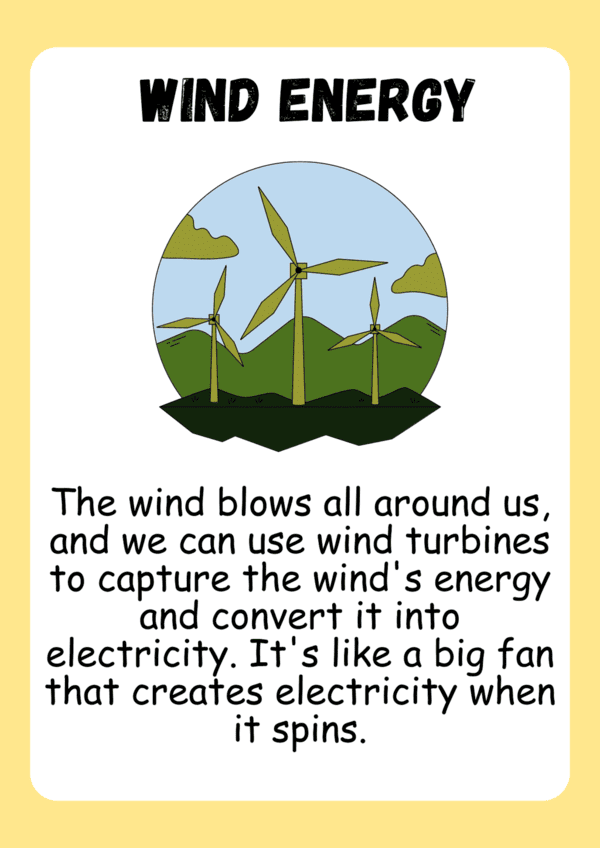
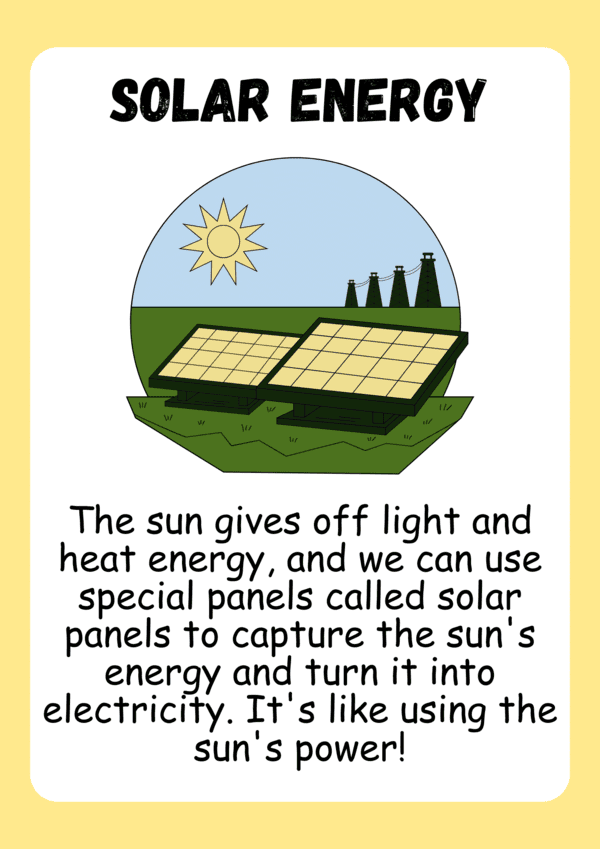
Ans. The different sources of energy include fossil fuels (coal, oil, natural gas), renewable sources (solar, wind, hydroelectric, geothermal), and nuclear energy.
2. How are fossil fuels formed?
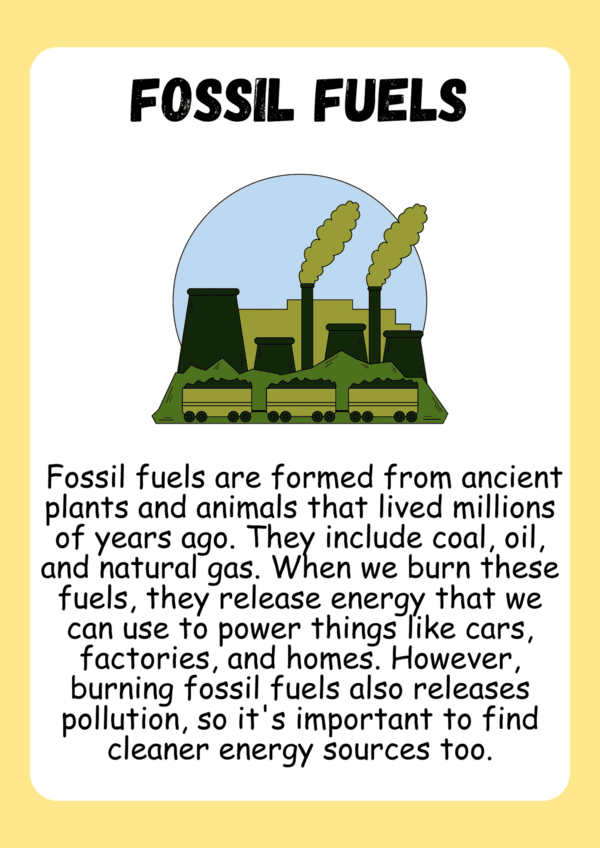
Ans. Fossil fuels are formed from the remains of plants and animals that lived millions of years ago. Over time, these organic materials were buried under layers of sediment and heat and pressure transformed them into coal, oil, and natural gas.
3. What are the advantages of using renewable sources of energy?
Ans. The advantages of using renewable sources of energy include being environmentally friendly, sustainable, and reducing greenhouse gas emissions that contribute to climate change.
4. How does nuclear energy work?
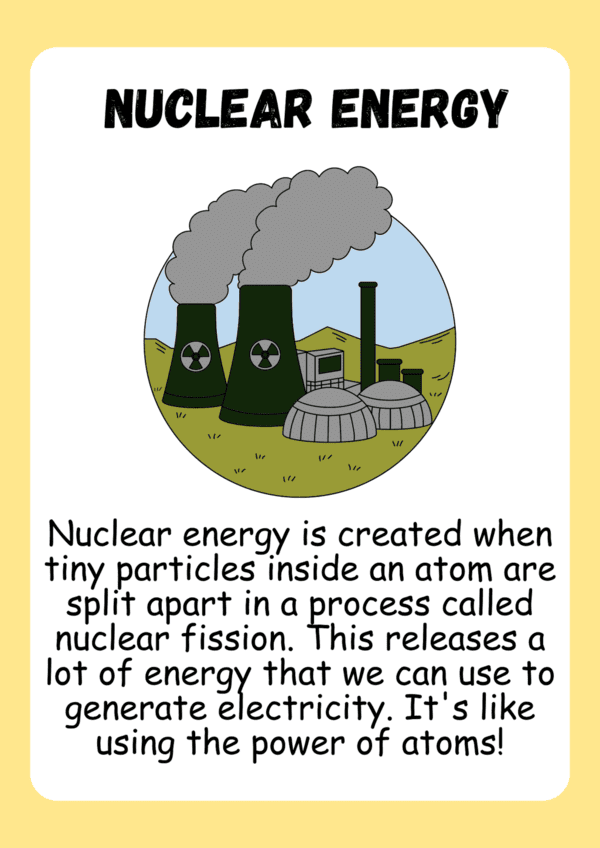
Ans. Nuclear energy is produced through a process called nuclear fission, where the nucleus of an atom is split to release energy. This energy is used to heat water, produce steam, and turn turbines to generate electricity.
5. How can individuals reduce their energy consumption at home?
Ans. Individuals can reduce their energy consumption at home by using energy-efficient appliances, turning off lights and electronics when not in use, insulating homes to reduce heating and cooling needs, and using renewable energy sources like solar panels.
Related Searches
study material, MCQs, Sources of Energy Flashcards - Class 4 Science, Summary, ppt, shortcuts and tricks, Sources of Energy Flashcards - Class 4 Science, Previous Year Questions with Solutions, past year papers, Important questions, Free, Sources of Energy Flashcards - Class 4 Science, mock tests for examination, Sample Paper, practice quizzes, Exam, Extra Questions, pdf , Semester Notes, Objective type Questions, Viva Questions, video lectures;