


Class 12 Exam > Class 12 Questions > Four successive members of the first series o... Start Learning for Free
Four successive members of the first series of the transition metals are listed below. For which one of them the standard potential (E0M2+ /M) value has a positive sign? [2012 M]
- a)Co (Z = 27)
- b)Ni (Z = 28)
- c)Cu (Z = 29)
- d)Fe (Z = 26)
Correct answer is option 'C'. Can you explain this answer?

Verified Answer
Four successive members of the first series of the transition metals a...
Most Upvoted Answer
Four successive members of the first series of the transition metals a...
The standard potential (E0M2/M) value is a measure of the tendency of an element to lose or gain electrons. A positive sign indicates that the element has a tendency to lose electrons and undergo oxidation.
In the given options, we are looking for the element that has a positive standard potential value.
Let's analyze each option to determine which one satisfies this condition.
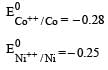
a) Co (Z = 27): The standard potential value for the Co2+/Co half-cell reaction is -0.28 V. The negative sign indicates that cobalt has a tendency to gain electrons and undergo reduction. Therefore, option a) is not the correct answer.
b) Ni (Z = 28): The standard potential value for the Ni2+/Ni half-cell reaction is -0.25 V. Again, the negative sign indicates that nickel has a tendency to gain electrons and undergo reduction. Therefore, option b) is not the correct answer.
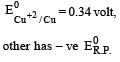
c) Cu (Z = 29): The standard potential value for the Cu2+/Cu half-cell reaction is +0.34 V. The positive sign indicates that copper has a tendency to lose electrons and undergo oxidation. Therefore, option c) is the correct answer.
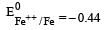
d) Fe (Z = 26): The standard potential value for the Fe2+/Fe half-cell reaction is -0.44 V. Once again, the negative sign indicates that iron has a tendency to gain electrons and undergo reduction. Therefore, option d) is not the correct answer.
In conclusion, the correct answer is option c) Cu (Z = 29) as it has a positive standard potential value, indicating a tendency to lose electrons and undergo oxidation.
In the given options, we are looking for the element that has a positive standard potential value.
Let's analyze each option to determine which one satisfies this condition.
a) Co (Z = 27): The standard potential value for the Co2+/Co half-cell reaction is -0.28 V. The negative sign indicates that cobalt has a tendency to gain electrons and undergo reduction. Therefore, option a) is not the correct answer.
b) Ni (Z = 28): The standard potential value for the Ni2+/Ni half-cell reaction is -0.25 V. Again, the negative sign indicates that nickel has a tendency to gain electrons and undergo reduction. Therefore, option b) is not the correct answer.
c) Cu (Z = 29): The standard potential value for the Cu2+/Cu half-cell reaction is +0.34 V. The positive sign indicates that copper has a tendency to lose electrons and undergo oxidation. Therefore, option c) is the correct answer.
d) Fe (Z = 26): The standard potential value for the Fe2+/Fe half-cell reaction is -0.44 V. Once again, the negative sign indicates that iron has a tendency to gain electrons and undergo reduction. Therefore, option d) is not the correct answer.
In conclusion, the correct answer is option c) Cu (Z = 29) as it has a positive standard potential value, indicating a tendency to lose electrons and undergo oxidation.
 | Explore Courses for Class 12 exam |  |
Top Courses for Class 12View all





Top Courses for Class 12
Question Description
Four successive members of the first series of the transition metals are listed below. For which one of them the standard potential (E0M2+ /M) value has a positive sign? [2012 M]a)Co (Z = 27)b)Ni (Z = 28)c)Cu (Z = 29)d)Fe (Z = 26)Correct answer is option 'C'. Can you explain this answer? for Class 12 2026 is part of Class 12 preparation. The Question and answers have been prepared according to the Class 12 exam syllabus. Information about Four successive members of the first series of the transition metals are listed below. For which one of them the standard potential (E0M2+ /M) value has a positive sign? [2012 M]a)Co (Z = 27)b)Ni (Z = 28)c)Cu (Z = 29)d)Fe (Z = 26)Correct answer is option 'C'. Can you explain this answer? covers all topics & solutions for Class 12 2026 Exam. Find important definitions, questions, meanings, examples, exercises and tests below for Four successive members of the first series of the transition metals are listed below. For which one of them the standard potential (E0M2+ /M) value has a positive sign? [2012 M]a)Co (Z = 27)b)Ni (Z = 28)c)Cu (Z = 29)d)Fe (Z = 26)Correct answer is option 'C'. Can you explain this answer?.
Four successive members of the first series of the transition metals are listed below. For which one of them the standard potential (E0M2+ /M) value has a positive sign? [2012 M]a)Co (Z = 27)b)Ni (Z = 28)c)Cu (Z = 29)d)Fe (Z = 26)Correct answer is option 'C'. Can you explain this answer? for Class 12 2026 is part of Class 12 preparation. The Question and answers have been prepared according to the Class 12 exam syllabus. Information about Four successive members of the first series of the transition metals are listed below. For which one of them the standard potential (E0M2+ /M) value has a positive sign? [2012 M]a)Co (Z = 27)b)Ni (Z = 28)c)Cu (Z = 29)d)Fe (Z = 26)Correct answer is option 'C'. Can you explain this answer? covers all topics & solutions for Class 12 2026 Exam. Find important definitions, questions, meanings, examples, exercises and tests below for Four successive members of the first series of the transition metals are listed below. For which one of them the standard potential (E0M2+ /M) value has a positive sign? [2012 M]a)Co (Z = 27)b)Ni (Z = 28)c)Cu (Z = 29)d)Fe (Z = 26)Correct answer is option 'C'. Can you explain this answer?.
Solutions for Four successive members of the first series of the transition metals are listed below. For which one of them the standard potential (E0M2+ /M) value has a positive sign? [2012 M]a)Co (Z = 27)b)Ni (Z = 28)c)Cu (Z = 29)d)Fe (Z = 26)Correct answer is option 'C'. Can you explain this answer? in English & in Hindi are available as part of our courses for Class 12. Download more important topics, notes, lectures and mock test series for Class 12 Exam by signing up for free.
Here you can find the meaning of Four successive members of the first series of the transition metals are listed below. For which one of them the standard potential (E0M2+ /M) value has a positive sign? [2012 M]a)Co (Z = 27)b)Ni (Z = 28)c)Cu (Z = 29)d)Fe (Z = 26)Correct answer is option 'C'. Can you explain this answer? defined & explained in the simplest way possible. Besides giving the explanation of Four successive members of the first series of the transition metals are listed below. For which one of them the standard potential (E0M2+ /M) value has a positive sign? [2012 M]a)Co (Z = 27)b)Ni (Z = 28)c)Cu (Z = 29)d)Fe (Z = 26)Correct answer is option 'C'. Can you explain this answer?, a detailed solution for Four successive members of the first series of the transition metals are listed below. For which one of them the standard potential (E0M2+ /M) value has a positive sign? [2012 M]a)Co (Z = 27)b)Ni (Z = 28)c)Cu (Z = 29)d)Fe (Z = 26)Correct answer is option 'C'. Can you explain this answer? has been provided alongside types of Four successive members of the first series of the transition metals are listed below. For which one of them the standard potential (E0M2+ /M) value has a positive sign? [2012 M]a)Co (Z = 27)b)Ni (Z = 28)c)Cu (Z = 29)d)Fe (Z = 26)Correct answer is option 'C'. Can you explain this answer? theory, EduRev gives you an ample number of questions to practice Four successive members of the first series of the transition metals are listed below. For which one of them the standard potential (E0M2+ /M) value has a positive sign? [2012 M]a)Co (Z = 27)b)Ni (Z = 28)c)Cu (Z = 29)d)Fe (Z = 26)Correct answer is option 'C'. Can you explain this answer? tests, examples and also practice Class 12 tests.
| Explore Courses for Class 12 exam | |
Top Courses for Class 12
Explore Courses
Signup for Free!
Signup to see your scores go up within 7 days! Learn & Practice with 1000+ FREE Notes, Videos & Tests.


