


Physics Exam > Physics Questions > In electrodynamics, the set of transformation... Start Learning for Free
In electrodynamics, the set of transformation rules for components of E and B are given as follows :
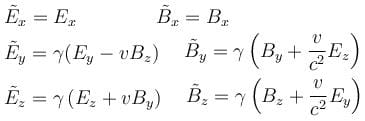
Here ' ~' denotes the components of E and B in a reference frame moving along the x-axis with speed v
Choose the correct statement.
- a)E2 - B2c2 is a relativistically invariant quantity
- b)
 is a relativistically invariant quantity
 - c)
 is not a relativistically invariant quantity
 - d)E2 - B2c2 is not a relativistically invariant quantity
Correct answer is option 'A,B'. Can you explain this answer?

Verified Answer
In electrodynamics, the set of transformation rules for components ofE...
Consider the dot product 
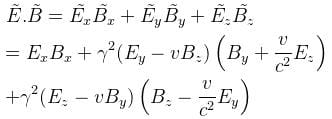
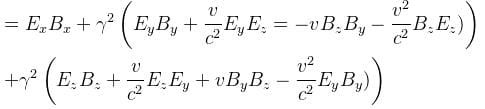
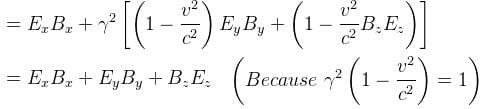
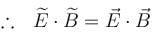
∴ E.B is relativistically in invariant
∴ E.B is relativistically in invariant
Consider the quantity 

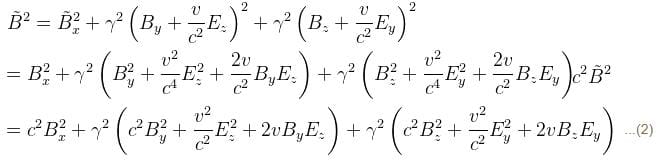
Now (1) – (2)
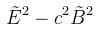
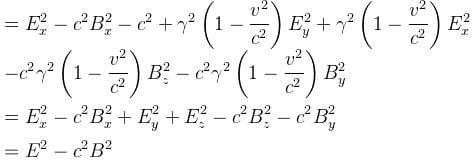
Invariant !
The correct answers are: is a relativistically invariant quantity, E2 - B2c2 is a relativistically invariant quantity
Now (1) – (2)
Invariant !
The correct answers are:
is a relativistically invariant quantity, E2 - B2c2 is a relativistically invariant quantity | Explore Courses for Physics exam |  |
Top Courses for PhysicsView all





Top Courses for Physics
Question Description
In electrodynamics, the set of transformation rules for components ofE andB are given as follows :Here ' ~' denotes the components ofEandBin a reference frame moving along thex-axis with speedvChoose the correct statement.a)E2 - B2c2 is a relativistically invariant quantityb)is a relativistically invariant quantityc)is not a relativistically invariant quantityd)E2 - B2c2is not a relativistically invariant quantityCorrect answer is option 'A,B'. Can you explain this answer? for Physics 2026 is part of Physics preparation. The Question and answers have been prepared according to the Physics exam syllabus. Information about In electrodynamics, the set of transformation rules for components ofE andB are given as follows :Here ' ~' denotes the components ofEandBin a reference frame moving along thex-axis with speedvChoose the correct statement.a)E2 - B2c2 is a relativistically invariant quantityb)is a relativistically invariant quantityc)is not a relativistically invariant quantityd)E2 - B2c2is not a relativistically invariant quantityCorrect answer is option 'A,B'. Can you explain this answer? covers all topics & solutions for Physics 2026 Exam. Find important definitions, questions, meanings, examples, exercises and tests below for In electrodynamics, the set of transformation rules for components ofE andB are given as follows :Here ' ~' denotes the components ofEandBin a reference frame moving along thex-axis with speedvChoose the correct statement.a)E2 - B2c2 is a relativistically invariant quantityb)is a relativistically invariant quantityc)is not a relativistically invariant quantityd)E2 - B2c2is not a relativistically invariant quantityCorrect answer is option 'A,B'. Can you explain this answer?.
In electrodynamics, the set of transformation rules for components ofE andB are given as follows :Here ' ~' denotes the components ofEandBin a reference frame moving along thex-axis with speedvChoose the correct statement.a)E2 - B2c2 is a relativistically invariant quantityb)is a relativistically invariant quantityc)is not a relativistically invariant quantityd)E2 - B2c2is not a relativistically invariant quantityCorrect answer is option 'A,B'. Can you explain this answer? for Physics 2026 is part of Physics preparation. The Question and answers have been prepared according to the Physics exam syllabus. Information about In electrodynamics, the set of transformation rules for components ofE andB are given as follows :Here ' ~' denotes the components ofEandBin a reference frame moving along thex-axis with speedvChoose the correct statement.a)E2 - B2c2 is a relativistically invariant quantityb)is a relativistically invariant quantityc)is not a relativistically invariant quantityd)E2 - B2c2is not a relativistically invariant quantityCorrect answer is option 'A,B'. Can you explain this answer? covers all topics & solutions for Physics 2026 Exam. Find important definitions, questions, meanings, examples, exercises and tests below for In electrodynamics, the set of transformation rules for components ofE andB are given as follows :Here ' ~' denotes the components ofEandBin a reference frame moving along thex-axis with speedvChoose the correct statement.a)E2 - B2c2 is a relativistically invariant quantityb)is a relativistically invariant quantityc)is not a relativistically invariant quantityd)E2 - B2c2is not a relativistically invariant quantityCorrect answer is option 'A,B'. Can you explain this answer?.
Solutions for In electrodynamics, the set of transformation rules for components ofE andB are given as follows :Here ' ~' denotes the components ofEandBin a reference frame moving along thex-axis with speedvChoose the correct statement.a)E2 - B2c2 is a relativistically invariant quantityb)is a relativistically invariant quantityc)is not a relativistically invariant quantityd)E2 - B2c2is not a relativistically invariant quantityCorrect answer is option 'A,B'. Can you explain this answer? in English & in Hindi are available as part of our courses for Physics. Download more important topics, notes, lectures and mock test series for Physics Exam by signing up for free.
Here you can find the meaning of In electrodynamics, the set of transformation rules for components ofE andB are given as follows :Here ' ~' denotes the components ofEandBin a reference frame moving along thex-axis with speedvChoose the correct statement.a)E2 - B2c2 is a relativistically invariant quantityb)is a relativistically invariant quantityc)is not a relativistically invariant quantityd)E2 - B2c2is not a relativistically invariant quantityCorrect answer is option 'A,B'. Can you explain this answer? defined & explained in the simplest way possible. Besides giving the explanation of In electrodynamics, the set of transformation rules for components ofE andB are given as follows :Here ' ~' denotes the components ofEandBin a reference frame moving along thex-axis with speedvChoose the correct statement.a)E2 - B2c2 is a relativistically invariant quantityb)is a relativistically invariant quantityc)is not a relativistically invariant quantityd)E2 - B2c2is not a relativistically invariant quantityCorrect answer is option 'A,B'. Can you explain this answer?, a detailed solution for In electrodynamics, the set of transformation rules for components ofE andB are given as follows :Here ' ~' denotes the components ofEandBin a reference frame moving along thex-axis with speedvChoose the correct statement.a)E2 - B2c2 is a relativistically invariant quantityb)is a relativistically invariant quantityc)is not a relativistically invariant quantityd)E2 - B2c2is not a relativistically invariant quantityCorrect answer is option 'A,B'. Can you explain this answer? has been provided alongside types of In electrodynamics, the set of transformation rules for components ofE andB are given as follows :Here ' ~' denotes the components ofEandBin a reference frame moving along thex-axis with speedvChoose the correct statement.a)E2 - B2c2 is a relativistically invariant quantityb)is a relativistically invariant quantityc)is not a relativistically invariant quantityd)E2 - B2c2is not a relativistically invariant quantityCorrect answer is option 'A,B'. Can you explain this answer? theory, EduRev gives you an ample number of questions to practice In electrodynamics, the set of transformation rules for components ofE andB are given as follows :Here ' ~' denotes the components ofEandBin a reference frame moving along thex-axis with speedvChoose the correct statement.a)E2 - B2c2 is a relativistically invariant quantityb)is a relativistically invariant quantityc)is not a relativistically invariant quantityd)E2 - B2c2is not a relativistically invariant quantityCorrect answer is option 'A,B'. Can you explain this answer? tests, examples and also practice Physics tests.
| Explore Courses for Physics exam | |
Top Courses for Physics
Explore Courses
Signup for Free!
Signup to see your scores go up within 7 days! Learn & Practice with 1000+ FREE Notes, Videos & Tests.


