


Electrical Engineering (EE) Exam > Electrical Engineering (EE) Questions > Let P be linearity, Q be time invariance, R b... Start Learning for Free
Let P be linearity, Q be time invariance, R be causality and S be stability. In question discrete time input x[n] and output y[n] relationship has been given. In the option properties of system has been given. Choose the option which match the properties for system.
Q. y[ n] = rect ( x[ n])
Q. y[ n] = rect ( x[ n])
- a)P, Q, R
- b)Q, R, S
- c)R, S, P
- d)S , P, Q
Correct answer is option 'B'. Can you explain this answer?

Verified Answer
Let P be linearity, Q be time invariance, R be causality and S be stab...

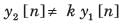 (Not Homogeneous not linear)
 (Time Invariant) At any discrete time n = no , the response depends only on the excitation at that discrete time.
(Causal) No matter what values the excitation may have the response can only have the values zero or one.
Most Upvoted Answer
Let P be linearity, Q be time invariance, R be causality and S be stab...
Understanding the System Properties
To determine the properties of the system defined by y[n] = rect(x[n]), we need to analyze each property: linearity (P), time invariance (Q), causality (R), and stability (S).
1. Linearity (P)
- A system is linear if it satisfies the principles of superposition: additivity and homogeneity.
- The rect function is not linear because it does not preserve the sum of inputs. For example, rect(x[n]) + rect(x[n]) does not equal rect(2x[n]).
2. Time Invariance (Q)
- A system is time-invariant if a shift in the input results in an equivalent shift in the output.
- The rect function is time-invariant because shifting x[n] results in an equivalent shift in y[n]: rect(x[n-n0]) = rect(x[n-n0]).
3. Causality (R)
- A system is causal if the output at any time n depends only on the current and past input values, not future ones.
- The rect function is causal if x[n] is defined such that it only takes values from n = 0 onward, which is a common assumption in discrete-time signals.
4. Stability (S)
- A system is stable if bounded inputs lead to bounded outputs (BIBO stability).
- The rect function is stable when the input is bounded, as it will produce a bounded output.
Conclusion
Given the analysis:
- The system is time-invariant (Q), causal (R), and stable (S). Thus, the correct properties of the system are represented by option B: Q, R, S.
- The properties linearity (P) is not satisfied, confirming that option B is indeed the correct answer.
To determine the properties of the system defined by y[n] = rect(x[n]), we need to analyze each property: linearity (P), time invariance (Q), causality (R), and stability (S).
1. Linearity (P)
- A system is linear if it satisfies the principles of superposition: additivity and homogeneity.
- The rect function is not linear because it does not preserve the sum of inputs. For example, rect(x[n]) + rect(x[n]) does not equal rect(2x[n]).
2. Time Invariance (Q)
- A system is time-invariant if a shift in the input results in an equivalent shift in the output.
- The rect function is time-invariant because shifting x[n] results in an equivalent shift in y[n]: rect(x[n-n0]) = rect(x[n-n0]).
3. Causality (R)
- A system is causal if the output at any time n depends only on the current and past input values, not future ones.
- The rect function is causal if x[n] is defined such that it only takes values from n = 0 onward, which is a common assumption in discrete-time signals.
4. Stability (S)
- A system is stable if bounded inputs lead to bounded outputs (BIBO stability).
- The rect function is stable when the input is bounded, as it will produce a bounded output.
Conclusion
Given the analysis:
- The system is time-invariant (Q), causal (R), and stable (S). Thus, the correct properties of the system are represented by option B: Q, R, S.
- The properties linearity (P) is not satisfied, confirming that option B is indeed the correct answer.
 | Explore Courses for Electrical Engineering (EE) exam |  |
Top Courses for Electrical Engineering (EE)View all




Top Courses for Electrical Engineering (EE)
Question Description
Let P be linearity, Q be time invariance, R be causality and S be stability. In question discrete time input x[n] and output y[n] relationship has been given. In the option properties of system has been given. Choose the option which match the properties for system.Q.y[ n] = rect ( x[ n])a)P, Q, Rb)Q, R, Sc)R, S, Pd)S , P, QCorrect answer is option 'B'. Can you explain this answer? for Electrical Engineering (EE) 2026 is part of Electrical Engineering (EE) preparation. The Question and answers have been prepared according to the Electrical Engineering (EE) exam syllabus. Information about Let P be linearity, Q be time invariance, R be causality and S be stability. In question discrete time input x[n] and output y[n] relationship has been given. In the option properties of system has been given. Choose the option which match the properties for system.Q.y[ n] = rect ( x[ n])a)P, Q, Rb)Q, R, Sc)R, S, Pd)S , P, QCorrect answer is option 'B'. Can you explain this answer? covers all topics & solutions for Electrical Engineering (EE) 2026 Exam. Find important definitions, questions, meanings, examples, exercises and tests below for Let P be linearity, Q be time invariance, R be causality and S be stability. In question discrete time input x[n] and output y[n] relationship has been given. In the option properties of system has been given. Choose the option which match the properties for system.Q.y[ n] = rect ( x[ n])a)P, Q, Rb)Q, R, Sc)R, S, Pd)S , P, QCorrect answer is option 'B'. Can you explain this answer?.
Let P be linearity, Q be time invariance, R be causality and S be stability. In question discrete time input x[n] and output y[n] relationship has been given. In the option properties of system has been given. Choose the option which match the properties for system.Q.y[ n] = rect ( x[ n])a)P, Q, Rb)Q, R, Sc)R, S, Pd)S , P, QCorrect answer is option 'B'. Can you explain this answer? for Electrical Engineering (EE) 2026 is part of Electrical Engineering (EE) preparation. The Question and answers have been prepared according to the Electrical Engineering (EE) exam syllabus. Information about Let P be linearity, Q be time invariance, R be causality and S be stability. In question discrete time input x[n] and output y[n] relationship has been given. In the option properties of system has been given. Choose the option which match the properties for system.Q.y[ n] = rect ( x[ n])a)P, Q, Rb)Q, R, Sc)R, S, Pd)S , P, QCorrect answer is option 'B'. Can you explain this answer? covers all topics & solutions for Electrical Engineering (EE) 2026 Exam. Find important definitions, questions, meanings, examples, exercises and tests below for Let P be linearity, Q be time invariance, R be causality and S be stability. In question discrete time input x[n] and output y[n] relationship has been given. In the option properties of system has been given. Choose the option which match the properties for system.Q.y[ n] = rect ( x[ n])a)P, Q, Rb)Q, R, Sc)R, S, Pd)S , P, QCorrect answer is option 'B'. Can you explain this answer?.
Solutions for Let P be linearity, Q be time invariance, R be causality and S be stability. In question discrete time input x[n] and output y[n] relationship has been given. In the option properties of system has been given. Choose the option which match the properties for system.Q.y[ n] = rect ( x[ n])a)P, Q, Rb)Q, R, Sc)R, S, Pd)S , P, QCorrect answer is option 'B'. Can you explain this answer? in English & in Hindi are available as part of our courses for Electrical Engineering (EE). Download more important topics, notes, lectures and mock test series for Electrical Engineering (EE) Exam by signing up for free.
Here you can find the meaning of Let P be linearity, Q be time invariance, R be causality and S be stability. In question discrete time input x[n] and output y[n] relationship has been given. In the option properties of system has been given. Choose the option which match the properties for system.Q.y[ n] = rect ( x[ n])a)P, Q, Rb)Q, R, Sc)R, S, Pd)S , P, QCorrect answer is option 'B'. Can you explain this answer? defined & explained in the simplest way possible. Besides giving the explanation of Let P be linearity, Q be time invariance, R be causality and S be stability. In question discrete time input x[n] and output y[n] relationship has been given. In the option properties of system has been given. Choose the option which match the properties for system.Q.y[ n] = rect ( x[ n])a)P, Q, Rb)Q, R, Sc)R, S, Pd)S , P, QCorrect answer is option 'B'. Can you explain this answer?, a detailed solution for Let P be linearity, Q be time invariance, R be causality and S be stability. In question discrete time input x[n] and output y[n] relationship has been given. In the option properties of system has been given. Choose the option which match the properties for system.Q.y[ n] = rect ( x[ n])a)P, Q, Rb)Q, R, Sc)R, S, Pd)S , P, QCorrect answer is option 'B'. Can you explain this answer? has been provided alongside types of Let P be linearity, Q be time invariance, R be causality and S be stability. In question discrete time input x[n] and output y[n] relationship has been given. In the option properties of system has been given. Choose the option which match the properties for system.Q.y[ n] = rect ( x[ n])a)P, Q, Rb)Q, R, Sc)R, S, Pd)S , P, QCorrect answer is option 'B'. Can you explain this answer? theory, EduRev gives you an ample number of questions to practice Let P be linearity, Q be time invariance, R be causality and S be stability. In question discrete time input x[n] and output y[n] relationship has been given. In the option properties of system has been given. Choose the option which match the properties for system.Q.y[ n] = rect ( x[ n])a)P, Q, Rb)Q, R, Sc)R, S, Pd)S , P, QCorrect answer is option 'B'. Can you explain this answer? tests, examples and also practice Electrical Engineering (EE) tests.
| Explore Courses for Electrical Engineering (EE) exam | |
Top Courses for Electrical Engineering (EE)
Explore Courses
Signup for Free!
Signup to see your scores go up within 7 days! Learn & Practice with 1000+ FREE Notes, Videos & Tests.


