


Mechanical Engineering Exam > Mechanical Engineering Questions > Coriolis component of acceleration is alwaysa... Start Learning for Free
Coriolis component of acceleration is always
- a)Parallel to link
- b)Perpendicular to link
- c)Radially outward along link
- d)Coincident with the axis of link
Correct answer is option 'B'. Can you explain this answer?

Verified Answer
Coriolis component of acceleration is alwaysa)Parallel to linkb)Perpen...
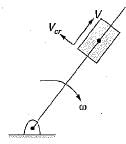
Coriolis component of acceleration appears in the direction perpendicular to the link.
Most Upvoted Answer
Coriolis component of acceleration is alwaysa)Parallel to linkb)Perpen...
Coriolis component of acceleration
The Coriolis component of acceleration is a term used to describe the acceleration experienced by an object in motion relative to a rotating reference frame. It arises due to the Coriolis effect, which is the apparent deflection of objects moving in a rotating system.
Perpendicular to the link
The correct answer is option 'B' - the Coriolis component of acceleration is perpendicular to the link. This means that it is at a right angle to the direction of motion of the object or link.
Explanation
When an object is in motion in a rotating reference frame, it experiences a Coriolis force. This force is perpendicular to both the velocity of the object and the axis of rotation. The Coriolis component of acceleration is the acceleration that results from this force.
To understand why the Coriolis component of acceleration is perpendicular to the link, consider a simple example of a rotating disk with a ball rolling on its surface. As the disk rotates, the ball experiences a Coriolis force that is directed perpendicular to its velocity. This force causes the ball to move in a curved path.
Similarly, in a mechanical system with rotating links, the Coriolis component of acceleration is perpendicular to the link. This means that it acts in a direction that is perpendicular to the direction of motion of the link. It is important to note that the Coriolis component of acceleration is not always present in all mechanical systems. It only arises when there is relative motion between the object and the rotating reference frame.
In conclusion, the Coriolis component of acceleration is always perpendicular to the link. This is because it arises from the Coriolis force, which is perpendicular to both the velocity of the object and the axis of rotation.
The Coriolis component of acceleration is a term used to describe the acceleration experienced by an object in motion relative to a rotating reference frame. It arises due to the Coriolis effect, which is the apparent deflection of objects moving in a rotating system.
Perpendicular to the link
The correct answer is option 'B' - the Coriolis component of acceleration is perpendicular to the link. This means that it is at a right angle to the direction of motion of the object or link.
Explanation
When an object is in motion in a rotating reference frame, it experiences a Coriolis force. This force is perpendicular to both the velocity of the object and the axis of rotation. The Coriolis component of acceleration is the acceleration that results from this force.
To understand why the Coriolis component of acceleration is perpendicular to the link, consider a simple example of a rotating disk with a ball rolling on its surface. As the disk rotates, the ball experiences a Coriolis force that is directed perpendicular to its velocity. This force causes the ball to move in a curved path.
Similarly, in a mechanical system with rotating links, the Coriolis component of acceleration is perpendicular to the link. This means that it acts in a direction that is perpendicular to the direction of motion of the link. It is important to note that the Coriolis component of acceleration is not always present in all mechanical systems. It only arises when there is relative motion between the object and the rotating reference frame.
In conclusion, the Coriolis component of acceleration is always perpendicular to the link. This is because it arises from the Coriolis force, which is perpendicular to both the velocity of the object and the axis of rotation.
 | Explore Courses for Mechanical Engineering exam |  |
Top Courses for Mechanical EngineeringView all




Top Courses for Mechanical Engineering
Question Description
Coriolis component of acceleration is alwaysa)Parallel to linkb)Perpendicular to linkc)Radially outward along linkd)Coincident with the axis of linkCorrect answer is option 'B'. Can you explain this answer? for Mechanical Engineering 2026 is part of Mechanical Engineering preparation. The Question and answers have been prepared according to the Mechanical Engineering exam syllabus. Information about Coriolis component of acceleration is alwaysa)Parallel to linkb)Perpendicular to linkc)Radially outward along linkd)Coincident with the axis of linkCorrect answer is option 'B'. Can you explain this answer? covers all topics & solutions for Mechanical Engineering 2026 Exam. Find important definitions, questions, meanings, examples, exercises and tests below for Coriolis component of acceleration is alwaysa)Parallel to linkb)Perpendicular to linkc)Radially outward along linkd)Coincident with the axis of linkCorrect answer is option 'B'. Can you explain this answer?.
Coriolis component of acceleration is alwaysa)Parallel to linkb)Perpendicular to linkc)Radially outward along linkd)Coincident with the axis of linkCorrect answer is option 'B'. Can you explain this answer? for Mechanical Engineering 2026 is part of Mechanical Engineering preparation. The Question and answers have been prepared according to the Mechanical Engineering exam syllabus. Information about Coriolis component of acceleration is alwaysa)Parallel to linkb)Perpendicular to linkc)Radially outward along linkd)Coincident with the axis of linkCorrect answer is option 'B'. Can you explain this answer? covers all topics & solutions for Mechanical Engineering 2026 Exam. Find important definitions, questions, meanings, examples, exercises and tests below for Coriolis component of acceleration is alwaysa)Parallel to linkb)Perpendicular to linkc)Radially outward along linkd)Coincident with the axis of linkCorrect answer is option 'B'. Can you explain this answer?.
Solutions for Coriolis component of acceleration is alwaysa)Parallel to linkb)Perpendicular to linkc)Radially outward along linkd)Coincident with the axis of linkCorrect answer is option 'B'. Can you explain this answer? in English & in Hindi are available as part of our courses for Mechanical Engineering. Download more important topics, notes, lectures and mock test series for Mechanical Engineering Exam by signing up for free.
Here you can find the meaning of Coriolis component of acceleration is alwaysa)Parallel to linkb)Perpendicular to linkc)Radially outward along linkd)Coincident with the axis of linkCorrect answer is option 'B'. Can you explain this answer? defined & explained in the simplest way possible. Besides giving the explanation of Coriolis component of acceleration is alwaysa)Parallel to linkb)Perpendicular to linkc)Radially outward along linkd)Coincident with the axis of linkCorrect answer is option 'B'. Can you explain this answer?, a detailed solution for Coriolis component of acceleration is alwaysa)Parallel to linkb)Perpendicular to linkc)Radially outward along linkd)Coincident with the axis of linkCorrect answer is option 'B'. Can you explain this answer? has been provided alongside types of Coriolis component of acceleration is alwaysa)Parallel to linkb)Perpendicular to linkc)Radially outward along linkd)Coincident with the axis of linkCorrect answer is option 'B'. Can you explain this answer? theory, EduRev gives you an ample number of questions to practice Coriolis component of acceleration is alwaysa)Parallel to linkb)Perpendicular to linkc)Radially outward along linkd)Coincident with the axis of linkCorrect answer is option 'B'. Can you explain this answer? tests, examples and also practice Mechanical Engineering tests.
| Explore Courses for Mechanical Engineering exam | |
Top Courses for Mechanical Engineering
Explore Courses
Signup for Free!
Signup to see your scores go up within 7 days! Learn & Practice with 1000+ FREE Notes, Videos & Tests.


