


Class 8 Exam > Class 8 Questions > In Hydra, the mode of reproduction isa)Both B... Start Learning for Free
In Hydra, the mode of reproduction is
- a)Both B and C
- b)Sexual
- c)Asexual
- d)None of these
Correct answer is option 'C'. Can you explain this answer?

Verified Answer
In Hydra, the mode of reproduction isa)Both B and Cb)Sexualc)Asexuald)...
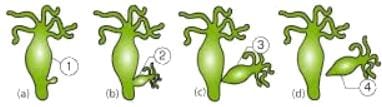
Hydra reproduce by asexual mode. Budding is the process by which hydra reproduce through asexual mode. An outgrowth grows from the parent body due to the repeated cell division at a specific site. The cell which divide rapidly are known as regenerative cell. The outgrowth from the parent body is known as bud. This bud separates from the parent and develops into a genetically identical new organism.
Most Upvoted Answer
In Hydra, the mode of reproduction isa)Both B and Cb)Sexualc)Asexuald)...
Answers:----- In hydra , the mode of reproduction is option 'A' (Asexual).
In hydra the new individuals develop as outgrowths from a single parent. this type of reproduction in which only a single parent is involved is called asexual reproduction . Since new individuals develop from the buds in hydra, this type of asexual reproduction is called budding.
In hydra the new individuals develop as outgrowths from a single parent. this type of reproduction in which only a single parent is involved is called asexual reproduction . Since new individuals develop from the buds in hydra, this type of asexual reproduction is called budding.
Free Test
FREE
| Start Free Test |
Community Answer
In Hydra, the mode of reproduction isa)Both B and Cb)Sexualc)Asexuald)...
Hydra is a small, tubular, freshwater organism belonging to the phylum Cnidaria. It is a member of the class Hydrozoa. Hydra is known for its remarkable regenerative abilities and its ability to reproduce both sexually and asexually.
a) Asexual Reproduction in Hydra:
Hydra can reproduce asexually through a process called budding. Budding involves the formation of a small outgrowth or bud on the body of the parent Hydra. This bud grows and develops into a miniature version of the parent Hydra. Eventually, the bud detaches from the parent and becomes an independent organism. This method of reproduction allows Hydra to rapidly increase its population.
b) Sexual Reproduction in Hydra:
Hydra can also reproduce sexually. The sexual reproduction in Hydra involves the fusion of gametes from two different individuals. The male Hydra releases sperm into the water, which is then captured by the tentacles of the female Hydra. The sperm is transferred to the female's body, where it fertilizes the eggs. The fertilized eggs develop into larvae, which are then released into the water. These larvae eventually settle and develop into new Hydra individuals.
c) Both Asexual and Sexual Reproduction:
Hydra is unique in that it can reproduce both asexually and sexually. This flexibility allows Hydra to adapt to different environmental conditions. Asexual reproduction through budding enables Hydra to quickly increase its population size when conditions are favorable. On the other hand, sexual reproduction introduces genetic diversity into the population, which can be advantageous for survival in changing environments.
By being able to reproduce both asexually and sexually, Hydra exhibits a high degree of reproductive plasticity. This adaptability gives Hydra an advantage in colonizing new habitats and surviving in varying environmental conditions.
Overall, the mode of reproduction in Hydra is both asexual (through budding) and sexual (through the fusion of gametes). This unique reproductive strategy contributes to the success and survival of this fascinating organism.
a) Asexual Reproduction in Hydra:
Hydra can reproduce asexually through a process called budding. Budding involves the formation of a small outgrowth or bud on the body of the parent Hydra. This bud grows and develops into a miniature version of the parent Hydra. Eventually, the bud detaches from the parent and becomes an independent organism. This method of reproduction allows Hydra to rapidly increase its population.
b) Sexual Reproduction in Hydra:
Hydra can also reproduce sexually. The sexual reproduction in Hydra involves the fusion of gametes from two different individuals. The male Hydra releases sperm into the water, which is then captured by the tentacles of the female Hydra. The sperm is transferred to the female's body, where it fertilizes the eggs. The fertilized eggs develop into larvae, which are then released into the water. These larvae eventually settle and develop into new Hydra individuals.
c) Both Asexual and Sexual Reproduction:
Hydra is unique in that it can reproduce both asexually and sexually. This flexibility allows Hydra to adapt to different environmental conditions. Asexual reproduction through budding enables Hydra to quickly increase its population size when conditions are favorable. On the other hand, sexual reproduction introduces genetic diversity into the population, which can be advantageous for survival in changing environments.
By being able to reproduce both asexually and sexually, Hydra exhibits a high degree of reproductive plasticity. This adaptability gives Hydra an advantage in colonizing new habitats and surviving in varying environmental conditions.
Overall, the mode of reproduction in Hydra is both asexual (through budding) and sexual (through the fusion of gametes). This unique reproductive strategy contributes to the success and survival of this fascinating organism.
 | Explore Courses for Class 8 exam |  |
Top Courses for Class 8View all


Top Courses for Class 8
Question Description
In Hydra, the mode of reproduction isa)Both B and Cb)Sexualc)Asexuald)None of theseCorrect answer is option 'C'. Can you explain this answer? for Class 8 2026 is part of Class 8 preparation. The Question and answers have been prepared according to the Class 8 exam syllabus. Information about In Hydra, the mode of reproduction isa)Both B and Cb)Sexualc)Asexuald)None of theseCorrect answer is option 'C'. Can you explain this answer? covers all topics & solutions for Class 8 2026 Exam. Find important definitions, questions, meanings, examples, exercises and tests below for In Hydra, the mode of reproduction isa)Both B and Cb)Sexualc)Asexuald)None of theseCorrect answer is option 'C'. Can you explain this answer?.
In Hydra, the mode of reproduction isa)Both B and Cb)Sexualc)Asexuald)None of theseCorrect answer is option 'C'. Can you explain this answer? for Class 8 2026 is part of Class 8 preparation. The Question and answers have been prepared according to the Class 8 exam syllabus. Information about In Hydra, the mode of reproduction isa)Both B and Cb)Sexualc)Asexuald)None of theseCorrect answer is option 'C'. Can you explain this answer? covers all topics & solutions for Class 8 2026 Exam. Find important definitions, questions, meanings, examples, exercises and tests below for In Hydra, the mode of reproduction isa)Both B and Cb)Sexualc)Asexuald)None of theseCorrect answer is option 'C'. Can you explain this answer?.
Solutions for In Hydra, the mode of reproduction isa)Both B and Cb)Sexualc)Asexuald)None of theseCorrect answer is option 'C'. Can you explain this answer? in English & in Hindi are available as part of our courses for Class 8. Download more important topics, notes, lectures and mock test series for Class 8 Exam by signing up for free.
Here you can find the meaning of In Hydra, the mode of reproduction isa)Both B and Cb)Sexualc)Asexuald)None of theseCorrect answer is option 'C'. Can you explain this answer? defined & explained in the simplest way possible. Besides giving the explanation of In Hydra, the mode of reproduction isa)Both B and Cb)Sexualc)Asexuald)None of theseCorrect answer is option 'C'. Can you explain this answer?, a detailed solution for In Hydra, the mode of reproduction isa)Both B and Cb)Sexualc)Asexuald)None of theseCorrect answer is option 'C'. Can you explain this answer? has been provided alongside types of In Hydra, the mode of reproduction isa)Both B and Cb)Sexualc)Asexuald)None of theseCorrect answer is option 'C'. Can you explain this answer? theory, EduRev gives you an ample number of questions to practice In Hydra, the mode of reproduction isa)Both B and Cb)Sexualc)Asexuald)None of theseCorrect answer is option 'C'. Can you explain this answer? tests, examples and also practice Class 8 tests.
| Explore Courses for Class 8 exam | |
Top Courses for Class 8
Explore Courses
Signup for Free!
Signup to see your scores go up within 7 days! Learn & Practice with 1000+ FREE Notes, Videos & Tests.


