


Electrical Engineering (EE) Exam > Electrical Engineering (EE) Questions > The area of his hysteresis loss is a measure ... Start Learning for Free
The area of his hysteresis loss is a measure of:
- a)Permittivity
- b)Permeance
- c)Energy loss per cycle
- d)Magnetic flux
Correct answer is option 'C'. Can you explain this answer?

Verified Answer
The area of his hysteresis loss is a measure of:a)Permittivityb)Permea...
Most Upvoted Answer
The area of his hysteresis loss is a measure of:a)Permittivityb)Permea...
Free Test
FREE
| Start Free Test |
Community Answer
The area of his hysteresis loss is a measure of:a)Permittivityb)Permea...
Explanation:
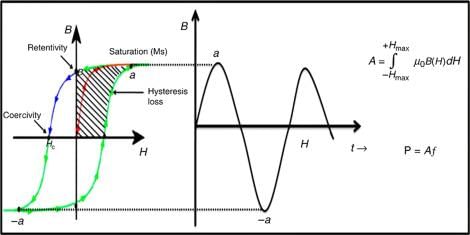
Similarly, hysteresis loss is a measure of the energy lost in a magnetic material due to the reversal of magnetization in each cycle.
What is Hysteresis Loss?
Hysteresis loss occurs in magnetic materials when the magnetic field is applied and removed, causing the material to undergo magnetization and demagnetization processes. This results in energy loss in the form of heat.
Area of Hysteresis Loop:
The area enclosed by the hysteresis loop on a graph of magnetic flux density (B) versus magnetic field strength (H) represents the energy lost per cycle in the material.
Measure of Energy Loss:
The area within the hysteresis loop is a measure of the energy dissipated as heat during each cycle of magnetization and demagnetization. The larger the area, the higher the energy loss.
Significance:
Understanding the hysteresis loss is essential in the design and selection of magnetic materials for various applications. Minimizing hysteresis loss helps in improving the efficiency of magnetic devices.
Relation to Permittivity and Permeance:
Permittivity is a measure of a material's ability to store electrical energy in an electric field, while permeance is the reciprocal of reluctance in a magnetic circuit. These properties are different from hysteresis loss, which specifically deals with energy dissipation in magnetic materials.
In conclusion, the area of the hysteresis loss loop is a crucial parameter that quantifies the energy lost per cycle in a magnetic material and is essential for optimizing the performance of magnetic devices.
 | Explore Courses for Electrical Engineering (EE) exam |  |
Top Courses for Electrical Engineering (EE)View all




Top Courses for Electrical Engineering (EE)
Question Description
The area of his hysteresis loss is a measure of:a)Permittivityb)Permeancec)Energy loss per cycled)Magnetic fluxCorrect answer is option 'C'. Can you explain this answer? for Electrical Engineering (EE) 2026 is part of Electrical Engineering (EE) preparation. The Question and answers have been prepared according to the Electrical Engineering (EE) exam syllabus. Information about The area of his hysteresis loss is a measure of:a)Permittivityb)Permeancec)Energy loss per cycled)Magnetic fluxCorrect answer is option 'C'. Can you explain this answer? covers all topics & solutions for Electrical Engineering (EE) 2026 Exam. Find important definitions, questions, meanings, examples, exercises and tests below for The area of his hysteresis loss is a measure of:a)Permittivityb)Permeancec)Energy loss per cycled)Magnetic fluxCorrect answer is option 'C'. Can you explain this answer?.
The area of his hysteresis loss is a measure of:a)Permittivityb)Permeancec)Energy loss per cycled)Magnetic fluxCorrect answer is option 'C'. Can you explain this answer? for Electrical Engineering (EE) 2026 is part of Electrical Engineering (EE) preparation. The Question and answers have been prepared according to the Electrical Engineering (EE) exam syllabus. Information about The area of his hysteresis loss is a measure of:a)Permittivityb)Permeancec)Energy loss per cycled)Magnetic fluxCorrect answer is option 'C'. Can you explain this answer? covers all topics & solutions for Electrical Engineering (EE) 2026 Exam. Find important definitions, questions, meanings, examples, exercises and tests below for The area of his hysteresis loss is a measure of:a)Permittivityb)Permeancec)Energy loss per cycled)Magnetic fluxCorrect answer is option 'C'. Can you explain this answer?.
Solutions for The area of his hysteresis loss is a measure of:a)Permittivityb)Permeancec)Energy loss per cycled)Magnetic fluxCorrect answer is option 'C'. Can you explain this answer? in English & in Hindi are available as part of our courses for Electrical Engineering (EE). Download more important topics, notes, lectures and mock test series for Electrical Engineering (EE) Exam by signing up for free.
Here you can find the meaning of The area of his hysteresis loss is a measure of:a)Permittivityb)Permeancec)Energy loss per cycled)Magnetic fluxCorrect answer is option 'C'. Can you explain this answer? defined & explained in the simplest way possible. Besides giving the explanation of The area of his hysteresis loss is a measure of:a)Permittivityb)Permeancec)Energy loss per cycled)Magnetic fluxCorrect answer is option 'C'. Can you explain this answer?, a detailed solution for The area of his hysteresis loss is a measure of:a)Permittivityb)Permeancec)Energy loss per cycled)Magnetic fluxCorrect answer is option 'C'. Can you explain this answer? has been provided alongside types of The area of his hysteresis loss is a measure of:a)Permittivityb)Permeancec)Energy loss per cycled)Magnetic fluxCorrect answer is option 'C'. Can you explain this answer? theory, EduRev gives you an ample number of questions to practice The area of his hysteresis loss is a measure of:a)Permittivityb)Permeancec)Energy loss per cycled)Magnetic fluxCorrect answer is option 'C'. Can you explain this answer? tests, examples and also practice Electrical Engineering (EE) tests.
| Explore Courses for Electrical Engineering (EE) exam | |
Top Courses for Electrical Engineering (EE)
Explore Courses
Signup for Free!
Signup to see your scores go up within 7 days! Learn & Practice with 1000+ FREE Notes, Videos & Tests.


