


Electrical Engineering (EE) Exam > Electrical Engineering (EE) Questions > R-C phase shift oscillator and Wein bridge os... Start Learning for Free
R-C phase shift oscillator and Wein bridge oscillator are the commonly used circuits for generating ________ waveform of a required frequency.
- a)sine
- b)negative
- c)cosine
- d)both sine and cosine
Correct answer is option 'A'. Can you explain this answer?

Most Upvoted Answer
R-C phase shift oscillator and Wein bridge oscillator are the commonly...
The R-C phase shift oscillator and Wein bridge oscillator are the commonly used circuits for generating a sinusoidal waveform of required frequency.
RC Phase shift oscillator:
The circuit diagram of the RC phase shift oscillator is shown below:
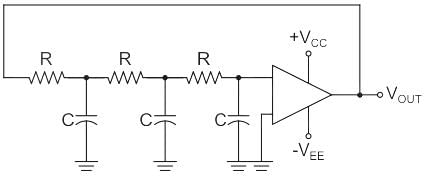
- The phase shift oscillator is a linear electronic circuit that produces a sine wave output.
- It consists of an inverting amplifier element such as a transistor or op-amp with its output feedback to its input through a phase shift network consisting of resistors and capacitors in a ladder network.
- The feedback network shifts the phase of the amplifier output by 1800 at the oscillation frequency to give positive feedback.
Wein bridge oscillator:
The circuit diagram of the Wein bridge oscillator is shown below:
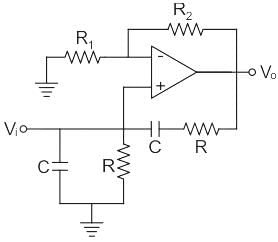
- The Wein bridge oscillator uses two RC networks connected together to produce a sinusoidal oscillator.
- The Wein bridge oscillator uses a feedback circuit consisting of a series RC circuit connected with a parallel RC of the same component values producing a phase delay or phase advance depending upon the circuit frequency
- At the resonant frequency, the phase shift is 00.
Free Test
FREE
| Start Free Test |
Community Answer
R-C phase shift oscillator and Wein bridge oscillator are the commonly...
R-C phase shift oscillator and Wein bridge oscillator are commonly used circuits for generating sine waveform of a required frequency. Let's understand each oscillator in detail:
1. R-C Phase Shift Oscillator:
- The R-C phase shift oscillator is a type of feedback oscillator that uses an RC network (resistor-capacitor network) to provide phase shift.
- The basic principle of the R-C phase shift oscillator is that the phase shift of the RC network changes with frequency.
- The RC network consists of multiple stages of RC filter circuits connected in series.
- Each stage provides a phase shift of 60 degrees, resulting in a total phase shift of 180 degrees or more.
- The feedback network is connected to an amplifier, which amplifies the signal and feeds it back to the RC network.
- The phase shift provided by the RC network and the gain of the amplifier are carefully designed to ensure positive feedback and oscillation.
- The frequency of oscillation is determined by the values of resistors and capacitors in the RC network.
- The output waveform of the R-C phase shift oscillator is a sine waveform.
2. Wein Bridge Oscillator:
- The Wein bridge oscillator is another type of feedback oscillator that uses a bridge network known as the Wein bridge.
- The Wein bridge consists of resistors and capacitors connected in a specific configuration.
- The bridge network is connected to an amplifier, which amplifies the signal and feeds it back to the bridge network.
- The feedback network and the amplifier are designed such that the bridge network operates at its resonant frequency.
- The frequency of oscillation is determined by the values of resistors and capacitors in the bridge network.
- The output waveform of the Wein bridge oscillator is a sine waveform.
Comparison:
- Both the R-C phase shift oscillator and Wein bridge oscillator are used to generate sine waveforms of a required frequency.
- The R-C phase shift oscillator uses an RC network for phase shift, while the Wein bridge oscillator uses a bridge network.
- The R-C phase shift oscillator provides a phase shift of 180 degrees or more, while the Wein bridge oscillator operates at its resonant frequency.
- The frequency of oscillation in both oscillators is determined by the values of resistors and capacitors.
- Both oscillators require an amplifier for positive feedback and oscillation.
In conclusion, the R-C phase shift oscillator and Wein bridge oscillator are commonly used circuits for generating sine waveforms of a required frequency.
1. R-C Phase Shift Oscillator:
- The R-C phase shift oscillator is a type of feedback oscillator that uses an RC network (resistor-capacitor network) to provide phase shift.
- The basic principle of the R-C phase shift oscillator is that the phase shift of the RC network changes with frequency.
- The RC network consists of multiple stages of RC filter circuits connected in series.
- Each stage provides a phase shift of 60 degrees, resulting in a total phase shift of 180 degrees or more.
- The feedback network is connected to an amplifier, which amplifies the signal and feeds it back to the RC network.
- The phase shift provided by the RC network and the gain of the amplifier are carefully designed to ensure positive feedback and oscillation.
- The frequency of oscillation is determined by the values of resistors and capacitors in the RC network.
- The output waveform of the R-C phase shift oscillator is a sine waveform.
2. Wein Bridge Oscillator:
- The Wein bridge oscillator is another type of feedback oscillator that uses a bridge network known as the Wein bridge.
- The Wein bridge consists of resistors and capacitors connected in a specific configuration.
- The bridge network is connected to an amplifier, which amplifies the signal and feeds it back to the bridge network.
- The feedback network and the amplifier are designed such that the bridge network operates at its resonant frequency.
- The frequency of oscillation is determined by the values of resistors and capacitors in the bridge network.
- The output waveform of the Wein bridge oscillator is a sine waveform.
Comparison:
- Both the R-C phase shift oscillator and Wein bridge oscillator are used to generate sine waveforms of a required frequency.
- The R-C phase shift oscillator uses an RC network for phase shift, while the Wein bridge oscillator uses a bridge network.
- The R-C phase shift oscillator provides a phase shift of 180 degrees or more, while the Wein bridge oscillator operates at its resonant frequency.
- The frequency of oscillation in both oscillators is determined by the values of resistors and capacitors.
- Both oscillators require an amplifier for positive feedback and oscillation.
In conclusion, the R-C phase shift oscillator and Wein bridge oscillator are commonly used circuits for generating sine waveforms of a required frequency.
 | Explore Courses for Electrical Engineering (EE) exam |  |
Top Courses for Electrical Engineering (EE)View all




Top Courses for Electrical Engineering (EE)
Question Description
R-C phase shift oscillator and Wein bridge oscillator are the commonly used circuits for generating ________ waveform of a required frequency.a)sineb)negativec)cosined)both sine and cosineCorrect answer is option 'A'. Can you explain this answer? for Electrical Engineering (EE) 2026 is part of Electrical Engineering (EE) preparation. The Question and answers have been prepared according to the Electrical Engineering (EE) exam syllabus. Information about R-C phase shift oscillator and Wein bridge oscillator are the commonly used circuits for generating ________ waveform of a required frequency.a)sineb)negativec)cosined)both sine and cosineCorrect answer is option 'A'. Can you explain this answer? covers all topics & solutions for Electrical Engineering (EE) 2026 Exam. Find important definitions, questions, meanings, examples, exercises and tests below for R-C phase shift oscillator and Wein bridge oscillator are the commonly used circuits for generating ________ waveform of a required frequency.a)sineb)negativec)cosined)both sine and cosineCorrect answer is option 'A'. Can you explain this answer?.
R-C phase shift oscillator and Wein bridge oscillator are the commonly used circuits for generating ________ waveform of a required frequency.a)sineb)negativec)cosined)both sine and cosineCorrect answer is option 'A'. Can you explain this answer? for Electrical Engineering (EE) 2026 is part of Electrical Engineering (EE) preparation. The Question and answers have been prepared according to the Electrical Engineering (EE) exam syllabus. Information about R-C phase shift oscillator and Wein bridge oscillator are the commonly used circuits for generating ________ waveform of a required frequency.a)sineb)negativec)cosined)both sine and cosineCorrect answer is option 'A'. Can you explain this answer? covers all topics & solutions for Electrical Engineering (EE) 2026 Exam. Find important definitions, questions, meanings, examples, exercises and tests below for R-C phase shift oscillator and Wein bridge oscillator are the commonly used circuits for generating ________ waveform of a required frequency.a)sineb)negativec)cosined)both sine and cosineCorrect answer is option 'A'. Can you explain this answer?.
Solutions for R-C phase shift oscillator and Wein bridge oscillator are the commonly used circuits for generating ________ waveform of a required frequency.a)sineb)negativec)cosined)both sine and cosineCorrect answer is option 'A'. Can you explain this answer? in English & in Hindi are available as part of our courses for Electrical Engineering (EE). Download more important topics, notes, lectures and mock test series for Electrical Engineering (EE) Exam by signing up for free.
Here you can find the meaning of R-C phase shift oscillator and Wein bridge oscillator are the commonly used circuits for generating ________ waveform of a required frequency.a)sineb)negativec)cosined)both sine and cosineCorrect answer is option 'A'. Can you explain this answer? defined & explained in the simplest way possible. Besides giving the explanation of R-C phase shift oscillator and Wein bridge oscillator are the commonly used circuits for generating ________ waveform of a required frequency.a)sineb)negativec)cosined)both sine and cosineCorrect answer is option 'A'. Can you explain this answer?, a detailed solution for R-C phase shift oscillator and Wein bridge oscillator are the commonly used circuits for generating ________ waveform of a required frequency.a)sineb)negativec)cosined)both sine and cosineCorrect answer is option 'A'. Can you explain this answer? has been provided alongside types of R-C phase shift oscillator and Wein bridge oscillator are the commonly used circuits for generating ________ waveform of a required frequency.a)sineb)negativec)cosined)both sine and cosineCorrect answer is option 'A'. Can you explain this answer? theory, EduRev gives you an ample number of questions to practice R-C phase shift oscillator and Wein bridge oscillator are the commonly used circuits for generating ________ waveform of a required frequency.a)sineb)negativec)cosined)both sine and cosineCorrect answer is option 'A'. Can you explain this answer? tests, examples and also practice Electrical Engineering (EE) tests.
| Explore Courses for Electrical Engineering (EE) exam | |
Top Courses for Electrical Engineering (EE)
Explore Courses
Signup for Free!
Signup to see your scores go up within 7 days! Learn & Practice with 1000+ FREE Notes, Videos & Tests.


