


Electrical Engineering (EE) Exam > Electrical Engineering (EE) Questions > Which one of the following is/are not true wi... Start Learning for Free
Which one of the following is/are not true with reference to a thyristor?
1. Latching current (IL) is associated with the turn-off process and holding current (IH) with the turn-on process.
2. Holding current is associated with the turn-off process and latching current with the turn-on process
3. A thyristor can be termed as an AC switch
2. Holding current is associated with the turn-off process and latching current with the turn-on process
3. A thyristor can be termed as an AC switch
- a)Both 1 & 2 are correct.
- b)Only 2 & 3 are correct
- c)Only 2 is correct
- d)Only 1 is correct
Correct answer is option 'C'. Can you explain this answer?

Most Upvoted Answer
Which one of the following is/are not true with reference to a thyrist...
Silicon Controlled Rectifier is a device that has four layers and three PN junctions. The silicon control rectifier (SCR) consists of four layers of semiconductors, which form NPNP or PNPN structures, having three P-N junctions labeled J1, J2 and J3, and three terminals.
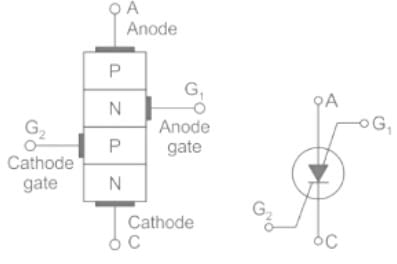
- The anode terminal of an SCR is connected to the p-type material of a PNPN structure, and the cathode terminal is connected to the n-type layer, while the gate of the SCR is connected to the p-type material nearest to the cathode.
- A thyristor or SCR (silicon-controlled rectifier) can only conduct in one direction so it is mostly called a DC switch.
Latching & Holding Current:
- Latching Current is the minimum anode current required to maintain the thyristor in the ON state immediately after a thyristor has been turned on and the the gate signal has been removed.
- Holding Current is the minimum anode current to maintain the thyristor in the on-state.
- Latching current is always greater than holding current.
- Latching current is the minimum value of anode current which it must attain during turn – ON process to maintain conduction when gate signal is removed.
- Holding current is the minimum value of anode current below which it must fall for turning – OFF the thyristor.
Free Test
FREE
| Start Free Test |
Community Answer
Which one of the following is/are not true with reference to a thyrist...
And 2
b)Only 1
c)Only 2
d)None of the above
b)Only 1
c)Only 2
d)None of the above
 | Explore Courses for Electrical Engineering (EE) exam |  |
Top Courses for Electrical Engineering (EE)View all


Top Courses for Electrical Engineering (EE)
Question Description
Which one of the following is/are not true with reference to a thyristor?1. Latching current (IL) is associated with the turn-off process and holding current (IH) with the turn-on process.2. Holding current is associated with the turn-off process and latching current with the turn-on process3. A thyristor can be termed as an AC switcha)Both 1 & 2 are correct.b)Only 2 & 3 are correctc)Only 2 is correctd)Only 1 is correctCorrect answer is option 'C'. Can you explain this answer? for Electrical Engineering (EE) 2026 is part of Electrical Engineering (EE) preparation. The Question and answers have been prepared according to the Electrical Engineering (EE) exam syllabus. Information about Which one of the following is/are not true with reference to a thyristor?1. Latching current (IL) is associated with the turn-off process and holding current (IH) with the turn-on process.2. Holding current is associated with the turn-off process and latching current with the turn-on process3. A thyristor can be termed as an AC switcha)Both 1 & 2 are correct.b)Only 2 & 3 are correctc)Only 2 is correctd)Only 1 is correctCorrect answer is option 'C'. Can you explain this answer? covers all topics & solutions for Electrical Engineering (EE) 2026 Exam. Find important definitions, questions, meanings, examples, exercises and tests below for Which one of the following is/are not true with reference to a thyristor?1. Latching current (IL) is associated with the turn-off process and holding current (IH) with the turn-on process.2. Holding current is associated with the turn-off process and latching current with the turn-on process3. A thyristor can be termed as an AC switcha)Both 1 & 2 are correct.b)Only 2 & 3 are correctc)Only 2 is correctd)Only 1 is correctCorrect answer is option 'C'. Can you explain this answer?.
Which one of the following is/are not true with reference to a thyristor?1. Latching current (IL) is associated with the turn-off process and holding current (IH) with the turn-on process.2. Holding current is associated with the turn-off process and latching current with the turn-on process3. A thyristor can be termed as an AC switcha)Both 1 & 2 are correct.b)Only 2 & 3 are correctc)Only 2 is correctd)Only 1 is correctCorrect answer is option 'C'. Can you explain this answer? for Electrical Engineering (EE) 2026 is part of Electrical Engineering (EE) preparation. The Question and answers have been prepared according to the Electrical Engineering (EE) exam syllabus. Information about Which one of the following is/are not true with reference to a thyristor?1. Latching current (IL) is associated with the turn-off process and holding current (IH) with the turn-on process.2. Holding current is associated with the turn-off process and latching current with the turn-on process3. A thyristor can be termed as an AC switcha)Both 1 & 2 are correct.b)Only 2 & 3 are correctc)Only 2 is correctd)Only 1 is correctCorrect answer is option 'C'. Can you explain this answer? covers all topics & solutions for Electrical Engineering (EE) 2026 Exam. Find important definitions, questions, meanings, examples, exercises and tests below for Which one of the following is/are not true with reference to a thyristor?1. Latching current (IL) is associated with the turn-off process and holding current (IH) with the turn-on process.2. Holding current is associated with the turn-off process and latching current with the turn-on process3. A thyristor can be termed as an AC switcha)Both 1 & 2 are correct.b)Only 2 & 3 are correctc)Only 2 is correctd)Only 1 is correctCorrect answer is option 'C'. Can you explain this answer?.
Solutions for Which one of the following is/are not true with reference to a thyristor?1. Latching current (IL) is associated with the turn-off process and holding current (IH) with the turn-on process.2. Holding current is associated with the turn-off process and latching current with the turn-on process3. A thyristor can be termed as an AC switcha)Both 1 & 2 are correct.b)Only 2 & 3 are correctc)Only 2 is correctd)Only 1 is correctCorrect answer is option 'C'. Can you explain this answer? in English & in Hindi are available as part of our courses for Electrical Engineering (EE). Download more important topics, notes, lectures and mock test series for Electrical Engineering (EE) Exam by signing up for free.
Here you can find the meaning of Which one of the following is/are not true with reference to a thyristor?1. Latching current (IL) is associated with the turn-off process and holding current (IH) with the turn-on process.2. Holding current is associated with the turn-off process and latching current with the turn-on process3. A thyristor can be termed as an AC switcha)Both 1 & 2 are correct.b)Only 2 & 3 are correctc)Only 2 is correctd)Only 1 is correctCorrect answer is option 'C'. Can you explain this answer? defined & explained in the simplest way possible. Besides giving the explanation of Which one of the following is/are not true with reference to a thyristor?1. Latching current (IL) is associated with the turn-off process and holding current (IH) with the turn-on process.2. Holding current is associated with the turn-off process and latching current with the turn-on process3. A thyristor can be termed as an AC switcha)Both 1 & 2 are correct.b)Only 2 & 3 are correctc)Only 2 is correctd)Only 1 is correctCorrect answer is option 'C'. Can you explain this answer?, a detailed solution for Which one of the following is/are not true with reference to a thyristor?1. Latching current (IL) is associated with the turn-off process and holding current (IH) with the turn-on process.2. Holding current is associated with the turn-off process and latching current with the turn-on process3. A thyristor can be termed as an AC switcha)Both 1 & 2 are correct.b)Only 2 & 3 are correctc)Only 2 is correctd)Only 1 is correctCorrect answer is option 'C'. Can you explain this answer? has been provided alongside types of Which one of the following is/are not true with reference to a thyristor?1. Latching current (IL) is associated with the turn-off process and holding current (IH) with the turn-on process.2. Holding current is associated with the turn-off process and latching current with the turn-on process3. A thyristor can be termed as an AC switcha)Both 1 & 2 are correct.b)Only 2 & 3 are correctc)Only 2 is correctd)Only 1 is correctCorrect answer is option 'C'. Can you explain this answer? theory, EduRev gives you an ample number of questions to practice Which one of the following is/are not true with reference to a thyristor?1. Latching current (IL) is associated with the turn-off process and holding current (IH) with the turn-on process.2. Holding current is associated with the turn-off process and latching current with the turn-on process3. A thyristor can be termed as an AC switcha)Both 1 & 2 are correct.b)Only 2 & 3 are correctc)Only 2 is correctd)Only 1 is correctCorrect answer is option 'C'. Can you explain this answer? tests, examples and also practice Electrical Engineering (EE) tests.
| Explore Courses for Electrical Engineering (EE) exam | |
Top Courses for Electrical Engineering (EE)
Explore Courses
Signup for Free!
Signup to see your scores go up within 7 days! Learn & Practice with 1000+ FREE Notes, Videos & Tests.


