


Electrical Engineering (EE) Exam > Electrical Engineering (EE) Questions > For formation of the Y bus matrix (using node... Start Learning for Free
For formation of the Y bus matrix (using node voltage analysis) in power system network modelling ______ is used
- a)KVL
- b)KCL
- c)Faraday's law
- d)all are correct
Correct answer is option 'B'. Can you explain this answer?

Most Upvoted Answer
For formation of the Y bus matrix (using node voltage analysis) in pow...
Y bus matrix:
- In a power system, Bus Admittance Matrix represents the nodal admittances of the various buses.
- Admittance matrix is used to analyze the data that is needed in the load or a power flow study of the buses.
- It explains the admittance and the topology of the network.
The following are the advantages of the bus admittance matrix.
- The data preparation of the bus admittance matrix is very simple.
- The formation of the bus admittance matrix and its modification is easy.
- The bus admittance matrix is a sparse matrix thus the computer memory requirement is less.
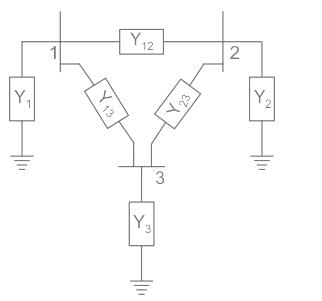
For the above figure, the admittance matrix is as shown below.

For formation of the Y bus matrix (using node voltage analysis) in power system network modelling KCL is used
Diagonal elements of the Bus Admittance matrix are known as self-admittances and the off-diagonal elements are known as mutual admittances.
Some observations on the admittance matrix:
Diagonal elements of the Bus Admittance matrix are known as self-admittances and the off-diagonal elements are known as mutual admittances.
Some observations on the admittance matrix:
- Off diagonal elements are symmetric in terms of both position and value with respect to diagonal.
- The diagonal element of each node is the sum of the admittances connected to it
- Off diagonal element is negated admittance
Free Test
FREE
| Start Free Test |
Community Answer
For formation of the Y bus matrix (using node voltage analysis) in pow...
Introduction:
In power system network modeling, the Y bus matrix is an essential component that represents the admittance between different nodes in the network. It is used for various analysis and calculations, such as load flow studies, fault analysis, and stability analysis. The Y bus matrix is formed using the node voltage analysis method, which is based on Kirchhoff's current law (KCL).
Kirchhoff's Current Law (KCL):
Kirchhoff's Current Law states that the algebraic sum of currents entering and leaving a node in an electrical circuit is zero. It is based on the principle of conservation of charge.
Formation of Y bus matrix:
The Y bus matrix is formed by considering the admittance between different nodes in the power system network. The admittance is the reciprocal of impedance and represents the ease with which current can flow through a particular branch or element.
To form the Y bus matrix using node voltage analysis, the following steps are typically followed:
1. Node numbering: Assign a unique number to each node in the power system network.
2. Formulate the equations: Write the KCL equations for each node in terms of the unknown node voltages. These equations represent the current entering or leaving each node.
3. Admittance representation: Represent the admittance between different nodes in terms of conductance (G) and susceptance (B). The admittance can be determined based on the type of element connecting the nodes. For example, for a resistor, the admittance is G, while for a reactance, the admittance is jB.
4. Construct the Y bus matrix: Based on the KCL equations and admittance representation, construct the Y bus matrix by filling in the appropriate values. The Y bus matrix is a square matrix with dimensions equal to the total number of nodes in the power system network.
5. Include shunt elements: If there are shunt elements such as capacitors or inductors connected to the nodes, include their admittance values in the Y bus matrix as well.
6. Account for grounded nodes: If any nodes in the network are grounded, the corresponding row and column in the Y bus matrix will be zero except for the diagonal element, which represents the total admittance connected to the ground.
7. Finalize the Y bus matrix: Once all the elements and admittances are included, the Y bus matrix is finalized and can be used for various power system analysis.
Conclusion:
In power system network modeling, the Y bus matrix is formed using the node voltage analysis method, which is based on Kirchhoff's current law (KCL). KCL ensures that the algebraic sum of currents entering and leaving a node is zero. By formulating the KCL equations for each node and considering the admittance between different nodes, the Y bus matrix can be constructed. The Y bus matrix is an essential tool for power system analysis and calculations.
In power system network modeling, the Y bus matrix is an essential component that represents the admittance between different nodes in the network. It is used for various analysis and calculations, such as load flow studies, fault analysis, and stability analysis. The Y bus matrix is formed using the node voltage analysis method, which is based on Kirchhoff's current law (KCL).
Kirchhoff's Current Law (KCL):
Kirchhoff's Current Law states that the algebraic sum of currents entering and leaving a node in an electrical circuit is zero. It is based on the principle of conservation of charge.
Formation of Y bus matrix:
The Y bus matrix is formed by considering the admittance between different nodes in the power system network. The admittance is the reciprocal of impedance and represents the ease with which current can flow through a particular branch or element.
To form the Y bus matrix using node voltage analysis, the following steps are typically followed:
1. Node numbering: Assign a unique number to each node in the power system network.
2. Formulate the equations: Write the KCL equations for each node in terms of the unknown node voltages. These equations represent the current entering or leaving each node.
3. Admittance representation: Represent the admittance between different nodes in terms of conductance (G) and susceptance (B). The admittance can be determined based on the type of element connecting the nodes. For example, for a resistor, the admittance is G, while for a reactance, the admittance is jB.
4. Construct the Y bus matrix: Based on the KCL equations and admittance representation, construct the Y bus matrix by filling in the appropriate values. The Y bus matrix is a square matrix with dimensions equal to the total number of nodes in the power system network.
5. Include shunt elements: If there are shunt elements such as capacitors or inductors connected to the nodes, include their admittance values in the Y bus matrix as well.
6. Account for grounded nodes: If any nodes in the network are grounded, the corresponding row and column in the Y bus matrix will be zero except for the diagonal element, which represents the total admittance connected to the ground.
7. Finalize the Y bus matrix: Once all the elements and admittances are included, the Y bus matrix is finalized and can be used for various power system analysis.
Conclusion:
In power system network modeling, the Y bus matrix is formed using the node voltage analysis method, which is based on Kirchhoff's current law (KCL). KCL ensures that the algebraic sum of currents entering and leaving a node is zero. By formulating the KCL equations for each node and considering the admittance between different nodes, the Y bus matrix can be constructed. The Y bus matrix is an essential tool for power system analysis and calculations.
 | Explore Courses for Electrical Engineering (EE) exam |  |
Top Courses for Electrical Engineering (EE)View all




Top Courses for Electrical Engineering (EE)
Question Description
For formation of the Y bus matrix (using node voltage analysis) in power system network modelling ______ is useda)KVLb)KCLc)Faradays lawd)all are correctCorrect answer is option 'B'. Can you explain this answer? for Electrical Engineering (EE) 2026 is part of Electrical Engineering (EE) preparation. The Question and answers have been prepared according to the Electrical Engineering (EE) exam syllabus. Information about For formation of the Y bus matrix (using node voltage analysis) in power system network modelling ______ is useda)KVLb)KCLc)Faradays lawd)all are correctCorrect answer is option 'B'. Can you explain this answer? covers all topics & solutions for Electrical Engineering (EE) 2026 Exam. Find important definitions, questions, meanings, examples, exercises and tests below for For formation of the Y bus matrix (using node voltage analysis) in power system network modelling ______ is useda)KVLb)KCLc)Faradays lawd)all are correctCorrect answer is option 'B'. Can you explain this answer?.
For formation of the Y bus matrix (using node voltage analysis) in power system network modelling ______ is useda)KVLb)KCLc)Faradays lawd)all are correctCorrect answer is option 'B'. Can you explain this answer? for Electrical Engineering (EE) 2026 is part of Electrical Engineering (EE) preparation. The Question and answers have been prepared according to the Electrical Engineering (EE) exam syllabus. Information about For formation of the Y bus matrix (using node voltage analysis) in power system network modelling ______ is useda)KVLb)KCLc)Faradays lawd)all are correctCorrect answer is option 'B'. Can you explain this answer? covers all topics & solutions for Electrical Engineering (EE) 2026 Exam. Find important definitions, questions, meanings, examples, exercises and tests below for For formation of the Y bus matrix (using node voltage analysis) in power system network modelling ______ is useda)KVLb)KCLc)Faradays lawd)all are correctCorrect answer is option 'B'. Can you explain this answer?.
Solutions for For formation of the Y bus matrix (using node voltage analysis) in power system network modelling ______ is useda)KVLb)KCLc)Faradays lawd)all are correctCorrect answer is option 'B'. Can you explain this answer? in English & in Hindi are available as part of our courses for Electrical Engineering (EE). Download more important topics, notes, lectures and mock test series for Electrical Engineering (EE) Exam by signing up for free.
Here you can find the meaning of For formation of the Y bus matrix (using node voltage analysis) in power system network modelling ______ is useda)KVLb)KCLc)Faradays lawd)all are correctCorrect answer is option 'B'. Can you explain this answer? defined & explained in the simplest way possible. Besides giving the explanation of For formation of the Y bus matrix (using node voltage analysis) in power system network modelling ______ is useda)KVLb)KCLc)Faradays lawd)all are correctCorrect answer is option 'B'. Can you explain this answer?, a detailed solution for For formation of the Y bus matrix (using node voltage analysis) in power system network modelling ______ is useda)KVLb)KCLc)Faradays lawd)all are correctCorrect answer is option 'B'. Can you explain this answer? has been provided alongside types of For formation of the Y bus matrix (using node voltage analysis) in power system network modelling ______ is useda)KVLb)KCLc)Faradays lawd)all are correctCorrect answer is option 'B'. Can you explain this answer? theory, EduRev gives you an ample number of questions to practice For formation of the Y bus matrix (using node voltage analysis) in power system network modelling ______ is useda)KVLb)KCLc)Faradays lawd)all are correctCorrect answer is option 'B'. Can you explain this answer? tests, examples and also practice Electrical Engineering (EE) tests.
| Explore Courses for Electrical Engineering (EE) exam | |
Top Courses for Electrical Engineering (EE)
Explore Courses
Signup for Free!
Signup to see your scores go up within 7 days! Learn & Practice with 1000+ FREE Notes, Videos & Tests.


