


Electrical Engineering (EE) Exam > Electrical Engineering (EE) Questions > Which of the following is NOT one of the prop... Start Learning for Free
Which of the following is NOT one of the properties of transfer function?
- a)All initial conditions of the system are set to zero.
- b)The transfer function is dependent on the input of the system.
- c)It is defined only for a linear time-invariant system.
- d)The transfer function between an input variable and an output variable of a system is defined as the Laplace transform of the impulse response.
Correct answer is option 'B'. Can you explain this answer?

Verified Answer
Which of the following is NOT one of the properties of transfer functi...
Transfer function:
The transfer function is defined as the ratio of the Laplace transform of the output variable to the input variable with all initial conditions zero.
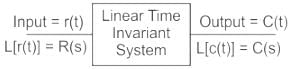
TF = L[output] / L[input]| Initial conditions = 0
TF = C(s) / R(s)
The transfer function of a linear time-invariant system can also be defined as the Laplace transform of the impulse response, with all the initial conditions set to zero.
Properties of transfer function:
- The transfer function is defined only for a linear time-invariant system. It is not defined for nonlinear systems.
- The transfer function is independent of the input and output.
- Because the transfer function of the system depends on the governing dynamic equation of the system only.
- If the transfer function is dependent on the input means the system will come under non-linear systems, but actually, the transfer function is defined for linear systems only.
- Transfer function analysis is not valid for the system that contains variables having initial values.
Most Upvoted Answer
Which of the following is NOT one of the properties of transfer functi...
Transfer function:
The transfer function is defined as the ratio of the Laplace transform of the output variable to the input variable with all initial conditions zero.
TF = L[output] / L[input]| Initial conditions = 0
TF = C(s) / R(s)
The transfer function of a linear time-invariant system can also be defined as the Laplace transform of the impulse response, with all the initial conditions set to zero.
Properties of transfer function:
- The transfer function is defined only for a linear time-invariant system. It is not defined for nonlinear systems.
- The transfer function is independent of the input and output.
- Because the transfer function of the system depends on the governing dynamic equation of the system only.
- If the transfer function is dependent on the input means the system will come under non-linear systems, but actually, the transfer function is defined for linear systems only.
- Transfer function analysis is not valid for the system that contains variables having initial values.
Free Test
FREE
| Start Free Test |
Community Answer
Which of the following is NOT one of the properties of transfer functi...
Transfer Function Properties
The transfer function is an important concept in control systems engineering. It is a mathematical representation of the relationship between the input and output of a system. The transfer function can be used to analyze and design control systems. There are several properties associated with the transfer function. Let's discuss each of them:
All initial conditions of the system are set to zero
When analyzing a system using the transfer function, it is assumed that all initial conditions of the system are set to zero. This means that the system is in a steady state and there are no transient effects or memory of past inputs. This assumption simplifies the analysis and allows us to focus on the behavior of the system under the given input.
The transfer function is dependent on the input of the system
The transfer function describes the relationship between the input and output of a system. It is a function of the input variable(s) and represents how the system processes the input to produce the output. Therefore, the transfer function is dependent on the input of the system. Different inputs can result in different transfer functions, reflecting the different behavior of the system under different inputs.
It is defined only for a linear time-invariant system
The transfer function is defined only for linear time-invariant (LTI) systems. A linear system is one that satisfies the principle of superposition, meaning that the output is a linear combination of the inputs. A time-invariant system is one whose behavior does not change with time. The transfer function is a useful tool for analyzing LTI systems because it simplifies the analysis by converting differential equations into algebraic equations.
The transfer function between an input variable and an output variable of a system is defined as the Laplace transform of the impulse response
The transfer function can be obtained by taking the Laplace transform of the impulse response of a system. The impulse response is the output of the system when the input is an impulse function. The transfer function represents the system's frequency response and provides information about how the system behaves at different frequencies.
Conclusion
Among the given options, option 'B' is NOT one of the properties of the transfer function. The transfer function is indeed dependent on the input of the system, as it represents the relationship between the input and output variables. Therefore, the correct answer is option 'B'.
The transfer function is an important concept in control systems engineering. It is a mathematical representation of the relationship between the input and output of a system. The transfer function can be used to analyze and design control systems. There are several properties associated with the transfer function. Let's discuss each of them:
All initial conditions of the system are set to zero
When analyzing a system using the transfer function, it is assumed that all initial conditions of the system are set to zero. This means that the system is in a steady state and there are no transient effects or memory of past inputs. This assumption simplifies the analysis and allows us to focus on the behavior of the system under the given input.
The transfer function is dependent on the input of the system
The transfer function describes the relationship between the input and output of a system. It is a function of the input variable(s) and represents how the system processes the input to produce the output. Therefore, the transfer function is dependent on the input of the system. Different inputs can result in different transfer functions, reflecting the different behavior of the system under different inputs.
It is defined only for a linear time-invariant system
The transfer function is defined only for linear time-invariant (LTI) systems. A linear system is one that satisfies the principle of superposition, meaning that the output is a linear combination of the inputs. A time-invariant system is one whose behavior does not change with time. The transfer function is a useful tool for analyzing LTI systems because it simplifies the analysis by converting differential equations into algebraic equations.
The transfer function between an input variable and an output variable of a system is defined as the Laplace transform of the impulse response
The transfer function can be obtained by taking the Laplace transform of the impulse response of a system. The impulse response is the output of the system when the input is an impulse function. The transfer function represents the system's frequency response and provides information about how the system behaves at different frequencies.
Conclusion
Among the given options, option 'B' is NOT one of the properties of the transfer function. The transfer function is indeed dependent on the input of the system, as it represents the relationship between the input and output variables. Therefore, the correct answer is option 'B'.
 | Explore Courses for Electrical Engineering (EE) exam |  |
Top Courses for Electrical Engineering (EE)View all




Top Courses for Electrical Engineering (EE)
Question Description
Which of the following is NOT one of the properties of transfer function?a)All initial conditions of the system are set to zero.b)The transfer function is dependent on the input of the system.c)It is defined only for a linear time-invariant system.d)The transfer function between an input variable and an output variable of a system is defined as the Laplace transform of the impulse response.Correct answer is option 'B'. Can you explain this answer? for Electrical Engineering (EE) 2026 is part of Electrical Engineering (EE) preparation. The Question and answers have been prepared according to the Electrical Engineering (EE) exam syllabus. Information about Which of the following is NOT one of the properties of transfer function?a)All initial conditions of the system are set to zero.b)The transfer function is dependent on the input of the system.c)It is defined only for a linear time-invariant system.d)The transfer function between an input variable and an output variable of a system is defined as the Laplace transform of the impulse response.Correct answer is option 'B'. Can you explain this answer? covers all topics & solutions for Electrical Engineering (EE) 2026 Exam. Find important definitions, questions, meanings, examples, exercises and tests below for Which of the following is NOT one of the properties of transfer function?a)All initial conditions of the system are set to zero.b)The transfer function is dependent on the input of the system.c)It is defined only for a linear time-invariant system.d)The transfer function between an input variable and an output variable of a system is defined as the Laplace transform of the impulse response.Correct answer is option 'B'. Can you explain this answer?.
Which of the following is NOT one of the properties of transfer function?a)All initial conditions of the system are set to zero.b)The transfer function is dependent on the input of the system.c)It is defined only for a linear time-invariant system.d)The transfer function between an input variable and an output variable of a system is defined as the Laplace transform of the impulse response.Correct answer is option 'B'. Can you explain this answer? for Electrical Engineering (EE) 2026 is part of Electrical Engineering (EE) preparation. The Question and answers have been prepared according to the Electrical Engineering (EE) exam syllabus. Information about Which of the following is NOT one of the properties of transfer function?a)All initial conditions of the system are set to zero.b)The transfer function is dependent on the input of the system.c)It is defined only for a linear time-invariant system.d)The transfer function between an input variable and an output variable of a system is defined as the Laplace transform of the impulse response.Correct answer is option 'B'. Can you explain this answer? covers all topics & solutions for Electrical Engineering (EE) 2026 Exam. Find important definitions, questions, meanings, examples, exercises and tests below for Which of the following is NOT one of the properties of transfer function?a)All initial conditions of the system are set to zero.b)The transfer function is dependent on the input of the system.c)It is defined only for a linear time-invariant system.d)The transfer function between an input variable and an output variable of a system is defined as the Laplace transform of the impulse response.Correct answer is option 'B'. Can you explain this answer?.
Solutions for Which of the following is NOT one of the properties of transfer function?a)All initial conditions of the system are set to zero.b)The transfer function is dependent on the input of the system.c)It is defined only for a linear time-invariant system.d)The transfer function between an input variable and an output variable of a system is defined as the Laplace transform of the impulse response.Correct answer is option 'B'. Can you explain this answer? in English & in Hindi are available as part of our courses for Electrical Engineering (EE). Download more important topics, notes, lectures and mock test series for Electrical Engineering (EE) Exam by signing up for free.
Here you can find the meaning of Which of the following is NOT one of the properties of transfer function?a)All initial conditions of the system are set to zero.b)The transfer function is dependent on the input of the system.c)It is defined only for a linear time-invariant system.d)The transfer function between an input variable and an output variable of a system is defined as the Laplace transform of the impulse response.Correct answer is option 'B'. Can you explain this answer? defined & explained in the simplest way possible. Besides giving the explanation of Which of the following is NOT one of the properties of transfer function?a)All initial conditions of the system are set to zero.b)The transfer function is dependent on the input of the system.c)It is defined only for a linear time-invariant system.d)The transfer function between an input variable and an output variable of a system is defined as the Laplace transform of the impulse response.Correct answer is option 'B'. Can you explain this answer?, a detailed solution for Which of the following is NOT one of the properties of transfer function?a)All initial conditions of the system are set to zero.b)The transfer function is dependent on the input of the system.c)It is defined only for a linear time-invariant system.d)The transfer function between an input variable and an output variable of a system is defined as the Laplace transform of the impulse response.Correct answer is option 'B'. Can you explain this answer? has been provided alongside types of Which of the following is NOT one of the properties of transfer function?a)All initial conditions of the system are set to zero.b)The transfer function is dependent on the input of the system.c)It is defined only for a linear time-invariant system.d)The transfer function between an input variable and an output variable of a system is defined as the Laplace transform of the impulse response.Correct answer is option 'B'. Can you explain this answer? theory, EduRev gives you an ample number of questions to practice Which of the following is NOT one of the properties of transfer function?a)All initial conditions of the system are set to zero.b)The transfer function is dependent on the input of the system.c)It is defined only for a linear time-invariant system.d)The transfer function between an input variable and an output variable of a system is defined as the Laplace transform of the impulse response.Correct answer is option 'B'. Can you explain this answer? tests, examples and also practice Electrical Engineering (EE) tests.
| Explore Courses for Electrical Engineering (EE) exam | |
Top Courses for Electrical Engineering (EE)
Explore Courses
Signup for Free!
Signup to see your scores go up within 7 days! Learn & Practice with 1000+ FREE Notes, Videos & Tests.


