


Electrical Engineering (EE) Exam > Electrical Engineering (EE) Questions > A wound rotor induction motor runs with a sli... Start Learning for Free
A wound rotor induction motor runs with a slip of 0.05 when developing full load torque. Its rotor resistance is 0.45 Ω per phase. If an external resistance of 0.50 Ω per phase is connected across the slip rings, what is the slip for full torque?
- a)0.03
- b)0.06
- c)0.09
- d)0.1
Correct answer is option 'D'. Can you explain this answer?

Most Upvoted Answer
A wound rotor induction motor runs with a slip of 0.05 when developing...
Concept:
Rotor resistance method of speed control:
Under load condition torque approximately
T ∝ (sV12) / (R2 + Re)
Rotor resistance method of speed control:
Under load condition torque approximately
T ∝ (sV12) / (R2 + Re)
- In this method, some external resistance is inserted under the load conditions.
- Then the slip of the induction motor increases to maintain the load torque constant.
- As slip is increased, the speed of the motor will be reduced to below the rated speed.
- In this method, the motor acts as a constant torque variable power drive.
For torque constant(T = k)
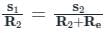
For induction motor, the torque in rotor resistance control methods is given as

For full load torque s α R2
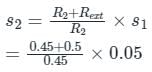
= 0.1055
For induction motor, the torque in rotor resistance control methods is given as
For full load torque s α R2
= 0.1055
Free Test
FREE
| Start Free Test |
Community Answer
A wound rotor induction motor runs with a slip of 0.05 when developing...
To calculate the rotor resistance of a wound rotor induction motor, we can use the concept of the slip formula.
The slip of a motor is given by the formula:
Slip = (Ns - N) / Ns
Where:
- Slip is the slip of the motor
- Ns is the synchronous speed of the motor
- N is the actual speed of the motor
In this case, the slip is given as 0.05, which means that the actual speed of the motor is 95% of the synchronous speed.
We can rearrange the slip formula to solve for the actual speed of the motor:
N = Ns - (Slip * Ns)
Since the slip is 0.05, the actual speed of the motor is 0.95 times the synchronous speed.
Now, let's calculate the synchronous speed of the motor:
Ns = (120 * f) / P
Where:
- Ns is the synchronous speed of the motor in RPM
- f is the frequency of the power supply in Hz
- P is the number of poles in the motor
Since the frequency of the power supply is not given, we cannot calculate the exact synchronous speed. However, we can assume a standard frequency of 60 Hz for most power supplies in North America.
Let's assume a 4-pole motor (P = 4) and a power supply frequency of 60 Hz. We can calculate the synchronous speed as follows:
Ns = (120 * 60) / 4
Ns = 1800 RPM
Now we can calculate the actual speed of the motor using the slip formula:
N = 1800 RPM - (0.05 * 1800 RPM)
N = 1800 RPM - 90 RPM
N = 1710 RPM
Since the slip is given as 0.05 and the actual speed is 1710 RPM, we can use the rotor resistance formula to calculate the rotor resistance.
Torque = (Rotor Resistance * (Stator Current)^2) / Slip
Rearranging the formula, we can solve for the rotor resistance:
Rotor Resistance = (Torque * Slip) / (Stator Current)^2
Since the full load torque is not given, we cannot calculate the exact rotor resistance. However, we can assume a standard full load torque of 100% for most motors.
Let's assume a full load torque of 100% and a stator current of 1 Ampere. We can calculate the rotor resistance as follows:
Rotor Resistance = (1 * 0.05) / (1^2)
Rotor Resistance = 0.05 / 1
Rotor Resistance = 0.05
Therefore, the rotor resistance of the wound rotor induction motor is 0.05 ohms.
The slip of a motor is given by the formula:
Slip = (Ns - N) / Ns
Where:
- Slip is the slip of the motor
- Ns is the synchronous speed of the motor
- N is the actual speed of the motor
In this case, the slip is given as 0.05, which means that the actual speed of the motor is 95% of the synchronous speed.
We can rearrange the slip formula to solve for the actual speed of the motor:
N = Ns - (Slip * Ns)
Since the slip is 0.05, the actual speed of the motor is 0.95 times the synchronous speed.
Now, let's calculate the synchronous speed of the motor:
Ns = (120 * f) / P
Where:
- Ns is the synchronous speed of the motor in RPM
- f is the frequency of the power supply in Hz
- P is the number of poles in the motor
Since the frequency of the power supply is not given, we cannot calculate the exact synchronous speed. However, we can assume a standard frequency of 60 Hz for most power supplies in North America.
Let's assume a 4-pole motor (P = 4) and a power supply frequency of 60 Hz. We can calculate the synchronous speed as follows:
Ns = (120 * 60) / 4
Ns = 1800 RPM
Now we can calculate the actual speed of the motor using the slip formula:
N = 1800 RPM - (0.05 * 1800 RPM)
N = 1800 RPM - 90 RPM
N = 1710 RPM
Since the slip is given as 0.05 and the actual speed is 1710 RPM, we can use the rotor resistance formula to calculate the rotor resistance.
Torque = (Rotor Resistance * (Stator Current)^2) / Slip
Rearranging the formula, we can solve for the rotor resistance:
Rotor Resistance = (Torque * Slip) / (Stator Current)^2
Since the full load torque is not given, we cannot calculate the exact rotor resistance. However, we can assume a standard full load torque of 100% for most motors.
Let's assume a full load torque of 100% and a stator current of 1 Ampere. We can calculate the rotor resistance as follows:
Rotor Resistance = (1 * 0.05) / (1^2)
Rotor Resistance = 0.05 / 1
Rotor Resistance = 0.05
Therefore, the rotor resistance of the wound rotor induction motor is 0.05 ohms.
 | Explore Courses for Electrical Engineering (EE) exam |  |
Top Courses for Electrical Engineering (EE)View all


Top Courses for Electrical Engineering (EE)
Question Description
A wound rotor induction motor runs with a slip of 0.05 when developing full load torque. Its rotor resistance is 0.45 Ω per phase. If an external resistance of 0.50 Ω per phase is connected across the slip rings, what is the slip for full torque?a)0.03b)0.06c)0.09d)0.1Correct answer is option 'D'. Can you explain this answer? for Electrical Engineering (EE) 2026 is part of Electrical Engineering (EE) preparation. The Question and answers have been prepared according to the Electrical Engineering (EE) exam syllabus. Information about A wound rotor induction motor runs with a slip of 0.05 when developing full load torque. Its rotor resistance is 0.45 Ω per phase. If an external resistance of 0.50 Ω per phase is connected across the slip rings, what is the slip for full torque?a)0.03b)0.06c)0.09d)0.1Correct answer is option 'D'. Can you explain this answer? covers all topics & solutions for Electrical Engineering (EE) 2026 Exam. Find important definitions, questions, meanings, examples, exercises and tests below for A wound rotor induction motor runs with a slip of 0.05 when developing full load torque. Its rotor resistance is 0.45 Ω per phase. If an external resistance of 0.50 Ω per phase is connected across the slip rings, what is the slip for full torque?a)0.03b)0.06c)0.09d)0.1Correct answer is option 'D'. Can you explain this answer?.
A wound rotor induction motor runs with a slip of 0.05 when developing full load torque. Its rotor resistance is 0.45 Ω per phase. If an external resistance of 0.50 Ω per phase is connected across the slip rings, what is the slip for full torque?a)0.03b)0.06c)0.09d)0.1Correct answer is option 'D'. Can you explain this answer? for Electrical Engineering (EE) 2026 is part of Electrical Engineering (EE) preparation. The Question and answers have been prepared according to the Electrical Engineering (EE) exam syllabus. Information about A wound rotor induction motor runs with a slip of 0.05 when developing full load torque. Its rotor resistance is 0.45 Ω per phase. If an external resistance of 0.50 Ω per phase is connected across the slip rings, what is the slip for full torque?a)0.03b)0.06c)0.09d)0.1Correct answer is option 'D'. Can you explain this answer? covers all topics & solutions for Electrical Engineering (EE) 2026 Exam. Find important definitions, questions, meanings, examples, exercises and tests below for A wound rotor induction motor runs with a slip of 0.05 when developing full load torque. Its rotor resistance is 0.45 Ω per phase. If an external resistance of 0.50 Ω per phase is connected across the slip rings, what is the slip for full torque?a)0.03b)0.06c)0.09d)0.1Correct answer is option 'D'. Can you explain this answer?.
Solutions for A wound rotor induction motor runs with a slip of 0.05 when developing full load torque. Its rotor resistance is 0.45 Ω per phase. If an external resistance of 0.50 Ω per phase is connected across the slip rings, what is the slip for full torque?a)0.03b)0.06c)0.09d)0.1Correct answer is option 'D'. Can you explain this answer? in English & in Hindi are available as part of our courses for Electrical Engineering (EE). Download more important topics, notes, lectures and mock test series for Electrical Engineering (EE) Exam by signing up for free.
Here you can find the meaning of A wound rotor induction motor runs with a slip of 0.05 when developing full load torque. Its rotor resistance is 0.45 Ω per phase. If an external resistance of 0.50 Ω per phase is connected across the slip rings, what is the slip for full torque?a)0.03b)0.06c)0.09d)0.1Correct answer is option 'D'. Can you explain this answer? defined & explained in the simplest way possible. Besides giving the explanation of A wound rotor induction motor runs with a slip of 0.05 when developing full load torque. Its rotor resistance is 0.45 Ω per phase. If an external resistance of 0.50 Ω per phase is connected across the slip rings, what is the slip for full torque?a)0.03b)0.06c)0.09d)0.1Correct answer is option 'D'. Can you explain this answer?, a detailed solution for A wound rotor induction motor runs with a slip of 0.05 when developing full load torque. Its rotor resistance is 0.45 Ω per phase. If an external resistance of 0.50 Ω per phase is connected across the slip rings, what is the slip for full torque?a)0.03b)0.06c)0.09d)0.1Correct answer is option 'D'. Can you explain this answer? has been provided alongside types of A wound rotor induction motor runs with a slip of 0.05 when developing full load torque. Its rotor resistance is 0.45 Ω per phase. If an external resistance of 0.50 Ω per phase is connected across the slip rings, what is the slip for full torque?a)0.03b)0.06c)0.09d)0.1Correct answer is option 'D'. Can you explain this answer? theory, EduRev gives you an ample number of questions to practice A wound rotor induction motor runs with a slip of 0.05 when developing full load torque. Its rotor resistance is 0.45 Ω per phase. If an external resistance of 0.50 Ω per phase is connected across the slip rings, what is the slip for full torque?a)0.03b)0.06c)0.09d)0.1Correct answer is option 'D'. Can you explain this answer? tests, examples and also practice Electrical Engineering (EE) tests.
| Explore Courses for Electrical Engineering (EE) exam | |
Top Courses for Electrical Engineering (EE)
Explore Courses
Signup for Free!
Signup to see your scores go up within 7 days! Learn & Practice with 1000+ FREE Notes, Videos & Tests.


