


Electronics and Communication Engineering (ECE) Exam > Electronics and Communication Engineering (ECE) Questions > The function which has its Fourier transform,... Start Learning for Free
The function which has its Fourier transform, Laplace transform and Z-transform unity is
- a)Gaussian
- b)Impulse
- c)Sinc
- d)Pulse
Correct answer is option 'B'. Can you explain this answer?

Most Upvoted Answer
The function which has its Fourier transform, Laplace transform and Z-...
Concept:
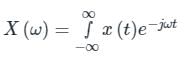
The Fourier transform of a signal in the time domain is given as:
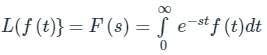
The Laplace transform F(s) of a function f(t) is defined by:
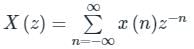
The definition of z-transform is given by,
Calculations:
Unit impulse signal:
It is defined as,

For f(t) = δ(t)
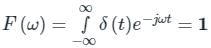
The spectrum is represented as:
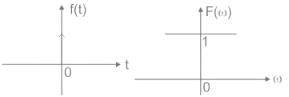
The Laplace transform of unit impulse is 1 i.e. unity.

Discrete-time Laplace transform is Z- transform.

Free Test
FREE
| Start Free Test |
Community Answer
The function which has its Fourier transform, Laplace transform and Z-...
Understanding the Impulse Function
The impulse function, also known as the Dirac delta function, is a fundamental concept in signal processing and systems analysis. Its unique properties make it a vital tool in various transforms.
Properties of the Impulse Function
- Fourier Transform: The Fourier transform of the impulse function is unity across all frequencies. This indicates that it contains all frequency components with equal amplitude.
- Laplace Transform: Similarly, the Laplace transform of the impulse function results in a value of one. This reflects its behavior in the complex frequency domain, where it acts as a unit impulse at time zero.
- Z-Transform: In the discrete domain, the Z-transform of the impulse function also yields one. This signifies that the impulse serves as a fundamental building block for discrete-time signals.
Why the Impulse Function?
- Unit Response: The impulse function is often used to analyze system responses because it characterizes the system's behavior to any input. Its response can reveal critical information about system stability and frequency response.
- Mathematical Simplicity: The unity result in all three transforms simplifies many calculations in engineering applications, allowing for easier manipulation of signals and systems.
- Signal Representation: It serves as an ideal representation of a signal that occurs at a specific point in time, making it crucial in both theoretical and practical applications.
Conclusion
The impulse function is the only function whose Fourier transform, Laplace transform, and Z-transform equal one. This characteristic makes it a cornerstone of signal processing and analysis within the field of Electronics and Communication Engineering.
The impulse function, also known as the Dirac delta function, is a fundamental concept in signal processing and systems analysis. Its unique properties make it a vital tool in various transforms.
Properties of the Impulse Function
- Fourier Transform: The Fourier transform of the impulse function is unity across all frequencies. This indicates that it contains all frequency components with equal amplitude.
- Laplace Transform: Similarly, the Laplace transform of the impulse function results in a value of one. This reflects its behavior in the complex frequency domain, where it acts as a unit impulse at time zero.
- Z-Transform: In the discrete domain, the Z-transform of the impulse function also yields one. This signifies that the impulse serves as a fundamental building block for discrete-time signals.
Why the Impulse Function?
- Unit Response: The impulse function is often used to analyze system responses because it characterizes the system's behavior to any input. Its response can reveal critical information about system stability and frequency response.
- Mathematical Simplicity: The unity result in all three transforms simplifies many calculations in engineering applications, allowing for easier manipulation of signals and systems.
- Signal Representation: It serves as an ideal representation of a signal that occurs at a specific point in time, making it crucial in both theoretical and practical applications.
Conclusion
The impulse function is the only function whose Fourier transform, Laplace transform, and Z-transform equal one. This characteristic makes it a cornerstone of signal processing and analysis within the field of Electronics and Communication Engineering.
 | Explore Courses for Electronics and Communication Engineering (ECE) exam |  |
Top Courses for Electronics and Communication Engineering (ECE)View all




Top Courses for Electronics and Communication Engineering (ECE)
Question Description
The function which has its Fourier transform, Laplace transform and Z-transform unity isa)Gaussianb)Impulsec)Sincd)PulseCorrect answer is option 'B'. Can you explain this answer? for Electronics and Communication Engineering (ECE) 2026 is part of Electronics and Communication Engineering (ECE) preparation. The Question and answers have been prepared according to the Electronics and Communication Engineering (ECE) exam syllabus. Information about The function which has its Fourier transform, Laplace transform and Z-transform unity isa)Gaussianb)Impulsec)Sincd)PulseCorrect answer is option 'B'. Can you explain this answer? covers all topics & solutions for Electronics and Communication Engineering (ECE) 2026 Exam. Find important definitions, questions, meanings, examples, exercises and tests below for The function which has its Fourier transform, Laplace transform and Z-transform unity isa)Gaussianb)Impulsec)Sincd)PulseCorrect answer is option 'B'. Can you explain this answer?.
The function which has its Fourier transform, Laplace transform and Z-transform unity isa)Gaussianb)Impulsec)Sincd)PulseCorrect answer is option 'B'. Can you explain this answer? for Electronics and Communication Engineering (ECE) 2026 is part of Electronics and Communication Engineering (ECE) preparation. The Question and answers have been prepared according to the Electronics and Communication Engineering (ECE) exam syllabus. Information about The function which has its Fourier transform, Laplace transform and Z-transform unity isa)Gaussianb)Impulsec)Sincd)PulseCorrect answer is option 'B'. Can you explain this answer? covers all topics & solutions for Electronics and Communication Engineering (ECE) 2026 Exam. Find important definitions, questions, meanings, examples, exercises and tests below for The function which has its Fourier transform, Laplace transform and Z-transform unity isa)Gaussianb)Impulsec)Sincd)PulseCorrect answer is option 'B'. Can you explain this answer?.
Solutions for The function which has its Fourier transform, Laplace transform and Z-transform unity isa)Gaussianb)Impulsec)Sincd)PulseCorrect answer is option 'B'. Can you explain this answer? in English & in Hindi are available as part of our courses for Electronics and Communication Engineering (ECE). Download more important topics, notes, lectures and mock test series for Electronics and Communication Engineering (ECE) Exam by signing up for free.
Here you can find the meaning of The function which has its Fourier transform, Laplace transform and Z-transform unity isa)Gaussianb)Impulsec)Sincd)PulseCorrect answer is option 'B'. Can you explain this answer? defined & explained in the simplest way possible. Besides giving the explanation of The function which has its Fourier transform, Laplace transform and Z-transform unity isa)Gaussianb)Impulsec)Sincd)PulseCorrect answer is option 'B'. Can you explain this answer?, a detailed solution for The function which has its Fourier transform, Laplace transform and Z-transform unity isa)Gaussianb)Impulsec)Sincd)PulseCorrect answer is option 'B'. Can you explain this answer? has been provided alongside types of The function which has its Fourier transform, Laplace transform and Z-transform unity isa)Gaussianb)Impulsec)Sincd)PulseCorrect answer is option 'B'. Can you explain this answer? theory, EduRev gives you an ample number of questions to practice The function which has its Fourier transform, Laplace transform and Z-transform unity isa)Gaussianb)Impulsec)Sincd)PulseCorrect answer is option 'B'. Can you explain this answer? tests, examples and also practice Electronics and Communication Engineering (ECE) tests.
| Explore Courses for Electronics and Communication Engineering (ECE) exam | |
Top Courses for Electronics and Communication Engineering (ECE)
Explore Courses
Signup for Free!
Signup to see your scores go up within 7 days! Learn & Practice with 1000+ FREE Notes, Videos & Tests.
x![]()

Best way to Prepare for Electronics and Communication Engineering (ECE)
Learn | Test | Discuss | Repeat


