


Electrical Engineering (EE) Exam > Electrical Engineering (EE) Questions > Find the energy (power) drawn by the circuit ... Start Learning for Free
Find the energy (power) drawn by the circuit shown in the figure below.
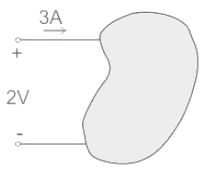
- a)+ 6 W
- b)- 5 W
- c)+ 5 W
- d)- 6 W
Correct answer is option 'A'. Can you explain this answer?

Verified Answer
Find the energy (power) drawn by the circuit shown in the figure below...
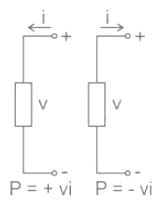
Sign convention for Power delivered and absorbed:
When current is leaving the positive voltage terminal of the element or current is entering the negative voltage terminal of the element then the particular element is delivering power.
∴ P = +Vi
When current is leaving the positive voltage terminal of the element or current is entering the negative voltage terminal of the element then the particular element is delivering power.
∴ P = +Vi
- When current is entering the positive voltage terminal of the element or current is leaving the negative voltage terminal of the element then the particular element is absorbing power.
∴ P = -Vi
- The power delivered to an element is denoted by the positive sign, whereas, power supplied by an element is denoted by the negative sign.
- In figure (i), when current enters through the positive terminal of the circuit, the power has a positive sign.
- In figure (ii) when the current leaves the positive terminal, the power has a negative sign
Calculation:
Given that,
V = 2 volts,
i = 3 A
Given that,
V = 2 volts,
i = 3 A
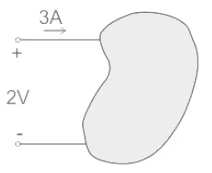
In the above circuit, the current is leaving the positive voltage terminal of the element or the current is entering the negative voltage terminal of the element then the particular element is delivering power.
Thus, the power drawn by the circuit shown in the above figure can be calculated as
P = + Vi
=> P = +(2 × 3)
∴ P = + 6 W
Thus, the power drawn by the circuit shown in the above figure can be calculated as
P = + Vi
=> P = +(2 × 3)
∴ P = + 6 W
Most Upvoted Answer
Find the energy (power) drawn by the circuit shown in the figure below...
Sign convention for Power delivered and absorbed:
When current is leaving the positive voltage terminal of the element or current is entering the negative voltage terminal of the element then the particular element is delivering power.
∴ P = +Vi
When current is leaving the positive voltage terminal of the element or current is entering the negative voltage terminal of the element then the particular element is delivering power.
∴ P = +Vi
- When current is entering the positive voltage terminal of the element or current is leaving the negative voltage terminal of the element then the particular element is absorbing power.
∴ P = -Vi
- The power delivered to an element is denoted by the positive sign, whereas, power supplied by an element is denoted by the negative sign.
- In figure (i), when current enters through the positive terminal of the circuit, the power has a positive sign.
- In figure (ii) when the current leaves the positive terminal, the power has a negative sign
Calculation:
Given that,
V = 2 volts,
i = 3 A
Given that,
V = 2 volts,
i = 3 A
In the above circuit, the current is leaving the positive voltage terminal of the element or the current is entering the negative voltage terminal of the element then the particular element is delivering power.
Thus, the power drawn by the circuit shown in the above figure can be calculated as
P = + Vi
=> P = +(2 × 3)
∴ P = + 6 W
Thus, the power drawn by the circuit shown in the above figure can be calculated as
P = + Vi
=> P = +(2 × 3)
∴ P = + 6 W
Free Test
FREE
| Start Free Test |
Community Answer
Find the energy (power) drawn by the circuit shown in the figure below...
Understanding Power in Resistors
To determine the power absorbed by a resistor, we can use the formula:
Power (P) = Voltage (V) × Current (I)
In this case, we have:
- Resistor (R) = 4 Ω
- Voltage (V) = 12 V
Calculating Current
First, we need to calculate the current flowing through the resistor using Ohm's Law:
I = V/R
- Substituting the values, we get:
I = 12 V / 4 Ω = 3 A
Calculating Power Absorbed
Now that we have the current, we can calculate the power absorbed by the resistor:
- P = V × I
- P = 12 V × 3 A = 36 W
Interpreting the Results
The power absorbed by the resistor is positive (36 W), indicating that the resistor is consuming power from the circuit.
Conclusion
The correct answer is:
- a) +36 W
This means the resistor absorbs 36 watts of power, which is consistent with the calculations based on the voltage and resistance provided. Thus, the power absorbed by the resistor, when connected across a 12 V source, is indeed 36 W.
To determine the power absorbed by a resistor, we can use the formula:
Power (P) = Voltage (V) × Current (I)
In this case, we have:
- Resistor (R) = 4 Ω
- Voltage (V) = 12 V
Calculating Current
First, we need to calculate the current flowing through the resistor using Ohm's Law:
I = V/R
- Substituting the values, we get:
I = 12 V / 4 Ω = 3 A
Calculating Power Absorbed
Now that we have the current, we can calculate the power absorbed by the resistor:
- P = V × I
- P = 12 V × 3 A = 36 W
Interpreting the Results
The power absorbed by the resistor is positive (36 W), indicating that the resistor is consuming power from the circuit.
Conclusion
The correct answer is:
- a) +36 W
This means the resistor absorbs 36 watts of power, which is consistent with the calculations based on the voltage and resistance provided. Thus, the power absorbed by the resistor, when connected across a 12 V source, is indeed 36 W.
 | Explore Courses for Electrical Engineering (EE) exam |  |
Top Courses for Electrical Engineering (EE)View all



Top Courses for Electrical Engineering (EE)
Question Description
Find the energy (power) drawn by the circuit shown in the figure below.a)+ 6 Wb)- 5 Wc)+ 5 Wd)- 6 WCorrect answer is option 'A'. Can you explain this answer? for Electrical Engineering (EE) 2026 is part of Electrical Engineering (EE) preparation. The Question and answers have been prepared according to the Electrical Engineering (EE) exam syllabus. Information about Find the energy (power) drawn by the circuit shown in the figure below.a)+ 6 Wb)- 5 Wc)+ 5 Wd)- 6 WCorrect answer is option 'A'. Can you explain this answer? covers all topics & solutions for Electrical Engineering (EE) 2026 Exam. Find important definitions, questions, meanings, examples, exercises and tests below for Find the energy (power) drawn by the circuit shown in the figure below.a)+ 6 Wb)- 5 Wc)+ 5 Wd)- 6 WCorrect answer is option 'A'. Can you explain this answer?.
Find the energy (power) drawn by the circuit shown in the figure below.a)+ 6 Wb)- 5 Wc)+ 5 Wd)- 6 WCorrect answer is option 'A'. Can you explain this answer? for Electrical Engineering (EE) 2026 is part of Electrical Engineering (EE) preparation. The Question and answers have been prepared according to the Electrical Engineering (EE) exam syllabus. Information about Find the energy (power) drawn by the circuit shown in the figure below.a)+ 6 Wb)- 5 Wc)+ 5 Wd)- 6 WCorrect answer is option 'A'. Can you explain this answer? covers all topics & solutions for Electrical Engineering (EE) 2026 Exam. Find important definitions, questions, meanings, examples, exercises and tests below for Find the energy (power) drawn by the circuit shown in the figure below.a)+ 6 Wb)- 5 Wc)+ 5 Wd)- 6 WCorrect answer is option 'A'. Can you explain this answer?.
Solutions for Find the energy (power) drawn by the circuit shown in the figure below.a)+ 6 Wb)- 5 Wc)+ 5 Wd)- 6 WCorrect answer is option 'A'. Can you explain this answer? in English & in Hindi are available as part of our courses for Electrical Engineering (EE). Download more important topics, notes, lectures and mock test series for Electrical Engineering (EE) Exam by signing up for free.
Here you can find the meaning of Find the energy (power) drawn by the circuit shown in the figure below.a)+ 6 Wb)- 5 Wc)+ 5 Wd)- 6 WCorrect answer is option 'A'. Can you explain this answer? defined & explained in the simplest way possible. Besides giving the explanation of Find the energy (power) drawn by the circuit shown in the figure below.a)+ 6 Wb)- 5 Wc)+ 5 Wd)- 6 WCorrect answer is option 'A'. Can you explain this answer?, a detailed solution for Find the energy (power) drawn by the circuit shown in the figure below.a)+ 6 Wb)- 5 Wc)+ 5 Wd)- 6 WCorrect answer is option 'A'. Can you explain this answer? has been provided alongside types of Find the energy (power) drawn by the circuit shown in the figure below.a)+ 6 Wb)- 5 Wc)+ 5 Wd)- 6 WCorrect answer is option 'A'. Can you explain this answer? theory, EduRev gives you an ample number of questions to practice Find the energy (power) drawn by the circuit shown in the figure below.a)+ 6 Wb)- 5 Wc)+ 5 Wd)- 6 WCorrect answer is option 'A'. Can you explain this answer? tests, examples and also practice Electrical Engineering (EE) tests.
| Explore Courses for Electrical Engineering (EE) exam | |
Top Courses for Electrical Engineering (EE)
Explore Courses
Signup for Free!
Signup to see your scores go up within 7 days! Learn & Practice with 1000+ FREE Notes, Videos & Tests.


