


Electrical Engineering (EE) Exam > Electrical Engineering (EE) Questions > In the question given below there are three ... Start Learning for Free
In the question given below there are three statements followed by three conclusions. You have to read the given three statements and take them to be true even if they seem to be at variance from commonly known facts. Read the conclusions and then decide which of the conclusions logically follows from the given three statements, disregarding commonly known facts.
Statements :
(i) All airports are tidy.
(ii) Some departments are neat.
(iii) Some airports are departments.
Conclusions :
(i) Some departments are tidy.
(ii) Some airports are neat.
(iii) No neat is airport.
- a)Only (i) follows
- b)Only (ii) follows
- c)(i) and either (ii) or (iii) follow
- d)All follow
Correct answer is option 'C'. Can you explain this answer?

Most Upvoted Answer
In the question given below there are three statements followed by th...
Understanding the Statements
To analyze the conclusions, let's break down the statements:
- Statement (i): All airports are tidy.
- Statement (ii): Some departments are neat.
- Statement (iii): Some airports are departments.
Analyzing the Conclusions
Now, let's evaluate each conclusion:
- Conclusion (i): Some departments are tidy.
- Given that all airports are tidy and some airports are departments, it logically follows that some departments must be tidy. Thus, this conclusion is valid.
- Conclusion (ii): Some airports are neat.
- Since some departments are neat and some airports are departments, it can be inferred that at least some airports are neat. Therefore, this conclusion also holds true.
- Conclusion (iii): No neat is airport.
- This conclusion is not supported by the statements. The statements do not provide any basis for assuming that neat departments cannot be airports. Thus, this conclusion does not follow.
Final Evaluation
Considering the evaluations:
- Conclusion (i) is true.
- Conclusion (ii) is true.
- Conclusion (iii) is false.
Therefore, the correct option is (c): (i) and either (ii) or (iii) follow. Since both (i) and (ii) are valid while (iii) is not, option (c) is indeed the right answer.
This logical deduction showcases the importance of carefully analyzing premises to derive valid conclusions.
To analyze the conclusions, let's break down the statements:
- Statement (i): All airports are tidy.
- Statement (ii): Some departments are neat.
- Statement (iii): Some airports are departments.
Analyzing the Conclusions
Now, let's evaluate each conclusion:
- Conclusion (i): Some departments are tidy.
- Given that all airports are tidy and some airports are departments, it logically follows that some departments must be tidy. Thus, this conclusion is valid.
- Conclusion (ii): Some airports are neat.
- Since some departments are neat and some airports are departments, it can be inferred that at least some airports are neat. Therefore, this conclusion also holds true.
- Conclusion (iii): No neat is airport.
- This conclusion is not supported by the statements. The statements do not provide any basis for assuming that neat departments cannot be airports. Thus, this conclusion does not follow.
Final Evaluation
Considering the evaluations:
- Conclusion (i) is true.
- Conclusion (ii) is true.
- Conclusion (iii) is false.
Therefore, the correct option is (c): (i) and either (ii) or (iii) follow. Since both (i) and (ii) are valid while (iii) is not, option (c) is indeed the right answer.
This logical deduction showcases the importance of carefully analyzing premises to derive valid conclusions.
Free Test
FREE
| Start Free Test |
Community Answer
In the question given below there are three statements followed by th...
Now let us first dissect the case. Look at the venn diagrams given in the explanation, we get two possibilities. Case 1, is that the set of neat is outside the set airports. Case 2, is that set of neat is enclosed in the set of airports as we are told that some airports are departments, hence set of departments may be inside the set of airports or it may just intersect the set of airports. It is clear from the diagram that (i) necessarity follows and out of (ii) and (iii), atleast one conclusion is necessarily true.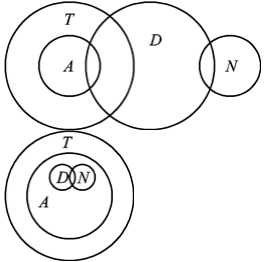
 | Explore Courses for Electrical Engineering (EE) exam |  |
Top Courses for Electrical Engineering (EE)View all




Top Courses for Electrical Engineering (EE)
Question Description
In the question given below there are three statements followed by three conclusions. You have to read the given three statements and take them to be true even if they seem to be at variance from commonly known facts. Read the conclusions and then decide which of the conclusions logically follows from the given three statements, disregarding commonly known facts.Statements :(i) All airports are tidy.(ii) Some departments are neat.(iii) Some airports are departments.Conclusions :(i) Some departments are tidy.(ii) Some airports are neat.(iii) No neat is airport.a)Only (i) followsb)Only (ii) followsc)(i) and either (ii) or (iii) followd)All followCorrect answer is option 'C'. Can you explain this answer? for Electrical Engineering (EE) 2026 is part of Electrical Engineering (EE) preparation. The Question and answers have been prepared according to the Electrical Engineering (EE) exam syllabus. Information about In the question given below there are three statements followed by three conclusions. You have to read the given three statements and take them to be true even if they seem to be at variance from commonly known facts. Read the conclusions and then decide which of the conclusions logically follows from the given three statements, disregarding commonly known facts.Statements :(i) All airports are tidy.(ii) Some departments are neat.(iii) Some airports are departments.Conclusions :(i) Some departments are tidy.(ii) Some airports are neat.(iii) No neat is airport.a)Only (i) followsb)Only (ii) followsc)(i) and either (ii) or (iii) followd)All followCorrect answer is option 'C'. Can you explain this answer? covers all topics & solutions for Electrical Engineering (EE) 2026 Exam. Find important definitions, questions, meanings, examples, exercises and tests below for In the question given below there are three statements followed by three conclusions. You have to read the given three statements and take them to be true even if they seem to be at variance from commonly known facts. Read the conclusions and then decide which of the conclusions logically follows from the given three statements, disregarding commonly known facts.Statements :(i) All airports are tidy.(ii) Some departments are neat.(iii) Some airports are departments.Conclusions :(i) Some departments are tidy.(ii) Some airports are neat.(iii) No neat is airport.a)Only (i) followsb)Only (ii) followsc)(i) and either (ii) or (iii) followd)All followCorrect answer is option 'C'. Can you explain this answer?.
In the question given below there are three statements followed by three conclusions. You have to read the given three statements and take them to be true even if they seem to be at variance from commonly known facts. Read the conclusions and then decide which of the conclusions logically follows from the given three statements, disregarding commonly known facts.Statements :(i) All airports are tidy.(ii) Some departments are neat.(iii) Some airports are departments.Conclusions :(i) Some departments are tidy.(ii) Some airports are neat.(iii) No neat is airport.a)Only (i) followsb)Only (ii) followsc)(i) and either (ii) or (iii) followd)All followCorrect answer is option 'C'. Can you explain this answer? for Electrical Engineering (EE) 2026 is part of Electrical Engineering (EE) preparation. The Question and answers have been prepared according to the Electrical Engineering (EE) exam syllabus. Information about In the question given below there are three statements followed by three conclusions. You have to read the given three statements and take them to be true even if they seem to be at variance from commonly known facts. Read the conclusions and then decide which of the conclusions logically follows from the given three statements, disregarding commonly known facts.Statements :(i) All airports are tidy.(ii) Some departments are neat.(iii) Some airports are departments.Conclusions :(i) Some departments are tidy.(ii) Some airports are neat.(iii) No neat is airport.a)Only (i) followsb)Only (ii) followsc)(i) and either (ii) or (iii) followd)All followCorrect answer is option 'C'. Can you explain this answer? covers all topics & solutions for Electrical Engineering (EE) 2026 Exam. Find important definitions, questions, meanings, examples, exercises and tests below for In the question given below there are three statements followed by three conclusions. You have to read the given three statements and take them to be true even if they seem to be at variance from commonly known facts. Read the conclusions and then decide which of the conclusions logically follows from the given three statements, disregarding commonly known facts.Statements :(i) All airports are tidy.(ii) Some departments are neat.(iii) Some airports are departments.Conclusions :(i) Some departments are tidy.(ii) Some airports are neat.(iii) No neat is airport.a)Only (i) followsb)Only (ii) followsc)(i) and either (ii) or (iii) followd)All followCorrect answer is option 'C'. Can you explain this answer?.
Solutions for In the question given below there are three statements followed by three conclusions. You have to read the given three statements and take them to be true even if they seem to be at variance from commonly known facts. Read the conclusions and then decide which of the conclusions logically follows from the given three statements, disregarding commonly known facts.Statements :(i) All airports are tidy.(ii) Some departments are neat.(iii) Some airports are departments.Conclusions :(i) Some departments are tidy.(ii) Some airports are neat.(iii) No neat is airport.a)Only (i) followsb)Only (ii) followsc)(i) and either (ii) or (iii) followd)All followCorrect answer is option 'C'. Can you explain this answer? in English & in Hindi are available as part of our courses for Electrical Engineering (EE). Download more important topics, notes, lectures and mock test series for Electrical Engineering (EE) Exam by signing up for free.
Here you can find the meaning of In the question given below there are three statements followed by three conclusions. You have to read the given three statements and take them to be true even if they seem to be at variance from commonly known facts. Read the conclusions and then decide which of the conclusions logically follows from the given three statements, disregarding commonly known facts.Statements :(i) All airports are tidy.(ii) Some departments are neat.(iii) Some airports are departments.Conclusions :(i) Some departments are tidy.(ii) Some airports are neat.(iii) No neat is airport.a)Only (i) followsb)Only (ii) followsc)(i) and either (ii) or (iii) followd)All followCorrect answer is option 'C'. Can you explain this answer? defined & explained in the simplest way possible. Besides giving the explanation of In the question given below there are three statements followed by three conclusions. You have to read the given three statements and take them to be true even if they seem to be at variance from commonly known facts. Read the conclusions and then decide which of the conclusions logically follows from the given three statements, disregarding commonly known facts.Statements :(i) All airports are tidy.(ii) Some departments are neat.(iii) Some airports are departments.Conclusions :(i) Some departments are tidy.(ii) Some airports are neat.(iii) No neat is airport.a)Only (i) followsb)Only (ii) followsc)(i) and either (ii) or (iii) followd)All followCorrect answer is option 'C'. Can you explain this answer?, a detailed solution for In the question given below there are three statements followed by three conclusions. You have to read the given three statements and take them to be true even if they seem to be at variance from commonly known facts. Read the conclusions and then decide which of the conclusions logically follows from the given three statements, disregarding commonly known facts.Statements :(i) All airports are tidy.(ii) Some departments are neat.(iii) Some airports are departments.Conclusions :(i) Some departments are tidy.(ii) Some airports are neat.(iii) No neat is airport.a)Only (i) followsb)Only (ii) followsc)(i) and either (ii) or (iii) followd)All followCorrect answer is option 'C'. Can you explain this answer? has been provided alongside types of In the question given below there are three statements followed by three conclusions. You have to read the given three statements and take them to be true even if they seem to be at variance from commonly known facts. Read the conclusions and then decide which of the conclusions logically follows from the given three statements, disregarding commonly known facts.Statements :(i) All airports are tidy.(ii) Some departments are neat.(iii) Some airports are departments.Conclusions :(i) Some departments are tidy.(ii) Some airports are neat.(iii) No neat is airport.a)Only (i) followsb)Only (ii) followsc)(i) and either (ii) or (iii) followd)All followCorrect answer is option 'C'. Can you explain this answer? theory, EduRev gives you an ample number of questions to practice In the question given below there are three statements followed by three conclusions. You have to read the given three statements and take them to be true even if they seem to be at variance from commonly known facts. Read the conclusions and then decide which of the conclusions logically follows from the given three statements, disregarding commonly known facts.Statements :(i) All airports are tidy.(ii) Some departments are neat.(iii) Some airports are departments.Conclusions :(i) Some departments are tidy.(ii) Some airports are neat.(iii) No neat is airport.a)Only (i) followsb)Only (ii) followsc)(i) and either (ii) or (iii) followd)All followCorrect answer is option 'C'. Can you explain this answer? tests, examples and also practice Electrical Engineering (EE) tests.
| Explore Courses for Electrical Engineering (EE) exam | |
Top Courses for Electrical Engineering (EE)
Explore Courses
Signup for Free!
Signup to see your scores go up within 7 days! Learn & Practice with 1000+ FREE Notes, Videos & Tests.


