


Software Development Exam > Software Development Questions > Cuscuta is an example of:a)autotrophb)parasit... Start Learning for Free
Cuscuta is an example of:
- a)autotroph
- b)parasite
- c)saprotroph
- d)host
Correct answer is option 'B'. Can you explain this answer?

Verified Answer
Cuscuta is an example of:a)autotrophb)parasitec)saprotrophd)hostCorrec...
Concept:
- Nutrition is a process by whichan organism consumes and uses food materials.
- There are various modes of nutrition mainly,Autotrophic, Heterotrophic, Chemoautotrophic, Saprophytic,etc.
- Parasitismis a type of heterotrophic nutrition.
Explanation:
Cuscuta:
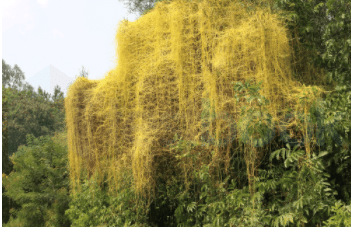
- < />Cuscutais aparasitic plant.
- SinceCuscutadoes not have chlorophyll,it cannot synthesize its own food by photosynthesis.
- It takes readymade food from the plant on which it is climbing.
- The plant on which it climbs is called a host.
- Since it deprives the host of valuable nutrients, it is called a parasite.
- It is yellow and tubular in structure twining around the stem and branches of a tree.
- Other parasitic plants are -Rafflesia, Viscum, Nuytsia floribunda.
- Parasitic plants cause damage to the host plant.
Thus, Cuscuta is a parasite.
Additional Information
- Holophytic or autotrophic nutrition:In this type of nutrition the organisms prepare their food by themselves. Eg - green plants.
- Saprobiotic nutrition:In this type of nutrition the organism depends on the dead and decaying matter of other organisms. Eg - fungi
Most Upvoted Answer
Cuscuta is an example of:a)autotrophb)parasitec)saprotrophd)hostCorrec...
Understanding Cuscuta
Cuscuta, commonly known as dodder, is a genus of parasitic plants that exhibit unique characteristics distinguishing them from other plant types. It primarily relies on other plants for its nutrients, making it a classic example of a parasite.
Characteristics of Cuscuta
- Parasitic Nature:
- Cuscuta does not have chlorophyll, which means it cannot perform photosynthesis to create its own food. Instead, it attaches to host plants using specialized structures called haustoria.
- Nutrient Absorption:
- Through its haustoria, Cuscuta taps into the vascular system of the host plant to extract water and essential nutrients, thereby sustaining itself.
Differences from Other Categories
- Autotrophs:
- These organisms can synthesize their own food using sunlight or chemical energy. Cuscuta does not fit into this category as it lacks chlorophyll.
- Saprotrophs:
- Saprotrophic organisms decompose organic matter to obtain nutrients. Cuscuta, on the other hand, requires a living host for sustenance.
- Host:
- The term "host" refers to the organism that provides sustenance to a parasite. In this case, the host is the plant that Cuscuta attaches itself to.
Conclusion
In summary, Cuscuta is an example of a parasite due to its dependence on other plants for survival. Its unique adaptations enable it to thrive by extracting nutrients from its hosts, showcasing the complex relationships within ecosystems.
Cuscuta, commonly known as dodder, is a genus of parasitic plants that exhibit unique characteristics distinguishing them from other plant types. It primarily relies on other plants for its nutrients, making it a classic example of a parasite.
Characteristics of Cuscuta
- Parasitic Nature:
- Cuscuta does not have chlorophyll, which means it cannot perform photosynthesis to create its own food. Instead, it attaches to host plants using specialized structures called haustoria.
- Nutrient Absorption:
- Through its haustoria, Cuscuta taps into the vascular system of the host plant to extract water and essential nutrients, thereby sustaining itself.
Differences from Other Categories
- Autotrophs:
- These organisms can synthesize their own food using sunlight or chemical energy. Cuscuta does not fit into this category as it lacks chlorophyll.
- Saprotrophs:
- Saprotrophic organisms decompose organic matter to obtain nutrients. Cuscuta, on the other hand, requires a living host for sustenance.
- Host:
- The term "host" refers to the organism that provides sustenance to a parasite. In this case, the host is the plant that Cuscuta attaches itself to.
Conclusion
In summary, Cuscuta is an example of a parasite due to its dependence on other plants for survival. Its unique adaptations enable it to thrive by extracting nutrients from its hosts, showcasing the complex relationships within ecosystems.
 | Explore Courses for Software Development exam |  |
Top Courses for Software DevelopmentView all


Top Courses for Software Development
Question Description
Cuscuta is an example of:a)autotrophb)parasitec)saprotrophd)hostCorrect answer is option 'B'. Can you explain this answer? for Software Development 2026 is part of Software Development preparation. The Question and answers have been prepared according to the Software Development exam syllabus. Information about Cuscuta is an example of:a)autotrophb)parasitec)saprotrophd)hostCorrect answer is option 'B'. Can you explain this answer? covers all topics & solutions for Software Development 2026 Exam. Find important definitions, questions, meanings, examples, exercises and tests below for Cuscuta is an example of:a)autotrophb)parasitec)saprotrophd)hostCorrect answer is option 'B'. Can you explain this answer?.
Cuscuta is an example of:a)autotrophb)parasitec)saprotrophd)hostCorrect answer is option 'B'. Can you explain this answer? for Software Development 2026 is part of Software Development preparation. The Question and answers have been prepared according to the Software Development exam syllabus. Information about Cuscuta is an example of:a)autotrophb)parasitec)saprotrophd)hostCorrect answer is option 'B'. Can you explain this answer? covers all topics & solutions for Software Development 2026 Exam. Find important definitions, questions, meanings, examples, exercises and tests below for Cuscuta is an example of:a)autotrophb)parasitec)saprotrophd)hostCorrect answer is option 'B'. Can you explain this answer?.
Solutions for Cuscuta is an example of:a)autotrophb)parasitec)saprotrophd)hostCorrect answer is option 'B'. Can you explain this answer? in English & in Hindi are available as part of our courses for Software Development. Download more important topics, notes, lectures and mock test series for Software Development Exam by signing up for free.
Here you can find the meaning of Cuscuta is an example of:a)autotrophb)parasitec)saprotrophd)hostCorrect answer is option 'B'. Can you explain this answer? defined & explained in the simplest way possible. Besides giving the explanation of Cuscuta is an example of:a)autotrophb)parasitec)saprotrophd)hostCorrect answer is option 'B'. Can you explain this answer?, a detailed solution for Cuscuta is an example of:a)autotrophb)parasitec)saprotrophd)hostCorrect answer is option 'B'. Can you explain this answer? has been provided alongside types of Cuscuta is an example of:a)autotrophb)parasitec)saprotrophd)hostCorrect answer is option 'B'. Can you explain this answer? theory, EduRev gives you an ample number of questions to practice Cuscuta is an example of:a)autotrophb)parasitec)saprotrophd)hostCorrect answer is option 'B'. Can you explain this answer? tests, examples and also practice Software Development tests.
| Explore Courses for Software Development exam | |
Top Courses for Software Development
Explore Courses
Signup for Free!
Signup to see your scores go up within 7 days! Learn & Practice with 1000+ FREE Notes, Videos & Tests.


