


Electrical Engineering (EE) Exam > Electrical Engineering (EE) Questions > The barrier voltage for germanium is ________... Start Learning for Free
The barrier voltage for germanium is _________ at 25°C.
- a)0.3 V
- b)0.7 V
- c)0 V
- d)infinity
Correct answer is option 'A'. Can you explain this answer?

Most Upvoted Answer
The barrier voltage for germanium is _________ at 25°C.a)0.3 Vb)0....
Barrier voltage
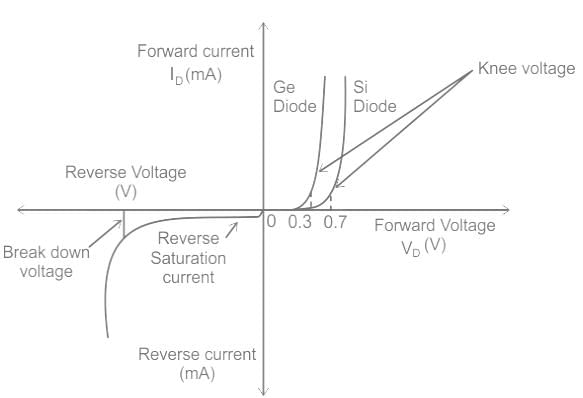
The minimum voltage required by a diode to conduct is known as barrier voltage.
It is also known as the cut-in voltage or knee voltage.
The barrier potential of the "Germanium" diode is 0.3 V.
The barrier potential of the "Silicon" diode is 0.7 V.
Above the knee voltage, the diode conducts and the forward current from p to n flows in the diode.
Free Test
FREE
| Start Free Test |
Community Answer
The barrier voltage for germanium is _________ at 25°C.a)0.3 Vb)0....
Understanding Barrier Voltage in Germanium
The barrier voltage, also known as the built-in potential, is a critical parameter in semiconductor physics, particularly for diodes and transistors made from materials like germanium.
What is Barrier Voltage?
- The barrier voltage is the voltage required to overcome the potential energy barrier at the junction of a p-n semiconductor.
- This voltage is essential for the flow of charge carriers (electrons and holes) across the junction.
Germanium Characteristics
- Germanium is a semiconductor material that has properties different from silicon.
- It has a lower bandgap energy (approximately 0.66 eV) compared to silicon (about 1.12 eV).
Barrier Voltage at 25°C
- At room temperature (25°C), the barrier voltage for germanium is approximately 0.3 V.
- This value is lower than that of silicon, which typically has a barrier voltage of around 0.7 V.
Reasons for the Value
- The lower barrier voltage in germanium results from its smaller bandgap, making it easier for charge carriers to overcome the junction potential.
- This characteristic makes germanium suitable for certain applications, such as high-speed electronics and infrared optics.
Conclusion
- The correct answer to the question regarding the barrier voltage for germanium at 25°C is option 'A' - 0.3 V.
- Understanding this value is vital for engineers and technicians working with semiconductor devices.
The barrier voltage, also known as the built-in potential, is a critical parameter in semiconductor physics, particularly for diodes and transistors made from materials like germanium.
What is Barrier Voltage?
- The barrier voltage is the voltage required to overcome the potential energy barrier at the junction of a p-n semiconductor.
- This voltage is essential for the flow of charge carriers (electrons and holes) across the junction.
Germanium Characteristics
- Germanium is a semiconductor material that has properties different from silicon.
- It has a lower bandgap energy (approximately 0.66 eV) compared to silicon (about 1.12 eV).
Barrier Voltage at 25°C
- At room temperature (25°C), the barrier voltage for germanium is approximately 0.3 V.
- This value is lower than that of silicon, which typically has a barrier voltage of around 0.7 V.
Reasons for the Value
- The lower barrier voltage in germanium results from its smaller bandgap, making it easier for charge carriers to overcome the junction potential.
- This characteristic makes germanium suitable for certain applications, such as high-speed electronics and infrared optics.
Conclusion
- The correct answer to the question regarding the barrier voltage for germanium at 25°C is option 'A' - 0.3 V.
- Understanding this value is vital for engineers and technicians working with semiconductor devices.
 | Explore Courses for Electrical Engineering (EE) exam |  |
Top Courses for Electrical Engineering (EE)View all




Top Courses for Electrical Engineering (EE)
Question Description
The barrier voltage for germanium is _________ at 25°C.a)0.3 Vb)0.7 Vc)0 Vd)infinityCorrect answer is option 'A'. Can you explain this answer? for Electrical Engineering (EE) 2026 is part of Electrical Engineering (EE) preparation. The Question and answers have been prepared according to the Electrical Engineering (EE) exam syllabus. Information about The barrier voltage for germanium is _________ at 25°C.a)0.3 Vb)0.7 Vc)0 Vd)infinityCorrect answer is option 'A'. Can you explain this answer? covers all topics & solutions for Electrical Engineering (EE) 2026 Exam. Find important definitions, questions, meanings, examples, exercises and tests below for The barrier voltage for germanium is _________ at 25°C.a)0.3 Vb)0.7 Vc)0 Vd)infinityCorrect answer is option 'A'. Can you explain this answer?.
The barrier voltage for germanium is _________ at 25°C.a)0.3 Vb)0.7 Vc)0 Vd)infinityCorrect answer is option 'A'. Can you explain this answer? for Electrical Engineering (EE) 2026 is part of Electrical Engineering (EE) preparation. The Question and answers have been prepared according to the Electrical Engineering (EE) exam syllabus. Information about The barrier voltage for germanium is _________ at 25°C.a)0.3 Vb)0.7 Vc)0 Vd)infinityCorrect answer is option 'A'. Can you explain this answer? covers all topics & solutions for Electrical Engineering (EE) 2026 Exam. Find important definitions, questions, meanings, examples, exercises and tests below for The barrier voltage for germanium is _________ at 25°C.a)0.3 Vb)0.7 Vc)0 Vd)infinityCorrect answer is option 'A'. Can you explain this answer?.
Solutions for The barrier voltage for germanium is _________ at 25°C.a)0.3 Vb)0.7 Vc)0 Vd)infinityCorrect answer is option 'A'. Can you explain this answer? in English & in Hindi are available as part of our courses for Electrical Engineering (EE). Download more important topics, notes, lectures and mock test series for Electrical Engineering (EE) Exam by signing up for free.
Here you can find the meaning of The barrier voltage for germanium is _________ at 25°C.a)0.3 Vb)0.7 Vc)0 Vd)infinityCorrect answer is option 'A'. Can you explain this answer? defined & explained in the simplest way possible. Besides giving the explanation of The barrier voltage for germanium is _________ at 25°C.a)0.3 Vb)0.7 Vc)0 Vd)infinityCorrect answer is option 'A'. Can you explain this answer?, a detailed solution for The barrier voltage for germanium is _________ at 25°C.a)0.3 Vb)0.7 Vc)0 Vd)infinityCorrect answer is option 'A'. Can you explain this answer? has been provided alongside types of The barrier voltage for germanium is _________ at 25°C.a)0.3 Vb)0.7 Vc)0 Vd)infinityCorrect answer is option 'A'. Can you explain this answer? theory, EduRev gives you an ample number of questions to practice The barrier voltage for germanium is _________ at 25°C.a)0.3 Vb)0.7 Vc)0 Vd)infinityCorrect answer is option 'A'. Can you explain this answer? tests, examples and also practice Electrical Engineering (EE) tests.
| Explore Courses for Electrical Engineering (EE) exam | |
Top Courses for Electrical Engineering (EE)
Explore Courses
Signup for Free!
Signup to see your scores go up within 7 days! Learn & Practice with 1000+ FREE Notes, Videos & Tests.


