


Class 9 Exam > Class 9 Questions > Nucleus diagram? Start Learning for Free
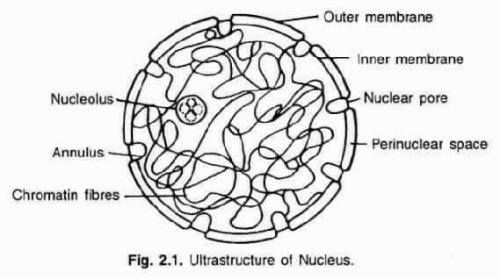
Nucleus diagram?

Most Upvoted Answer
Nucleus diagram?
Nucleus Diagram
The nucleus is a small, dense organelle found in eukaryotic cells. It is responsible for controlling the cell's growth, division, and genetic material. The nucleus is surrounded by a double membrane called the nuclear envelope, which contains pores that allow for the transport of molecules in and out of the nucleus.
Parts of the Nucleus Diagram
The nucleus is composed of several parts, including:
Functions of the Nucleus Diagram
The nucleus serves several important functions within the cell, including:
In conclusion, the nucleus is a vital organelle within the cell that is responsible for controlling the cell's growth, division, and genetic material. Understanding its structure and functions is essential for understanding the overall behavior and function of the cell.
The nucleus is a small, dense organelle found in eukaryotic cells. It is responsible for controlling the cell's growth, division, and genetic material. The nucleus is surrounded by a double membrane called the nuclear envelope, which contains pores that allow for the transport of molecules in and out of the nucleus.
Parts of the Nucleus Diagram
The nucleus is composed of several parts, including:
- Nuclear Envelope: The double membrane that surrounds the nucleus and contains pores that allow for the transport of molecules in and out of the nucleus.
- Nucleoplasm: The gel-like substance that fills the nucleus.
- Nucleolus: A small, dense structure within the nucleus that is responsible for the production of ribosomes.
- Chromatin: The genetic material of the cell, which is composed of DNA and proteins.
Functions of the Nucleus Diagram
The nucleus serves several important functions within the cell, including:
- Control of Gene Expression: The nucleus is responsible for controlling which genes are turned on or off in the cell, which determines the cell's function and behavior.
- Cellular Reproduction: The nucleus is responsible for controlling the cell's division and reproduction, ensuring that the new cells contain the appropriate genetic material.
- Production of Ribosomes: The nucleolus within the nucleus is responsible for producing ribosomes, which are essential for protein synthesis in the cell.
In conclusion, the nucleus is a vital organelle within the cell that is responsible for controlling the cell's growth, division, and genetic material. Understanding its structure and functions is essential for understanding the overall behavior and function of the cell.
Community Answer
Nucleus diagram?
 | Explore Courses for Class 9 exam |  |
Top Courses for Class 9View all



Top Courses for Class 9
Question Description
Nucleus diagram? for Class 9 2026 is part of Class 9 preparation. The Question and answers have been prepared according to the Class 9 exam syllabus. Information about Nucleus diagram? covers all topics & solutions for Class 9 2026 Exam. Find important definitions, questions, meanings, examples, exercises and tests below for Nucleus diagram?.
Nucleus diagram? for Class 9 2026 is part of Class 9 preparation. The Question and answers have been prepared according to the Class 9 exam syllabus. Information about Nucleus diagram? covers all topics & solutions for Class 9 2026 Exam. Find important definitions, questions, meanings, examples, exercises and tests below for Nucleus diagram?.
Solutions for Nucleus diagram? in English & in Hindi are available as part of our courses for Class 9. Download more important topics, notes, lectures and mock test series for Class 9 Exam by signing up for free.
Here you can find the meaning of Nucleus diagram? defined & explained in the simplest way possible. Besides giving the explanation of Nucleus diagram?, a detailed solution for Nucleus diagram? has been provided alongside types of Nucleus diagram? theory, EduRev gives you an ample number of questions to practice Nucleus diagram? tests, examples and also practice Class 9 tests.
| Explore Courses for Class 9 exam | |
Top Courses for Class 9
Explore Courses
Signup for Free!
Signup to see your scores go up within 7 days! Learn & Practice with 1000+ FREE Notes, Videos & Tests.


