Worksheet Solutions: My Family - 1

Q1: Fill in the Blanks.
(i) Your grandfather is your father's ______.
Ans: Your grandfather is your father's father.
(ii) In a _______ family, there are usually parents and their children living together in their own home.
Ans: In a nuclear family, there are usually parents and their children living together in their own home.
(iii) A family with parents, grandparents, uncles, aunts, and cousins living in one house is called a _______ family.
Ans: A family with parents, grandparents, uncles, aunts, and cousins living in one house is called a joint family.
(iv) A child who has his/her father as his/her only family member lives in a ______ family.
Ans: A child who has his/her father as his/her only family member lives in a single parent family.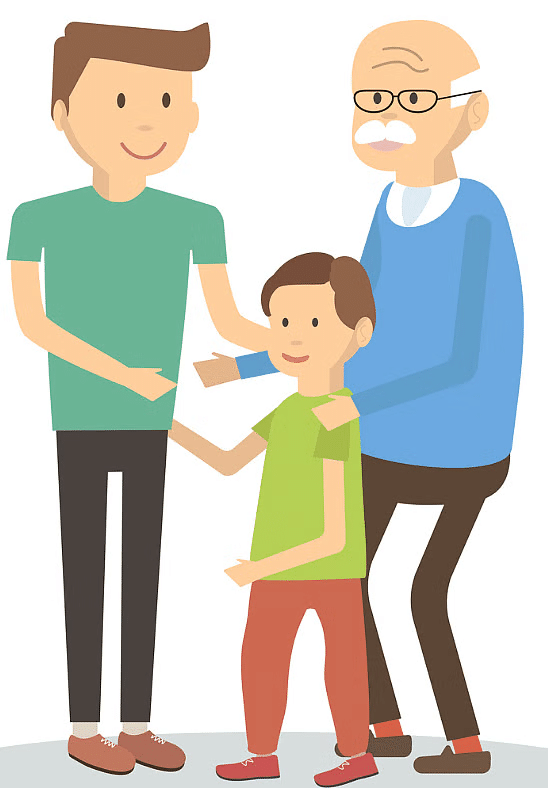
Q2: True & False.
(i) Family members do not help each other.
Ans: False
Family members always help and care for each other.
(ii) Pets are also part of the family.
Ans: True
Many families keep pets and treat them as small members of the family.
(iii) All families are the same.
Ans: False
Families differ in size, customs and ways of living; each family is different in its own way.
(iv) A nuclear family is where grandparents, uncles, aunts and cousins, all live together with you and your parents.
Ans: False
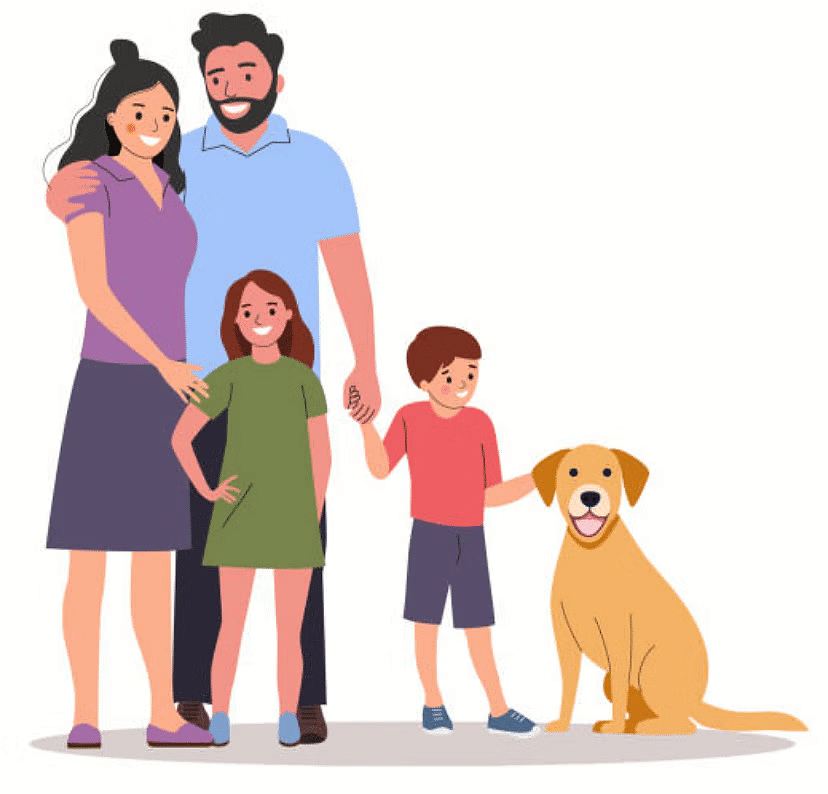
A nuclear family is small and usually has only the parents and their children living together.
Q3: Match the following.
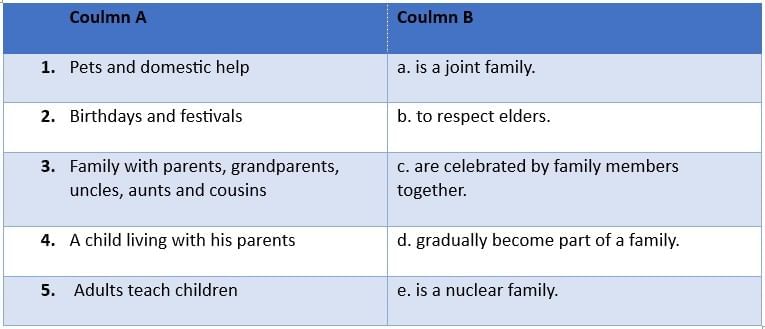
Ans: 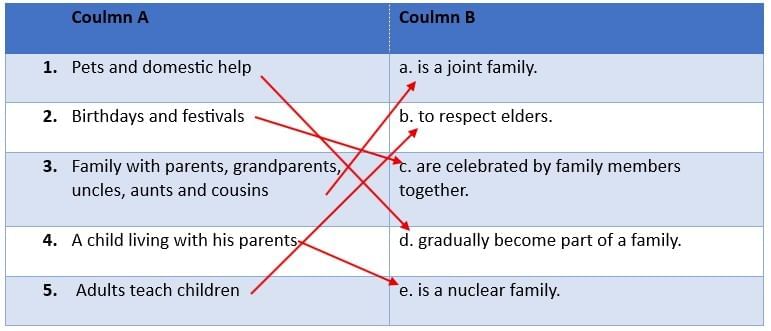
1. - d. There is a growing global trend to consider pets as part of the family.
2. - c. We celebrate birthdays and festivals with our families.
3. - a. Child lives with his mother, father, brother, grandmother, grandfather, Uncle, aunt and cousins is called joint family .
4. - e. A child who lives with his father, mother and a brother or sister is in a small family. A small family is also called a nuclear family.
5. - b. When children are born, they are welcomed into the family. As they grow they learn things from their parents, such as respect and good manners.
Q4: Answer the following questions.
(i) How do parents help one another?
Ans:
- They take care of their child together.
- They share household work like cooking and cleaning.
- They talk and understand each other when there is a problem.
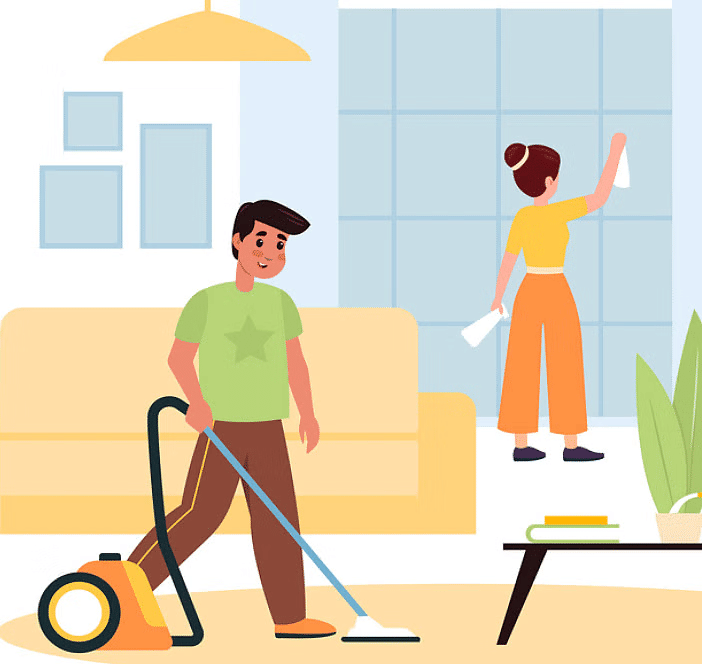 Doing household work together
(ii) What is the difference between a nuclear family and a joint family?
Ans:
- Joint family: Many relatives live together - parents, grandparents, uncles, aunts and cousins.
- Nuclear family: A small family with only parents and their children living together.
(iii) How do family members strengthen the bond amongst them?
Ans: Family members strengthen the bond by spending time interacting with members of the family.
(iv) How is a single-parent family different from a nuclear family?
Ans: A nuclear family has two parents, a mother and a father, and their child. A single parent family has one parent and their child.
(v) What role do children play in a family?
Ans:
- Children are the future of the family.
- They are welcomed when they are born and bring joy to the family.
- They learn good habits and respect from their parents as they grow.
FAQs on Worksheet Solutions: My Family - 1
| 1. Who are the members that make up my family in EVS Class 2? |  |
| 2. What are the main responsibilities of each family member? | |
| 3. How do I identify different family relationships like cousins and grandparents? | |
| 4. Why is it important to respect and help family members in daily life? | |
| 5. What activities can families do together to stay connected? | |