Class 7 Exam > Class 7 Notes > Social Studies (SST) Class 7 (Old NCERT) > Chapter Notes - Growing up as Boys and Girls
Class 7 Civics Chapter 4 Notes - Growing up as Boys and Girls
| Table of contents |

|
| Introduction |
|
| Growing up in Samoa in the 1920s |
|
| Growing up Male in Madhya Pradesh in the 1960s |
|
| Valuing Housework |
|
| Lives of Domestic Workers |
|
| Women’s Work and Equality |
|

Introduction
Gender identity is a crucial aspect of who we are. Society shapes our understanding of appropriate behaviour for boys and girls, and these norms can vary across cultures. In many societies, men and women are valued differently, with women's roles and contributions often being seen as less important than men's. This leads to gender inequalities, particularly in the workplace.
 Gender Equality
What is gender inequality?
Gender inequality means that boys and girls, or men and women, are not treated the same.
- Sometimes, people believe that one gender is better or more important than the other, which isn't fair.
- For example, in some places, girls might not get the same chances as boys to go to school, or women might not get paid as much as men for doing the same job.
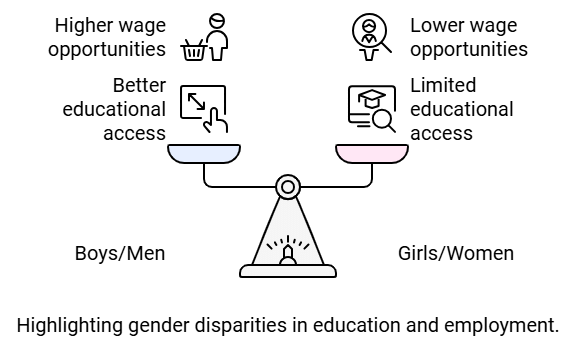
- This happens because of the way people think about what boys and girls should do, even though both are equally important and should have the same opportunities.
- Gender inequality is when things are unfair just because of whether someone is a boy or a girl.
Growing up in Samoa in the 1920s
- The Samoan Islands are located in the southern part of the Pacific Ocean.
- In the 1920s, children in Samoan society did not go to school.
- Children learned household work and how to take care of children from older children and adults.
 Samoan Island
- Fishing, being an important activity on the islands, was taught to young people to undertake long fishing expeditions.
- Babies were cared for by their mothers or other adults until they could walk, and then older children took over the responsibility.
- Boys started learning outdoor jobs like fishing and planting coconuts around the age of nine.
- Girls continued to care for small children or do errands for adults until they were teenagers.
- Once they became teenagers, girls had more freedom and participated in fishing trips, worked in plantations, and learned how to weave baskets.
- Cooking was done in special cooking houses, with boys doing most of the work and girls helping with preparations.
Question for Chapter Notes - Growing up as Boys and GirlsTry yourself: At what age did boys in Samoan society start learning outdoor jobs like fishing and planting coconuts?View Solution
Growing up Male in Madhya Pradesh in the 1960s
- In the 1960s, boys and girls in a small town in Madhya Pradesh went to separate schools from class VI onwards.
- The girls' school had a central courtyard where they played in seclusion and safety.
- The boys' school did not have a courtyard but had a big playground attached to it.
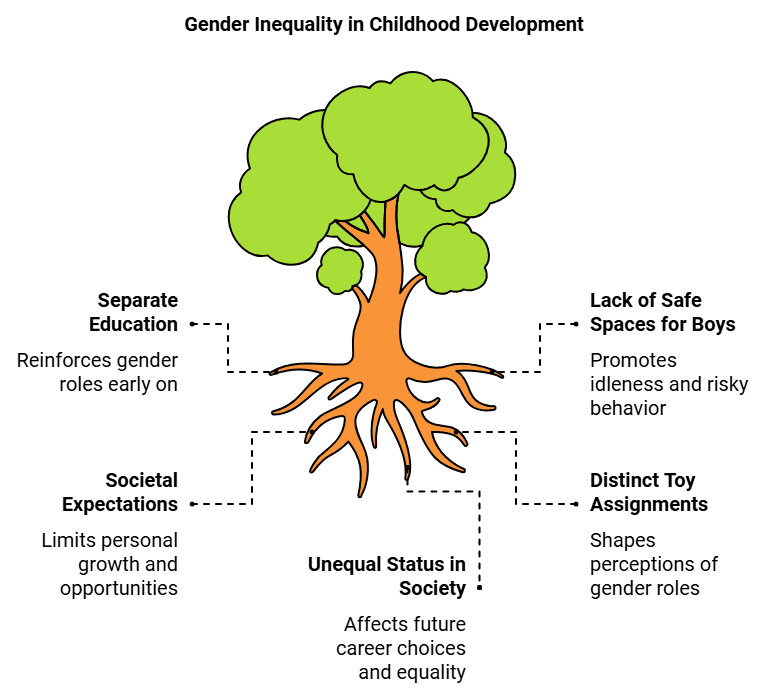
- After school, the boys watched as the girls walked home in groups while the boys used the streets to be idle and play. The girls feared being teased or attacked as they walked down the streets.
- Growing up can differ for each child in various ways, and our own experiences may not be representative of others.
- Societies make clear distinctions between boys and girls from a young age, such as giving them different toys to play with. For instance, boys are given cars, while girls are given dolls.
- Toys, clothing, and expectations for behaviour all contribute to telling children that they have specific roles to play as they grow up.
- Men and women do not have equal status in society, and this is evident in the different work they do.
Valuing Housework
- Women are mainly responsible for housework and caregiving tasks globally.
- Their work is not recognized as work and is undervalued by society.
- Society assumes that caregiving comes naturally to women and does not need to be paid for.
- Valuing housework is an important element which needs to be propagated in society.
- A number of housework actually involves many different tasks. The work is strenuous and physically demanding.
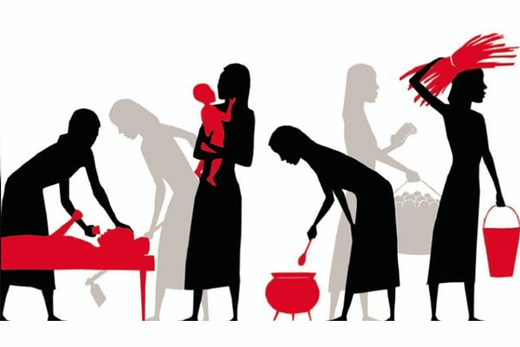 Women- The Heart of Every Home
Lives of Domestic Workers
- Many homes employ domestic workers, mostly women, to do housework such as cleaning, cooking, and taking care of children or the elderly.
- Sometimes, even young girls or boys are employed for this work
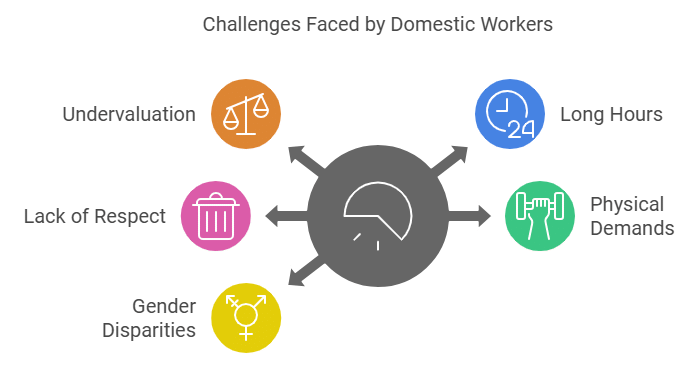
- Domestic work is undervalued and poorly paid.
- Domestic workers often work long hours, from early in the morning to late at night.
- Employers often do not show respect to domestic workers.
- The experience of a domestic worker in Delhi included being shouted at by the employer, not receiving enough food, and not being allowed to wear shoes in the house.
- Housework involves physically demanding tasks such as fetching water, carrying heavy loads, and standing for long hours.
- Domestic workers are often required to work barefoot inside the employers' houses, even in freezing winter conditions.
- Women spend more time working, both inside and outside the home, than men and have less leisure time.
- According to a study by the Central Statistical Organization of India, an average woman spends about 30-35 hours per week doing household work, while a man spends 2-4 hours. The time spent on their paid work is much less than their unpaid or household work.
Question for Chapter Notes - Growing up as Boys and GirlsTry yourself:What is one way in which boys and girls in Madhya Pradesh in the 1960s were treated differently?
View Solution
Women’s Work and Equality
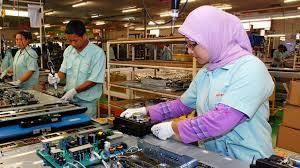 Women's Work and Equality
- Women's household and caregiving work is undervalued and is part of a larger system of inequality between men and women.
- Since this issue cannot be solved at an individual level, government action is needed to address it.
- The Constitution promotes equality and prohibits discrimination based on gender.
- Inequality between the sexes still exists.
- The government is committed to understanding the reasons for this inequality and taking steps to address it.
- For example, the burden of child-care and housework falls on women and girls, affecting their education and employment opportunities.
- To combat this problem, the government has established anganwadis or child-care centres in villages and made it mandatory for organizations with more than 30 women employees to provide creche facilities.
- These measures help women take up employment and allow more girls to attend school.
The document Class 7 Civics Chapter 4 Notes - Growing up as Boys and Girls is a part of the Class 7 Course Social Studies (SST) Class 7 (Old NCERT).
All you need of Class 7 at this link: Class 7
|
63 videos|554 docs|46 tests
|
FAQs on Class 7 Civics Chapter 4 Notes - Growing up as Boys and Girls
| 1. What were the key differences in the upbringing of boys and girls in Samoa during the 1920s? |  |
Ans.In Samoa during the 1920s, boys and girls experienced different expectations and roles. Boys were often encouraged to engage in outdoor activities, sports, and learning skills that prepared them for leadership roles in the community. In contrast, girls were typically expected to help with household chores and caregiving, emphasizing their roles in family and domestic life.
| 2. How did growing up male in Madhya Pradesh during the 1960s shape a boy's identity? | |
Ans.Growing up male in Madhya Pradesh in the 1960s often involved societal expectations that emphasized masculinity, strength, and a future role as the provider for the family. Boys were usually encouraged to pursue education and work outside the home, shaping their identity around notions of power and responsibility within the community.
| 3. Why is housework often undervalued despite being essential for family well-being? | |
Ans.Housework is often undervalued because it is typically associated with women's roles and is not seen as "real" work that contributes to the economy. This perception stems from traditional gender norms that designate domestic tasks as less important compared to jobs that are paid. However, housework is crucial for maintaining a supportive family environment and enabling other family members to engage in work outside the home.
| 4. What challenges do domestic workers face in their lives and work environments? | |
Ans.Domestic workers often face several challenges, including low wages, lack of job security, and limited access to rights and benefits. Many work long hours without proper breaks and may experience exploitation or abuse. Additionally, their work is frequently undervalued and not recognized as legitimate labor, leading to social stigma.
| 5. How does women’s work contribute to the idea of equality in society? | |
Ans.Women’s work, both paid and unpaid, plays a crucial role in promoting equality by challenging traditional gender roles and highlighting the importance of women’s contributions to society. Recognizing and valuing women’s work fosters a more equitable distribution of responsibilities and opportunities, ultimately leading to a more inclusive society where both men and women can thrive equally.
About this Document

13.4K Views

4.83/5
Rating

Sep 23, 2025
Last updated
Document Description: Chapter Notes - Growing up as Boys and Girls for Class 7 2025 is part of Social Studies (SST) Class 7 (Old NCERT) preparation.
The notes and questions for Chapter Notes - Growing up as Boys and Girls have been prepared according to the Class 7 exam syllabus. Information about Chapter Notes - Growing up as Boys and Girls covers topics
like Introduction, Growing up in Samoa in the 1920s, Growing up Male in Madhya Pradesh in the 1960s, Valuing Housework, Lives of Domestic Workers, Women’s Work and Equality and Chapter Notes - Growing up as Boys and Girls Example, for Class 7 2025 Exam. Find important definitions, questions, notes, meanings, examples, exercises and tests below for Chapter Notes - Growing up as Boys and Girls.
Introduction of Chapter Notes - Growing up as Boys and Girls in English is available as part of our Social Studies (SST) Class 7 (Old NCERT)
for Class 7 & Chapter Notes - Growing up as Boys and Girls in Hindi for Social Studies (SST) Class 7 (Old NCERT) course.
Download more important topics related with notes, lectures and mock test series for Class 7
Exam by signing up for free. Class 7: Class 7 Civics Chapter 4 Notes - Growing up as Boys and Girls
Description
Full syllabus notes, lecture & questions for Class 7 Civics Chapter 4 Notes - Growing up as Boys and Girls - Class 7 | Plus excerises question with solution to help you revise complete syllabus for Social Studies (SST) Class 7 (Old NCERT) | Best notes, free PDF download
Information about Chapter Notes - Growing up as Boys and Girls
In this doc you can find the meaning of Chapter Notes - Growing up as Boys and Girls defined & explained in the simplest way possible. Besides explaining types of
Chapter Notes - Growing up as Boys and Girls theory, EduRev gives you an ample number of questions to practice Chapter Notes - Growing up as Boys and Girls tests, examples and also practice Class 7
tests

Related Searches
Objective type Questions
,practice quizzes
,mock tests for examination
,Semester Notes
,shortcuts and tricks
,Class 7 Civics Chapter 4 Notes - Growing up as Boys and Girls
,Extra Questions
,Previous Year Questions with Solutions
,Free
,MCQs
,Class 7 Civics Chapter 4 Notes - Growing up as Boys and Girls
,Sample Paper
,Exam
,Summary
,Viva Questions
,Class 7 Civics Chapter 4 Notes - Growing up as Boys and Girls
,ppt
,Important questions
,video lectures
,past year papers
,study material
;



Additional Information about Chapter Notes - Growing up as Boys and Girls for Class 7 Preparation
Chapter Notes - Growing up as Boys and Girls Free PDF Download
The Chapter Notes - Growing up as Boys and Girls is an invaluable resource that delves deep into the core of the Class 7 exam.
These study notes are curated by experts and cover all the essential topics and concepts, making your preparation more efficient and effective.
With the help of these notes, you can grasp complex subjects quickly, revise important points easily,
and reinforce your understanding of key concepts. The study notes are presented in a concise and easy-to-understand manner,
allowing you to optimize your learning process. Whether you're looking for best-recommended books, sample papers, study material,
or toppers' notes, this PDF has got you covered. Download the Chapter Notes - Growing up as Boys and Girls now and kickstart your journey towards success in the Class 7 exam.
Importance of Chapter Notes - Growing up as Boys and Girls
The importance of Chapter Notes - Growing up as Boys and Girls cannot be overstated, especially for Class 7 aspirants.
This document holds the key to success in the Class 7 exam.
It offers a detailed understanding of the concept, providing invaluable insights into the topic.
By knowing the concepts well in advance, students can plan their preparation effectively.
Utilize this indispensable guide for a well-rounded preparation and achieve your desired results.
Chapter Notes - Growing up as Boys and Girls
Chapter Notes - Growing up as Boys and Girls Notes offer in-depth insights into the specific topic to help you master it with ease.
This comprehensive document covers all aspects related to Chapter Notes - Growing up as Boys and Girls.
It includes detailed information about the exam syllabus, recommended books, and study materials for a well-rounded preparation.
Practice papers and question papers enable you to assess your progress effectively.
Additionally, the paper analysis provides valuable tips for tackling the exam strategically.
Access to Toppers' notes gives you an edge in understanding complex concepts.
Whether you're a beginner or aiming for advanced proficiency, Chapter Notes - Growing up as Boys and Girls Notes on EduRev are your ultimate resource for success.
Chapter Notes - Growing up as Boys and Girls Class 7 Questions
The "Chapter Notes - Growing up as Boys and Girls Class 7 Questions" guide is a valuable resource for all aspiring students preparing for the
Class 7 exam. It focuses on providing a wide range of practice questions to help students gauge
their understanding of the exam topics. These questions cover the entire syllabus, ensuring comprehensive preparation.
The guide includes previous years' question papers for students to familiarize themselves with the exam's format and difficulty level.
Additionally, it offers subject-specific question banks, allowing students to focus on weak areas and improve their performance.
Study Chapter Notes - Growing up as Boys and Girls on the App
Students of Class 7 can study Chapter Notes - Growing up as Boys and Girls alongwith tests & analysis from the EduRev app,
which will help them while preparing for their exam. Apart from the Chapter Notes - Growing up as Boys and Girls,
students can also utilize the EduRev App for other study materials such as previous year question papers, syllabus, important questions, etc.
The EduRev App will make your learning easier as you can access it from anywhere you want.
The content of Chapter Notes - Growing up as Boys and Girls is prepared as per the latest Class 7 syllabus.
|
© EduRev
|
Education Revolution
|


|




Signup to see your scores
go up
within 7 days!
within 7 days!
Takes less than 10 seconds to signup