Short Answer Questions: Two Stories about Flying

Q1: How did the young seagull's family celebrate his first flight?
Ans: Soon after his first flight, all the family flew around him, crying aloud with joy. They praised him and offered him pieces of dog fish as a reward. This is how they celebrated his first flight.
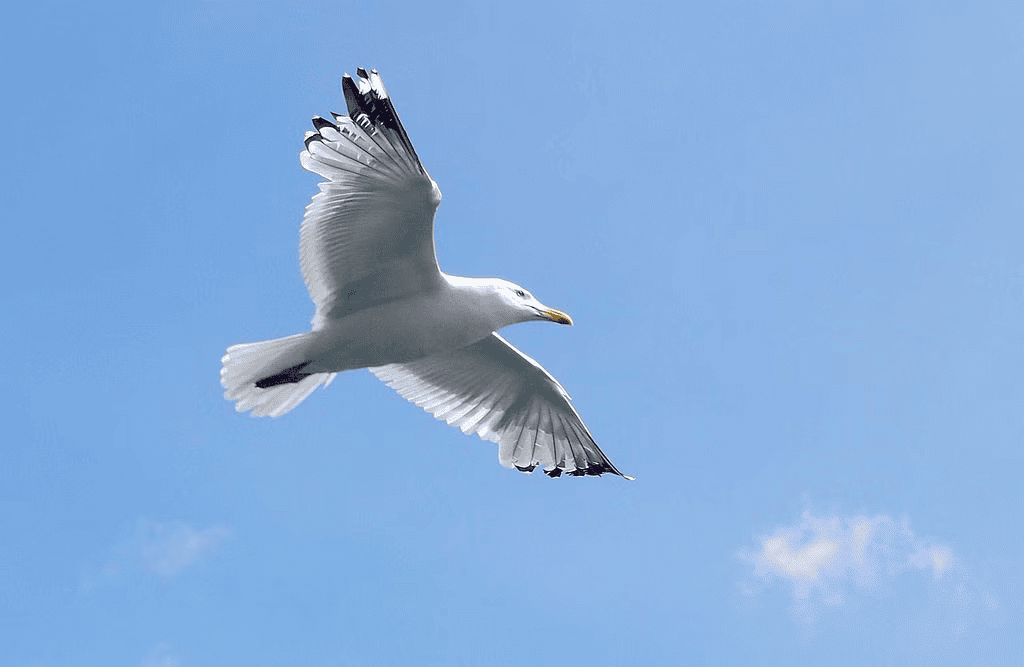
Q2: What was the young seagull's experience during his first flight?
Ans: When he fell from the ledge he was terrified at first. Very quickly his wings opened and he began to soar and then to fly. His fear gave way to confidence and then to delight as he realised he could fly. He felt nervous again while landing, but soon became calm. Overall, his first flight was an intense and memorable experience.
Q3: Young seagull tried to fly but he could not. Why was he afraid to fly?
Or
Why could the young seagull not fly with his brothers and sisters?
Ans: The young seagull believed that his wings were too weak to hold him. He had no courage to flap them and take the plunge. Even though his brothers and sister, whose wings were much shorter than his, ran to the brink, flapped their wings and flew, he could not summon the courage to join them.
Q4:While alone on the ledge, how did the little seagull tried to draw the attention of his family?
Ans: He crept slowly to the edge of the ledge and stood on one leg, hiding the other under his wing. He closed one eye and then the other, pretending to fall asleep. By this behaviour he tried to attract his mother's attention and appear harmless.
Q5: Did the seagull think the sea was like land? Pick out the words that suggest this.
Ans: Yes, the young seagull treated the sea as if it were solid ground. After flying for a while he came down and tried to stand on the water surface, but his legs sank. The phrases that suggest this are 'dropped his legs to stand on', 'sank into' and 'screamed with fright'.
Q6: When did the seagull's flight begin?
Ans: He was very hungry and, seeing his mother bring food in her beak, he dived towards her. He fell from the ledge and screamed with fear. The fear lasted only a moment; then he felt his wings spread outwards and he realised he was flying. He then screamed with joy.
Q7: Where did the seagull's flight end?
Ans: After flying for some time with his family circling him, they all came down and landed on the sea. When he tried to land his legs sank into the sea, and he cried in fear. His belly touched the water but he did not drown; he floated on the surface. Thus his first flight ended with him floating safely on the sea.
Q8: When did the seagull get over his fear of the water?
Ans: He overcame his fear after landing on the sea and discovering that, although his legs sank, his belly touched the water and he did not drown. Seeing that he could float on the surface made him lose his fear of the water.
Q9: Do you sympathize with the seagull? Give reasons.
Ans: Yes, we sympathise with the young seagull. He is a very young bird who has not yet learned to fly. His parents encourage him to learn but he is terrified of falling. They even leave him without food for twenty-four hours to force him to fly. Despite their pressure and his fear, he eventually learns to fly, which makes his struggle moving and sympathetic.
Q10: How did the young seagull's parents teach him the art of flying?
Ans: The parents encouraged and scolded him, and finally kept him hungry for twenty-four hours. When he still refused to fly, his mother took a piece of fish and flew towards him, holding it just out of reach. Driven by hunger he dived for the fish, fell, felt his wings open and began to fly. Thus their combination of encouragement, hunger and a bold tactic taught him to fly.
Q11: Where did the young seagull sit alone? What did he watch from there?
Ans: The young seagull sat alone on his ledge. He was the only bird in the family who had not yet flown. From the ledge he watched his parents, two brothers and sister flying over the sea .When he tried to flap his wings, he was seized with fear. Hence, he sat alone on the ledge watching his family flying over the sea.
Q12: Why didn't the young seagull take the plunge? What stopped him from doing so?
Ans: Although his brothers and sister, with shorter wings, had learned to fly, he was convinced that his wings would not support him. This fear and lack of confidence stopped him from flapping his wings and taking the plunge into the air.
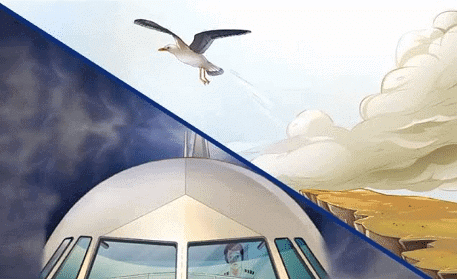
Q13: Did the upbraiding and threatening of his parents help him in flying?
Ans: The parents' scolding and threats alone did not make him fly. Their pressure created a situation, but it was the mother's clever action-flying towards him with a piece of fish held just out of reach-that used his hunger as a push. When he dived for the food he fell, felt his wings spread, and began to fly. Thus the mother's tactic, combined with his hunger, produced the result.
Q14: How were his two brothers and sister different from the young seagull?
Ans: His two brothers and his sister had much shorter wings than he had, yet they had already learned to fly. Their parents had trained them to skim the waves and dive for fish. The young seagull had seen his older brother catch his first herring and eat it, which showed him what flying and hunting could achieve.
Q15: What was the mother doing standing on a little high hump on the plateau?
Ans: The mother stood on a small hump and watched the young seagull. Now and then she tore a piece of fish and scraped each side of her beak on the rock. The sight of the food maddened the young seagull and made him long for a share.
Q16: Why did the young seagull cry "Ga, ga, ga"? Did her mother oblige him?
Ans: He cried "Ga, ga, ga" because he was almost mad with hunger when he saw his mother holding a piece of fish. He begged her for food. When he saw his mother flying across to him with a piece of fish, he uttered a joyful scream. He started tapping the rock with his feet impatiently. He was almost within the reach of the fish but failed to get at it.
Q17: How did the young seagull overcome his fear and soared gradually towards the sea during his first flight?
Ans: Driven by hunger, he dived at the fish the mother carried. He fell outwards and downwards with a loud scream and was seized by fear. The fear lasted only for a moment; then he felt his wings spread outwards and he began to soar. Gradually he recovered his confidence and flew downwards towards the blue sea.
Q18: What is the message that Liam 0′ Flaherty wants to give to the readers through the lesson 'His First Flight'?
Ans: Success cannot be taken for granted; it usually comes after struggle and facing one's fears. The young seagull's experience shows how hesitation, doubt and fear can be overcome when one is forced to act. In his case hunger compelled him to take the final plunge, and that led to his first flight and success.
Q19: Explain the statement: 'I was very happy to go behind the strange aeroplane like an obedient child.'
Ans: The pilot encountered huge storm clouds he could not fly above or around because of lack of fuel. Then he saw a black aeroplane without lights signalling for him to follow. With little choice, and trusting its guidance, he followed the black plane like an obedient child.
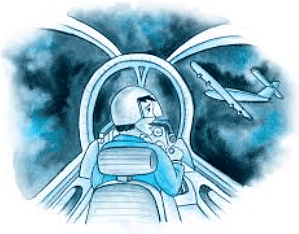
Q20: "I'll take the risk." What is the risk? Why does the pilot of the old Dakota take it?
Ans: The risk was flying the old Dakota through the black storm clouds. He took it because he did not have enough fuel to go around or above the clouds, and because he wanted to reach England in time for his holiday and a big English breakfast.
Q21: Which two options did the pilot of' the Dakota plane have when he encountered the storm clouds on his way? What did he decide to do? Why?
Ans: His two options were to turn back to Paris, about 150 kilometres behind him, or to fly through the storm clouds. He chose to go through the clouds because he wanted to reach England and spend the holiday with his family, and he did not have the fuel to go around the storm.
Q22: Describe the black clouds from the point of view of the pilot.
Ans: The pilot saw huge storm clouds like black mountains standing across the sky. They looked impenetrable and blocked his way as he flew from France towards England.
Q23: Recount the experience of the pilot of the Dakota inside the black clouds.
Ans: Inside the clouds everything became black and it was impossible to see outside. The old Dakota rolled and jumped in the air. The compass and other instruments stopped working and the radio went dead, leaving him unable to navigate.
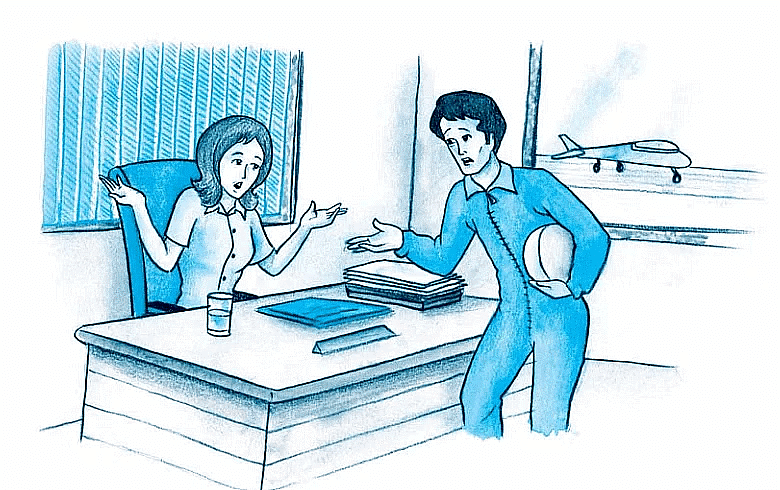
Q24: How did the black aeroplane rescue the first pilot?
Ans: The pilot of the black aeroplane gestured for him to follow. The narrator followed the black plane for about half an hour. Eventually his plane emerged from the clouds and he could see the runway lights and land safely. In this way the black aeroplane guided and rescued him.
Q25: Was the pilot of the Dakota able to meet the pilot of the black aeroplane?
Ans: No. When he looked back before landing the black plane had gone and the sky was empty. The woman in the control tower told him that there were no other planes flying that night, so he could not meet the mysterious pilot.
Q26: Why was the narrator happy and what was he dreaming of?
Ans: It was a clear, cloudless night with the moon rising and stars shining. The narrator was happy flying high above the sleeping countryside and was dreaming of his holiday and being with his family.
Q27: Why and when did he call Paris control-room?
Ans: At about one-thirty in the morning he called Paris control to report his position as Dakota DS 088 en route to England. He received instructions to turn twelve degrees west towards England.
Q28: What did he find when he checked the map and the compass?
Ans: He checked the map and compass and switched to his second and last fuel tank. He turned the Dakota twelve degrees west towards England, believing he would be in time for breakfast. Everything seemed to be going well until he entered the clouds.
Q29: The narrator had two options before risking himself entering the storm clouds? Why didn't he choose them?
Ans: He could either turn back to Paris or fly over the clouds. He did not choose either option because Paris was 150 kilometres behind and he did not want to lose time, and he lacked the fuel to climb over or go round the storm. He chose to risk flying through the clouds to reach England in time.
Q30: What did he do when he was inside the clouds?
Ans: He continued through the black storm clouds despite the danger. Inside, everything went black; the plane tossed and turned. His compass and instruments failed and the radio lost contact. He tried to call Paris control but received no answer.

Q31: Who rescued the narrator when he was hopelessly lost in the storm clouds?
Ans: There seemed no hope for the narrator. He was hopelessly lost in the storm clouds. His compass and other instruments were dead. Even Paris control didn't respond. In such a hopeless situation, the narrator saw another aeroplane flying next to him. It had no light on its wings but he could see the pilot's face. The pilot came to his help. When he said "Follow me," the narrator followed him like an obedient child.
Q32: How and when did the narrator feel that he was safe now?
Ans: When the other pilot told him to "Follow me," the narrator obeyed like an obedient child and felt some comfort. He was still worried about fuel, but soon his plane came out below the clouds and he saw the long lines of runway lights. Finding the airport and the runway made him feel safe enough to land.
Q33: Why did the narrator want to meet the woman in the control tower? Did he get any information about the mysterious disappearance of the black aeroplane and its pilot?
Ans: He wanted to know how the black aeroplane and its pilot had disappeared after guiding him. The woman in the control tower told him that no other planes were in the sky that stormy night. Thus he received no explanation for the mysterious helper's disappearance.
Q34: What is the message that Frederick want to give to the readers through the lesson 'The Black Aeroplane'?
Ans: Never give up hope, even in the most hopeless situations. One cannot know who may come to help. The narrator was in a dire situation with instruments and radio dead and no contact with Paris control, yet an unexpected pilot guided him to safety. The lesson is to keep courage and hope until the end.
FAQs on Short Answer Questions: Two Stories about Flying
| 1. What are the main themes in the two flying stories for Class 10 English? |  |
| 2. How should I answer short answer questions about these flying stories in CBSE exams? | |
| 3. What's the difference between the two flying stories and their messages about human achievement? | |
| 4. Why do students struggle with comprehension questions on these flying narratives? | |
| 5. What character traits help the protagonists succeed in their flying journeys? | |





