The Nationalist Movement (1858-1905)- 2 | History for UPSC CSE PDF Download


The Programme and Activities of the Early Nationalists
- Early nationalist leaders in India recognized that a direct struggle for political emancipation was not immediately feasible. Instead, they focused on arousing national sentiment, consolidating it, and mobilizing Indians into nationalist politics.
- The agenda included creating public interest in political issues, formulating popular demands, and fostering national unity among politically conscious Indians.
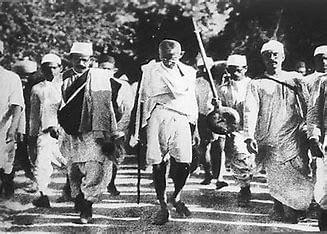
Agenda of Early Nationalist Leadership:
- Arousal of National Feeling:
- The primary task was to ignite a sense of national identity and pride among Indians, transcending regional, caste, and religious divides.
- This involved raising awareness about political issues and rallying support for nationalist goals.
- Organization of Public Opinion:
- Public interest in political matters needed to be cultivated, and mechanisms for organizing public opinion were established.
- Nationalist leaders utilized platforms like newspapers, public meetings, and social gatherings to disseminate political ideas and garner support.
- Formulation of Popular Demands:
- Nationalist leaders worked towards formulating demands that resonated with people across India, fostering an all-India focus for emerging public opinion.
- These demands were aimed at addressing common grievances and advocating for the interests of the Indian populace as a whole.
- Promotion of National Unity:
- Recognizing India as a nation-in-the-making, early leaders emphasized the importance of fostering national unity.
- Despite diverse backgrounds, politically conscious Indians were encouraged to unite on the basis of a shared economic and political agenda.
- Development of Indian Nationhood:
- Indian nationhood was seen as a process that required careful nurturing and consolidation.
- Nationalist leaders aimed to weld Indians into a cohesive nation by emphasizing common interests and fostering a sense of collective identity.
Economic Critique of Imperialism
- Early nationalist leaders in India undertook a critical examination of British colonial economic policies, aiming to address the exploitation and backwardness inflicted upon India's economy.
- Through their economic critique, they advocated for reforms to promote indigenous industries, alleviate poverty, and reduce the drain of wealth to England.
- Forms of Colonial Economic Exploitation:
- Nationalists identified three main forms of exploitation: trade, industry, and finance, all aimed at subordinating India's economy to British interests.
- They opposed British efforts to transform India into a supplier of raw materials, a market for British goods, and a hub for foreign capital investment.
- Agitation Against Official Policies:
- Nationalist leaders organized protests against policies that harmed India's traditional industries and hindered the growth of modern ones.
- They criticized excessive taxation, military spending, and the drain of wealth to England, demanding reforms to address these issues.
- Promotion of Swadeshi and Boycott:
- Emphasizing self-reliance, nationalists promoted the use of Indian goods (swadeshi) and boycotted British products.
- Symbolic acts, like public burning of foreign clothes, showcased their commitment to indigenous industries and economic independence.
- Demand for Economic Reforms:
- Nationalists called for reforms to reduce land revenue, improve conditions for plantation laborers, and lower taxation burdens on the Indian populace.
- They condemned British policies that perpetuated poverty and hindered India's economic progress.
- Reassessment of British Rule:
- Over time, nationalists recognized that the benefits touted by British rule were outweighed by its economic exploitation and the hardships endured by millions of Indians.
- They challenged the notion of security and property under British rule, highlighting the harsh realities faced by ordinary Indians.
Constitutional Reforms
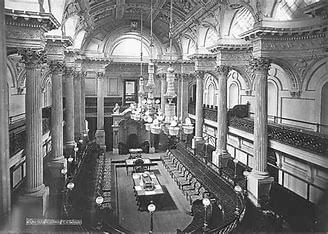
Early nationalist leaders in India advocated for democratic self-government, but their initial demands were moderate and cautious, aiming for gradual progress towards their ultimate goal.
- Moderate Demands for Reform:
- Early nationalists believed in achieving freedom through gradual steps and moderate demands to avoid government suppression of their activities.
- From 1885 to 1892, they focused on expanding and reforming Legislative Councils, seeking increased Indian representation but facing limitations due to the officials' majority.
- Indian Councils Act of 1892:
- The agitation of nationalists led to the passing of the Indian Councils Act of 1892, which increased the number of members in Imperial and provincial Legislative Councils.
- However, the Act fell short of nationalist expectations, leading to dissatisfaction and the assertion that it was a mere sham.
- Demand for Greater Indian Representation:
- Nationalists demanded a larger share of representation for Indians in Legislative Councils and advocated for Indian control over the public purse.
- They raised the slogan "No taxation without representation," echoing the sentiment of the American War of Independence.
- Limitations of Early Demands:
- While demanding greater representation, early nationalists did not broaden their democratic demands to include voting rights for the masses or for women.
- Advancement of the Claim for Self-Government:
- By the early 20th century, nationalist leaders like Gokhale and Dadabhai Naoroji began advocating for swarajya, or self-government, within the British Empire.
- They pointed to self-governing colonies like Australia and Canada as models for India's future political status.
Administrative and other Reforms
Early Indian nationalists were vocal critics of the British administrative system in India, advocating for reforms to address corruption, inefficiency, and oppression. They aimed to Indianize administrative services and separate judicial powers from the executive to protect the rights of citizens.
Indianization of Administrative Services:
- Nationalists demanded the Indianization of higher administrative services to reduce economic burden and make the administration more responsive to Indian needs.
- They criticized the high salaries paid to Europeans and the drain of wealth caused by sending salaries and pensions to England.
Separation of Judicial and Executive Powers:
- Nationalists advocated for the separation of judicial and executive powers to protect citizens from arbitrary acts by the police and bureaucracy.
- They protested against police oppression and delays in the judicial process, emphasizing the need for a fair and efficient legal system.
Opposition to Aggressive Foreign Policy:
- Nationalists opposed Britain's aggressive foreign policies, including the annexation of Burma, attacks on Afghanistan, and suppression of tribal people in North-Western India.
- They urged for policies promoting peace and cooperation with India's neighbors.
Welfare Activities and Education:
- Nationalists called for government involvement in welfare activities, emphasizing the importance of primary education, technical education, and agricultural development.
- They advocated for the establishment of agricultural banks, extension of irrigation facilities, and improvement of medical and health services to combat poverty and famine.
Protection of Indian Workers Abroad:
- Nationalist leaders defended Indian workers who faced oppression and racial discrimination in foreign countries where they migrated for employment.
- They highlighted the struggles of Indians in places like South Africa, where Mahatma Gandhi led a movement to defend their basic human rights.
Defence of Civil Rights
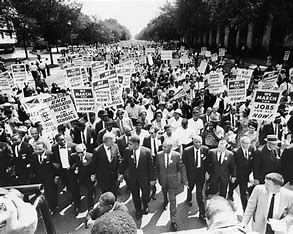
Politically conscious Indians advocated for democratic ideals and civil rights, such as freedom of speech, press, thought, and association, which became integral to the nationalist struggle for freedom against British rule.
- Attraction to Democratic Ideals:
- Indians were drawn to democracy and modern civil rights, valuing freedoms such as speech, press, thought, and association.
- These rights were vigorously defended against government attempts to curtail them, reflecting the desire for political liberty and empowerment.
- Integration of Democratic Struggle with Nationalist Movement:
- The fight for democratic freedoms became intertwined with the broader nationalist struggle for independence from British rule.
- Advocacy for civil rights formed a crucial aspect of nationalist political work, shaping public opinion and fostering a sense of collective resistance.
- Impact of Political Repression:
- In 1897, the Bombay government arrested leaders like B.G. Tilak and newspaper editors, accusing them of spreading disaffection against the government.
- Tilak's arrest and the deportation of the Natu brothers without trial sparked nationwide outrage, highlighting the government's crackdown on civil liberties.
- National Protest and Leadership:
- The arrests and deportations led to widespread protests across the country, rallying support for the cause of civil rights and political freedom.
- Tilak, previously known mainly in Maharashtra, gained national prominence overnight, symbolizing the unity of the Indian people in defense of their liberties.
The advocacy for democratic freedoms, including freedom of speech and press, played a significant role in the nationalist movement against British rule in India. The defense of these civil rights became a cornerstone of the struggle for independence, fostering unity and resistance among politically conscious Indians nationwide.
Methods of Political Work
- The Indian national movement up to 1905 was led by Moderate nationalists, who advocated for constitutional agitation and orderly political progress within the framework of the law.
- Their methods focused on building public opinion in India, educating the masses, and influencing British government and public opinion to introduce reforms aligning with nationalist aspirations.
Constitutional Agitation and Political Progress:
- Moderate nationalists believed in advocating for reforms through legal means, such as petitions, meetings, resolutions, and speeches.
- They aimed to gradually persuade the authorities to concede to popular demands by organizing public opinion and presenting them systematically.
Education and Unity Building:
- One key objective of the Moderates was to foster political consciousness and national spirit among the Indian people.
- They used platforms like the Indian National Congress to educate and unite Indians on political issues, even though their petitions and resolutions were primarily aimed at educating the masses rather than expecting immediate results from the government.
Influence on British Government and Public Opinion:
- Moderate nationalists sought to educate British public opinion about the true state of affairs in India and influence the British government to introduce reforms beneficial to India.
- They engaged in active propaganda in Britain, sending deputations and establishing committees and journals to propagate the Indian viewpoint.
Professions of Loyalty to British Rule:
- Despite their loud professions of loyalty to British rule, Moderate leaders were genuine patriots who believed that India's political connection with Britain was in its interest at that time.
- They aimed to transform British rule into a form of national rule rather than expelling the British outright, viewing self-government as a gradual progression.
Strategic Moderation:
- Many Moderates adopted a moderate stance because they believed the time was not yet ripe for direct confrontation with the foreign rulers.
- However, as they witnessed the failures of British governance and the denial of nationalist demands, some Moderates shifted towards demanding self-government for India.
Role of the Masses
- The early phase of the Indian national movement faced a fundamental weakness due to its narrow social base, which limited its ability to mobilize the masses effectively.
- Despite this limitation, the movement's leaders championed the cause of all sections of Indian society and worked against colonial domination.
Key Points:
Limited Penetration to the Masses:
- The early national movement struggled to reach the masses and lacked political faith in their ability to actively participate in the struggle.
- Leaders like Gopal Krishna Gokhale highlighted the challenges, including endless divisions in society and the prevalence of traditional sentiments resistant to change, which hindered mass mobilization.
Passive Role of the Masses:
- Due to the leaders' skepticism and the perception of societal divisions, the masses were assigned a passive role in the national movement's early phase.
- This passive role contributed to political moderation among the leaders, as they believed militant struggle against colonial rule required a unified nation, which they thought was lacking.
Misguided Approach:
- The Moderate leaders believed that a unified nation had to be formed before engaging in militant struggle, but history would show that such a struggle was crucial for nation-building.
- This approach limited the movement's effectiveness in mobilizing broad-based support and adopting more aggressive political positions.
Championing the National Cause:
- Despite its narrow social base, the early national movement advocated for the interests of all sections of Indian society.
- The movement's program and policies aimed to represent the emerging Indian nation and challenge colonial domination, regardless of the specific social groups involved.
Evaluation of the Early National Movement
Critics argue that the early nationalist movement, including the National Congress, achieved limited success in their efforts to bring about reforms. However, viewing the movement historically reveals its significant achievements and contributions to Indian society.
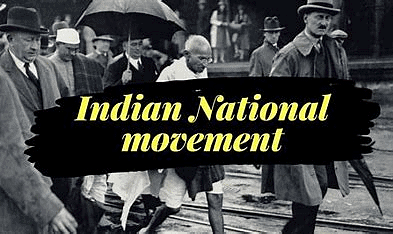
- National Awakening: The early nationalists played a crucial role in fostering a national awakening among the Indian people. They instilled a sense of belonging to a common Indian nation, uniting people across regions, castes, and religions.
- Promotion of Modern Ideas: They promoted progressive ideas such as democracy, civil liberties, secularism, and nationalism. This helped shape a modern outlook among Indians and laid the foundation for future political discourse.
- Economic Critique of Imperialism: Pioneering economic critique exposed the exploitative nature of British imperialism. They linked economic issues with political dependency, undermining the moral foundations of British rule.
- Establishment of Political Truths: The early nationalists established key political truths, asserting that India must be ruled in the interests of its people. They developed a common political and economic program for future struggles against colonial rule.
- Foundation for Future Movements: Despite weaknesses like limited mass mobilization and moderate strategies, the early nationalists laid a strong foundation for future movements. Their concrete analysis of Indian life and focus on political realities set the stage for future advancements in the struggle for independence.
In conclusion, while critics may highlight the limited success of the early nationalist movement, its historical significance cannot be overlooked. The early nationalists played a pivotal role in awakening Indian consciousness, promoting modern ideas, critiquing imperialism, and establishing key political truths. Their efforts laid the groundwork for future movements and deserve recognition in shaping the trajectory of modern India.
|
210 videos|855 docs|219 tests
|
FAQs on The Nationalist Movement (1858-1905)- 2 - History for UPSC CSE
| 1. What were the main activities and programmes of the early nationalists in India during the period of 1858-1905? |  |
| 2. What were the key constitutional and administrative reforms advocated by the early nationalists in India? | |
| 3. How did the early nationalists defend civil rights in India during the nationalist movement of 1858-1905? | |
| 4. What methods of political work were employed by the early nationalists in India during the nationalist movement of 1858-1905? | |
| 5. How did the early nationalists involve the masses in the nationalist movement in India during the period of 1858-1905? | |



video lectures
,Extra Questions
,The Nationalist Movement (1858-1905)- 2 | History for UPSC CSE
,Previous Year Questions with Solutions
,practice quizzes
,study material
,shortcuts and tricks
,Important questions
,Objective type Questions
,past year papers
,ppt
,Summary
,MCQs
,The Nationalist Movement (1858-1905)- 2 | History for UPSC CSE
,The Nationalist Movement (1858-1905)- 2 | History for UPSC CSE
,Sample Paper
,Viva Questions
,Exam
,Free
,mock tests for examination
,Semester Notes
;




The Nationalist Movement (1858-1905)- 2 Free PDF Download
Importance of The Nationalist Movement (1858-1905)- 2
The Nationalist Movement (1858-1905)- 2 Notes
The Nationalist Movement (1858-1905)- 2 UPSC Questions
Study The Nationalist Movement (1858-1905)- 2 on the App
|
© EduRev
|
Education Revolution
|


|




within 7 days!