Old NCERT Summary (RS Sharma): Religious Movements in Later Vedic Period | History for UPSC CSE PDF Download
Introduction
Numerous religious, sects arose in the middle Gangetic plains in the second half of the sixth century B.C. Of these sects, Jainism and Buddhism were the most important, and they emerged as the most potent religious reform movements.
Jainism
- In post-Vedic times society was clearly divided into four varnas:
(i) Brahman
(ii) Kshatriyas
(iii) Vaishyas
(iv) Shudras - Each varna was assigned well-defined functions, although it was emphasized that varna was based on birth. The Brahmanas, who were given the functions of priests and teachers, claimed the highest status in society. The Kshatriyas ranked second in the varna hierarchy. The Vaishya were engaged in agriculture, cattle-rearing, and trade.
 Symbol of Jainism
 - They appear as principal taxpayers. The Shudras were meant for serving the three higher varnas, and women were barred from taking to Vedic studies.
- Naturally, varna-divided society seems to have generated tensions. We have no means to find out the reactions of the Vaishyas and the Shudras. But the Kshatriyas, who functioned as rulers, reacted strongly against the ritualistic domination of the Brahmanas, and seem to have led a kind of protest movement against the importance attached to birth in the varna system.
- The Kshatriya reaction against the domination of the priestly class called Brahmanas, who claimed various privileges, was one of the causes of the origin of new religions. Vardhamana Mahavira, who founded Jainism, and Gautama Buddha, who founded Buddhism belonged to the Kshatriya clan, and both disputed the authority of the Brahmanas.
- But the real cause of the rise of these new religions lays in the spread of a new agricultural economy in north-eastern India. In the middle Gangetic plains, large-scale habitations began in about 600 B.C., when iron came to be used in this area. The use of iron is made the possible clearance, agriculture, and large settlements.
- The agricultural economy based on their plowshare required the use of bullocks, and it could not flourish without animal husbandry. But the Vedic practice of killing cattle indiscriminately in sacrifices stood in the way of the progress of new agriculture. But if the new agrarian economy had to be stable, this killing had to be stopped.
The period saw the rise of a large number of cities in north-eastern India. We may refer, for example, to Kaushambi near Allahabad, Kushinagar (in Deoria district of Uttar Pradesh).
Banaras, Vaishali (in the newly created district of the same name in north Bihar), Chirand (in Saran district), and Rajgir (situated at a distance of about 100 km southeast of Patna). Besides others, these cities had many artisans and traders, who began to use coins for the first time.
The earliest coins belong to the fifth century B.C., and they are called punch-marked coins. They circulated for the first time in eastern Uttar Pradesh and Bihar. The use of coins naturally facilitated trade and commerce, which added to the importance of the vaishyas.
In the Brahmanical society, the vaishyas ranked third, the first two being brahman as and Kshatriyas. Naturally, they looked for some religion that would improve their position.

➢ Vardhamana Mahavira and Jainism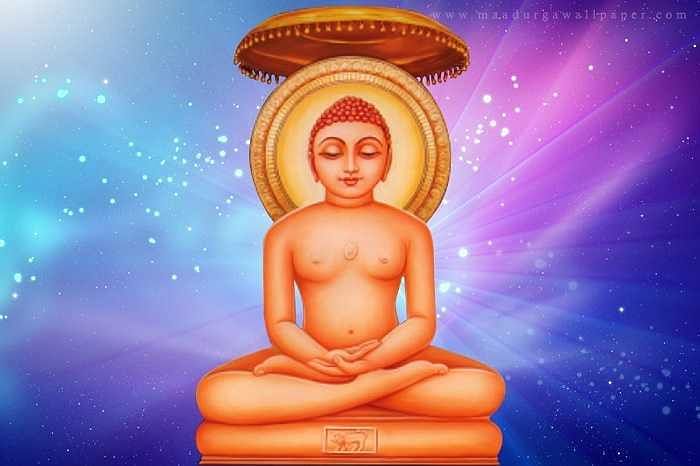 Vardhamana Mahavira
- According to the Jainas, the origin of Jainism goes back to very ancient times. They believe in twenty-four Tirthankaras or great teachers or leaders of their religion. The first Tirthankara is believed to be Rishabhadev who was born in Ayodhya. He said to have laid the foundations for an orderly human society. The last, twenty-fourth, Tirthankara, was Vardh is and a Mahavira who was a contemporary of Gautama Buddha.
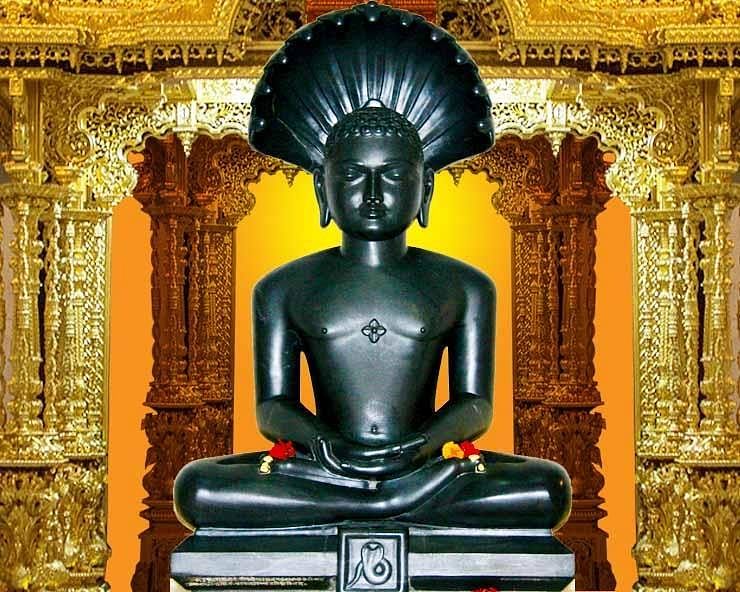
- The twenty-third Tirthankara was Parshvanath who was born in Varanasi. He gave up royal life and became an ascetic. Many teachings of Jainism are attributed to him. According to Jaina tradition, he lived two hundred years before Mahavira. Mahavir is said to be the twenty-fourth. Lord Parshvanath
- According to one tradition, Vardhamana Mahavira was born in 540 B.C. in a village called Kundagrama near Vaishali, which is identical to Basarh in the district of Vaishali, in north Bihar. His father Siddhartha was the head of a famous Kshatriya clan called Jnatrika and the ruler of his own area. Mahavira’s mother was named Trishala, sister of the Lichchhavi chief Chetaka, whose daughter was wedded to Bimbisara.
- In the beginning, Mahavira led the life of a householder, but in the search for truth, he abandoned the world at the age of 30 and became an ascetic. In the thirteenth year, when he had reached the age of 42, he attained kaivalya.
- Through kaivalya he conquered misery and happiness. Because of this conquest he is known as Mahavira or the great hero or Jina, i.e. the conqueror, and his followers are known as Jainas. He propagated his religion for 30 years, and his mission took him to Kosala, Magadha, Mithila, Champa, etc. He passed away at the age of 72 in 468 B.C. at a place called Pawapuri near modern Rajgir. According to another tradition, he was born in 599 B.C. and passed away in 527 B.C.
➢ Doctrines of Jainism

- Jainism taught five doctrines:
(i) Do not commit violence
(ii) Do not speak a lie
(ii) Do not steal
(iv) Do not acquire property
(v) Observe continence
Brahmacharya: It is said that only the fifth doctrine was added by Mahavira: The other four were taken over by him from previous teachers. Jainism attached the utmost importance to ahmsa or non-injury to living beings in later times, Jainism was divided into two sects: Svetambara or those who put on white dress, and digambaras or those who keep them-selves naked.
- Jainism mainly aims at the attainment of freedom from worldly bonds. No ritual is required for acquiring such liberation. It can be obtained through the right knowledge, right faith, and right action. These three are considered to be the Three Jewels or Triratna of Jainism.
- Jainism prohibited the practice of war and even agriculture for its followers because both involve the killing of living beings. Eventually, the Jainas mainly confined themselves to trade and mercantile activities.
➢ Spread of Jainism
- In order to spread the teachings of Jainism, Mahavira organized an order of his followers that admitted both men and women. According to a late tradition, the spread of Jainism in Karnataka is attributed to Chandragupta Maurya (322-298 B.C.). The emperor became a Jaina, gave up his throne, and spent the last years of his life in Karnataka as a Jaina ascetic.
- The second cause of the spread of Jainism in South India is said to be the great famine that took place in Magadha 200 years after the death of Mahavira. The famine lasted for twelve years, and in order to protect themselves many a Jaina went to the south under the leadership of Bhadrabahu, but the rest of them stayed back in Magadha under the leadership of Sthulabahu.
- The emigrant Jainas spread Jainism in south India. At the end of the famine they came back to Magadha, where they developed differences with the local Jainas. Those who came back from the south claimed that even during the famine they had strictly observed the religious rules, on the other hand, they alleged, the Jaina ascetics living in Magadha had violated those rules and had become lax.
- In order to sort out these differences and to compile the main teachings of Jainism, a council was convened in Pataliputra, modern Patna, but the southern Jainas boycotted the council and refused to accept its decisions.
- From now onwards, the southern began to be called digambaras, and the Magadhan svetambara. However, epigraphic evidence for the spread of Jainism in Karnataka is not earlier than the third century A.D. In subsequent centuries, especially after the fifth century, numerous Jaina monastic establishments called basis sprang up in Karnataka and were granted land by the king for their support.
- Jainism spread to Kalinga in Orissa in the fourth century B.C., and in the first century B.C. it enjoyed the patronage of the Kalinga king Kharavela who had defeated the princes of Andhra and Magadha.
➢ Contribution of Jainism
- Jainism made the first serious attempt to mitigate the evils of the varna order and the ritualistic Vedic religion. The early Jains discarded the Sanskrit language mainly patronized by the Brahmanas. They adopted the Prakrit language of the common people to preach their doctrines. Their religious literature was written in Ardhamagadhi, and texts were finally compiled in the sixth century A.D. in Gujarat at a place called Valabhi, a great center of Education. The adoption of Prakrit by the Jainas heed the growth of this language and its literature.
- Many regional languages developed out of Prakrit language, particularly Sauraseni, out of which grew of Marathi language. They contributed to the growth of Kannada, in which they wrote extensively.
Gautam Buddha and Buddhism
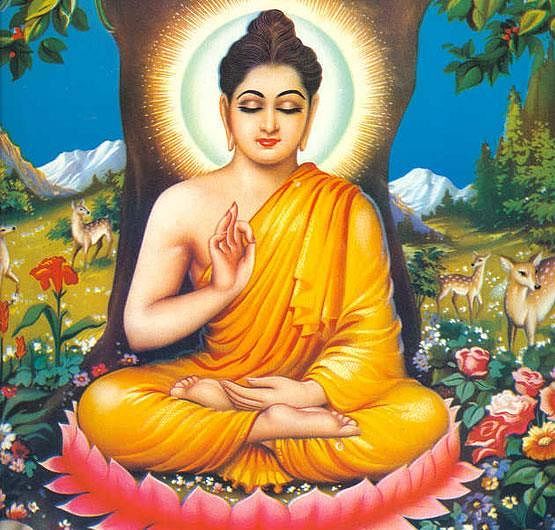 Gautam Buddha
- Gautama Buddha or Siddhartha was a contemporary of Mahavira. According to tradition, he was born in 563 B.C. in a Shakya Kshatriya family in Lumbini in Nepal near Kapilvastu, which is identified with Piprahwa in Basti district and close to the foothills of Nepal.
- Gautama’s father seems to have been the elected ruler of Kapilvastu and headed the republican clan of the Shakyas. His mother was a princess from the Koshal dynasty. Thus, like Mahavira, Gautama also belonged to a noble family.
- At the age of 29, like Mahavira again, he left home. He kept on wandering for about seven years and then attained knowledge at the age of 35 at Bodh Gaya under a pipal tree.
- From this time onwards he began to be called the Buddha or the enlightened, Gautam Buddha delivered his first sermon at Sarnath in Banaras, passed away at the age of 80 in 483 B.C. at a place called Kushinagar, identical to the village called Kasia in the district of Deoria in eastern Uttar Pradesh.
➢ Doctrines of Buddhism
- Gautama Buddha recommended an eight-fold path (ashtanga marga) for the elimination of human misery. This path is attributed to him in a text of about the third century B.C. It comprised the right observation, right determination, right speech, right action, right livelihood, right exercise, right memory, and right meditation.
- If a person follows this eight-fold path he would not depend on the machinations of the priests and will be able to reach his destination. Gautama taught that a person should avoid the excess of both luxury and austerity. He prescribed the middle path.
- The Buddha also laid down a code of conduct for his followers on the same lines as was done by the Jaina teachers.
The main items in these social conduct are:
(i) Do not cover the property of others.
(ii) Do not commit violence.
(iii) Do not use intoxicants.
(iv) Do not speak a lie.
(v) Do not indulge in corrupt practices.
These teaching are common to the social conduct ordinance by almost all religions.
➢ Special Features of Buddhism and the Causes of Its Spread
- Buddhism does not recognize the existence of god and soul (atman). This can be taken as a kind of revolution in the history of Indian religions. It particularly won trie support of the lower orders as it attacked the varna system.
- People were taken into the Buddhist order without any consideration of caste. Women also were admitted to the sangha and thus brought on par with men. In comparison with Brahmanism, Buddhism was liberal and democratic.
- The use of Pali, the language of the people, also contributed to the spread of Buddhism. It facilitated the spread of Buddhist doctrines among the common people. Gautama Buddha also organized the sangha or the religious order, whose doors were kept open to everybody, irrespective of caste and sex.
- The only condition required of the monks was that they would faithfully observe the rules and regulations of the sangha. Once they were enrolled as members of the Buddhist Church they had to take the vow of continence, poverty, and faith.
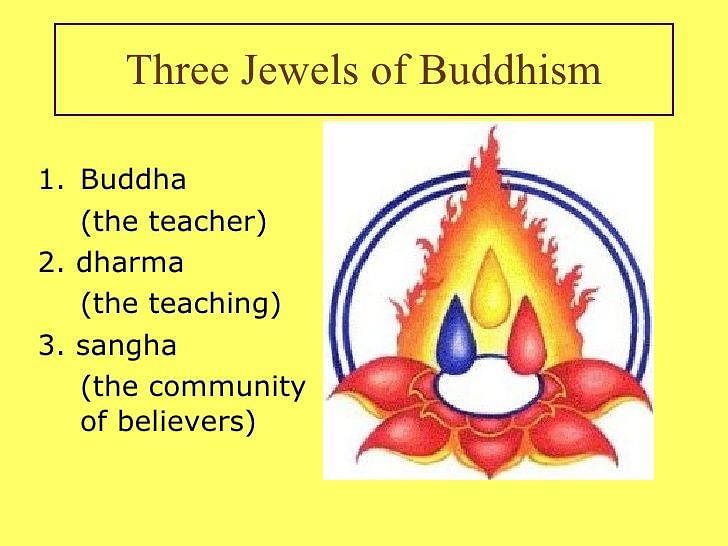
- There are three main elements in Buddhism:
(i) Buddha
(ii) Sangha
(iii) Dharma - The monarchy of Magadha, Kosala, and Kaushambi and several republican states and their people adopted this religion.
- Two hundred years after the death of the Buddha, the famous Maurya king Ashoka embraced Buddhism. This was an epoch-making event. Through his agents, Ashoka spread Buddhism into Central Asia, West Asia, and Sri Lanka, and thus transformed it into a world religion. Even today Sri Lanka, Burma (Myanmar), Tibet, and parts of China and Japan, profess Buddhism Although.
➢ Importance and Influence of Buddhism
- Despite its ultimate disappearance as an organized religion, Buddhism left its abiding mark on the history of India. The Buddhist showed a keen awareness of the problems that faced the people of north-east India in the sixth century B.C.
- Undoubtedly the objective of the Buddhist teaching was to secure the salvation of the individual or nirvana.
- Buddhism made an important impact on society by keeping its doors open to women and Shudras. Since both women and Shudras were placed in the same category by Brahmanism, they were neither given sacred thread nor allowed to read the Vedas. Their conversion to Buddhism freed them from such marks of inferiority.
- With its emphasis on non-violence and the sanctity of animal life, Buddhism boosted the cattle wealth of the country. The earliest Buddhist texts Sutta Nipata declares the cattle to be givers of food, beauty, and happiness (annada, Vannada, sukhada), and thus pleads for their protection. This teaching came significantly at a time when the non-Aryans slaughtered animals for food, and the Aryans in the name of religion.
- Buddhism created and developed a new awareness in the field of intellect and culture. The enormously enriched Pali by their writings.
- The early Pali literature can be divided into three categories:
(i) The first contains the sayings and teachings of the Buddha.
(ii) The second deals with the rules to be observed by members of the sangha.
(iii) The third presents the philosophical exposition of the dhamma. - In the first three centuries of the Christian era, by mixing Pali with Sanskrit the Buddhists created a new language which is called Hybrid Sanskrit. The literary activities of the Buddhist monks continued even in the Middle Ages, and some famous Apabhramsa writing in east India was composed by them.
- The Buddhist monasteries developed as great centers of learning and can be called-residential universities. Mention may be made of Nalanda and Vikramshila in Bihar, and Valabhi in Gujarat.
- Buddhism left its mark on the art of ancient India. The first human statues worshipped in India were probably those of the Buddha. From the first century A.D. onwards the panel images of Gautama Buddha began to be made.
- The Greek and the Indian sculptors worked together to create a new kind of art on the north-west frontier of India, which is known as the Gandhara art. For the residence of the monks, rooms were hewn out of the rocks, and thus began the cave architecture in the Barabar hills in Gaya and in western India around Nashik. Buddhist art flourished in the Krishna delta in the south and in Mathura in the north.
|
121 videos|490 docs|176 tests
|
FAQs on Old NCERT Summary (RS Sharma): Religious Movements in Later Vedic Period - History for UPSC CSE
| 1. What is Jainism? |  |
| 2. Who was Gautam Buddha and what is Buddhism? | |
| 3. What is the significance of Jainism in Indian history? | |
| 4. How does Jainism differ from other religions? | |
| 5. What are the main teachings of Buddhism? | |

|
2K Views |

|
4.86/5 Rating |

|
Nov 16, 2024 Last updated |

|
Explore Courses for UPSC exam
|

|
Important questions
,video lectures
,Viva Questions
,shortcuts and tricks
,Previous Year Questions with Solutions
,Old NCERT Summary (RS Sharma): Religious Movements in Later Vedic Period | History for UPSC CSE
,Old NCERT Summary (RS Sharma): Religious Movements in Later Vedic Period | History for UPSC CSE
,Semester Notes
,ppt
,Exam
,mock tests for examination
,Free
,Sample Paper
,past year papers
,practice quizzes
,Old NCERT Summary (RS Sharma): Religious Movements in Later Vedic Period | History for UPSC CSE
,study material
,MCQs
,Extra Questions
,Summary
,Objective type Questions
;





Old NCERT Summary (RS Sharma): Religious Movements in Later Vedic Period Free PDF Download
Importance of Old NCERT Summary (RS Sharma): Religious Movements in Later Vedic Period
Old NCERT Summary (RS Sharma): Religious Movements in Later Vedic Period Notes
Old NCERT Summary (RS Sharma): Religious Movements in Later Vedic Period UPSC Questions
Study Old NCERT Summary (RS Sharma): Religious Movements in Later Vedic Period on the App
|
© EduRev
|
Education Revolution
|


Follow Us
|