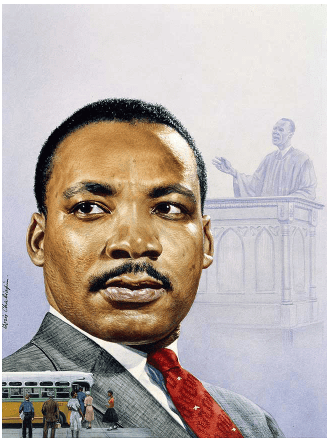
Throughout history, many great philosophers and leaders have shaped the way people think and live. They encouraged others to question old beliefs, seek truth, and fight for justice. These individuals came from different cultures, countries, and times, yet often shared a common aim: to improve society and make life fairer for more people. This chapter looks at the lives and teachings of influential figures such as Socrates, Abraham Lincoln, Karl Marx, Mahatma Gandhi, and Martin Luther King. Their ideas continue to inspire many generations and show how courage and wisdom can bring change.
Many great thinkers asked questions and helped people think more clearly.
They believed in values such as truth, justice, equality, and peace.
Leaders and philosophers used different methods-speeches, writings, peaceful protest, or teaching-to bring change.
We study their lives to learn how ideas can change laws, society, and people's hearts.
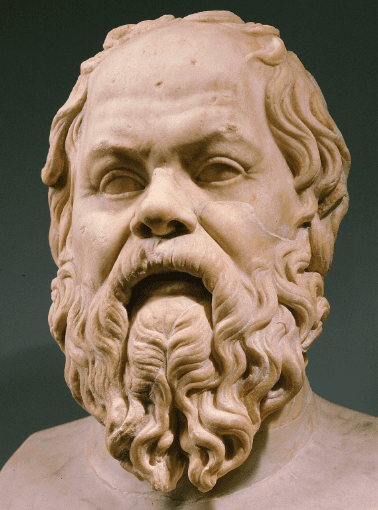
Socrates (470-399 BC)
Who was Socrates?
Socrates was a Greek philosopher who lived about 2,400 years ago in Athens, Greece.
He is called one of the founders of Western philosophy because he asked new questions about knowledge, right conduct and how people should live.
Socrates believed that wisdom and honesty were more important than money or fame and encouraged people to examine their own lives.
One famous saying attributed to him is "Know yourself." This means that each person should try to understand their own beliefs and actions.
Teaching methods
Socrates did not write books. He taught by talking to people in the marketplace and asking them questions.
His way of teaching is called the Socratic method: asking questions so that students think carefully and find answers themselves.
This method helps people discover errors in their thinking and learn to reason clearly.
Beliefs and reputation
Socrates often asked people to question commonly held beliefs rather than accepting them without thought.
He protested against superstition and emphasised using reason and evidence to find the truth.
Although many called him wise, Socrates himself often said he did not know everything; he valued asking questions more than giving final answers.
Trial and death
Because Socrates questioned the ways people thought and the authority of some leaders, he made enemies.
He was accused of not respecting the gods of the city and of corrupting the young people by encouraging them to think for themselves.
After a trial, he was sentenced to death. He accepted the sentence and drank poison while still discussing ideas with his friends.
Legacy
Socrates' teachings were recorded by his students, most famously Plato, who wrote dialogues describing Socratic conversations.
Key lessons from Socrates:
Be honest and courageous in seeking the truth.
Think carefully and do not accept things without questioning them.
Use reason to judge ideas and avoid superstition.
His way of asking questions is still used in schools and law to teach clear thinking.
MULTIPLE CHOICE QUESTION
Try yourself: What was Socrates' main teaching to his followers?
A
Be wealthy and famous.
B
Know yourself and be honest.
C
Avoid questioning beliefs.
D
Follow superstitions blindly.
Correct Answer: B
- Socrates believed in the importance of wisdom and honesty. - His main idea was "Know yourself" and to always search for the truth through reasoning. - He taught his followers to be honest and fearless, to question things, avoid superstitions, and use their minds to think carefully and find the truth.
Report a problem
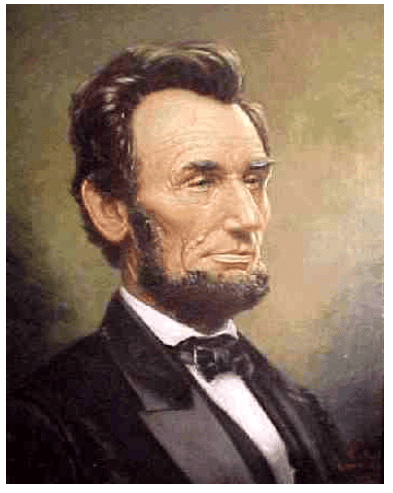
Abraham Lincoln (1809-1865)
Birth and early life
Abraham Lincoln was born in 1809 in the United States.
He came from a humble background; his father was a farmer, and his mother died when he was a child.
Lincoln grew up in a rural home and taught himself to read and write; he is known for being largely self-taught.
Career and politics
Lincoln studied law by reading books and became a lawyer.
He entered politics and, in the 1850s, joined the newly formed Republican Party, which opposed the spread of slavery.
Presidency and the Civil War
Lincoln was elected President of the United States in 1860.
His presidency came at a time when the country was deeply divided over the issue of slavery, a system that kept African people in bondage and denied them basic rights.
Lincoln believed in freedom and equality and worked to keep the country united.
He led the nation during the Civil War, the conflict between the northern states (the Union) and southern states (the Confederacy).
Ending slavery and achievements
One of Lincoln's most important acts was to issue the Emancipation Proclamation, which declared that enslaved people in Confederate areas were to be set free.
By the end of the Civil War, slavery had been brought to an end in the United States.
Second term and assassination
Lincoln was re-elected in 1864 and began a new term in 1865, aiming to restore peace and rebuild the nation.
Tragically, he was shot on 14 April 1865 while attending a play at a theatre; this attack led to his death the following day.
Legacy
Lincoln is remembered as a leader who fought for equality, preserved the union of the United States, and ended slavery.
His life shows how courage and clear moral belief can change laws and help many people gain freedom.
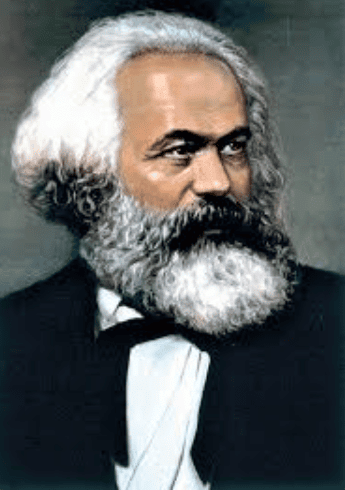
Karl Marx (1818-1883)
Early life and background
Karl Marx was a German thinker, writer, and political activist.
He studied ideas about history, economics and society and became one of the founding figures of modern communist thought.
Career and writing
In 1842, Marx worked as a newspaper editor and wrote about social and economic issues. His articles caused trouble, and the newspaper was sometimes banned.
He later wrote important books, the most famous being Das Kapital, in which he examined how industry and money affected people's lives.
Observations on the Industrial Revolution
Marx observed that the Industrial Revolution made a clear difference between people who owned factories and machines (capitalists) and those who worked for them (workers).
He saw that factory owners often earned large profits while many workers lived in poor conditions and received very low pay.
Marx's ideas
Marx believed that this unfair situation led to class conflict: the rich (capitalists) and the working class (proletariat).
He argued that workers would eventually unite to demand better conditions and fairer sharing of wealth.
His ideas inspired later movements and revolutions that aimed to make society more equal.
Impact and legacy
Marx's writing influenced many political movements and governments during the 19th and 20th centuries.
Even today, his observations are studied to understand the problems of poverty, worker rights, and economic fairness.
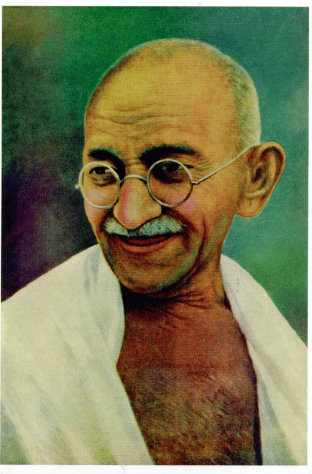
Mahatma Gandhi (1869-1948)
Basic facts
Full name: Mohandas Karamchand Gandhi
Title: Known as Mahatma (meaning "Great Soul") for his kindness, simple life, and moral leadership.
Birth: 2 October 1869, in Porbandar, Gujarat.
Education: Studied law in London and became a barrister.
Legal career: Began practising law in India before moving abroad for work.
South Africa - the beginning of his struggle
Gandhi went to South Africa for a legal case and stayed there for about 21 years.
He saw how people of Indian origin and Black Africans were treated unfairly under colonial rules and laws.
During this time, he developed and used the method of Satyagraha, which means "insistence on truth" and is a form of non-violent resistance.
Gandhi was often imprisoned for his protests, but his peaceful methods helped win rights for Indian communities in South Africa.
Return to India and fight for independence
Gandhi returned to India and saw the widespread poverty and the unfair rule of the British.
He asked Indians to resist British rule through peaceful and mass non-cooperation rather than violence.
Gandhi inspired millions to join campaigns such as refusing to buy foreign goods, marching for the right to make their own salt, and other peaceful protests.
His leadership included urging people to refuse unfair laws, to remain peaceful even when attacked, and to work for the uplift of the poorest.
Weapons of non-violence
Gandhi's main tools were truth and non-violence (ahimsa).
He showed that peaceful suffering and courage could be stronger than weapons and violence.
Because of sustained non-violent struggle and widespread support, the British eventually left India and India became independent on 15 August 1947.
Social work and beliefs
Gandhi fought against social evils like untouchability and worked for the rights of women and poor people.
He encouraged people of different religions to live together peacefully and taught that all people deserve respect.
Assassination
Not everyone agreed with Gandhi's ideas. On 30 January 1948, he was assassinated by a man who opposed his policies.
Gandhi was shot at Birla House, New Delhi.
Legacy
Gandhi is remembered worldwide for teaching that non-violence, truth, and love can be powerful forces for change.
He is honoured in India as the Father of the Nation and is an example for civil rights and freedom movements around the world.
MULTIPLE CHOICE QUESTION
Try yourself: Who is known as the Father of the Nation in India?
A
Abraham Lincoln
B
Karl Marx
C
Mahatma Gandhi
D
Nelson Mandela
Correct Answer: C
- Mahatma Gandhi is known as the Father of the Nation in India for his role in leading the country to independence through non-violent resistance and civil disobedience. - He fought against British colonial rule and various social injustices in India. - Gandhi's principles of truth, love, peace, and non-violence inspired movements for civil rights and freedom around the world.
Report a problem
Martin Luther King (1929-1968)
Early life and background
Martin Luther King Jr. was an American clergyman and civil rights leader.
As a Black person in the United States, he experienced and witnessed racial humiliation and unfair treatment.
Seeing the injustice around him made him decide to work for the rights of coloured people and for equality.
Fight for civil rights
Although slavery had ended in the United States, many laws and practices still kept Black people unequal-this was called segregation.
Black people were often not allowed in the same schools, restaurants, or buses as white people.
King believed in non-violent protest and followed the example of Mahatma Gandhi to bring about social change.
Activism and leadership
Martin Luther King travelled widely across the United States to give speeches and to encourage peaceful demonstrations against racial injustice.
He led marches, organised boycotts, and helped communities prepare and use non-violent methods to demand equal rights.
Because of his activism, King was arrested several times and faced danger, but he continued to call for justice and love.
Achievements and recognition
King was awarded the Nobel Peace Prize in 1964 for his work to end racial segregation and to establish equal rights through non-violent means.
He donated the prize money to support the civil rights movement and community work.
Legacy and death
King's speeches and actions helped bring important changes in laws and in people's ideas about race and equality.
He was assassinated on 4 April 1968, but his message of peaceful protest and equal rights lives on.
Connection to India
Martin Luther King visited India and described the trip as a pilgrimage to the land of Mahatma Gandhi, whose methods inspired him.
King often acknowledged Gandhi's influence on his own work for civil rights in the United States.
Conclusion
The lives of these philosophers and leaders teach important lessons for young learners: ask questions, stand up for truth and justice, use peaceful methods to protest unfairness, and work to help others. Whether through asking questions like Socrates, leading a nation like Abraham Lincoln, challenging economic injustice like Karl Marx, practising non-violence like Mahatma Gandhi, or fighting for civil rights like Martin Luther King, each person showed how ideas and actions can change the world.
FAQs on Chapter Notes: Great Philosophers / Nobel Laureates
1. Who was Socrates and why is he important in philosophy?
Ans. Socrates was a Greek philosopher who lived from 470 to 399 BC. He is considered one of the founders of Western philosophy. His method of questioning and dialogue, known as the Socratic method, encouraged critical thinking and helped people explore complex ideas about ethics, knowledge, and existence. Socrates' thoughts laid the groundwork for many philosophical discussions that followed.
2. What were Abraham Lincoln's contributions to society?
Ans. Abraham Lincoln, who lived from 1809 to 1865, was the 16th President of the United States. He is best known for leading the country during the Civil War and for his efforts to abolish slavery through the Emancipation Proclamation. Lincoln's leadership preserved the Union and is celebrated for promoting equality and human rights.
3. How did Karl Marx influence modern political thought?
Ans. Karl Marx, who lived from 1818 to 1883, was a philosopher and economist whose ideas about class struggle and capitalism have significantly influenced modern political thought. His works, including "The Communist Manifesto," argue that capitalism leads to inequality and exploitation. Marx's ideas inspired various political movements and the development of socialist and communist ideologies.
4. What did Mahatma Gandhi advocate for in India?
Ans. Mahatma Gandhi, who lived from 1869 to 1948, was a leader in the Indian independence movement against British rule. He is known for his philosophy of non-violence (Ahimsa) and civil disobedience. Gandhi's methods inspired movements for civil rights and freedom across the world, promoting peaceful resistance as a means to achieve social and political change.
5. How did Martin Luther King Jr. contribute to the civil rights movement?
Ans. Martin Luther King Jr., who lived from 1929 to 1968, was a key leader in the American civil rights movement. He advocated for racial equality through non-violent protest and delivered powerful speeches, including the famous "I Have a Dream." King's efforts helped to dismantle segregation laws and promote civil rights for African Americans, leaving a lasting legacy in the fight for social justice.
shortcuts and tricks, Chapter Notes: Great Philosophers / Nobel Laureates, Summary, pdf , Exam, ppt, Chapter Notes: Great Philosophers / Nobel Laureates, mock tests for examination, study material, Previous Year Questions with Solutions, Sample Paper, Viva Questions, Extra Questions, Chapter Notes: Great Philosophers / Nobel Laureates, Objective type Questions, Free, MCQs, past year papers, Important questions, Semester Notes, practice quizzes, video lectures;